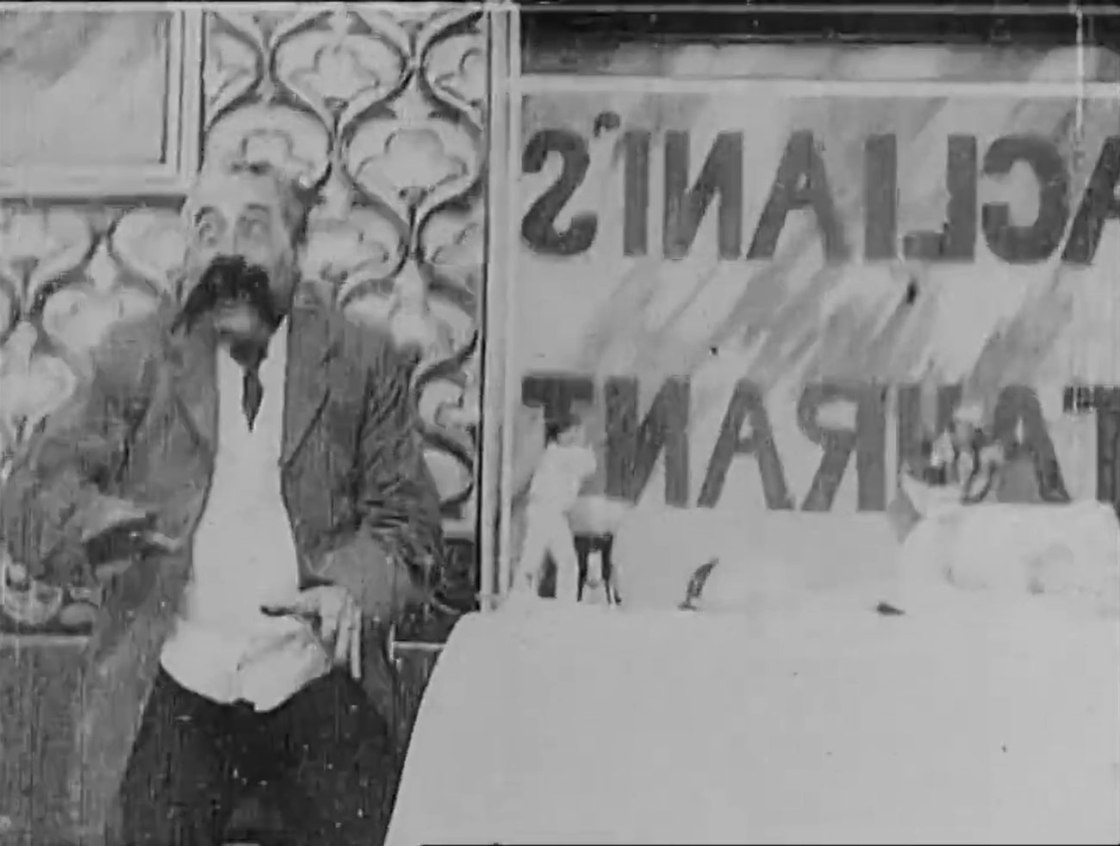
A British comedy about a man who orders cheese and beer, and is surprised to discover a rather unique infestation inside…
Home Media Availability: Released on DVD.
More Fun Than Temperance
R.W. Paul’s film company was among the leaders in trick films and magical antics on the still-new motion picture screen. 1901 was a particularly fruitful year, with the three-minute medieval epic The Magic Sword, the diabolic comedy The Devil in the Studio, and the current events satire The Over-Incubated Baby.
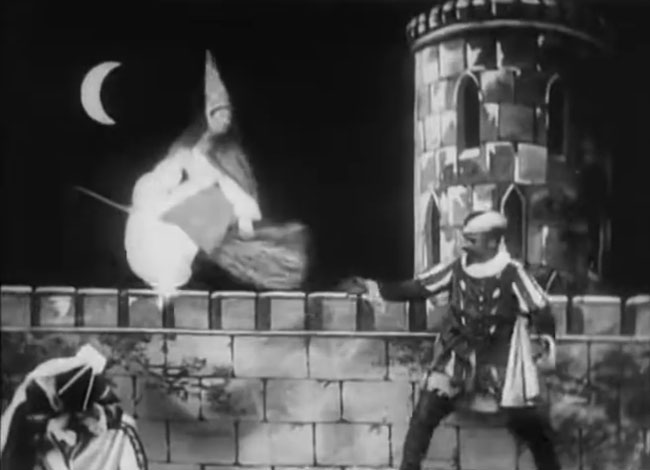
Whenever trick films of this era enter the conversation, comparisons with Méliès are inevitable. He was and is a giant in the field and, indeed, Paul’s company both remade Méliès films and was drawing from the same well of inspiration: stage magic and fairy extravaganzas. However, just as Méliès was not all about fantasy and actually dipped his feet into torn-from-the-headlines filmmaking (such as portraying the sinking of the Maine and the trial of Alfred Dreyfus), other trick film companies had their own style and twist on the genre. (I need to mention that Paul sold Méliès his first camera because that is always brought up.)
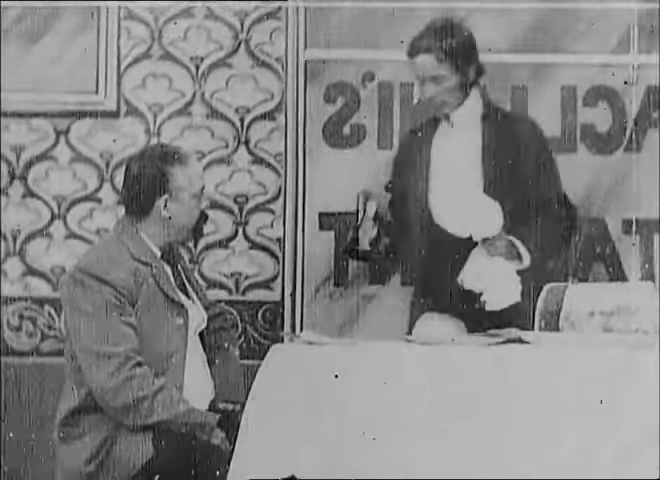
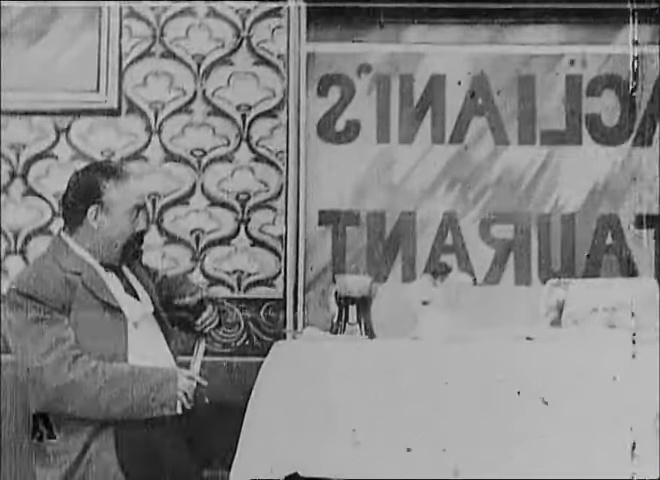
In the case of today’s subject for review, Paul’s Cheese Mites; or, Lilliputians in a London Restaurant, the production team transports a bit of Irish political satire to London for some decidedly non-Méliès fun. The one-minute film starts with a man sitting in a restaurant and tucking into cheese sliced from a large wheel that sits on the table before him. He calls the waiter and orders some beer, which is swiftly delivered.
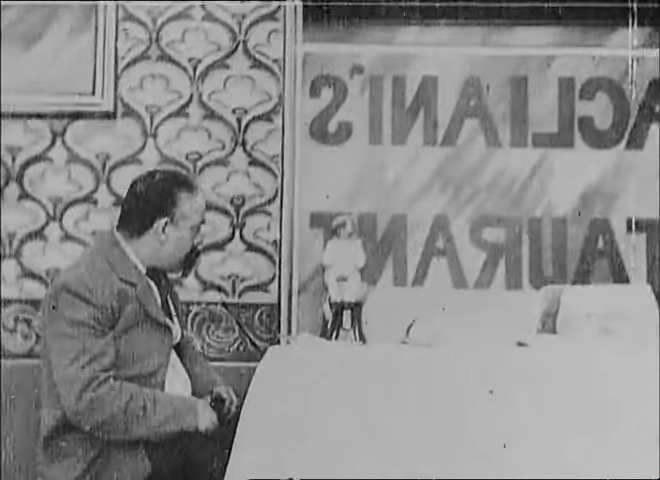
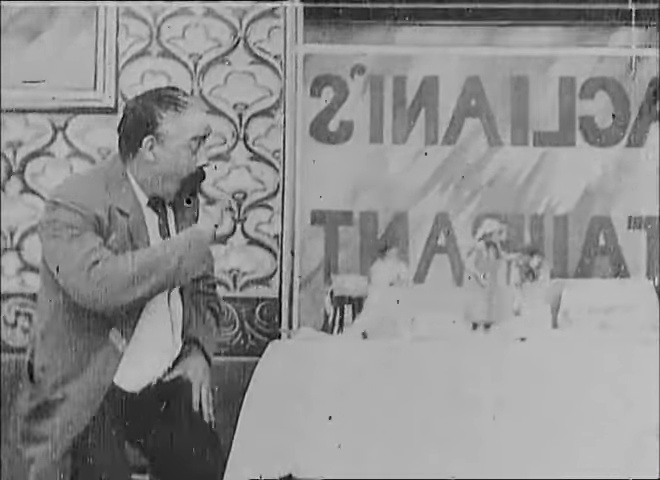
A tiny man in sailor garb appears on top of the beer and dances a jig around the table, much to the full-size human’s delight. A male and female Lilliputian in country dress emerge from the wheel of cheese. The lady dances with the sailor, the countryman gets annoyed, the two tiny men begin to fight as the lady continues a solo dance. All the while, the restaurant patron delights in their antics.
I would consider the notion that this was intended as a Temperance tract but the customer seems so pleased with the antics of the Lilliputians that it hardly counts as a cautionary tale. If fact, I imagine drinking would become far more popular if people were assured of watching a wacky fistfight between tiny people.
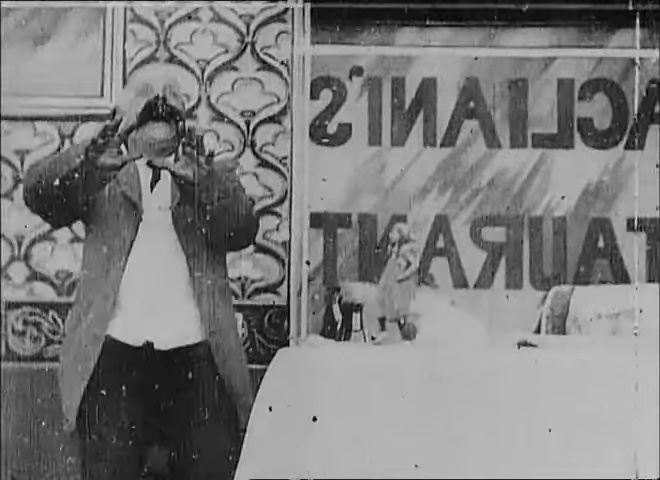
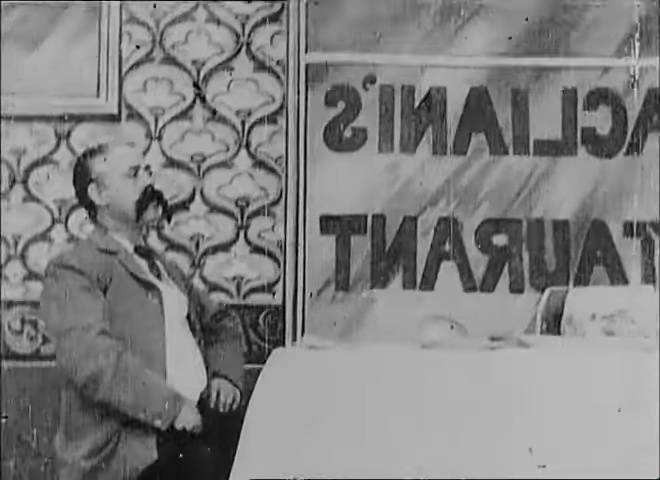
The effect was accomplished by cutting, replacing the faux restaurant window with a black background and superimposing footage of the Lilliputian actors, who performed their antics on an oversize set. The slight jitter of the window gives the game away but it is still an extremely charming effect and the matching of the text on the “real” window with the large scale one was particularly well-done.
(There will be inevitable comparisons to the 1909 Vitagraph film Princess Nicotine; or, The Smoke Fairy but, while both pictures involve tiny people on a tabletop while a full-size human watches and interacts, they accomplished their effect in very different ways, with Princess Nicotine quite literally relying on smoke and mirrors rather than double exposure.)
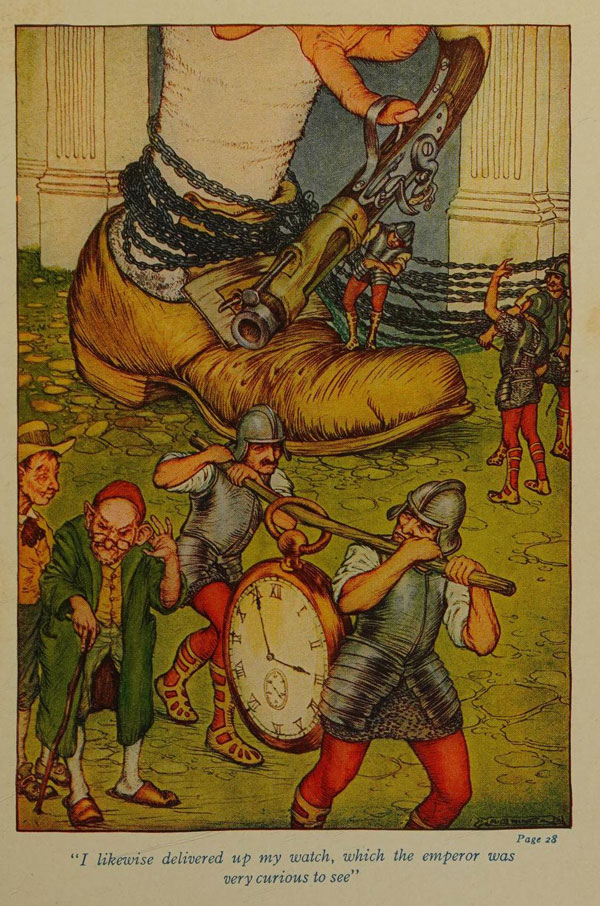
Few political satirists have been twee-ified quite like Jonathan Swift. Gulliver’s Travels still packs a satirical wallop but is commomly treated as a children’s story. While Cheese Mites was clearly not intended to be a full adaptation of the narrative, the battling Lilliputians are true to the book. At one point, one of the Lilliputians explains to Gulliver that the nation traditionally broke eggs by tapping the larger end but, when a prince cut his fingers doing so, his father decreed that eggs be tapped on the smaller end. “The people so highly resented this law, that our histories tell us, there have been six rebellions raised on that account; wherein one emperor lost his life, and another his crown… It is computed that eleven thousand persons have at several times suffered death rather than submit to break their eggs at the smaller end.” Later in the book, Gulliver angers the Lilliputian king by not eliminating his egg heretic opponent in a war. Such people would indeed duke it out on a restaurant table, I think.
It wouldn’t be an early film if there wasn’t at least some confusion about the film credits and, in fact, just about every film from R.W. Paul’s film company for this year (and several years after). You see, most sources credit Paul as the producer and magician Walter Booth as the director but this has been challenged by historians John and William Barnes, who point out there is little actual evidence supporting these credits.
In the essay Issues of Provenance and Attribution for the Canon: Bookending Robert Paul found in the collection Provenance and Early Film, Ian Christie points out that the term “director” was anachronistic for this period in any case. Indeed, the terminology and duties of the post were still fluid in the 1910s, when a producer might be credited as a director and a director as a producer.
Credit disputes are common in early film– in addition to roles not yet fleshed out and established, record keeping could be spotty– and generally seem to be settled quickly or not at all. There are pleasant instances where a credit is disputed and just about everyone agrees with the findings, such as how the Madame Thuillier of the movies is now understood to be daughter Berthe and not mother Elisabeth. But then there is the other kind, a shooting war of claims and counterclaims. We saw that with the efforts to credit Arthur Melbourne-Cooper and not George Albert Smith with the pioneering trick film Grandma’s Reading Glass. It was a red hot written debate that, at one point, hinged on the tails of the cats shown in the film (the Melbourne-Cooper side claimed they were Manx, which proved their arguments, while the Smith side declared “Tail”).
The Booth side fired back with Walter R. Booth and the Early Trick Film by Barry Anthony, pointing out that Booth was credited as the director of The Magic Sword by at least one of his coworkers within a decade of its completion, Paul did not embrace trick films before Booth started working for him, and the Paul trick films fit Booth’s stage work as a magician. So there we go.
There is nothing like early cinema to remind us of just how little we can be certain of as we try to piece together the history of movies. And just to add to the confusion, another Cheese Mites film was released in 1903, which used microscopic footage of actual cheese mites to horrify and amuse the audience. Come back, Lilliputians, all is forgiven.
The credit dispute is unlikely to be resolved any time soon, but that shouldn’t stop us from enjoying the antics of the Cheese Mites. As Napoleon said in Time Bandits, “That’s what I like! Little things hitting each other!” and it turns out that sentiment is truly timeless.
Where can I see it?
Released on DVD as part of the BFI’s R.W. Paul collection. Also available on the BFI player but it is region locked.
☙❦❧
Like what you’re reading? Please consider sponsoring me on Patreon. All patrons will get early previews of upcoming features, exclusive polls and other goodies.
Disclosure: Some links included in this post may be affiliate links and I earn from qualifying purchases.

