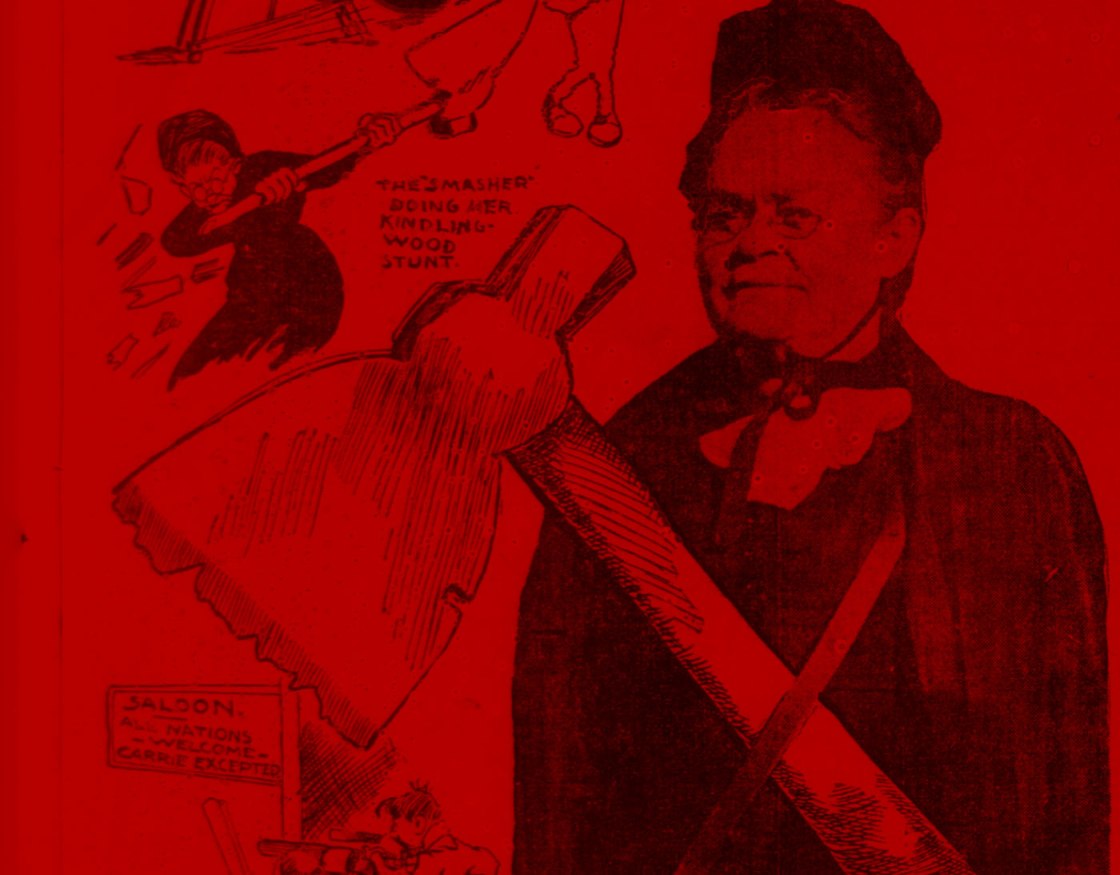
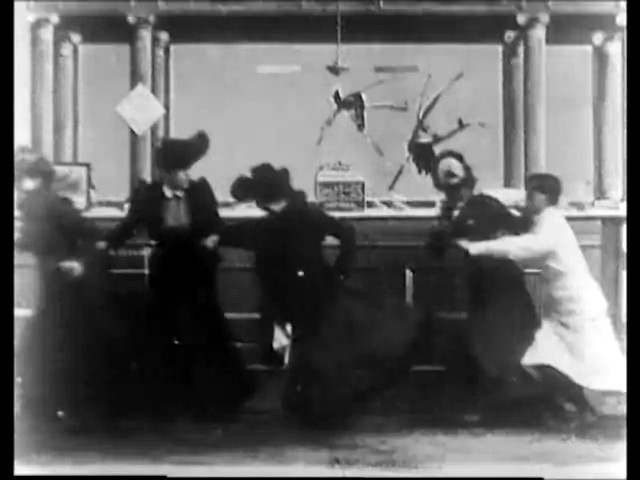
Political satire in which the colorful, hatchet-wielding Temperance crusader Carrie Nation attacks a bar and smashes its mirror before being driven off by cinema’s favorite comedy weapon, seltzer.
Home Media Availability: Released on out-of-print DVD
Hatchet Woman
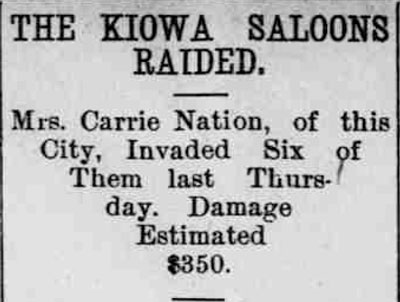
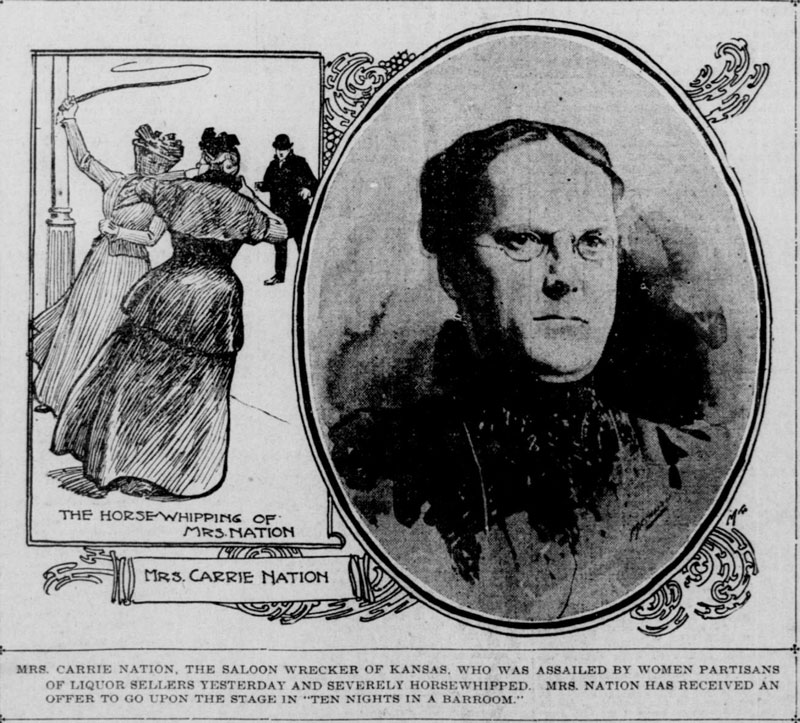
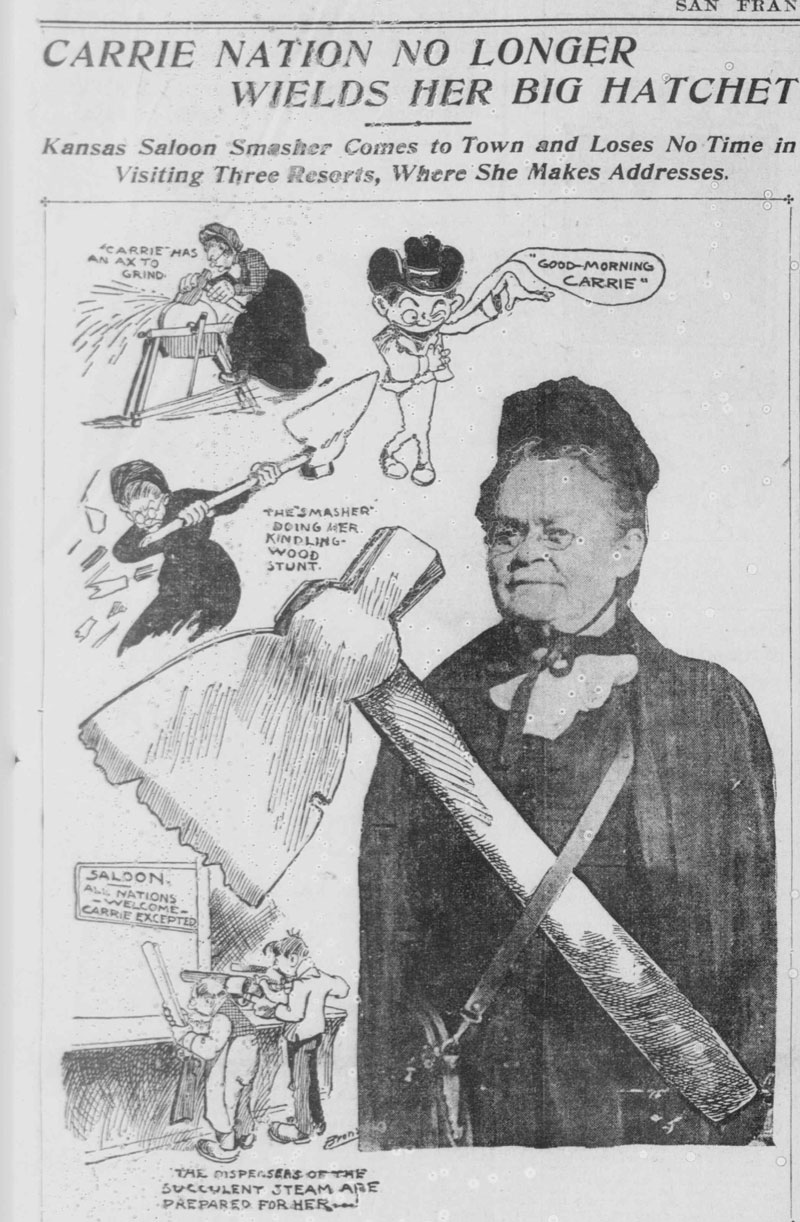
On May 31, 1900, Carrie Nation, a devout Temperance activist, went from preaching to violence when she used rocks to smash the alcohol supply of saloons located in Kiowa, Kansas. She soon switched from rocks to her signature hatchet and expanded her campaign to wrecking expensive imported mirrors (the first reported to be worth $100 or around $4,000 in today’s money) and nude pictures on display. Her activism caused a sensation. More extreme Temperance advocates cheered her on, people who opposed her views jeered, nobody had a neutral opinion about Nation.
At the same time, movies were taking off in popularity and filmmakers were constantly looking for fresh material, liberally tearing what they needed from the headlines. A respectable woman in her fifties taking a hatchet to saloons was irresistible (they did not even try to resist) and the Edison company produced Kansas Saloon Smashers under the direction of Edwin S. Porter, who was assisted by George S. Fleming, just weeks after Nation had smashed her first mirror.
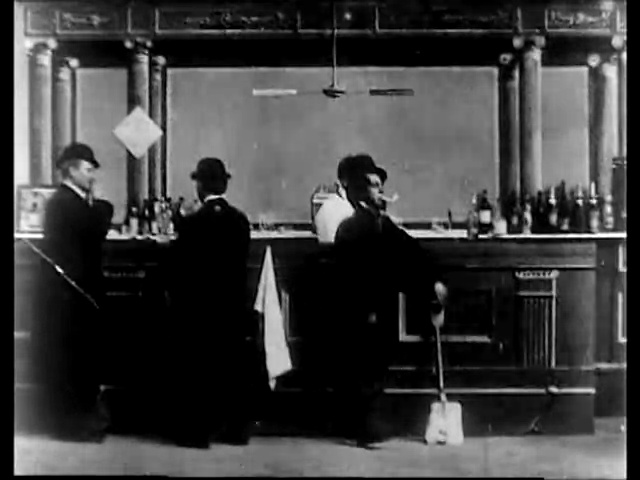
The film was shot in Edison’s new Manhattan rooftop studio and opens with a seen of a peaceful, well-run saloon. A respectable woman fetches a bucket of beer, a policeman serenely drinks at the bar, and a pantomime Irishman shows up, complete with sod shovel, to make his purchase. In marches Carrie Nation, hatchet in hand, followers in tow. She assaults the Irishman, splashing him with his own beer, before turning her attention to the mirror and administering one of her self-proclaimed hatchetations via special effects.
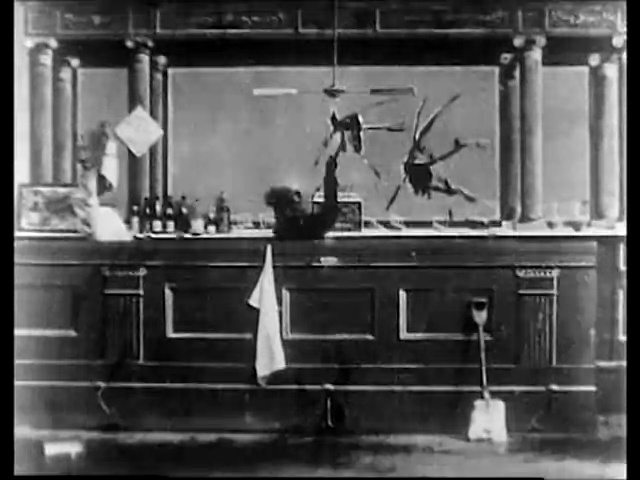
(The mirror in the scene is clearly a painted background. The angle of the camera would have meant the crew would have been captured in the reflection and I doubt the Edison company was willing to splash out hundreds of dollars to really break a mirror. Instead, the break is accomplished with a quick edit.)
The bartender shows a cool head and uses a seltzer bottle to drive Nation and her allies from the bar and the film ends on a happy note for the, presumably, wet-sympathetic audience who had no love for the dry prohibitionists. The film would have played both in the still-popular peepshow machines and in projected cinema as part of a longer program. One report of the period stated that, at a New Orleans carnival, the film was paired with the funeral of Queen Victoria and footage of the Galveston hurricane, the films were screened between other attractions like a mirror maze and a dog and monkey show.
Carrie Nation’s first husband had been an alcoholic and had died young as a result. The experience turned the already religious Carrie into an activist and she put in work supporting families of alcoholics. Kansas was officially dry but saloons still ran with impunity (news coverage sarcastically referred to them as “soda fountains), which motivated Nation to take action but also stymied efforts to prosecute her as the property she smashed was technically not supposed to exist at all.
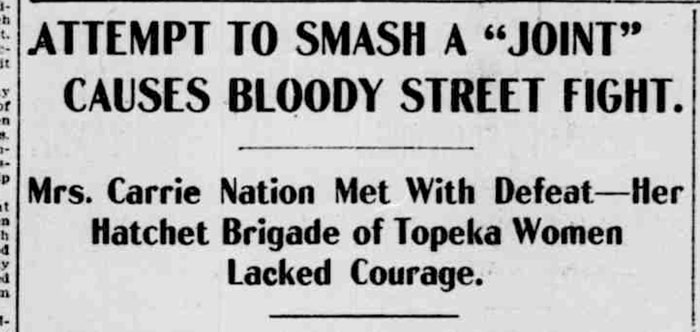
Nation going interstate created more publicity for her cause but also meant she was facing more serious prosecution and pushback. She was thrown out of an establishment in Texas (an advertisement for entertainers in the trade periodical Billboard crowed that the state had no Carrie Nation) and, after a series of incidents where violence was visited back on her, declared that she would use the Bible instead of a hatchet.
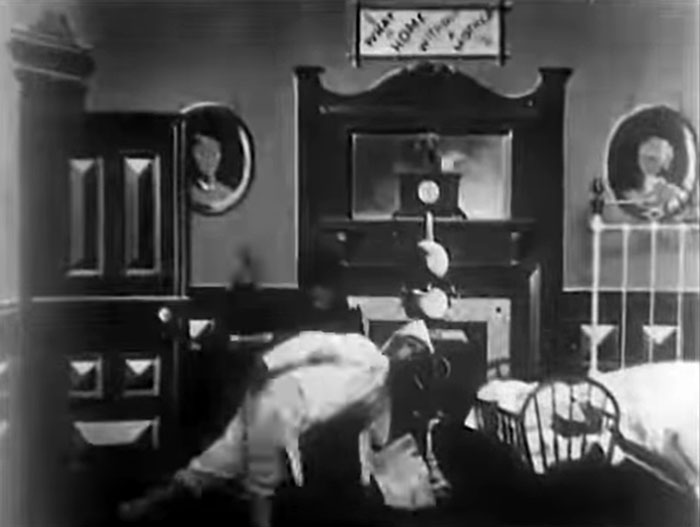
Nation’s husband, Rev. David A. Nation, obtained a divorce in 1901 and this too was parodied on film as Why Mr. Nation Wants a Divorce, also released by Edison in 1901 and directed by Porter with Fleming. Despite both the spouse’s children from their previous marriages being grown, the comedy portrays David Nation struggling with a crying infant and an insomniac tween before his wife comes home, catches him drinking to cope, and lays him across her knee for a spanking. All common lines of attack against women in politics: but who will darn the socks and see to the kids? David Nation passed away in 1903 and Carrie was apparently informed of it when a reporter handed her a telegram announcing the fact.
As is always the case with flamboyant political activists, there is a danger of the madcap antics overshadowing their message and that seems to have been the case with Carrie Nation. She attempted a lecture tour but was met with mixed results as East Coast audiences wanted to see smashing, not hear a Temperance speech. She also appeared as part of a Ten Nights in a Bar-Room company (the play was a Temperance warhorse, often performed and filmed) and sold souvenir hatchets.
While Nation became something of a punchline (alcohol-related businesses are still ironically named for her) international Temperance movement was at the height of its powers at the turn of the twentieth century. It was organized, popular enough to make trouble, and on the eve of attaining its goal of banning alcohol in multiple countries, helped along by the havoc of the war and post-war period. We’ve already covered bootlegging and illicit home brew in Finland, which joined the United States in banning most alcohol, we’ve looked into Temperance propaganda in the United Kingdom and U.S., both the scolding kind and the friendly persuasion kind, and we have discussed bootlegging pictures and moonshining in the U.S. Kansas Saloon Smashers fits into yet another niche of Temperance history.
Meanwhile, almost from the beginning, motion pictures had started incorporating reenactments of current events into their release schedule, both straight and satirical. Such satire was already familiar to Porter and the Edison team, they had released Terrible Teddy the Grizzly King the previous month. The film portrays the then vice-president as a publicity hound ready to shoot anything that moves while being followed by his own publicity staff. (We know who they are because their titles are written on placards hung from their necks with string.)
In the United States, Temperance was seen as a women’s movement and for good reason: a woman with an alcoholic husband was in a precarious position indeed. Even if she did find employment that would rival the kind of wages a man could earn, her husband had every right to drain the family coffers, sell property and she would be on the hook. However, the movement was also used by anti-immigration activists to rally against “undesirable” newcomers from Ireland, Italy, etc.
Once in place, Prohibition became a potent weapon for the revived Ku Klux Klan, which quickly swooped in to help enforce the alcohol ban (rural home brew “fruit juice and applejack” production were notably exempted, leaving the Klan’s stronghold happily in drink). Naturally, this enforcement somehow came down harder on Black Americans and immigrants.
Movies in the early 1900s were the favored entertainment of the immigrants targeted by the Temperance movement, so it is not surprising that portrayals of Carrie Nation were almost entirely negative. Not that early film studios were bastions of social justice, it’s just, well, why not score some points with paying customers? And peepshows were popular attractions at just the sort of Coney Island-type establishments that also were met with their share of attempted smashings.
Kansas Saloon Smashers captures a very particular time and place but the trajectory of Carrie Nation is a familiar one being repeated to this day. It’s also a snapshot of the movies at a time when their full political potency was only just being realized and explored. And, let’s face it, then as now, we all want to see Carrie Nation smash something.
Where can I see it?
Originally released on the out of print third volume of the Treasures from American Film Archives set but widely available online.
☙❦❧
Like what you’re reading? Please consider sponsoring me on Patreon. All patrons will get early previews of upcoming features, exclusive polls and other goodies.
Disclosure: Some links included in this post may be affiliate links and I earn from qualifying purchases.

