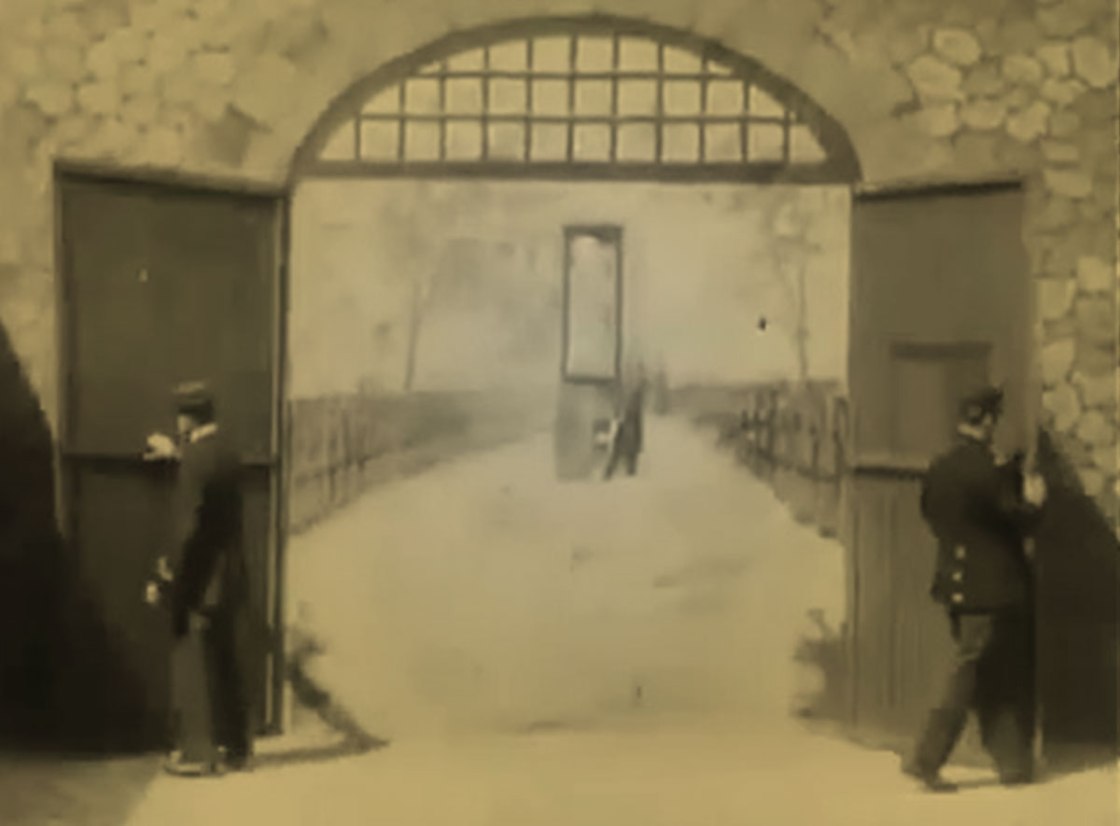
Ferdinand Zecca portrays a murder and then the path from the crime to the guillotine in this elaborate narrative film, complete with flashbacks to happier times.
Home Media Availability: Out of print on disc
Dream a little dream of me
Ferdinand Zecca was a busy man in 1901, transitioning from the Pathé Frères sound film experiments to their main business of silent filmmaking. Conquering the Air, a science fiction confection, helped pioneer the genre onscreen and inspired imitators and it was just one of the over twenty movies he directed that year. History of a Crime is a torn-from-the-headlines (and the wax museum) narrative showcasing a murderer’s path from the killing to the coffin.
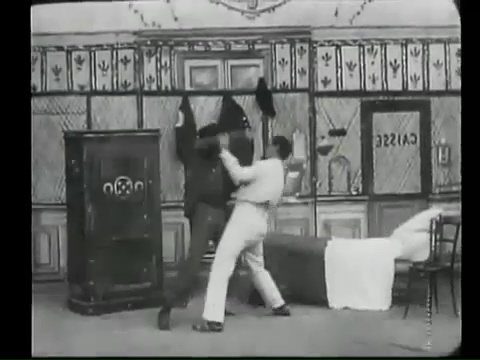
Zecca gets right down to business, showing a burglar breaking into the cash room safe. The owner is asleep but awakens and, after a struggle and a melodramatic bit of dying, he is dispatched by the burglar’s knife. The burglar celebrates with wine, women and song but is arrested and shown the victim’s body in the morgue, which wrenches a confession from the guilty man.
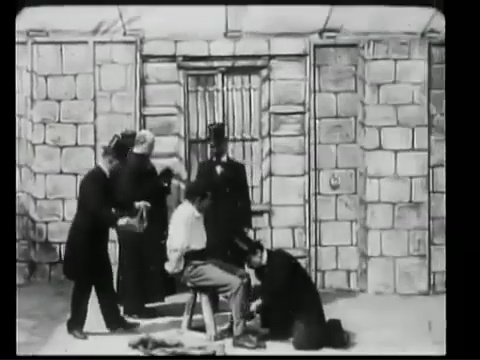
Sentenced to die by guillotine, the condemned man sleeps his last night and dreams of his respectable life before gambling and drink led him down the path to crime. In the morning, he is led out to the painted prison courtyard and his head is chopped off. Thus we have the history of a crime.
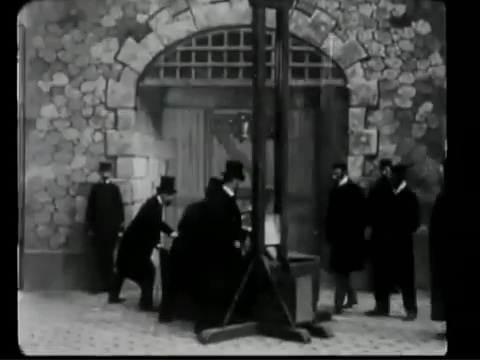
Movies were still in a period of transition, heavily indebted to both the stage and magic lantern shows, plus any other inspirations that might come their way. In this case, Zecca borrowed from a wax tableaux series of the same title on display at Musée Grévin. The wax museum released a souvenir booklet of its most famous displays, including History of a Crime, and Zecca was clearly mimicking the compositions, from the pose of the murdered man to the confrontation in the morgue to the final execution. At this period in film history, demand far exceeded supply and any popular property was ripe for cinematic interpretation.
(Incidentally, the exhibit and film share a title with the Victor Hugo 1877 essay History of a Crime, which details the rise of Louis Napoleon Bonaparte but have nothing to do with it.)
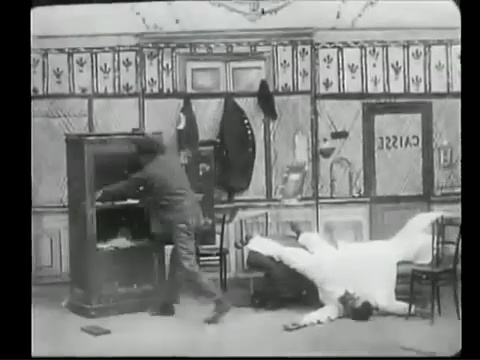
That said, History of a Crime owes much to the stage, especially in the extravagant gestures displayed by its cast and particularly its murder victim, who clearly meant to make the most of his big scene. The backdrops are not as elaborately painted as the ones we might be used to seeing in other French films of the period. The focus on plot seems to have drawn attention away from the more mundane visual aspects, I would go so far as to say that these sets are crude.
Incidentally, I see multiple references claiming that Zecca was the man who brought crime and working class grit to the movies. However, British filmmaker R.W. Paul had made the mugging picture A Wayfarer Compelled to Disrobe Partially in 1897. That film was shot entirely out of doors and portrays a mugger taking all the valuables a businessman has on his person, including his clothing, as the title indicates. In my opinion, Paul film is grittier, if lighter in subject, than the Zecca production and was equally intended to appeal to the working class as the victim of the mugging is portrayed as a figure for ridicule.
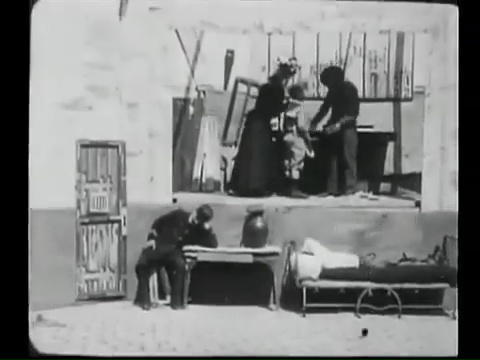
The major set piece for History of a Crime is also where it differs from the wax museum exhibit: the extended sequence of flashbacks explaining how the murderer got into this mess in the first place. In keeping with the rest of the stage-centric material of this film, the flashbacks were not accomplished via double exposure or composite shots of any kind. Rather, a smaller stage was built behind the main one and the murderer’s life is playacted as he sleeps. The main nod to cinema is the shutter snap that divides the different scenes of his life.
The more cinematic sequence is actually the execution by guillotine, which is graphically portrayed via substitution splice, with the actor playing the killer strapped to the board and then a dummy replacing him for the chop. The executioners casually roll the decapitated body into a waiting coffin and that’s that. What did everyone fancy for lunch? The speed, casualness and comparative lack of fanfare adds to the horror, whether this was intended or not.
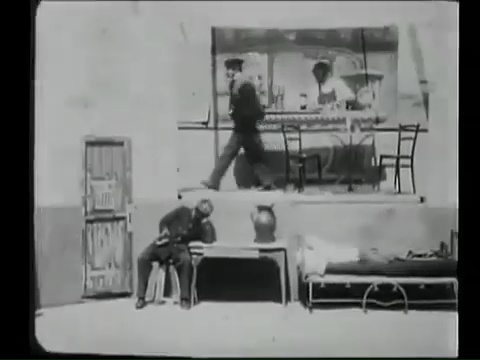
A final claim about History of a Crime is that it gives the audience its first look into the mind of a film character. While the film contains the earliest flashback sequence I have seen (and, remember, most early films are lost), I do think we need to also discuss the 1899 Georges Méliès film Cinderella, which features a nightmarish sequence in which the heroine is tormented by giant clocks. You could argue this was meant to be a literal scene of magic but Cinderella is awakened by her stepsisters at the end of the scene, which indicates a dream in my eyes.
It is always wildly ill-advised to try to definitively define firsts in cinema, as we can see, and especially since so much material is lost or surviving and uncatalogued and unwatched. In any case, true firsts don’t really matter as much as influence and History of a Crime was at the vanguard of a trend for crime pictures that would ignite the box office, cause pearls to be clutched, and produce both trash and masterpieces. That’s not nothing, regardless of whether or not there are firsts involved.
History of a Crime is a film made during a period of transition, as movies and their makers were demonstrating that they were not a passing fad or gimmick but something powerful. Movies had served as propaganda for the Spanish American War and had entered the fray of the Dreyfus Affair in the 1890s, now in the 1900s, they were taking on social and political topics in an increasingly elaborate manner. Some of the seams show in History of a Crime but it is still a dynamic and punchy picture with a dramatic conclusion. First, last, or somewhere in the middle, it’s essential viewing for anyone interested in the portrayal of crime in cinema.
Where can I see it?
Released on disc in several collections, including The Movies Begin.
☙❦❧
Like what you’re reading? Please consider sponsoring me on Patreon. All patrons will get early previews of upcoming features, exclusive polls and other goodies.
Disclosure: Some links included in this post may be affiliate links and I earn from qualifying purchases.

