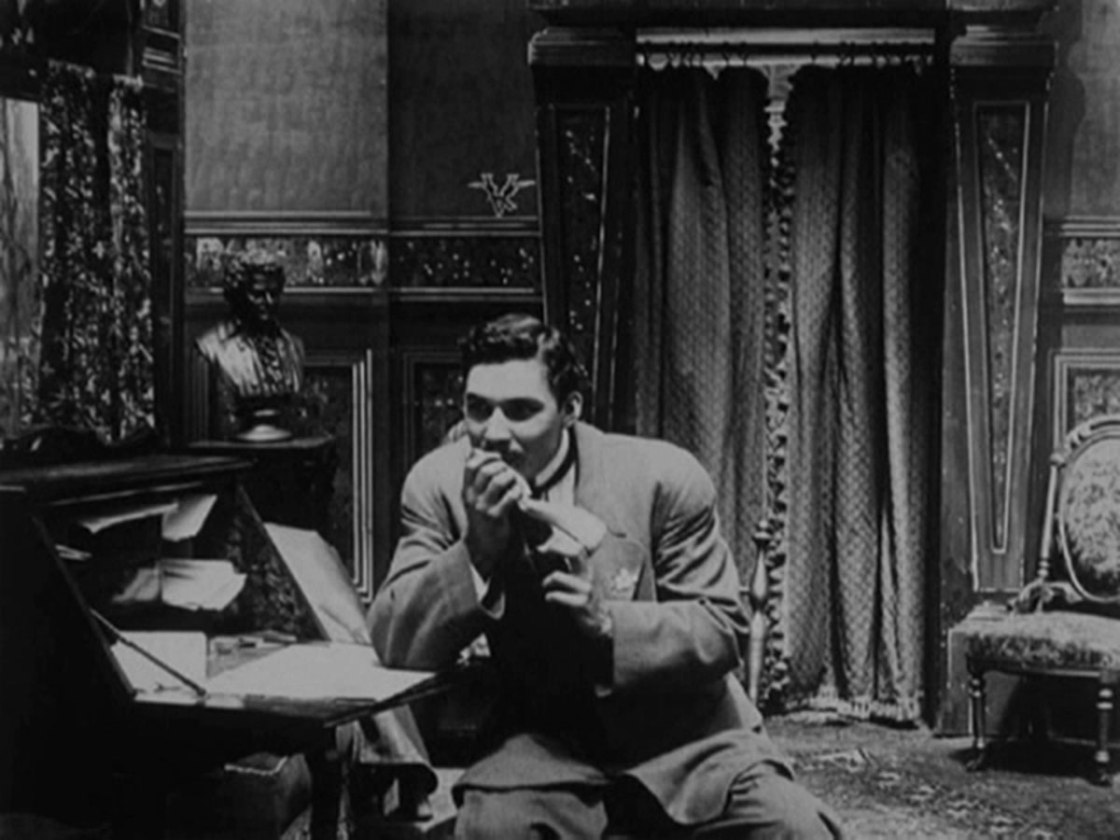
The little cinder maid is updated for the bustling modern world of 1910. All the trappings of the fantasy get a 20th century makeover, with future serial queen Mary Fuller in the lead.
Home Media Availability: Stream courtesy of the National Film Institute.
A Fairy Godmother with a Charge Account
If I had to guess which popular fairy tale was given the most silent era screentime, I would have to say Cinderella. There were straight adaptations from Georges Méliès, Mary Pickford and Lotte Reiniger. There were loose modern comedic riffs on the theme from Colleen Moore and Alice Howell. Cecil B. DeMille modernized the tale twice, once as The Golden Chance and again as Forbidden Fruit, which featured a fantasy ball sequence in which everyone wore glass costumes. All this and I have barely scratched the surface!
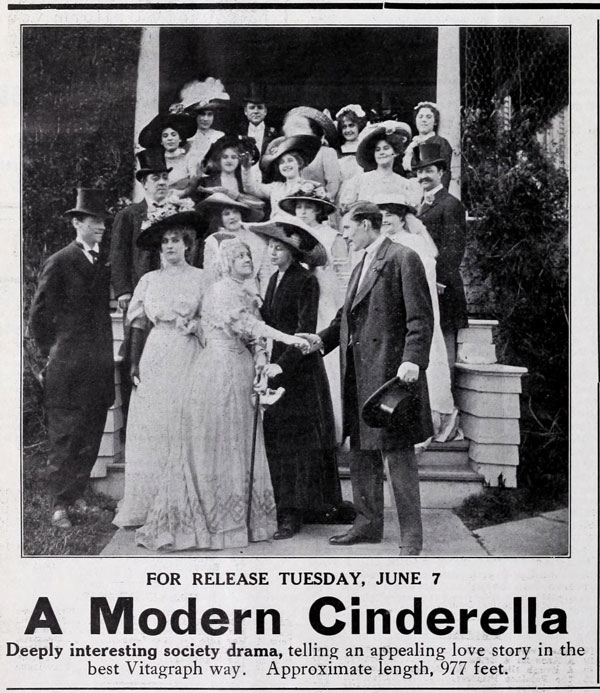
A Modern Cinderella was a Vitagraph vehicle for their popular star, Mary Fuller. 1910 was the very dawn of the star system and Fuller was one of the first American film stars whose popularity pre-dated the adoption of credits for lead actors. (Indeed, the credits and ads for A Modern Cinderalla do not name her.) She didn’t stay at Vitagraph long and jumped over to Edison and helped pioneer the film serial with What Happened to Mary? Her film career was essentially over by the mid-1910s and she is really only discussed among the nerdiest of film nerds.
So, how did Vitagraph modernize Cinderella for Fuller? To start, our Cinder Girl lives in a rather nice boarding house with her older, vainer step-sister, Jane. (I couldn’t find acting credits but I wonder if the role was played by Julia Swayne Gordon. All character names, save Cinderella, are sourced from a synopsis published in the June 11, 1910 issue of The Film Index.) Cinderella has befriended an older resident of the establishment, Mrs. Marvin, who is clearly far more well-to-do than the sisters as she employs a personal maid and dresses in an outdated-yet-lavish manner.
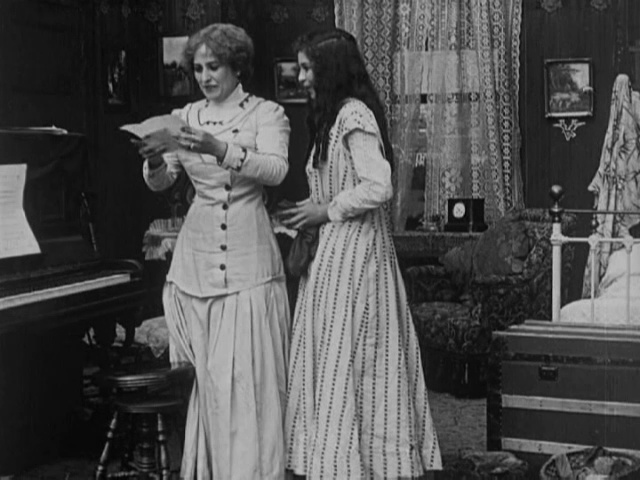
The sisters receive an invitation to a ball being held “Bell Haven” and excitement turns to disappointment for Cinderella as she realizes that Jane has all the finery (even if her shoes are bit tight) and she has nothing at all to wear to such a grand occasion. Jane tells her to just stay home, in that case. Mrs. Marvin pays a call on the sisters and hears Cinderella’s plight. Her old dress is too plain and her dance slippers have been worn to shreds. It’s hopeless! While Cinderella is lamenting, Mrs. Marvin slips one of the worn shoes into her purse.
You see, she is the fairy godmother and she may not have magic but she does have a charge account with every shop in the city, which is just as good, if not better. Mrs. Marvin buys everything that Cinderella could need, including a trendy pair of pumps, and then bides her time. Jane dresses in her best and leaves Cinderella weeping on the bed but then the fairy godmother appears with her maid and helps the poor girl get ready for the ball. Mrs. Marvin will send a car for Cinderella at midnight.
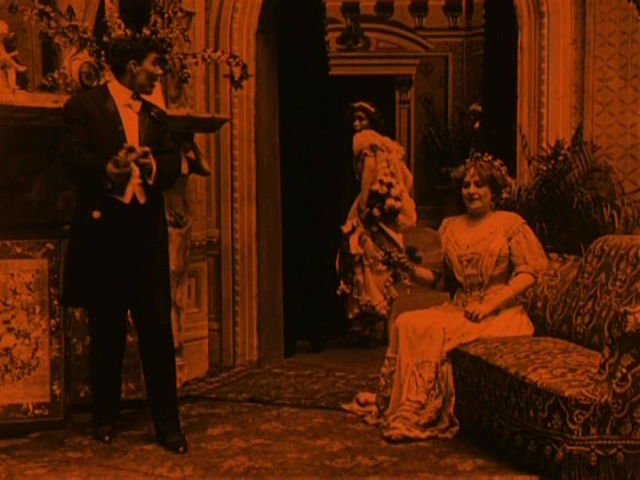
At the ball, it turns out the joke is on Jane as those too-tight shoes knock her off the dance floor quickly while Cinderella whirls around with an endless number of partners. Unfortunately, one of her shoes comes off as she dances and is accidentally kicked around by the other partygoers. Cinderella retreats to the company of her step-sister and is too embarrassed to claim the show when the cutest guy at the party recovers it and asks her directly if it belongs to her. It’s now midnight and she slips away and he spots her bare retreating foot but she drives away in Mrs. Marvin’s car before he can speak with her.
(One a side note, the leading man’s parted handlebar mustache gives him a somewhat Klingon appearance, I have to say.)
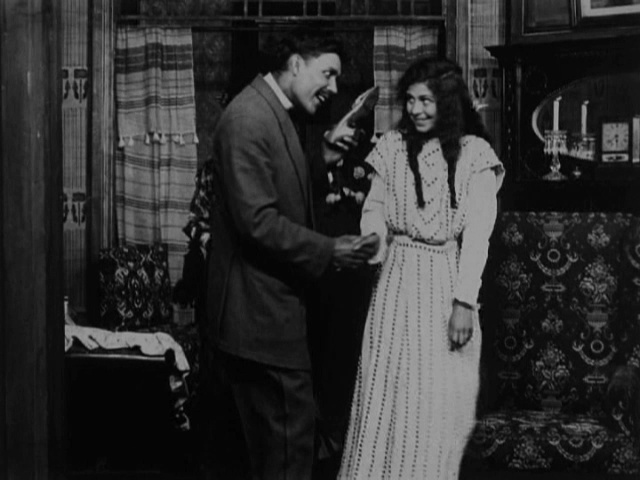
Prince Charming is taken with Cinderella and asks Jane if she knows who she but Jane maliciously refuses to hand over any information and goes home. Cinderella recounts her adventures to Mrs. Marvin, who isn’t too upset about the lost shoe– surely it’s the sign of a successful ball!
Meanwhile, Prince Charming still has the shoe and can’t stop thinking about its mysterious owner. Sure, he could go house-to-house trying to find the owner but that’s so medieval. Instead, he takes the sensible approach and inquires at the boutique, which has helpfully attached its name to the shoe. Sure enough, the have a record of the purchase and it was charged to… his grandmother.
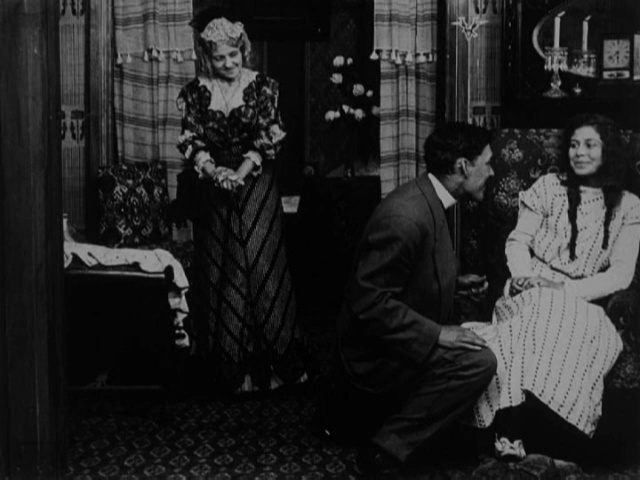
Prince Charming rushes to Mrs. Marvin and asks about the shoe and everything is quickly revealed. Although, I must say, his putting the shoe on Cinderella’s foot directly after meeting her seems awfully forward for 1910… or 2026, come to think of it. Jane fumes, the couple lives happily ever after (until World War One) and there you have it.
All in all, this was a cute variation on Cinderella, even if the rushed romance is more noticeable in a 1910s context versus a fairy tale. These films were produced at a breathtaking clip but Vitagraph’s quality remains obvious in the creative choices. I especially liked the fairy godmother’s charge accounts and Prince Charming’s retail-based detective work. The shots of the shoe being kicked around the dance floor are also nice, giving us a reason to understand how it was lost beyond the supernatural midnight deadline.
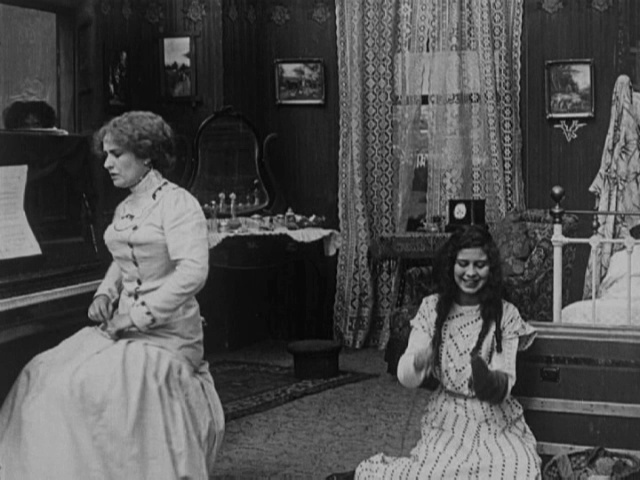
But here is another important question: how was Mary Fuller and is her star power evident today? One thing I discovered as I started watching the films of these early stars I had only seen in still images is that those stills do not do them justice. Fuller and fellow early superstar Florence Lawrence seem so fresh and lively when you see them in motion, their personality ricochets off the screen. Closeups were known and in use but, in practice, films of this era only used them for the most important narrative sequences (a hand reaching for a plot-significant item, for instance) and not for emotional reactions. So, these stars had to project emotion through medium and long shots and they were remarkably good at it.
In Fuller’s case, it’s easy to see why audiences liked her and sent her flying to the highest ranks of early stars. Quite a few of these early big names did not last as increased use of closeups reduced their advantage and stage stars flooded the motion picture space as the 1910s progressed and it’s unfortunate that Fuller’s popularity waned, she was rather appealing and had a subtle innocence that didn’t tip into simpering.
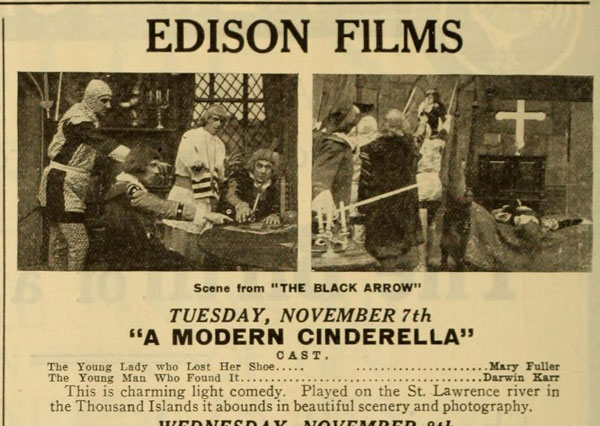
Fuller’s Cinderella career didn’t end there, though. She starred in another film called A Modern Cinderella for Edison in 1911. That picture involved her losing her slipper at the beach and her Prince Charming being even more of an open foot fetishist, parading the discovered shoe around and showing it off as the mortified woman tries to reclaim her property. The title was reused, sans Fuller, in 1917, 1929 and 1932.
A Modern Cinderella 1910 is cute and witty, helped along enormously by the appeal of its leading lady. It’s a good introduction to the charm of Mary Fuller and the quality of Vitagraph releases generally. Highly enjoyable.
Where can I see it?
Stream courtesy of the National Film Preservation Foundation.
☙❦❧
Like what you’re reading? Please consider sponsoring me on Patreon. All patrons will get early previews of upcoming features, exclusive polls and other goodies.
Disclosure: Some links included in this post may be affiliate links and I earn from qualifying purchases.

