When an heiress falls for a poor writer, her father tries to separate the pair. However, with the help of the newfangled “movies,” things soon take a turn for the better.
Home Media Availability: Stream courtesy of EYE
Breaking the Fourth Wall
1910-1912 was a time of enormous change in the maturing film industry. Movie stars had gone from uncredited to names in lights, feature films were breaking through and would soon take over as the main prestige releases, the business of movies itself was gaining respectability and prestige. With more people watching than ever, movie studios turned their cameras inward.
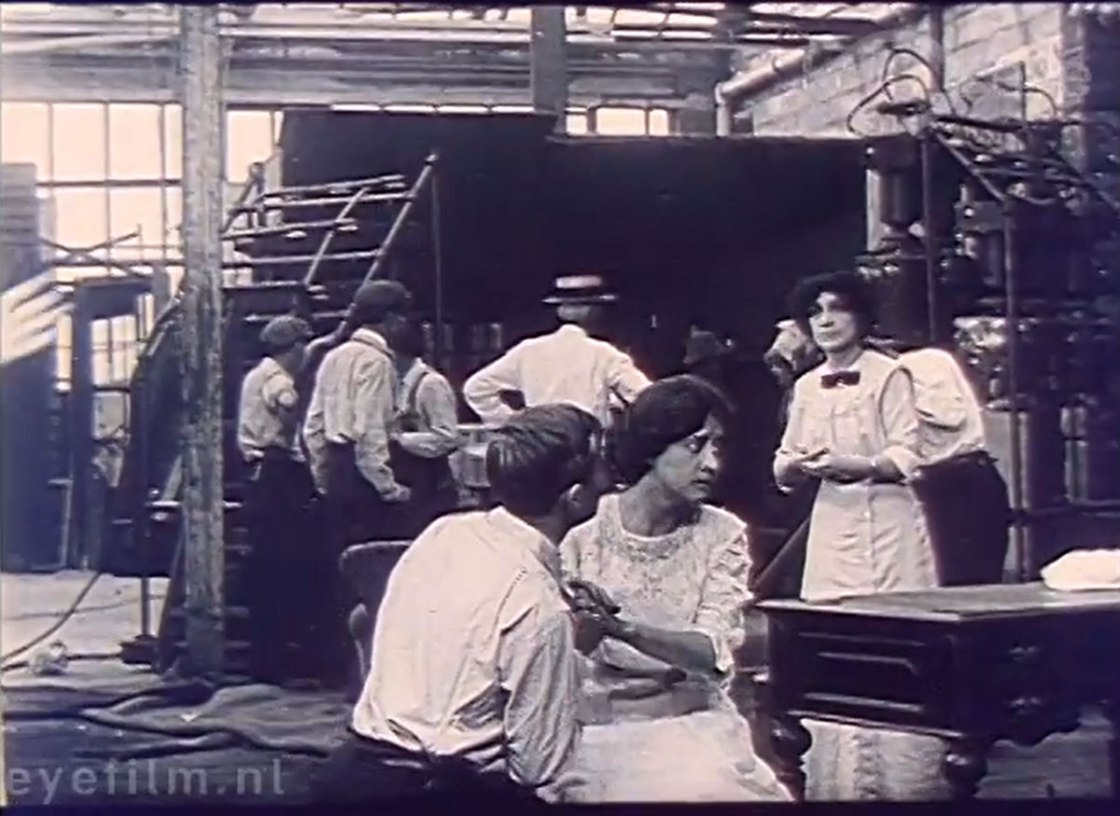
(By the way, in this review, I am supplementing what is onscreen in this Dutch print with a vintage synopsis and fictionalization in a fan magazine.)
The Vitagraph company was one of the most influential American studios of the time, so the title of A Vitagraph Romance would have had instant recognition. It stars Clara Kimball Young, already a name in the very early star system and about to become even more popular as the decade continued. She plays Caroline Carter, the daughter of Senator Carter (Edward Kimball).
(This film was a bit of a family affair, with Edward Kimball being Clara Kimball Young’s real father and the film written and directed by James Young, her husband.)
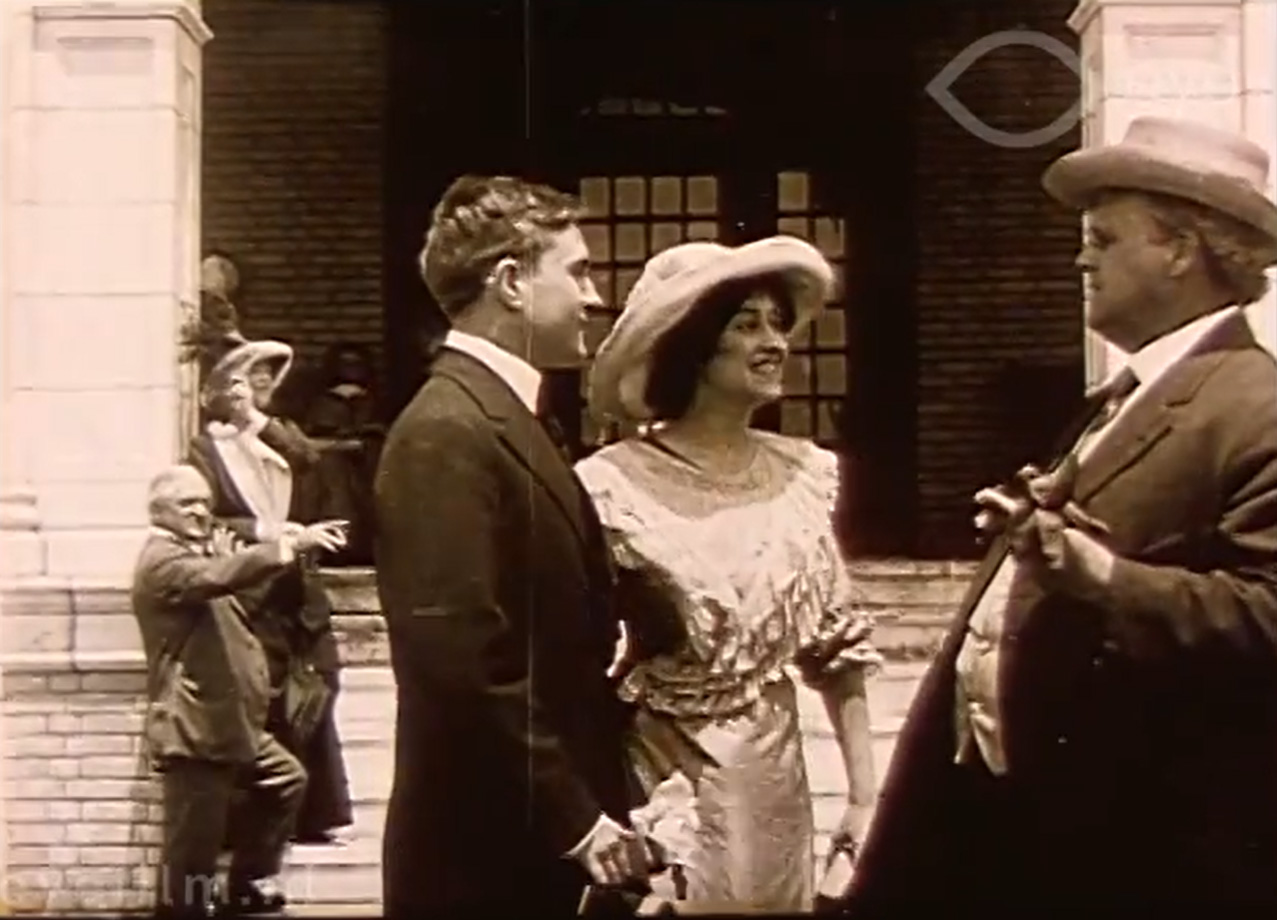
Caroline meets Charles Mackay (James Morrison), the author of the very book she is reading. A romance quickly blooms between them but the senator will not hear of a new author of uncertain success marrying his daughter and immediately sends her to boarding school, the fact that she is nearly twenty-two is neither here nor there, apparently.
That doesn’t work and, under the not-so-watchful eyes of the principal (Flora Finch), Charles and Caroline manage to reunite and elope. Senator Carter disinherits his daughter and cuts off their relationship. That’s bad enough but Charles is also experiencing financial woes as writing jobs have dried up and his style just isn’t up-to-the-minute. In desperation, he decides to hit up a friend for a job in the movies, low though that may seem. Caroline suggests one better and suggests that they tackle acting. J. Stuart Blackton, the founder of Vitagraph, personally hires them.
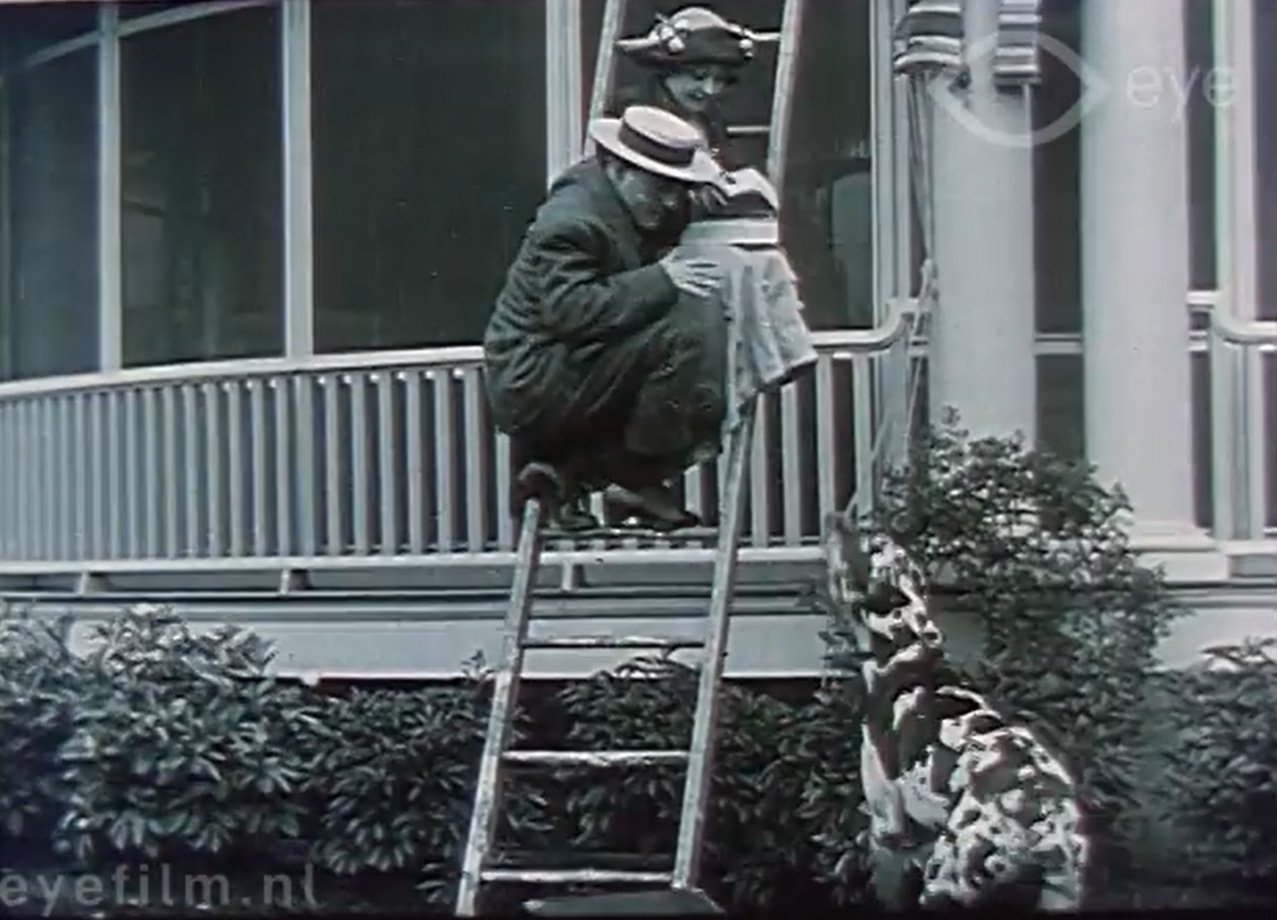
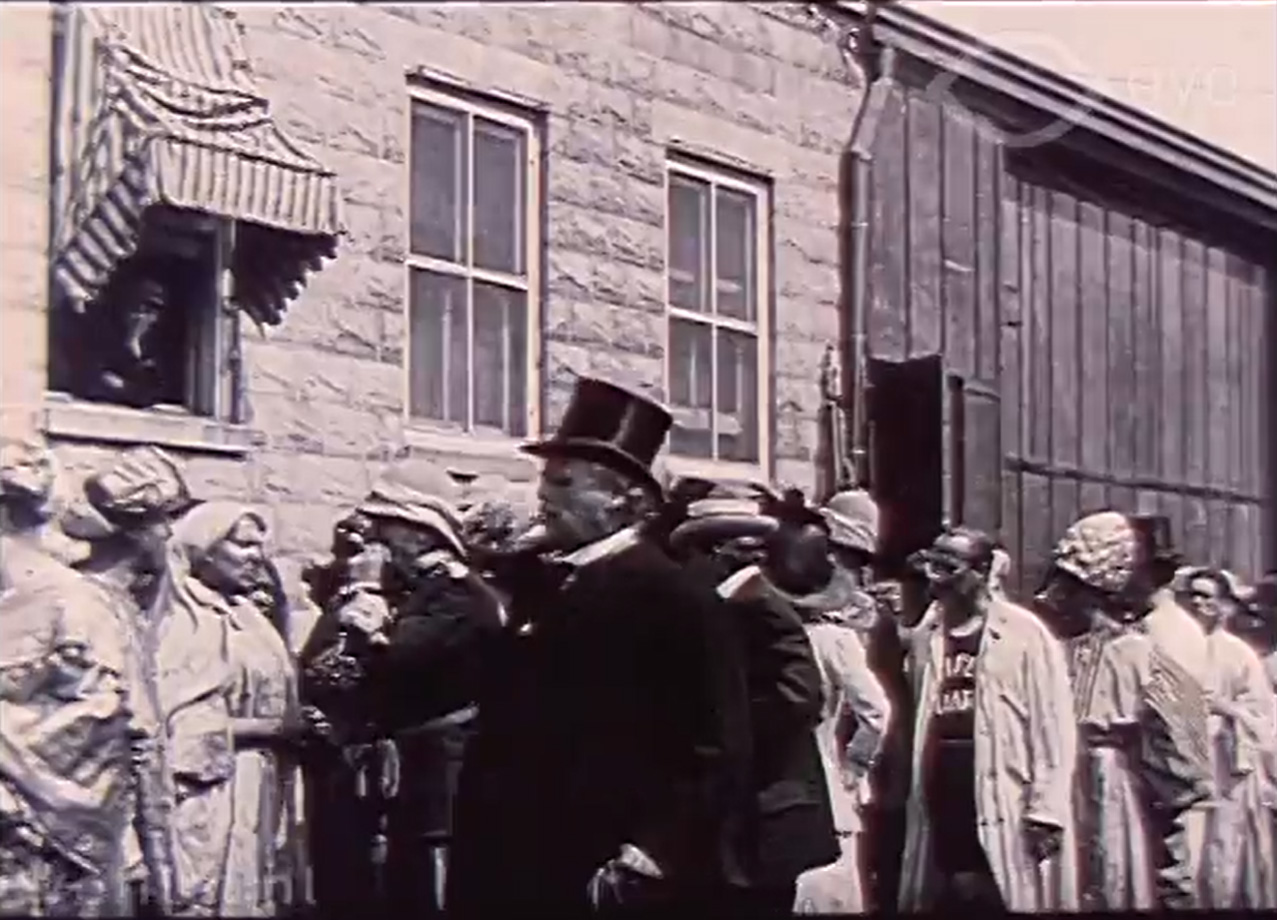
Success comes quickly and, after her father sees her perform in what seems to be a profoundly racist picture, he rushes over to the Vitagraph company. He meets Blackton, along with partners Albert E. Smith and Pop Rock, and rushes to see his daughter. So there you have it: the secret to parental estrangement is a movie career! Join the Vitagraph company to cure all that ails you!
If the movie was intended as a recruitment drive for the studio’s story department, it seems to have worked with an issue of The Photo Playwright declaring, “the picture shows the private sanctum of the men who okay or reject all scenarios, so you should sure see it.”
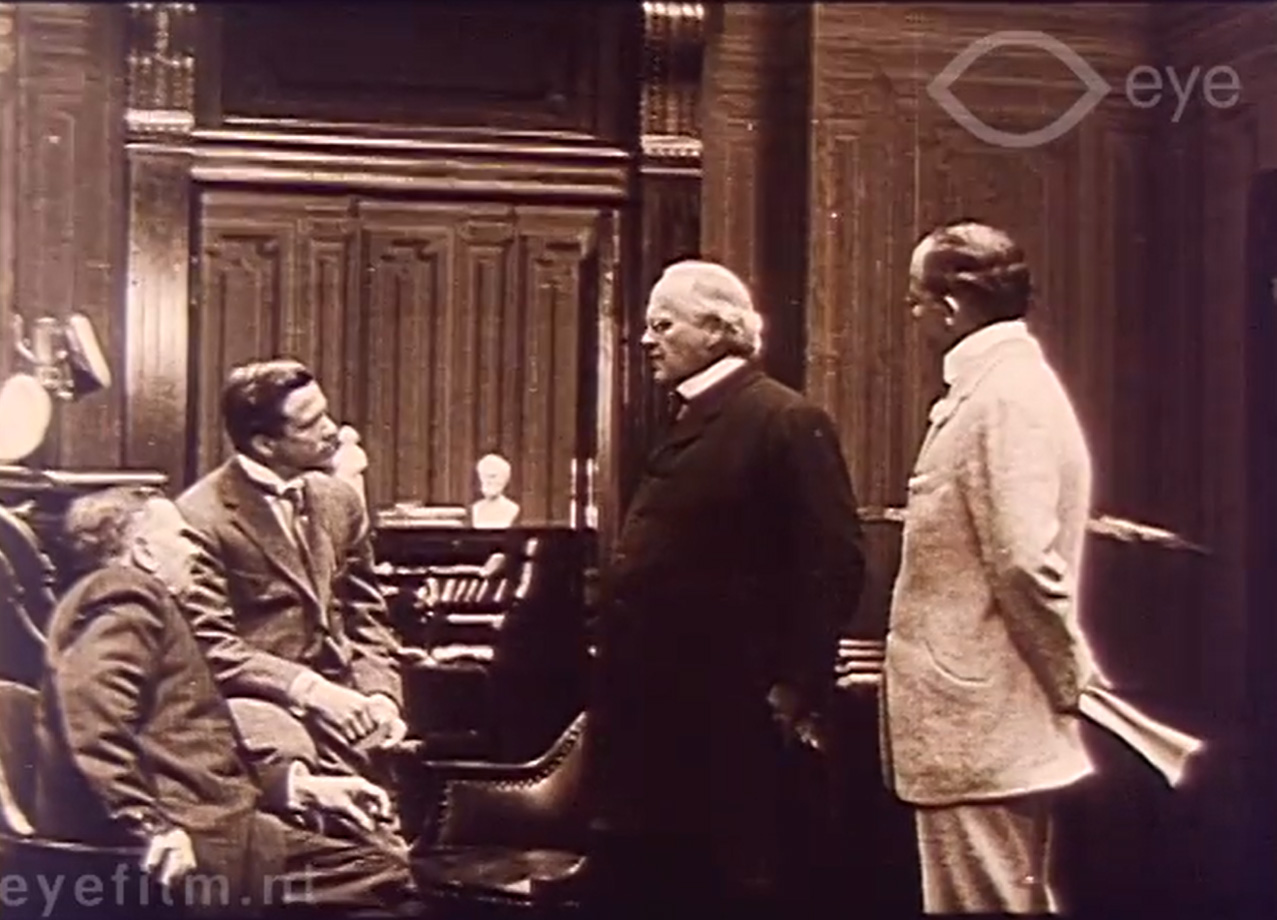
The story is just a thin tissue to weave together all the inner workings stuff and should be viewed as such. (I wasn’t able to track down the picture that shows Caroline being attacked by Black soldiers/rebels in a Birth of a Nationy manner but Vitagraph had a huge output at the time and, unfortunately, this sort of thing was not unusual in the American film industry generally, despite activism and, later, responses from Black filmmakers.)
So, rather than worrying about the plot particularly, look at the stars! Edith Storey is there! Florence Turner too! Look at the studio! Look at those costumed extras? Aren’t you glad you came? And we are! I am a sucker for these pictures, really, and thoroughly enjoyed the peek behind the scenes. All the actors play it pretty low key, which was typical for Vitagraph, and the non-actors in the background are game. (Though Blackton had dabbled at the start.)
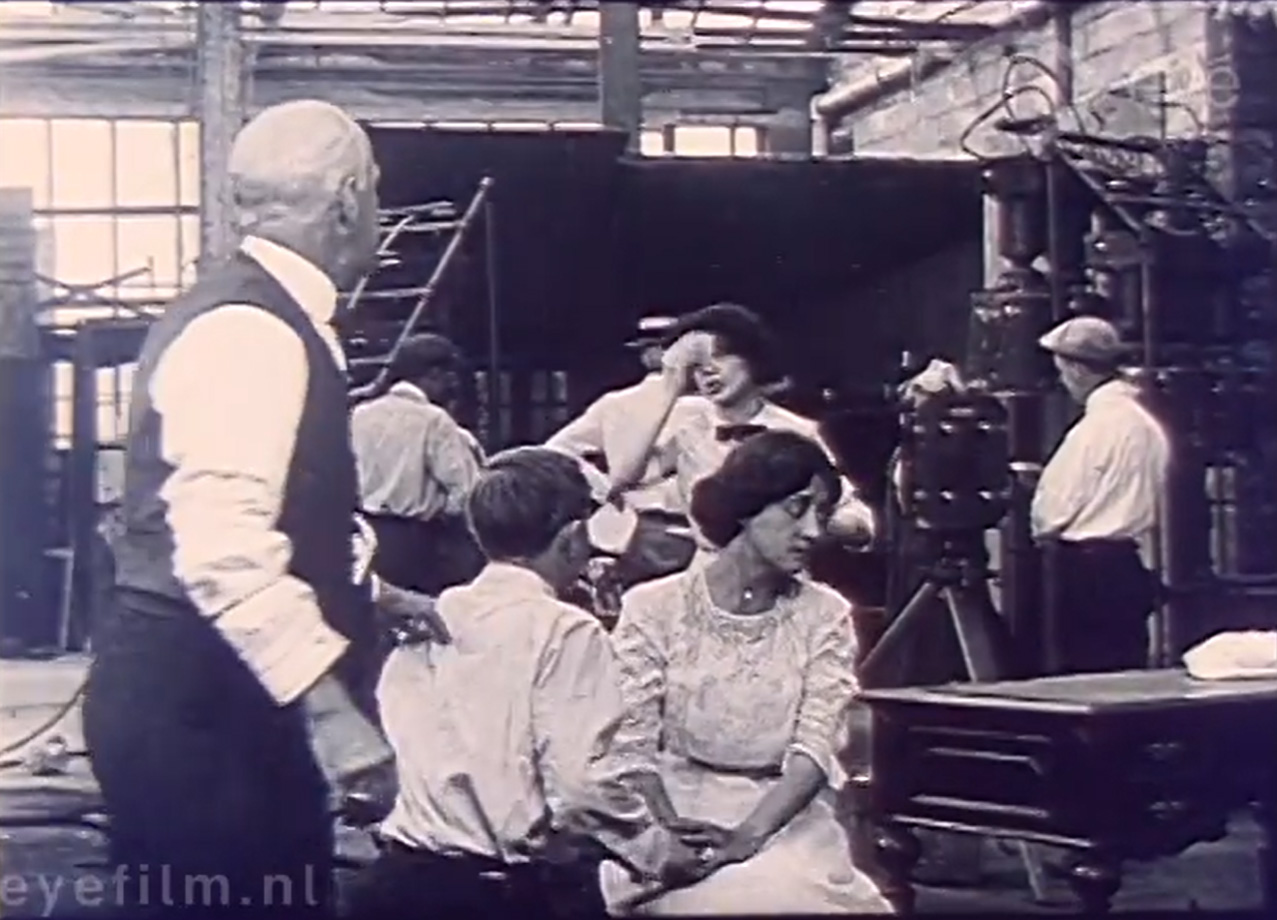
Movies about movies had been a popular subject since the beginning. After all, making a picture about one’s everyday work would be the easiest (and cheapest!) thing in the world and audiences were eager to look behind the screen. The earliest examples, such as The X-Rays (1897), in which a fiend with an x-ray camera exposes a courting couple’s bones, The Big Swallow (1901), in which a pesky cameraman is eaten whole by an irritated film subject, and The Countryman and the Cinematograph (1901), in which a bumpkin panics at the movie screen, were all British productions that focused on the camera as a voyeur and the response by theater audiences.
But these were vignettes, really, and were quick and charming gags that, nevertheless, didn’t show the business of motion pictures. Pioneering film star Max Linder starred in Max’s First Job (1910), which was one of the first movies about the movies in the classic sense. The picture shows Linder obtaining a job at Pathé from Charles Pathé himself. (I should also note that the presence of the Vitagraph board and stars in A Vitagraph Romance are sometimes credited as the first movie cameos. Seemingly not. Max proves it wasn’t even the first movie cameo of movie studio executives.)
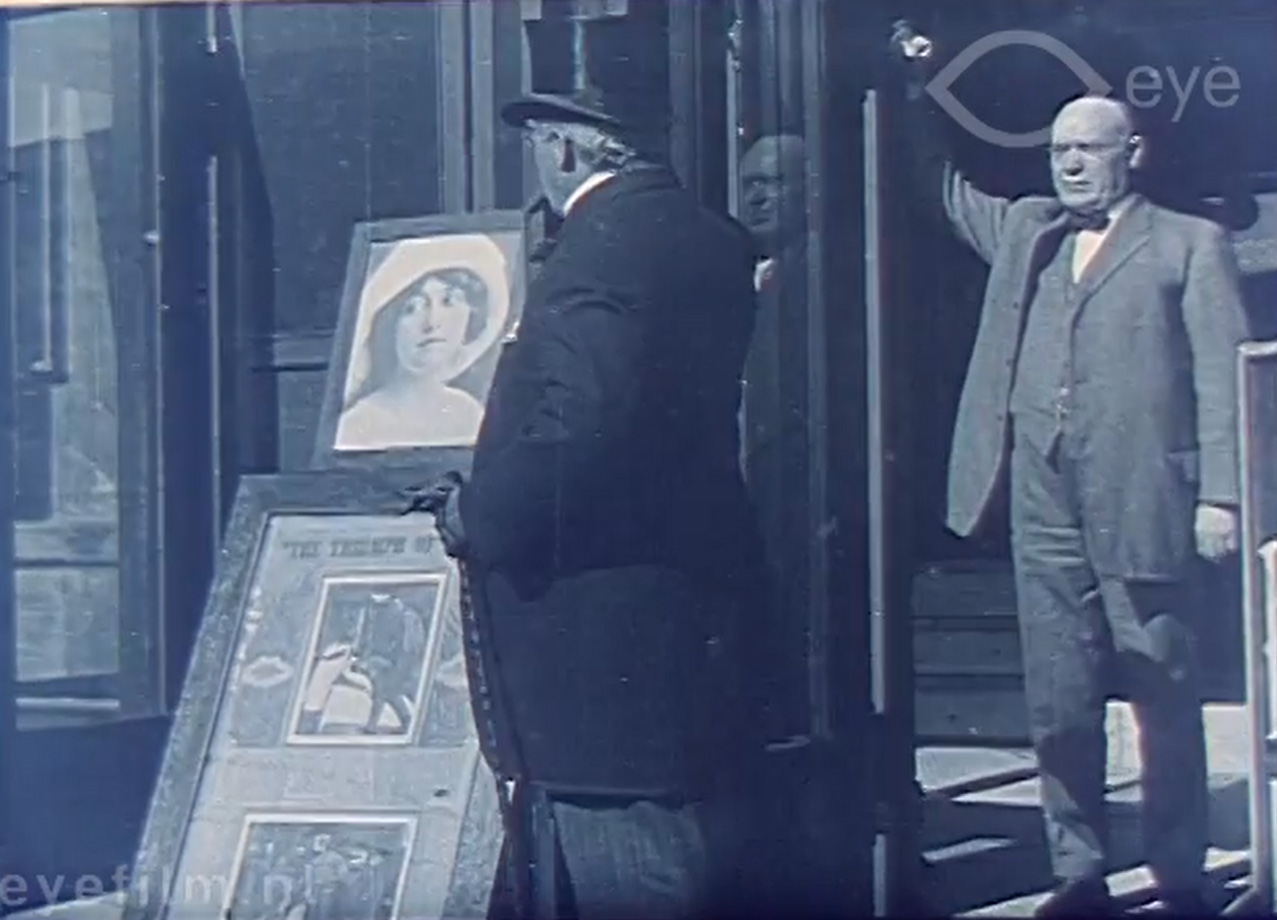
A Vitagraph Romance received a glowing review from Moving Picture World: “A dandy offering that we feel sure will please. It tells a good story convincingly and uses the Vitagraph plant as a background and in a very interesting way.” Mack Sennett and Mabel Normand would deliver a humorous variation on the plot with the 1913 comedy Mabel’s Dramatic Career. Vitagraph itself humorously showcased fantasy vs reality with heartthrob Maurice Costello playing with his fan’s unrealistic expectations in The Picture Idol (1912).
Other variations on movies about movies from around the same time include the French release The Mystery of the Rocks of Kador (1912), in which a film crew help solve a mystery and expose a would-be murderer with the power of movies. Another French film, The Tragic Error (1913), was about a wife who is caught on film arm-in-arm with her lover when she inadvertently walks into a shot but all is not what it seems (hence the title). The Evidence of the Film (1913), an American release, went the other way and a film crew’s inadvertent shot save the day.
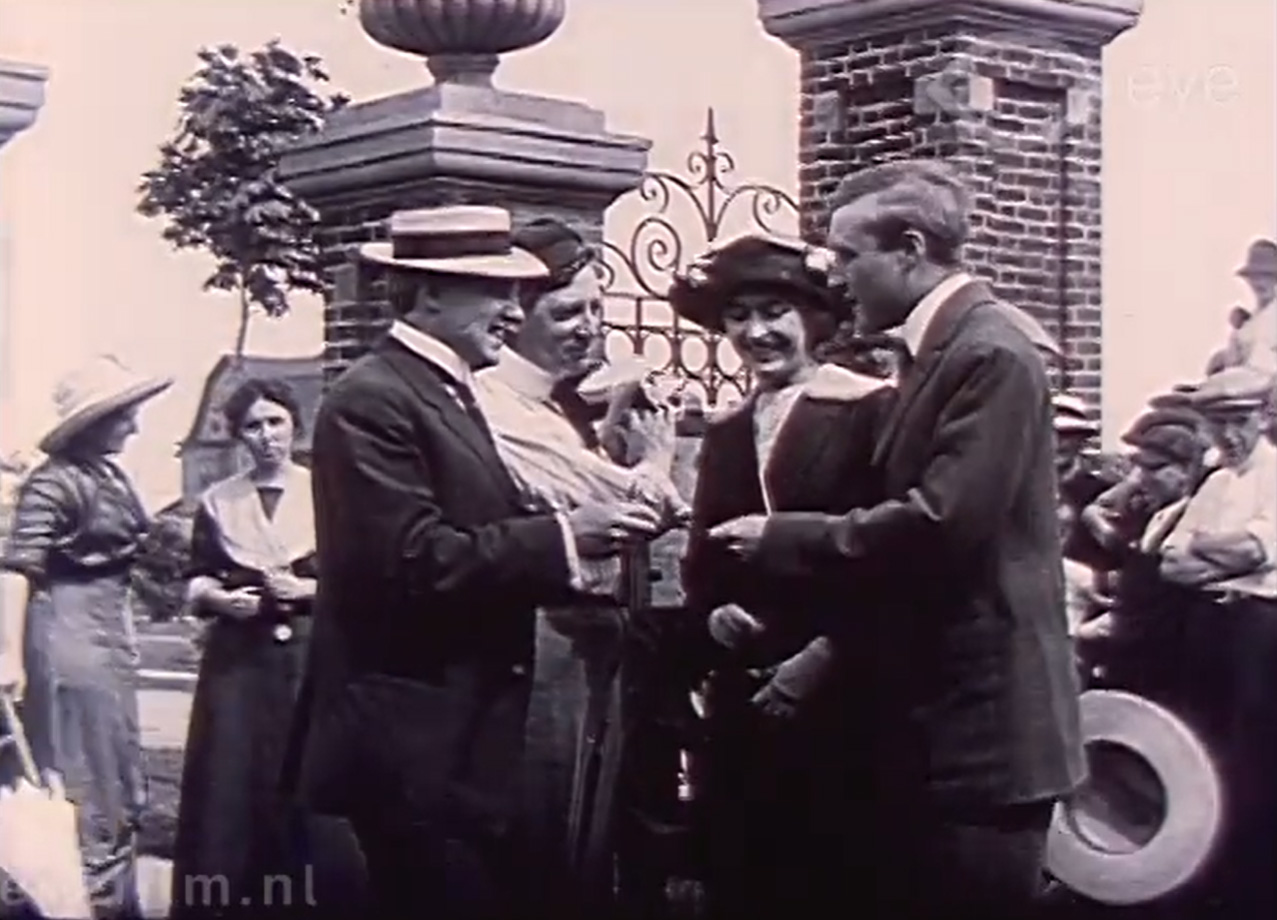
And, of course, the topic would be visited again and again with famous titles like A Girl’s Folly, Shooting Stars and Show People continuing to break the fourth wall for drama, tragedy and humor and sometimes all three at once. We’ve never tired of the subject.
A Vitagraph Romance delivers exactly what it promises: we get a look at a venerable studio’s interior workings. While not without its flaws, it is an excellent resource for anyone interested in this era of filmmaking.
Where can I see it?
Stream from EYE with Dutch titles and optional English subtitles.
☙❦❧
Like what you’re reading? Please consider sponsoring me on Patreon. All patrons will get early previews of upcoming features, exclusive polls and other goodies.
Disclosure: Some links included in this post may be affiliate links and I earn from qualifying purchases.

