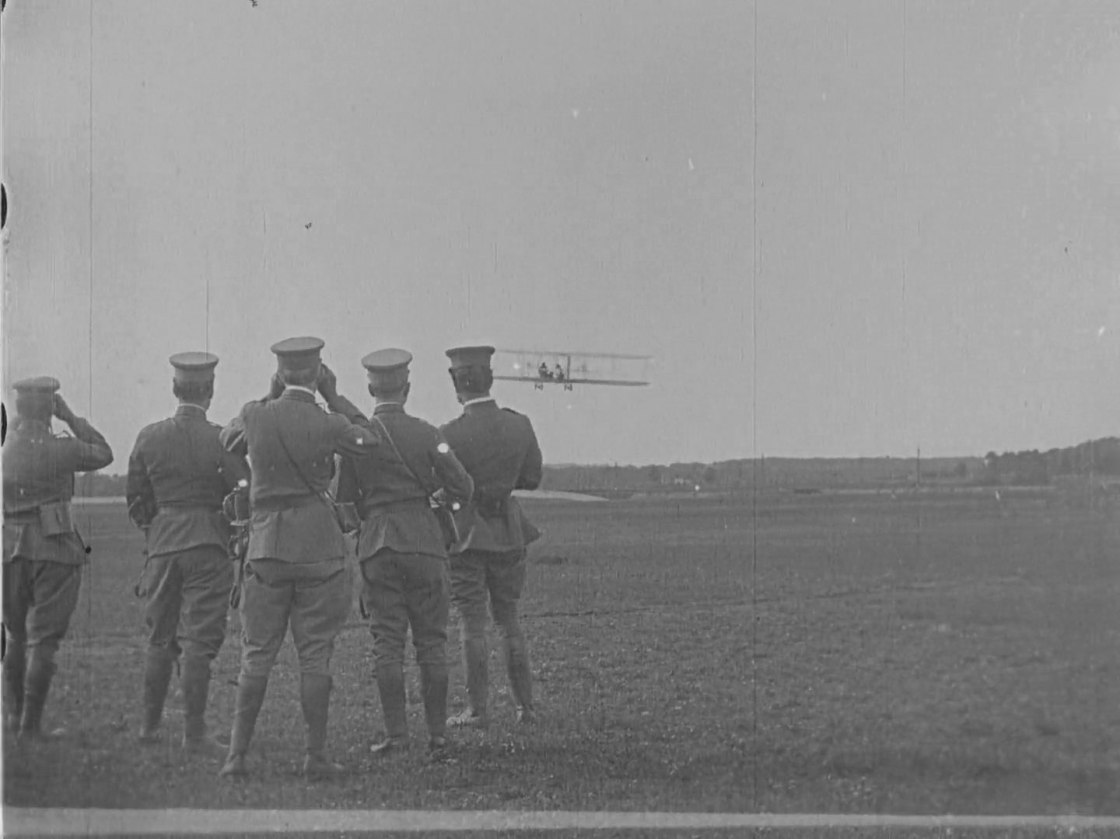
An American soldier embraces the latest technology and petitions to become an air scout in a newfangled aeroplane. This proves fortunate as soon after, the United States of Europe declares war.
Home Media Availability: Released on Bluray and via streaming
Up in his flying machine
Heavier-than-air flight had made the jump from science fiction to reality in 1903 and it was still young technology by the early 1910s, with aerial firsts being breathlessly reported in newspapers. Longer flight distances, new uses for airplanes (often called aeroplanes at the time). Why, you could use them for criminal manhunts! And what piece of artillery could hope to reach such lofty heights? A military with airplanes would be well-nigh invincible!
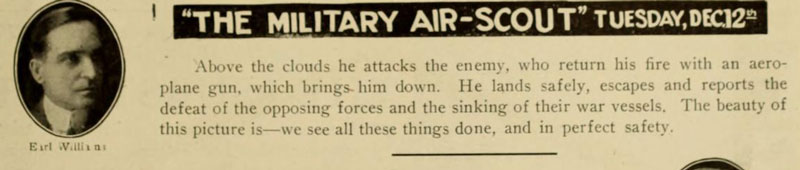
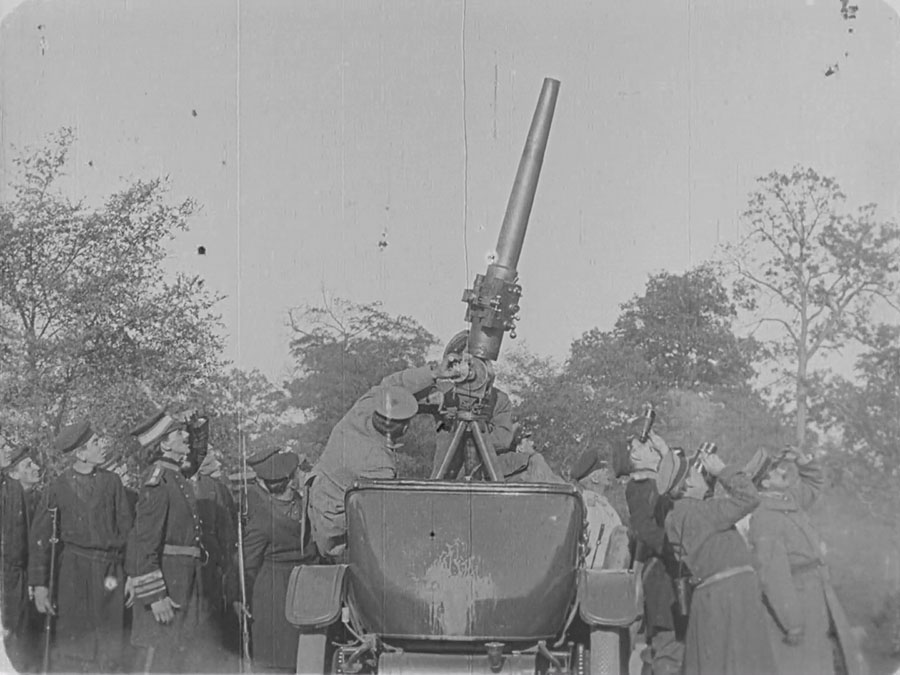
In August of 1911, Rear Admiral Twining, chief of ordinance for the Unites States Navy, announced that a solution had been found, a new one-pounder aero gun that was capable of anti-aircraft fire with a range of 11,000 yards. In October of the same year, writer John Elfreth Watkins declared the possibility that “the chesty air knight” would be knocked from his high horse but then stated that “the birdmen are not breaking out into gooseflesh” as both French and German militaries were experiencing difficulties with their anti-aircraft technology. Why, some even declared it impossible for an aircraft to be shot down! At the same time, newspapers reported on the important military post of “air-scout.”
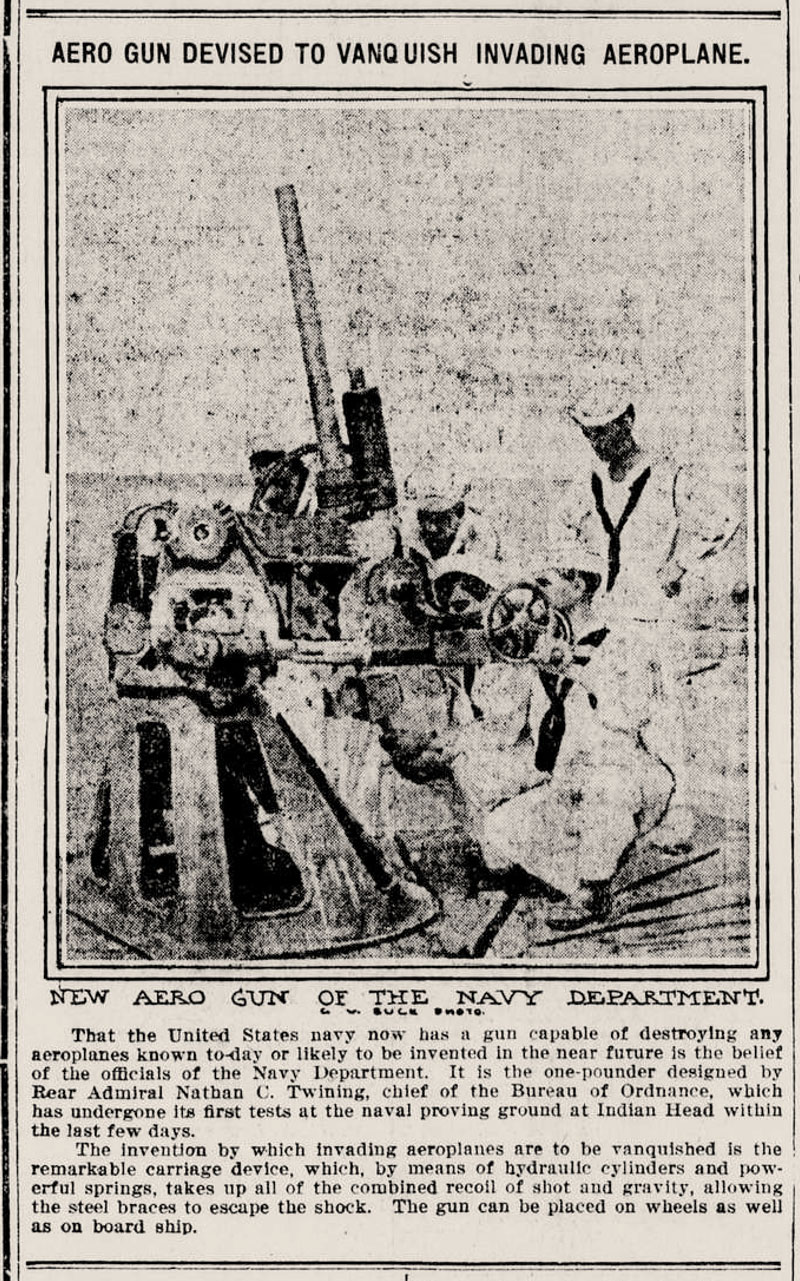
At this time, movies were nearly as nimble as current events television. Short production times meant that a studio could take news items and turn them into films within weeks or even days but The Military Air-Scout went even further: the United States military authorized pilots to appear in motion pictures to generate positive publicity and the Vitagraph company took advantage of this offer. In late 1911, and with the help of Army pilot Lieutenant Hap Arnold, Vitagraph combined both the anti-aircraft and air scout angle with the then-current discourse about a potential United States of Europe to create a near future scenario about a major war breaking out in August of 1914. Imagine that.
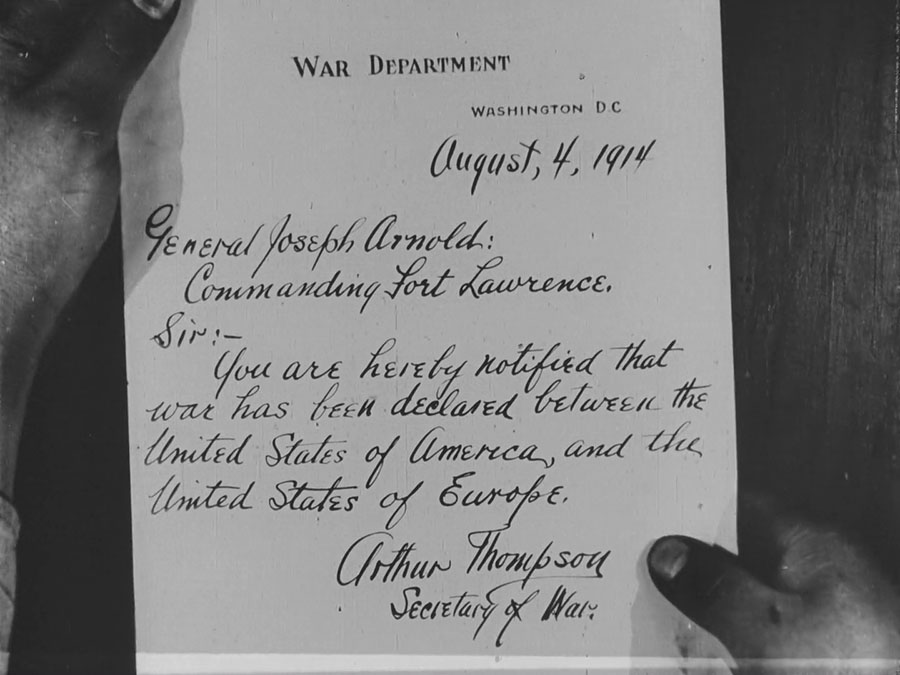
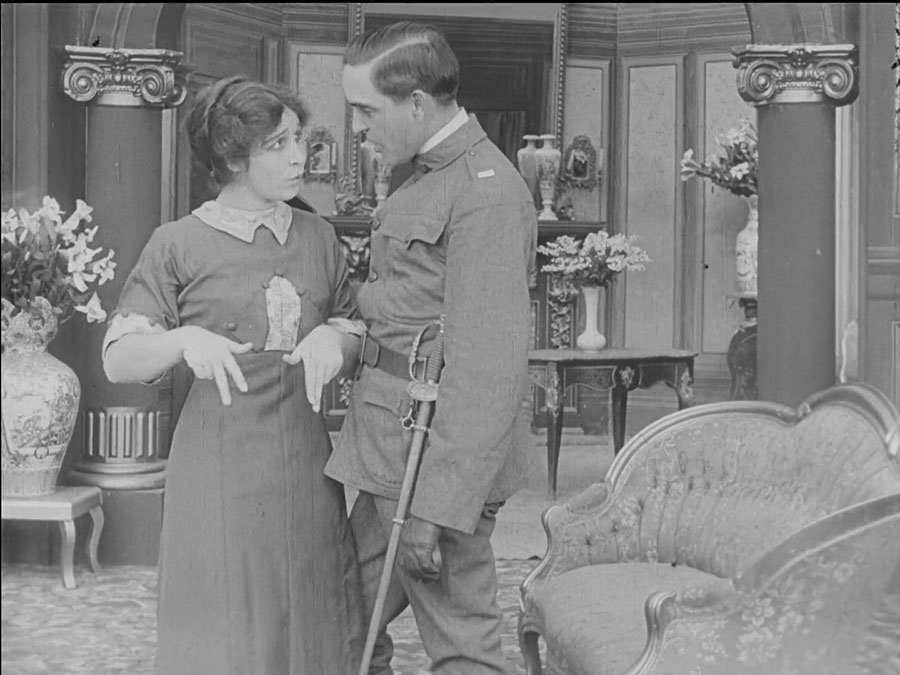
The film opens with Vitagraph star Earle Williams as a lieutenant petitioning to be made an Army Air-Scout. His commanding officer, General Arnold (Alec B. Francis), allows it. (We know he is in command because he has a bust of Napoleon.) Our bold lieutenant also has hopes of wooing the commander’s daughter, Edith Storey. All seems well but then General Arnold receives a message from the Secretary of War: war has been declared between the United States of America and the Unites States of Europe!
The lieutenant is given a mission: he must locate and destroy the enemy fleet. This is easily accomplished, thanks to air superiority and some pretty decent miniatures. But then our hero is sent to reconnoiter the enemy’s land forces and they have new anti-aircraft weapons.
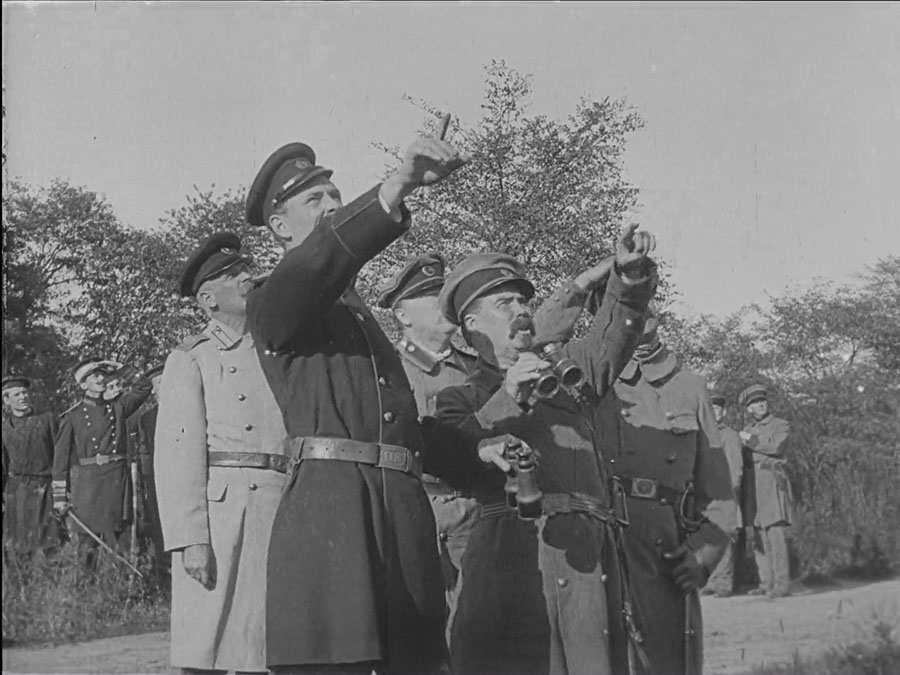
I will break in to say that I am very curious as to where, exactly, this film is supposed to be taking place. Are we to assume that the UK is in the United States of Europe and is attacking via Canada? Did Spain try to take back Cuba? Or are the Americans invading Europe? Also, I assumed that the United States of Europe was chosen as the enemy as it was ambiguous and could be easily replaced with whatever local opponent was convenient via translated intertitles but then we see the enemy’s army and… no, they are all in distinct uniforms of various European nations! I admire that they had the courage of their convictions, wacky though they are.
Back to the story: Oh no! That anti-aircraft weapon works, just as the Rear Admiral Twining said it would! And now the lieutenant has been downed behind enemy lines. (In either Canada, Cuba or maybe Denmark?) It’s okay, though, he has gumption and spirit and he evades the enemy to walk back home and into the loving arms of his sweetheart.
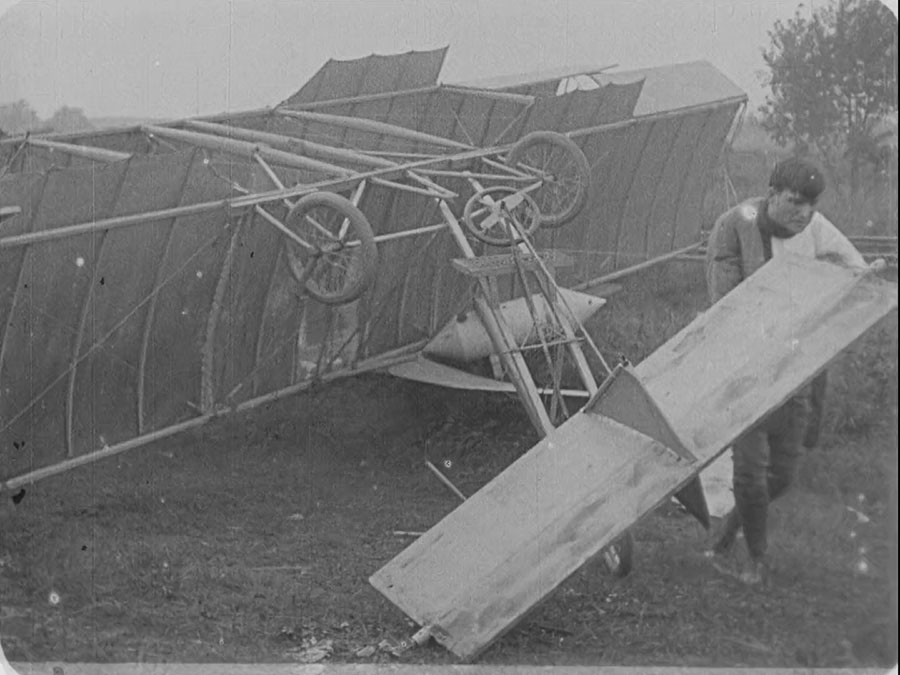
It’s a ten-minute one-reeler, what do you want from me?
Well, that was fun! Thoroughly enjoyed myself.
I am a big fan of Edith Storey and this film was publicized as a showcase for her talents. She is always a charming, subtle performer but is not given a lot to do in this picture. A piece in the Brunswick Daily News, which was almost certainly Vitagraph ad copy, states: “Now Let Us Have a Heart-to-Heart talk with you about Miss Edith Story of the Vitagraph company and the picture she features in today, matinee and night, at the Pastime entitled “The Military Air Scout.” Miss Story, while not so well known as some of the other performers of this company, has charming personalities and the grace and ease with which she handles the heroine’s part in this educational drama puts her among the foremost in her profession.” In this case, the hoopla was warranted and Storey would soon ascend to star ranks at Vitagraph.
But, let’s be fair here, the real star of the show is the aeroplane. This film is sometimes credited as the first aerial picture and that’s where we get into the weeds. Heavier or lighter than air? Fiction or non-fiction. Certainly, it was significant and billed as an “up-to-the-minute” story showcasing the very latest technology, but I would not be so fast to fling firsts around. Still, the use of Hap Arnold’s skills helped open a golden age for stunt pilots in the movies and the collaboration between motion pictures and the military, started with the Spanish-American War and continuing into the age of the Marvel Cinematic Universe, would prove to be fruitful for both parties. Okay, so the armies seem to have twenty or so soldiers at most. Where’s your imagination and sense of fun?
The picture ends with a victory… kind of? It is kept as ambiguous as the causes of the war (note the passive sentence of “war has been declared”) because the movie was made for a bit of military flyboy showing off and a bit of romance, and we were promptly delivered both. It’s certainly an early example of a “behind enemy lines” picture, even if the emphasis on the military doodads outshines this soon-to-be-popular cinema trope. As Vitagraph’s trade ad for the picture puts it, “The beauty of this picture is — we see all these things (ed note: sinking of ships, downing of planes) done, and in perfect safety.”
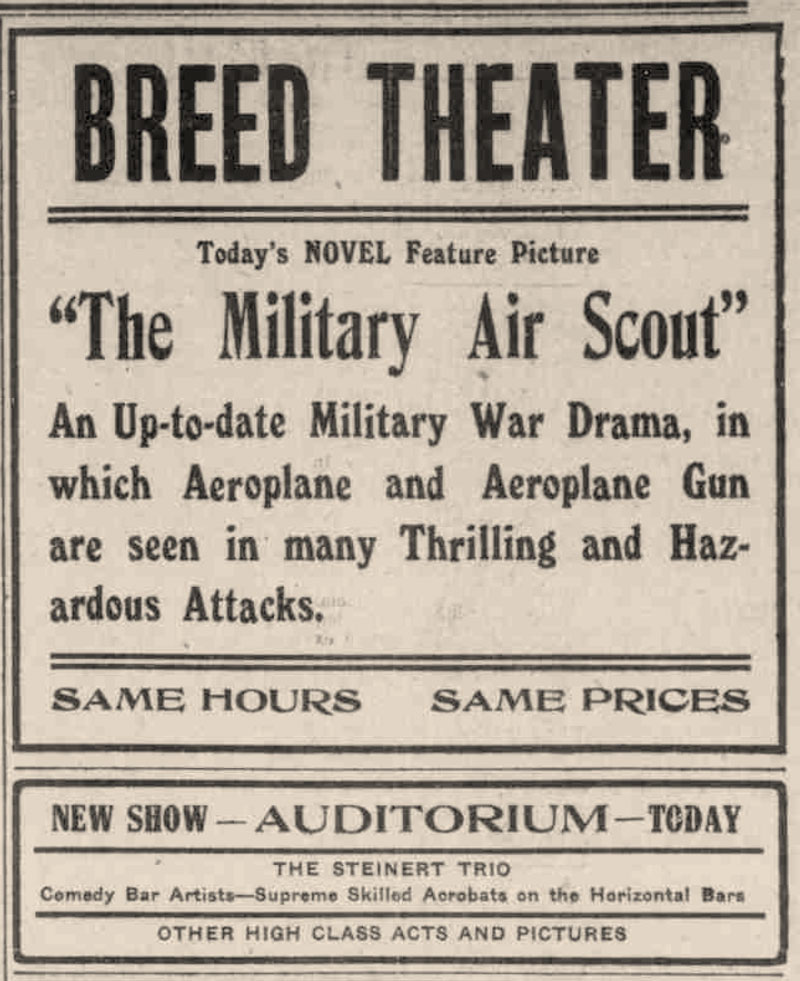
I had a blast with this picture. Between the eerie prognostication (WWI actually kicked off in early August of 1914 with a flurry of declarations after the initial one in late July between Serbia and Austria-Hungary), the portrayal of the United States of Europe, seeing Vitagraph stars I enjoy and seeing the studio put on an intercontinental war with a cast of dozens, this movie just keeps throwing interesting things on the screen and it flies by fast, quick even for its one-reel runtime. Director William Humphrey keeps things moving at a snappy clip. I imagine military history students will be particularly interested but even more casual fans should enjoy this very unique blast from the past.
Where can I see it?
Released on Bluray and via digital download by Harpodeon. I received a review copy of The Films of Edith Storey on Bluray from Harpodeon.
☙❦❧
Like what you’re reading? Please consider sponsoring me on Patreon. All patrons will get early previews of upcoming features, exclusive polls and other goodies.
Disclosure: Some links included in this post may be affiliate links and I earn from qualifying purchases.

