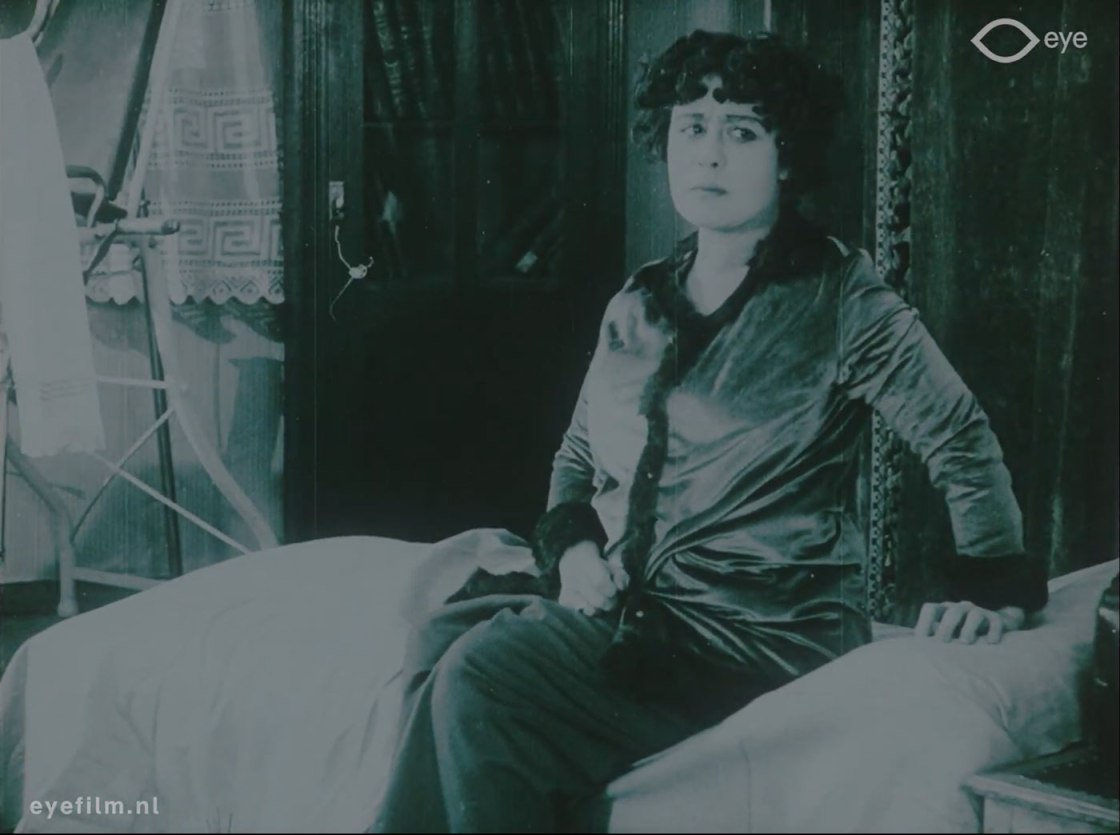
A busy Russian doctor is the top expert in her field and an in-demand speaker for the feminist movement but her fiance feels neglected and looks for love elsewhere.
Home Media Availability: Stream courtesy of EYE.
The Little Man at Home
“Lady doctors” were a wildly popular movie topic in the early to mid-1910s and every film featuring them had a different take. Some portrayed women in medicine as unnatural for neglecting home and husband, others painted them as comedic (either sympathizing with them or mocking them), while still others portrayed them as heroic figures.
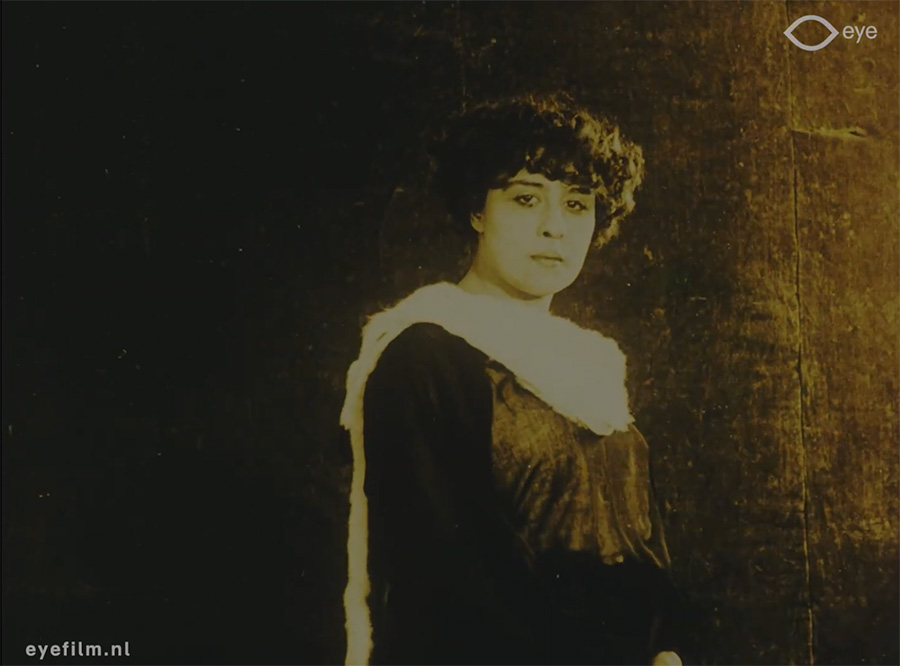
France’s Max Linder was among the first to tackle to subject in the 1909 comedy Max and the Lady Doctor (also released as Max and the Fair M.D.). In that film, Linder grows jealous at his doctor love’s attention to male patients and forcefully interferes with her career. Jealousy was also the topic in the American melodrama The Blood-stained Pearl (1913), in which a physician’s stalker ex plants a bomb in a piece of jewelry but she is saved by a grateful patient whom she had helped earlier in the picture.
This is just scratching the surface of the films covering this topic but Woman of Tomorrow was a serious drama of then-current events in Russia. Women entering medicine had been a nineteenth century battle in much of the world but the battle was not won by the turn of the century, particularly in North America due to the Flexner Report. Women and Black students were actively being pushed out of medical schools and the women were pressured into more “suitable” fields like pediatrics if they did succeed in attending. In the Russian Empire, Vera Gedroits was making headway as a pioneering woman surgeon in both civilian and military contexts during the Russo-Japanese War of the previous decade. Gedroits had to be educated in Switzerland due to restrictions in Russia at the time.
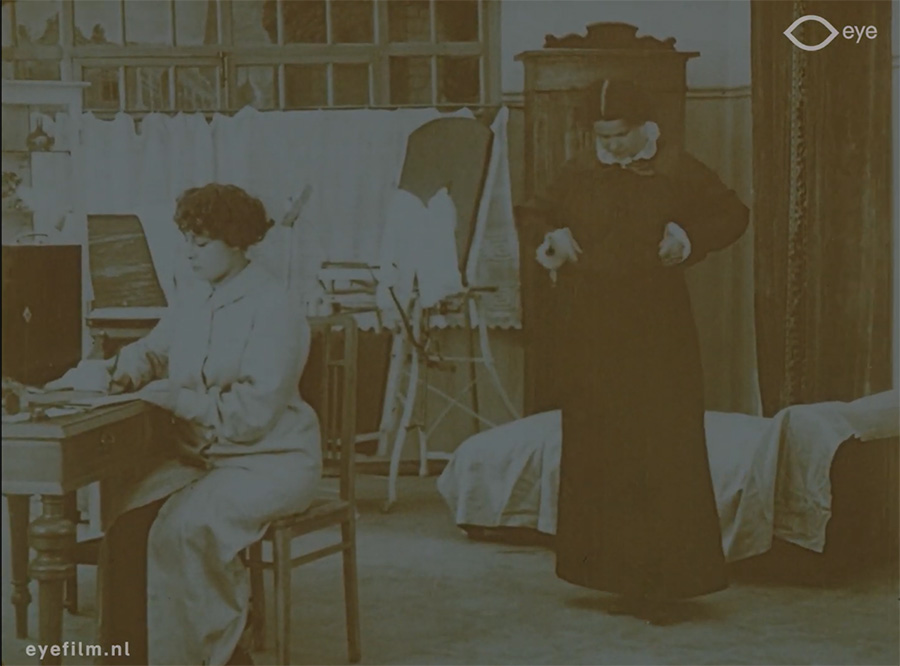
With this context in mind, and understanding that gender equality was still very much seen as a fringe belief in much of the world, A Woman of the Future opens with Dr. Nora Alsen (Vera Yureneva), a skilled physician who specializes in treating women from all classes. She conspicuously refuses to allow a wealthy patient jump the line ahead of a visibly poorer one.
(I am using the names found in the Dutch language release of this film, by the way. The heroine was named Dr. Betskaya in the original Russian release.)
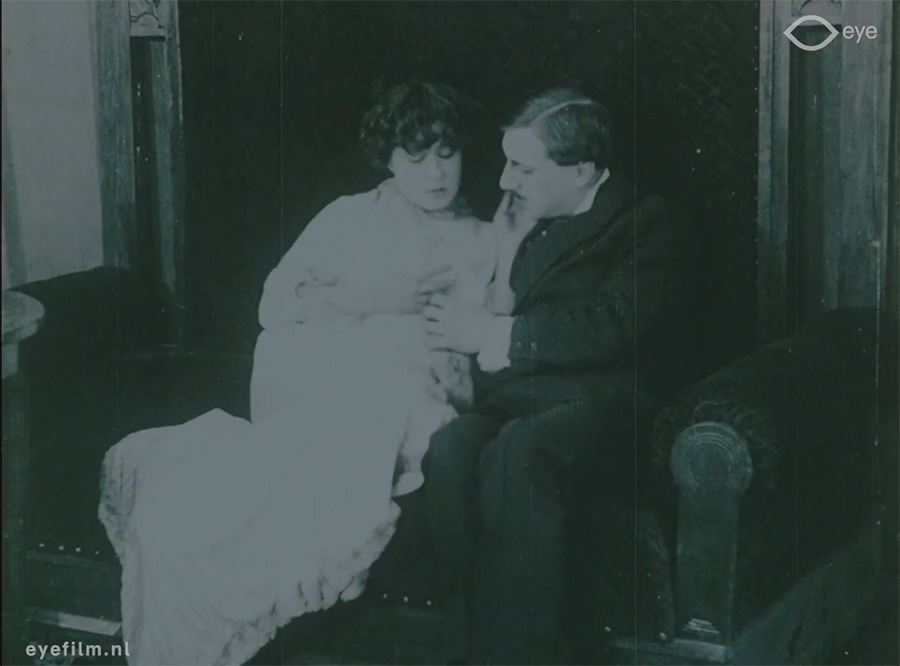
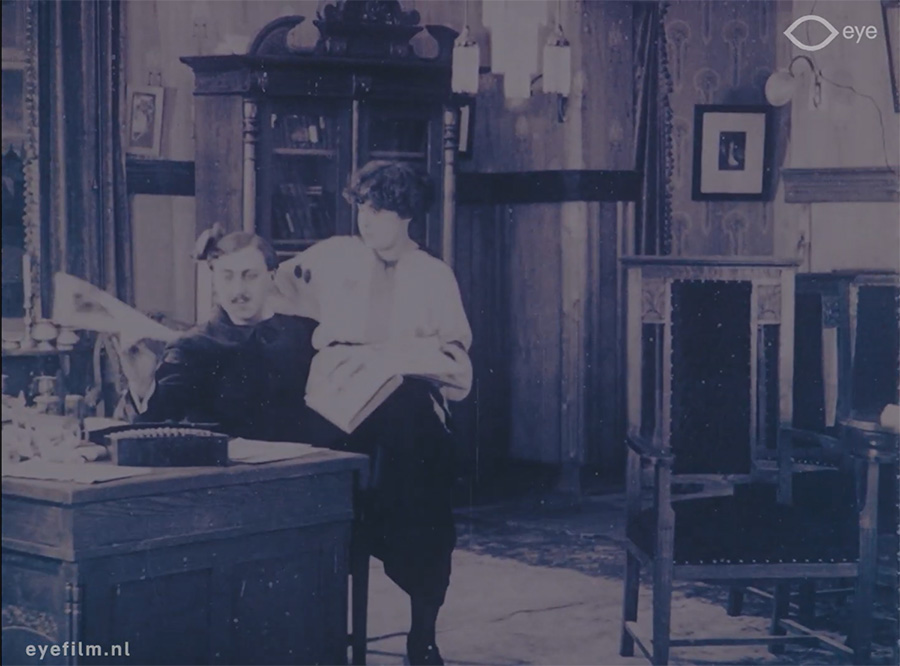
Nora is engaged to Robert (Ivan Mosjoukine), who feels neglected by the constant demands of her medical career. After she leaves a dinner they are sharing and blows off a night at the theater to tend to a patient, Robert heads out and picks up Nelly, a waitress at a restaurant, as his companion for the evening.
Nora doesn’t realize that she is losing Robert and accepts an invitation to speak at a feminist conference in Vienna, where she declares that soon women will have equal rights. Robert, meanwhile, continues his affair with Nelly, meeting her mother. Nora’s career continues to flourish and she receives a monetary reward for treating the royal family (Gedroits also became physician to the women of the tsar’s family). With this money, she can marry Robert!
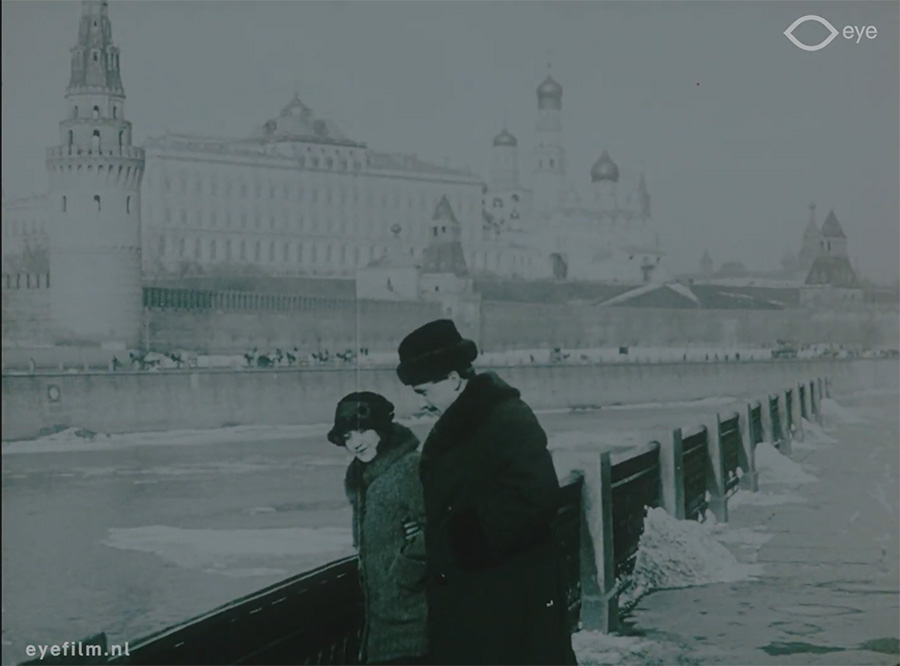
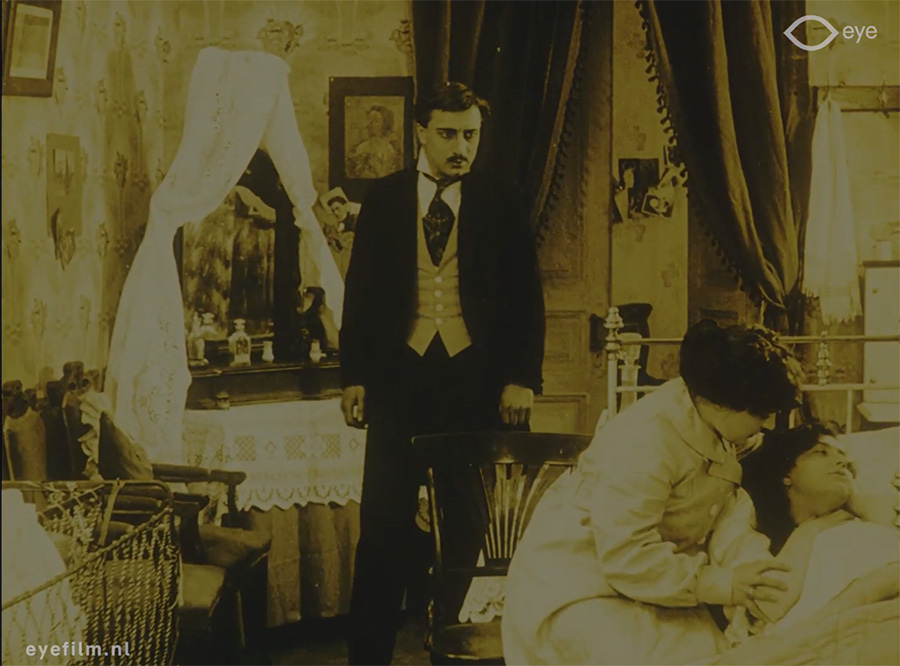
I am not sure if some footage is missing or if we were meant to infer something censorable but the next scene shows Robert by Nelly’s sickbed, she is suffering from complications in the aftermath of the birth of their child. The doctor Robert has called declares that he cannot help her and that Dr. Alsen is the one to call. Reluctantly, Robert has a hotel employee call Nora for help without mentioning his name. And that’s what we call setting up a final conflict.
The topic of a doctor having to choose between their family and the welfare of their patients was a popular one. The melodrama of a doctor’s own child suffering as they aid others! Alas! But, significantly, these films do not tend to end with the male doctor questioning their career path or giving up medicine. It’s more of a “he did his duty at great personal cost” sort of thing.
Women, on the other hand, would be sent into throes of guilt for making their man feel a bit sad. Being married to a medical professional, or any emergency on-call responder, is not easy and not for everyone but Robert clearly knew what he was signing on for. He resentment of Nora’s career is portrayed as normal and understandable, in keeping with the gender view of the time, but he’s also a rotten boyfriend and husband.
He starts up with Nelly while still seeing Nora. Later, after the birth of their child, knows that Nelly is sick and that Nora is the expert in her illness but calls another, less qualified doctor first because of his cowardice. The doctor is the one who says the case is beyond his skills and that Nora should be called. (On a side note, is he single? Maybe Nora could…) Then, Robert hides while Nora works with Nelly, despite Nelly being in distress and calling for him because he doesn’t want to expose the affair. It’s always about him, isn’t it? He’s as bad a partner to Nelly as he was to Nora and both women would have been better off without him.
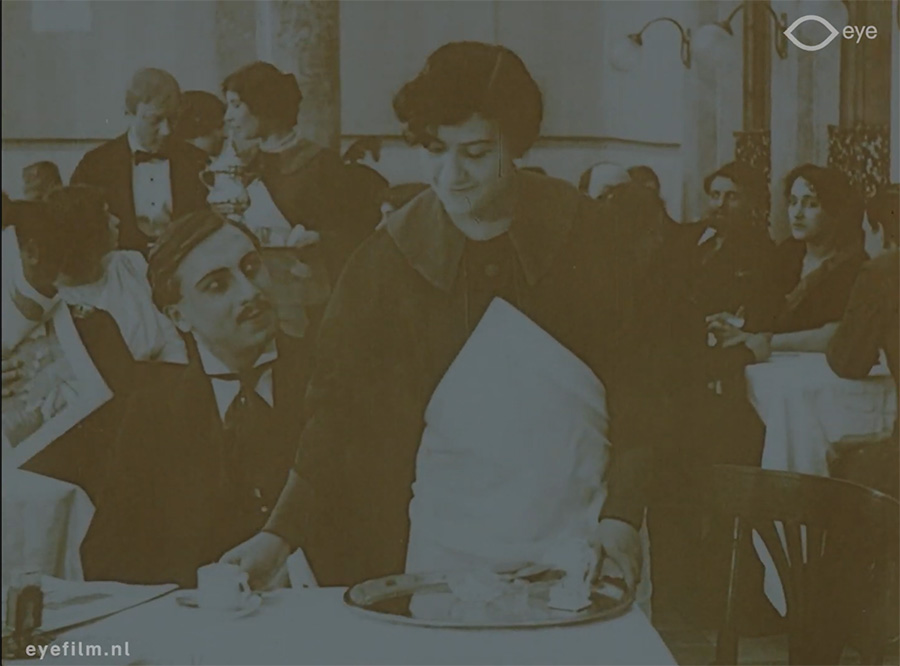
It’s significant that a clearly well-heeled man would pursue a waitress after feeling neglected by his influential and accomplished fiancee: he was looking for a woman from a lower socioeconomic stratum because he wanted to feel like the big guy on the block. Nelly was immediately dazzled by his offer, and it was all him doing the offering, so would be unlikely to get uppity notions. And this could inevitably lead to another popular trope of the era: a wealthy man tiring of his socially inferior wife and what he does about it. That’s assuming he marries Nelly at all.
So, in my opinion, the screenplay does not play fair, even in the context of the era. It’s a shame, as both Mosjoukine and Yureneva give far better performances than the story deserves. Mosjoukine is a big favorite of mine, of course, and possessed a wide acting range, from almost surreal intentional overacting to delicate and subtle underplaying. He is underplaying here, doing his best to infuse his rather nasty character with life and sympathy. Similarly, Yureneva keeps her performance tight by the standards of silent era Russia and ends her performance with a heartbreaking thousand yard stare.
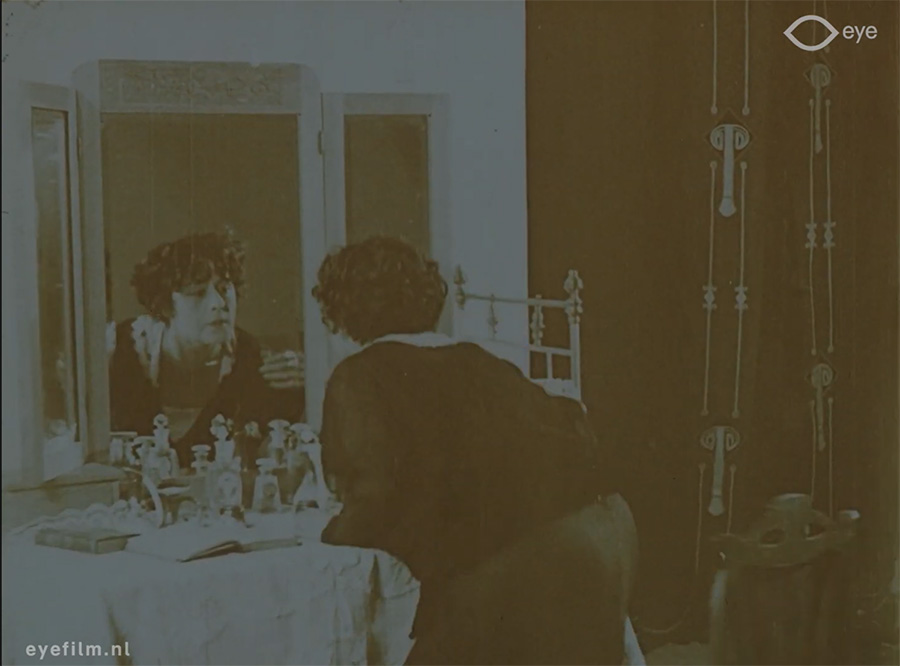
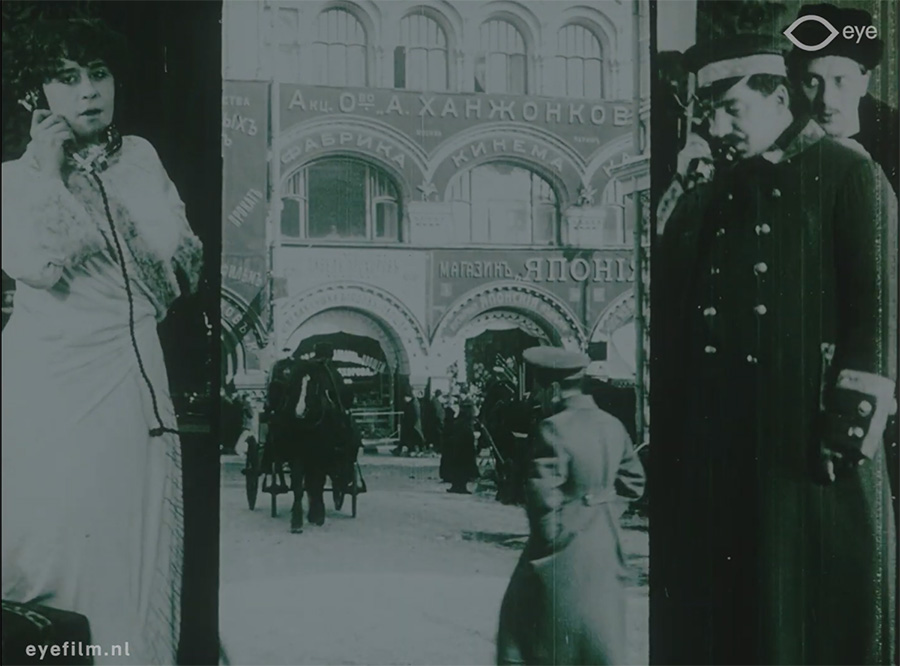
Unfortunately, director Pyotr Chardynin is no Evgeni Bauer and much of the film is wide shots with few closeups, little camera movement and almost no forceful editing. (All of which Bauer could and did employ for his dark melodramas, though it should be noted that the technical quality of Russian productions varied wildly during this period.) There is a nice phone call triptych near the end of the picture but it is used more to convey a relatively modest distance rather than to increase suspense and it only involves one main character. The grand finale, when Nora discovers that Robert is Nelly’s husband, desperately needed a few closeups to seal the deal.
Woman of Tomorrow ends, as so many of these films do, with Nora regretting that she has won the world but lost the man she loves. Robert’s appalling behavior makes this final sequence ring false and betrays the hard work of the performers. The implication is that Nora is being punished for trying to be a man but it seems to me she just chose the wrong man. “You made me impregnate a waitress!” is pretty rich.
(In fairness, it could have been worse. A very similar 1919 German film, Seine gelehrte Frau: Das Problem der Ehe und der freien Liebe, has the lady doctor married to the wretch, delivering his affair baby and then adopting the kid when the mother dies in childbirth because she realizes it was all her own fault, actually, and this saves their marriage. Gott im Himmel.)
In Kino: A History of Russian and Soviet Film, Jay Leyda characterizes Woman of Tomorrow as a typical approach to women’s rights in Russian films of the period: with some exceptions, church wedding or condemned to unhappy singleness. A successful career had to be paid for in some way, no Ivan Mosjoukine for you!
Woman of Tomorrow is a highly frustrating film that fails to make narrative sense even within the context of its anti-feminist genre. The “prize” of Robert’s love doesn’t seem worth having, even if the leads battle valiantly to breathe life into their characters. This film is more for Ivan Mosjoukine completists (that’s me), people interested in the history of pre-Soviet cinema, or students of feminism as portrayed onscreen. So, really more for historical than entertainment purposes.
Where can I see it?
Stream with optional English subtitles courtesy of the Eye Filmmuseum.
☙❦❧
Like what you’re reading? Please consider sponsoring me on Patreon. All patrons will get early previews of upcoming features, exclusive polls and other goodies.
Disclosure: Some links included in this post may be affiliate links and I earn from qualifying purchases.


I’d like to pitch a follow-up story: Nora, Nelly and the baby kick the cad to the curb and become roommates. Single gals trying to make it in the big city, in a world that judges them for choosing a career and being a never married/divorced mom, respectively. Other doctor guy can be a regular, potential love interest for Nora. Tune in Fridays at 6!
I learned after I posted that the company made a follow-up. I am eagerly awaiting news on its contents!
The film had a sequel: The Woman of Tomorrow, Part 2 (1915), also directed by Pyotr Chardynin. It picks up after Robert’s suicide — Nora takes in his former mistress and her daughter, defends her dissertation, and then proposes to Bravich herself (played by Vitold Polonsky). The marriage fails: Bravich cheats on her and makes jealous scenes, and Nora leaves him despite being pregnant.both parts survive only incomplete and without intertitles. The first part is the Dutch copy held by EYE Filmmuseum — that’s the one circulating online. The second part is in the collections of Gosfilmofond and EYE but isn’t available in open access.
Thank you!