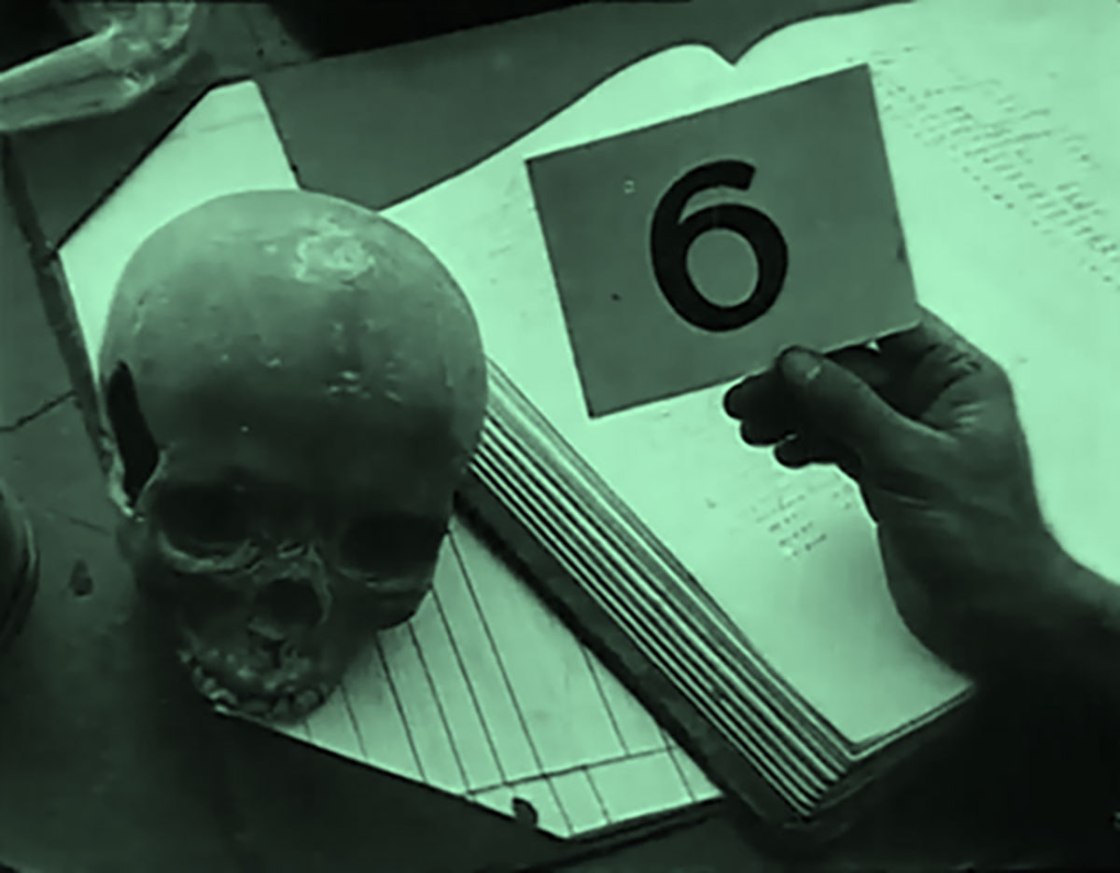
Unhinged surgeon Dr. Cuttem falls for the new nurse working at his hospital but she already has a boyfriend. The young couple tries to stay together against the doctor’s machinations and meat cleaver.
Home Media Availability: Stream courtesy of EYE.
Chop Chop
Medicine in the United States during the silent era was in a period of transition with certain modern practices emerging while other aspects remained firmly stuck in the darker, grimmer, bloodier world of nineteenth century medical theory. Mad scientists in fiction didn’t spring out of the ether. So, you could experience miracles of modern science– or electric shocks and massive infections.
Well, if you don’t laugh you might cry, so medical comedies were popular with audiences. These comedies could range from light rom-coms to adventure spectacles to roaring slapstick and the one-reeler Operating on Cupid is the latter. It was made for the Universal Nestor brand under the direction of Al Christie before he started his own comedy studio. (Christie would return to medical comedy under his own flag with pictures like Cupid in Quarantine.)
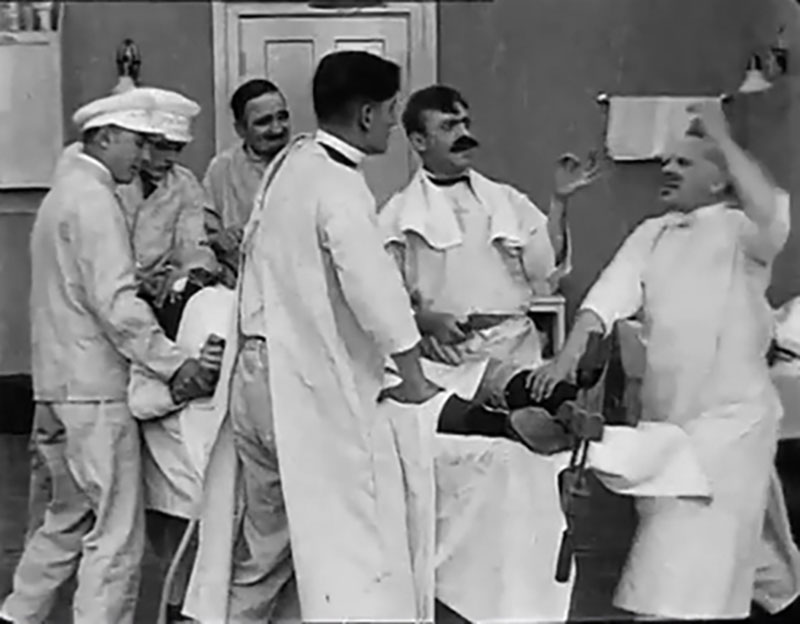
The film is directed by Horace Davey and stars Neal Burns as Dr. Cuttem, which should give you some idea of the exact type of comedy we will be experiencing. If that didn’t quite convince you, we see him straddling his patient with a meat cleaver in order to perform his surgery. The man loves his work, I can give him that, but it seems that his patients sometimes emerge from the operation feet first.
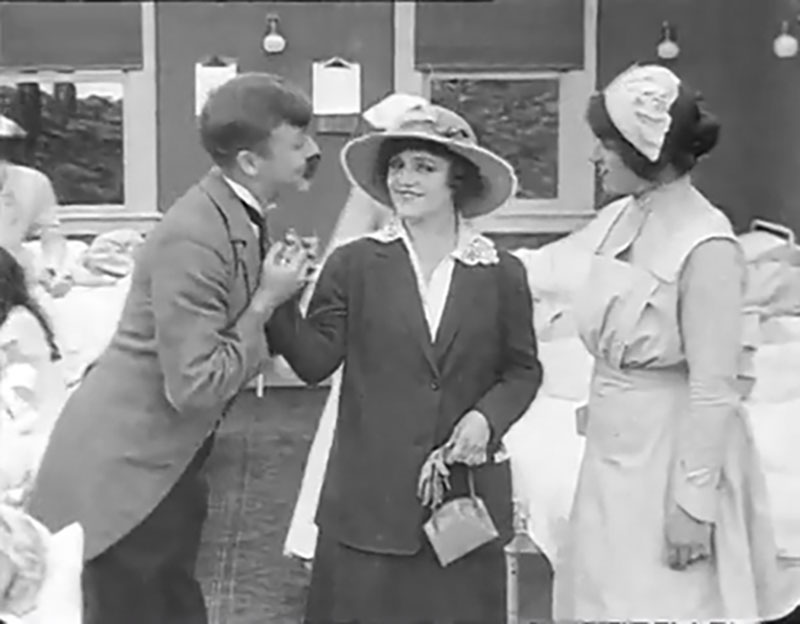
Billie Rhodes, a popular star at Nestor who would later follow Christie to his new digs, plays the new nurse in the hospital and Dr. Cuttem is smitten. He can’t keep his eyes or hands off Billie and even tries to steal a kiss. Billie wants none of it and actually is very happy with her boyfriend (Ray Gallagher). When Dr. Cuttem sees the couple together, he revokes Billie’s days off in order to keep them separated.
Not to be deterred, Ray fakes an illness and gets himself admitted to the hospital with a vague heart-related complaint. With Billie as his nurse, of course. Happily ensconced in room 6, Ray looks forward to long nurse visits with Billie.
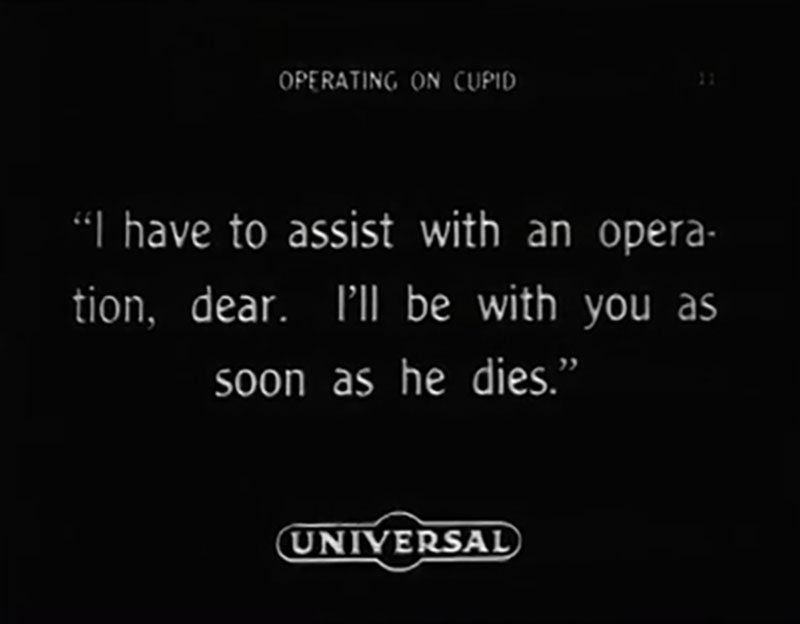
Meanwhile, the patient in room 9 has taken a turn for the worse and needs emergency surgery. Billie cheerfully tells Ray that she has to assist but will return once the patient is dead. Dr. Cuttem receives the room number and, in a move nobody could possibly see coming, accidentally turns the paper upside down. Uh oh.
The orderlies drag the struggling Ray into surgery and Dr. Cuttem, seizing an opportunity to remove his rival, gleefully begins his work over Billie’s objections. She manages to get Ray loose and hand him a pistol (gun safes would have killed silent comedy in its tracks) and a slapstick run-and-shoot chase ensues.
Well, then.
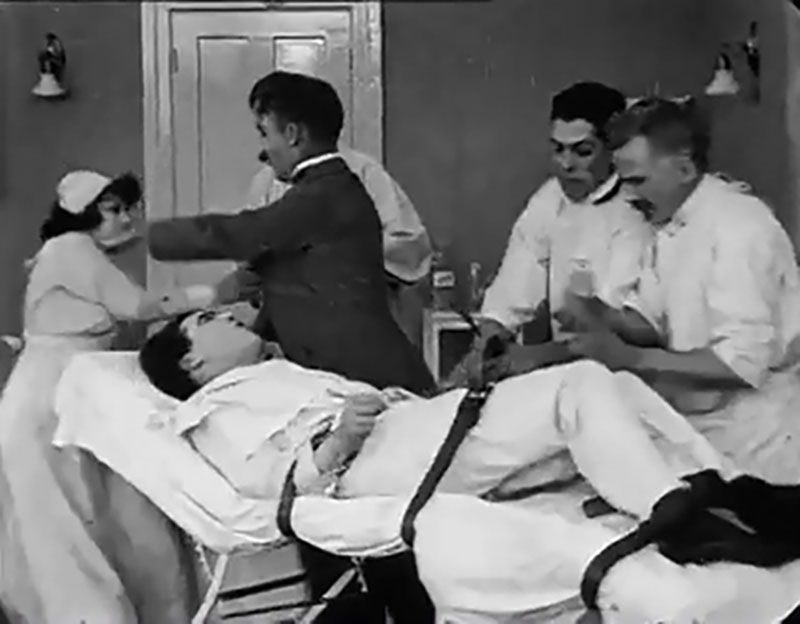
I have mentioned this before but I am not the biggest fan of rougher slapstick, so I may not be the target audience for this picture but I thought it was pretty poor. I liked Burns in the operating room and the gallows medical humor but felt that the film didn’t have suitable buildup to justify the shooting chase at its finale. Billie views Dr. Cuttem’s harassment as a minor annoyance and his machinations against her seeing Ray as an inconvenience (and Ray has the same attitude), so not much tension there.
It would have been better if the film had made it clearer that Dr. Cuttem was intentionally trying to operate on Ray from the start rather than the room 9 and 6 mix up, that would have added to the tension. You know, some Ford Sterling-esque glowers to the camera to put the point across. This ain’t the time or genre for subtlety, is my point. As the movie stands, the chase happens because slapstick of the era required one (1) chase, preferably with firearms or mud or seltzer.
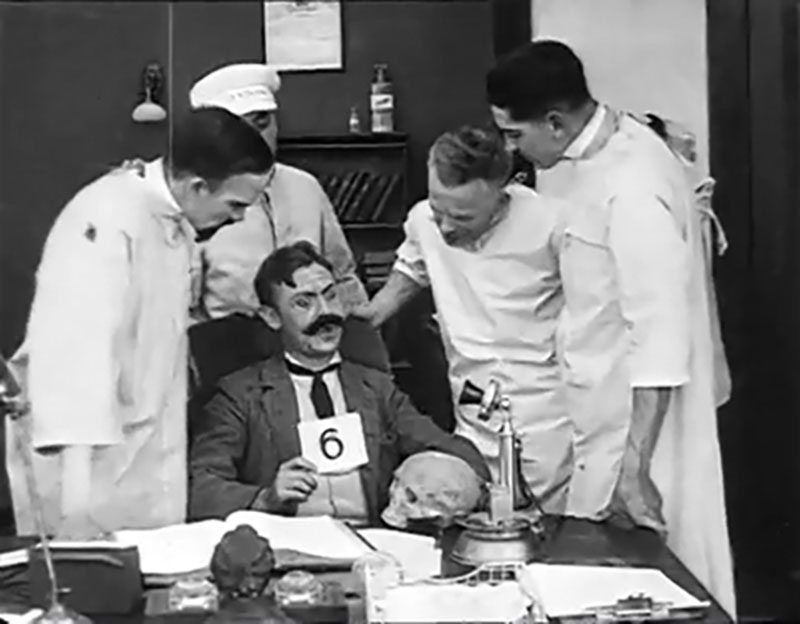
Billie Rhodes is the billed draw but she really isn’t given all that much to do in the picture beyond the generic The Girl stuff, so I wouldn’t call this a good introduction to her talents. I don’t judge actors by one dull performance, though. Silent era films have such a random survival rate and who can say if a performer’s best stuff was junked circa 1930 or went up in smoke in one of many vault fires? Fortunately, we do have better options already. Rhodes was a lot more fun in Somebody’s Widow, which gave her more to do and was a much better showcase for her talents.
But what did people of the silent era think? During Operating on Cupid’s initial release in late 1915 to early 1916, theater operators and fans were offering feedback but reactions to comedy shorts were more sporadic. I wasn’t able to locate any feedback other than capsule reviews from trade magazine critics and… they liked it.
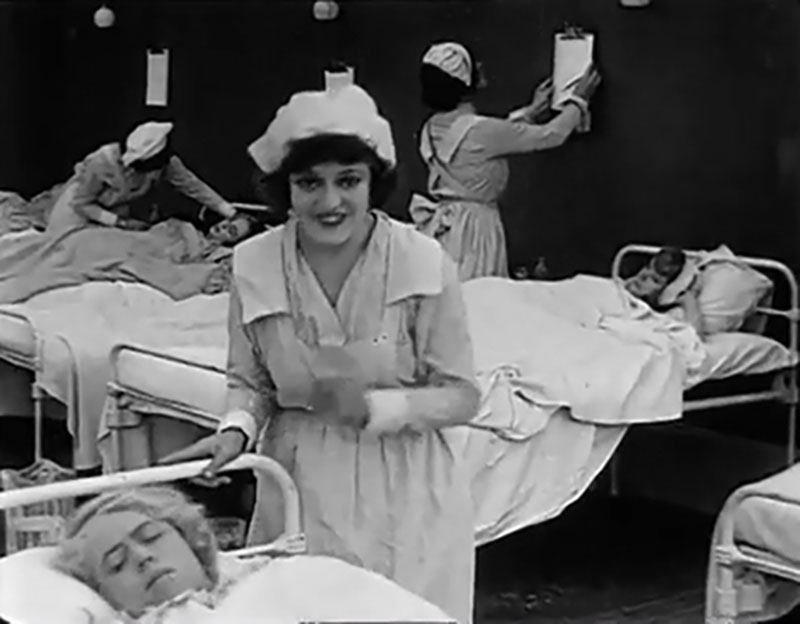
Motion Picture News stated: “Once more has the Nestor company staged a rough-and-tumble comedy in a hospital, and although it follows very conventional lines its laughs are quite thickly distributed.” Moving Picture World was equally positive: “A brisk little hospital comedy of the knockabout, burlesque type… The action and settings are good and there are numerous laughable incidents.”
So there you go. Shows you what I know.
At the time Operating on Cupid was made, Universal had established itself as the choice for smaller, independent theaters and it had multiple sub-brands to fulfill the preferences of local and (sometimes not always) rural audiences. Nestor was a comedy imprint, Blue Bird marked higher budgeted dramas, Red Feather pictures were more budget affairs.
There were studios releasing “magazines” of films with a set quantity of shorts to accompany a feature (the Edison Conquest brand, for example) but it was more common for theaters to pick and choose what they wanted to put together for between three and seven reels of entertainment. (Reels were usually cranked by hand and speed varied but 11-14 minutes per reel is not a bad guesstimate.)
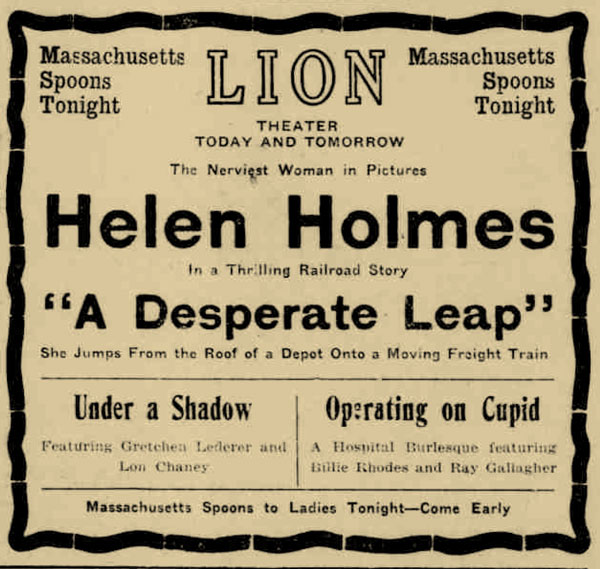
My recent hobby has been looking up what different theaters offered alongside the film I am reviewing and Operating on Cupid was an interesting cross-section of the time. The Lion Theater in Phoenix, Arizona (then with a population of approximately 30,000) gave the Helen Holmes railroad stunt picture A Desperate Leap top billing, with the lost Lon Chaney two-reeler Under a Shadow billed below, alongside Operating on Cupid. The theater also was giving away free spoons to ladies as a promotion and urged audiences to come early.
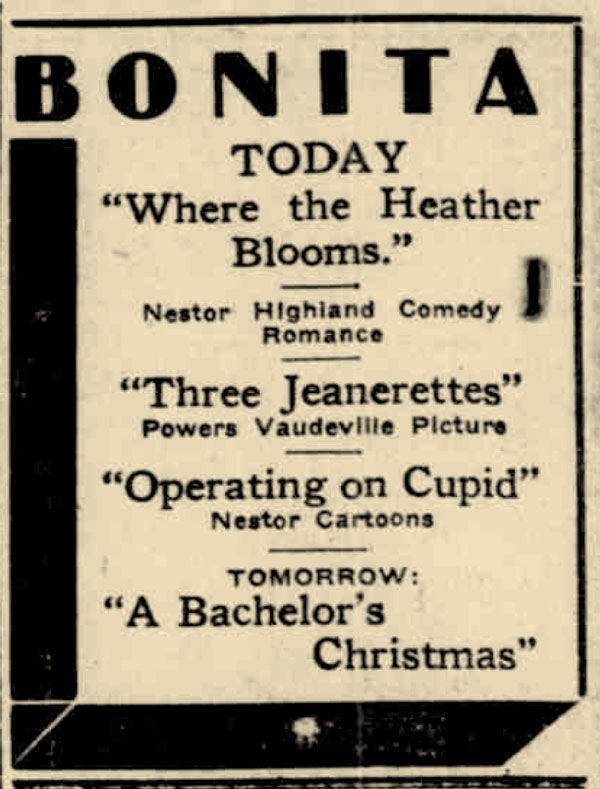
The Bonita in Pensacola, Florida had Operating on Cupid in a bill with a three-reel Nestor comedy, the Highlands themed Where the Heather Grows, and a vaudeville picture featuring the Three Jeanerettes. Keeping things in the Universal comedy was the most common approach, with theaters in Georgia, Indiana and South Carolina all making Universal their universal choice. The three-reel He Was Only a Bathing Suit Salesman seemed to have been a particularly popular choice.
So, there you have it. Is Operating on Cupid a hidden gem or a bore? The silent era critics and I disagree here, I think there’s far better slapstick and far better ways to watch Billie Rhodes but you will have to decide for yourself.
Where can I see it?
Stream courtesy of EYE. The very end of the chase sequence seems to have been clipped off but the movie is generally easy to follow.
☙❦❧
Like what you’re reading? Please consider sponsoring me on Patreon. All patrons will get early previews of upcoming features, exclusive polls and other goodies.
Disclosure: Some links included in this post may be affiliate links and I earn from qualifying purchases.

