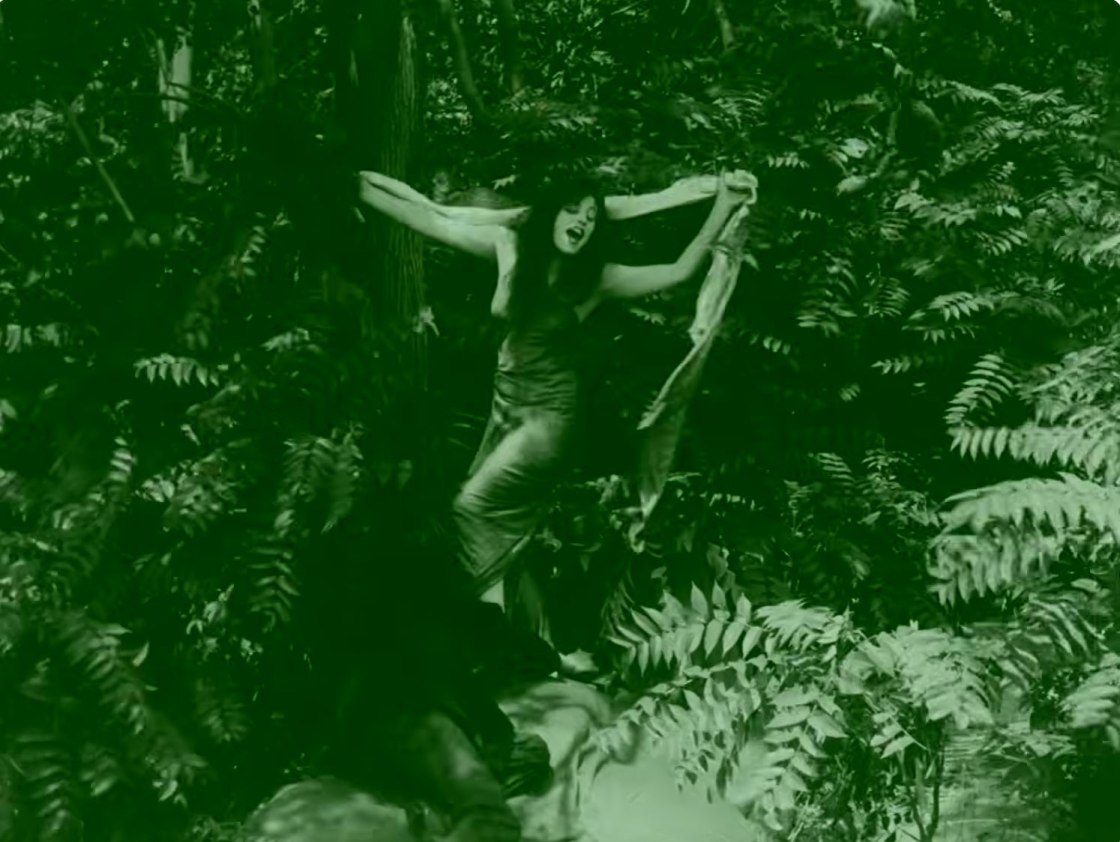
A country boy in the city falls into the clutches of a stylish vampire, forgetting his fiancee, his responsibilities and his self-respect. The perils of New York!
Home Media Availability: Released on Bluray
Oh, you vampire!
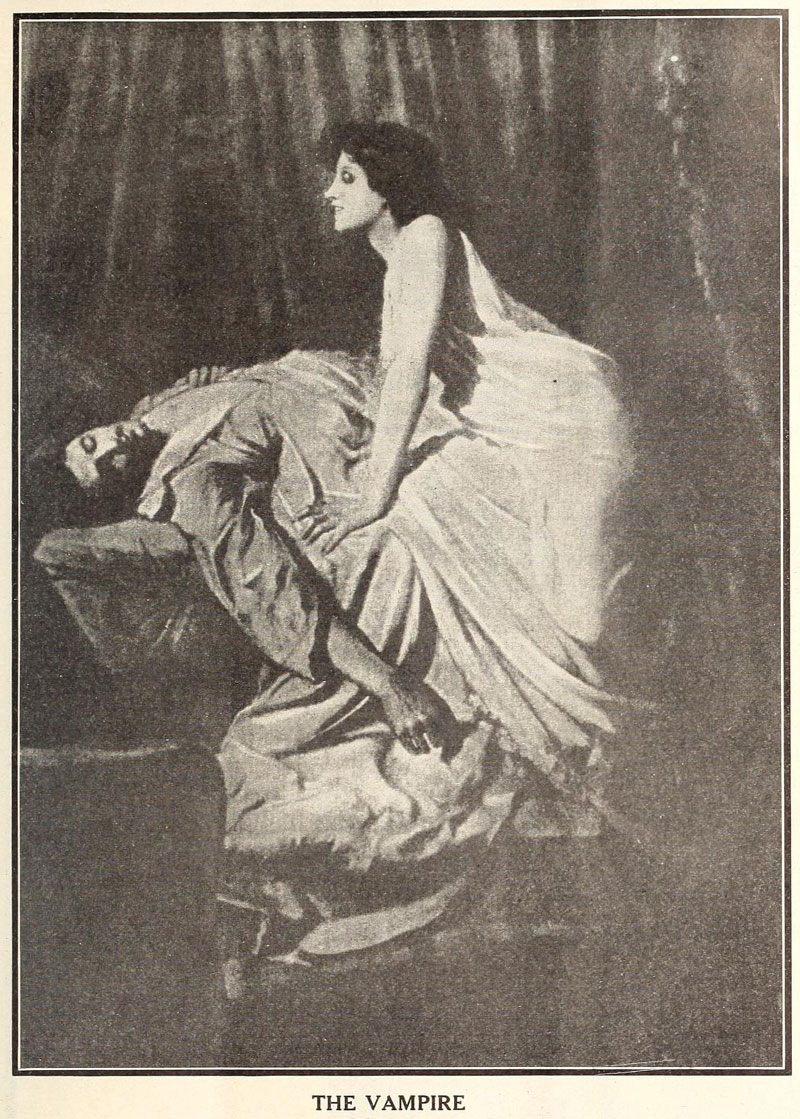
Before Theda Bara menaced men onscreen with her vampirish antics, the Kalem company produced their own picture based on the cultural phenomenon kicked off by the 1897 painting The Vampire by Philip Burne-Jones and the subsequent poem of the same title by his cousin, Rudyard Kipling. Kalem took it a step further by basing their version on the interpretive dance based on both the painting and poem. So, we have a movie based on a dance based on a poem based on an English painting that was a metaphorical reading of the German interpretation of Serbian folklore. Got all that?
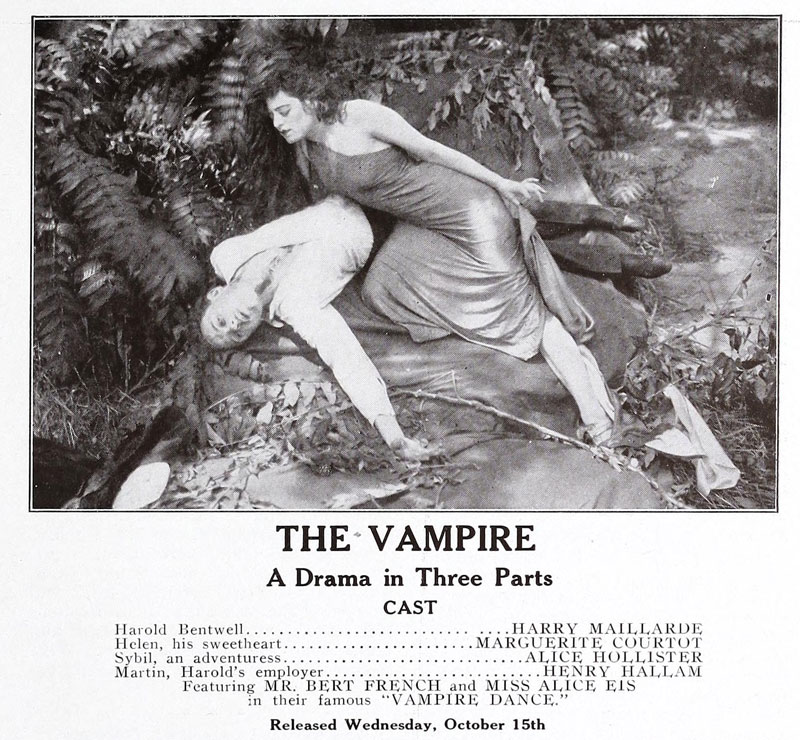
The Vampire’s setup will be familiar to anyone who has seen pre-WWI movies: Harold (Harry Millarde) is a simple country boy who wants more in life and means to go to New York to make his fortune. His fiancee, Helen (Marguerite Courtot), promises to wait for him. Harold arrives in the city and quickly finds work with an agricultural supply firm. He does so well that he will soon have enough money saved to marry Helen and a particularly large sale earns him a generous bonus. He decides to treat himself to one evening of the high life.
(Ominous chord)
He is seated at a tony restaurant table and Sybil (Alice Hollister) sits at the next. We know she’s bad news because she is wearing an extravagant hat and too much jewelry. She spots Harold’s roll of cash and decides they ought to become better acquainted. One thing leads to another– it would be rude o make a lady drive home alone, right?– and let’s just say Harold is late for work the next day.
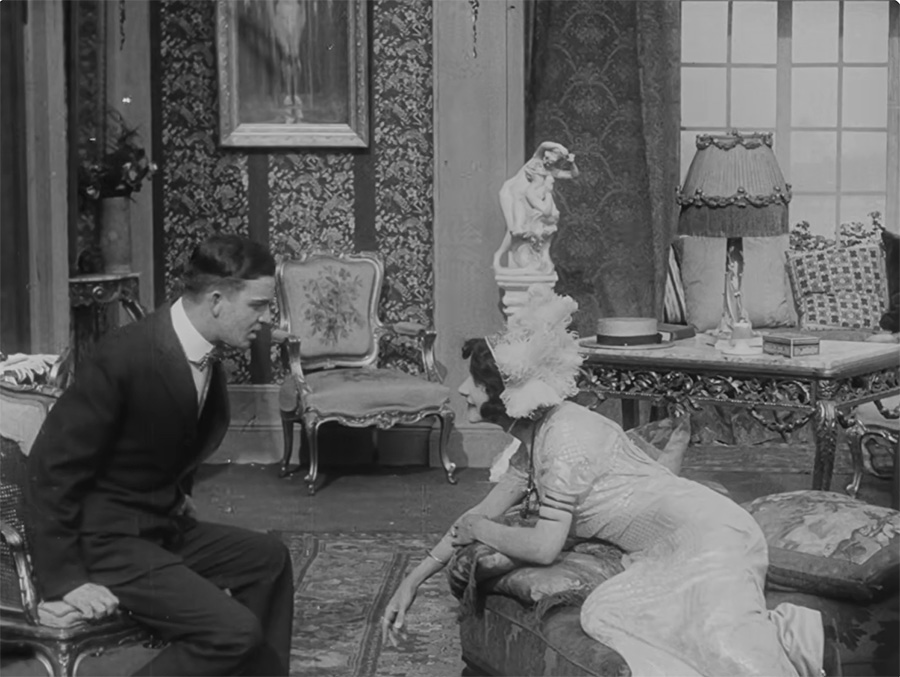
This pattern continues for a month. Harold’s boss is not happy, as you can imagine, and Helen has not had a letter in weeks. Both decide to take action, with the boss firing Harold and Helen heading to the city despite her foster father’s threat to disown her if she goes. She nearly falls into the hands of human traffickers (pre-WWI movies loved their “white slavery” plotlines) but escapes and finds Harold’s office. She discovers he has been discharged and the trail is cold. Unable to go home, she gets a job at a milliner’s shop.
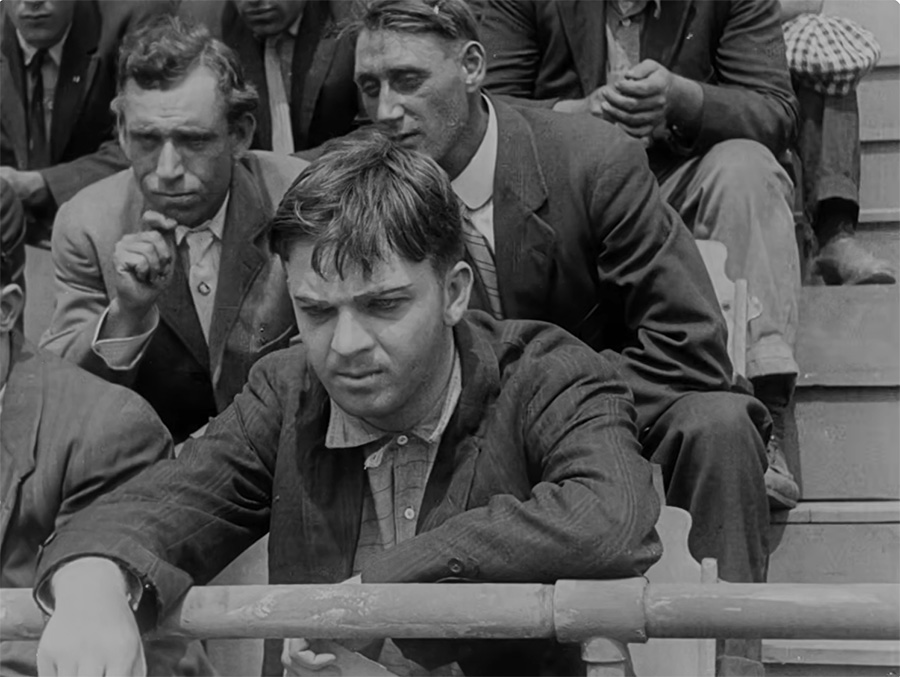
Harold, meanwhile, has sunk into ruin, the telltale stubble reveals all. He tries to see Sybil but she rebuffs him. All her friends have money, you see, and he is broke. Harold pawns his watch (with a photo of his dear old mother inside!), buys a revolver and a cheap ticket to the theater, planning to case the audience for a likely target to rob so he will have the money to continue to see Sybil.
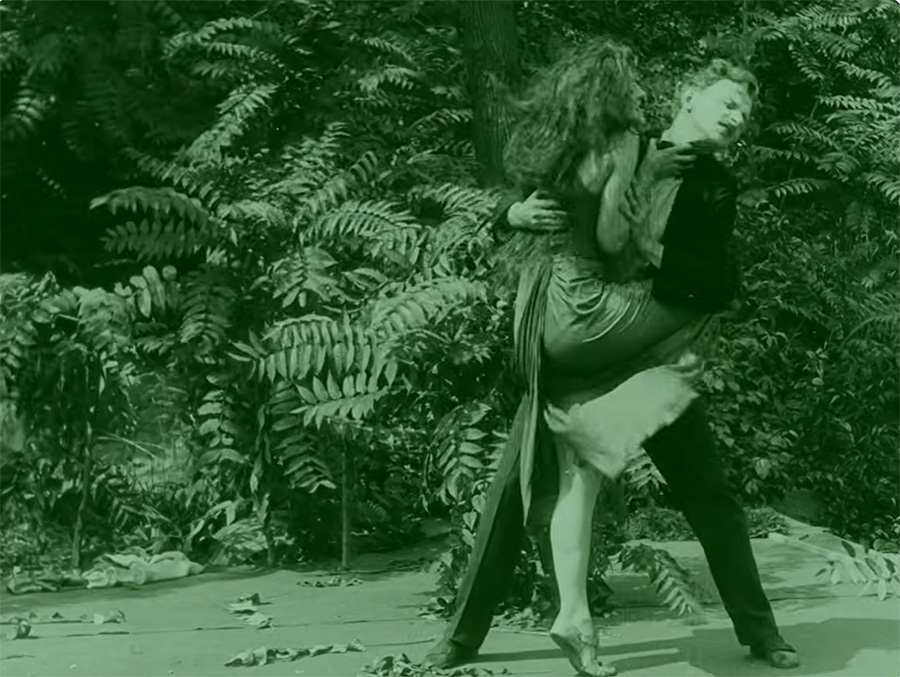
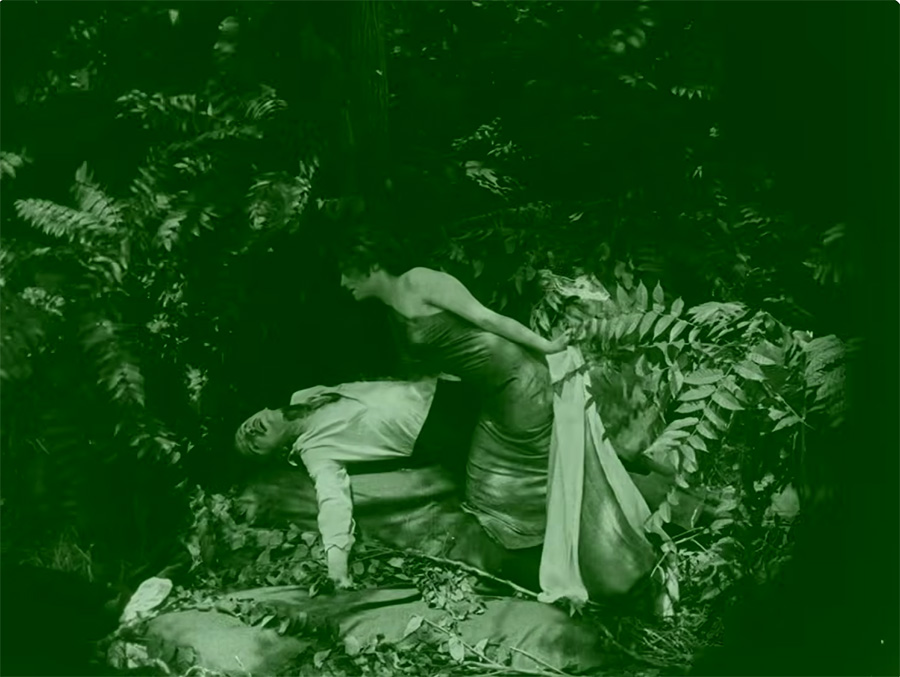
The theater is presenting Bert French and Alice Eis, a pair of dancers known for their, in the lingo of the time, warm dances and Eis’s abbreviated costumes. They act out the downfall of a male victim when he falls into the clutches of a sexy vampire. French and Eis had recently been arrested for indecency with a different dance and they had revived their older Vampire Dance for 1913, which was likely where Kalem got the idea for this movie. Will Harold learn from the fate of the victim? See The Vampire to find out!
One thing that struck me about this film was how similar it is to other vice films of the period. The repeated message throughout seems to be “don’t go to New York!” vice films often tied into anti-immigration or anti-emigration movements, with filmmakers basically encouraging everyone to stay put. I am not sure that this was intentional on the part of director-screenwriter Robert G. Vignola, born Rocco Vignola in Trivigno, Italy, but cognitive dissonance can be strong. It is possible the story was just borrowing beats because, let’s face it, the film is a frame to hang the Vampire Dance in. (I am not necessarily complaining, it’s quite a dance.)
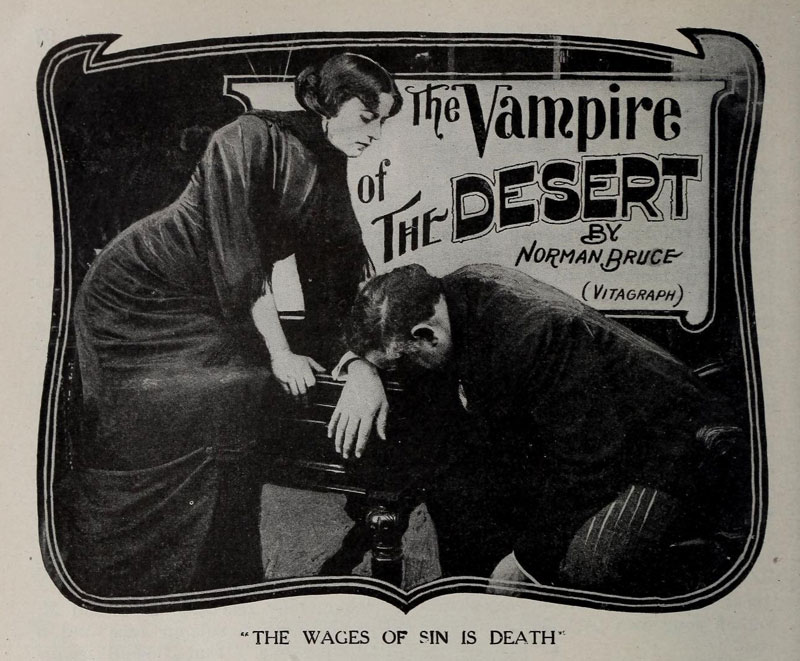
The Vampire was subsequently overshadowed by the 1915 film A Fool There Was, Theda Bara’s vamp debut and based on the same material. (Well, sort of. It was based on a novel based on the poem based on the painting, etc.) It was also not the only vampire film of 1913, having been beaten to release by Vitagraph’s The Vampire of the Desert, starring Helen Gardner. Denmark’s The Vampire Dancer (1912), also revolved around a vampire dance performance but was about the dancers specifically. Earlier still was the 1910 Selig release of The Vampire, which purported to be based directly on the Burne-Jones painting and marketing material boasted that it recreated the pose in its final scene. (Spoilers were viewed very differently back in the day.)
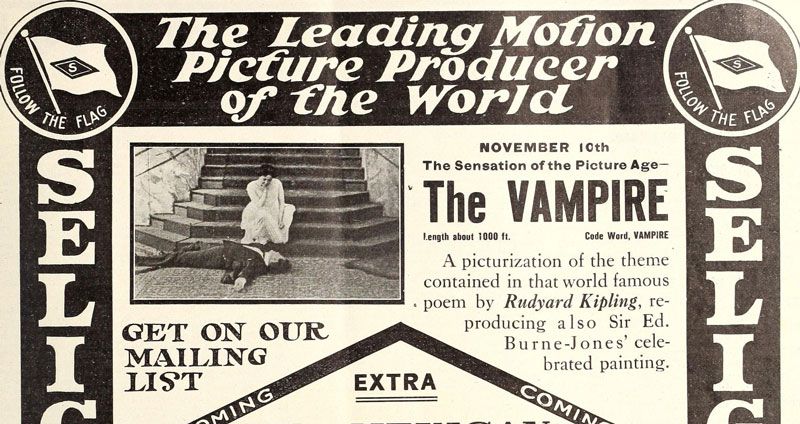
The Vampire (1913) may not have been the first but it was a big hit, though, as evidenced by Kalem using it as a marketing point for later releases, and helped to build the vampire craze that would become a cultural phenomenon.
Unlike the 1910 Selig release, both American vampire releases of 1913 ended with the vampire initially successful but ultimately thwarted. Gardner’s vamp is dispatched by her jealous husband, while Hollister is rebuffed but lives to vamp again. However, neither takes their victim to the ultimate demise portrayed in the vampire painting and poem.
Spoiler: The last act of The Vampire shows that Harold is entranced by the message of the dance (and not Miss Eis’s costume, let me make that very clear) and is immediately regenerated, swearing off drink, asking for his job back and going to look for Helen. He discovers that she has gone to New York and, apparently, none of his coworkers mention that she stopped by to find him.
Harold heads back to his old favorite restaurant and, of course, Sybil arrives to sit at her usual table. Seeing him cleaned up and once more in cash, she is ready to start things up again but Harold walks out. Later, he runs into Helen on the street and the pair reunite and wed.
A Fool There Was, meanwhile, opts to show its vampire triumphant. Bara goads one of her earlier victims to his death and ends the film standing triumphant over her latest vanquished “fool” as she sprinkles him with rose petals.
While The Vampire of the Desert is missing and presumed lost, an illustrated synopsis does survive and indicates that Lispeth, the vampire character played by Gardner, displayed the kind of amorphous, mildly North African-Middle Eastern occult behavior that would be so heavily associated with Bara in her prime. (Despite the setting being, apparently, the American west. Lots of prayers to Allah, etc.)
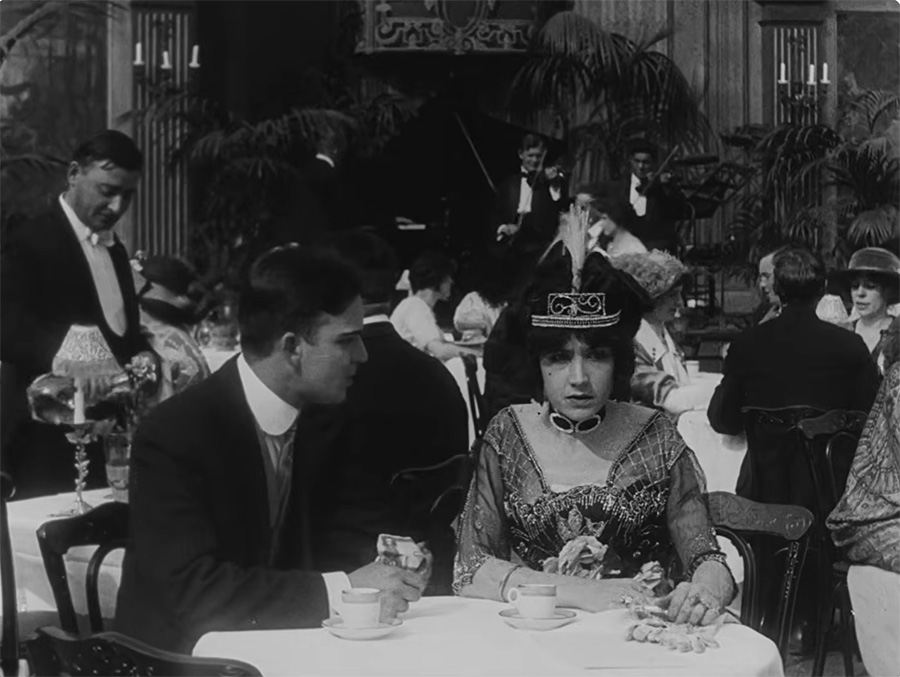
The Vampire, on the other hand, keeps its vamp pretty corporeal. She’s sexy, she wants money, she deploys the former to obtain the latter and wears some pretty extreme clothing too. No occult elements included and the destruction of her victim is collateral damage rather than the chief goal.
However, The Vampire also has two vampires: both Hollister’s real world vamp and the in-movie appearance of Eis in her vampire persona. Eis is an occult creature, leaving a bloody wound in her partner’s throat at the conclusion of their dance. And so, The Vampire is able to have its cake and eat it too: both presenting a money-hungry adventuress in the classic sense and showing off a supernatural figure filtered through interpretive dance.
The Vampire is a transitional film, with one foot in the popular vice pictures of the era and another in the upcoming vampire frenzy. Kalem knew it had something and continued to cast Hollister as a vamp and Harry Millarde as her victim. (Millarde would have another connection to sex symbols: his daughter grew up to be model Toni Seven.)
The Vampire is also a transitional film in another sense: it is three-reels long, the compromise length adopted by many studios in the wake of the new feature film boom. American narrative features had kicked off in 1912 with the independent five-reel Oliver Twist and Helen Gardner had independently produced her own five-reel Cleopatra the same year. Kalem had not been inclined to go feature length, putting all the studio eggs into one long basket was not seen as good business by the suits, but their international filming unit had delivered their own five-reel religious epic From the Manger to the Cross.
With longer pictures in demand and the independents delivering what big studios would not, three and four-reel pictures grew in popularity, with 1913 and 1914 being the height of this betwixt and between length in the United States.
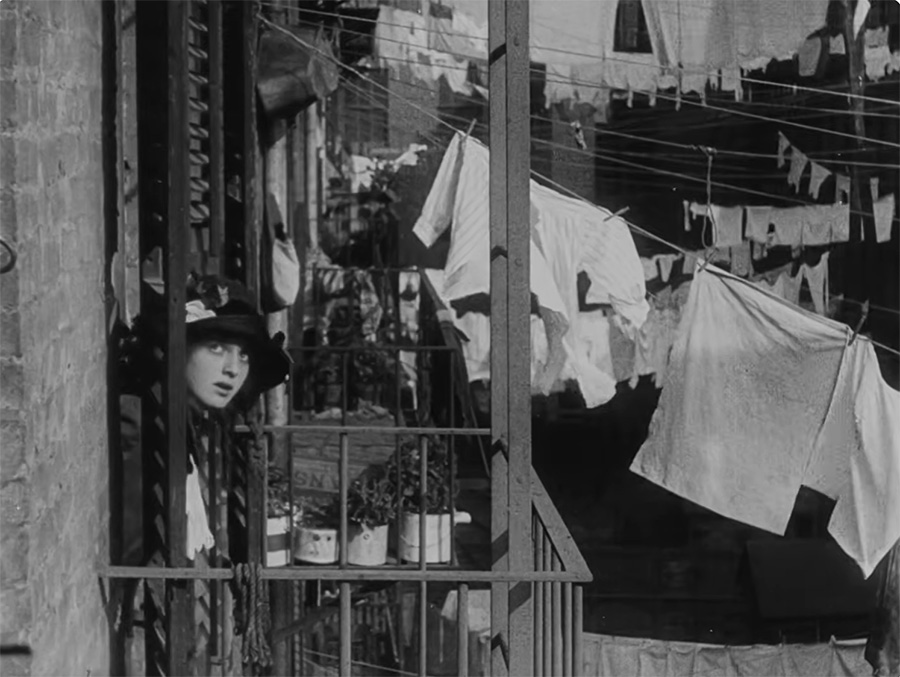
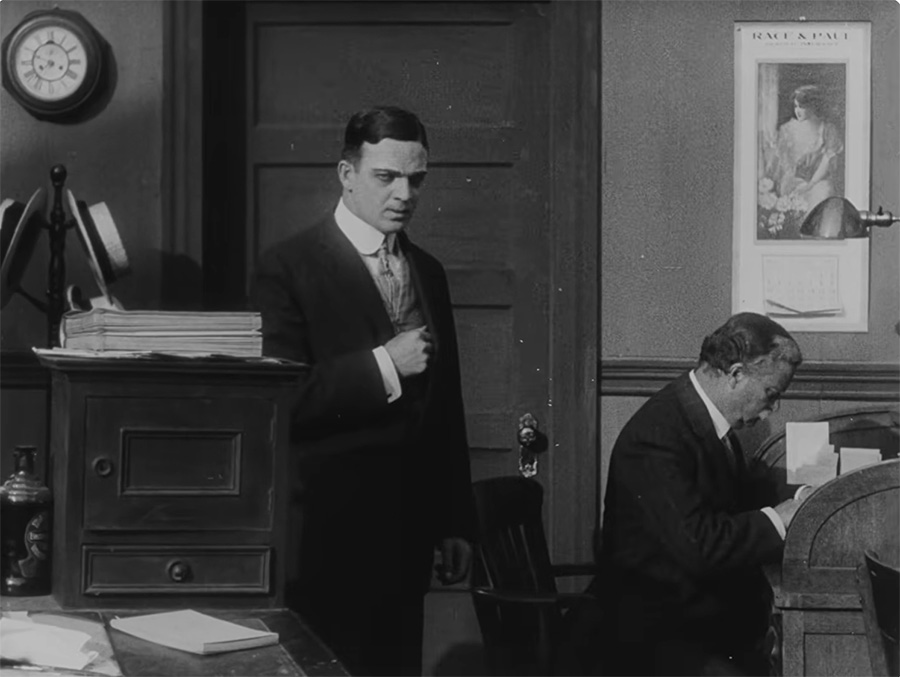
The Vampire is a handsome film in many ways. Hollister’s costumes are suitably eccentric and there are some visually striking sequences, such as Helen’s escape from traffickers via a fire escape. The film was shot on outdoor sets, as was typical of the time, and some of the lighting is quite harsh in the office scenes. I wonder if this was an intentional attempt to convey Harold’s stress or if it was just due to the scenes all being shot under the noonday sun.
Hollister, as you can imagine, was not as extreme in her performance as the later vamps I have seen but she does a hissable job of ruining hapless Harold with glee, and that’s really all you can ask from a cinematic vampire. Marguerite Courtot is given a generic sweetie-pie heroine role but she manages to do something with it, conveying steely-eyed determination and a bit of common sense. Millarde’s part is similarly thinly written and he is done in by the film’s abbreviated length as his reformation is unconvincingly instantaneous.
The Vampire is worth seeing for the French and Eis dance alone but it’s also a valuable record of an art in flux, with the craze for features and stars only growing and major studios about to relocate to the west coast en masse. We’re fortunate to have it.
Where can I see it?
Released on disc as part of the Made in New Jersey: Films from Fort Lee, America’s First Film Town set from Milestone.
☙❦❧
Like what you’re reading? Please consider sponsoring me on Patreon. All patrons will get early previews of upcoming features, exclusive polls and other goodies.
Disclosure: Some links included in this post may be affiliate links and I earn from qualifying purchases.

