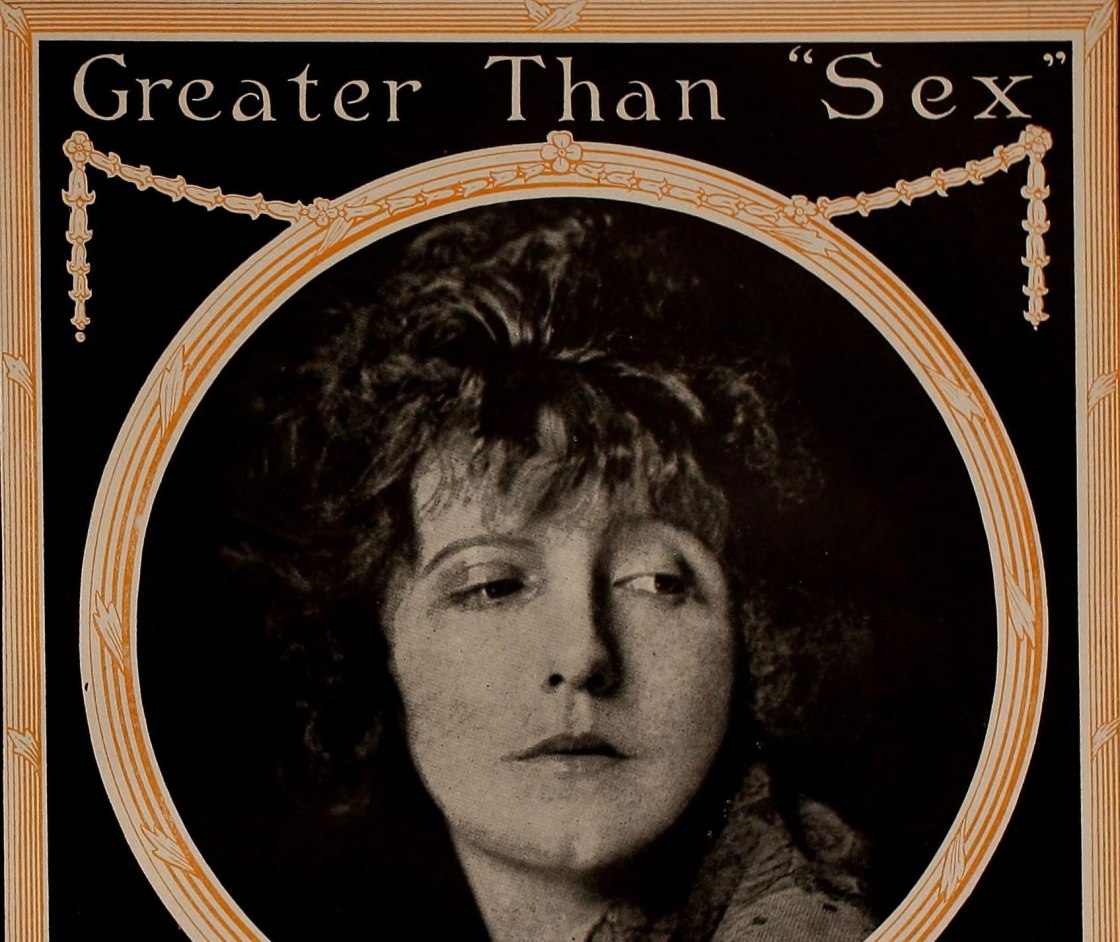
Screen vamp Louise Glaum plays a famous showgirl who enjoys stealing married men. It’s all fun and games until she gets married and finds the shoe on the other foot.
Home Media Availability: Widely available as a budget release.
Now that I have your attention…
The vamp craze had been simmering since the famous Philip Burne-Jones painting helped popularize the term “vampire” to mean a sexually aggressive woman who destroys her prey. However, it became a frenzy during Theda Bara’s career at Fox, beginning in 1915 and lasting until she took a hiatus from vamping in 1919. This coincided with a shift in audience taste as the flapper was rising to cultural dominance.
Vamps of the 1910s were marked by supernatural accouterments and the utter destruction of their prey, men being flies to their spiders. With this extreme styling no longer the thing, the other vamps of the screen had to find ways to adjust their personas. (Bara later attempted the same thing but the Vamp always followed her.)
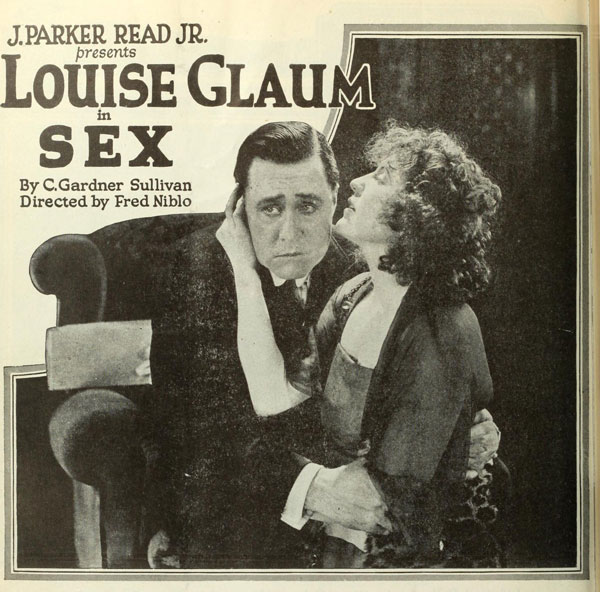
Louise Glaum had been the resident vampire of the Thomas Ince ranch, famously enslaving a weak minister into sexual obsession in Hell’s Hinges. She would wear snake brooches and such but her style was always a bit less extreme by vamp standards, which allowed Glaum a bit more versatility at the turn of the decade. Producer J. Parker Read Jr. signed Glaum on to play a series of exotic (but slightly more down-to-earth) roles and her biggest hit was Sex, written by C. Gardner Sullivan, who had penned Hell’s Hinges.

The film was a monster hit, winning critical acclaim and box office cash– and the attention of censor boards. Well, when you title your movie Sex, I guess you know what you’re signing up for.
I might as well come out and say it at the very start: all the sex in Sex is found in the title. It is a remarkably prim film with strictly Victorian sensibilities that would not have caused a single batted eyelash if it had been called Lonely Wives or some other silent era marital picture-type title. There are a few lingerie shots and wild parties and it all ends there. But hoopla has always been part of the game and that title was pure cash.
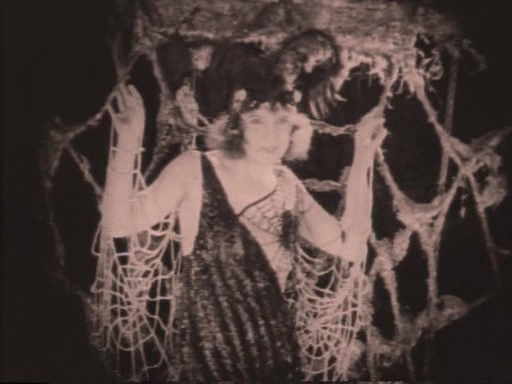
Glaum plays Adrienne Renault, the star of a Ziegfeld Follies-esque troupe. Her signature dance is a spider performance in which she lures and murders a male dancer playing a moth. This is an obvious callback to the golden era of vamps. The craze was helped along by lurid, stylized dances, which also helped establish the gothic styling of these dangerous ladies.
Adrienne has no ambitions to destroy men, she just likes to hang around money and the men with money sometimes happen to be married. C’est la vie. Wealthy Philip Overman (William Conklin) has been Adrienne’s most ardent admirer, leaving his wife (Myrtle Stedman) with no choice but to hire a detective to find out what her husband has been doing during his nights out.
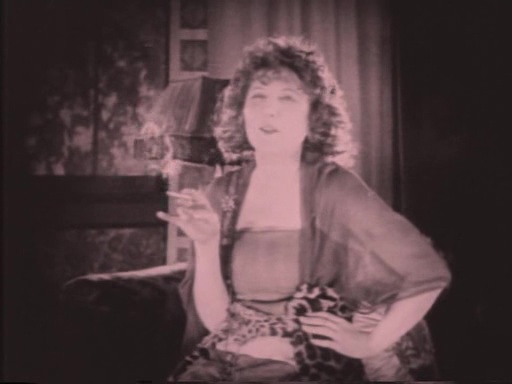
Adrienne is den mother to the younger dancers, especially naive Daisy Henderson (Peggy Pearce). The women are having breakfast when Mrs. Overman shows up to confront the Other Woman. Adrienne scoffs, why should she be to blame if a man is not finding what he needs at home? Philip enters at this moment, all is exposed and Mrs. Overman asks for a divorce.
It turns out that a forbidden fling is not nearly as fun once you are a divorced man and the spark has gone out of the relationship between Philip and Adrienne. As they sit together in a hellfire-themed nightclub (complete with a dancing Satan), Adrienne spots Dick Wallace (Irving Cummings), one of the wealthiest men in America. She dumps Philip and is soon Mrs. Cummings. Originally, she had married for money but she genuinely falls for her husband. Except…
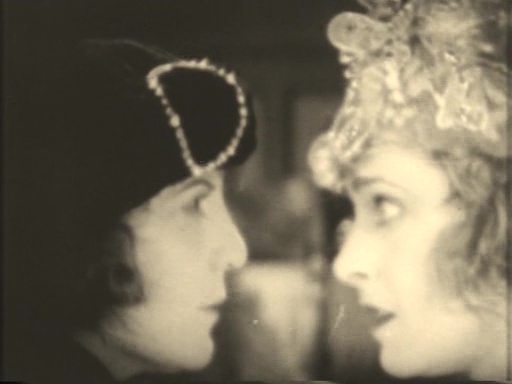
Dick has started spending nights out. Going to shows. In fact, he has been a regular attendee at the performances of Miss Daisy Henderson. A mole with cataracts could see where this is going but if you want to see for yourself, watch Sex to find out!
Sex might as well have been titled Vamp: The Backlash. The original vamp films were, to a great degree, a female power fantasy at a time when such things were in relatively short short supply. Much was written and filmed about the sexual double standard: women were expected to remain pure while men could sow wild oats with few consequences and any resulting pregnancies were solely the responsibility of the woman. Vamps flew in the face of that, with men destroyed or dying in their wake and, more often than not, the vampire getting away scot-free.
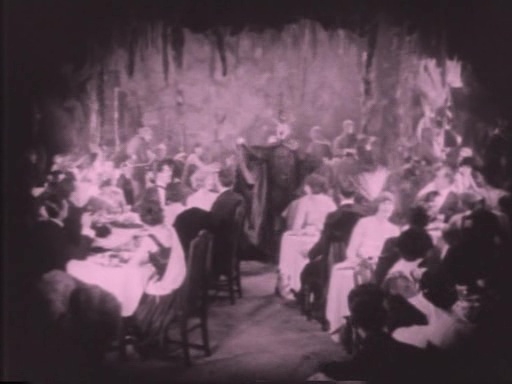
Sex, on the other hand, visually references to occult tone of vamp films but then seeks to make its seductress pay and pay and pay. And to be clear, Adrienne is not a nice woman. She is selfish and utterly lacks empathy but those traits are shared by every other member of the cast besides Mrs. Overman. Philip and Dick don’t care about anything beyond their own pleasure and Daisy has learned all of Adrienne’s lessons all too well. However, it is Adrienne alone who is left to suffer at the end of Sex. The Overmans have reconciled, Dick is seeing Daisy (for now) and Adrienne is forced to take a long sea voyage watching everyone but her be happy.
The message and lesson is clear: the vamp got what was coming to her and those poor men really can’t help themselves, can they? The wild oats won’t sow themselves, leave them alone and they’ll come home wagging their tails behind them. This was the same message put forth in The Women almost twenty years later.
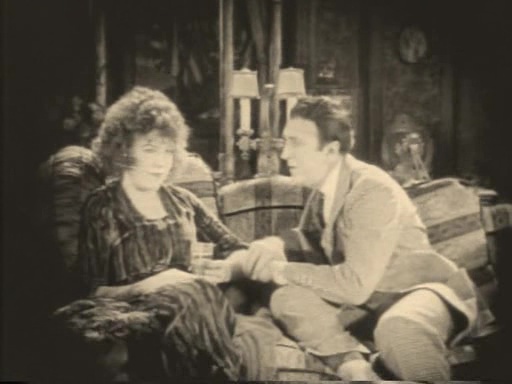
This doesn’t make for a satisfying story or morality tale because the punishment is not meted out fairly, which isn’t a crime in itself (life isn’t fair, it’s just fairer than death, after all) but the film’s titles make it clear that the filmmakers thought it was perfectly fair and equitable, thank you very much, and that is the problem.
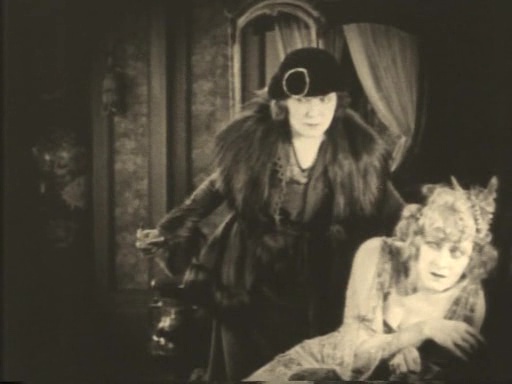
Further, the story hinges on Adrienne falling for Dick since losing him would only hurt if she cared. Irving Cummings is no Valentino and Sex does the “two years later…” thing, explaining that Adrienne has fallen for her husband via title card. Tell, don’t show is the film’s ethos. The picture also wimps out during the confrontation between Adrienne and Daisy, with Adrienne holding a knife behind her back but ultimately wimping out and weeping, arms flailing.
I put most of the blame for these issues on C. Gardner Sullivan’s scenario. He did good work with William S. Hart but his Old Testament sensibilities just didn’t play as well when he didn’t have a homicidal gunman in the mix. Instead, we get a corny plot that makes East Lynne look modern.
Glaum was a good actress with the right material and she does try. The scene where she dumps Philip is particularly well-played as she manipulates him into leaving without a fuss. Peggy Pearce steals the show as the sweet ingenue who learns a little too well from her mistress. The direction by Fred Niblo is also good, with plenty of smoking, dancing, dramatic closeups and all the night clubs scenes you could want. But it’s all to no avail if the story isn’t good.

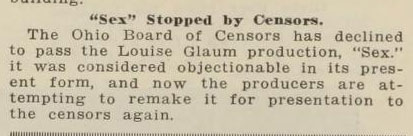
Sex is all sizzle and only a few shreds of steak, though. Nevertheless, the censor board of Ohio demanded and received unspecified cuts to the picture and Pennsylvania would only release it if the title was changed to Sex Crushed to Earth. New Jersey demanded a private screening prior to allowing release. Generally speaking, though, the message of Sex would have been very much to the tastes of film censorship of the time.
However, Admiral H.B. Wilson, who personally inspected most films that were to be shown on Navy property and vessels, apparently approved Sex for screening to American sailors. Per a 1920 interview with Moving Picture World, “Pictures that keep the men laughing are the kind that he prefers. He believes, however, in such pictures as “Sex” and said recently: “While we draw the line at vulgar and obscene pictures, we certainly don’t want any namby-pamby ones. The men on board ship want to see the same films that the public see. In my opinion, we are getting very high class movies these days.”
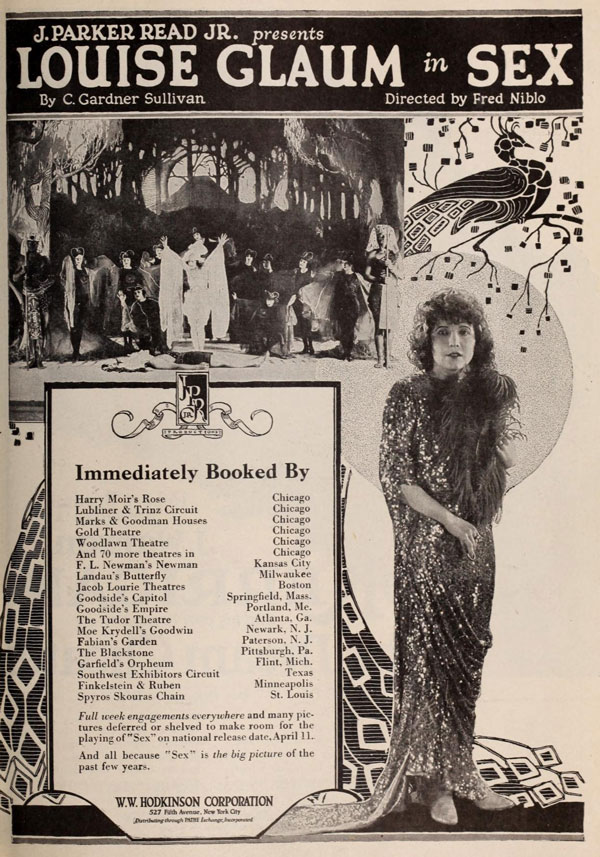
The lack of genuine sex in Sex didn’t dampen its box office, though, and Wid’s declared that theaters “wouldn’t be able to keep ‘em away from this with a small-pox sign.” The magazine also praised the film generally, declaring it to be a great drama. On that, we will just have to agree to disagree.
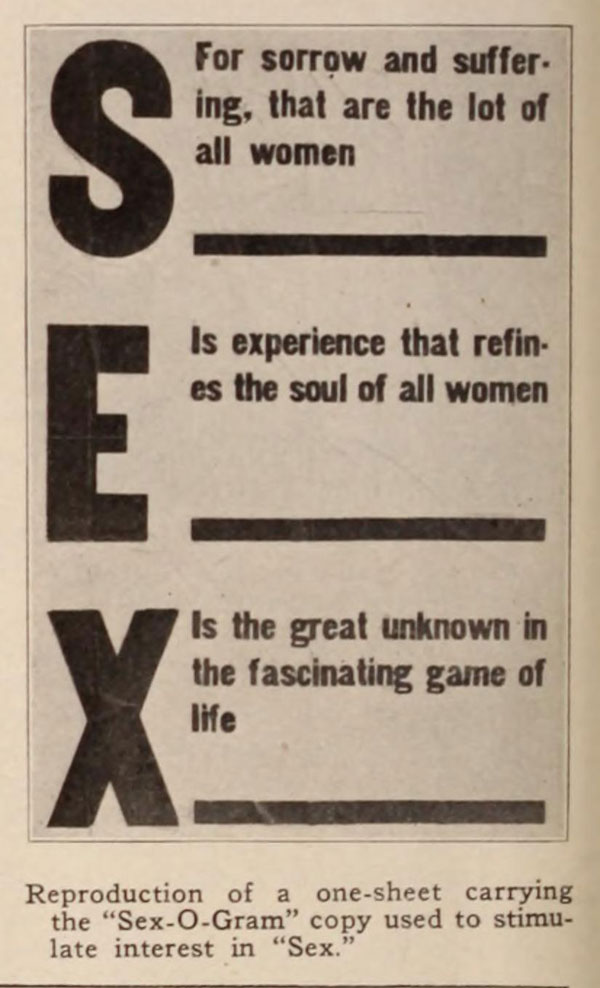
Sex’s biggest appeal is its title and the design of Adrienne’s costumes. The story is trite and unimaginative and the whole thing is just tedious and could have been resolved in two fewer reels. It’s an interesting time capsule made during the fall of the vamp but that only goes so far for the modern viewer. That doesn’t stop more unscrupulous film purveyors from trying, though, breathlessly declaring that Sex was a genuine silent era exploitation picture. The more things change, I suppose.
Where can I see it?
Originally released on VHS by the defunct Unknown Video, you can find it online or from budget concerns. Would love to view a new transfer as those costumes deserve to be seen.
☙❦❧
Like what you’re reading? Please consider sponsoring me on Patreon. All patrons will get early previews of upcoming features, exclusive polls and other goodies.
Disclosure: Some links included in this post may be affiliate links and I earn from qualifying purchases.

