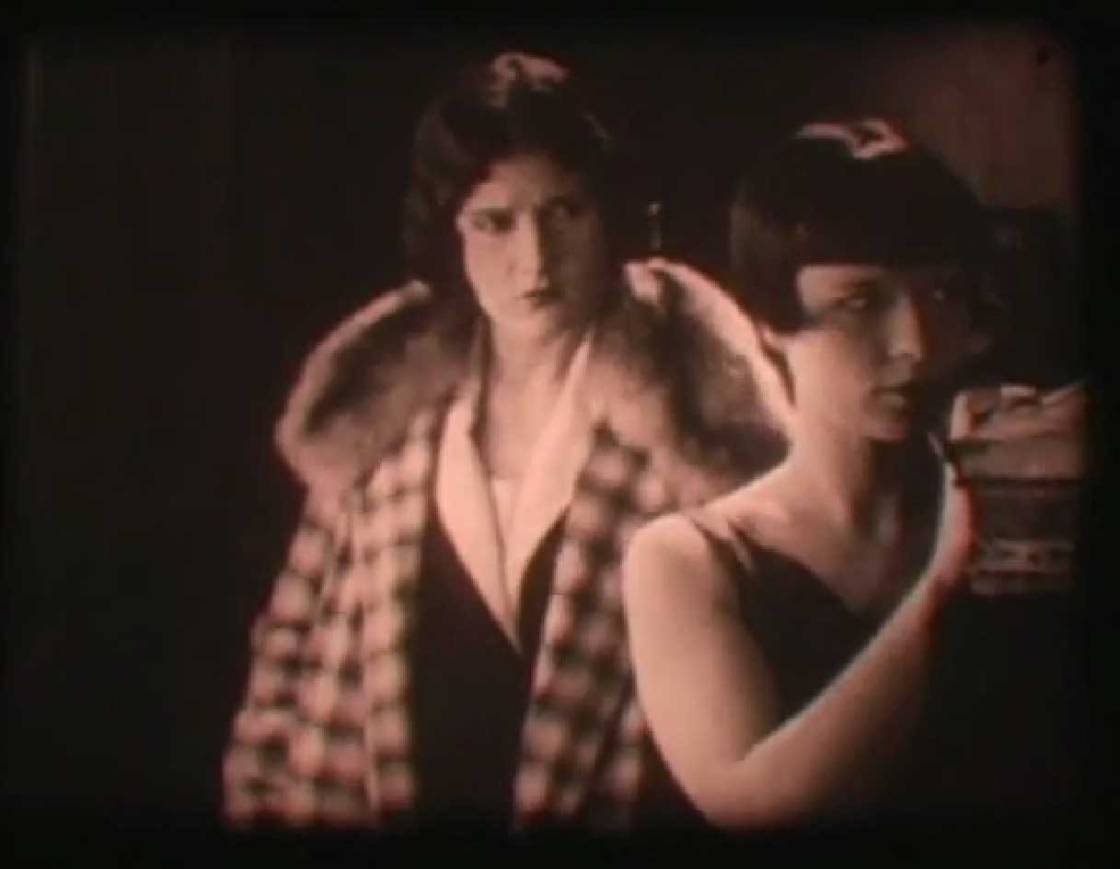
Shopgirl picture about the industrious Mame and the wild Janie, sisters and clerks at a department store. Mame mothers Janie but it all backfires when little sister bets charity money on the horses.
Home Media Availability: Released on DVD.
I will also be reviewing this film’s talkie remake, The Saturday Night Kid. Scroll down to read about the talkie.
Put the blame on Mame
Shopgirl pictures were a must for any star of the twenties. The genre gave glamorous stars (like Gloria Swanson in Manhandled) a chance to drop the glitz and embrace good-natured working class comedy. And, of course, these pictures often had a fairy tale element with the big boss falling for their employee, as was the case with Clara Bow in IT and Mary Pickford in My Best Girl.
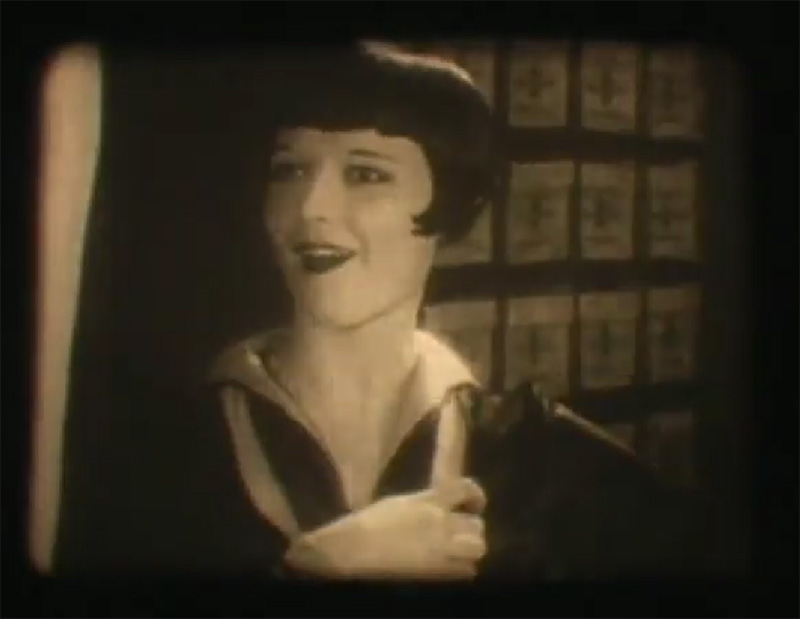
Love ‘em and Leave ‘em was based on a three act play be George Abbott and John V.A. Weaver and featured not one but two stylish young women employed at a department store: Mame (Evelyn Brent) and her little sister, Janie (Louise Brooks). They share a room in a boarding house with Bill (Lawrence Gray), another Ginsberg Department Store employee, as their next-door neighbor.
Mame takes care of both Janie and Bill, getting them to work on time and helping them complete their tasks. With this support, Bill hopes for a promotion and Janie is the treasurer of the store relief fund overseen by the intimidating Miss Streeter (Marcia Harris).
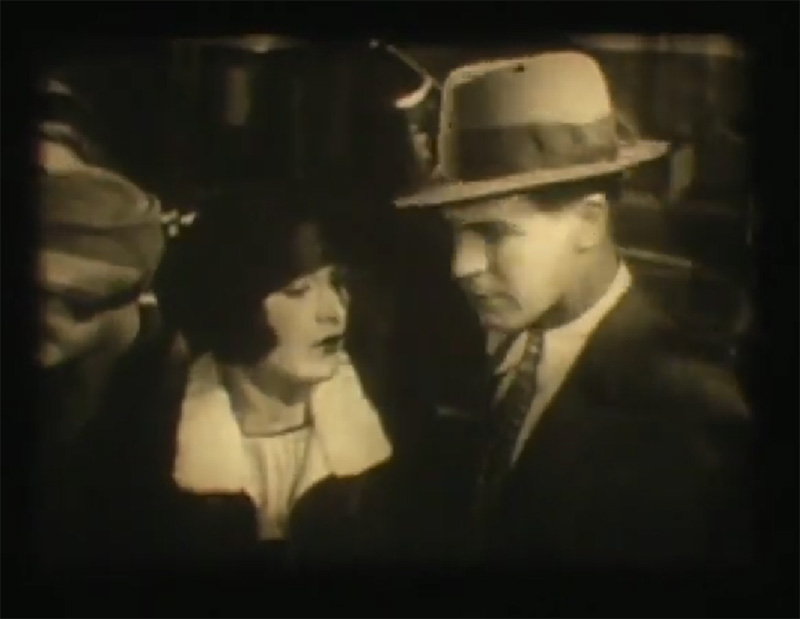
When Mame comes up with an idea to put a fan in the store window to blow the mannequins’ skirts, Bill gets the credit and is promoted to the window dressing department. Meanwhile, Janie borrows Mame’s new coat without asking, borrows from the relief fund to place a bet on a horse with neighbor Lem (Osgood Perkins) and while she’s at it, decides she’ll borrow Bill too.
Mame’s idea to let a kitten play in Bill’s new store display is another hit and Bill receives even more praise. He wants to marry Mame but she feels they don’t make enough money yet. Mame heads off for an already-planned vacation of Janie makes her move with Bill enthusiastically responding.
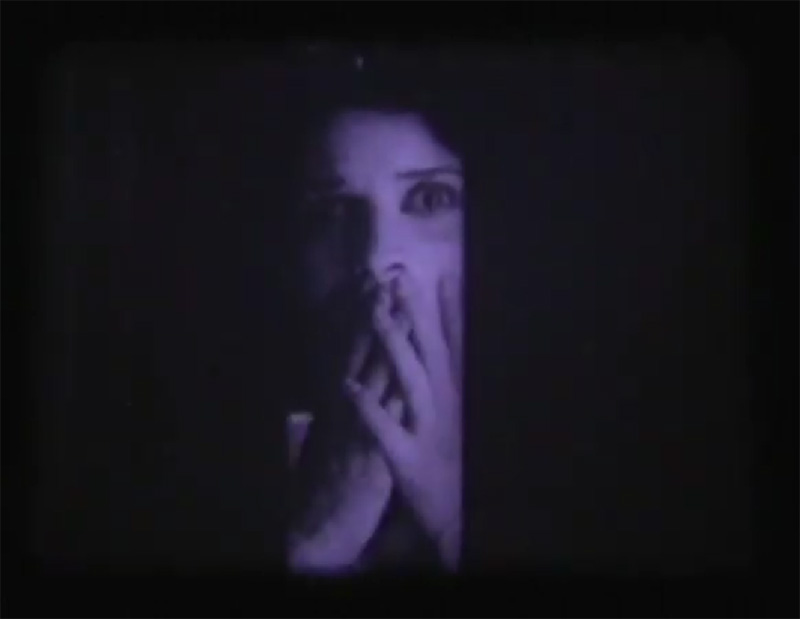
Mame decides to take a chance on Bill and returns to the city early, arranging a surprise “She said yes!” party in his room. The party fizzles when Bill and Janie open the door of the dark room and canoodle in full sight of Mame.
Mame pretends that she doesn’t care and declares she won’t break her heart for any man and her philosophy is going to be love ‘em and leave ‘em. However, that night, for the first time, she gets annoyed at Janie for borrowing her pillow.
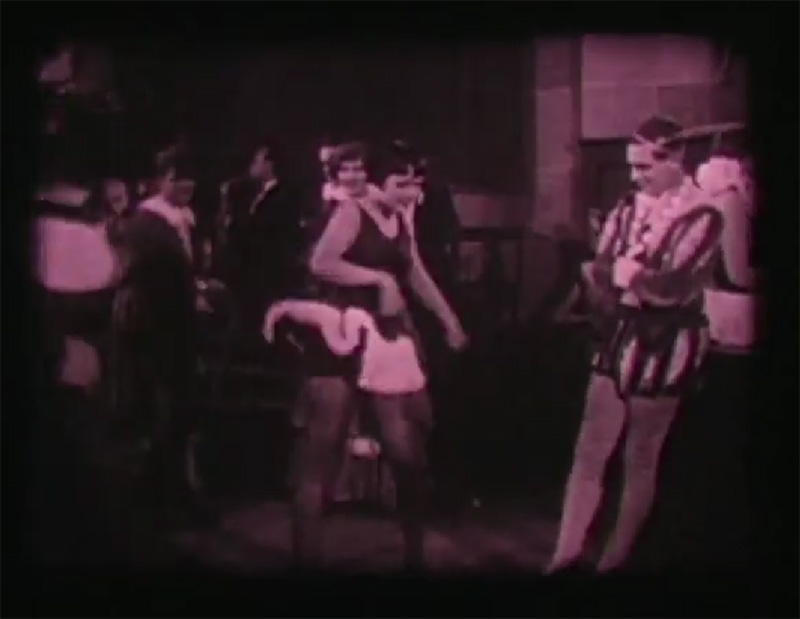
Janie’s horse wins but Lem refuses to give her the winnings and Miss Streeter has called in the money. Miss Streeter assumes that Mame stole the cash and Janie is covering for her, which Janie doesn’t entirely refute. In spite of everything, Mame tells Janie to go to the party and she will take care of the money.
In this case “take care” means to attempt a pickpocketing and then, when that fails, start a knock down drag out brawl. Can Mame best Lem and return the money in time? Will Janie ever learn her lesson? See Love ‘em and Leave ‘em to find out!
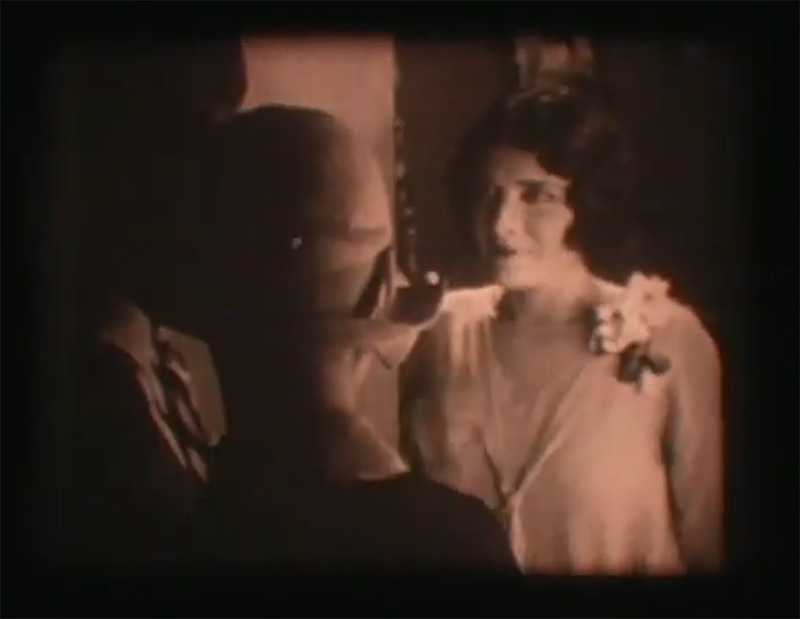
Most modern viewers will probably decide to watch this picture for Brooks and Brooks is indeed fun in baby vamp mode but this is Evelyn Brent’s picture. Brent’s modern popularity isn’t as big as that of her costar but she has a following, thanks to her snarly parts under the direction of Joseph von Sternberg. Brent specialized in tough dames, the kinds of parts that had worked so well for Norma Talmadge and Priscilla Dean and would later be played by Barbara Stanwyck.
Per industry press of the time, Lois Wilson was originally cast as Mame but it seems that she swapped out for the leading role in the lost silent version of The Great Gatsby. This would have been very much in Wilson’s good girl wheelhouse (she relished playing Daisy Buchanan for exactly that reason) and Brent’s casting is a bit surprising as I would have considered her more of a Janie than a Mame.
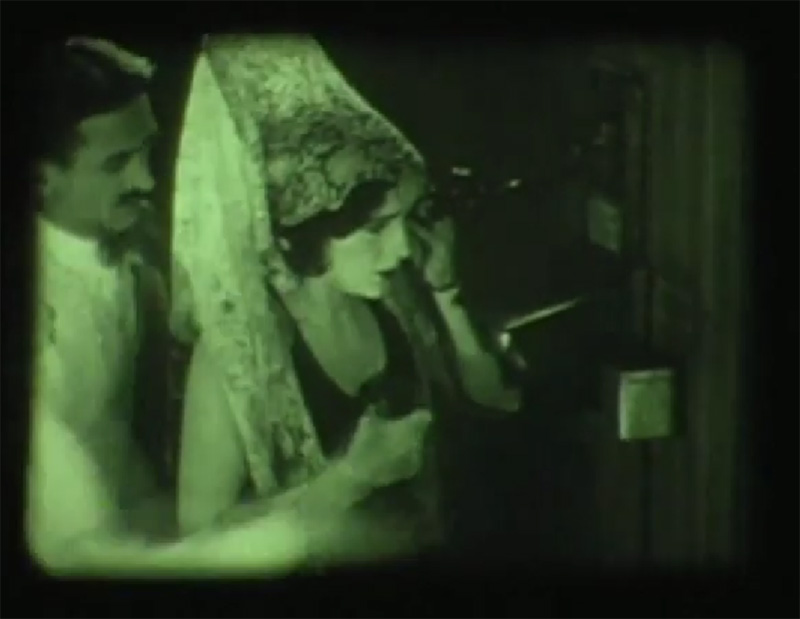
However, going against type pays off. Mame starts out sweet but as life continues to deal her blows, that classic Brent sneer comes creeping back. By the end of the picture, she is in full form. The grand finale brawl between Brent and Osgood Perkins (father of Anthony) is one for the ages, with cuts between smashing furniture and Bill speeding in a taxi to save her.
You know I love a good inversion of the damsel in distress trope and this one is a doozy. I won’t give away everything but the film has us believing that we are watching a race to the rescue only to fake us out. It’s witty, sassy, and it plays to Evelyn Brent’s dame-ish strengths. At least one critic of the time loved the scene too, with Moving Picture World gushing that Brent “stages a fight that rocks Milton Sills on his throne.”
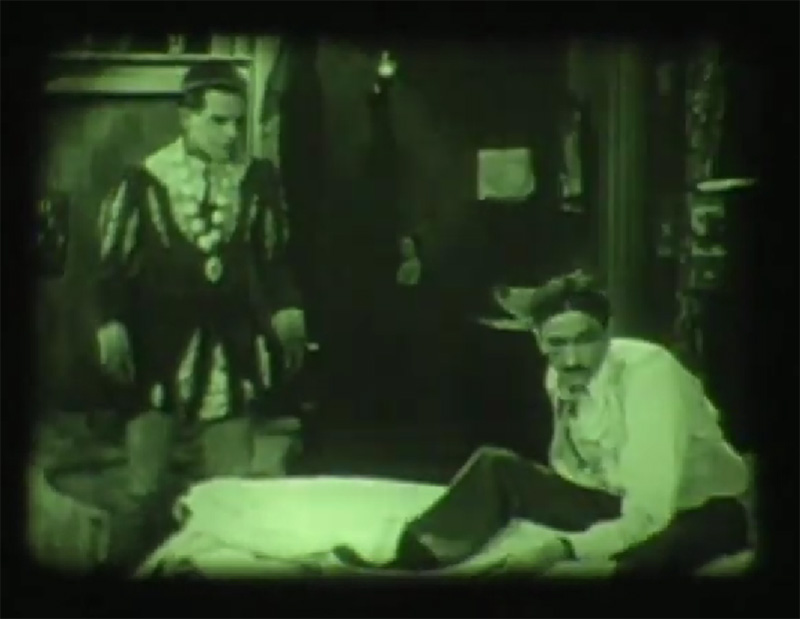
(Sills was kind of the Gerard Butler of his day, playing brawny action roles like the antihero of The Sea Hawk, as well as assorted Jack London characters, including the title role in The Sea Wolf.)
Brooks has plenty of moments that will please her fans as well, naturally, and received good notices for her appearance. She unrepentantly leaves Mame to clean up her mess and decides to pursue the lucrative career of a sugar baby to one of the department store executives.
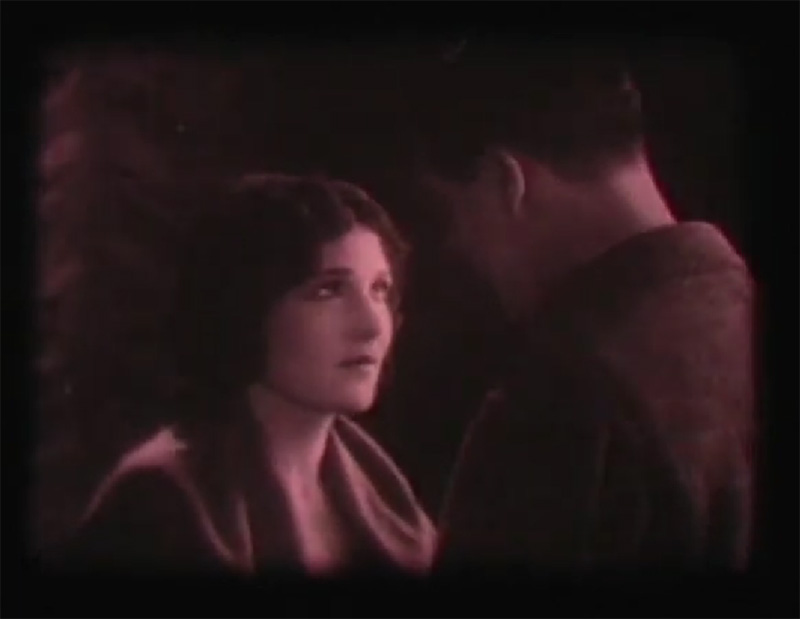
The only weak link here is the character of Bill, who is propped up by Mame at work and in life and repays her by cheating on her with her sister when she asks for a raincheck on the wedding. I know smart people sometimes go for arm candy but an amiable himbo is one thing, a disloyal goldbrick is quite another.
Still, generally, Love ‘em and Leave ‘em is a perfectly delightful slice of the twenties. Director Frank Tuttle was a master of this kind of light, unpretentious entertainment (he also helmed The Lucky Devil, one of the best racecar comedies of the silent era) and he scores another hit here.
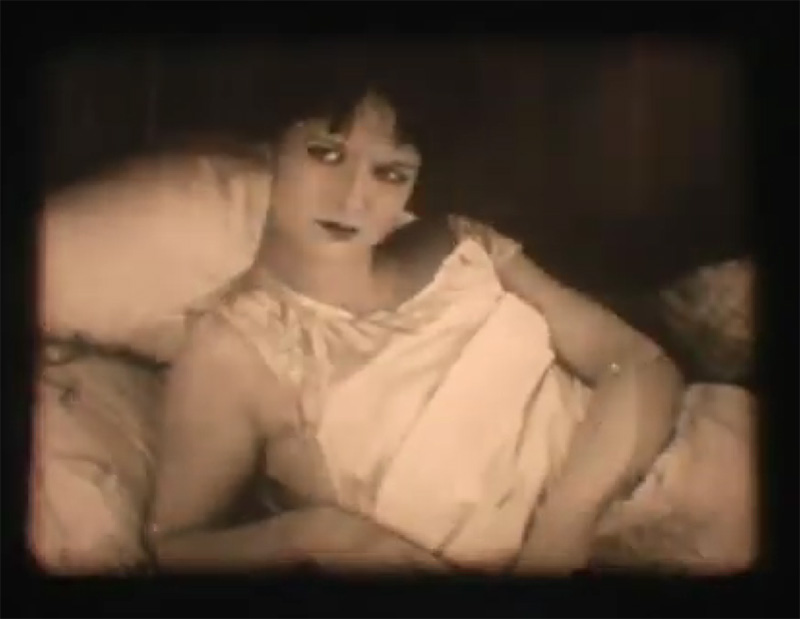
Come for Brooks but stay for Brent and the whole Jazz Age mood. This is a charming little picture that was a hit nearly a century ago and it will please audiences just as much today.
Where can I see it?
Older transfer from Grapevine available on DVD.
Silents vs Talkies
Love ‘em and Leave ‘em (1926)
vs
The Saturday Night Kid (1929)
This match is between two adaptations of the same play! Just three years after Love ‘em and Leave ‘em was released, Paramount returned to the well and adapted a new all-talking version renamed The Saturday Night Kid, with their top star Clara Bow as Mame and up-and-comer future star Jean Arthur as Janie. I don’t know what it was about this story that made the casting department do its job so well, but I am grateful.
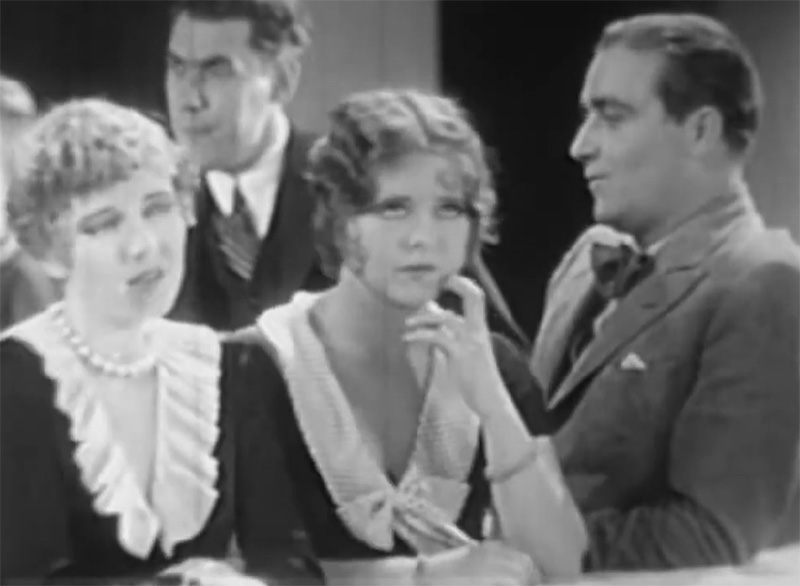
This time, it’s Arthur who plays against type, as most viewers probably know Arthur from her no-nonsense roles. Her characters could be manipulative but “baby vamp” is not a phrase that generally comes to mind. And Arthur’s Janie is far, far worse than the Brooks version.
Both films follow basically the same plot with a few exceptions—the window dressing story line was in the silent but not the original play and the talkie drops it, but it gives a lot more weight to Miss Streeter and her attempts to create a symbolic pageant in celebration of the department store—so I won’t recap. Instead, I wanted to focus on Clara Bow and how she was perfectly cast as the tough-but-tender Mame.
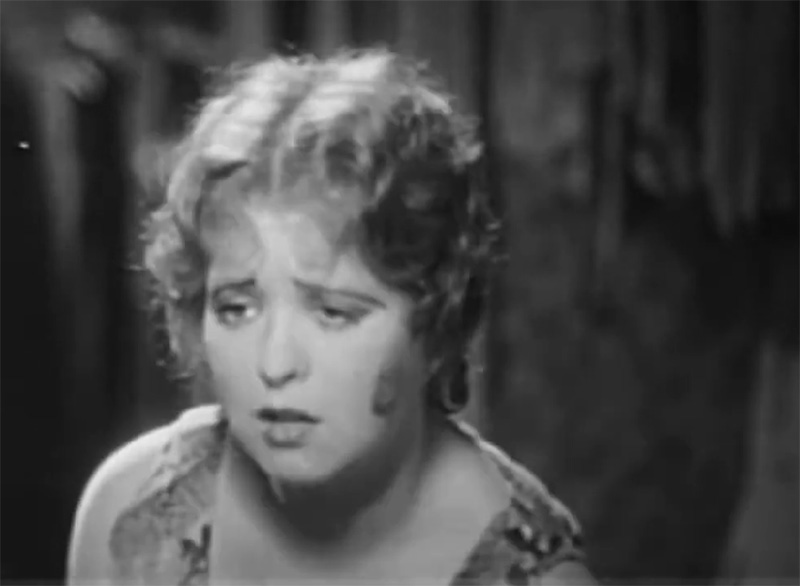
This was not Bow’s talkie debut but it was her first year in sound film. Heck, it was Hollywood’s first full year of sound, with 1928 very much being a year of transition. Therefore, it’s worth pointing out Bow’s clever use of code-switching.
For a while, when few of her talkies were available, there was a myth that Bow flailed in sound pictures because of her working class. That was always bunk because gangsters and shopgirls were a filmland staple and had been since the beginning. Further, Paramount cast Bow in roles that worked for her voice and her snappy, natural delivery was among the best compared to other silent veterans who were getting used to the new technology.
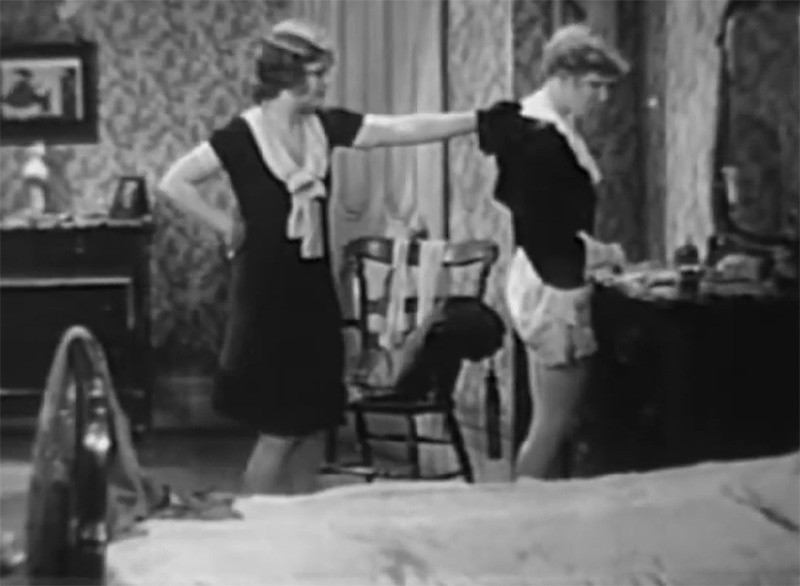
(The idea that silent stars had funny voices and were laughed off the screen is a gross oversimplification of sudden change in technology and artistry that had an inevitable learning curve. Poor William Boyd in High Voltage is my go-to example. Act, speak clearly for the microphone, or tamp down that Oklahoma accent. Pick two. But despite his early hiccups, Boyd also became a beloved sound star, his talkie and television career as Hopalong Cassidy eclipsing his silent stardom.)
Bow doesn’t stop at skillful line delivery, though, she teases our expectations, breaking out the plummy finishing school tones to mock the affectations of her employer and adopting wiseguy lingo to try to sound tough when she’s hurt. These latter scenes are sometimes used as examples of the artificiality of early sound but they were supposed to be artificial, Bow’s character is putting on an act, trying to sound hard when she’s heartbroken or frightened.
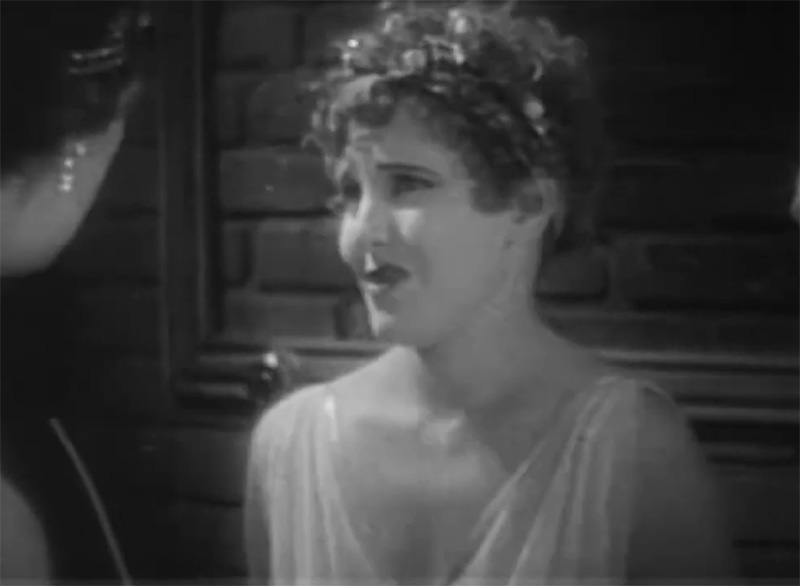
It’s also worth noting that Jean Arthur’s annoying baby talk delivery was also intentional. Baby talk had been a fad among the youth for a while and from the start, a vocal contingent and found it aggravating. In fact, it was spoofed in the splendid little 1915 comedy Miss Sticky Moufie Kiss, which ends with a bridegroom walking into the sea rather than facing a lifetime of listening to it.
Giving the more unlikable character the more controversial faddish speaking style was the twenties equivalent of a modern film giving the high school mean girl more vocal fry or constantly employing whatever modern slang annoys the adults. Everyone involved in The Saturday Night Kid knew what they were doing.
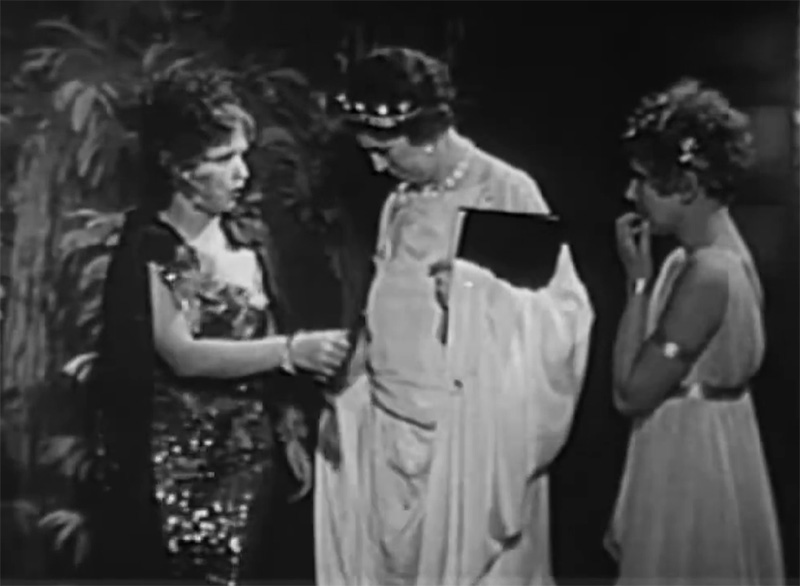
The direction by A. Edward Sutherland (former Mr. Louise Brooks) is generally good, though there are some static scenes with a long camera shot that looked like they could have been taken in 1905, if you ignore the cloche hats. The pageant scenes with Miss Streeter are particularly fun, as the pretentious would-be playwright trills out orders and delivers lines like, “Stupidity? Go find Pleasure!” Well, if you have Edna May Oliver cast in such a role, you let her play it for all it’s worth. It would be a crime not to.
So, Saturday Night Kid is just as fun as can be but how does it compare to Love ‘em and Leave ‘em?
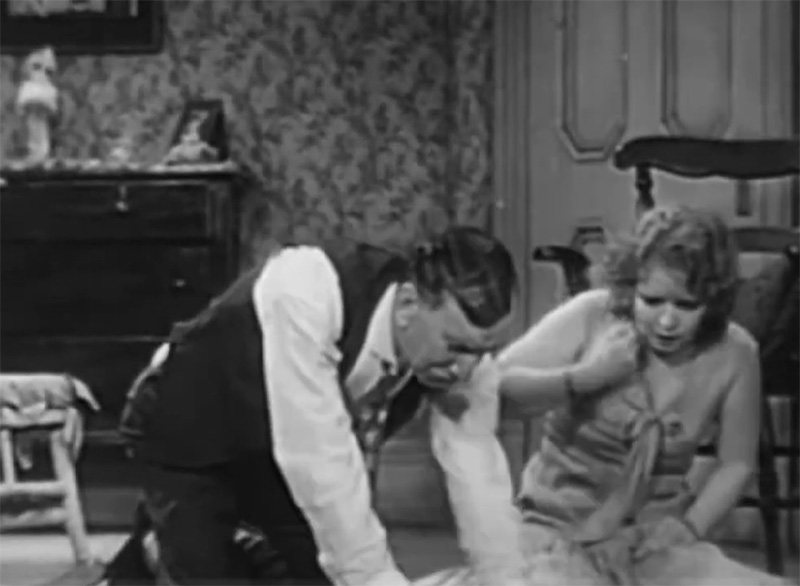
Both films make changes to the original play, though they generally follow it. Spoilers ahoy. (If you want to play along at home, here is a link for reading the script. Content warning: casual use of racial slurs in the play, these are not present in either film version.)
In the stage version, Janie has already gotten her claws into Bill when the story opens. Both films show the seduction process in more detail, with Love ‘em and Leave ‘em treating it as mutual attraction and The Saturday Night Kid going into detail about Jannie’s lies and manipulation to win Bill away from Mame.
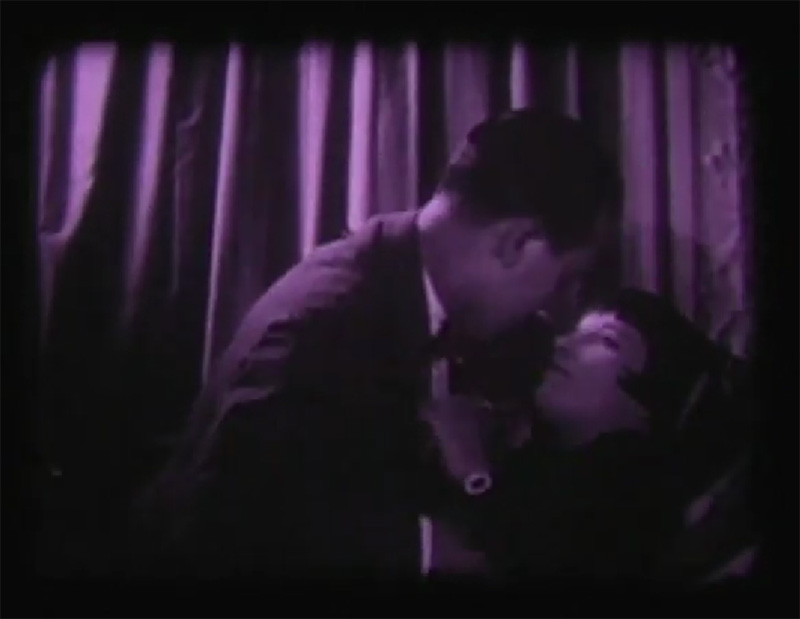
Ultimately, Love ‘em and Leave ‘em is more satisfying as the cheating is more complex and blame is shared by both parties. The Saturday Night Kid goes out of its way to treat Janie as a villain rather than just a spoiled kid drunk on her own beauty.
Speaking of beauty, the play positions Janie as the beauty compared to the plain Mame. I think we can all agree that it’s best that angle was dropped in both films as no stretch of the imagination could ever result in Evelyn Brent and Clara Bow being considered plain.
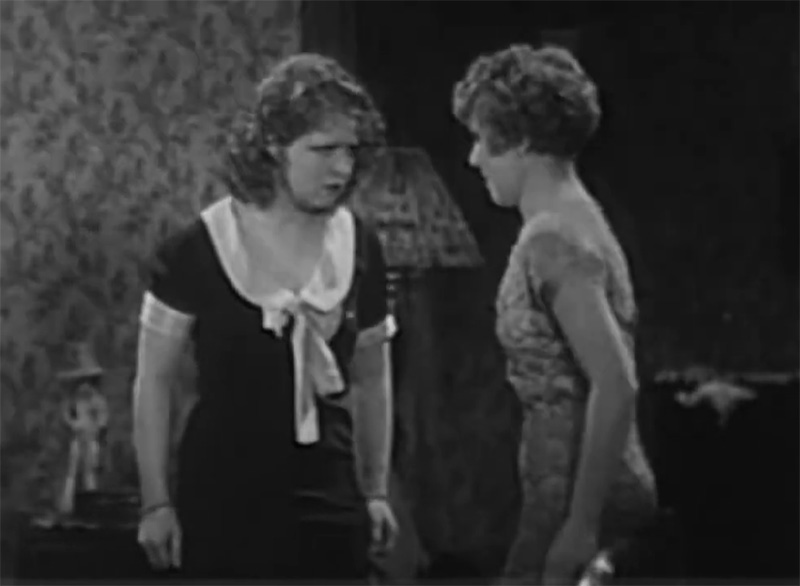
The relationship between the sisters is also different between the play and both films. In the play, Janie is a manipulative little thing and ends up as Mr. Ginsberg’s private (and how!) secretary. Janie declares that she is taking Mame’s advice: love ‘em and leave ‘em and get what she can out of life. She leaves her sister behind.
In Love ‘em and Leave ‘em, Janie wins her sugar daddy and never made a major effort to frame Mame for the theft. She is left to go on her own incorrigible way, not a villain or an antihero but a force of nature. In The Saturday Night Kid, the sisters have it out and Mame slaps Janie for her betrayal with Bill overhearing and realizing that Janie is a snake in the grass. I am not sure any version is entirely satisfying, especially since sibling dynamics are complex.
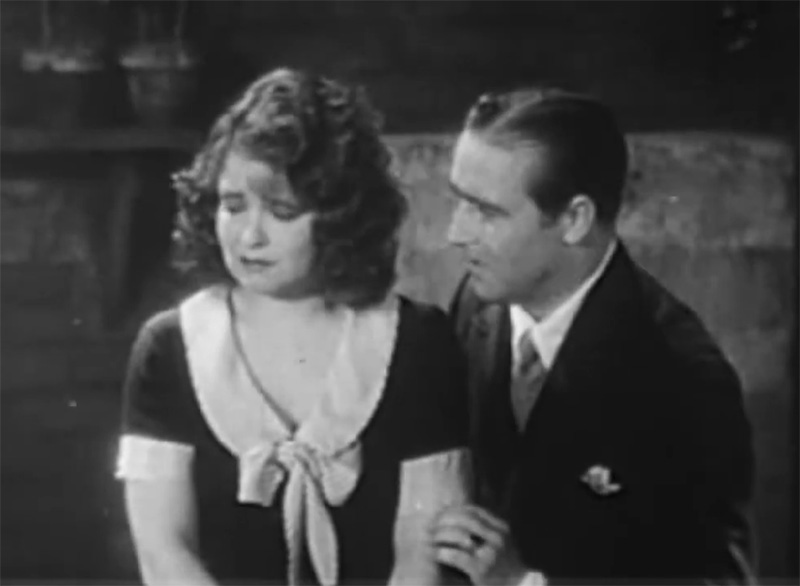
Bill generally comes off better in The Saturday Night Kid. He isn’t 100% sure that Mame likes him because of her tough act and Janie plays on his insecurities and outright lies, telling him that Mame hates his poems. Therefore, it’s less irritating when Mame takes Bill back as he never really meant any harm.
Besides the degree to which Bill is to blame for dumping Mame, the biggest difference between the two films is how they deal with Lem (played in the talkie by Charles Sellon). Both the original play and The Saturday Night Kid portray Mame shooting a hot game of craps and taking Lem for all the cash he stole from Janie. This is dynamic and dramatic since we are left in suspense as to whether or not she wins it all and aren’t shown until Mame shows up at the pageant.
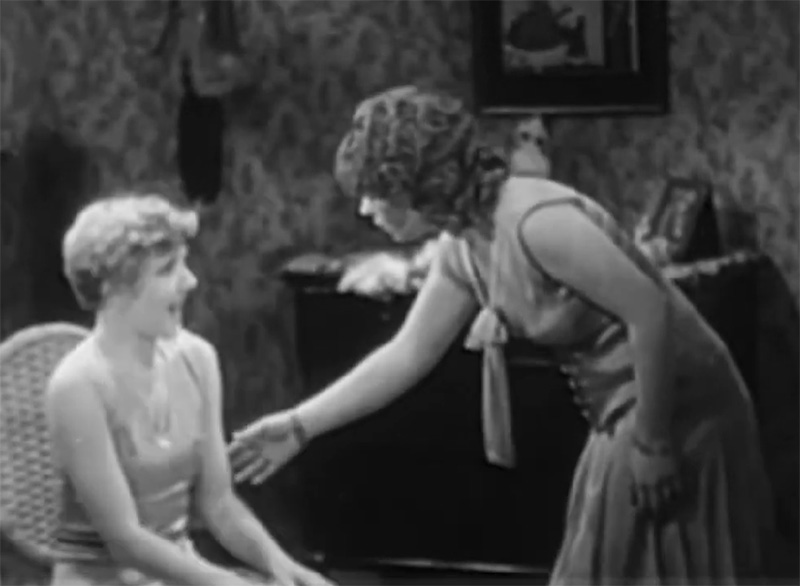
In the 1926 film, Mame attempts to steal Lem’s wallet, he snatches it back and a knock down drag out fight ensues. Bill hears the rumpus over the telephone and races to the rescue. He arrives to save Mame… only to find her calm, collected, in possession of the money, and Lem stuffed into the Murphy bed.
And the winner is…
The Silent
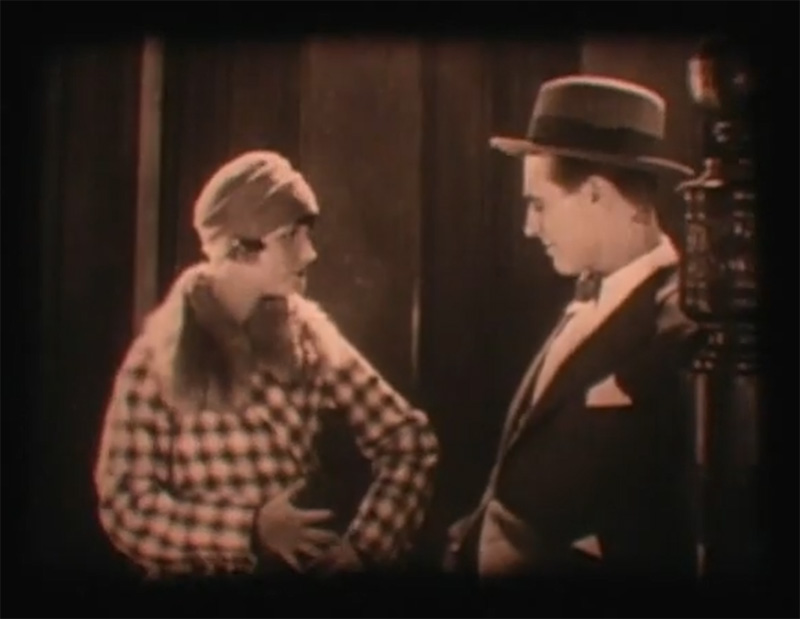
This was very very close and Love ‘em and Leave ‘em beat out The Saturday Night Kid by the thinnest of margins. Great casts in both films, good direction, good use of their respective mediums. I guess it came down to that fight and rescue fakeout and that was what nudged the silent across to victory, though I prefer the way the talkie handled the central romance.
In the end, I slightly favor Love ‘em and Leave ‘em but this film duo would be a delightful double feature. You really can’t go wrong with either one. Enjoy! I know I did.
Home Media: No official release of The Saturday Night Kid yet but streaming is a search engine result away.
☙❦❧
Like what you’re reading? Please consider sponsoring me on Patreon. All patrons will get early previews of upcoming features, exclusive polls and other goodies.
Disclosure: Some links included in this post may be affiliate links and I earn from qualifying purchases.


Wonderful film. I watched it for Evelyn Brent rather than Louise Brooks so I’m probably in the minority! The fight at the end was such a surprise considering Mame’s behaviour up till then. “Put on your pants and don’t worry about me”. I laughed out loud when she said that. Many thanks for bringing this film to my attention. I really enjoyed it.
Glad you enjoyed! Yes, I really had the time of my life watching these pictures, perfect summertime popcorn fare.