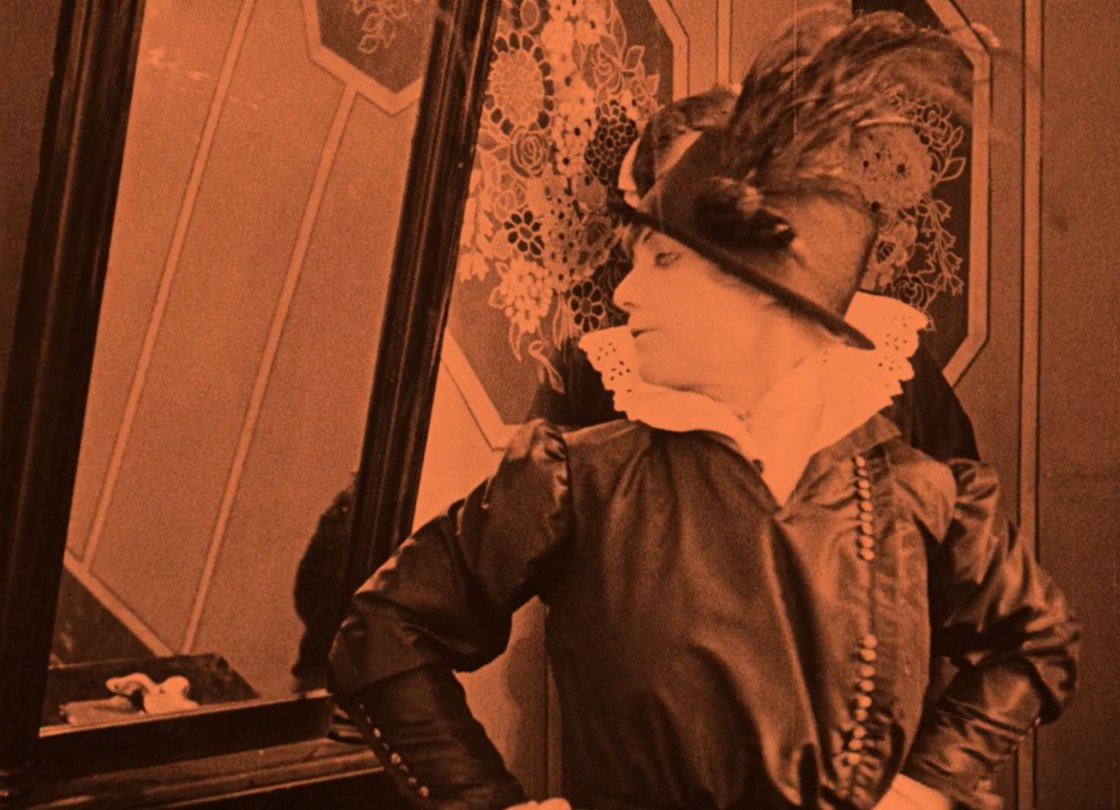
A pair of business partners soon find themselves in hot water with their wives and the misunderstandings continue to pile up when a flirty note is misdelivered.
Home Media Availability: Stream courtesy of the Danish Film Institute
Your Bad Girl
Director Lau Lauritzen Sr. was a Danish comedy machine, producing dozens of comedy shorts every year before making the jump to features. He specialized in domestic and everyday subjects with casts mired in believable, relatable messes that would soon escalate into farcical misunderstandings. His films were marked by consistent quality and a smooth, goes-down-easy flavor. In short, we are in good hands.
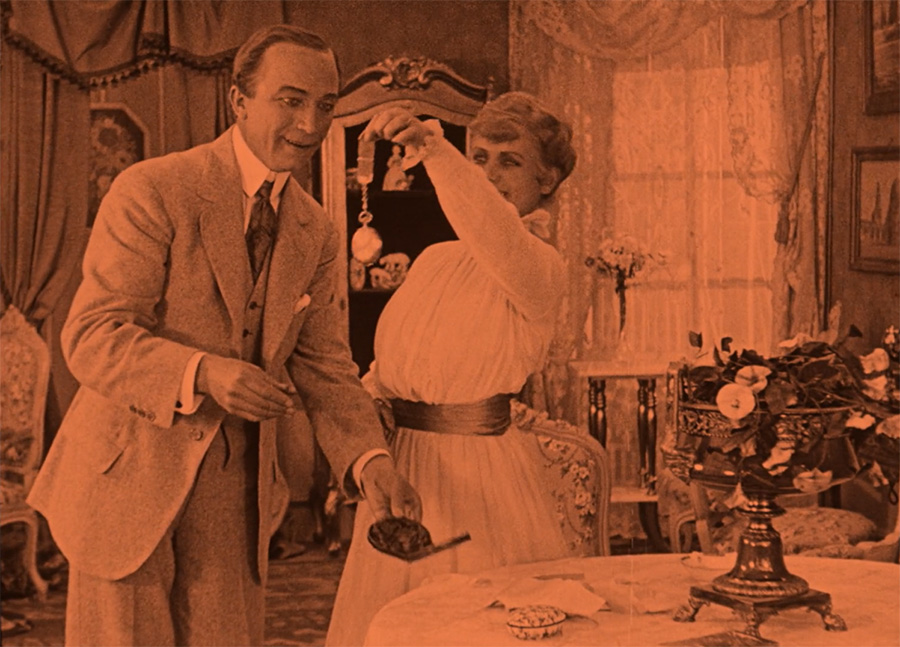
Oh, Those Women is a marital comedy about two business partners, Hans Storch (Rasmus Christiansen), who is celebrating his birthday with his wife, Anna, and Peter Søndergaard (Lauritz Olsen), who is celebrating his wedding anniversary with his wife, Dora– or should be! Søndergaard has clean forgotten and cannot understand why his wife seems so peeved with him.
(By the way, the original program for the film lists who plays which man but the wives are not listed and there is no modern confirmation that I could find. The Danish Film Institute lists Agnes Andersen and Agnes Seemann as members of the cast and it looks like Andersen plays Dora and Seemann plays Anna. At this point in film history, credits for movie actors were only seven or eight years old, so this lack of information is fairly common.)
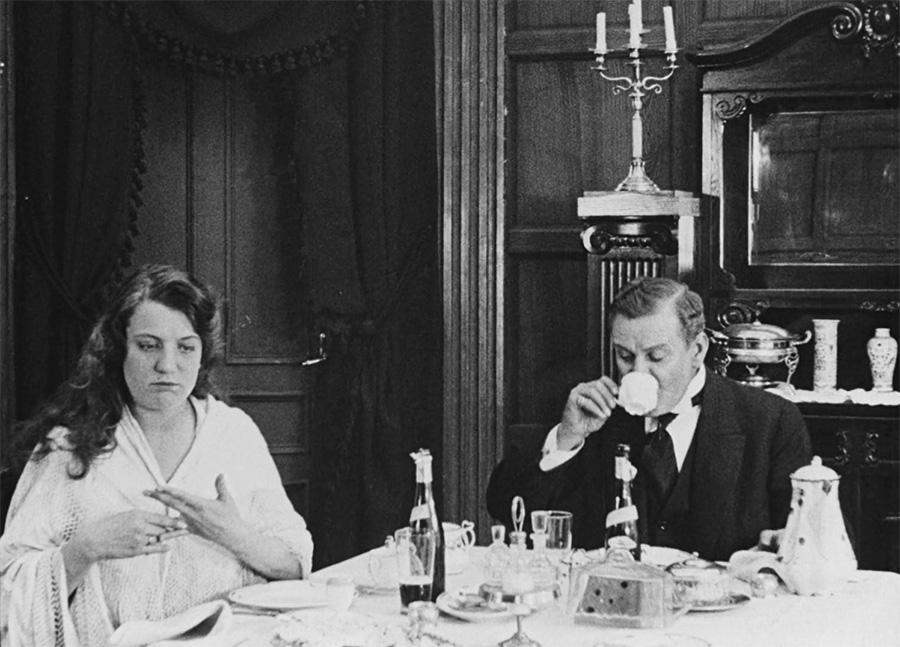
Storch reminds his partner that the birthday and anniversary fall on the same day and Søndergaard realizes his blunder. He quickly orders flowers and a note of apology to Dora, and she is happy to forgive when they are delivered to her. She also remembers the coincidence of Storch’s birthday falling on their anniversary and decides to send him flowers. She writes a flirtatious note to her husband, inviting him to an anniversary lunch at a restaurant and signing it “your bad girl.”
All’s well that ends well, right? Well, Dora accidentally mixes up her notes. The prim card meant to go with Storch’s flowers is delivered to her husband instead and the flirty card is sent with the bouquet. As a result, Søndergaard thinks Dora is giving him the cold shoulder and Storch is baffled by the anonymous “bad girl” who has sent him flowers. Anna shows up to invite her husband to a birthday lunch but he cannot go since he is drowning in work. Anna sees the note and is furious. Her husband refuses lunch with her but has an invitation from his bad girl? This will not be tolerated! She rushes home to pack her bags, she is leaving the snake!
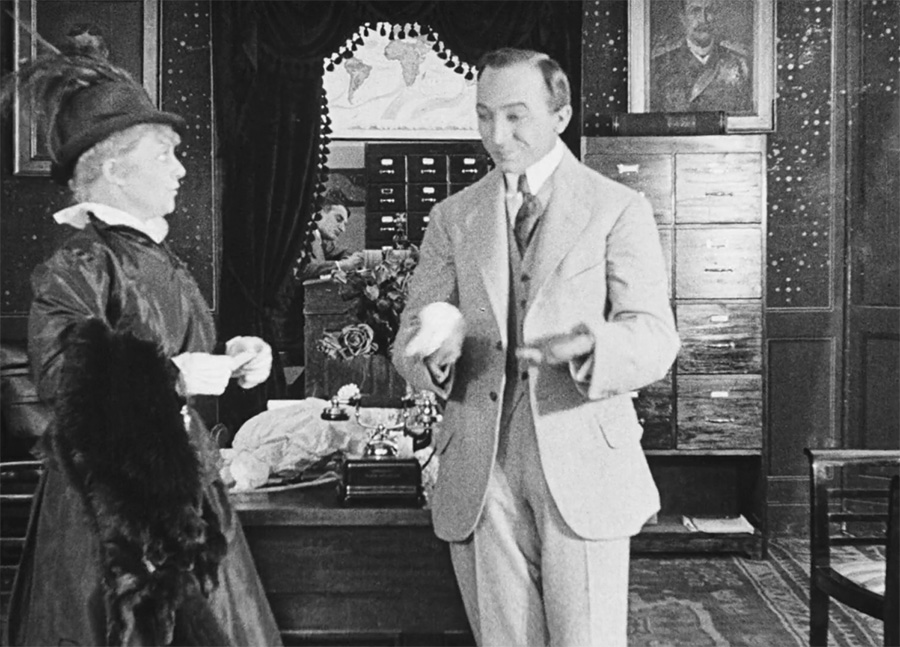
Meanwhile, Dora has been stood up for lunch and is furious at her husband for treating her like this. She goes home and cries. So, both couples are on the rocks and things look dire. In frustration, Storch tells his troubles to Søndergaard and shows him the note. He recognizes his wife’s handwriting and realizes that it must have been meant for him. If they can just get Dora to explain everything to Anna…
Will the marriages be saved or will Copenhagen see two more divorces? See Oh, Those Women to find out.
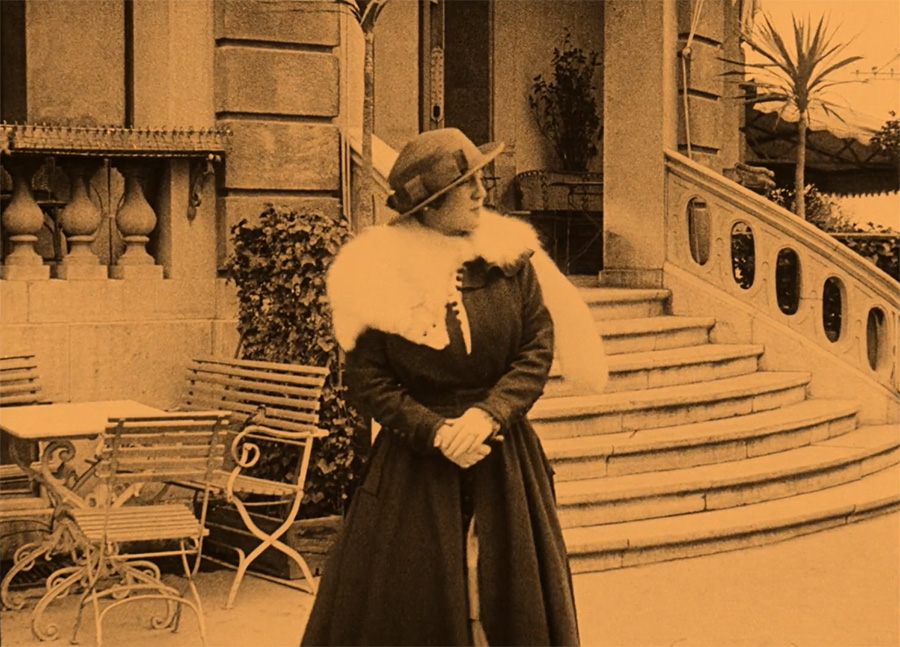
When a filmmaker of the silent era got into a rhythm, it was like an experienced jazz band improvising together. Lauritzen had a stock company of actors he used again and again and everyone falls into their respective characters easily. (Louis Feuillade, who was directing great serials in France around the same time and who had established his reputation during the reign of short films, similarly managed to get his cast in order quickly, though it was reportedly through absolute dictatorship and military-style drills. Lauritzen seems to have taken a friendlier approach, with his cast apparently just having fun and projecting that onto the screen.)
Lauritzen’s films represent an under-discussed area of silent cinema and one that I find most interesting: the crowdpleasers that didn’t cost a million and weren’t necessarily going for any prizes, they just wanted to entertain the average moviegoer (the average Danish moviegoer in this case) for a reel or two. While art films and wild slapstick get more attention, what Lauritzen produced was really the backbone of the cinematic experience. Every couple of weeks (and that was the pace he set in the 1910s), you could count on being entertained by Lauritzen and his troupe, which kept ticket buying movie fans interested and helped support more expensive fare too. (Lauritzen himself took advantage of this system with his epic, filmed-on-location adaptation of Don Quixote in 1926.)
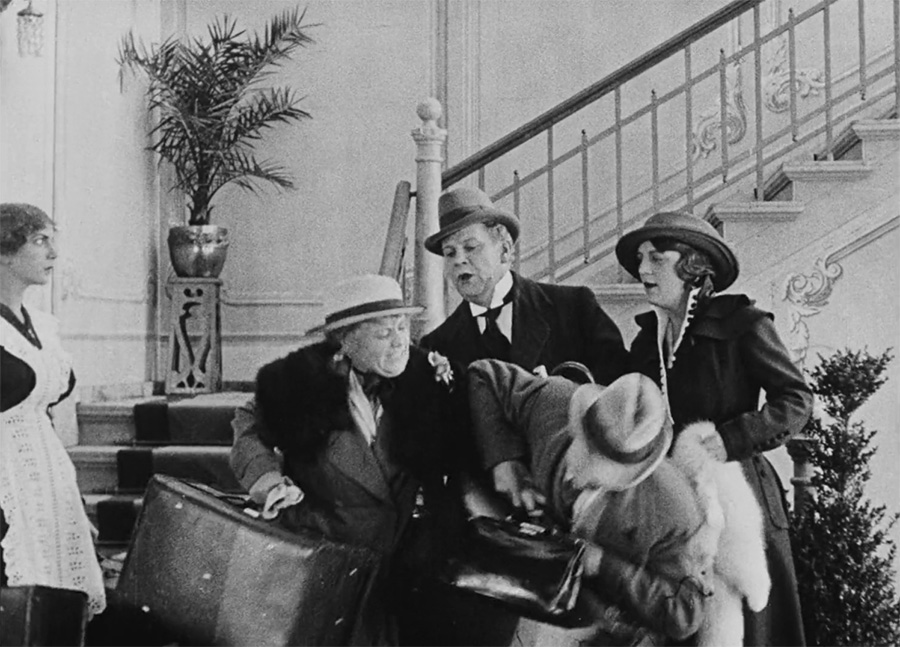
Oh, Those Women is a splendid little bonbon, half-sitcom and half-farce. Both genres tend to work with set situations, the pleasure for the viewer coming from exactly how this team will put the thing over. Of course, we expect that all will end with reconciliation and happiness but the journey is the main thing here, as well as watching the plot set itself in motion like one of those giant domino patterns.
The quartet of leads do an excellent job of passing the “I am not overreacting, you’re overreacting!” ball to one another throughout the picture. I particularly liked the scene where Søndergaard and Dora have reconciled but Storch is hopping about in the background because he needs them to get over to Anna and explain everything before she leaves their apartment. It’s a small detail but I also enjoyed the way the background office workers completely ignore some of the more fiery scenes in the office beyond a “here go the Bickertons again” shrug. Whether intentional or not, it gives us the impression that these scenes have played out repeatedly at the office.
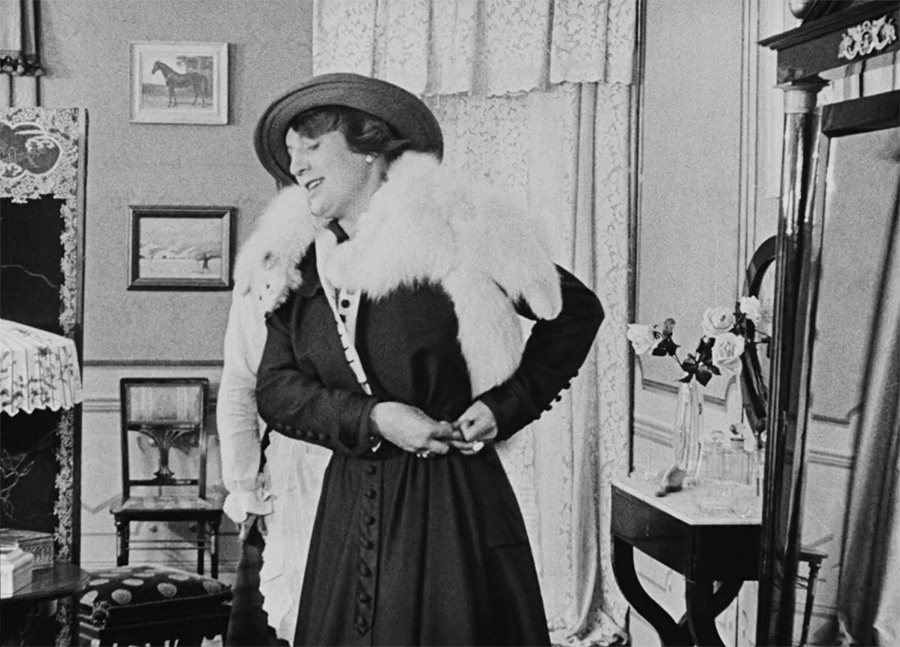
As a bonus, anyone interested in fashion will enjoy the many non-leering dressing scenes in the picture that showcase all the fastenings and fussiness of mid-1910s fashion.
I have seen enough Lauritzen pictures by now to say that this is very much typical of his output and enjoyably so. It’s a droll little comedy that will entertain you for 19 minutes and what more could you ask for?
Where can I see it?
Stream courtesy of the Danish Film Institute. There are no English subtitles or score for the picture yet.
☙❦❧
Like what you’re reading? Please consider sponsoring me on Patreon. All patrons will get early previews of upcoming features, exclusive polls and other goodies.
Disclosure: Some links included in this post may be affiliate links and I earn from qualifying purchases.


A very good one. Are there any more Lauritzen films out there, available for viewing?
Quite a few! Stumfilm.dk has a good collection