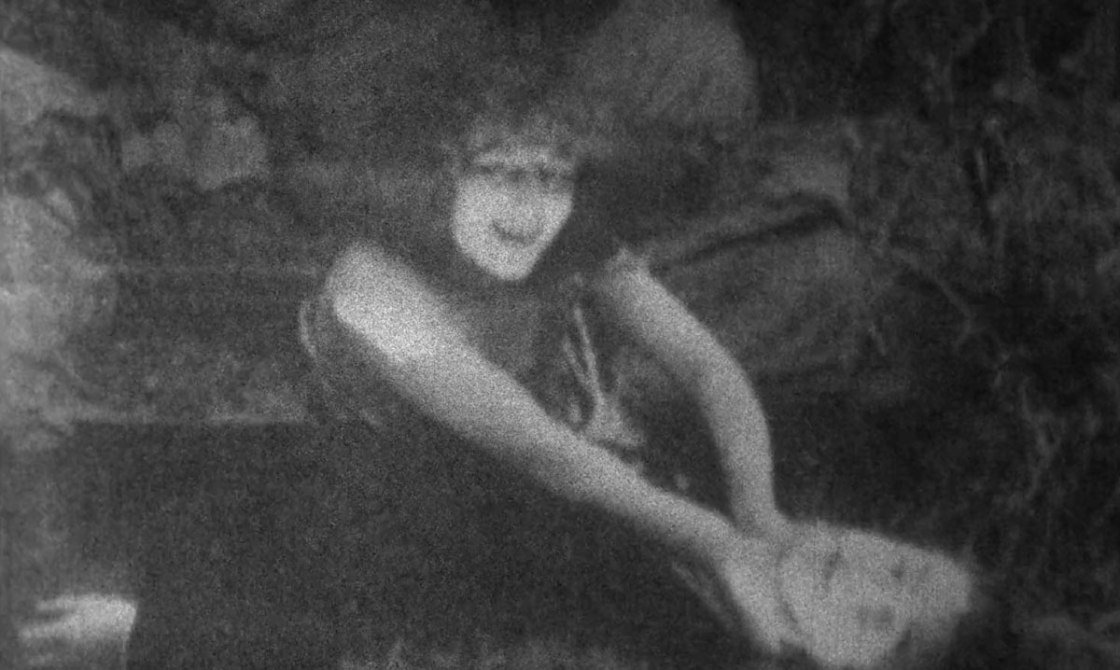
When a dancer’s partner suddenly falls ill, she hires a replacement but trouble arises when he falls in love with her and won’t take no for an answer.
Home Media Availability: Stream courtesy of the Danish Film Institute
Danish Slice
Philip Burne-Jones caused a sensation with his painting, The Vampire, which quickly inspired a poem of the same name by his cousin, Rudyard Kipling. The most famous iteration of the vamp can be found in the movies, with Theda Bara leading the charge of cinematic vamps from 1915 to 1919. However, vamps were found in the movies prior to Bara, notably two American films titled The Vampire, released by Selig in 1910 and Kalem in 1913.
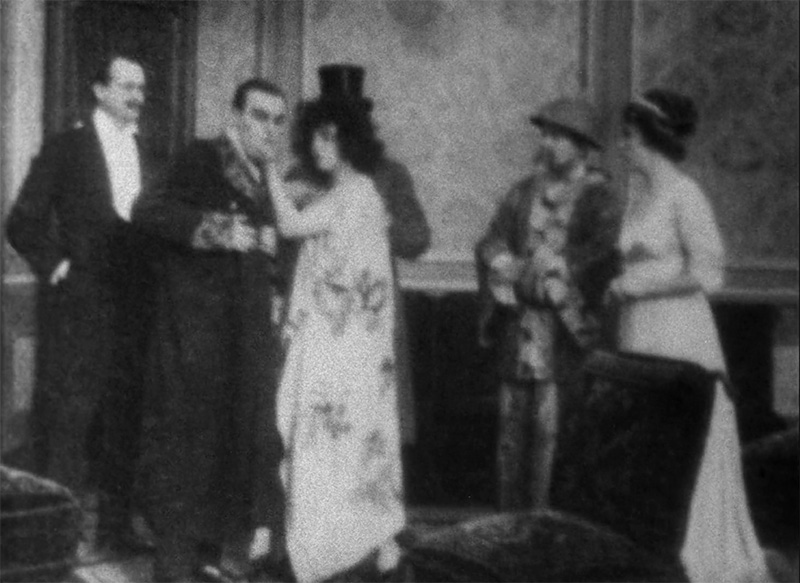
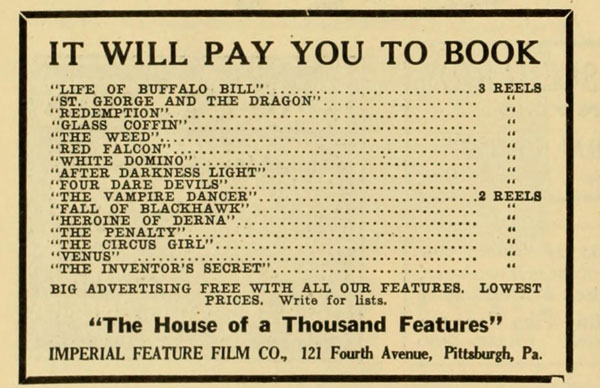
The Vampire Dancer was released in 1912 between these two productions and was directed by Danish pioneer August Blom. Denmark was uniquely positioned to take advantage of the vamp craze as its industry had probably done more than any other to inject capital S Sex into the movies. Like the later Kalem picture, The Vampire heavily incorporated the popular Vampire Dance into its plot. Vampire Dances had taken the world by storm a few years prior, featuring a woman in abbreviated attire seducing and consuming her male partner on stage.
However, The Vampire Dancer actually has more in common with the dark films Evgeni Bauer was making in Russia than it does with the American film industry’s vamp fixation. You see, vamp films were about the downfall of a man at the hands of a cruel woman but both Bauer and Blom present a world where men and women are both victims of a male lack of self-control and grasp of reality.
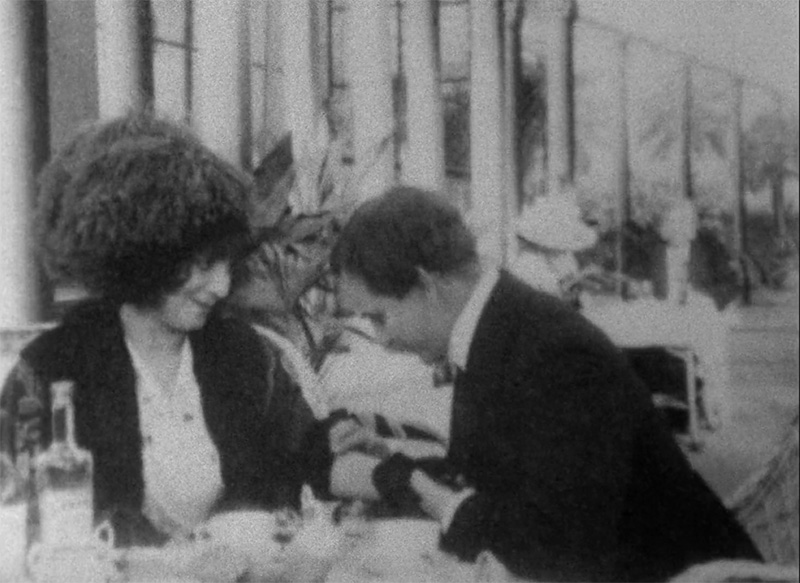
Clara Wieth plays Sylvia, a star dancer whose Vampire Dance is a smash hit. However, her partner suddenly falls ill and she needs a new one as soon as possible. She auditions and hires the moody Oscar (Robert Dinesen). The dance they rehearse together is quite hot stuff, with Sylvia biting and throttling Oscar until he feigns death on the stage boards. (I did tell you about the Danes.)
Oscar is deeply in love with Sylvia but she has a fiance (Henry Seemann). However, she tries to let the silly young man down easy, fussing over him and even allowing him to sob into her lap. Oscar realizes that Sylvia will never love him and so, prior to their next performance, he goes to the chemist and purchases a small bottle of poison…
You have probably noticed the grainy quality to the screenshots in this review. That is because no copy of The Vampire Dancer is known to survive on film. Into the early 1910s, movie copyright was no settled matter. (I dig into film copyright in the United States in my review of the unauthorized Kalem version of Ben-Hur.)
Filmmakers releasing in the United States would cover their bets by submitting important scenes or even their entire movie on photo paper. That way, should copyright law fail to cover movies as a single entity, each frame could be copyrighted as part of a photo collection. The Vampire Dancer was released in the United States, as well as numerous other foreign markets, and was submitted to the Library of Congress in its entirety for protection.
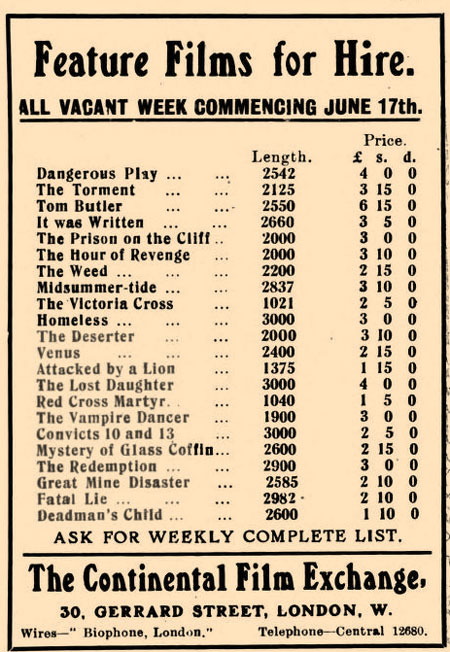
Naturally, these photos do not match the resolution of a 35mm or even 8mm film in some cases. However, they do represent a rare chance to see movies that would otherwise have been lost. That said, we lose quite a bit of nuance. I am sure Wieth and Dinesen were doing some subtle emoting that has been lost to the graininess but I will take a taste of the real thing over only imagining the picture from stills.
Even through the low resolution, it’s clear that Wieth and Dinesen are doing some fascinating work. People tend to write off silent film acting generally as melodramatic and, if they do find a subtle performance, will state something along the lines of “Unlike many silent era performances, this one is…” This is ridiculous as the silent era lasted from the mid-1890s to the early 1930s and there were multiple styles of acting in use across those decades.
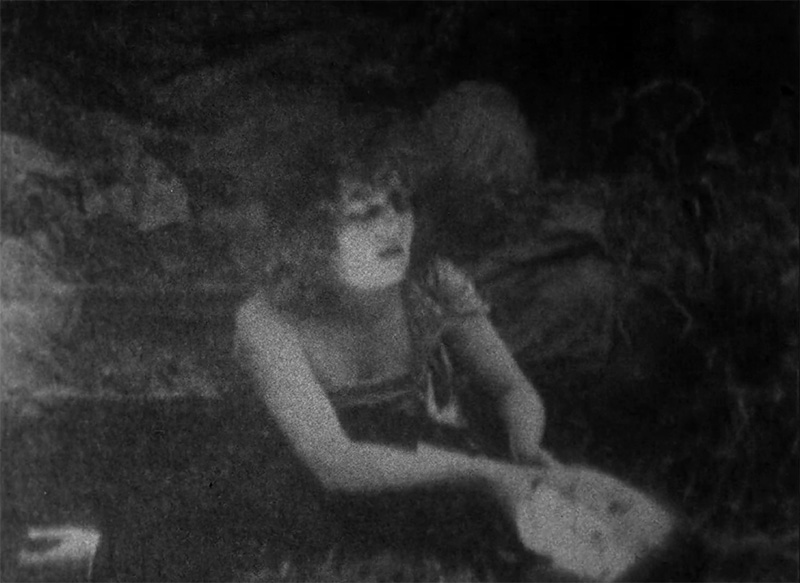
That being said, in an apples to apples comparison with other 1912 output, Wieth and Dinesen are doing some sophisticated acting. Wieth is particularly good during the final Vampire Dance scene. Oscar has downed his poison and is dying as he dances. Sylvia is triumphing over his body, as called for in the choreography, laughing in triumph but intermittently breaking character as she becomes concerned that his dying act is a bit too realistic. Surviving stills indicate that she was ably supported by cinematographer Axel Graatkjær’s moody lighting.
As noted earlier, the vamp film as we know it would always feature a man driven to his ruin and/or death (or nearly so) by a cruel woman with almost supernatural sex appeal. This fantasy formula appealed to men and women alike during the height of the craze before it burned itself out. The Vampire Dancer shares the DNA of these vamp pictures as they all have the same progenitor but its path is very different.
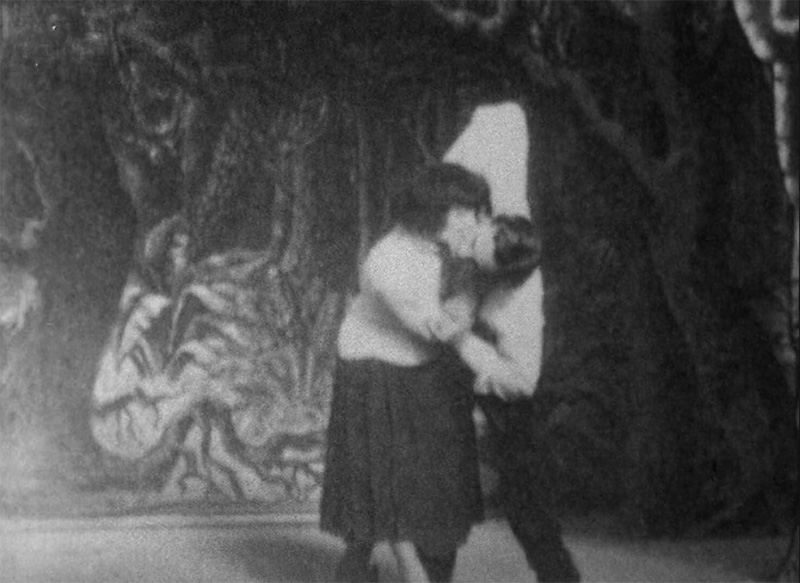
If Sylvia is guilty of anything, it’s being too nice to Oscar and not realizing how seriously ill he is; he is clearly in a crisis. Really, though, given the mental health situation of the time, what could she have done? Rejecting him harshly would not have been a better option for a man clearly in the throes of obsession. Sending him to an asylum would likely have not helped either. He has become obsessed with the dance and determined to make it real. Art and reality blur for some people and that is really the lesson of The Vampire Dancer.
This reminds me of Evgeni Bauer’s dance-themed tragedy, The Dying Swan (1917), in which a wealthy dilettante fails to differentiate between fact and fiction, becoming obsessed with painting a ballerina sleeping in death. Like Sylvia, she is too nice and fails to see the danger in this disturbed young man’s fixation. Both films would make an eerie dance obsession double feature.
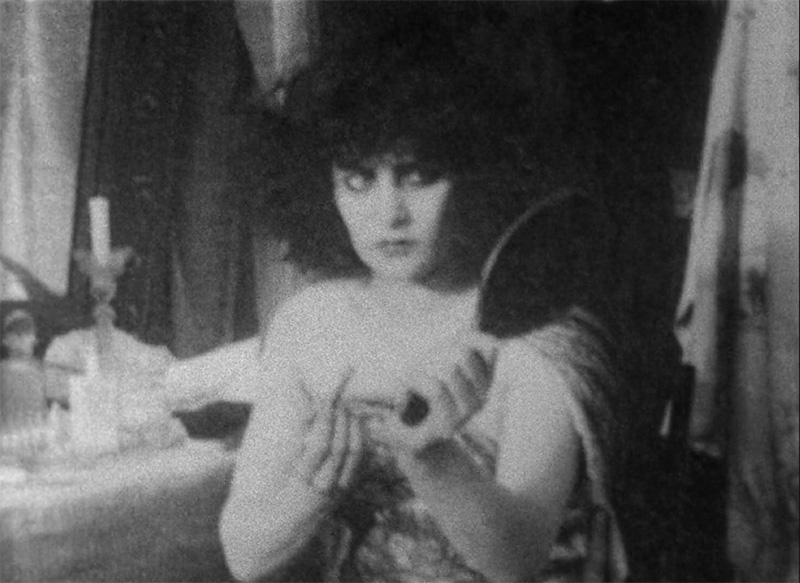
The Vampire Dancer is not a true vamp film but it is something more durable. Tales of dance and obsession have continued to intrigue film audiences today, as have stories of a break with reality and its tragic consequences. The surviving version of the film only gives us a taste of what was originally shown, here’s hoping a film copy turns up.
Where can I see it?
Stream for free courtesy of the Danish Film Institute.
☙❦❧
Like what you’re reading? Please consider sponsoring me on Patreon. All patrons will get early previews of upcoming features, exclusive polls and other goodies.
Disclosure: Some links included in this post may be affiliate links and I earn from qualifying purchases.


A nice sample of this era and style of filmmaking. I understand it, the fixed frame and the choreography within the frame, but it has its limitations. Good production values and, as you mention, restrained performances. Even the vampire dance. Noteworthy is what equates to a close-up at the dramatic moment of the dance scene. Remarkable. At least the young man poisons himself and not the dancer. It is lamentable that there is not a better source for this film.
Here’s hoping for a miracle discovery of film elements!