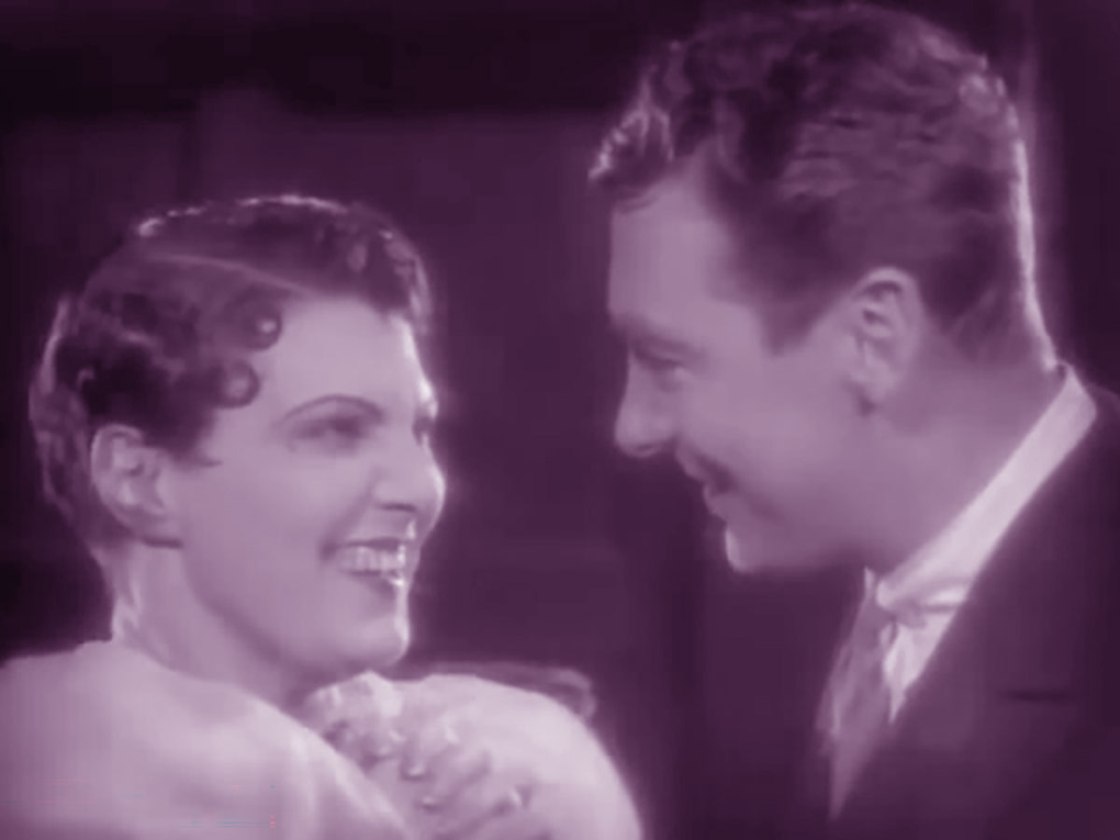
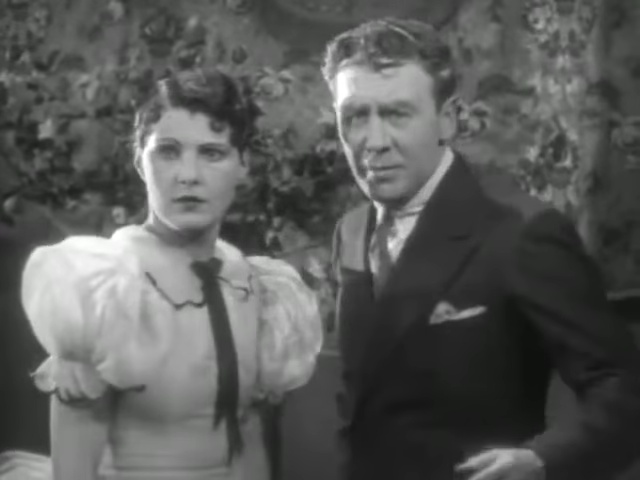
Leatrice Joy plays a sexless corporate power player who transforms into an eyelash-fluttering “clinging vine” after a fancy makeover. With her new identity, she tries to win the man of her dreams.
Home Media Availability: Released by Flicker Alley.
Makeover Mania
Women in the workplace! This shocking development was the topic of conversation in the United States in the 1920s and therefore a ripe subject for film. In fact, the number of working women had only risen from about 20% to 24% between 1900 and 1920 but what had changed was the type of toil women were performing. Previously, domestic work and manual labor, factory and farm, had been the main occupations but the 1920s saw a shift toward professional careers, clerical, sales and even management. In short, women were shifting from predominantly blue collar to more white collar careers.
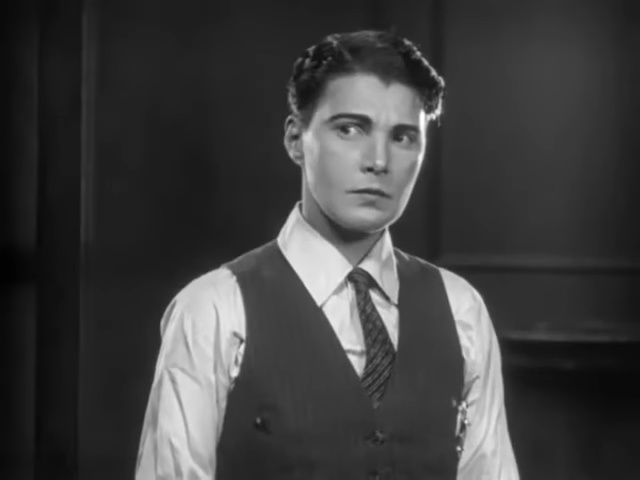
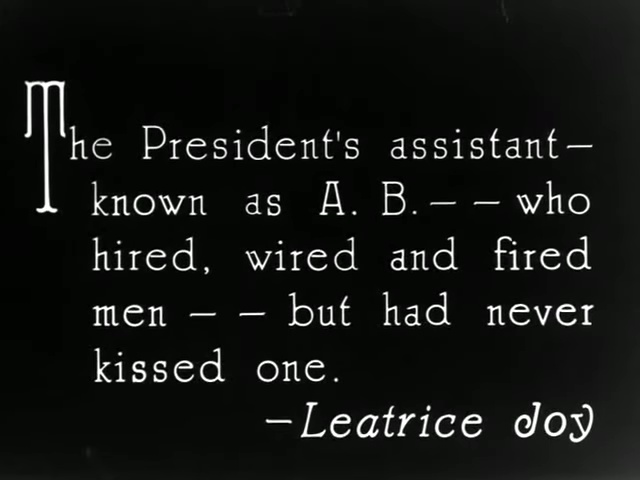
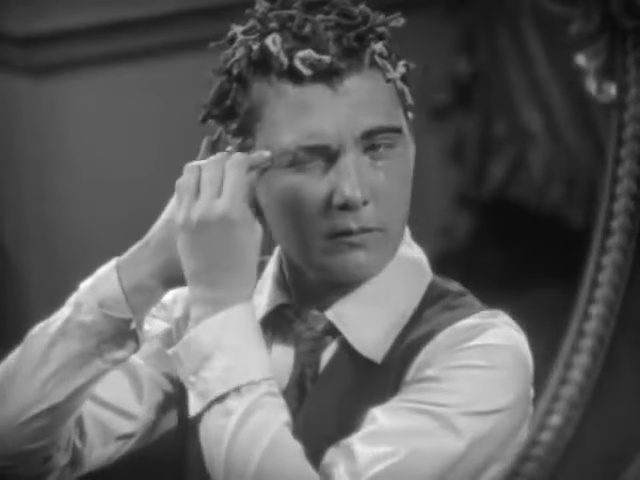
Management is the subject of The Clinging Vine, a Leatrice Joy vehicle released by Cecil B. DeMille’s brand new studio, Producers Distributing Corporation. Joy, showing off the aggressive bob she said she got on a dare from husband John Gilbert, plays A.B., the brains of a successful paint company. She wears no makeup, dresses in masculine suits, and (gasp) does not pluck her eyebrows, so she is Hollywood Ugly. A.B. knows her stuff, negotiating valuable mineral rights for a rare pigment, but she really longs for love.
A.B. has just fired Jimmie, the grandson of the company’s owner, T.M. Bancroft (Robert Edeson), via telegram. Bancroft considers him to be a failure with no head for business. This sends Jimmie (Tom Moore) racing home to grandma (Toby Claude) to complain about the evil A.B. who cruelly dismissed him merely because he couldn’t do his job.
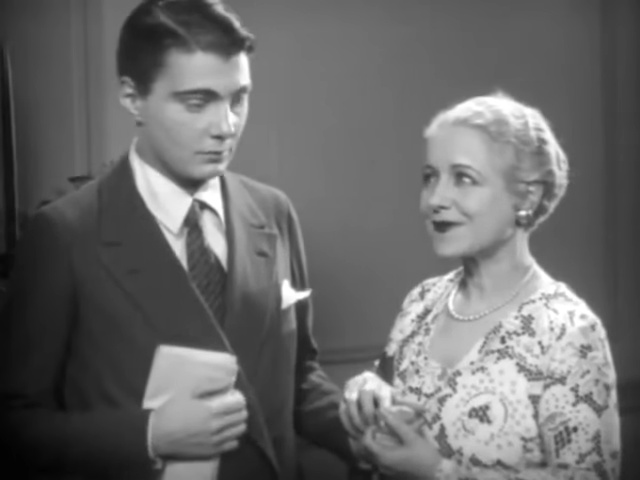
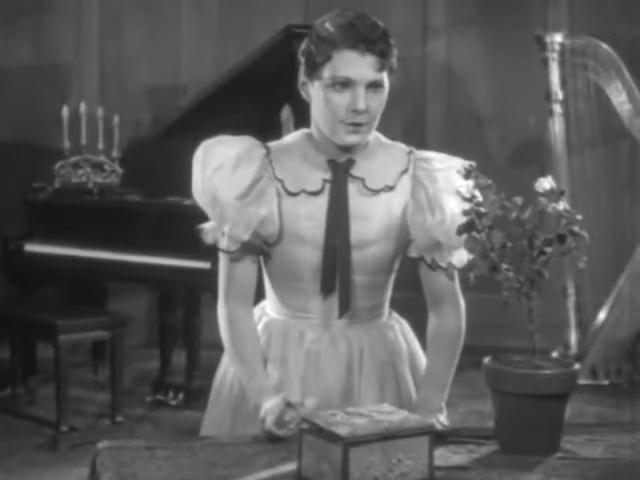
Bancroft, A.B., and the rest of the C-suite staff, including Dr. “Tut” Tutweiler (Snitz Edwards), are at the Bancroft home for business and golf, well, A.B. will perform the business and the men will play the golf, so grandma sets her plan into action. She offers A.B. a makeover and plenty of tips on how to land a man. Flutter the eyelashes! Tell them they are wonderful! Ask them to tell her more! And most of all, don’t know anything, men don’t like women who know things.
Grandma then brings A.B. and Jimmie together. Jimmie has no idea that this lovely creature is his arch-nemesis and A.B. is so flattered by the attention that she keeps her identity under wraps, despite Tut nearly outing her. Jimmie has a farm that he can’t offload and an overpowered industrial-strength eggbeater that he invented and hopes to sell to his grandfather. Add to that, a confidence man (Dell Henderson) is working the house party guests by claiming he is the one buying up that valuable paint mineral. I don’t think you need to be a genius to figure out where all of this is going.
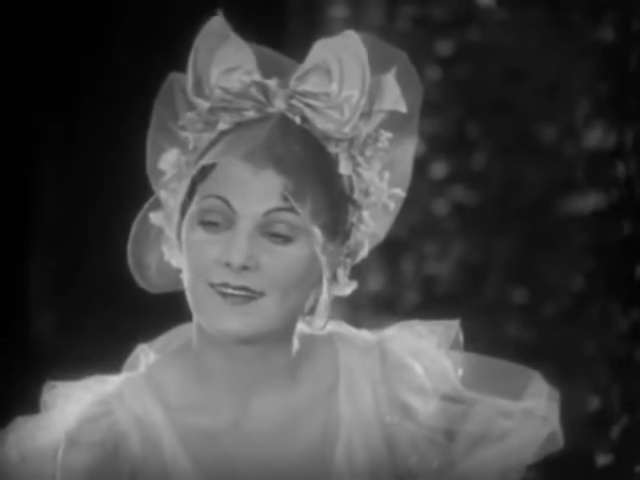
Well, that was a movie. I love Leatrice Joy as an actress, she brings so much enthusiasm and, well, joy to her roles, but she really had almost nothing to work with here. I liked the way she tries to keep up her clinging vine facade while still doing her businesswoman thing in certain scenes, but for the most part, this is a pretty unsatisfying role and story for her and she deserved better. Director Paul Sloane likewise knew his way around feather-light entertainment but, again, the screenwriting didn’t give him much to work with.
I have seen The Clinging Vine described as a feminist film. Is it, really? A.B. gets her man and he doesn’t mind even after learning her real identity but it seems to me that her fate is to constantly rescue him from his own stupidity. If he were just a himbo, it would be one thing, let A.B. have her arm candy, but he is an all-day sucker with zero survival instincts, merrily passing on thousands of dollars to a con man after a ten minute conversation. The initial blush of romance can only paper over so much.
A question that comes up often when I review silent films is whether I am judging these pictures from a modern perspective. Well, we all are, no matter how much we tell ourselves that we leave our modernity at the door, but, more importantly, women in the workforce and women covering for men were both topics that were covered both comedies and dramas during the silent era.
The Craven (1912) tells the story of a capable western woman who marries a charming braggart for love but when he is unable to carry out his duties as a lawman due to cowardice, she goes and gets the villains for him at great personal risk and allows him to take the credit because her family honor cannot allow a coward in their midst. The film ends with a melancholy shot of the heroine, who seems to realize that this will be her fate for the duration of her marriage. Will A.B.’s married life be any different? The Craven acknowledges what The Clinging Vine does not.
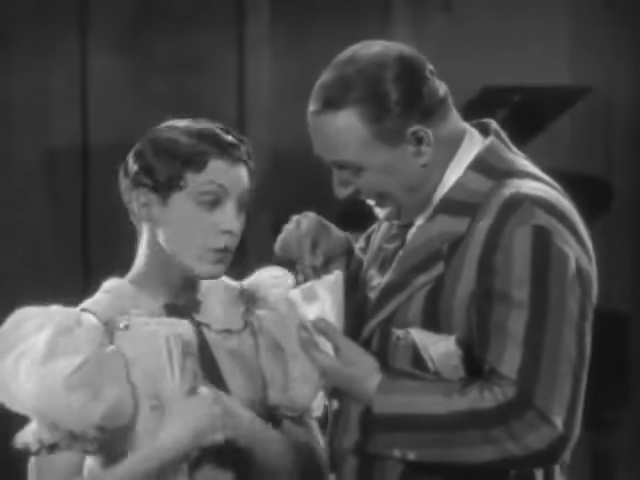
Yes, the film satirizes the male work ethic (or lack thereof) and their Pepe le Pew-esque responses to a beautiful woman entering the room but both of these things had been targets for satire in films since well before the feature era. The Ben Turpin comedy Mr. Flip (1909) centers around his attempting to harass working women and the women taking vengeance via the tools of their trades (a baker pies him, a manicurist deploys nail scissors, a bartender weaponizes seltzer, etc.).
As we see in Mr. Flip, there were a fair number of men (and women!) who believed that a working woman was fair game for all romantic intentions and that a married woman who continued to work was jeopardizing her marriage. This was a hot topic of the era and regularly analyzed from both the male and female perspectives in both comedies and dramas. Films like Max and the Lady Physician and The Woman of Tomorrow concluded that a woman cannot be a medical doctor and a good wife at once, but Kitty Kelly M.D. and The Bells of San Juan both allowed their physician heroines to use their skills or connections from their practices to save the heroes.
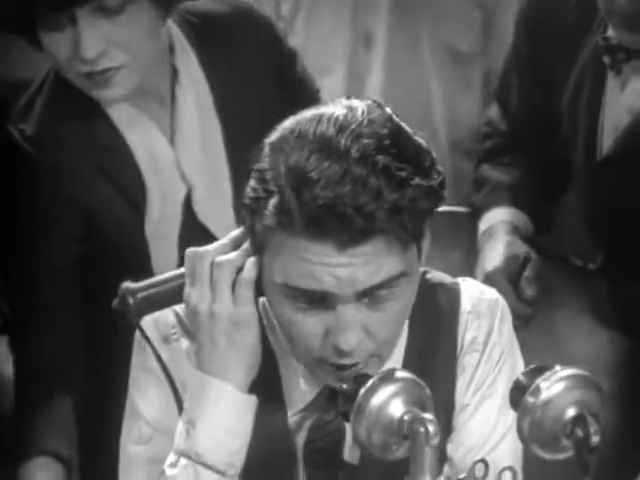
If The Clinging Vine had really wanted to satirize men, it would have asked why the board, eager to keep A.B. on the job, decided to try to marry her off to Tut rather than promote her to that very board. After all, she’s doing all of their jobs already. There are hints at it with all the golfing the men do but it just kind of withers.
In short, an androgynous heroine does not a feminist film make and The Clinging Vine was not the only picture to hang its shingle out on this topic.
Further, disappointment in the modern and capable A.B. playing the ditz to win male attention is not a modern thing. Picture-Play Magazine’s Norbert Lusk wrote the following in his The Screen in Review roundup:
“How she (Joy) could even simulate cheerfulness while playing the business girl who blossoms into a cooing dove is beyond me. The transition is supposed to be funny — and was in the stage play — but it is all too sad on the screen. And sadder still for Leatrice’s future. The story of the mannish girl who gives her life to swinging big business deals, and then, on the advice of a skittish aunt, decides all at once to become a dumb Dora in order to attract men, was trifling though fairly plausible entertainment on the stage, by reason of dialogue and music. But on the screen it is reduced to sheer silliness, and dull silliness at that.”
Reviews for The Clinging Vine were mixed overall. Motion Picture News called it “bright and snappy” and The Moving Picture World singled Joy’s performance out for praise, but Photoplay found it cliched and mused “We cant imagine what makes P. D. C. (Producers Distributing Corporation) or Leatrice Joy go in for this brand of stuff.”
The Clinging Vine was an obvious choice for DeMille’s company for two reasons. First, Leatrice Joy had bobbed her hair in one of the most extreme cuts in Hollywood and they were looking for pictures to suit her new shorn look. Second, DeMille’s own mother had to become a businesswoman herself after the early death of her husband, DeMille’s father, and attempted to run a finishing school before finding success as a play broker. Its appeal for his new company, which had many women screenwriters on staff, was obvious.
Interestingly, though, The Clinging Vine was adapted to the screen by male writers Jack Jevne and Rex Taylor. I wonder how the picture could have been improved if it has passed through the hands of genuine working women Lenore Coffee, Jeanie MacPherson, or Beulah Marie Dix, all of whom were employed by the DeMille company at the time. Or if William de Mille had taken a crack at it. The elder de Mille brother had already sensitively examined the sexual double standard in Miss Lulu Bett. Heck, Zelda Sears, who wrote the original play remember, was employed by DeMille and wrote the deliriously daffy adaptation of The Cruise of the Jasper B for the company.
The Clinging Vine is pure fluff and, while Joy does her best with the material, the screenplay doesn’t really have anything to say about gender in the workplace and leaves its heroine in a happy ending that doesn’t stand up to scrutiny. A cleverer adaptation would have had more fun with A.B.’s status as de facto boss in order to satirize workplace sexism rather than merely using it as an obstacle to her winning the failson of her dreams.
The Clinging Vine ultimately fails because it never commits to one message or tone. Is it a satire of gender and workplace politics? Is it a sex farce? Is it just a lightweight rom-com? It never chooses a lane and is ultimately unsatisfying as a result, especially when compared with other films on the same topic made during the silent era.
Where can I see it?
☙❦❧
Like what you’re reading? Please consider sponsoring me on Patreon. All patrons will get early previews of upcoming features, exclusive polls and other goodies.
Disclosure: Some links included in this post may be affiliate links to products sold by Amazon and as an Amazon Associate I earn from qualifying purchases.
 Movies Silently