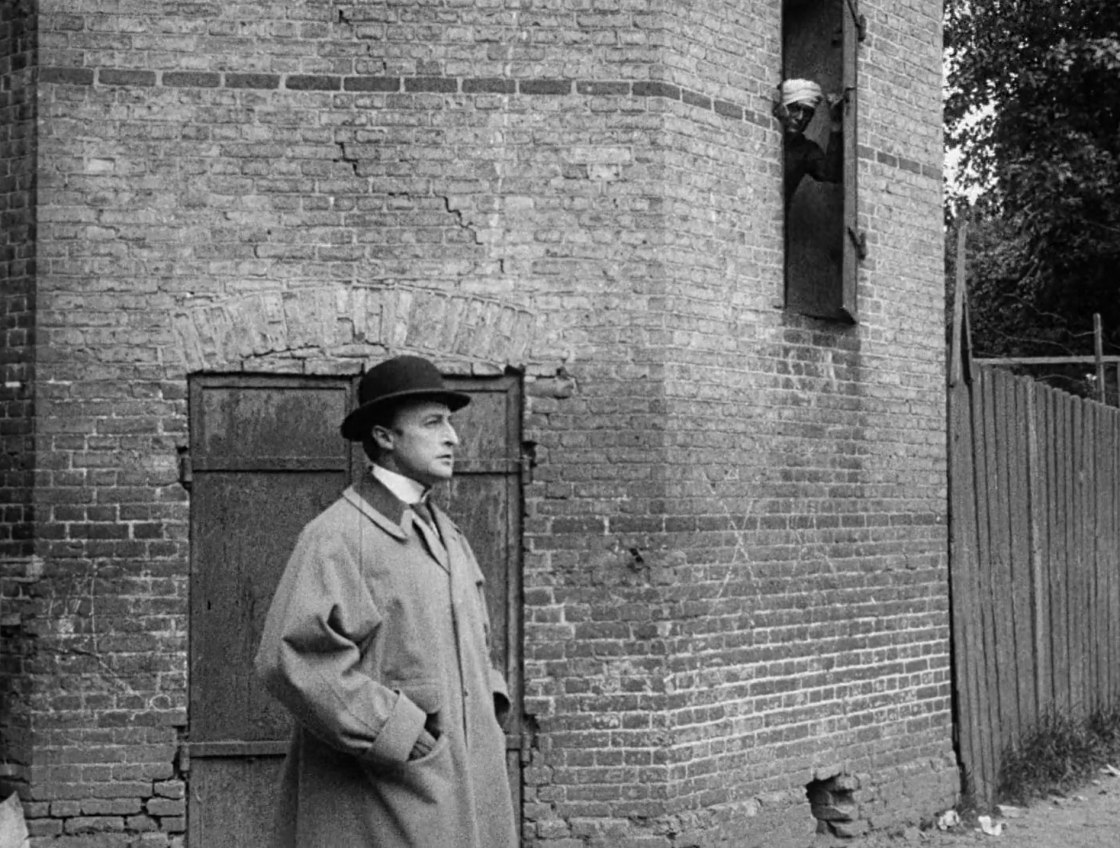
When a physician is called to assist a dying Indian man, his patient shows him a hidden idol and warns that a secret society wants it. When the physician brings the idol into his home, sure enough, strange things begin to happen…
Home Media Availability: Stream courtesy of the Danish Film Institute.
The Knickknack of Doom
Danish film of the silent era is noted not only for its quality but also for the sheer breadth of topics and genres attempted. You name it, the Danes probably filmed it. So, it wasn’t entirely surprising to see that they had tackled the popular pulp/weird tales trope of a cult chasing their missing tchotchke, a problem has that plagued movie heroes over the decades ranging from Indiana Jones to the Beatles
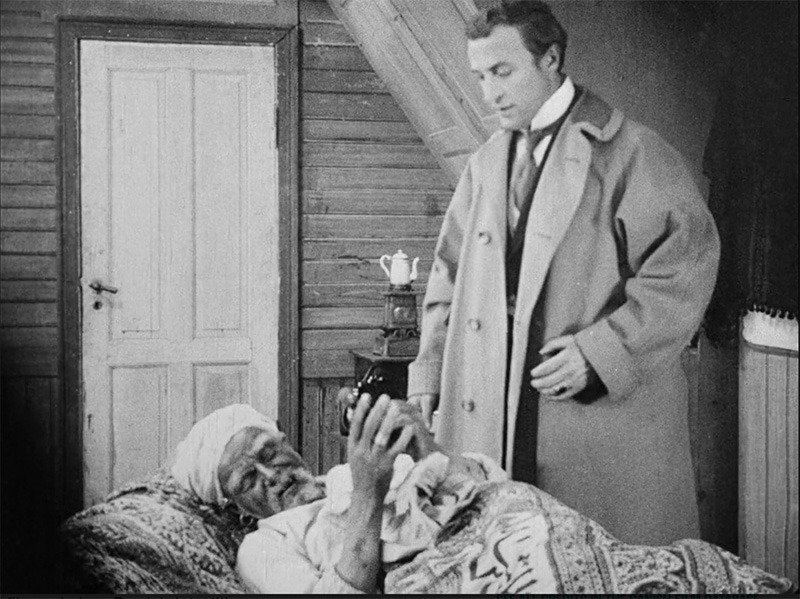
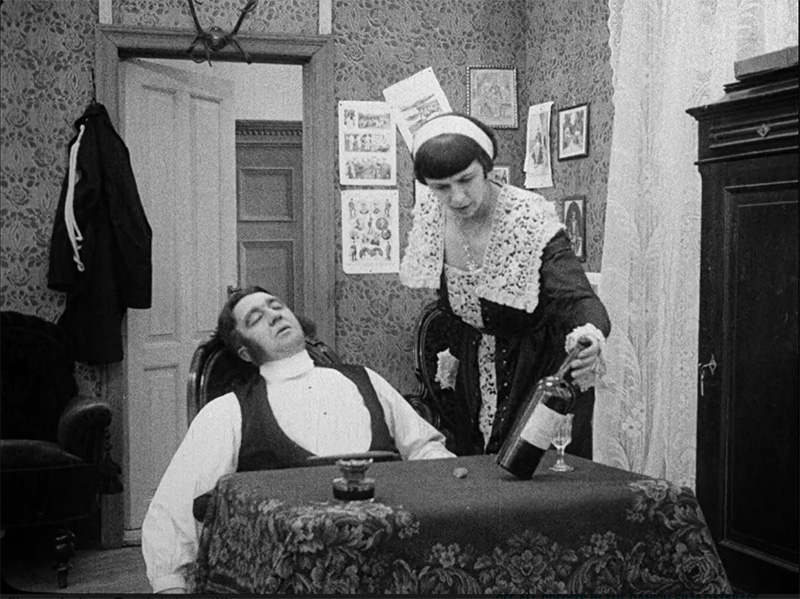
In the case of The Indian Idol, the whole thing starts with Dr. John Schmidt (Anton de Verdier) being summoned to a dying patient’s house. (Given the character and street names, I believe this film is meant to be set in England.) He leaves his wife, Alma (Alfi Zangenberg, looking quite modern with her blunt bangs and headband), happily tatting in their sitting room, which is festooned with art and antiquities from around the world and particularly Asia.
The patient is an elderly Indian man. He asks Dr. Schmidt to retrieve a small package from a secret panel in the wall. The patient unwraps a small idol and tells the doctor to take it but warns him that an Indian society is seeking it. As he tends to his patient, Dr. Schmidt does not notice two Indian men entering the room. The old man dies, Schmidt pockets the idol and departs.
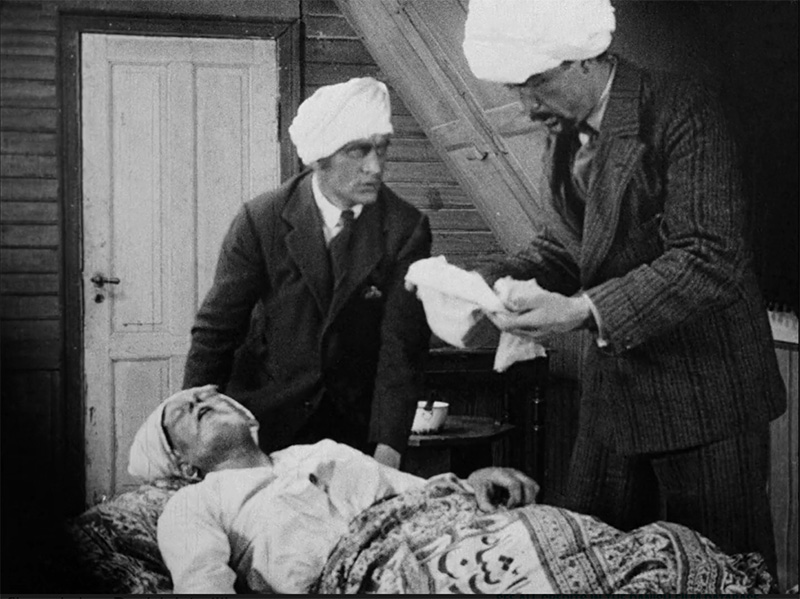
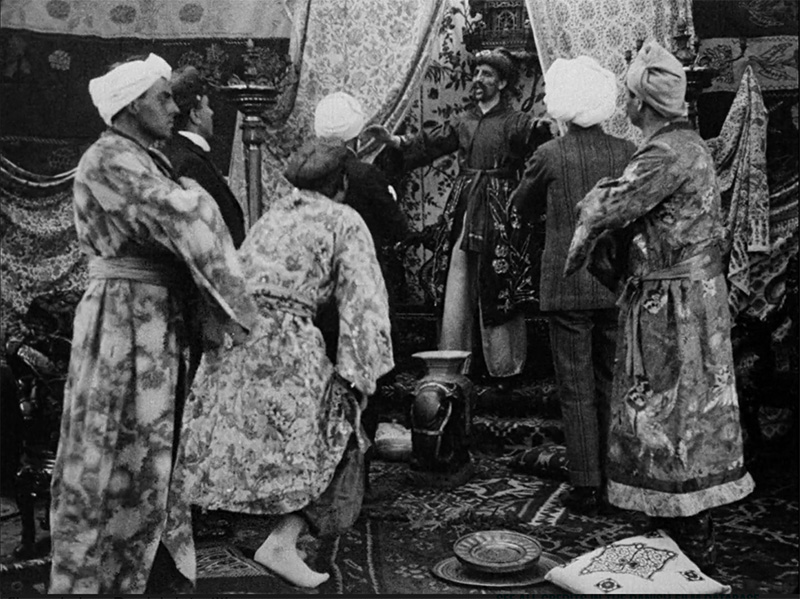
The Indians return to their headquarters, which has a secret knock and everything. Inside are Indian men costumed in dressing gowns and kimonos. They have figured out that the doctor likely has the idol, so they begin to plan ways to recover the treasure.
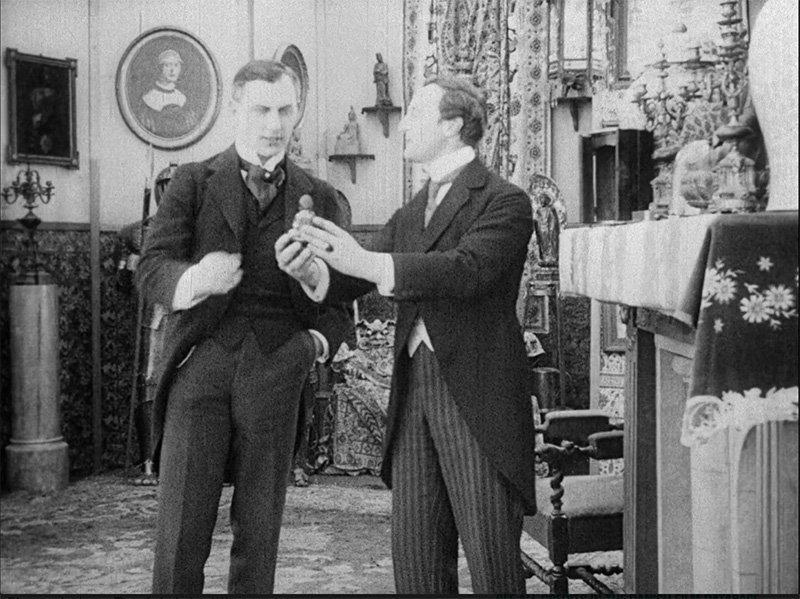
Meanwhile, Schmidt and his wife think the idol is simply heavenly and they display it on their mantle, showing off their treasure to their friend Dick Jackson (Tronier Funder), a police inspector. It’s a good thing he has come, because the Indian society makes its first attempt to get the idol, sending in one man to pose as a patient.
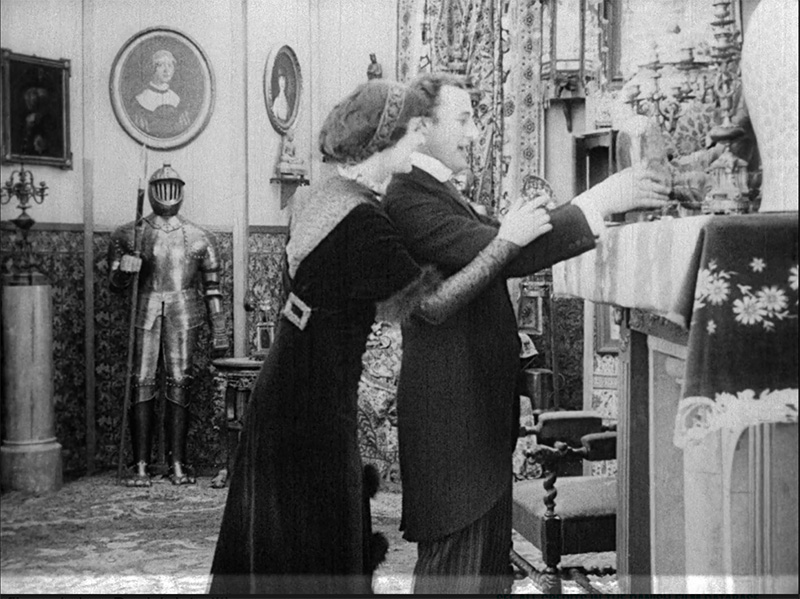
When that fails, the society decides it is time for sterner measures, including drugs and kidnapping. Will they get back their idol? Will the doctor get to keep his knickknack? See The Indian Idol to find out!
I am not sure what I expected when I chose this film but it sure as heck wasn’t this. I have seen a lot of silent films and I am not often perplexed by a picture but here we are. I feel that I need to contextualize this by discussing how India was generally portrayed in European and North American cinema at the time.
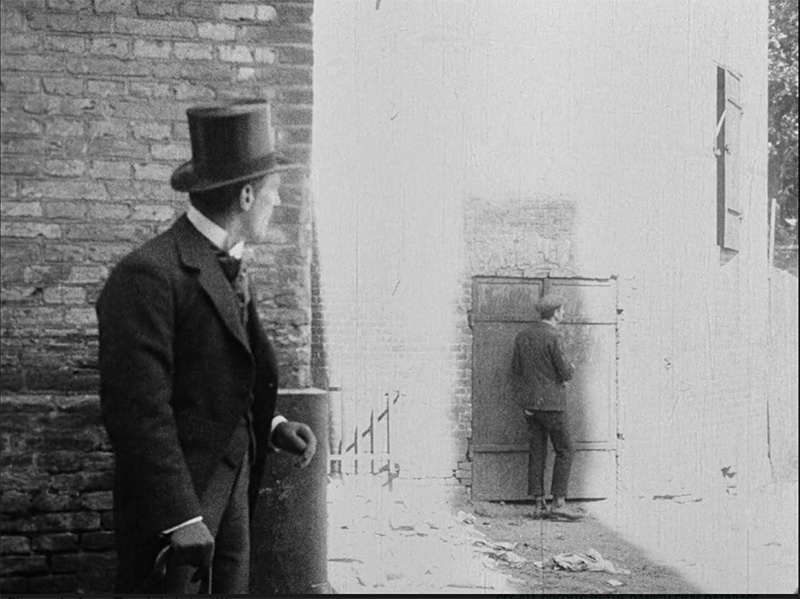
Hollywood took its cue from British entertainment and generally portrayed Indian characters as either violent maniacs bent on rebellion (positive portrayals of revolution being reserved for select Europe-adjacent peoples) or courtly sorts who cooperated with British rule. (The third option was to be some kind of mystic but that duty was often shared with Roma characters and they were essentially treated as interchangeable.) The other major portrayal of Indian characters outside of India can be found in German cinema.
Relations between Germany and India were complicated (to say the least) and resulted in, among other things, the Hindu-German Conspiracy (backing Indian independence in order to destabilize the British during WWI), a series of Indian-German silent film co-productions (including A Throw of Dice and Shiraz), and intensive Sanskrit translation projects. On a far darker note, bizarre racial theories infamously hijacked portions of Indian culture.
So, as a result, it’s not surprising that Germany would refer to India quite a bit in its silent films, frequently featuring exoticized Indian themes, characters and settings (complete with preserved palm trees stuck in the ground). Germany had a more benign view of Indian independence and British military presence. (Conrad Veidt’s Indian prince feeds a British soldier to his tigers in The Indian Tomb and experiences zero consequences.)
But as for Denmark… Denmark is Germany’s close neighbor, of course, but their relations with India during the silent era were not particularly close or dramatic.
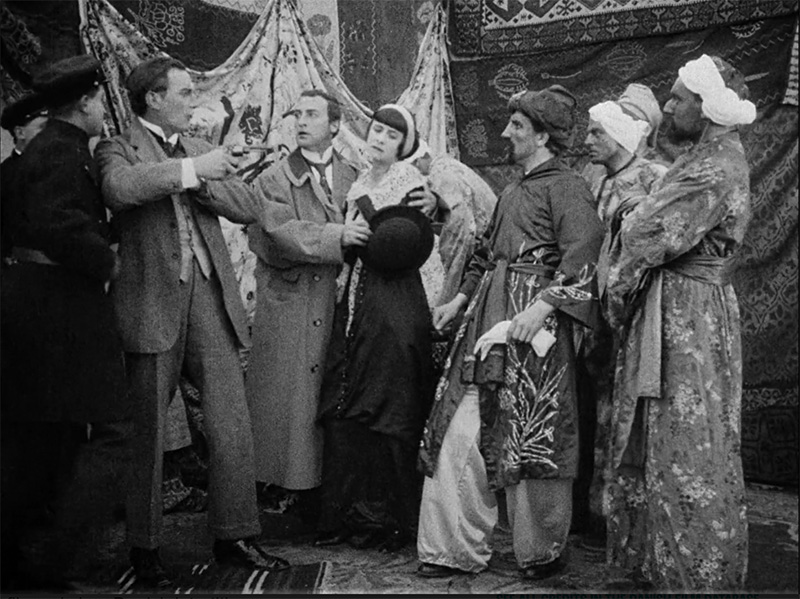
This picture feels like its makers saw a German or British silent film, or read a pulp novel, and were charmed by the idea of an Indian secret society but didn’t perform any further research or have any firsthand knowledge to rely on. Not that the Orientalism inherent to these pictures was particularly authentic but the alert viewer can parse out the cultural game of telephone and/or the particular flavor of propaganda that created the misconceptions and stereotypes found in them.
It sort of reminds me of the very brief period in the 1910s when Hollywood made a short burst of films set in Montenegro seemingly at random, not because they had particularly deep insights into the culture but rather because the costumes looked nice and there was potential for red hot romance during one or more of the Balkan Wars. (See also: the much longer, much stranger Hollywood Russian Revolution Romance fad.)
But to add an even stranger twist, nobody in this picture is particularly bad. Yes, the doctor clearly has the British Museum notion that any foreign art he likes can be his. Yes, the secret society kidnaps his wife. But nobody actually wants to hurt anyone else, they just want their McGuffin with a minimum of harm. And this is a far cry from the often-bloodthirsty portrayal of Indian characters in English language cinema, who strangle, stab and rip out hearts at the drop of a pith helmet. The Indian society members of this film are still walking stereotypes but quite nice fellows, really.
This film is a bit of an oddity. Its makers seem to have wanted a threatening tale of a mysterious secret society with their golden idol, but they also wanted a nice movie in which everything ends with tea, pearls and smiles. Since nobody is particularly interested in violence or harm, it’s basically a Nerf pulp picture. I don’t actually object—I live in America where violence in films is winked at but one toke gets a restricted rating, so this is quite refreshing—but it does take some time to process.
In fact, I would go as far as saying that I have never actually seen anything like this picture. Fakeouts with something scary turning out to be benign were fairly common during the silent era but this picture never has the Indian characters do anything particularly menacing beyond a bit of breaking and entering to recover their property.
If you’re interested in the history of pulp films, you will probably want to see this at least once just to compare and contrast with the more typical fare of the era. I am not sure how much appeal this picture will have outside of pulp circles because, as I keep saying, it’s a complete oddball.
Where can I see it?
Stream courtesy of the Danish Film Institute. The print was likely originally tinted, given the emphasis on the darkness of rooms without any corresponding lighting changes. This atmosphere would typically have been conveyed by using yellow or sepia tinting for exteriors and well-lit rooms and blue for night scenes.
☙❦❧
Like what you’re reading? Please consider sponsoring me on Patreon. All patrons will get early previews of upcoming features, exclusive polls and other goodies.
Disclosure: Some links included in this post may be affiliate links to products sold by Amazon and as an Amazon Associate I earn from qualifying purchases.
 Movies Silently
What a strange film. The crooks were not particularly nasty, and didn’t seem to be very bothered about being deported! The wife had been kidnapped, which must have been terrifying for her. However, the string of very expensive pearls soon made her forget about that. Very odd. But I still enjoyed watching it. Great fun. Many thanks!
Right? I quite enjoyed its overwhelming niceness.
Yes it was a very nice film. I’m glad it all turned out well in the end. Films with happy endings are my favourites.