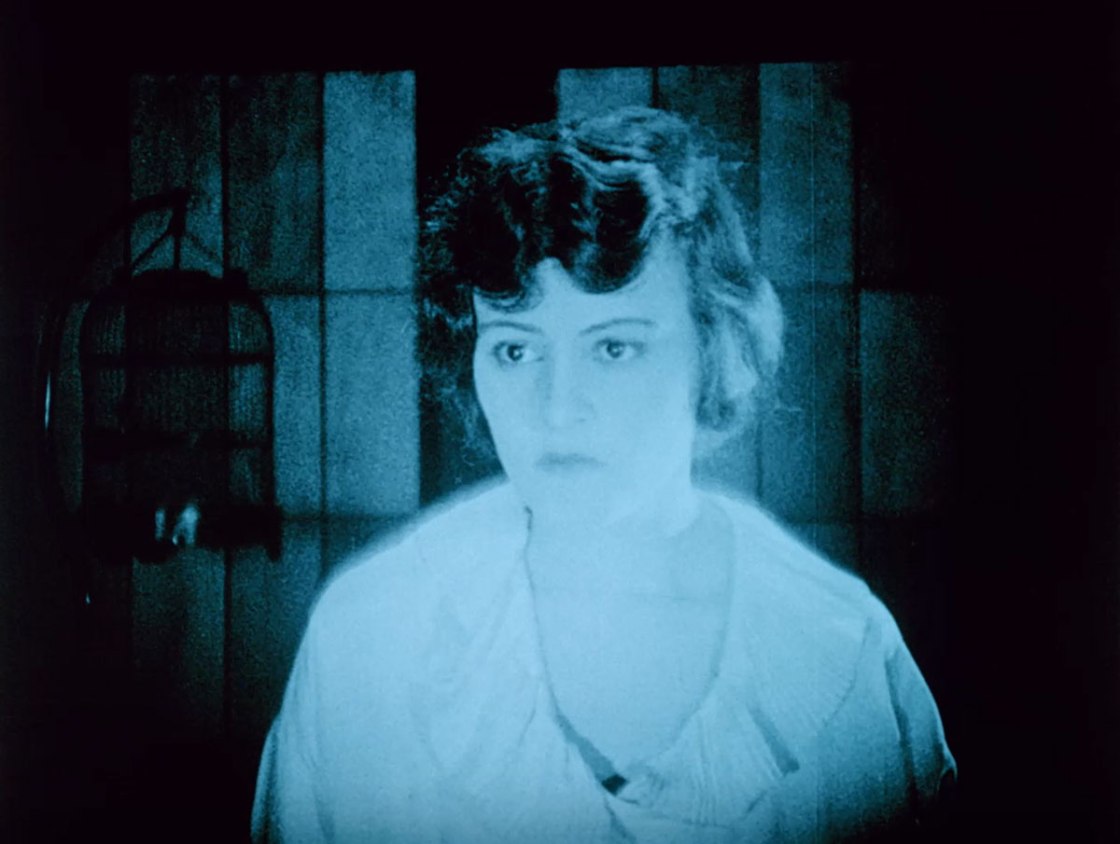
A young country girl has uncanny abilities but that doesn’t stop her from falling in love with a visiting city boy. Years pass and her powers make her a sensation but the boy who left her behind has never forgotten…
Home Media Availability: Stream courtesy of the NFPF.
I see dead people
Robert W. Chambers is best remembered today for his horror and weird fiction, particularly The King in Yellow (1895). Like most bestselling authors of his day, his works were often adapted to the silent screen, but (and here’s the rub) not his weird stuff. Chambers also wrote galloping melodramas full of society people, murder, suicide and, sometimes (in the film adaptation at least), fighting the Klan. (The Cambric Mask with Alice Joyce for the last one. Joyce starred in several Chambers adaptations and they all seem to be lost.)
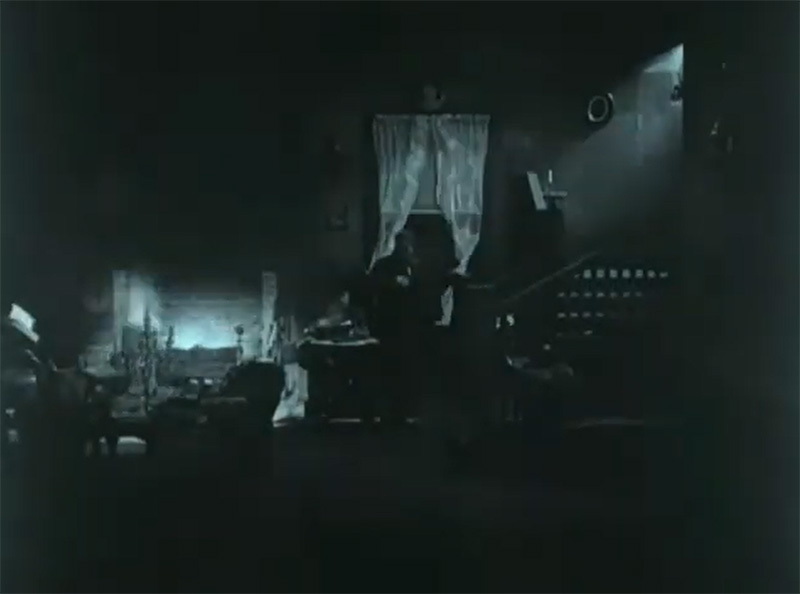
However, after almost a century as a lost film, a copy of Unseen Forces was recovered in New Zealand. There is considerable nitrate decay but the film is quite watchable and it is an adaptation of Chambers’s 1915 novel Athalie, about a girl who can see every dead thing. Weird? Check!
The film opens with a dark and stormy night as a woman lies in labor and, eventually, dies giving birth to her daughter. Little Miriam Holt (Mae Giraci) grows up under her father’s care at his bed and breakfast in upstate New York. Holt caters to wealthy duck hunters and among them are the Bruntons. George Brunton (George Martindale) has brought his young son, Clyde (Fred Warren).
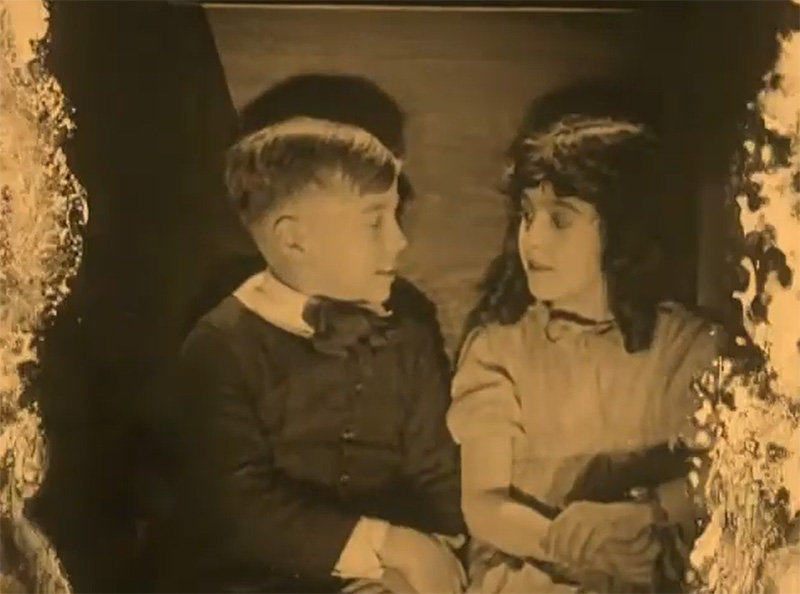
Miriam is known as “the girl who can see around corners” for her ability to foretell the future. Clyde is smitten and gifts her his wristwatch (an expensive item at the time) before leaving when the shooting season is over.
Let’s take a moment to discuss the film’s departures from the book as it has taken several. The heroine’s mother lives and knows of her daughters powers, later dying of a literary ailment. And the heroine’s powers are not just prognostication but the ability to see the dead. All of the dead. One of the more memorable passages of the novel is the heroine describing how she sees the world:
“I have never seen anything really dead, mamma. Even the ‘dead’ birds,—why, the evening sky is full of them—the little ‘dead’ ones I mean—flock after flock, twittering and singing—”
That’s some heavy stuff and I am a bit disappointed that it wasn’t used. The silent era was made for that kind of imagery. The Enchanted Cottage and The Blue Bird, for example, made heavy use of symbolic visions. And, like The Blue Bird, Athalie includes visions of unborn children. The heroine sees everything, pre-birth and post-death.
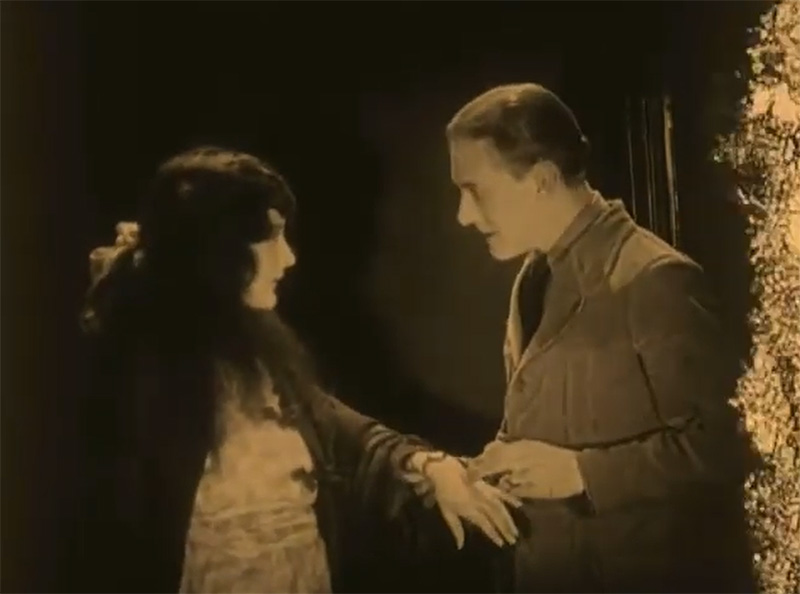
However, to pick up the story again, Miriam grows up to be Sylvia Breamer and Clyde to be Conrad Nagel and they meet again as adults during the shooting season. Clyde is accompanied by his friend, an explorer—this was when “explorer” was a real profession—Captain Stanley (Sam De Grasse, a favored nemesis of Douglas Fairbanks and quite good in a rare non-villain role).
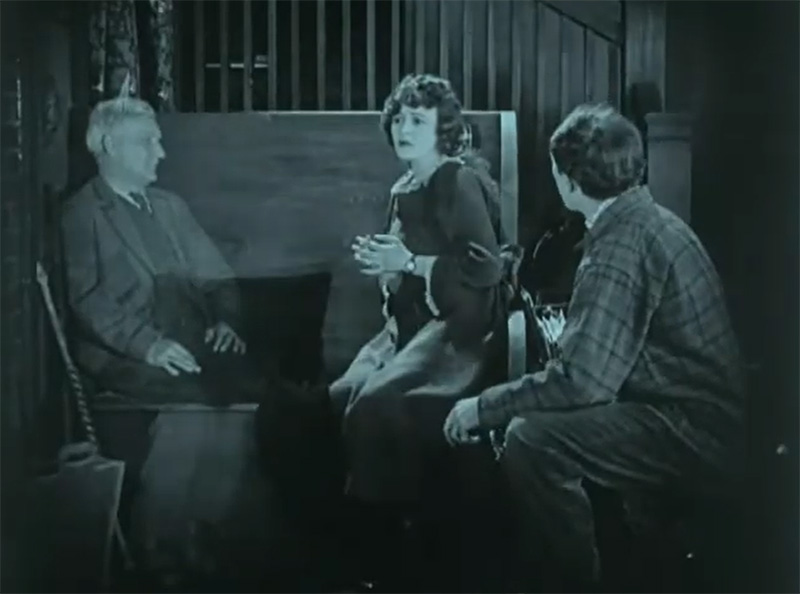
Sparks immediately fly between Clyde and Miriam. She makes an impression on Stanley too, predicting that he will face danger during his upcoming expedition to Africa and that his arm will be injured. Clyde is smitten and ready to pop the question. Unfortunately, Miriam’s father dies suddenly and Clyde mistakes a sympathetic embrace from a male cousin as two-timing and leaves without a word. Meanwhile, Miriam has a vision of her father…
You’d think a clairvoyant would have seen these matters coming but I digress. Clyde goes to Africa with Stanley, whose arm is wounded during the adventure, and then marries Winifred (Rosemary Theby). Winifred is unfaithful and finds Clyde to be a bore but she likes his money. Meanwhile, handsome cad Arnold Crane (venerable movie rake Robert Cain, who stole Male and Female in a similar role) is sniffing around, even stepping into the frame of their wedding film (hint hint).
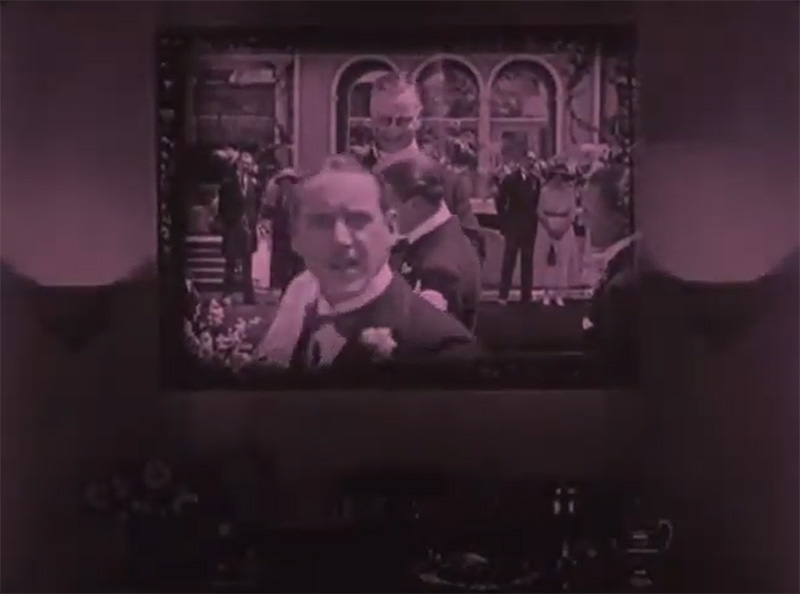
By the way, I loved the so-rich-they-have-an-in-house-projector-in-the-dining-room sequence! Portrayals of fabulous and expensive period technology are so fascinating to see. It’s like when they made a big deal of car phones in mid-century film and television.
Later, at the club, Mr. Simmons (James O. Barrows) tells Arnold that his grandchildren have been missing in Belgium since the war but he has met a remarkable mystic who told him where to find him. Arnold declares that it’s all bunk but Captain Stanley says that he has reason to believe in the supernatural. Of course, the mystic who helped Simmons is none other than Miriam and he has moved her to the city so that she can use her abilities to help others.
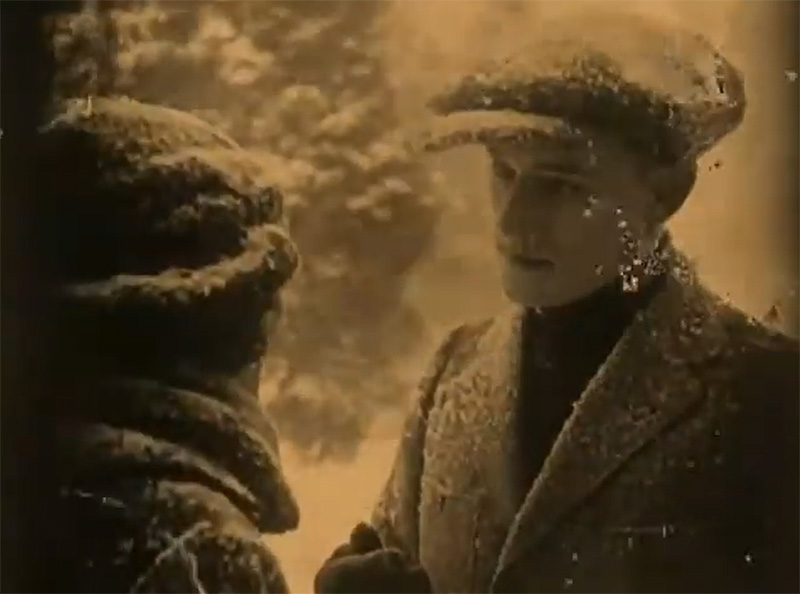
This leads to a reunion with Clyde, who now realizes his hot-headed mistake in leaving. Both his father and Winifred are annoyed as he spends more and more time with Miriam and begin to look for ways to discredit her. Arnold, meanwhile, sets about trying to seduce her, declaring that she is a phony.
Miriam tells him that he has hurt a woman and abandoned her after impregnating her and he must make amends. Shaken, Arnold returns home and burns a letter telling him that the baby has died and that he should pretend to have never met the writer. Signed, Winifred.
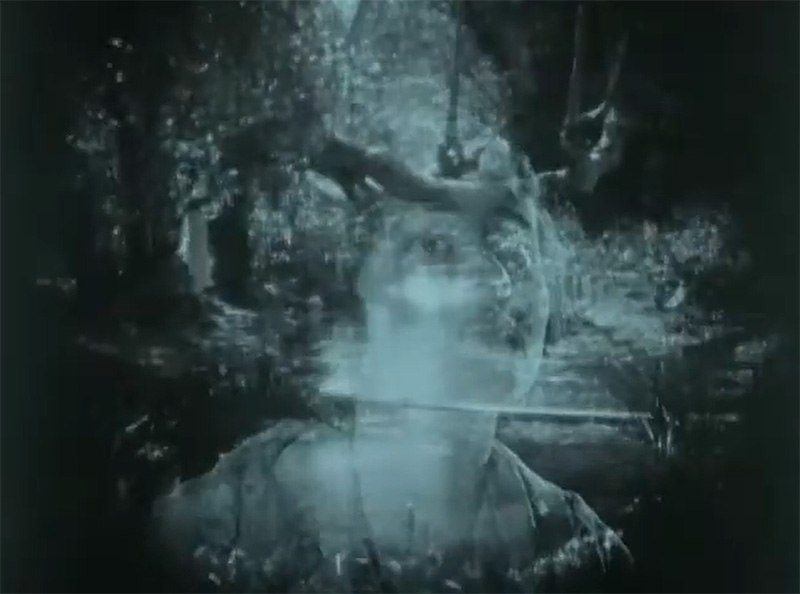
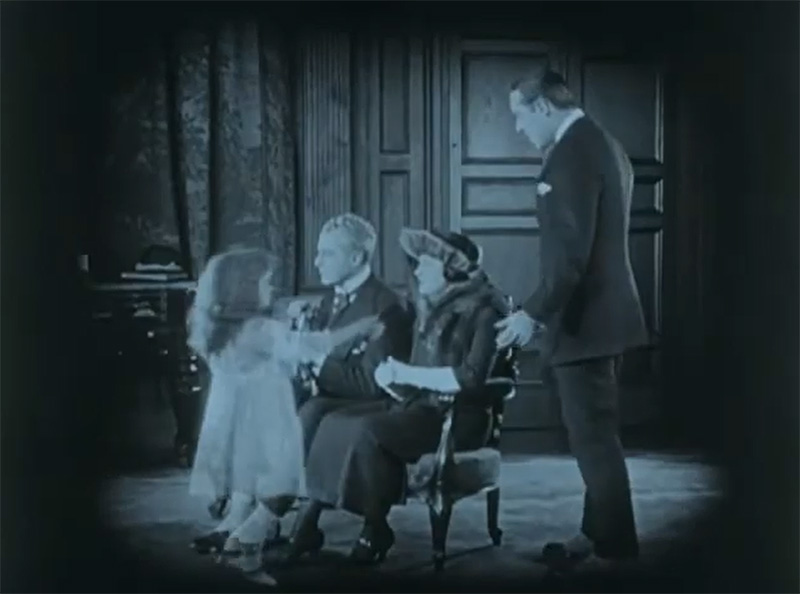
Meanwhile, Winifred and Mr. Brunton have called a meeting of the psychic poohbahs to determine whether Miriam’s powers are real. Arnold, now chastened, attends as a supporter of Miriam. (Secondary cads were not often granted redemption arcs in silent films, so this is a welcome innovation.) As the examination commences, a ghostly child appears beside Miriam and approaches Winifred. Winifred and Arnold recognize their own baby.
The vision of the dead child is surprisingly effective, thanks largely to the strong performances of experienced character actors Rosemary Theby and Robert Cain, along with the moody cinematography of David Abel, who later became the go-to guy for shooting sound era dance musicals. Both Winifred and Arnold are intensely unlikable characters but Cain and Theby sell their pain as grieving parents. It is quite something.
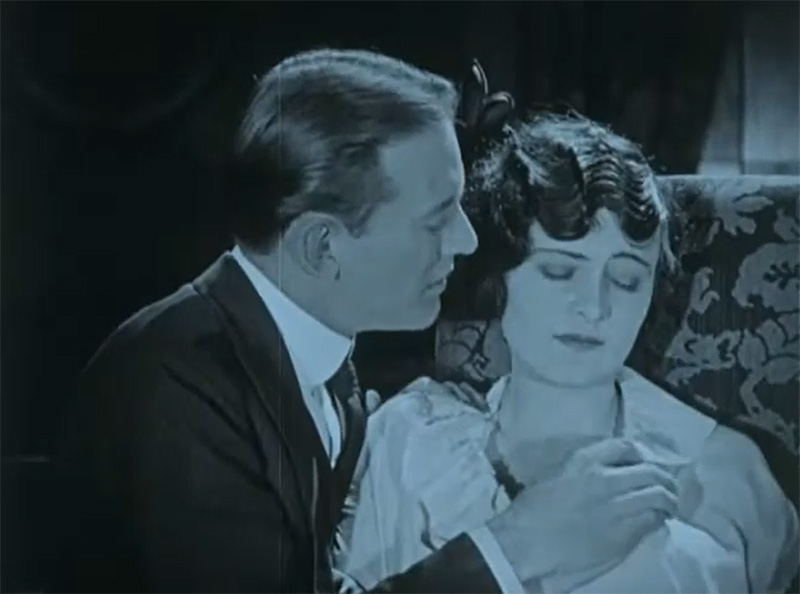
But, really, that is the main selling point for this picture: the supporting cast is made up entirely of experienced film actors who know their stuff and it’s a pleasure to watch them work. In both the novel and the film, the heroine has very little personality beyond being saintly and having powers. Clyde is a stereotypical romantic hothead and not terribly interesting either. Nagel and Breamer do what they can with their weak characters but everyone else is chewing the living daylights out of their roles and I love to see it.
Throughout the film, Miriam suffers from the infamous, vague Movie Illness. You know the kind, it’s the one that causes victims to faint prettily and daintily. The mystic examination weakens her and the rest of the film deals with her relationship with Clyde.
If you are familiar with the book, you may note that many small tweaks were made the to story, from renaming Athalie as Miriam to (spoiler) the extremely abrupt happy ending that flies in the face of all those foreshadowing spells of weakness. I did a little bit of digging and found an interesting trail in industry periodicals.
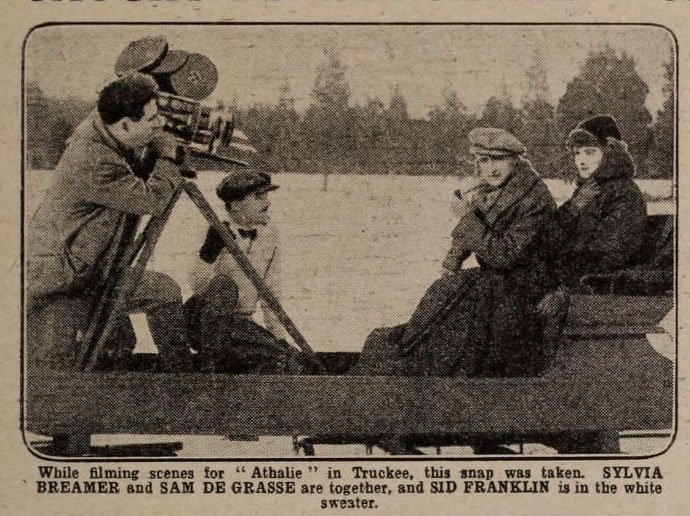
The May 29, 1920 issue of Exhibitors Herald announced that filming of Athalie, as it was still entitled, had wrapped and Franklin would edit the film personally once he had enjoyed a two-week vacation. By mid-June, the periodicals were mentioning the film as imminent on the release calendar. And then… nothing.
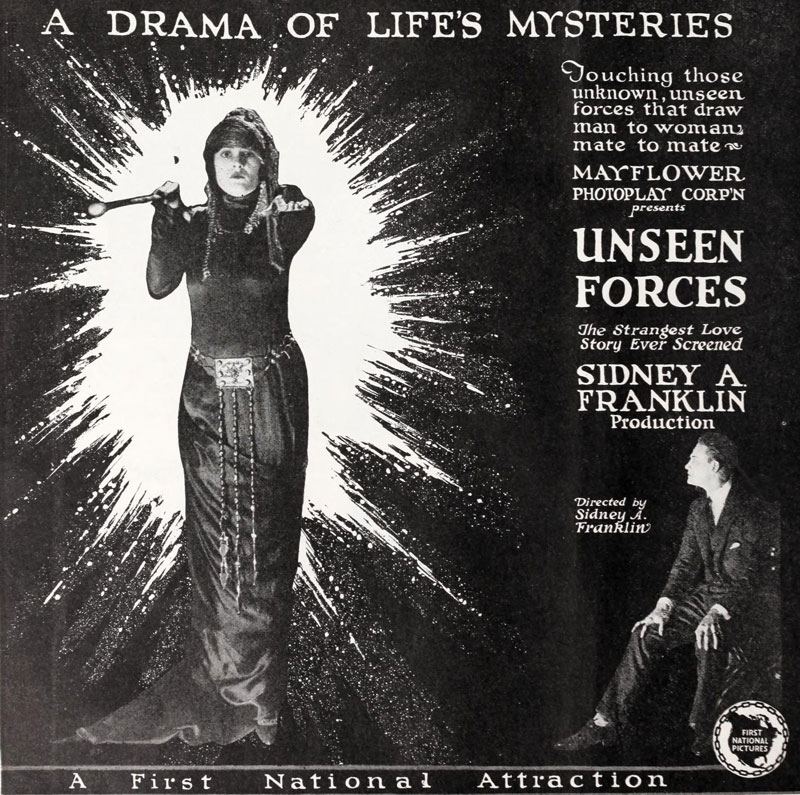
The trail heats up again with the October 16 issue of Motion Picture News. The new title of Unseen Forces was unveiled (likely intended to tie it more strongly into the spiritualism craze) and the item pointedly states that almost three months had been spent editing the picture.
Movies were released at a far more rapid pace in the silent era. Franklin had put out four features, big ones, in 1919 alone and that with a pandemic underway. And Franklin was no von Stroheim, he was a trusted and known quantity under the rising studio system. You hired Franklin for well-made, good-looking films that wouldn’t break the bank with overspending. He was trusted with the experimental Technicolor picture The Toll of the Sea, for example.
(This may sound like I am damning by faint praise but rock solid and reliably entertaining is always welcome in the wild west of silent film viewing. After slogging through the filmography of another Sidney, Olcott, I came to appreciate the lean-yet-stylish approach of someone like Franklin.)
I wonder if censorship worries kept the film in editing, combined with concern that audiences of Middle America couldn’t pronounce “Athalie.” Or perhaps they did try to include visions of dead birds and animals and the special effects proved to be beyond their reach.
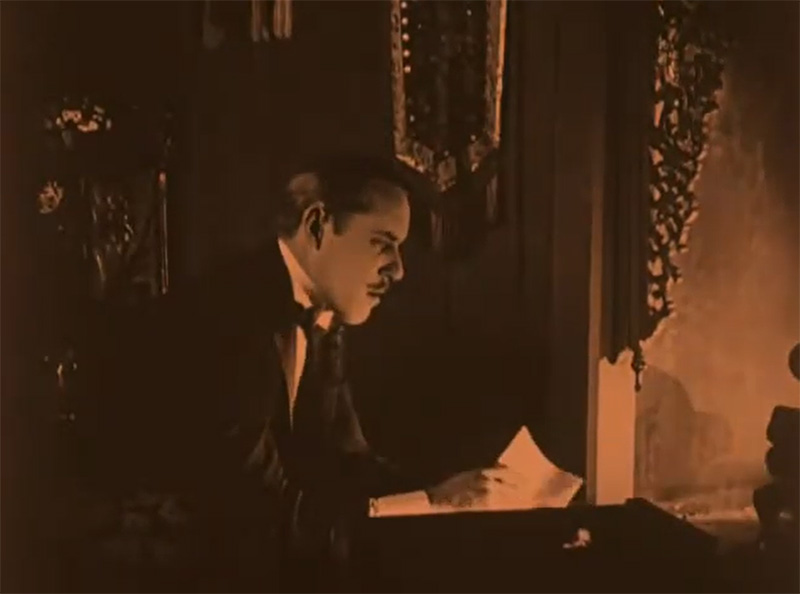
And try as I might, I could not find any record of whether the abrupt ending was the result of cuts in New Zealand or if it was part of the original First National release. The book, of course, ended with Athalie dying of Beautiful Literary Lady disease and then haunting the garden. Clive (Clyde in the film) cannot see her but her cat can. Perhaps this was seen as soon dreary for the audience (studios didn’t always balk at tragedy but tended to prefer happy endings).
I can see how such sequences would be an enormous risk, even in during the spiritualism craze immediately following the First World War. People were desperate for answers about the loved ones who had perished or gone missing in the conflict and subsequent pandemic. The trade press praised Unseen Forces for tapping into this and its spiritualism was hyped as a selling point. That didn’t mean the audience was necessarily going to accept a psychic cat in a serious context.
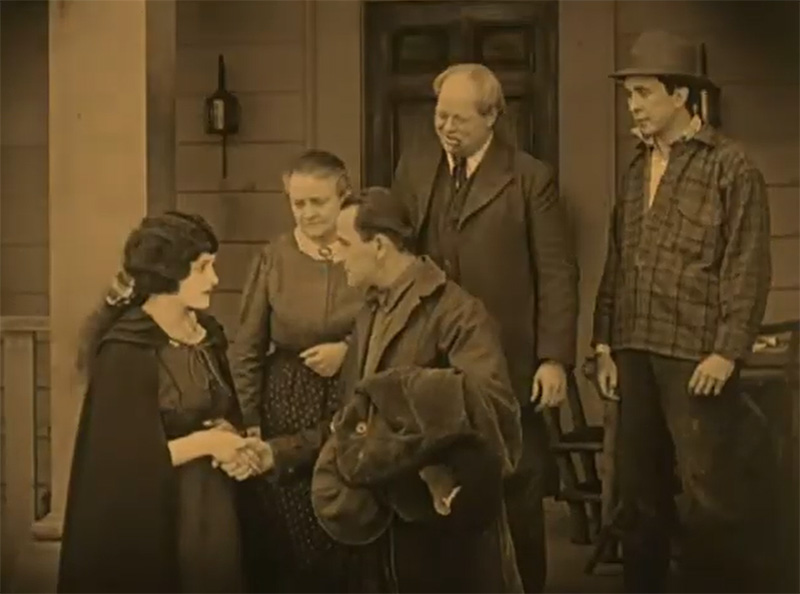
Unseen Forces was a pleasant surprise for me. I wasn’t expecting much, given the subject and synopsis, but Franklin and the supporting players knocked it out of the park. It’s an extremely accomplished and polished silent era drama and I salute it.
Where can I see it?
Stream for free courtesy of the National Film Preservation Foundation. The nitrate decay is quite noticeable but should not prevent you from enjoying the film.
☙❦❧
Like what you’re reading? Please consider sponsoring me on Patreon. All patrons will get early previews of upcoming features, exclusive polls and other goodies.
Disclosure: Some links included in this post may be affiliate links and I earn from qualifying purchases.

