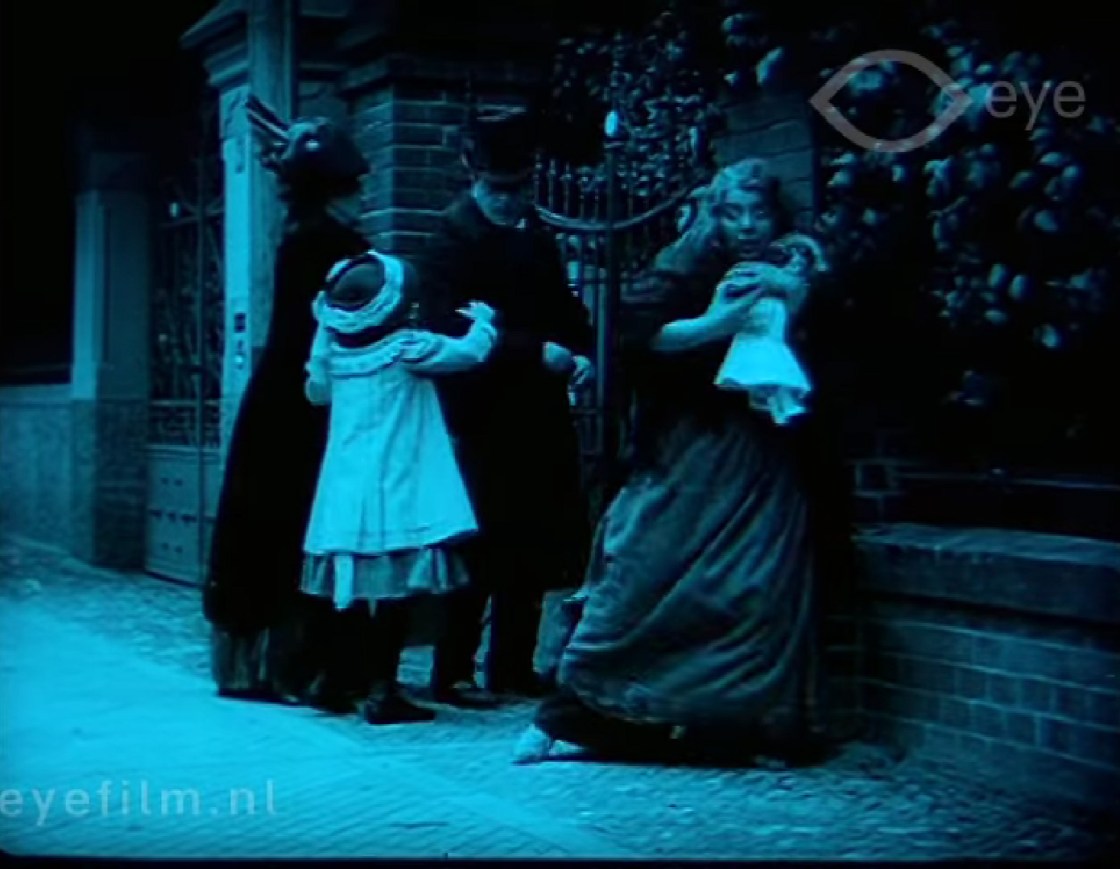
If this title isn’t a bait and switch… A woman falls into alcoholism after her young daughter is run over and killed by an automobile. The upcoming holiday threatens to push her further into grief.
Home Media Availability: Stream courtesy of EYE.
How heavy? Yes.
Note: This film is a bit difficult to pin down. Its title is listed as Weihnachtstränen and Weihnachtsträume, its date of release as 1910 and 1911. The director is Charles Decroix—probably. Welcome to early film history!
Most students of film begin their journey into German cinema with experimental Weimar pictures like The Cabinet of Dr. Caligari or perhaps the WWI-era escapist confections of Ernst Lubitsch. But before Caligari and before Lubitsch, German cinema was buzzing with tragedy and special effects.
Effects are not surprising in a symbolic and horror-infused production like The Student of Prague (1913) but they were also used in more straightforward productions like the biopic Theodor Körner (1913). Christmas Tears is a psychological melodrama that manages to include visual effects, both realistic and fantastic, in its major scenes.
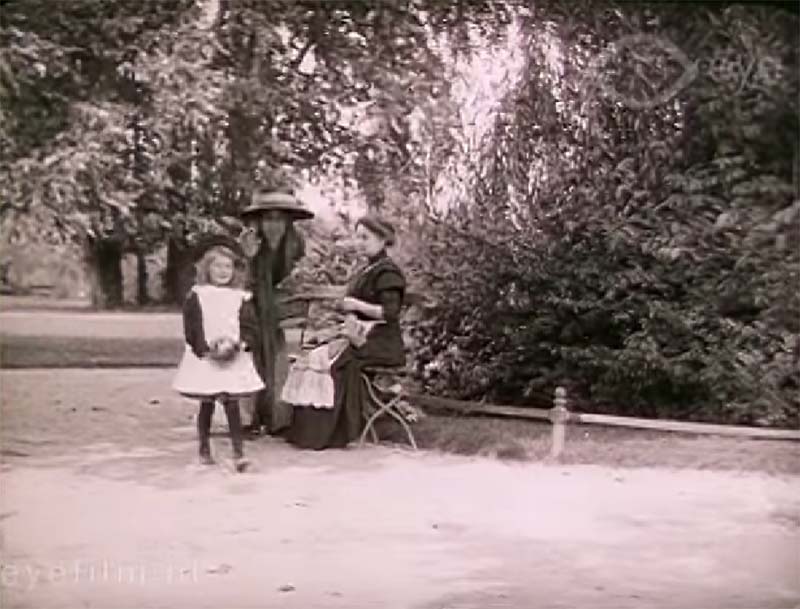
The film opens with a scene of a woman passed out drunk in her squalid flat. The scene shifts to her dreams: she was young mother who was taking her daughter to the park. She meets a friend and becomes distracted. The child wanders off and begins to play in the street where, via substitution splice, she is struck by a car and killed in a hit and run.
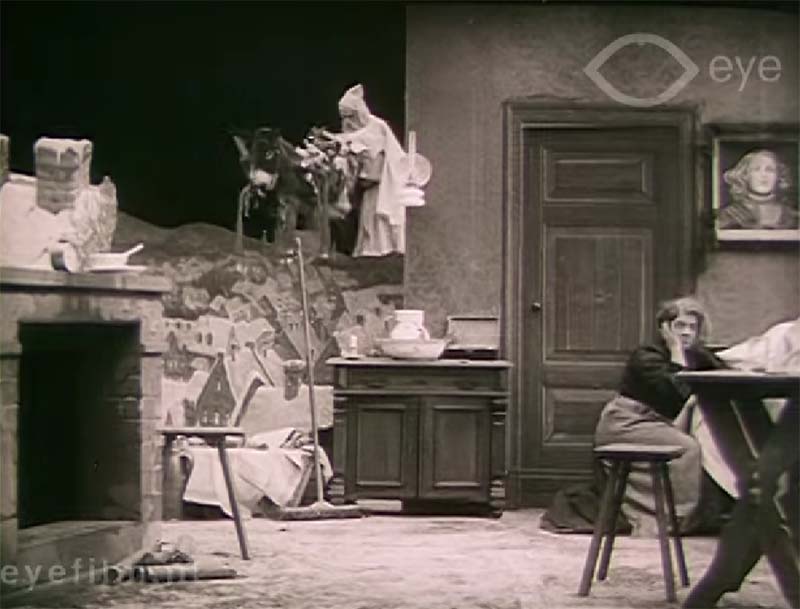
Back in the present, the grieving mother has visions of Father Christmas distributing toys but there is no doll for her daughter. She becomes obsessed with the thought of presenting her child with that doll and rushes to a toy shop but has no money to buy one. A well-heeled couple sees her, mistaking her for a beggar, they offer her a coin. At first, the mother’s old pride returns and she refuses but she realizes that she can afford a doll with the money. However, by the time she arrives, the shop has closed. She spends the money on drink instead.
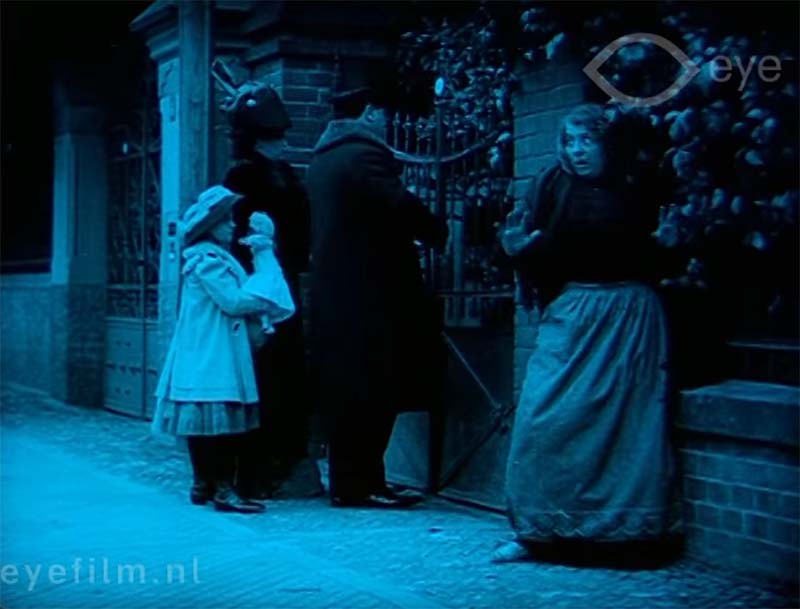
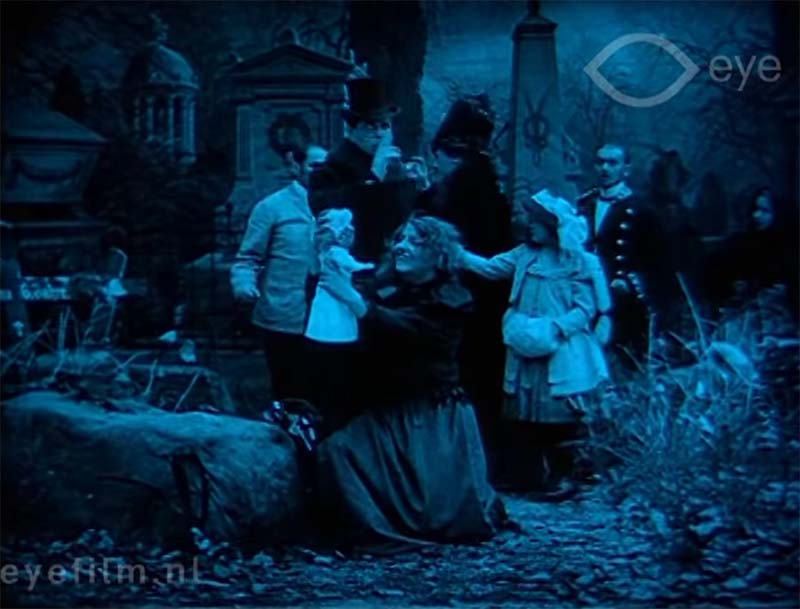
The mother is staggering drunkenly down the street when she crosses paths with a family. The little girl is holding a doll. The mother snatches it away and runs to the cemetery where her daughter is buried. The grave is overgrown and the mother has difficulty finding it, indicating that much time has passed since the tragedy.
The rightful owner of the doll and her family arrive but her parents quickly realize what has happened and decide to leave the mother alone out of compassion. Snow begins to fall and an apparition of the daughter appears, accepts the doll, and kisses her mother farewell before disappearing with the gift.
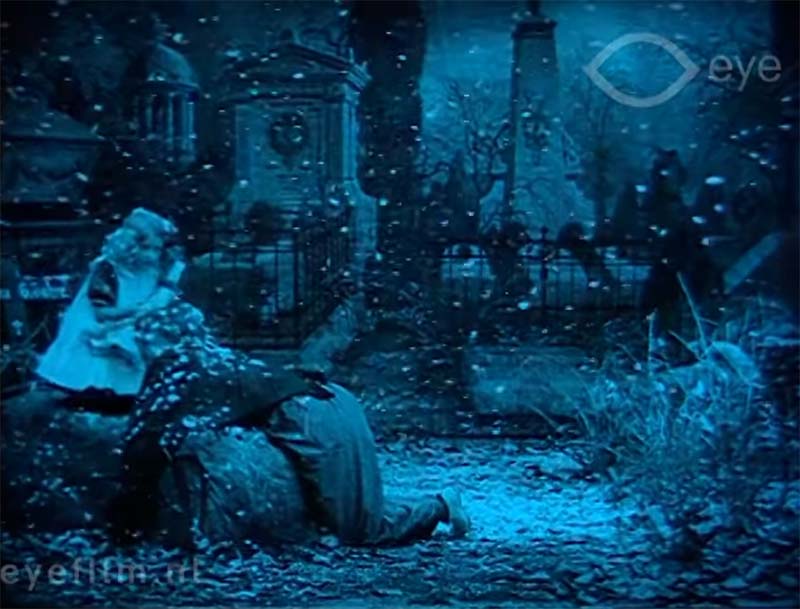
So, um, yeah, that was heavy. And, I would say, extremely typical of films of this era. While audiences enjoyed knockabout comedies and fantasy confections, they were also great lovers of the classic tear-jerker. These films can sometimes ask a lot of a modern viewer, especially in the case of Christmas Tears, as the acting is very much informed by the stage and is a bit emphatic by modern standards.
That said, the bold inclusion of adult topics like grief, mental illness, alcoholism and the death of a child make this picture quite and experience. However, it was not unusual for the era with Georges Méliès addressing the grief and horror of a resurrection gone wrong in The Monster and an inventor going mad by imagining the power of his own invention in The Inventor Crazybrains and His Wonderful Airship.
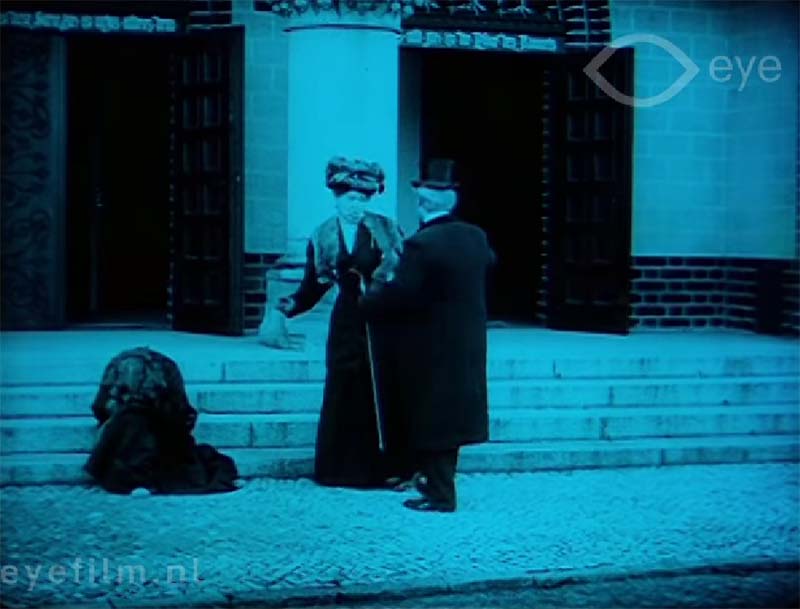
James Williamson’s 1902 adaptation of Hans Christian Andersen’s infamously manipulative tale of The Little Match Seller was possibly a blueprint for Christmas Tears, with its moody use of snow and visions of a dying child. Watching the two films together is also a study in how far cinema had progressed in just eight short years.
This sort of thing was not the exclusive domain of the Europeans either. The Faithful Dog (1907) is a genuine, guaranteed heartbreaker using the tried-and-true plot device of a loyal dog refusing to leave its master’s grave. Christmas Tears didn’t hit as hard as that film, thank goodness, because I don’t think I could go through that again.
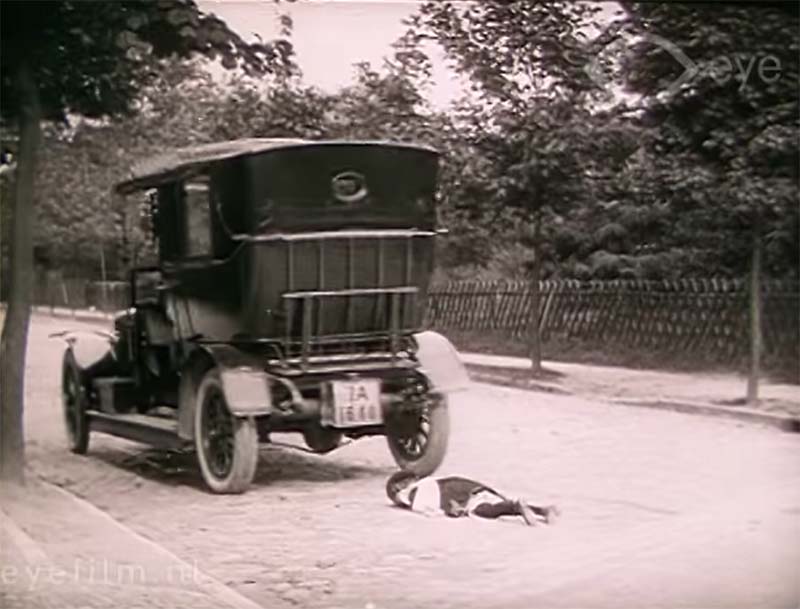
In addition to its popular subject matter, Christmas Tears is also enhanced by the technical polish of its special effects. There’s nothing in here that was done for the first time but the established techniques were accomplished with smoothness and aplomb.
There is very little telltale jitter in the opening scene where the child is run over by a car (we see the car approaching the child, a substitution splice to take the young actress out of harm’s way, and then the child is shown dead on the road), indicating that the shots were carefully planned and edited. Similarly, the Father Christmas scene seems to have been accomplished by removing one wall of the apartment set with a very light dissolve to smooth things out but, again, this was performed quite skillfully.
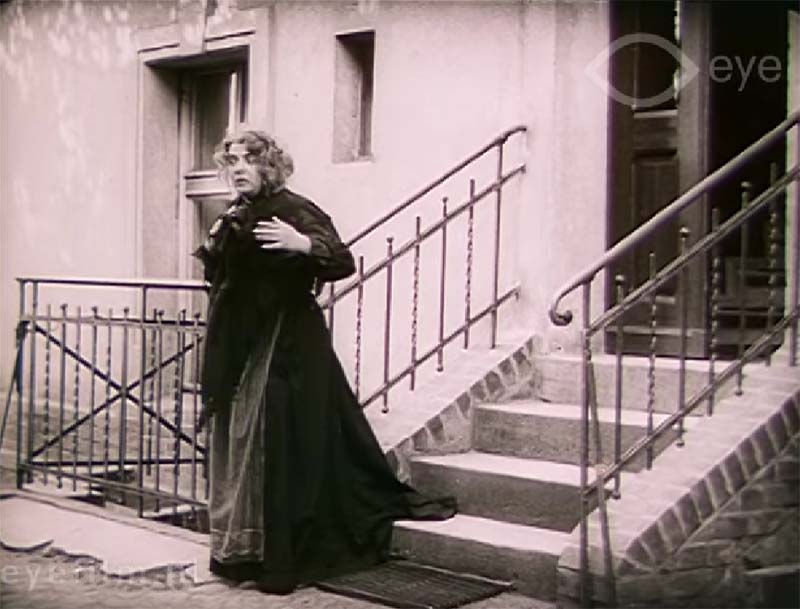
The lead actress (I do not know her name but let me know if you do) clearly does a bit of playing to the cheap seats but she is quite effective, especially if the modern audience is sympathetic to the changes in film performance. The use of closeups was still intermittent and very much dependent on the filmmaker (you can read about the origin of the technique in my review of The Gay Shoe Clerk), so a wider performance was often used to compensate and get the point across. This isn’t a flaw, it’s just a different way of doing things.
Christmas Tears is not a film that I would recommend to a silent film newcomer as the performances and plot require a sympathetic viewer and it rewards the kind of concentration that can be difficult to muster. For example, the clue of the overgrown grave to convey that many years have passed since the tragedy may not be noticed. The detail that the daughter was killed in a hit and run is also significant; the mother doesn’t even know who killed her child and has turned all blame on herself.
That being said, this is a rather interesting and rewarding picture for viewers who are willing to meet it where it lives. It showcases the old styles rubbing shoulders with the new and it is a fairly rare chance to see the origins of German cinema.
Where can I see it?
Stream for free courtesy of the EYE Filmmuseum YouTube channel. This German production has its intertitles translated into Dutch and they are tinted in a warm orange color. This difference in color between the titles and the rest of the film was possibly an antipiracy measure as duped films could not copy color, so black and white title cards were the sure sign of a stolen copy. Otherwise, the film is tinted in sepia for the interior and daylight scenes, and blue for the night scenes.
☙❦❧
Like what you’re reading? Please consider sponsoring me on Patreon. All patrons will get early previews of upcoming features, exclusive polls and other goodies.
Disclosure: Some links included in this post may be affiliate links to products sold by Amazon and as an Amazon Associate I earn from qualifying purchases.
 Movies Silently
Wow, this one sounds like it’s something else! I’m a relative silent newcomer, but I definitely look forward to checking it out. Enjoyed this first-rate review!
— Karen
Thank you!