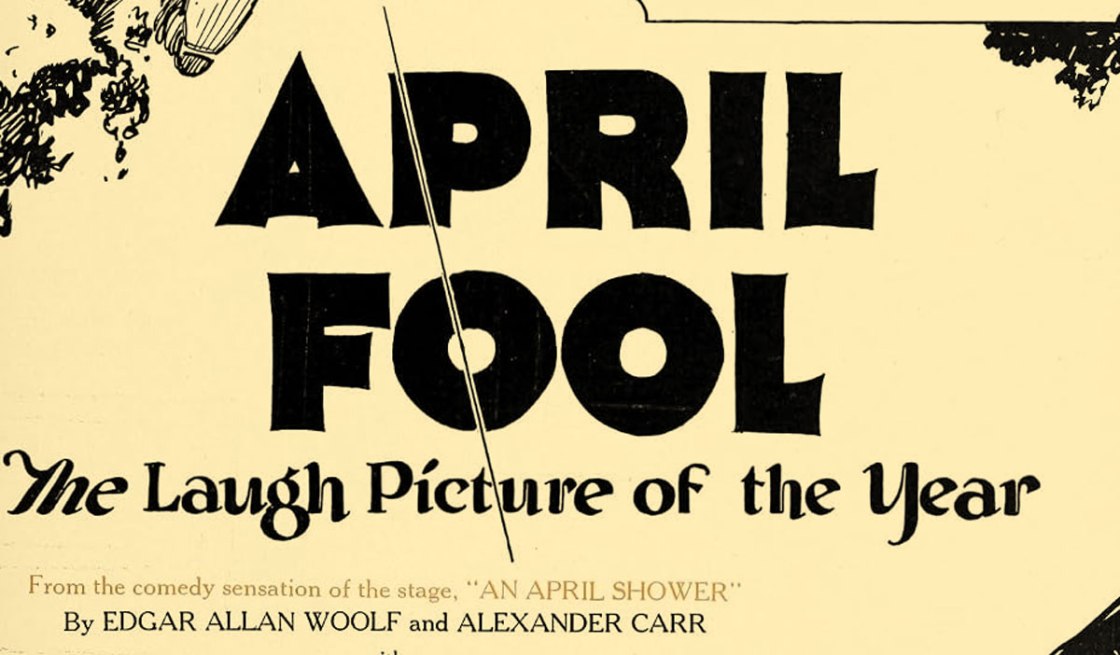
Umbrellas, love and sacrifice in a Jewish New York City neighborhood as an umbrella entrepreneur must find a way to assure his daughter’s happiness and maybe find some romance for himself with a local business owner.
Home Media Availability: Released on DVD.
It never rains but it pours
The silent era was a time of contrasts and that can be seen in its Jewish-themed films. At a time of rising global antisemitism, Jewish-themed films were popular entertainment, following the lead of the stage. Humoresque (1920) had won accolades, the play Abie’s Irish Rose (later a film) was legally deemed so full of stereotypes that much of it could not be copyrighted, and Universal had scored a hit with the heartwarming family dramedy His People in 1925.
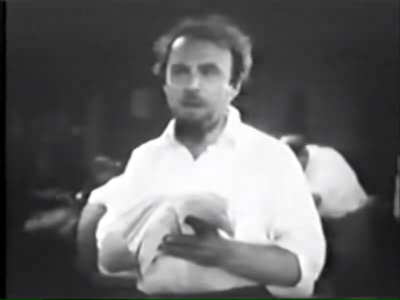
The Chadwick company was a poverty row studio with ambitions. It’s most famous, or infamous, for releasing the notorious 1925 version of The Wizard of Oz but that was just one title of many designed to help the studio break into the big leagues. It never succeeded but the ambition was not so laughable: most of the big studios of the 1920s had not even existed before the 1910s.
Chadwick’s strategy was to copycat big hits and to employ stars that were on the rocks but still had name recognition. And so, the studio obtained the rights to a one-act 1915 play (a “playlet” in the parlance of the time) called An April Shower by by Edgar Allan Woolf and Alexander Carr. It is the story of a hardworking immigrant father sacrificing all for his beloved daughter, classic schmaltz stuff and ideal to appeal to audience that had enjoyed His People. (Chadwick would also knock off Abie’s Irish Rose with The Shamrock and the Rose, hitching onto the Irish-Jewish Wedding Comedy genre.)
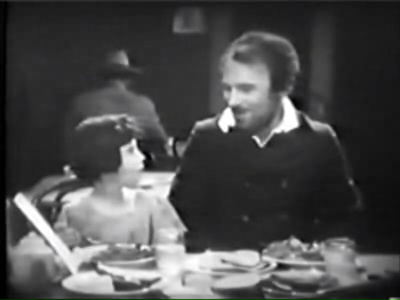
For the big name, Chadwick signed Carr, who had enjoyed success as part of the Potash and Perlmutter series of ethnic comedies (he was Perlmutter), but the most famous person in the film was Baby Peggy, who was returning to the screen after her father’s conflict with studio brass had effectively blacklisted her before her age was even in the double digits. I should warn viewers and Baby Peggy fans up front, though, that she plays the child version of the heroine and has only a few scenes in the picture, so I would consider this more of a cameo than a full role.
The story revolves around Jacob Goodman (Carr), an immigrant in America who dreams big and hopes self-education will get him there. When he becomes distracted and loses his job as a pants presser, he stumbles into a new profession. It’s a rainy night at the theater and nobody has an umbrella. Jacob buys the stock of pawnshop owner Applebaum (Snitz Edwards) and sells them at a profit, providing him with an income to support his daughter, Irma (Baby Peggy).
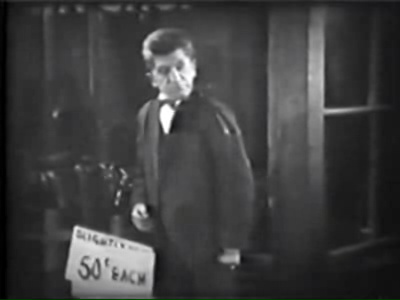
Applebaum is a sour little man who resents Goodman’s success and manages to ruin his attempts to court comely delicatessen owner Amelia Rosen (Mary Alden). She leaves for Europe and Goodman only has eyes for her, so he pours all his time and attention into his growing umbrella business and providing a good life for Irma, and so the years pass. Meanwhile, Applebaum has his own family affairs, namely his spoiled son Joseph (Eddie Phillips) and his semi-adopted assistant, the dutiful Leon Steinfeld (Raymond Keane).
Leon and Irma (now played by Duane Thompson) fall in love and hope to marry. At the same time, Amelia returns from her years abroad and she has never married either. Is it just possible that… But then Joseph upsets the apple cart. He robs his father but Leon is blamed, threatening the wedding and Irma’s happiness. Can Jacob save them? See April Fool to find out!
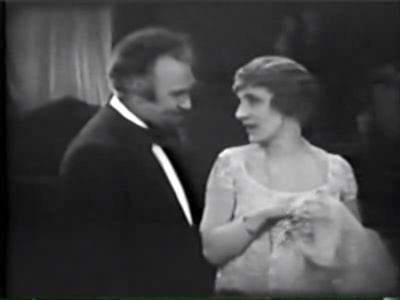
April Fool was aiming squarely for the kind of smiles-through-tears family film that had been accomplished successfully with His People and Humoresque and it succeeds to a degree. Certainly, critics were very pleased with the picture during its initial release and it was booked in big theaters that did not necessarily usually look at the indies. It’s essentially a three character play, with Jacob, Amelia and Applebaum at the center of everything and when that is the focus, it works. Mature love stories have never been common in the movies but they should be, there is something so sweet about a second chance at romance.
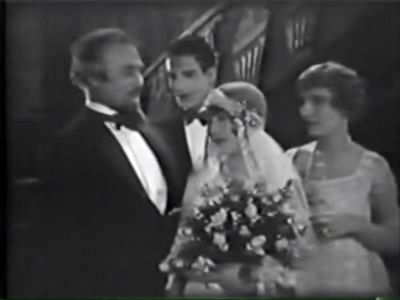
Unfortunately, a lot of the film revolves around Irma and Leon and the stolen funds and, without giving too much away, there is a resolution but it is not particularly satisfying or clear. The movie is unambiguous in the fate of Jacob and Amelia, though, which is what we really care about, so that is a win.
As far as its setting is concerned, it is pretty typical for the era. That is, a reliance on stereotypes but nothing seems to be malicious. In addition to the context of Jewish portrayals in silent cinema, April Fool was more generally part of Hollywood’s push for international dominance via either mimicry (which often fell into stereotypes) or strategic hires. In the 1910s, Famous Players had pushed Mary Pickford as the World’s Sweetheart by casting her to play Dutch, Inuit, Italian and Japanese characters. Norma Talmadge received the same treatment. Post-WWI, Hollywood hired away German and other European stars to assure their access to to large, lucrative, and film-hungry Germany.
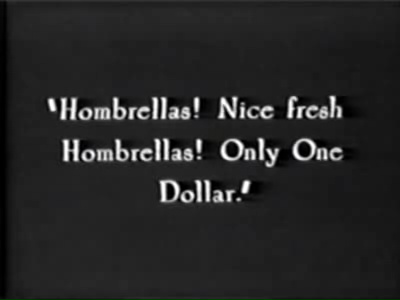
Hollywood Jewish-themed films were meant for the general audience but the studios also hoped to bring in the home team. Chadwick advertised in trade magazines that they were offering special marketing materials written in “Jewish characters” to bring in Jewish moviegoers. In a similar vein, one theater advertised Paramount’s Irish fantasy Castles for Two (1917) by claiming they had imported a box of Irish earth and any Irish customers could walk on the ground of their homeland for the price of a ticket.
Yiddish theater was alive and well, Yiddish cinema had its struggles (as did all independent and specialized filmmaking endeavors) but there were hits like East and West (1923), so a Jewish moviegoer didn’t necessarily need what Hollywood was offering but Alexander Carr was a name and Chadwick’s two-pronged marketing tactic was pretty standard. The strategy bore fruit in at least some locations, one theater in Cleveland, Ohio reported that efforts to attract Jewish patrons via 500 printed fliers brought results. (It should be noted that Castles for Two proved to be so offensive to Irish-American patrons that they rioted in some areas, so getting the audience in and pleasing them were two different things. All in all, audiences seemed pleased with April Fool.)
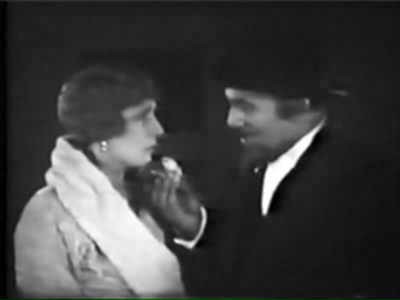
Ultimately, April Fool has an issue that I seem to find in most Chadwick productions: I am left wanting more and not in a good way. The studio’s films always seem to just miss satisfying me as a silent film viewer. A plot thread dropped, a hollow resolution, an ending that doesn’t quite work… I quite enjoy independent cinema and some micro-budgeted films of the silent era are excellent, so it’s not necessarily the money.
Learning that April Fool was a one-act play makes a lot of sense. It’s obvious why the young couple are so undefined: they were meant to be convenient plot devices but were never fleshed out when the story was extended to feature-length. Opening up a play for the screen is a challenge, expanding one act to seven whole reels makes it all the more difficult. Screenwriter Zion Myers (brother of Carmel) just doesn’t stick the landing and director Nat Ross doesn’t really add much oomph besides what was provided by his talented cast. (All this being said, April Fool was originally released as a seven-reel film, while available prints run just under an hour, indicating there were some cuts.)
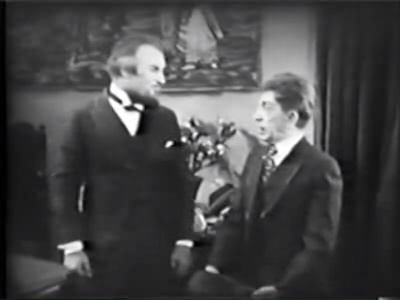
April Fool has good moments, particularly between Carr and Alden, but doesn’t feel focused or cohesive and isn’t as good as other films in the same genre. Still, it has enough to enjoy to make it worth seeing, especially if you are interested in the subject.
Where can I see it?
☙❦❧
Like what you’re reading? Please consider sponsoring me on Patreon. All patrons will get early previews of upcoming features, exclusive polls and other goodies.
Disclosure: Some links included in this post may be affiliate links and I earn from qualifying purchases.

