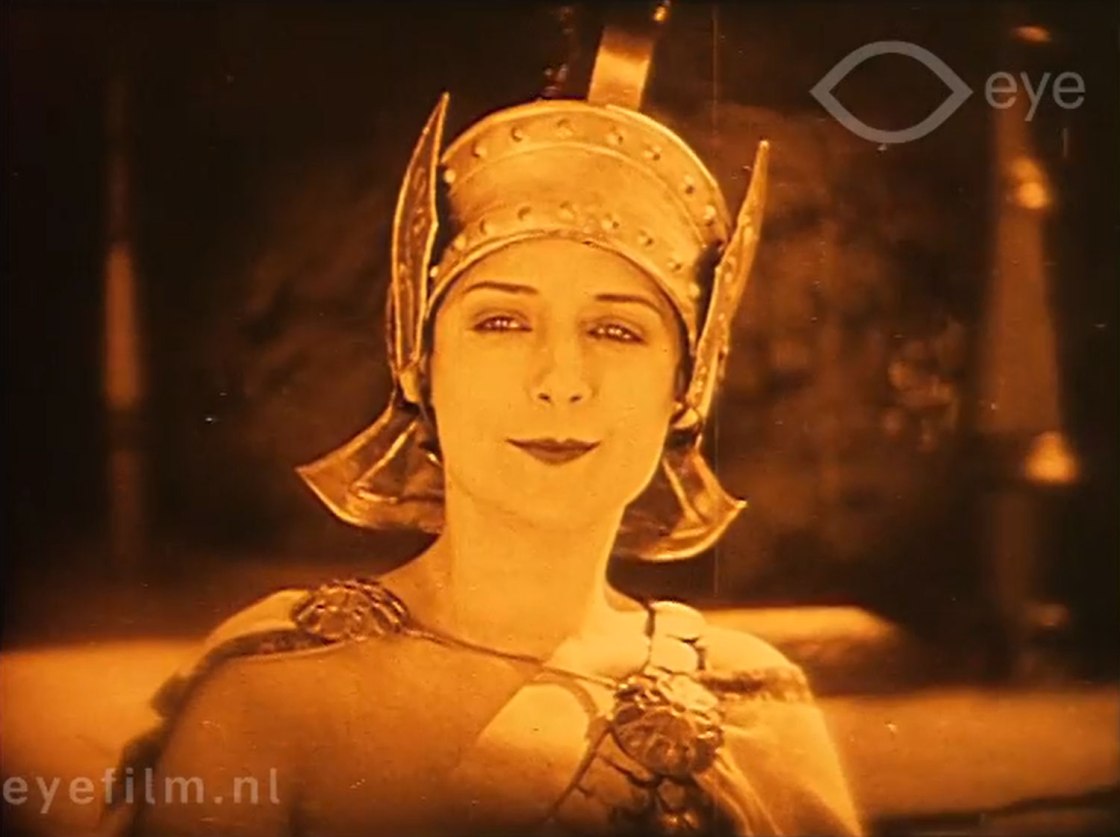
A young woman must choose between marriage for love and marriage for money. She is helped in her decision by flashbacks to womanly struggles throughout time. Mostly notable for being deemed one of the worst movies ever made.
Home Media Availability: Stream courtesy of EYE.
Carving the Turkey
Usually, when a reader requests that I review a movie, they make their selection based on their favorite star or director or they want coverage for one of their favorite films. At the very least, a movie they found interesting and enjoyable. The request for me to review Man-Woman-Marriage was a little different. You see, no less than Robert E. Sherwood, acclaimed writer for the stage and screen, had declared it to be the world’s worst movie in his review for Life magazine. Over a hundred years have passed since it was release, is it really so bad?

I usually take period reviews with some level of skepticism. Mordaunt Hall spent a good portion of his New York Times Michael Strogoff review talking about pretty horsies, for heaven’s sake! But then I took a gander at the cast and crew of Man-Woman-Marriage and was immediately intrigued. Allen Holubar. Dorothy Phillips. Olga Scholl. The trifecta of silent era turkey-makers. There was no way I was going to miss this.
Those three names probably don’t ring many bells outside the modern silent fan club and, frankly, not too many bells inside of it either. They were the director, star and writer of The Heart of Humanity, a frenzied ripoff of Hearts of the World that was infamously hijacked by Erich von Stroheim, who, in the role of a German officer, tore off Phillips’ dress with his teeth and threw a baby out the window.
Everyone talks about the kinky Stroheim bits but few mention how agonizingly bad the picture is overall, full of cliches and questionable humor involving bread stuffed down the front of trousers, with Phillips mimicking Lillian Gish and getting inappropriately excited about socks and squirrels. It’s horrendous. See it.
Holubar also directed the 1916 version of 20,000 Leagues Under the Sea, which everyone rightly praises for its pioneering and spectacular underwater photography… but there’s a whole hour of other movie in there that is all Holubar and that is not a good thing. His signature bad acting, bad directing and nonsensical plotting drain all the juice out of Jules Verne.
Holubar and Phillips were a married power couple and, for all the bizarre flaws, their films were essentially critic-proof, drawing large crowds at the box office. The downside, of course, is that they have not aged terribly well and modern silent movie fans may be familiar with clips of Holubar pictures but few sit down for a full viewing. I don’t blame anyone for that but I enjoy a dose of “so bad it’s good” so I was delighted to see that Man-Woman-Marriage had survived.
As a bonus, the film was touted as a feminist picture, displaying the plight and strength of women through the ages. So, in addition to all the background we have already discussed, we will see if perhaps the film’s message contributed to it being panned.
This is the longest and most rambling way possible to say, reader, I was seated and ready.
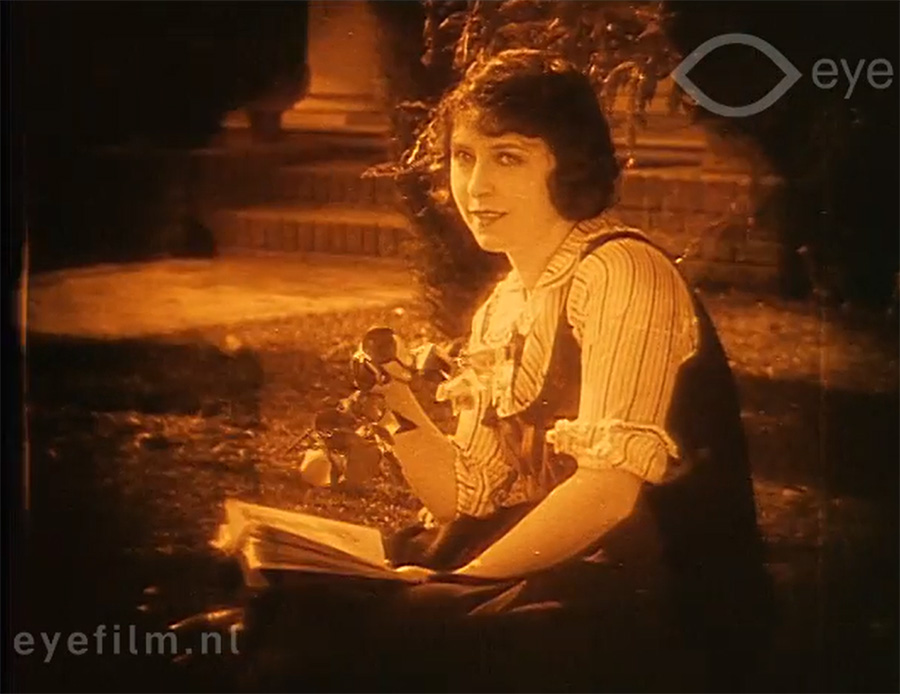
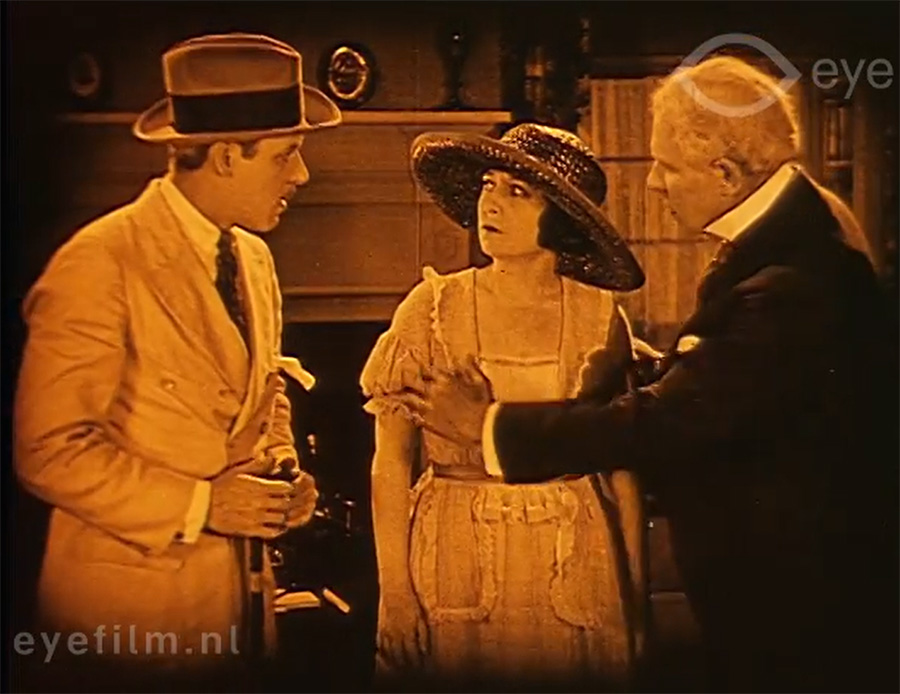
The picture opens with title cards about woman’s eternal struggle, etc. etc. and then introduces its heroine, Victoria (Phillips). She dreams of studying the law and making a difference in the world but that’s not so easy in 1921, especially with a social climbing father (Ralph Lewis) and a browbeaten mother (Margaret Mann). Dear old dad is trying to set her up with wealthy Bruce Schuyler (venerable character actor and cad specialist Robert Cain).
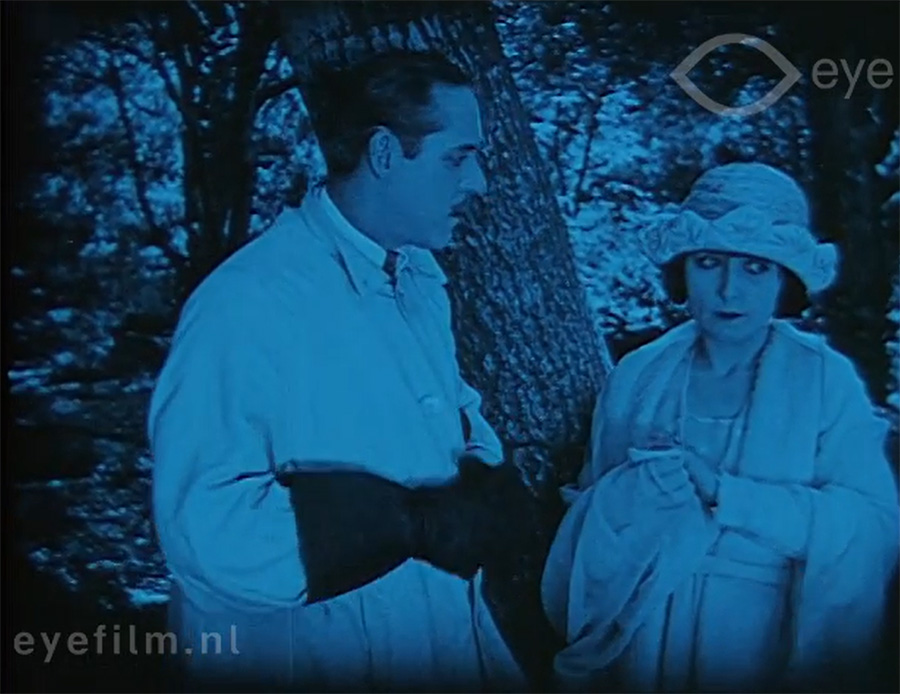
Victoria is not interested but, during a nighttime stroll through the woods, Bruce tells her that she can do whatever she likes once they marry. Seeing a chance to escape her father’s house and fulfill her dreams, Victoria accepts him but just then, they hear the snap of a bear trap.
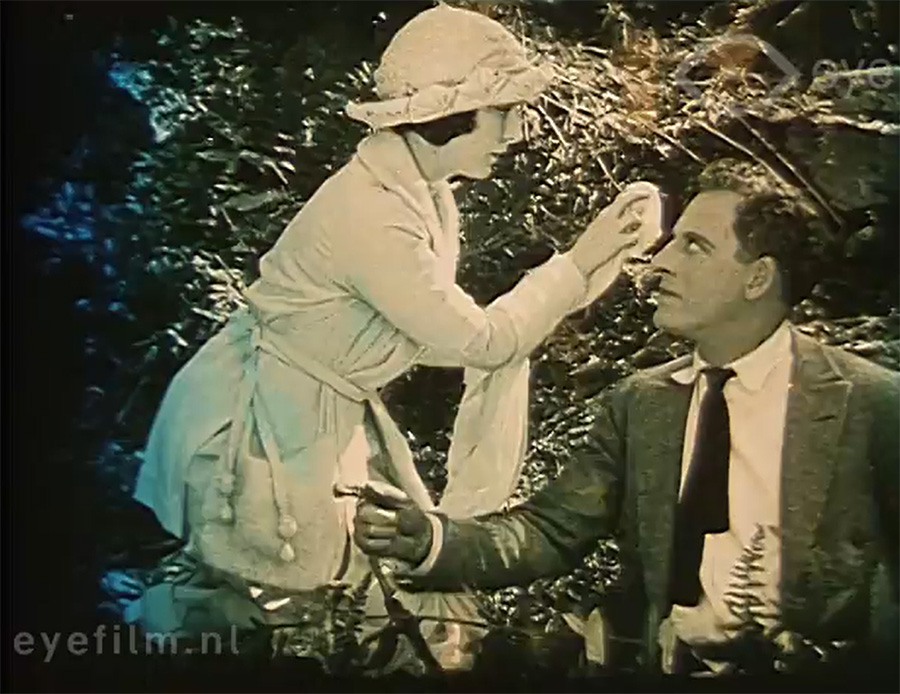
Oh no! David Courtney (James Kirkwood) was wandering through the woods and his ankle is caught. Bruce runs for help while Victoria pats his brow (?) and they flirt. Keep in mind, the man’s ankle is caught between spring-loaded steel jaws. Victoria then begins one of the film’s many historical flashbacks.
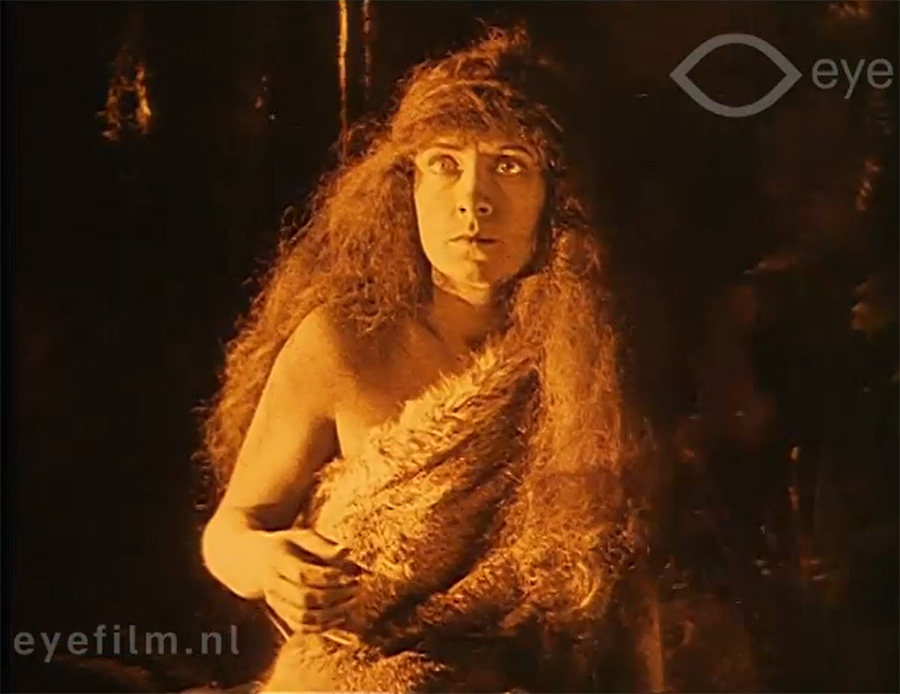
She envisions herself as a cavewoman and David as a caveman with the phoniest beard this side to gaslight melodrama. At first she fears him but then they do the whole “What is kiss?” thing and rub noses. A rival shows up and clubs David but Victoria grabs a bow and drills that sucker through the beard with an arrow. I am normally all in favor of action girl moments but it’s not exactly normal to fantasize like this while the person you are talking to is actively having his ankle crushed in a trap, is it?
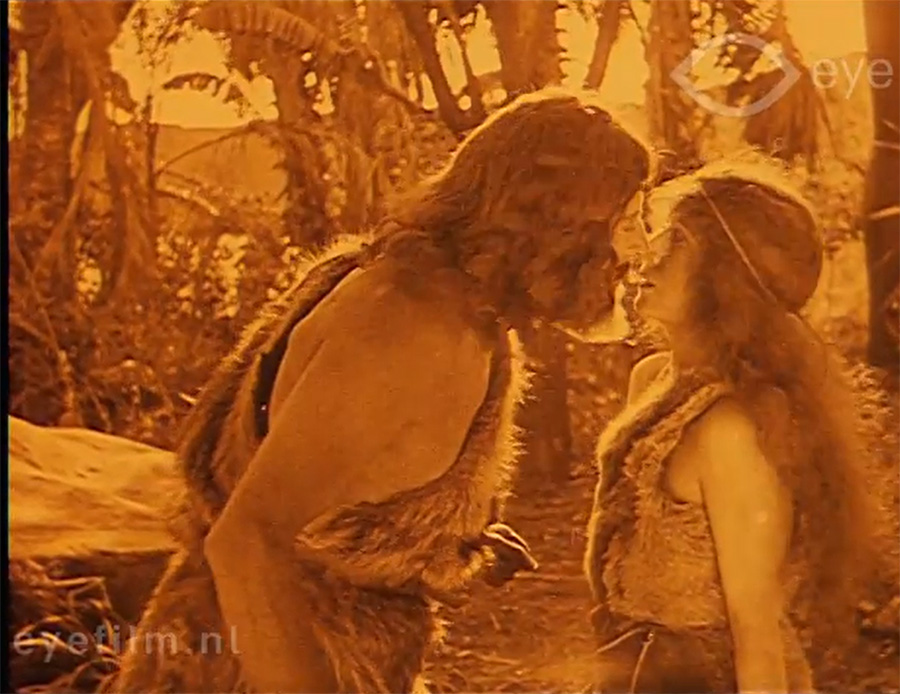
This pretty much sets the tone for the picture. At the time, historical flashbacks and fantasy sequences were a popular way to spice up modern romances and dramas but they tended to be more appropriately presented. For example, the Babylon fantasy of Cecil B. DeMille’s Male and Female (in which Robert Cain also played the cad) was presented during a moment of romantic tension and mirrored the class divide storyline. It didn’t get thrown in during the shipwreck scene.
DeMille did the fantasy sequence again in The Road to Yesterday, a positively bonkers picture but, again, the flashback made narrative sense. The characters are caught in a fiery train crash as a direct result of their actions in a past life and the heroine is thrown back in time to fix what has gone wrong. It feels about as natural as a flapper time travel movie can. You can’t just put historical flashback in random places, they have to help the story along.
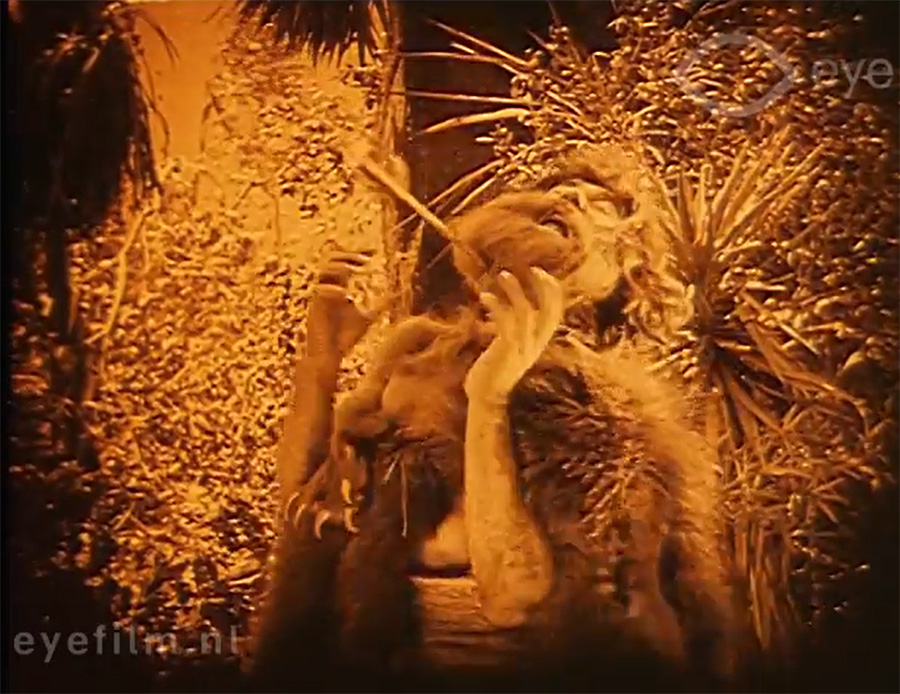
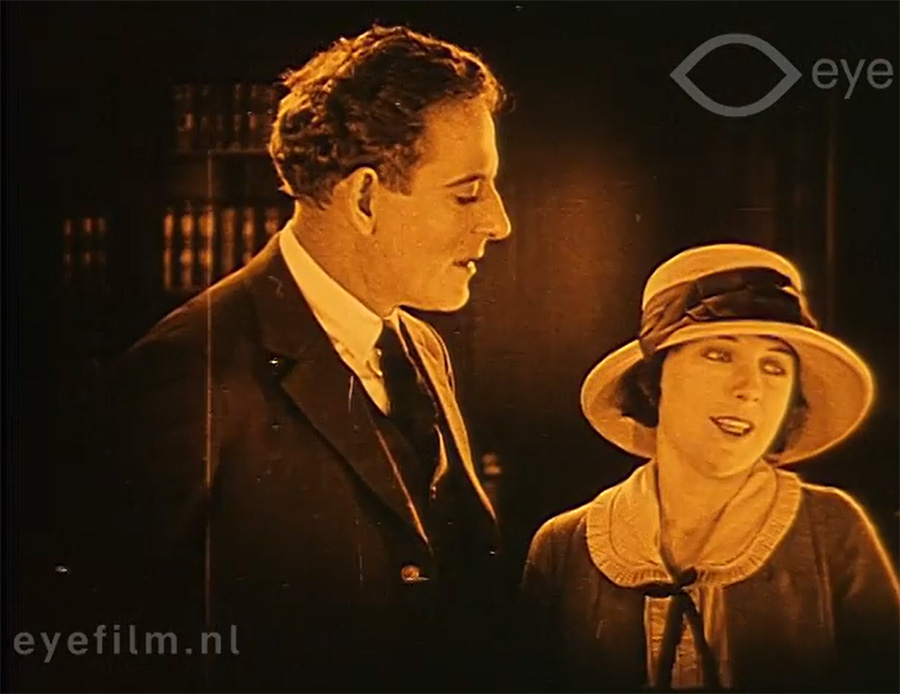
Anyway, the fantasy ends in Man-Woman-Marriage with David still stuck in the trap and stubbornly still wearing all his clothes. Bruce returns with help and notices there is something going on. Victoria meets David again but realize that they cannot move forward as she is an engaged woman. This is literally the only love scene between the two and it’s just them kind of standing around in his office (he is a lawyer). Keep that in mind.
Bruce declares that Victoria can only do what she likes if he approves, then grills her about her sex life and she fires back with the sexual double standard: What about you, buddy boy? He thinks rules are different for boys and the scene is going very well. Victoria gets annoyed and pretends that she has been playing the field, Bruce goes tattling to her dad, she tries to break the engagement and her father locks her in the house and calls for a minister to perform the marriage ASAP.
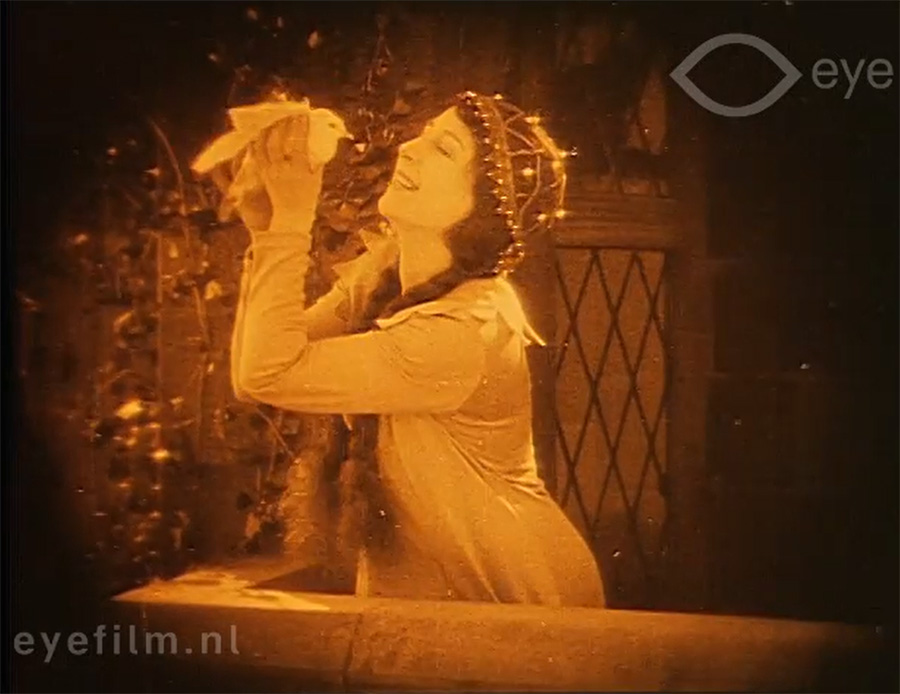
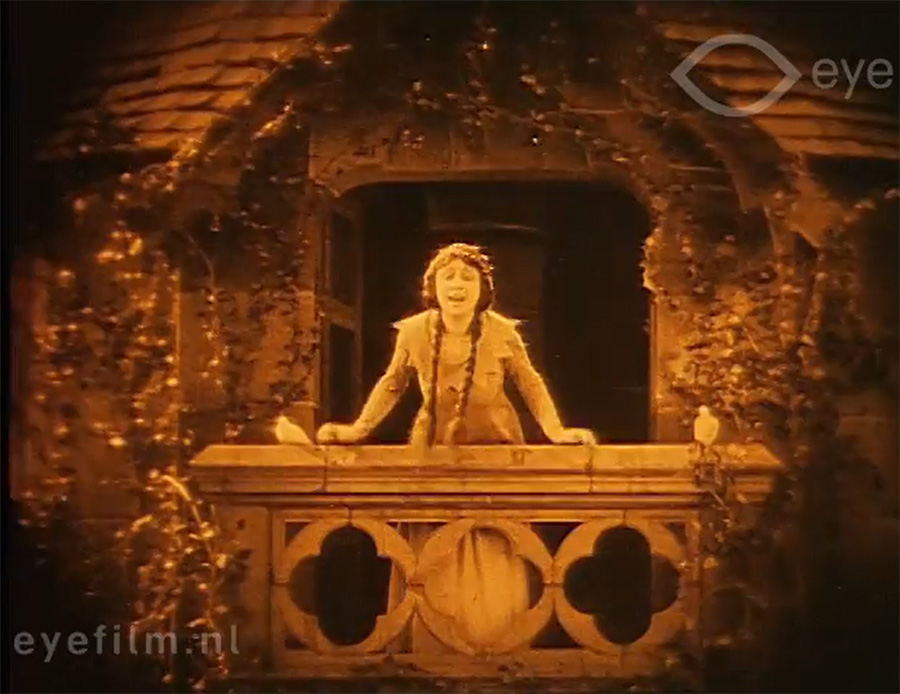
Victoria has another flashback then and there (really?) about medieval days and sees herself as a princess being forced to wed a nasty old nobleman. She ditches everyone and rides away with David as a knight in shining armor instead. Of all the fantasy sequences, this is the strongest as it is playful and gets its “you don’t own me” message across but it is so badly timed within the film, breaking the immediate tension.
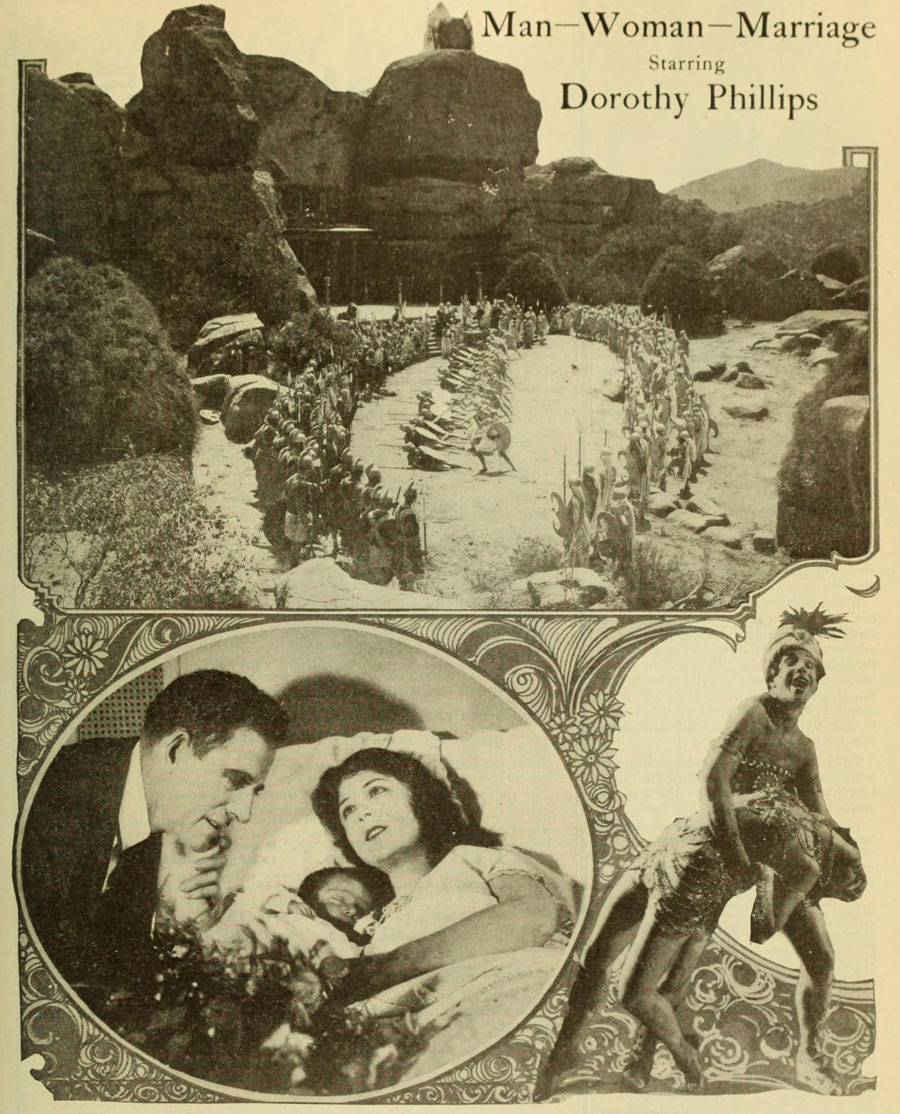
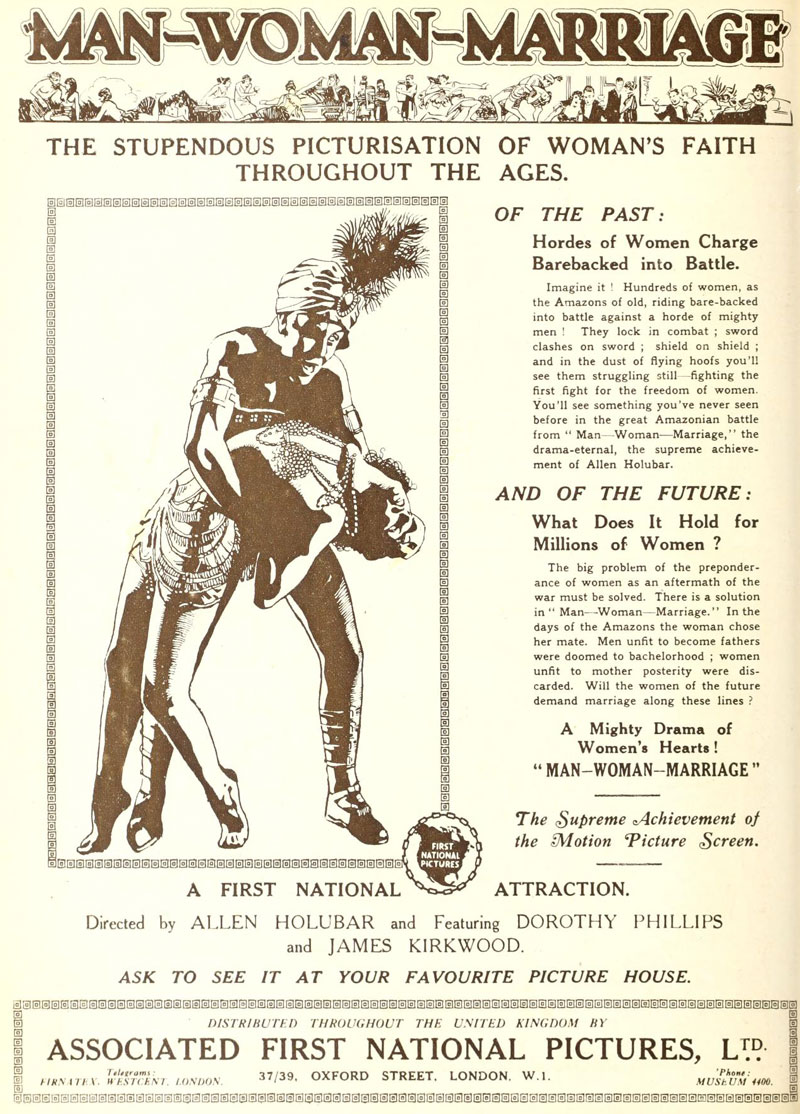
Victoria manages to call David and they elope. We know they are in love because the titles tell us so. And before you know it, they have a bouncing baby boy. The flashback that occurs during the birth scene is the most elaborate in the picture, with Victoria imagining herself as queen of the Amazons.
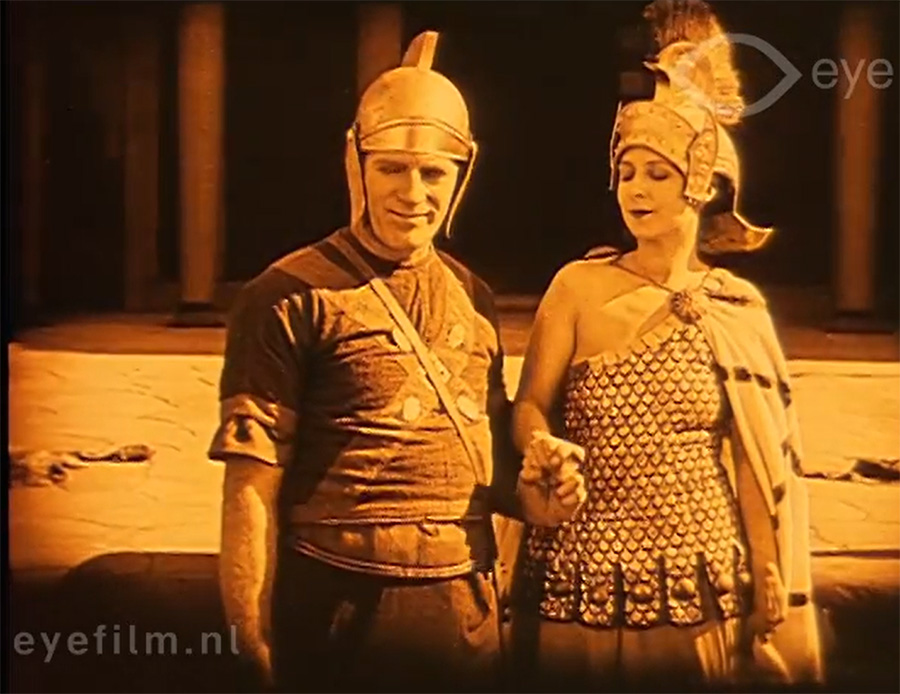
She rides into battle with her coed army and defeats barbarians, riding back triumphantly and claiming David as her husband. Later, they have a child together. The scene sounds like it would be very cool but, alas, Holubar trips over himself. The masses of extras ride out to enact the war between Amazons and barbarians but there’s no clash, no action, the horses just kind of gallop around and nobody seems to be fighting anyone. We only know who won because the title tells us so. (Another theme of the film.)
The kid starts to grown, David doesn’t like Victoria spending time to study the law when she should be doing wife and mother stuff and orders her to stop. Maybe Schuyler wasn’t so bad after all… She gives up her studies and David decides, at the urging of the sexy Bobo (Shannon Day) to leave his law practice behind and go into politics.
He wins his election, we know because the title tells us so, but starts to get into dirt and grift, we know because the title tells us so, and leaves Victoria miserable, we know because the title tells us so. At a party, Victoria sees that David has eyes for every woman but her. Apparently, at this point, there would have been a sexy dance sequence featuring an unknown Ramon Novarro but it is not present in the version preserved in the Netherlands. Maybe it was censored, maybe it was snipped out for a stag reel. Anyway, it was apparently quite something as it was heavily advertised.
Victoria decides to return to her study of the law and becomes a lawyer, as she dreamed. They have another kid somewhere, I dunno, the second one just appears with no fanfare or Amazon flashback. David gets caught up in a scandal, we know because the title tells us so, is tried and convicted offscreen and sent to prison. Courtroom scenes are movie gold, it is bizarre to leave them out of this, especially since the leads are both lawyers!
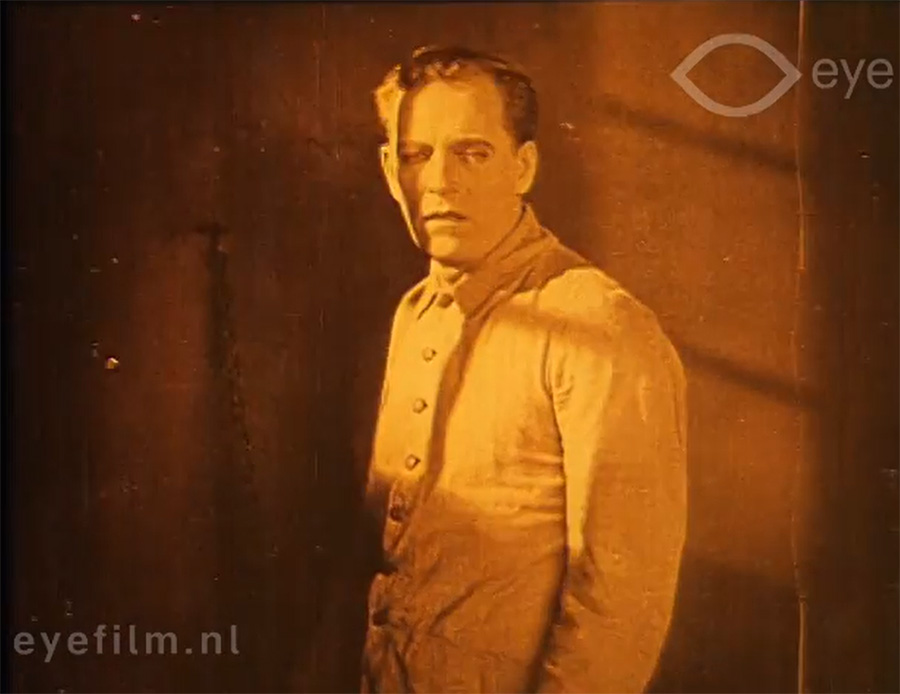
David wiles away his time in his cell but is visited by Victoria as an angel of mercy. And this is where I was sure we would see some payoff! Victoria’s goal has been the study of the law, she has her own practice, she’s in a position to head in their with her wiles and smarts and save the day, just like in the fantasy sequence that– no?
No. She just shows up in prison with a religious book and tells him to read it.
(Also, the synopsis published by the AFI states that Victoria actually runs against her husband and takes his office from him. The surviving version is the Netherlands release cut and it states that Victoria becomes a lawyer. It’s possible that there was an English title card stating that Victoria had won office but other details of the AFI synopsis do not match what is on the screen, so it may be based on early pre-release publicity materials.)
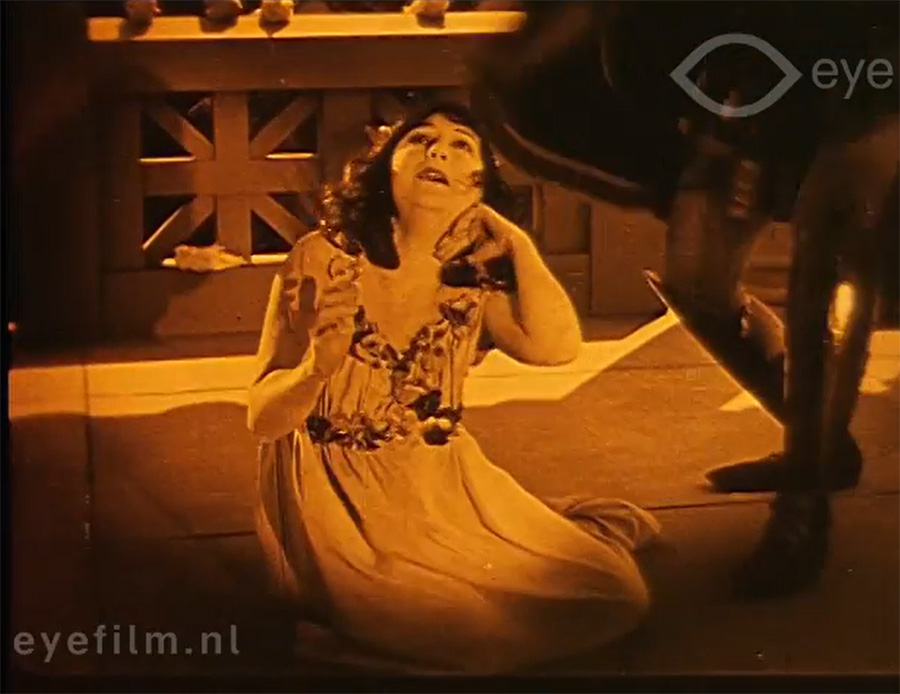
The Faith of Woman® was a popular plot element in silent films and I do not object to its inclusion generally but Victoria’s character has been all about the law for the entire picture. There’s a brief scene where her kid hands her the religious book and she reads from it but it was just one scene, we didn’t see any kind of transformation and she seemed to be pursuing her legal career.
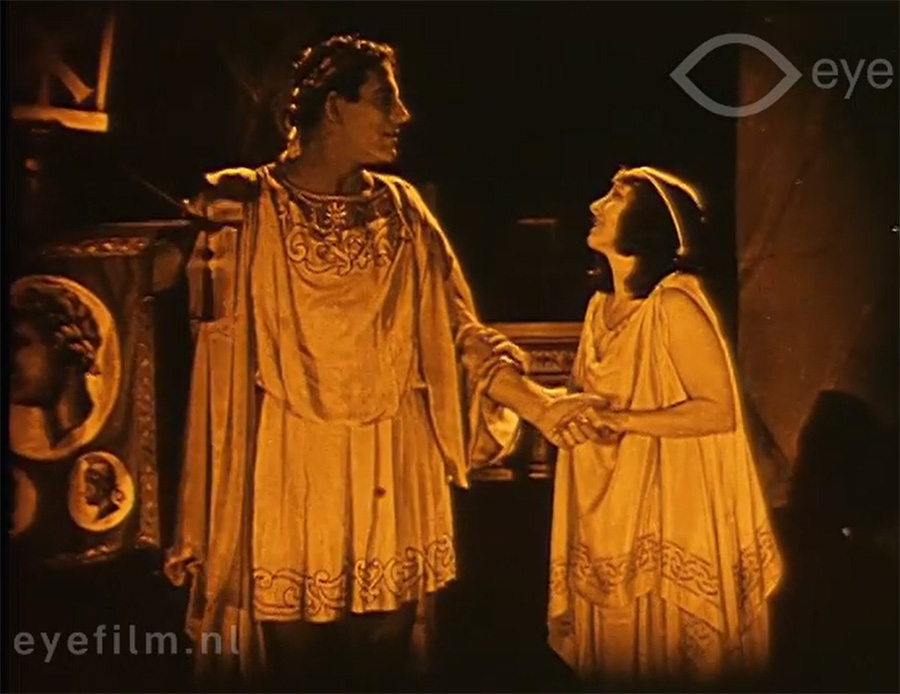
Then we get another sequence, this time of the court of Constantine (David, of course) and Victoria is a Christian slave. Constantine becomes intrigued with her when he sees that she doesn’t seem to feel pain from a flogging. She explains that it is her faith, which seems to indicate that Erich von Stroheim rubbed off on Holubar. Then Constantine dreams of the cross, blah blah blah, definitely the weakest fantasy sequence of the film and basically a bridge to show David gaining faith.
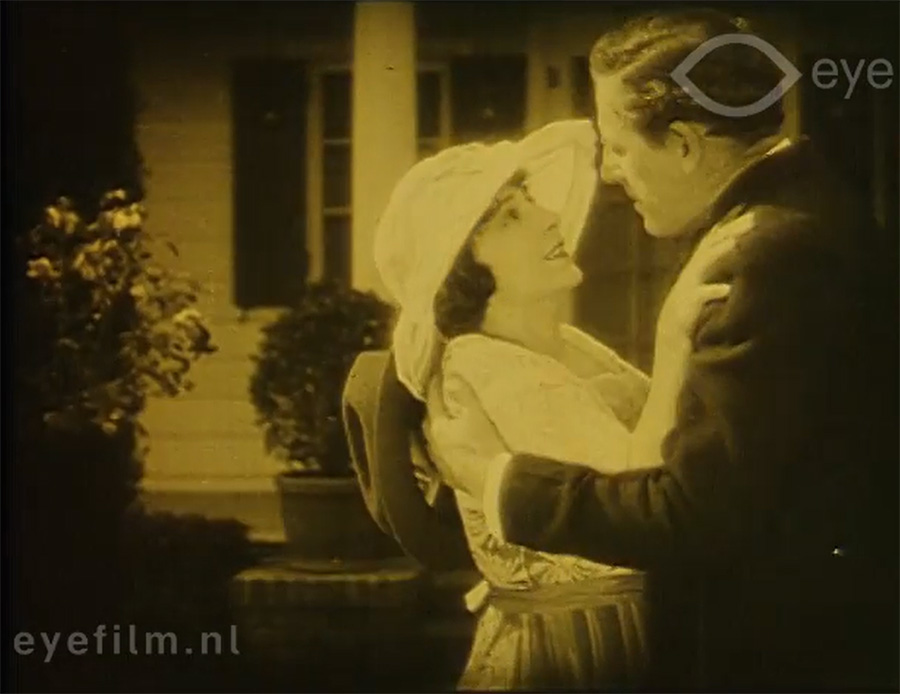
Anyway, David is released, they don’t say whether he served his time or was granted a reprieve, and returns home where Victoria, her mother and his kids wait, no word on what happened to Victoria’s dad. The end, I guess?
To contextualize Man-Woman-Marriage beyond Sherwood’s pan, it was a mega budget prestige picture. The Exhibitor’s Herald breathlessly repeated studio hype, declaring that it would be the sensation of 1921 and that the film was “the result of many months in actual shooting, two years in study for the completion of the story, several months consumed in editing and titling and an expenditure of $400,000.”
(Interestingly enough, the real sensation of 1921 was a little movie made on the cheap called The Sheik. James Kirkwood had been top choice to play the lead but Paramount was tightening its belt and his salary was too high, so they took a chance with an inexpensive up and coming player named Rudolph Valentino.)
Was some of the hostility toward the picture due to its message? I can’t definitively rule it out in all cases but the film is so sloppy and amateurish that I am hard pressed to defend it, even if its heart seems to to be in the right place. In fact, part of Sherwood’s pan was that, for all the film’s moralizing, it was a vehicle for leering. He’s not wrong about the silent era and he isn’t wrong about modern movies either, if we come to that. But beyond that, Man-Woman-Marriage is just… bad.
Obviously, the overuse of title cards is a major misstep. Silent films are visual and the best rule in all fiction is Show, Don’t Tell. Instead of using the power of visual storytelling, Holubar and Olga Schnoll toss in title cards to summarize what has happened but they tend to choose the most interesting stuff to leave out! I, for one, could do without a few of those silly fantasy sequences and instead watch details of David’s descent into corruption, Victoria’s law practice, David’s trial, Victoria carrying on as the humiliated wife of an unfaithful jailbird… But we get none of that. Silent films could tell extremely elaborate stories with few or even no title cards. Warning Shadows, for example, is a famously title-free story of fantasy, sexual jealousy and murder.
We are also not invested in the romance between David and Victoria because we are told they are in love but are given no proper romantic scenes. These wouldn’t have to be passionate clutches either. William D. deMille’s feminist film Miss Lulu Bett builds a quiet romance between Lois Wilson and Milton Sills slowly, and the pair finally have a breakthrough while they quietly wash dishes together.
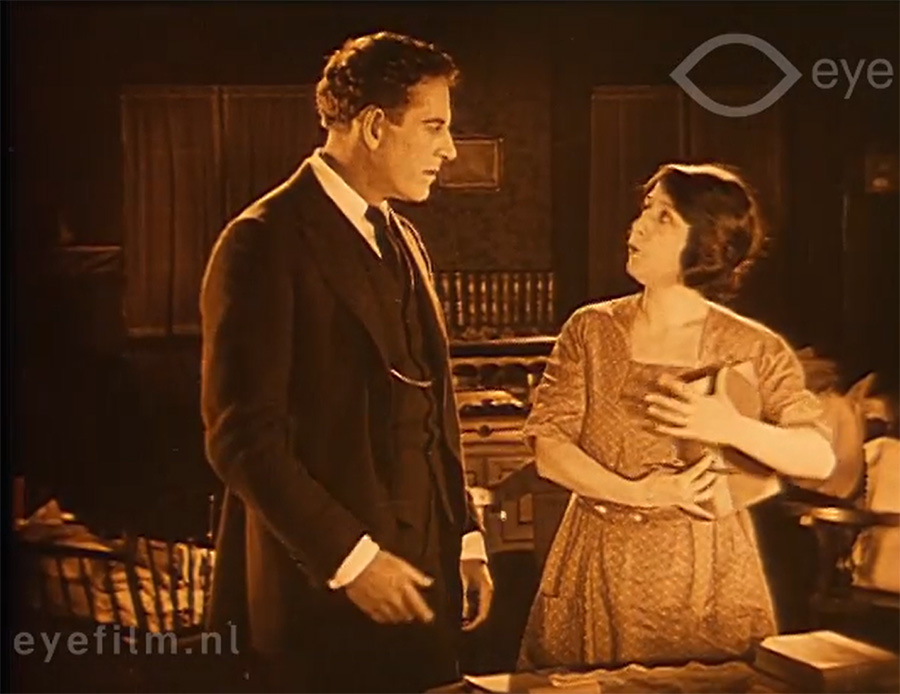
And, despite the film revolving around Victoria’s big plans to do good, we never get any specific details on what she hopes to accomplish or what good work in the law David is performing, beyond a glimpse at one paper about tenements. What is their specialty? Who are they standing up for? Why can’t we see David’s crusading do-gooding as a lawyer? Did we really need the caveman flashback instead of this?
The acting doesn’t save the picture either. Dorothy Phillips doesn’t seem to have her own screen persona and, while she isn’t doing a full-blown Gish impression here, she is just bland and dull as Generic Silent Film Heroine. James Kirkwood is given nothing to do as all his big scenes are summed up in the titles. Robert Cain was a wonderful cad, rogue and rascal and a favorite of mine among silent character actors but he is likewise given little to do and the story plays to none of his strengths.
Apparently, Holubar worked for years on the concept and perhaps that was the problem. He was seemingly in love with every fantasy sequence and loath to let a single one of them go but the result is a choppy and uneven film with subject matter clearly beyond the skill level of its director. I am all for an ambitious and slightly nutty mega epics, I go to bat for Sodom and Gomorrah, for heaven’s sake! But I have to have something to work with and Holubar is no Michael Curtiz, Fritz Lang, Raymond Bernard, or Lois Weber. He’s not even a DeMille (or a deMille, for that matter).
I like fantasy sequences, I like anthology films, but the writing in Man-Woman-Marriage is immature and awkward, jamming these sequences in at inappropriate moments and to the detriment of the film’s here and now. In fact, I would go so far as to say that these fantasies and when they occur enter the realm of parody. It’s like The Secret Life of Walter Mitty thought it was a gripping drama for the ages. It’s bizarre.
And yet…
The reviews were actually pretty favorable overall and the film broke box office records in some locations, with the Regent Theater in Paterson, New Jersey boasting that it sold over 31,000 tickets to see the picture in a single week. One theater! Well, people ate up The Heart of Humanity too, so Holubar and Phillips clearly had some kind of appeal.
Inside the industry, assessments were more realistic. In his Motion Picture News trade review, Laurence Reid hits the nail squarely on the head: “Holubar hasn’t done so well by his story which shows him at cross purposes with himself because he relegates his fine ideas to the background in order to bring forth purely melodramatic moments. His logic takes flight at critical times only to be brought back through captions which preach and moralize. In attempting to limit his scenes, continuity is dispensed with so that one is forced to jump at conclusions.”
This also answers my question of whether the film was ill-served by a foreign release print. An American critic pointing out that continuity is lacking and papered over with long title cards confirms that the Dutch print is not seriously truncated beyond the Novarro orgy scene and these problems were present in the film that was released in the United States.

Man-Woman-Marriage was cinematographer Byron Haskin’s first big job and he described it as “the most awful bomb ever made in Hollywood.” Haskin paints Holubar as a disorganized maniac, shrieking orders with no regard for the safety of the cast. Reports of dozens of injuries with some hospitalizations among the extras due to the chaotic Amazon charge back up what Haskin claims. I don’t support endangering people for art no matter how great the product, but it certainly adds insult to injury that these poor people were harmed making such a bad and pointless scene.
Now, would I call it the worst movie ever made? No, but then again I have seen Brute Island, Heart of Wetona, Surrender, and The Cossacks, so my ability to judge these things is warped. I have seen horrors. But Man-Woman-Marriage sure as heck ain’t good either and I don’t think Sherwood and Haskin were exaggerating. Phillips displays no personality of her own, Kirkwood is dull as dishwater, Holubar can’t direct action to save his life, the story relies too heavily on title cards rather than showing us what we need to know. The fantasy sequences are mostly redundant and even the ones that work are so weirdly timed that they distract from the main story.
What I will say, though, is that this is a movie worth seeing, safely nestled in the “so bad it’s funny” category of filmmaking. I wouldn’t recommend this as someone’s first silent film but a viewer familiar with these things done right will appreciate the way everything goes spectacularly wrong. So, to circle back to my assessment of The Heart of Humanity, Man-Woman-Marriage is absolutely terrible. See it.
Where can I see it?
Available to stream from EYE with Dutch intertitles.
☙❦❧
Like what you’re reading? Please consider sponsoring me on Patreon. All patrons will get early previews of upcoming features, exclusive polls and other goodies.
Disclosure: Some links included in this post may be affiliate links to products sold by Amazon and as an Amazon Associate I earn from qualifying purchases.
 Movies Silently
Phillips made two films in 1916 with Lon Chaney, Sr. as a part. Only fragments remain of the films, both released a few years back on a DVD entitled something like “Before the Man of a Thousand Faces”. Both films are so boring as to be nearly unwatchable. The next year she made another with Chaney, “A Doll’s House”, and though some of the supporting cast were praised, the direction and Phillips were panned. She just wasn’t made for the filmic side of things, but she and her husband had a huge cachet of fame and influence in Hollywood. Would be interesting to see a lot more written about the pair.
R Michael Pyle
Yes, she is just kind of a vacuum on the screen. She did receive good notices for Man-Woman-Marriage but they were phrased as “this is the film that will finally put her on top” which is interesting given she was three years out from the smash hit Heart of Humanity. Her copycatting isn’t as bad here but she does put on a few DeMille-esque affectations and Holubar is just pedal to the metal attempting to make another Male and Female. I don’t think there is a comparable duo for silent era reputation vs low film quality. Like Viola Dana and John Collins are not household names either but their collaborations are spectacular.