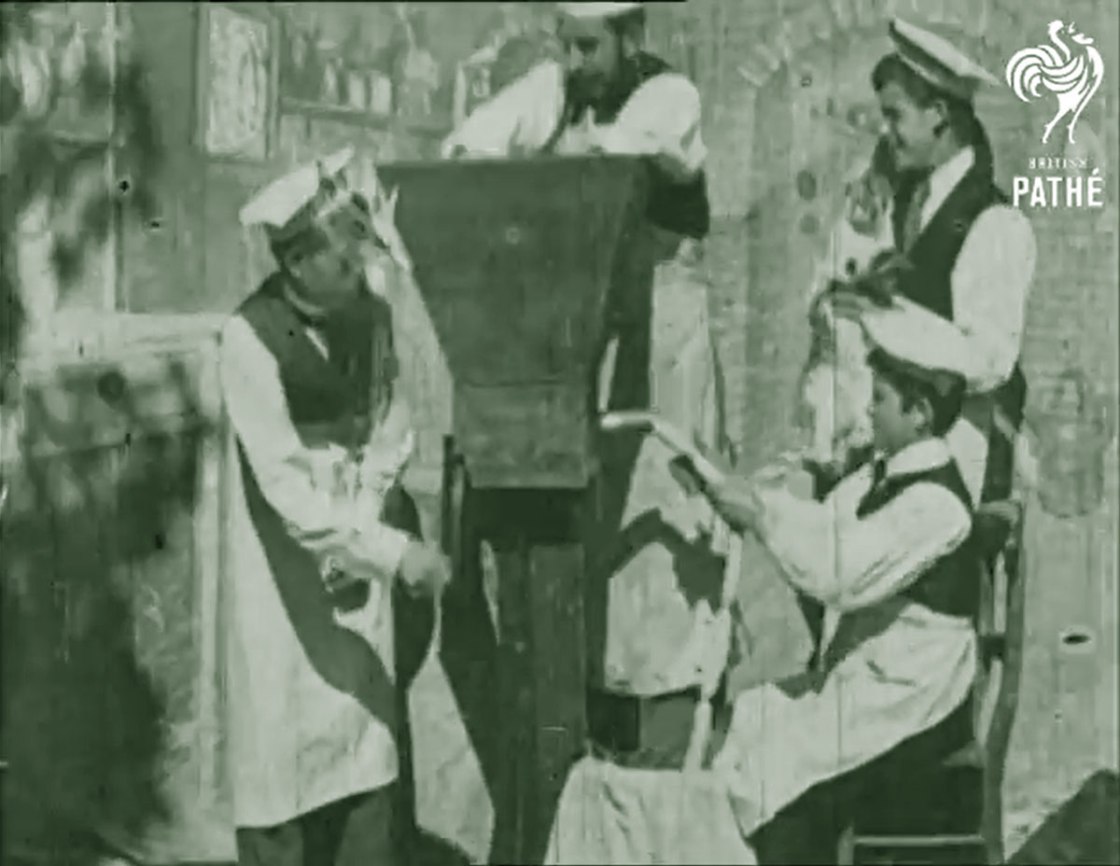
British pioneer George Albert Smith goes against all advice and asks just how sausages are made. The answer is a grisly comedy in keeping with the political climate of Britain at the time. Not bad for a one-minute movie!
Home Media Availability: Stream courtesy of British Pathe.
Snips and Snails…
Whether it is true or not, sausages are a curious food with a reputation for nastiness that hasn’t put off hungry diners. “You don’t want to know how the sausage is made” is a popular idiom that advises people not to look too closely behind the scenes as they may find something disgusting. And while many sausages use perfectly normal ingredients, any jokes about them containing lips, eyebrows and general offcuts and waste are usually met with chuckles. There will always be some people who refuse to eat them but sausage has remained widely popular, whether or not actually made out of meat.
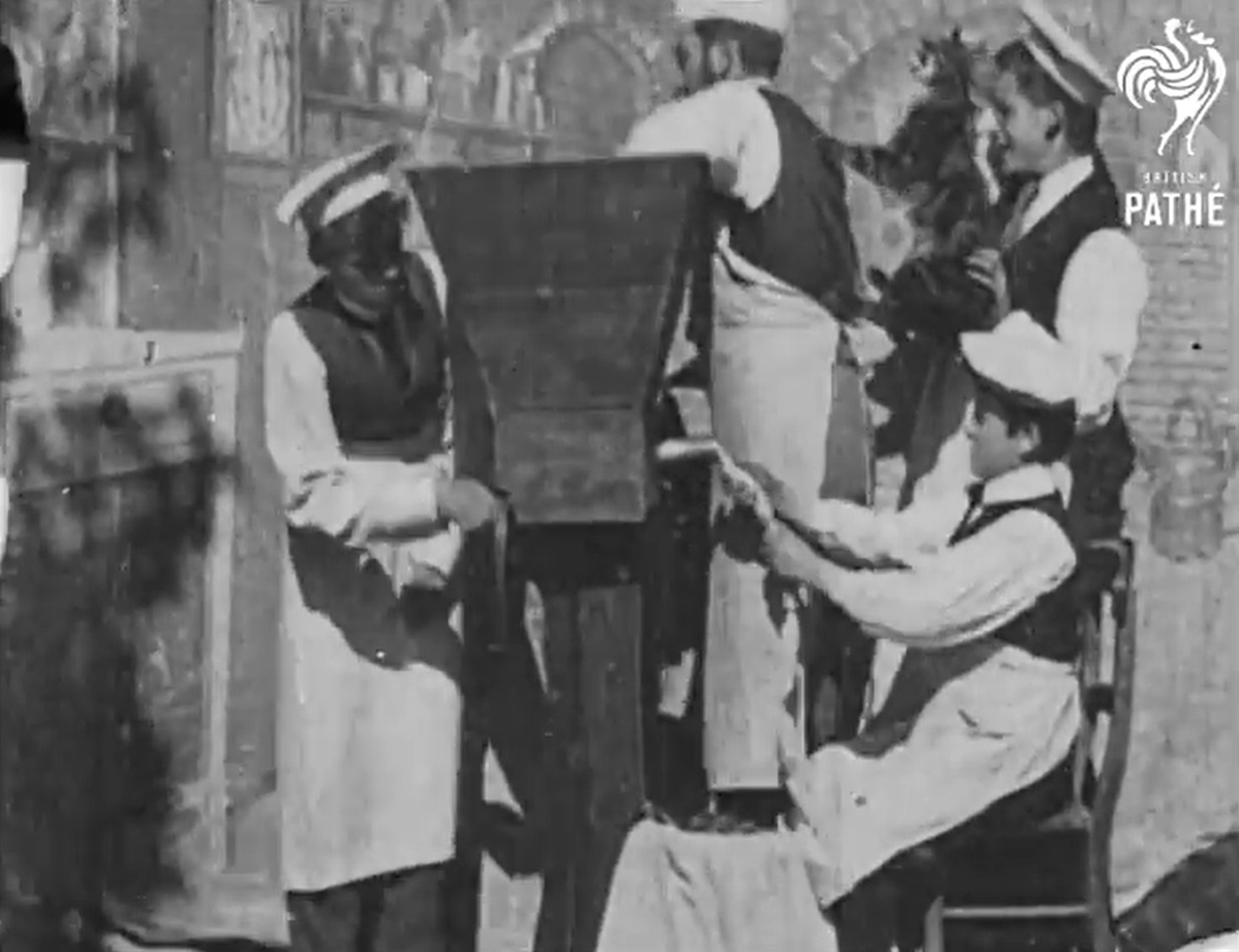
And in that respect, we are not so very different from Victorian Britain. Sausage had been steadily increasing in popularity as a working class staple and, by the time 1897 rolled around, had made the jump to more genteel cuisines. Pioneer filmmaker George Albert Smith saw an opportunity for comedy and so, he went about Making Sausages.
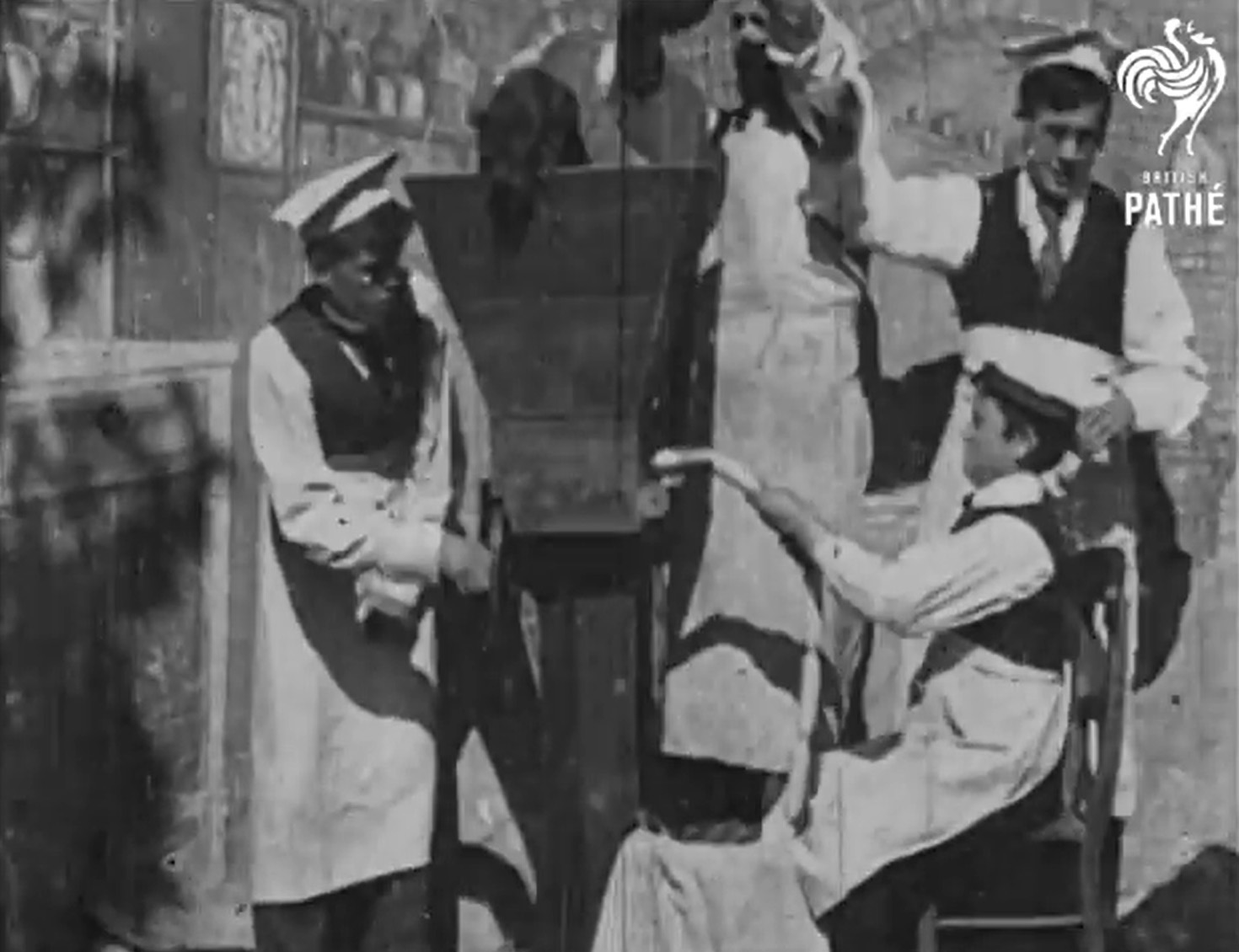
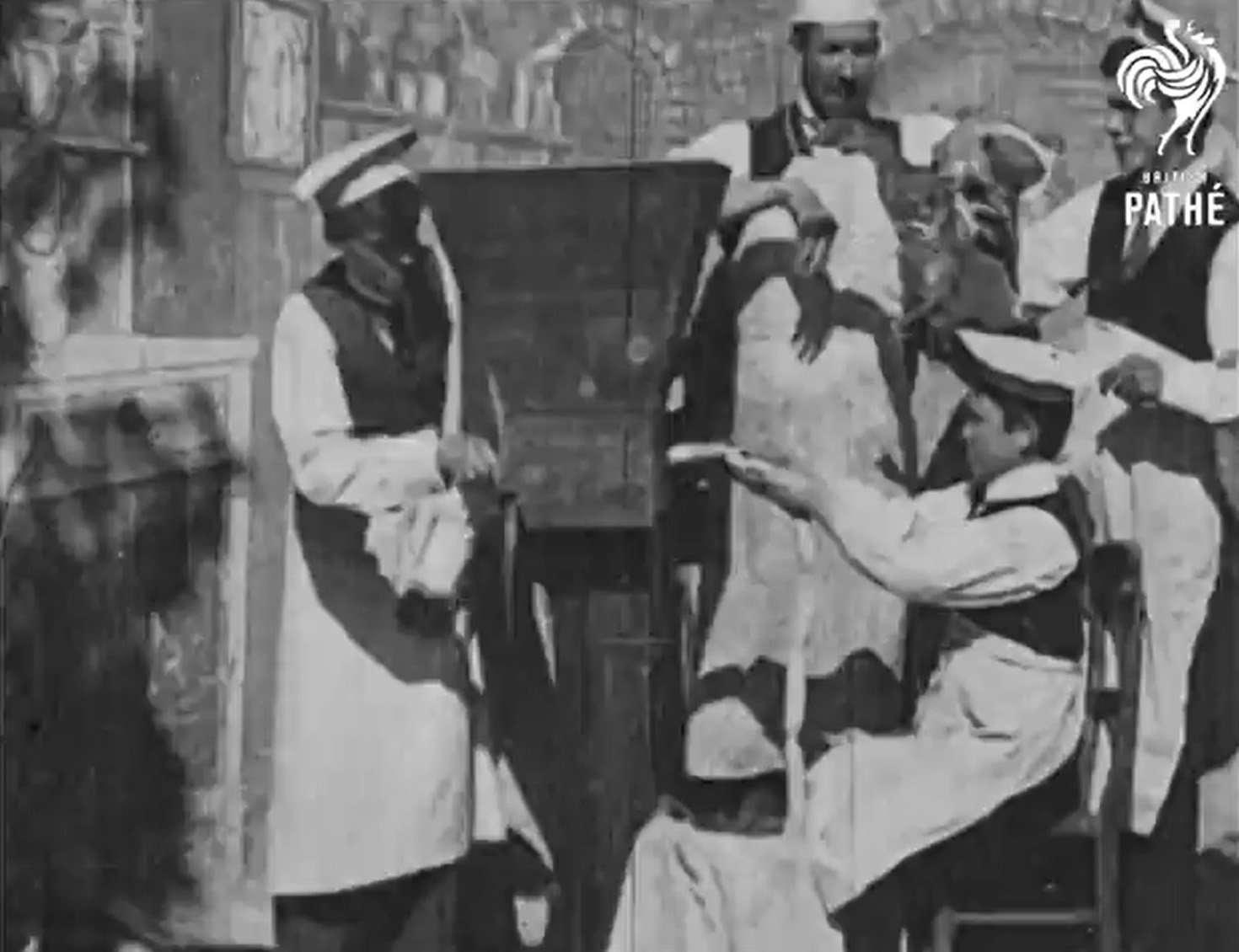
Smith had tackled the then-new x-ray technology the same year in The X-Rays but Making Sausages is a simpler affair: a group of men dressed as butchers surround a meat grinder, what will they put inside? The answer arrives quickly– the film is less than a minute long. A cat, a rabbit, a duck, some spices, a dog… the film ends as one of the butchers arrives with an old boot. All of the animals are tossed in alive and the cat can be seen exiting the hopper.
This rather grisly topic had been portrayed in the movies before. The 1895 Lumière film La Charcuterie mécanique portrayed an entire pig being pushed into an automatic butchery machine with employees proudly displaying various cuts from the animal. However, it should be noted, the French film portrays a pig being turned into pork products and not the strange menagerie that Smith included in his sausages. Another 1895 Lumière title, The Sausage Machine, brought dogs into the equation.
Over in the United States, there were comedies such as The Sausage Machine, an 1897 Biograph film with cats and dogs as sausage meat (likely lifted from the French title) and 1903’s The Dog Factory treated sausages as a kind of dog storage system. The 1901 film Fun in a Butcher Shop portrays Chinese immigrant butchers grinding up dogs– and a Chinese man. Instead of sausages, his body produces rats. (I suppose this is as good a time as any to mention that I am not making any of this up.)

This brings to mind the popular trend toward chop suey humor. Chinese immigrants were regularly portrayed as the threatening and incomprehensible other in pop culture of the silent era. Opium! The Tong! And chop suey. Americans eat it! What goes into it? Who can say? (Vegetables and meat but don’t let’s interrupt with anything resembling logic.)
I dug into the history of chop suey and how its “mysterious” ingredients (that were not actually mysterious) were portrayed in American comedy in my review of The Detectress (1919). In that film, Gail Henry is charged with going undercover at a Chinese restaurant to discover what they put into the chop suey. Cats and dogs were popular answers to this question.

So, with cats and dogs being fed into the sausage grinder, sausage nastiness attributed to the Chinese in at least one American film and the similarity to the “chop suey is dogs” jokes, I was curious to know if there was a corresponding xenophobic running gag in Britain. Cannibalism was popular comedy fodder in British films, Charles Dickens had discussed the use of cat flesh in meat pies in The Pickwick Papers, and Sweeney Todd had been a pop culture figure for half a century, so there was a rich history of chills and laughter of a grisly nature.
The short answer? The British and the Germans had issues that manifested themselves in sausage-based conspiracy theories right around the same time Making Sausages was produced. Fortunately, there is an academic paper for every topic and “We Don’t Want Any German Sausages Here!” Food, Fear, and the German Nation in Victorian and Edwardian Britain by Keir Waddington answers all of my questions.

There was a history of tying nationalities to foods and food safety panics (anti-Chinese sentiment for adulterated tea, an anti-Italian panic related to tales of typhus in ice cream) and sausages generally were under particular suspicion during the international pure foods movement but German sausages were singled out for paranoia in the British press.
It was a contradictory time, with Germans simultaneously admired (why, the queen married one!), viewed as imperial rivals, and portrayed as boorish, coarse, sausage munchers who kept them in their pockets at all times and sent them to their sweethearts. And, like any immigrant group, there was the usual talk of “taking our jobs, undercutting our wages.”
German sausages looked appetizing on the outside but who was to say what diseases lurked beneath their skins? And Germans could be using any manner of meat: cat, dog, stillborn calves, old horses, pony… (One humor magazine coined the portmanteau “polony” to describe the sausages.) Once again, adulterated sausage meat was an accusation leveled against butchers of all nationalities but Germans were particularly singled out for prosecution.
George Albert Smith did not have a German flag waving in the background or any other indication of the nationality of his butchers but it would have been likely, given the political climate of late Victorian Britain, that at least some members of his audience would have interpreted the gag as directed at Germans. And fear of food contamination was very real across Europe and North America. Industrialized food production had led to all manner of horrific adulteration and people were understandably on edge. Which meant it was also an ideal environment for xenophobia to flourish. “Weird strangers with their weird, strange food” remains a potent attack against any immigrant group.

This is a grim and grisly little comedy that could be warning of the dangers of food contamination or playing around with a very common xenophobic gag. I wouldn’t say it’s essential viewing, even if digging into the context was interesting.
Where can I see it?
View online courtesy of British Pathe.
☙❦❧
Like what you’re reading? Please consider sponsoring me on Patreon. All patrons will get early previews of upcoming features, exclusive polls and other goodies.
Disclosure: Some links included in this post may be affiliate links to products sold by Amazon and as an Amazon Associate I earn from qualifying purchases.
 Movies Silently