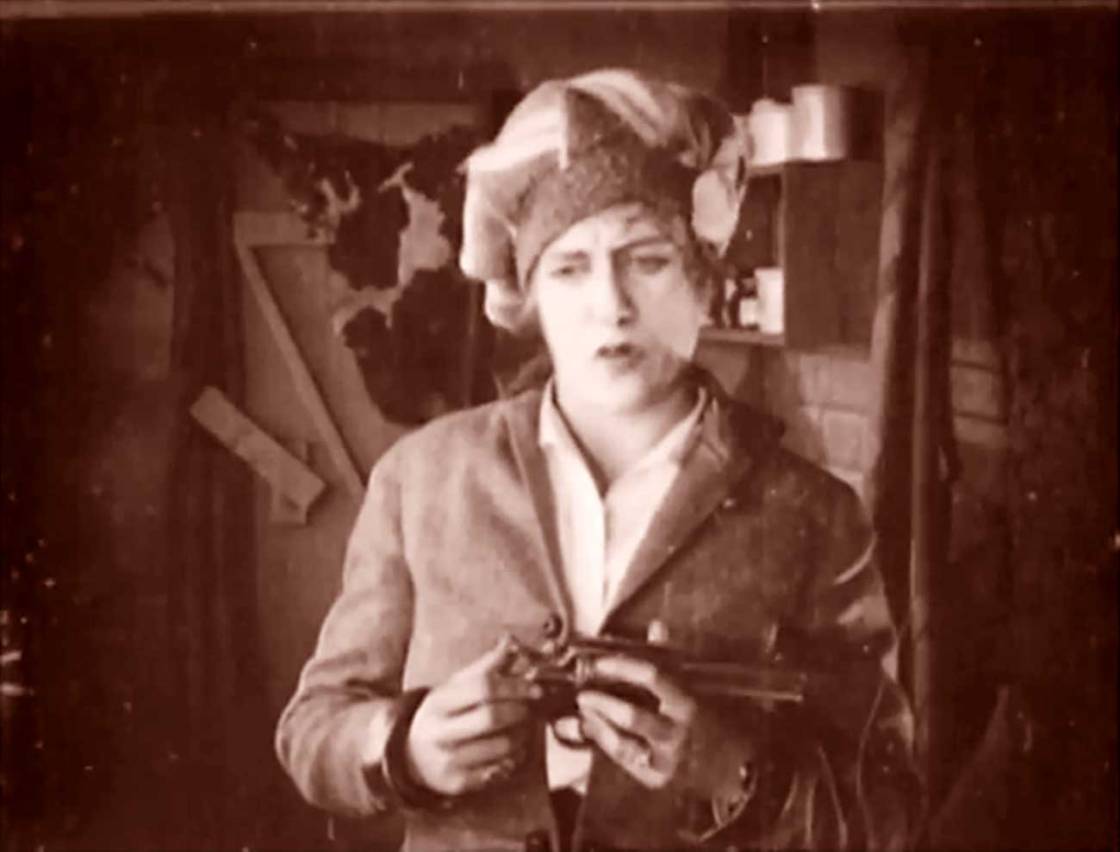
Francis Ford and Grace Cunard produced and starred in a western comedy about an easterner fresh off the stagecoach and a dashing bandit.
Outlaw Love
Francis Ford, like William de Mille, was a talented director whose career was eventually eclipsed by his ambitious younger brother. In the 1910s, Universal was a major force in platforming women directors and writers and Ford’s collaborations with Grace Cunard were heavily advertised. She was an action star extraordinaire who, industry publicity boasted, had written 400 scenarios. So, the team consisted of Ford directing, Cunard writing and the pair acting with a bit of support from little brother John.
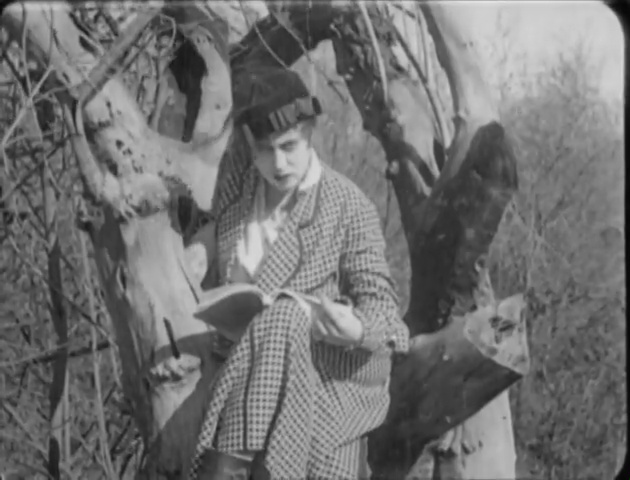
The Bandit’s Wager opens with Nan (Cunard) sitting in a tree reading. A bandit (Francis Ford) rides up and pitches woo. She is nervous but amused and he makes a bet that one day she will kiss him of her own free will. He rides off, she blows him a kiss and her brother (John Ford) arrives to tell her that the stage has been robbed.
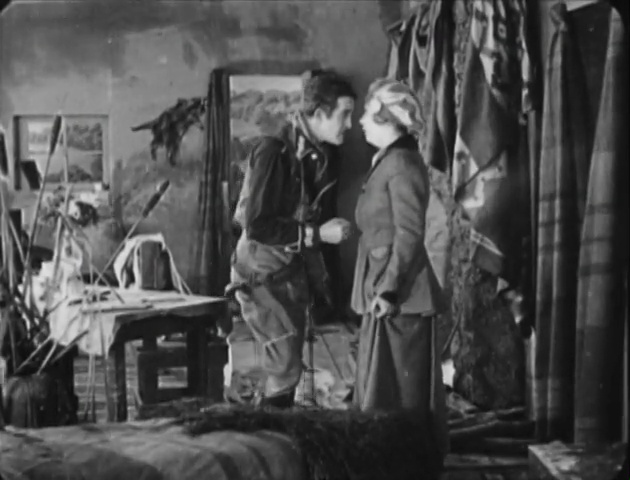
It’s a fine Friday the 13th, so Nan and her brother go motoring. Unfortunately, they run out of gas, so he tells her to wait at a nearby cabin while he walks to town to refill. And wouldn’t you know it, this is the home of the bandit. The bandit shows up and declares that Nan can’t leave until she kisses him. Nan responds by trying to shoot him and then locking herself in the living room and smashing the joint.
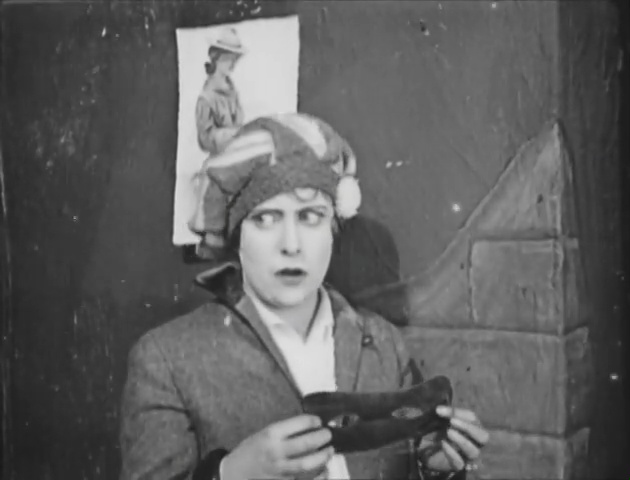
When destruction of his furniture doesn’t work, Nan tries to shoot him again but things take a serious turn when he actually falls down wounded. Will the bandit get that kiss? And is he even really a bandit? (Spoiler: He is not.)
The Bandit’s Wager covers rather familiar ground for anyone who has been dabbling in silent films for a while. Faking banditry and general outlawish behavior for the benefit of an easterner was a popular trope before and after 1916.
When the Tables Turned (1911) featured Edith Storey as an actress who is targeted for a practical joke and kidnapped, she lives up to the film’s title by capturing the cowhands-posing-as-kidnappers and forcing them to bunny-hop for her amusement. The 1917 Douglas Fairbanks vehicle Wild and Woolly has the whole town in on the scheme, trying to charm a wild west-obsessed heir into investing by posing as a den of yeehaw shootouts and vice. I cover earlier iterations of the gag in my review of Cripple Creek Barroom Scene (1899).
As is the case with many genre films, the point isn’t to blaze new trails so much as it is to put the creative team’s stamp on a beloved trope. Modern film marketing leans into plot twists and avoiding spoilers. While silent era advertising also liked to tout “new” and “never done before,” audiences and filmmakers also understood the value of a classic story ingredient used well.
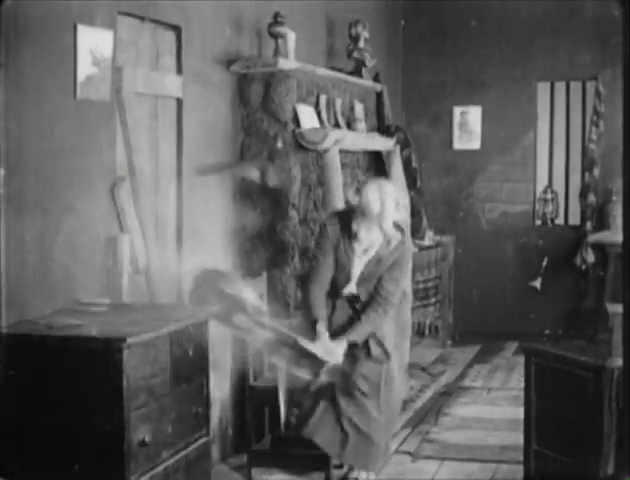
Grace Cunard, to employ an overused adjective, preferred a quirky screen persona and it serves her well in The Bandit’s Wager. She’s an easterner out west and she doesn’t quite know the customs but she’s more than ready to give herself some quality time by climbing a tree to read a magazine. She is more amused than frightened by her first run-in with the bandit and their rematch is punctuated by some flagrant vandalism on her part.
Francis Ford is fun as the swaggering bandit and both stars do well in the film’s stated comedy-drama genre. The direction is fine, things move along quickly, but the plot seems a little choppy and confusing. I am not sure this was the fault of either Ford or Cunard, however, because I have reason to believe this film (or at least the surviving print) was meddled with.

(Spoiler) I make a point of reading vintage reviews and synopses so I can get a handle on the film’s contemporary reception but this time around, the coverage was so inconsistent with what I saw that it made me doubt my own viewing! The big twist of the film is that the bandit is really a pal of Nan’s brother and the whole thing is an elaborate gag to test her mettle. He even gets his kiss when she thinks she shot him—the gun was filled with blanks. However, the capsule plot descriptions in both Motography and Moving Picture World both state that the bandit is the brother himself, not the friend:
“The play is all about a man who lives way out in the wilds somewhere. His sister insists upon coming out to keep house for him. He thinks she will not be up to the lonesomeness and roughness of the life out there so he plans to test her nerve by impersonating a bandit.”
“Then her brother, who is the bandit in disguise, gets up and tells her how the whole thing was to test her nerve and how he removed the bullets from the gun beforehand.”
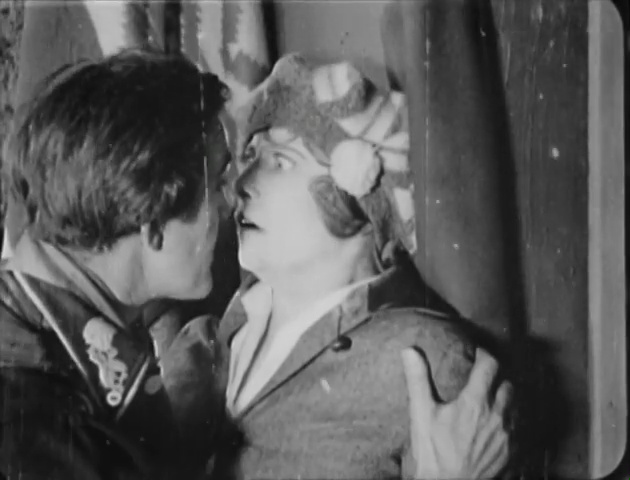
This sends the plot down a very different, much more George R.R. Martin path considering the whole kissing wager and general tone of sexual menace. However, the explanatory note in the film clearly states, “Forgive me, I am your brother’s friend disguised as a bandit to test your nerve. You belong in the west all right.”
Since the plot capsules were provided by the studio, it’s possible that the film originally had the brother as the bandit and, due to censorship, a change in title cards reworked the plot to push it in a less incestuous direction. (The surviving print is a British release, so this may have only been done for releases across the Atlantic.) The change may also have been made post-marketing but prior to release. Unless other prints turn up, we won’t know.
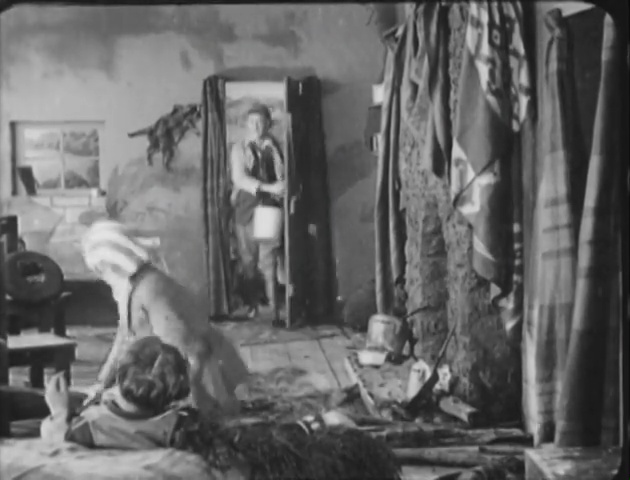
Most online and printed coverage of the film list Francis Ford as playing a dual role as the bandit/brother and John Ford in an unknown role, probably a friend posing as the brother so the brother can play bandit. However, since there are only three characters in the entire picture, it seems that the version I saw had Francis as the bandit and John as the brother. It’s better this way because I am not sure siblings would fail to recognize one another with a tiny half-mask and little mustache.
(If you want a western comedy involving a deceptive brother-as-bandit, Beyond the Border is hilarious. It stars John Ford favorite Harry Carey as a soft-hearted sheriff who agrees to swap identities with a thief so that his little sister won’t know he’s a criminal. Needless to say, the sister is not so little, played by the beautiful Mildred Harris, wants to stay with her “brother” in his house and has a collection of sheer negligees. Oh dear!)
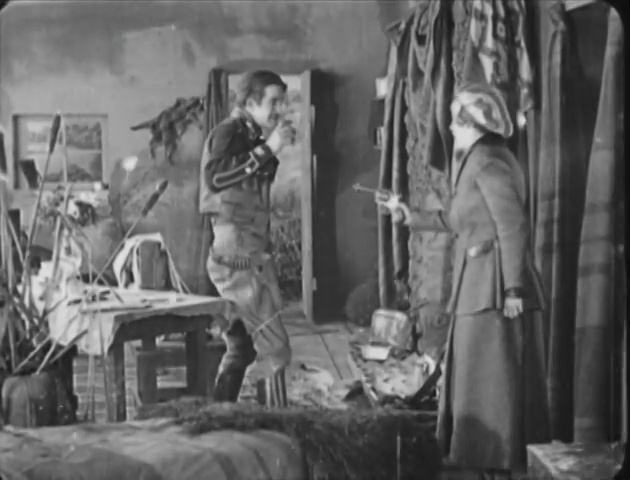
In the end, The Bandit’s Wager isn’t anything new but it was never really intended to blaze new trails. The story is wafer-thin and doesn’t make too much sense but Cunard and Ford are committed and that helps things along considerably. It’s a feather-light trifle designed very much for its 1916 audience and should be appreciated on those terms. Fans of western comedy will be amused and, really, what more can we ask for?
Where can I see it?
Released as an extra on the Criterion Collection DVD and Bluray of John Ford’s My Darling Clementine.
☙❦❧
Like what you’re reading? Please consider sponsoring me on Patreon. All patrons will get early previews of upcoming features, exclusive polls and other goodies.
Disclosure: Some links included in this post may be affiliate links to products sold by Amazon and as an Amazon Associate I earn from qualifying purchases.
 Movies Silently