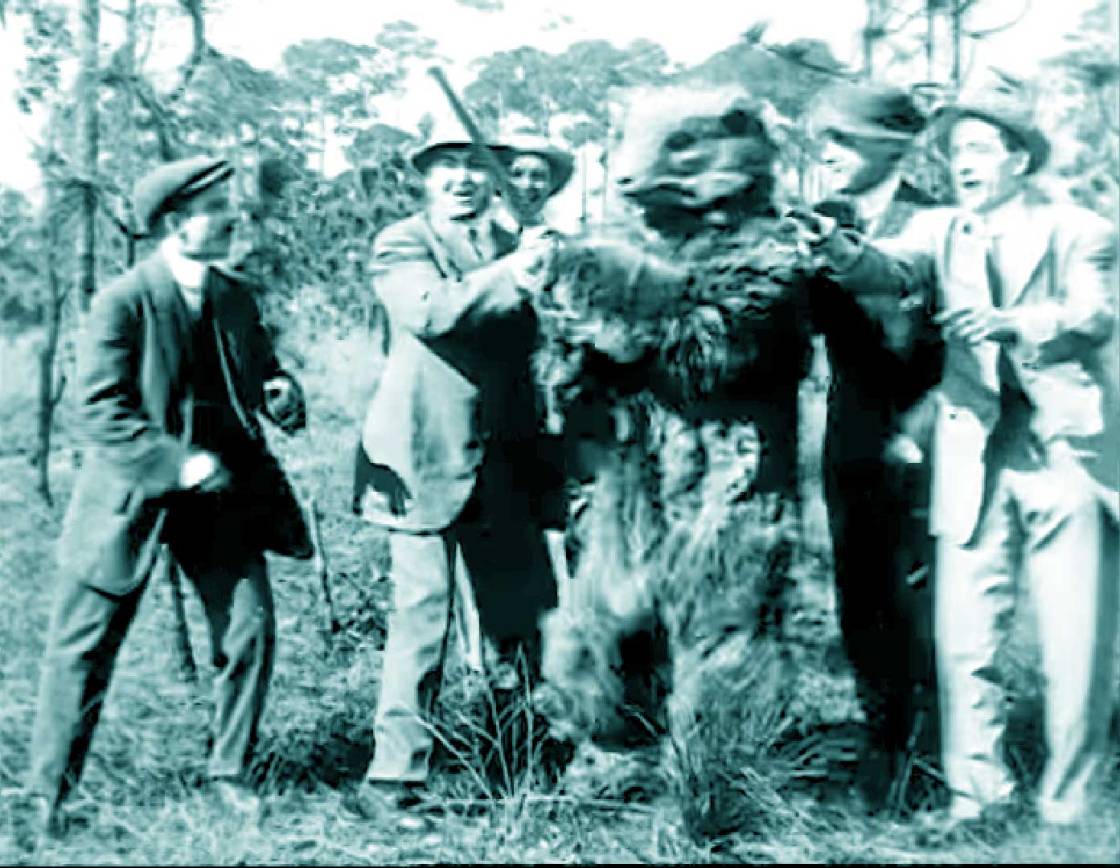
When a club member shows off his hunting gear to his friends, they decide to prank him by emptying his shotgun shells and renting a bear costume.
Home Media Availability: Stream courtesy of EYE.
Shh, be vewy vewy quiet…
The Lubin film company had been one of the very first American studios and its Production + Piracy policy had made it highly unpopular with the other producers of the time. Lubin’s own productions were all over the place in genre and style but the company tended to chase trends. For example, it both remade The Great Train Robbery shot-for-shot and produced other robberies in a selection of locations. However, amidst all the copycats and piracy, Lubin created some fascinating films, like an 1899 Passion Play that ran to feature length once the slides and included narration were factored in.
The trend in the late 1900s and early 1910s was slapstick. For context, Keystone was founded in 1912 as the anarchic Mack Sennett struck out on his own after paying his dues at Biograph. IMP, Edison, Vitagraph, Lubin… any serious studio knew that comedy was big business and were merrily producing funny frames with varying degrees of knockabout. And with copyright law becoming more settled, the wholesale piracy of the 1890s and 1900s and abated. Copycats and recycled gags, though, were as legal then as they are now.
Lubin not only embraced slapstick in Willie the Hunter, and not for the first time, it also had some fun at the expense of trophy hunting. Big game hunting was seen as prestigious at the time and footage of former President Teddy Roosevelt hunting trip to Africa had been a major hit in 1910. (It’s worth noting that Roosevelt’s penchant for bloodsport was not universally popular and he was mocked for his seeming willingness to hunt anything that moved in films like The Teddy Bears.)

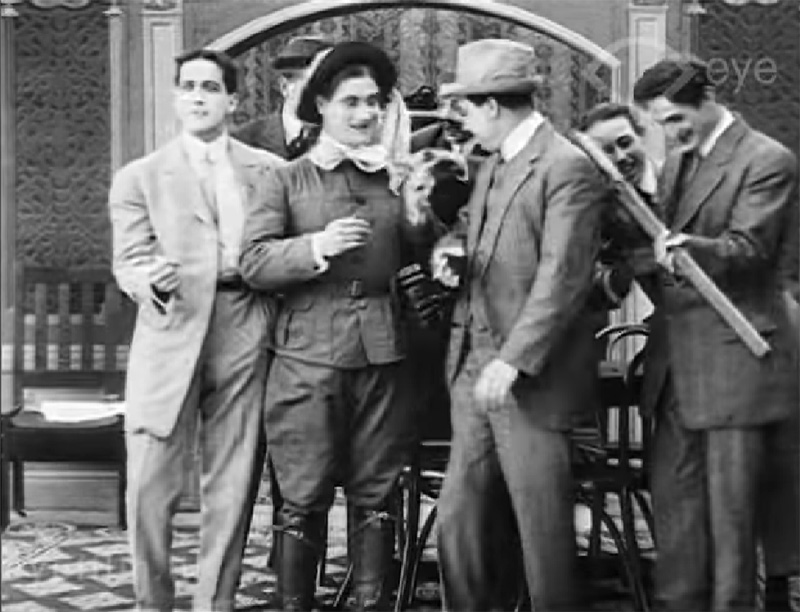
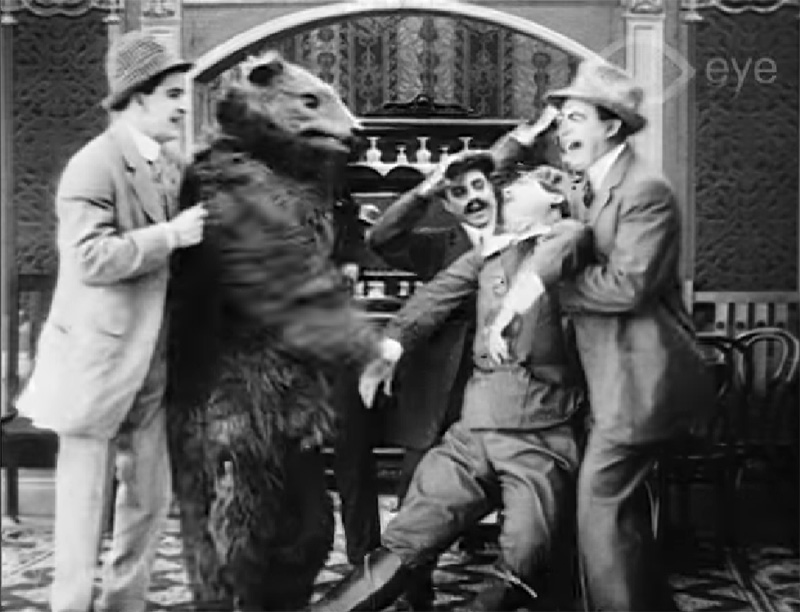
That may have been what the character of Willie had in mind. Willie the Hunter opens with our hero showing off his Roosevelt-esque hunting gear, complete with shotgun and shells. His friends at the club decide to have a bit of fun at his expense, so they distract him, empty the pellets from his shells and then rush out to the costume shop. The shop conveniently has a bear suit ready to go, one of the friends dresses up and…
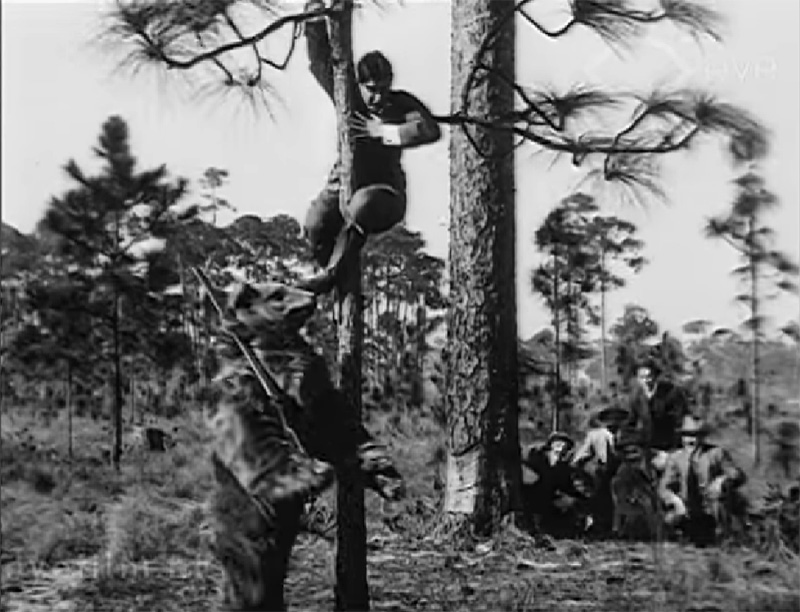
Willie is stalking his prey when he realizes that he himself is the hunted. The “bear” chases him up a tree, takes up his gun and stands guard and then forces Willie to beg for his life. Once he escapes from the bear, Willie decides to embroider the truth a bit and enters the club claiming that he had been involved in a violent brawl with a bear and emerged victorious, of course. Meanwhile, the friend in the bear suit sneaks up on Willie and causes him to faint dead away.

Acting during this period of filmmaking was all over the place. There were genuine pioneers who knew that the camera was a very different beast from the theater and worked to convey more subtle performances. (Kathlyn Williams of Selig, for example.) And then there were the old hams of the stage who didn’t see any reason to stop playing to the cheap seats. And then there were performers who were aware of the camera but were also aware that they were making silent films, so they would gesture in a manner best compared to a game of charades with a rather dim partner.
This charades type of acting could be disastrous in a serious film. The authorized French adaptation of The Copper Beeches, for example, has its Sherlock Holmes swaying and miming in a clockwork manner that is unintentionally hilarious. Willie the Hunter employs this style as well, though it is not quite as distracting in a comedy, I do want to make it clear that it was just one of many acting styles in use at the time and, well, it has kind of aged like milk. (Check out Vitagraph films of the same period for some more subtle comedy performances.)
The character of Willie wears a rather long decorative band on his hat and a puffy bow tie, plus his gestures are quite dainty and affected. Was he coded as effeminate? Another thing to know about films of this period is that advertisements were not coy and loved nothing more than making the subtext text. Lubin’s own advertisement for the picture states: “Willie Tate, a somewhat ladylike member of the Oakland Club…”
So, that settles that, not that there was much ambiguity to begin with. Willie is in a classic cinematic CATCH-22 as characters coded as sickly, weak or effeminate during this era were expected to “man up” but were also mocked for entering manly man spaces. (See The Beloved Blackmailer for contrast.)
However, Willie does choose to attempt to kill innocent animals, so I am a bit of Team Nobody with this film. Prank films of the silent era could go a bit far (my jaw remains on the floor over the antics of Peck’s Bad Boy) and Willie the Hunter is no exception. I recently reviewed an IMP comedy from the same era, Billy’s Séance, which featured a man responding to his friends mocking his spiritualism by electrocuting them. That, as they say, escalated quickly.
The picture has a few good laughs—as unlikely as it is, the sight of a bear playing sentry with a hunter’s own gun as he clings to tree for safety is quite amusing—but generally plays things too broadly to be considered a particularly sophisticated comedy but has too few stunts and antics to fully satisfy as a slapstick picture.

This one is definitely a mixed bag. I am a bit of a Lubin nerd and had to see it as the studio’s output is fairly rare. It may also be of interest to comedy aficionados who wish to see a spiritual ancestor to Elmer Fudd. And, of course, it’s sometimes fun to see the bear win, even if it is a dodgy masquerade costume.
Where can I see it?
Stream for free courtesy of the Eye Filmmuseum. The opening title is in Dutch but the film does not have any intertitles, which likely explains the decision to include so many broad performances.
☙❦❧
Like what you’re reading? Please consider sponsoring me on Patreon. All patrons will get early previews of upcoming features, exclusive polls and other goodies.
Disclosure: Some links included in this post may be affiliate links to products sold by Amazon and as an Amazon Associate I earn from qualifying purchases.
 Movies Silently