
A bold Chilean fireman attempts to prevent a corrupt mine owner from stealing an heiress’s fortune in this once-lost melodrama. Only a fragment of the original runtime survives.
Home Media Availability: Stream courtesy of Cineteca Nacional de Chile.
Burn, baby!
Incendio, an expensive and prestigious production for the nascent Chilean film industry, was released to positive reviews in 1926 and was enough of a hit to warrant mention in the decades following its debut. It was alleged to be beautiful and an equal to the fancy imported American and European films that filled Chilean cinemas. All of this was theoretical, however, because no copy of Incendio was known to survive.

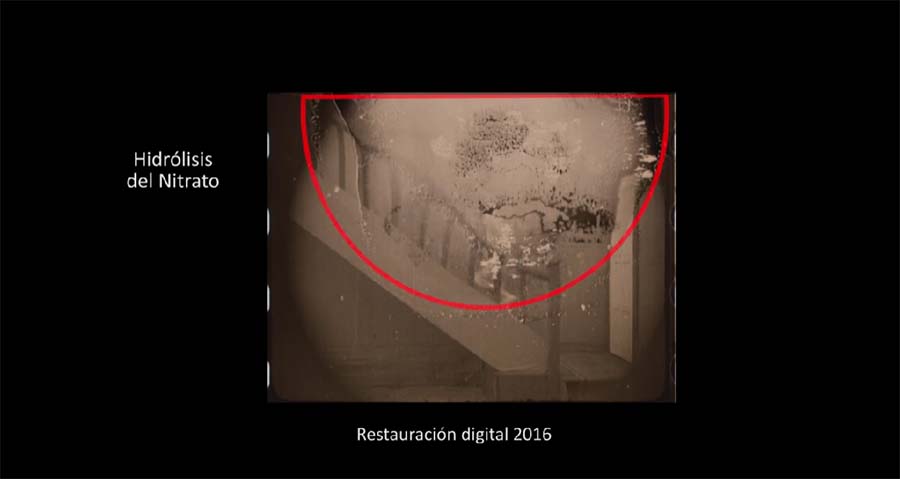
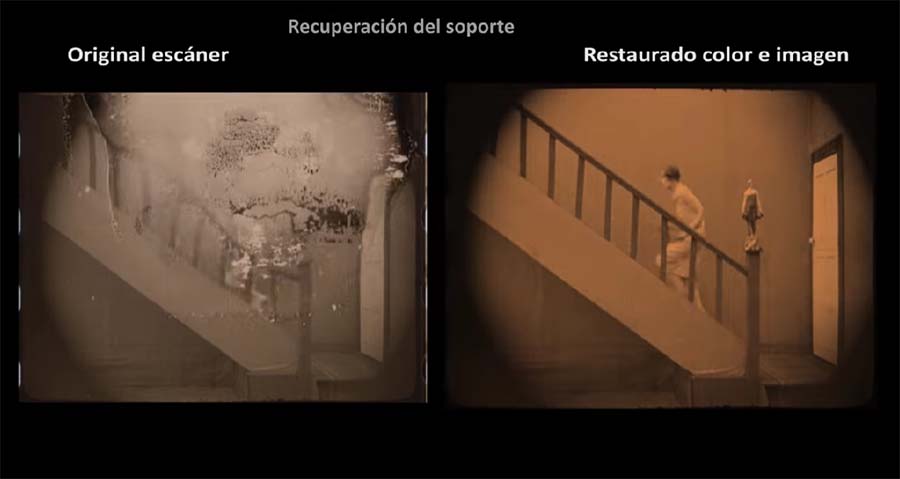
Fast forward to 2015. A partial print in a precarious state of decay was found in an antiques fair. Cineteca Nacional de Chile began a valiant effort to rescue the footage, while Jaime Córdova, who discovered the film, pieced together the plot through descriptions in the press and testimony. In the end, including explanatory intertitles, the surviving footage clocked in at twenty-three minutes, likely a fraction of the picture’s original runtime. (Features of the era were at least five reels, or over an hour in runtime.) We’re fortunate to have it.
I have reviewed incomplete films before and abbreviated pictures released for the home media market but in both cases, the majority of the footage survives or the abbreviated footage was selected to create a coherent plot. In the case of Incendio, most of the film’s setup and its two biggest set pieces only survive in partial form. Obviously, it would be impossible and unfair to complain about plot holes (though people have done it!). In any case, despite its deeply compromised state, Incendio is extremely interesting.

The plot revolves around a large-scale mineral prospector’s scheme to get his hands on the fortune of an heiress. Saldivar (Álvaro Valencia) is making all the right moves to win over Laura Norton (Francisca Launnert) but when she starts to drown while going for a swim, he stands by. Fireman Luis (Carlos del Mudo) sees her peril and jumps in to rescue her.
Now, Laura is no fool and she immediately knows that the guy who jumps into the water to save you is imminently preferable to the guy who just stands there, so Saldivar is supplanted by Luis, much to the former’s anger and the latter’s delight. Luis is aided in matters of romance by his fellow firefighter, Tomasito (Evaristo Lillo).

By the way, I owe a lot to Hispanic, Latin American and Chilean Twitter for helping out with the cultural context of certain scenes. For example, Tomasito is shown playing a roulette-type game beside the beach that seems to result in him winning a bag of snacks. It was kindly explained to me that the scene involves a number guessing game and the prize is cuchuflí, tubular cookies with a sweet filling, similar to barquillos. Here in the U.S., similar wafers are sold with various fillings under the trade name Pirouette (among others) and they are delicious. We do not, however, have a spinning game that will result in free cookies as a prize. That is a brilliant innovation.
None of this information affects the plot in any way but it’s an example of why it is so fun to watch national cinema: interesting cultural details that help international viewers appreciate the customs of the film’s country of origin.
Anyway, Saldivar’s jealousy soon has deadly consequences. He has his minions kidnap Luis, tie him up in a quarry and set dynamite to trigger and avalanche and bury him. Classic villain stuff. Luis managers to free himself and escape in the ta-da nick of time and then employs the help of the police to arrest the perpetrators.
Meanwhile, Saldivar’s wicked schemes turn to Laura and her father in a last ditch effort to extract the final money he needs for his mining. Will Luis get there in time? Will there be a fire? Are cuchuflí sweet? See Incendio to find out!
So, obviously, there are huge holes papered over by title cards. Most of the Luis abduction scenes are gone and we are dropped into his escape. The finale of the film takes place in a burning hotel and almost none of the footage—tinted red for mood, by the way—survives. We get the ending but almost nothing of the beginning. I don’t think there’s a better illustration of the plight of lost films and I praise Cineteca Nacional de Chile for undertaking a restoration of these fragments.
Reviews for the film seem to have been enthusiastic, with critics praising the film’s cinematography and stating that it was the equal of flashy foreign fare. El Mercurio’s review was enthusiastic overall, but pointed out that there were some awkward moments and rough edges in the performances and that seems to be a pretty fair assessment of the picture. Carlos del Mudo in particular seems far more comfortable in action scenes than during scenes of romance.
There are tantalizing hints of what we are missing, such as the praise for the child actor that we briefly see in a couple of sequences. The fiery climax was likewise praised but, unfortunately, the only part that survives is a brief shot of the firemen at work.
The surviving material is a random assortment indeed, with a long sequence that seems to randomly praise the Chilean navy. Perhaps the scene made more sense in its original context but, without knowing more about the political leanings of del Mudo, it looks as though he was seeking a crowdpleasing moment of patriotism at a time of extreme political unrest in Chile. He certainly sought official approval, arranging a special screening for government and military officials. (This was filmmaking 101 during the silent era worldwide: seek official approval for publicity.)

Watching Incendio feels almost occult, the partial resurrection of a work of art. We see glimpses of what it once was—a moody interior shot here, scenes of Tomasito’s comedy relief there, a too-brief fragment of the firemen in action—but the impression remains hazy and dim. Still, this visit to the spirit realm is rich and rewarding, a tantalizing hint of the film that charmed Chilean critics so back in 1926.
Carlos del Mudo does not seem to have remained in the film industry. He was briefly interviewed in 1939 about his opinion on another Chilean release, El encanto del trigal. The former director gave his opinion but more interesting are the article’s claims that del Mudo went to Germany and worked with Lya de Putti. I can’t find any German references to him doing so, but silent era people often worked under multiple names. (Don’t even get me started on Ivan/Iwan/Jwan Mozzhukhin/Mosjoukine/Mosukine/Moskine.) The claims are repeated in other sources and provide another tantalizing mystery.
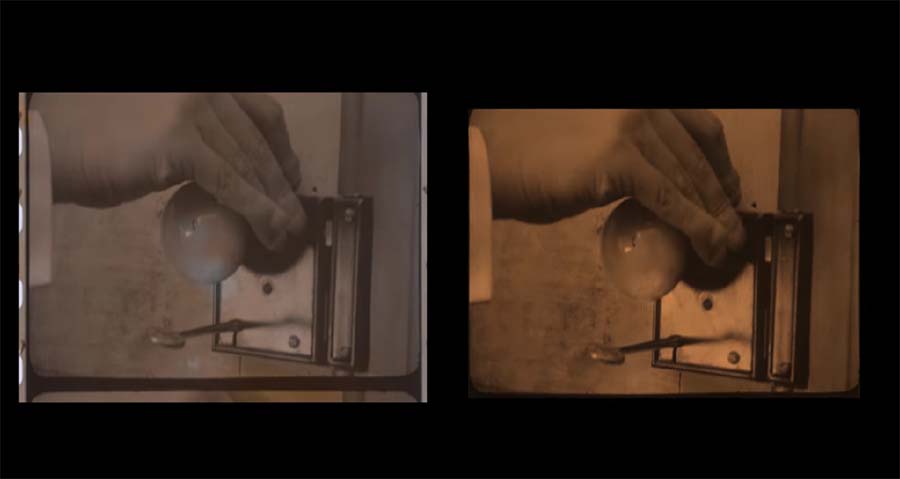
So, what’s the verdict for Incendio? Well, I don’t think it can be viewed as a standalone film given its fragmentary state. However, it is still very much worthy of our time and attention. It dramatically illustrates the plight of lost films and the difficulties faced by researchers. The valiant restoration efforts are most impressive and the surviving sequences are impressive. All in all, it’s a ghost rather than a film but a friendly ghost.
Where can I see it?
Stream online courtesy of Cineteca Nacional de Chile. There are no English subtitles. The picture is accompanied by a piano score by Martin Joseph. The film’s multi-theater premiere was involved two motion picture palace orchestras, along with a (presumably) live cueca dance accompanied by guitar, ocarina and bandoneon. Now that sounds like a real party.
☙❦❧
Like what you’re reading? Please consider sponsoring me on Patreon. All patrons will get early previews of upcoming features, exclusive polls and other goodies.
Disclosure: Some links included in this post may be affiliate links to products sold by Amazon and as an Amazon Associate I earn from qualifying purchases.
 Movies Silently
The Mechanical Man (1920) is another fascinating lost film that also only exists in a confusing, truncated form but is still fascinating. Will have to check this one out.
Reminds me of The Mechanical Man (1920), rediscovered and only partially extant but still fascinating. Will have to check this one here out.