
It’s all blood and guts in this Danish romantic adventure about, well, a robber and his sweetheart and her attempts to rescue him from the long arm of the law.
Home Media Availability: Stream online.
Bønnie and Clyde
As movies evolved into the favored form of popular entertainment in the 1900s and 1910s, concerns about their influence and message grew. A major source of alarm were the portrayals of violent crime. Filmmakers and audiences alike loved robbery, criminal gangs and gunplay and they remained fixtures of the screen, despite efforts to censor them.
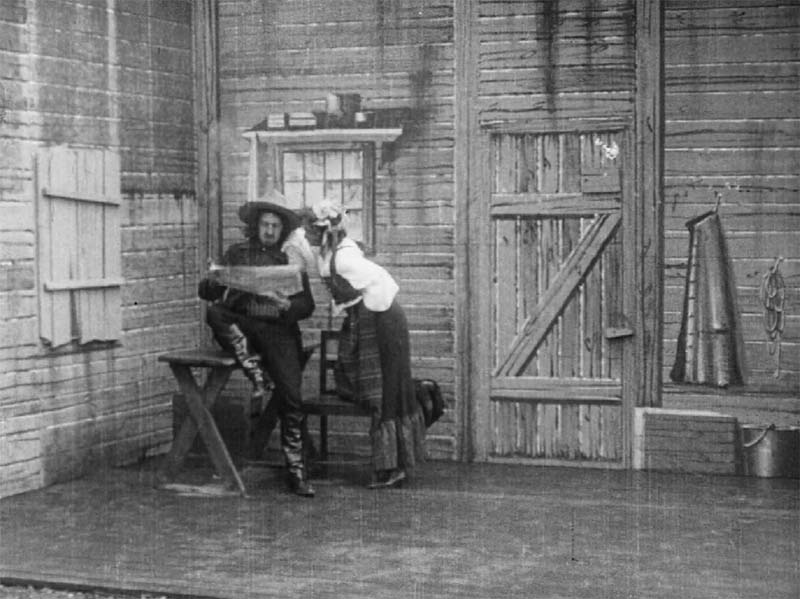
Viggo Larsen, one of the pioneers of the Danish film industry, was no exception and, in fact, human trafficking exploitation pictures would help put Denmark on the international filmmaking map just a few years after The Robber’s Sweetheart was released. I am a huge fan of Larsen’s comedies but he worked in a wide variety of genres and, given its popularity, crime pictures were an inevitable addition to his filmography.
The picture opens with Clara (Clara Nebelong) letting members of a criminal gang into a secret meeting led by her lover/husband, their leader. One of them tries to make a pass at her but she rebuffs him. This is enough to make him turn traitor and betray his comrades to the police.
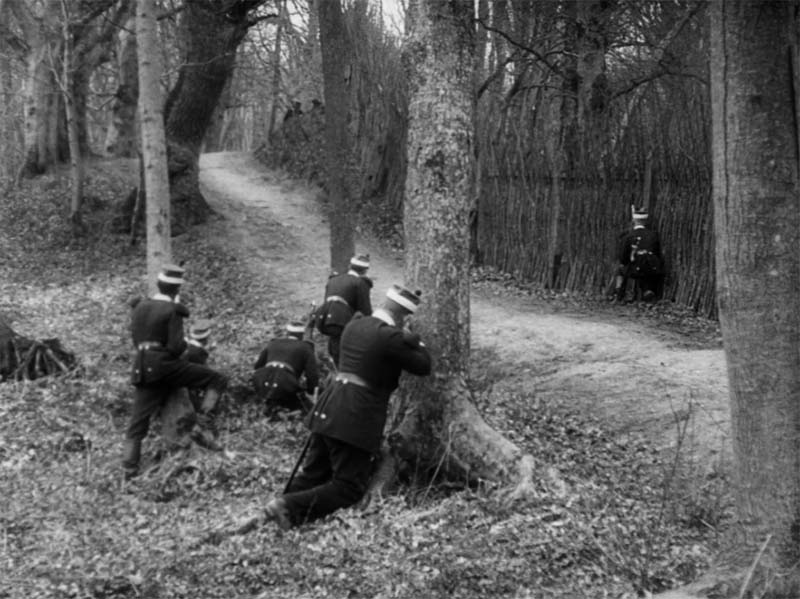
With the help of the informant, the police are able to set up an ambush and either kill or capture the entire gang. The leader is arrested and locked away in the local jail. The triumphant informant rushes off—but Clara has set up an ambush and promptly shoots him dead.
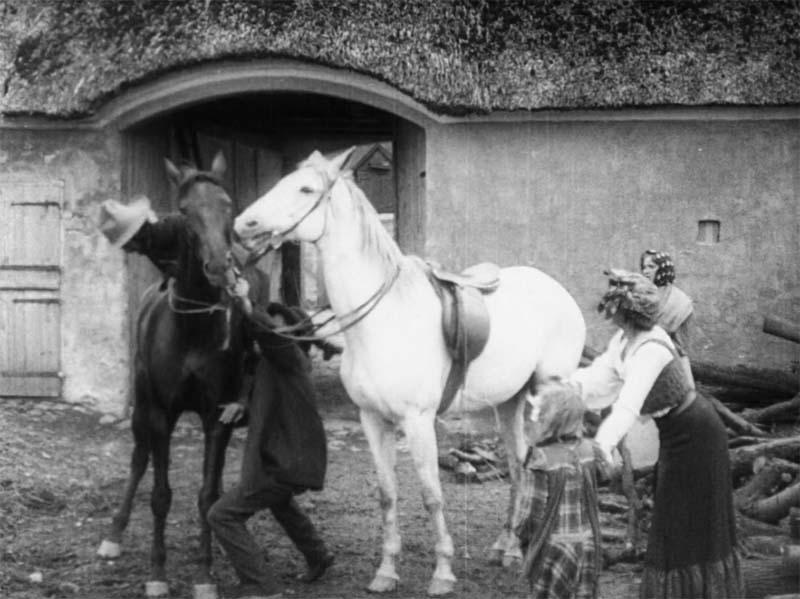
Being a young lady of determination, Clara next decides to break her lover out of jail. Her first attempt involves drugging the guards but reinforcements arrive before she is able to get him out. Her next attempt is more successful: she climbs into the prison wagon that is transporting her lover and they make a run for it. Clara takes a householder’s daughter hostage in order to steal the family horses and it looks like crime will indeed pay…
However, the police discover the old hideout where the fugitive couple has taken refuge and gun them down during a vicious exchange of fire. Clara finds enough strength before she dies to throw herself on top of her lover and the police are obliged to doff their hats out of respect.
I don’t know about you but that was an intense twelve minutes for me. I’ll be willing to bet audiences of 1907 were hooting and hollering after that little slice of blood and thunder. The film never stops moving, there are villains to boo and enough ambiguity to keep things interesting.
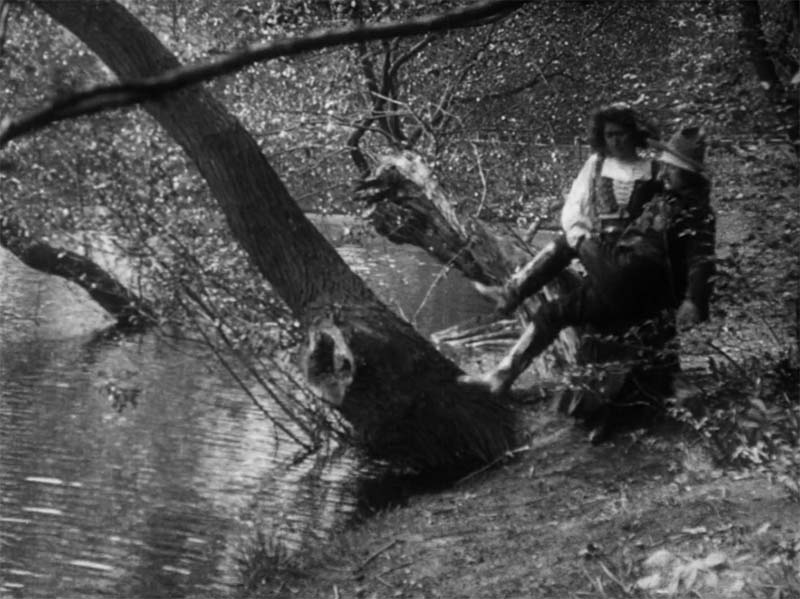
Clara is a classic silent film action heroine (if heroine is the correct word in this case) in that she gets right down to business. In fact, she’s a bit of a steamroller in the way she barges around causing violence and mayhem in her efforts to free her hapless man, up to and including carrying him. While she’s not entirely sympathetic, she is dynamic to watch. During the silent era, while the heroines could be feisty in general, the tropes of “woman wringing hands while hero does the fighting” and “woman draws gun but doesn’t have the nerve to shoot, so the bad guy takes it from her” were alive and well, so it’s always refreshing to see someone who means business.
(For other fine examples of ladies shooting up the place without hesitation or mercy in both serious and comedic settings, please see The Craven, The Gun Woman, Rowdy Ann, and Two Little Rangers.)

While films of this era were accused of glamorizing crime, they actually tended to have a more documentary-style warts-and-all approach. The most famous early crime picture of them all, The Great Train Robbery, showed the gang of criminals shooting innocent civilians before being gunned down themselves by a posse. By the same token, Clara threatens to shoot a child in the head in order to steal her parents’ horses and the sweethearts are later gunned down themselves by the police. Dark stuff and very typical of the era.
However, from a technical perspective, the film itself is not quite as good as Larsen’s other early films. His earlier work tended toward simplicity but the first and last scenes of The Robber’s Sweetheart are quite stagey. The action scenes are awkward, with much of the action hidden behind trees. Larsen’s movie, The Other Woman, had stronger action and suspense. It kept things unassuming but still managed to be dramatic and visually arresting with a creative arrangement of the players. And that film had been made in 1906, a year earlier.

It is possible that Larsen simply bit off more than he could chew in the context of the breakneck production speed of the era. The Robber’s Sweetheart was a more elaborate picture than other Larsen films of the same era. I counted fourteen different scene locations jumping between painted sets, real structures and exterior forest shots. In contrast, The Other Woman had only four different exteriors, cutting between them as the drama commenced. Then again, A New Hat for the Madam (1906) had a whopping nine locations and it was still delightful.
Oh, and you may be wondering when and where this film is set. Clara is dressed in a folkwear bodice, her lover has a cowboy hat, the police chief has a telephone (ruling out an old-timey setting) and the uniforms are pure pantomime gendarme. Well, I don’t know what they were going for and the Danish Film Institute doesn’t either. I am absolutely nuts for European westerns and would love for this to be an early example but, alas, I don’t think I can confidently make that call here, despite the ten-gallon Stetson and cowboy boots.

While The Robber’s Sweetheart isn’t quite as good as other Larsen productions a technical level, it is still an interesting film to see for its brash and violent heroine. The creative decision to deglamorize the runaway pair is worth studying and discussing, even if the days of long shots and plywood sets were already dead and gone.
Where can I see it?
Stream courtesy of the Danish Film Institute, along with many other Viggo Larsen titles.
☙❦❧
Like what you’re reading? Please consider sponsoring me on Patreon. All patrons will get early previews of upcoming features, exclusive polls and other goodies.
Disclosure: Some links included in this post may be affiliate links to products sold by Amazon and as an Amazon Associate I earn from qualifying purchases.
 Movies Silently