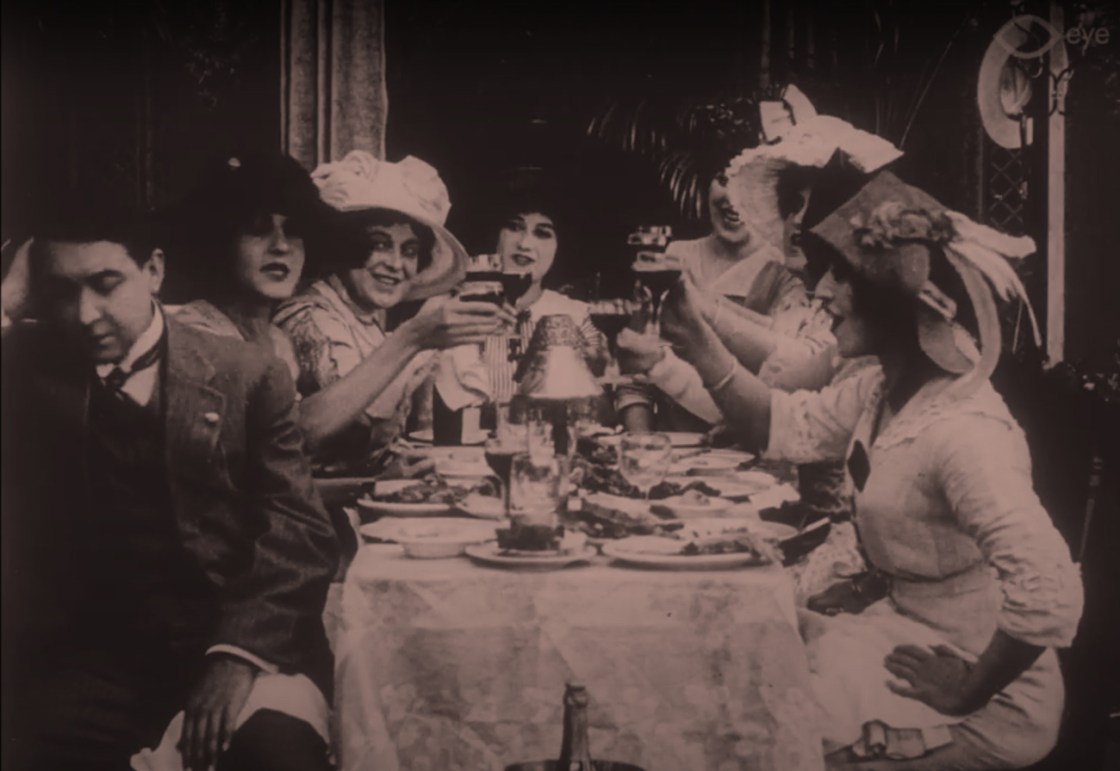
When a would-be lothario tries to flirt with the entire staff of a dress shop, he gets more than he bargained for. A battle of the sexes played out in the dining room of a fancy restaurant.
Home Media Availability: Stream courtesy of EYE.
Separate checks, please!
While the increase in American women joining the paid workforce had its biggest increase in the mid-to-late-twentieth century, the rise began, albeit far slower, began from the 1890s onward. The vast majority of U.S. women employed outside the home had another thing in common: almost all of them were single. Among other issues, that meant dealing with the local Casanovas.
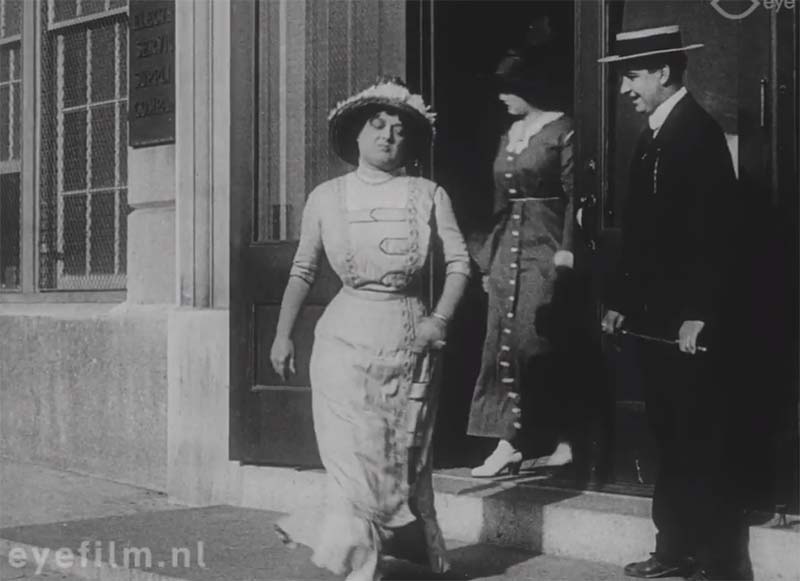
The woes of hardworking women trying to go about their day while fending off obnoxiously flirtatious men provided rich comedic soil indeed. The situation provided an immediately sympathetic protagonist—she just wants to get her work done in peace, for heaven’s sake—and a smarmy villain to boo and hiss.
Ben Turpin spent all of Mr. Flip (1909) trying to flirt with women bakers, barbers, bartenders and operators only to find the targets of conquest turning the tools of their trade against him, one after the other. Fixing a Flirt also deals with women banding together to fight back against an annoying flirt but this vengeance is wreaked by the group simultaneously.
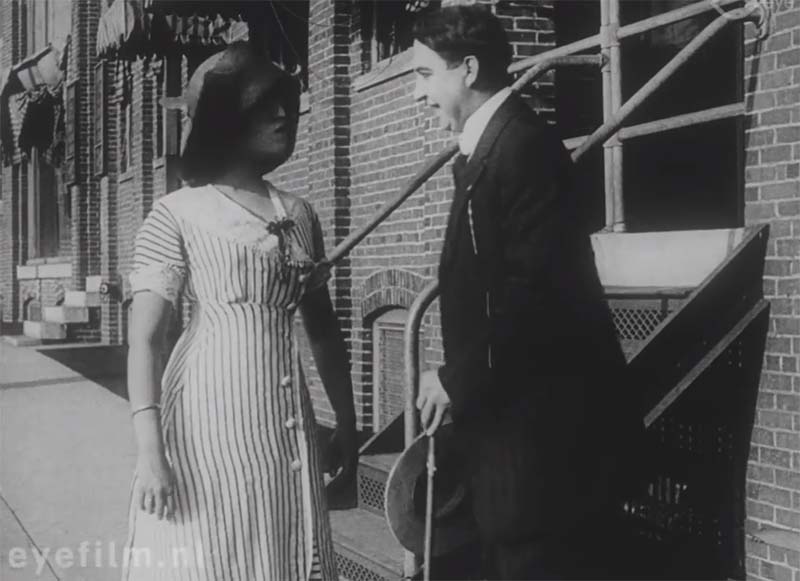
The story revolves around the all-woman staff of a dress boutique. Bill Bruce (George Reehm) stands by the door of the establishment and tries to pick up one of them, any one will do. He pays special attention to Bess Bradley (Frances NeMoyer), following her and trying everything he can to get her attention but she is decidedly not interested.
Undeterred, Bruce has the dress shop’s handyman deliver a letter. It’s a brazen bit of writing, calling Bess by a term of endearment (“schatje” in the translated Dutch title cards, I don’t know what it would have been in the original American English but I like to think “baby” or “kid” were used.) Bruce invites her out to dinner and the head clerk has a plan to teach this flirt a lesson.
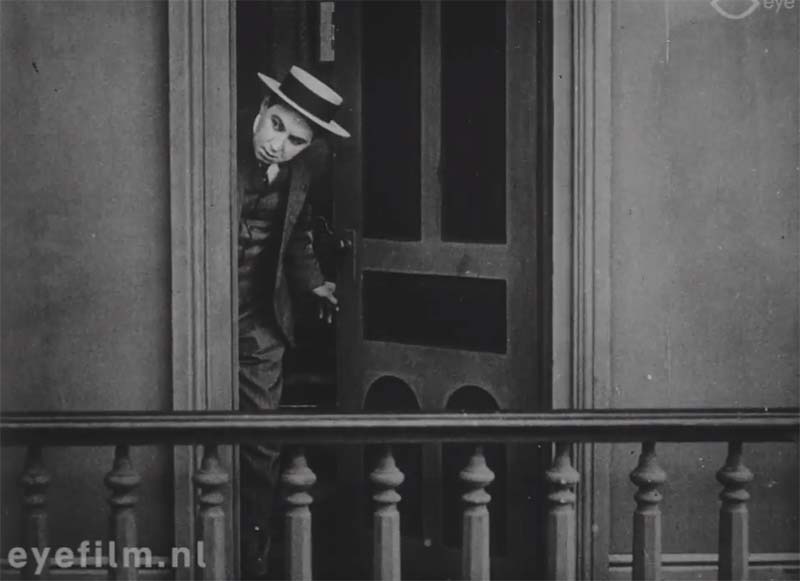
Meanwhile, Bruce is in his boarding house room counting a fat bankroll. However, when his landlady comes for the rent, he hides his money and feigns poverty. Unfortunately, she spots him counting his money as he heads out to keep his date.
Bess is all smiles and friendliness when she meets Bruce and he takes her to a swanky restaurant. (Please note the multitude of palm trees in front of the establishment. The Lubin company was headquartered in Philadelphia, Pennsylvania but wintered in Jacksonville, Florida and a 1912 fan magazine lists the cast of Fixing a Flirt as the company’s Jacksonville “tourists” for the fall/winter season, which would have coincided with the picture’s November release. However, the sign in front of the dress shop says “Electric Service Supplies Company,” which had a branch just four miles from the Lubin studio. So, it is possible that the restaurant was a half-dozen states down from the dress shop.)
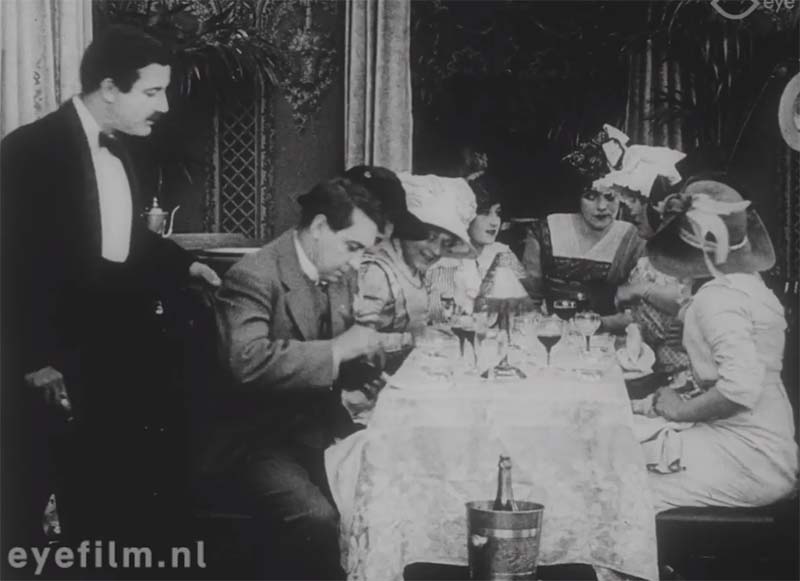
The rest of the clerks have followed and, with the couple seated, they spring into action. Two by two, they enter the restaurant, pretend to be delighted to see their friend and then ask the waiter to add chairs. Bess plays along, making it impossible for Bruce to evict the interlopers. The women eat food and drink wine on Bruce’s dime and when the bill comes, his intimate dinner for two has turned into a feast for eight and he doesn’t have the money. He is forced to hand over all of his cash, along with his watch and other valuables as collateral.
Oh well, at least he has seven women to keep him company right? Right?

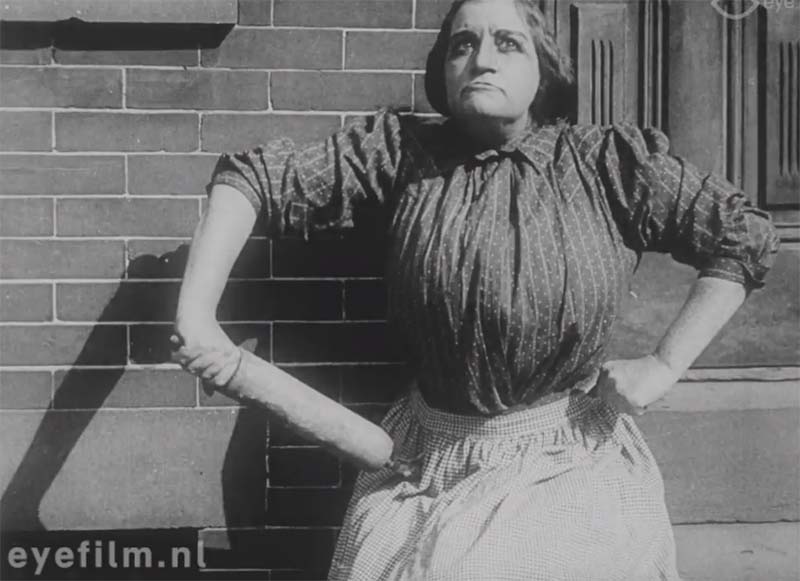
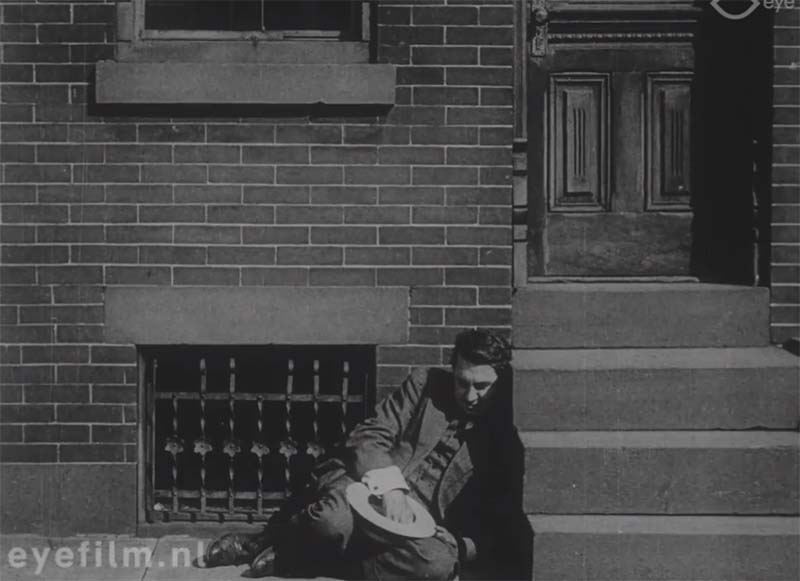
Having had their fun, the women dump him, Bess declining to allow him to walk her home. Bruce returns to his boarding house, only to be confronted by his landlady demanding immediate payment. Since all his cash is at the restaurant, Bruce is thrown out and forced to sleep in the cold.
Fixing a Flirt is a broad farce, though never slapsticky, and the performers play things on the obvious side, this is clearly intentional. When you have a social comedy with a very clear punchline, you give things a bit more oomph than you would when making, say, an intimate drama or a quiet country romance (both popular genres of the period).
The rather harsh punishment for Bruce’s crime of obnoxiousness is best appreciated if we understand the context that audiences of 1912 would have understood. At the time, “the double standard” and “it’s/’tis the woman who pays” referred to the fact that an illicit liaison that resulted in exposure or pregnancy would mean disaster for the women, while the man was just seen as sowing a few wild oats and boys will be boys.
This topic was passionately discussed and debated in politics (with the birth control and family planning movement especially pushing for reform) and these politics seeped into pop culture, from plays to films to sheet music. The plight of impoverished young women tricked, lured or simply desperate for money and then losing their virtue was sympathetically portrayed, especially in Lois Weber pictures like Shoes and Where are my Children? You simply were not a star in early films if you didn’t die in childbirth or from a botched abortion— or get thrown out into the snow clutching a baby to your breast with no ring on your finger.
Fixing a Flirt was created in the context of these more dramatic portrayals and shows the women taking matters into their own hands and making the flirt be the one who pays. Their punishment is harsh and flippant, but they had more to lose. The unsuccessful flirt losing his boarding house room but if he had succeeded, the seamstresses could have lost their lives.
I would say that Fixing a Flirt is more amusing than laugh out loud funny. The trade magazine Moving Picture World reviewed the picture and concluded that it was “a fair comedy.” I concur. Rich historical material to be mined her, perfectly competent production, a fair comedy indeed.
Where can I see it?
Stream for free courtesy of the EYE Film Museum. The intertitles are in Dutch but there are few of them and the story is easy to follow.
☙❦❧
Like what you’re reading? Please consider sponsoring me on Patreon. All patrons will get early previews of upcoming features, exclusive polls and other goodies.
Disclosure: Some links included in this post may be affiliate links to products sold by Amazon and as an Amazon Associate I earn from qualifying purchases.
 Movies Silently
Not a laugh out loud comedy but very enjoyable nonetheless. I thought the cashier was funny when the guy was handing over all his possessions to pay the bill! I’m glad it’s a nice clear print as I love to see the fashions that ladies wore in the 1910s. Thanks for your interesting and entertaining review.
Glad you enjoyed!
The Dutch word “Schatje” looks similar to the German word “Schatz” or “Schatze”, which means “sweetheart”.