
It’s a new month and time for last month’s star, Enid Bennett, to pass her crown to a new performer. This month, we will celebrate a comedian who just can’t seem to catch a break.
The featured star is…
Harry Langdon!
Harry Langdon (1884-1944)
 Harry Langdon’s stint as a silent film superstar was relatively short. Like most comedians, he started out in short subjects didn’t break into the exclusive feature film club until the mid-1920s. Sound arrived, unbalancing the film landscape and forcing the silent clowns to adapt their routines for a new medium. Langdon managed to find his equilibrium and continued his career, albeit mostly in short films.
This may come as a surprise to some as Langdon is often held up as a cautionary tale, a talentless bozo who rode to stardom on the backs of better men and was undone by his own hubris. Frank Capra directed The Strong Man, Langdon’s best film, and he spread the tale of Langdon’s fall from grace to anyone who would listen. The problem? We’re only hearing one side of the story. Capra outlived Langdon by nearly fifty years.
The fact is, Langdon made funny stuff before Capra and he made funny stuff after Capra. Instead of focusing on backstage gossip and one very bitter director’s tale, let’s talk about Langdon’s comedy chops.
Why you should love him:
Langdon’s signature character was the Little Elf, a sweet little man-child who only seems to avoid disaster through apparent divine intervention. To him, the world is wondrous and just a little bit frightening.
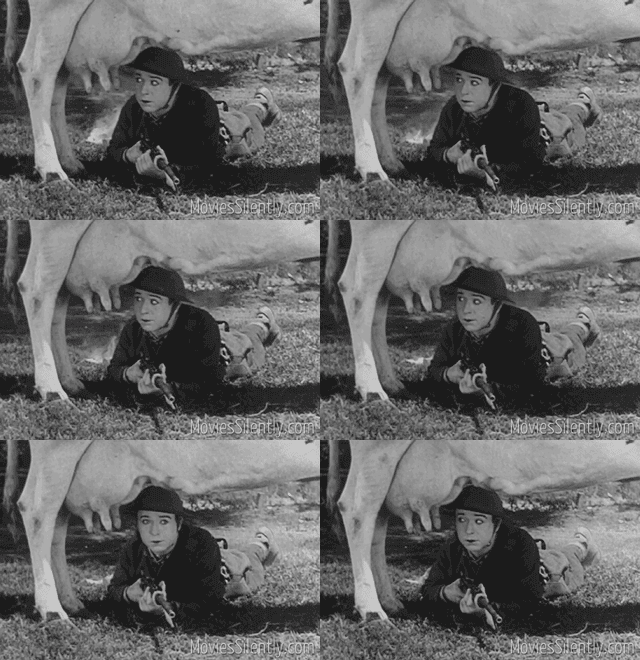
Langdon thrived when he was allowed to take his time, look around, blink and then react in terror. His character is basically sweet but not above mischief or childlike cruelty, which creates a bit of tension and prevents things from becoming maudlin. Langdon also gets considerable mileage out of what can only be described as a sly Lillian Gish impression.
There is a gentle quality to Langdon’s best films and much of his appeal relies on audience empathy. It makes a refreshing change from the “faw down, go boom” style that is more often associated with silent films.
I know much is made of how “difficult” it is to appreciate Langdon’s comedy and how you need some kind of expertise in slapstick to enjoy his work but I think that notion is ridiculous. I saw The Strong Man very early in my silent movie career and I instantly loved it. Of course, this may be due to the fact that I am not an enormous fan of the more frantic silent comedy. In any case, don’t let people scare you. Give Harry a chance and you may just fall in love.
Where you can see him:
I have reviewed one Langdon silent comedy and one talkie. I hope to cover more of his work soon as he needs all the help he can get.
Soldier Man (1926): Generally reckoned to be one of Langdon’s best silent short films, the story concerns a doughboy who doesn’t realize that the war is over and ends up stumbling into a Prisoner of Zenda plot. Highlights include Langdon’s search for his military comrades and his antics with a stick of dynamite.
 Misbehaving Husbands (1940): Langdon plays a doting husband who is accused of adultery after he spends the night dragging a very attractive mannequin around the town. A surprisingly enjoyable trifle and a perfect chance to see how Langdon’s style was adapted to the talkies.
If you really want to explore Langdon’s career, I highly recommend Kino Lorber’s Harry Langdon… The Forgotten Clown, which contains his three most famous silent feature films, and Lost and Found: The Harry Langdon Collection from FACETS, a box set of Langdon’s silent short films presented with excellent scores.


There are two of his short films in The Mack Sennett Collection Volume 1. Saturday Afternoon and His Marriage Vow. Both of them are enjoyable.
Yeah, his Sennett stuff gets panned by a lot of people but I find many of the shorts quite fun