A Mexican customs officer befriends a Magonista general, Welsh mercenary Rhys Pryce, played by Rhys Pryce, and is threatened with death by the government for refusing to betray him. A slice of the Mexican Revolution.
Home Media Availability: Stream courtesy of EYE.
One Good Turn
While the star system was not established for another fifteen years, filmmakers of the 1890s understood that celebrity would draw eyeballs to their new technology and so famous personalities of the stage were engaged but cameras also captured political leaders like William McKinley and Queen Victoria, as well as famous sports figures like sharpshooter Annie Oakley and Eugen Sandow the father of bodybuilding.
Notable military figures were also soon incorporated into the movies, starting with loving footage of the Rough Riders during the Spanish-American War. Fiction military films quickly followed and, in a pattern that would be repeated a generation later with Audie Murphy, the soldiers would play themselves and reenact their exploits for the cameras.
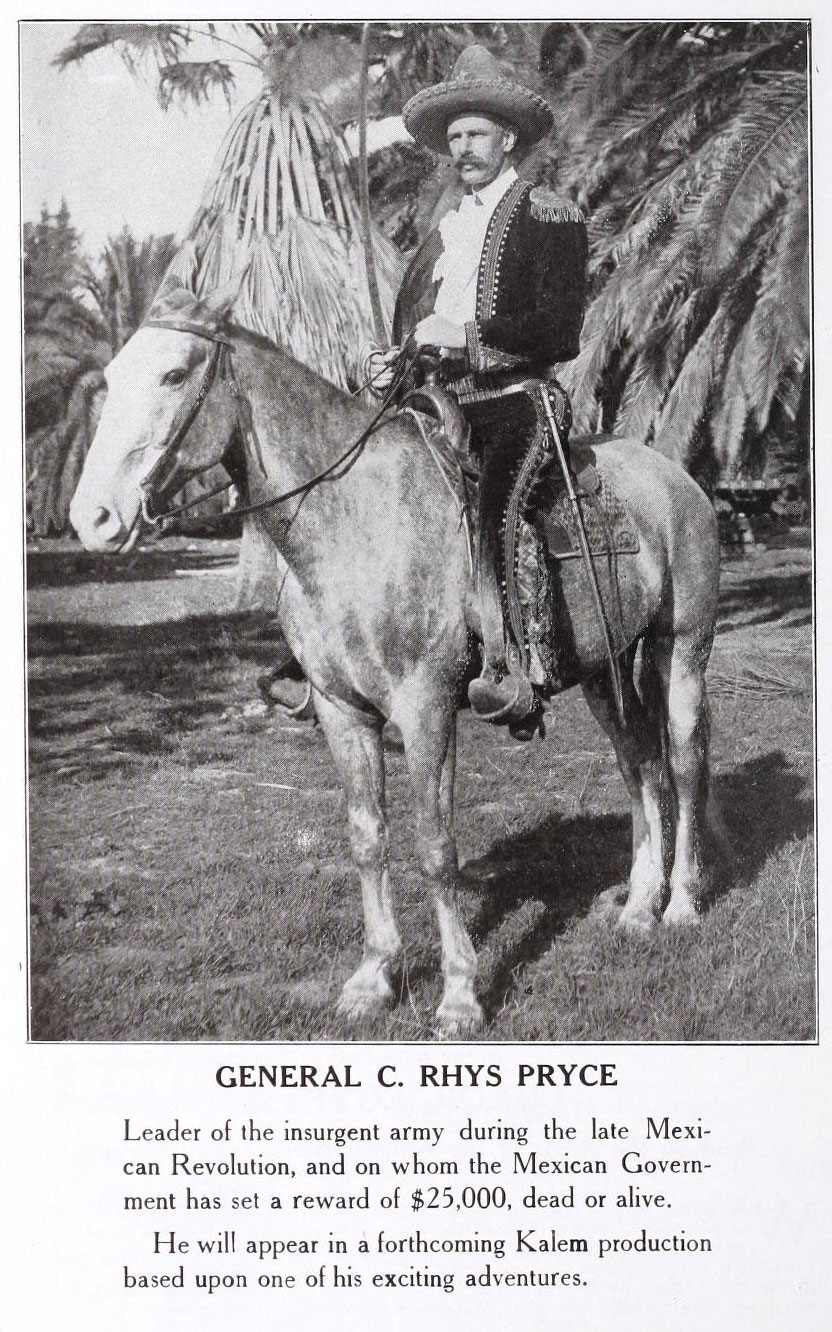
And this is where Carol Ap Rhys Pryce enters the story. Pryce was a Welsh officer in the British army with a reasonably posh pedigree who had seen action in South Africa and India, and had served as a Mountie in Canada. Depending on who was telling the story, Pryce was either moved by the plight of the Mexican people and chose to enter their brand new and blazing hot revolution– or he wanted money and thought this was the best way to get it. These calls to adventure, romance and cash were common, Cecil B. DeMille, then struggling to find a career, had been tempted and my own great-grandfather gave in entirely.
A quick note before we begin with The Colonel’s Escape, Pryce’s film appearance: Movies of the nickelodeon era regularly tore their plots from the headlines before the ink had a chance to dry, so there is often a lack of context that would make the pictures difficult to decipher even a few years after their initial release. The Mexican Revolution was a wildly popular film subject and so here is a small, incomplete and likely overly-simplified refresher:
Porfirio Díaz of Mexico was playing president-for-life game, which led to revolution and uprisings kicking off in 1910 and the one we are concerned with was the one involving the Magonistas, an anarcho-communist group led by the Magón brothers, Ricardo and Enrique. Magonista rebellion of 1911 managed to capture Tijuana, Baja and Mexicali but its leaders were at odds with rival revolutionary Francisco Madero. The Magonistas included mercenaries, adventurers, soldiers of fortune, whatever you might call them, and Pryce was one of the most successful commanders, overseeing the taking of Tijuana.
Madero emerged as the overall political victor, ousting Díaz with the help of more militant revolutionary branches but only maintaining a shaky hold on Mexico overall and soon finding himself dealing with rebellions of his own. The United States backed a coup against Madero, who was assassinated in 1913. The US was subsequently shocked, shocked, when revolutionary Pancho Villa conducted cross-border raids into New Mexico and President Woodrow Wilson sent General Pershing to catch him. The unsuccessful campaign would have been more embarrassing if WWI had not provided Pershing (and Wilson) with more flattering exploits. Díaz retired to Paris and died in his bed.
Got all that? So, in 1912, when The Colonel’s Escape was released, the Magonistas were still newsworthy, Madero was the newly-elected president, and Rhys Pryce had made headlines when he had been arrested in San Diego (while negotiating whether to disband his military group in light of the success of Madero) but all charges were dropped. With the Magonistas in decline, Pryce signed on with the Kalem company to make movies based on his adventures.
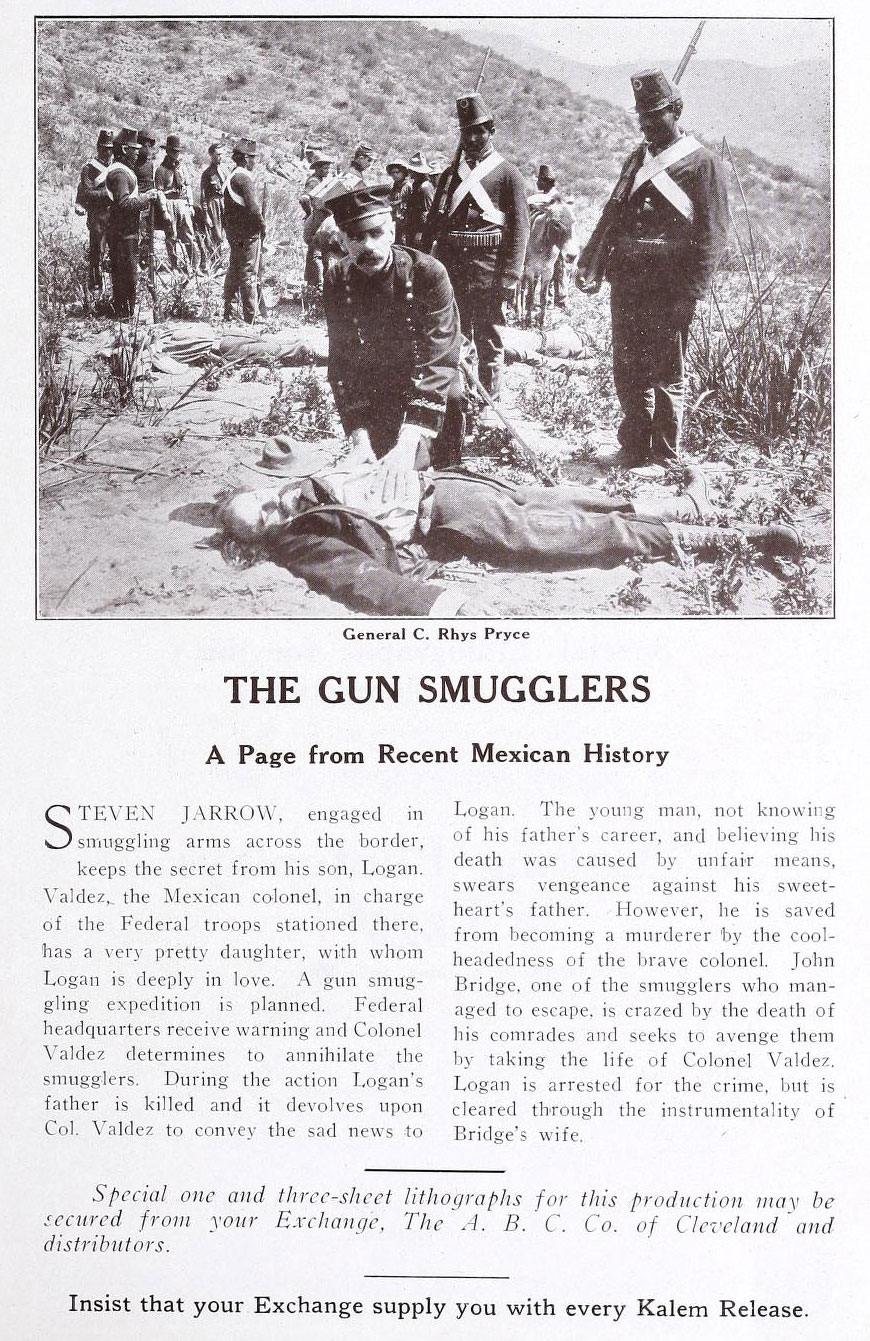
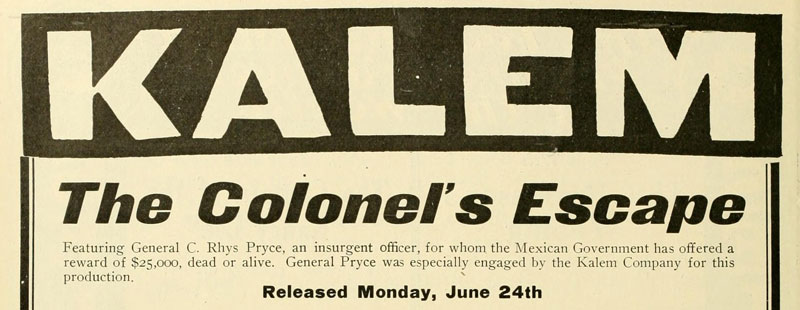
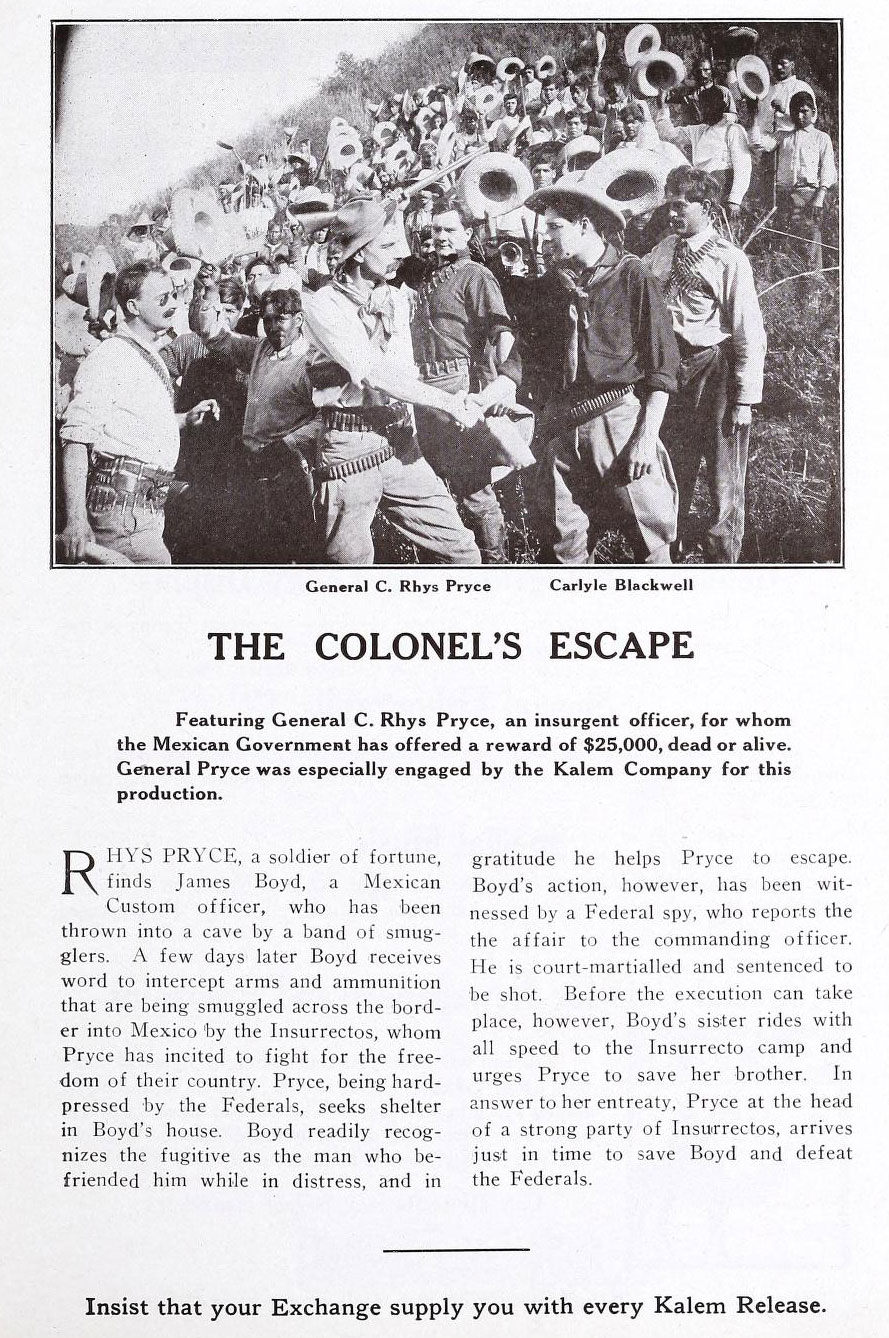
The Colonels’s Escape was the second Pryce film from Kalem. The first, The Gun Smugglers, features Pryce as a Mexican colonel trying to arrest gun runners. Pryce was supported by Kalem stars Carlyle Blackwell and Alice Joyce and the trio were reunited in The Colonel’s Escape, released a few weeks later. In this film, Pryce plays himself and the titles announce that there is a price on his head.
(I should not neglect to mention that contemporary American support for Mexican revolutionaries can be at least partially attributed to wishing to pull an Alamo/Texas and annex bits and pieces in the chaos. I am also relying on English language sources, so there are limits to my research. I am indebted to The Desert Revolution: Baja California 1911 by Lowell L. Blaisdell, which presents a rather starry-eyed portrait of Pryce but nevertheless provided a backbone of dates and places.)
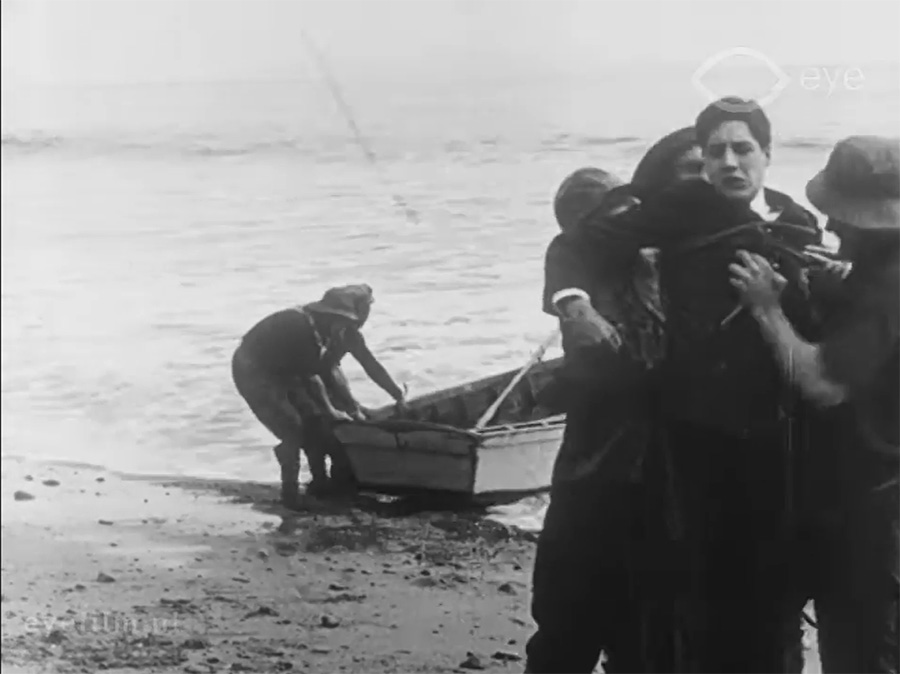
Blackwell plays Boyd, a Mexican customs officer who ends up in a pickle when he is set upon by smugglers, tied up and left in a cave. Pryce saves him and takes him home but does not identify himself. Boyd’s sister (Joyce) and father (Karl Formes) thank Pryce profusely and they part ways as friends.
Boyd is called on by the government to help chase down rebels smuggling arms and ammunition across the border and, of course, Pryce is among them. Outnumbered and on the run, Pryce ducks into the Boyd home, where Boyd’s father and sister help him hide. Boyd returns with other officers, sees Pryce but does not turn him in and helps him escape.
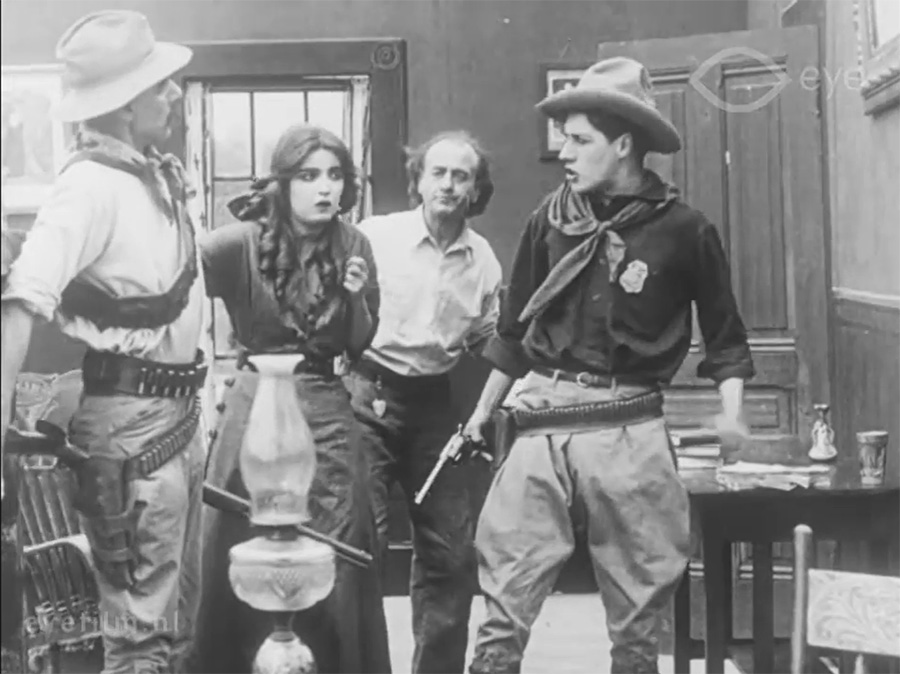
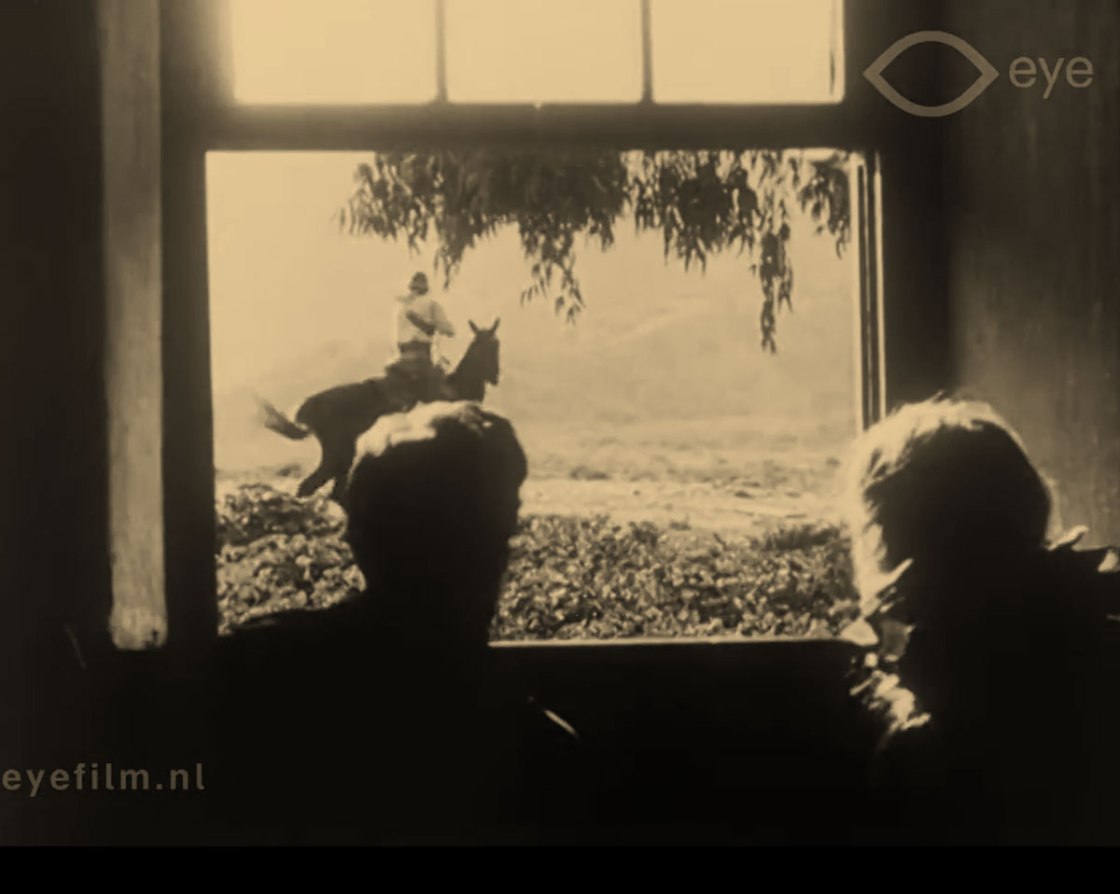
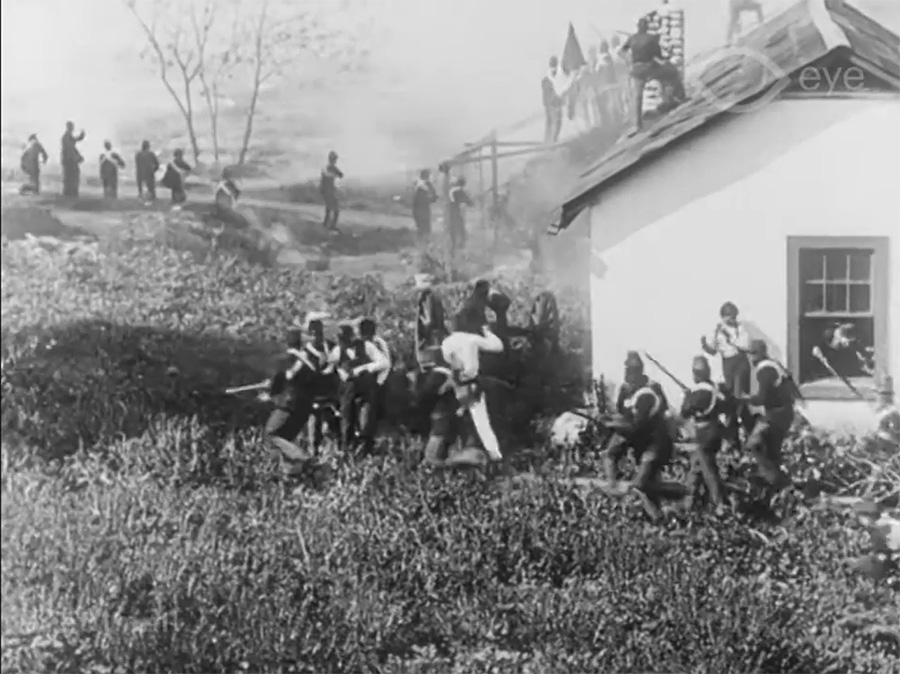
There is a beautiful shot of Pryce escaping out of the window as the Boyd siblings watch and then a quick firefight with the Mexican forces. The Federals arrest Boyd for letting the criminal go and take him away to be shot. Boyd’s sister rides to Pryce, tells him the score and the rebels ride to the rescue. Will they arrive in time? See The Colonel’s Escape to find out!
A quick note about director credit: I see sources crediting either George Melford (best remembered today for The Sheik and the Spanish language Dracula) or Kenean Buel with the direction of this film. I have to say that window shot mentioned above has Buel’s fingerprints all over it and not Melford’s. If you watch other silent Melford productions, they are not exactly stodgy but they don’t have that many fireworks. Buel, on the other hand, could be wildly creative, such as his brilliant transition shot carrying the viewer back in time in The Mystery of the Sleeping Death. So, I am inclined to think Buel was our man.
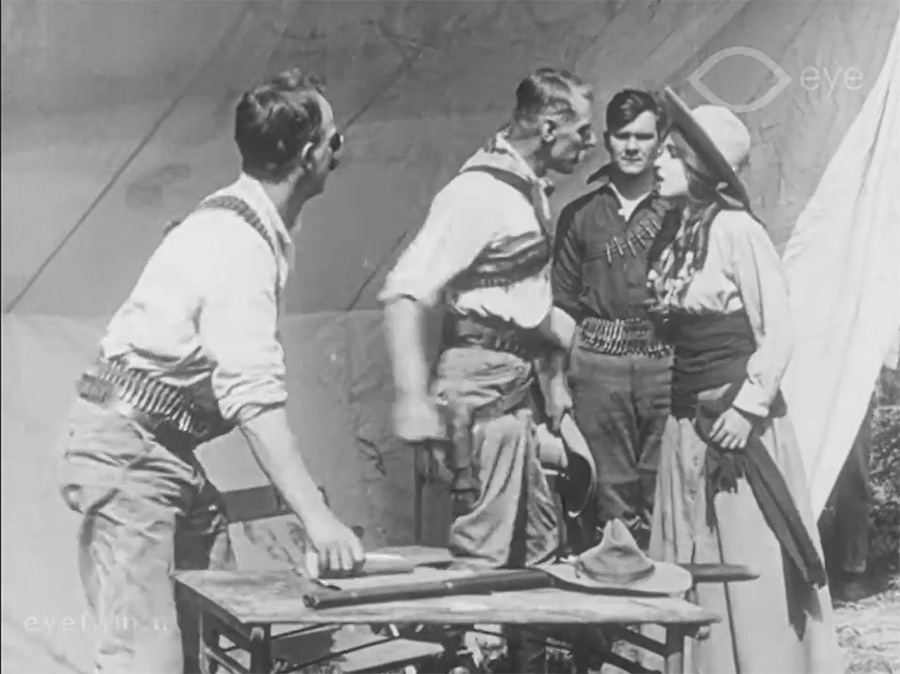
During this period, the United States was supportive of the Mexican Revolution and the films of the period reflect that. The Kalem team had no problem portraying the government as the baddies and Boyd’s decision to go rebel as heroic. You can see similar sentiments regarding Russia during this period, with mainstream American movies populated by glamorous Bolsheviks.
Pryce is stiff onscreen and writing Joyce as Blackwell’s sister was clearly intended to build a romance with Pryce but the most he manages is a handshake. It’s actually a bit endearing but it does give the movie an awkward tone. Blackwell spends the movie tied up or awaiting execution, he takes very little action and it is Joyce who does most of the work, saving Pryce and then riding to save her brother.
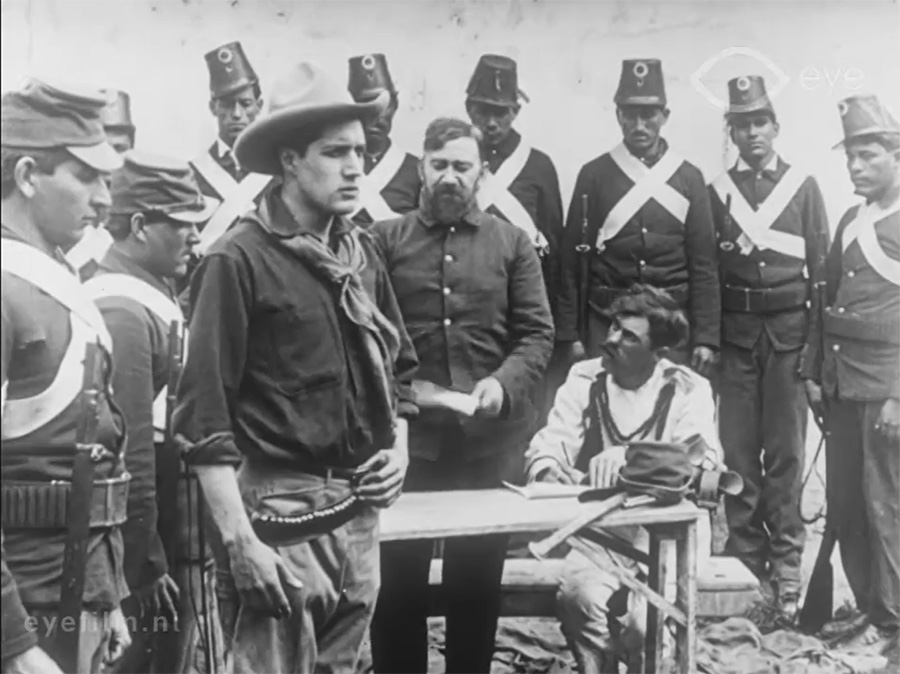
An active heroine and distressed dude would have been normal for a movie of the period (see Across the Mexican Line and The Deputy’s Peril) but I am used to the male lead taking a bit more action. In fact, this is a rare case of a male lead failing the Sexy Lamp Test. (Can the heroine of the film be replaced by a novelty sexy lamp with no change to the story?)
Of course, everyone is here to see Pryce and the shootout at the end and no blank ammunition was spared as every extra in the picture sets out with guns blazing during the climax. It’s a bit of a confused business but there’s an awful lot of shooting, even if extras from the wrong side can be seen milling about behind enemy lines.
Pryce appeared in several films in 1913 but returned to service in the British army when the Great War started. He was wounded in action, which put an end to his military career. By that time, his exploits in Mexico were old news and he did not resume his film career. (Or rejoin any Mexican revolutionary action, for that matter.) I think it’s likely he only got into films for the money, it would certainly fit with his inclinations.
The Colonel’s Escape is a fascinating movie with some moments of genuine beauty intercut with some awkwardness, which is typical of this period of transition between shorts and features. Plenty of action is crammed into its one-reel runtime, enough for a feature, certainly. And, given the fact that With Pancho Villa in Mexico (1913) and The Life of Villa (1912) are both lost, this is a rare chance to see the kind of “starring as himself” productions that really kicked off during the Mexican Revolution.
Where can I see it?
Stream courtesy of the Eye Filmmuseum. The intertitles are in Dutch but the story is easy enough to follow.
☙❦❧
Like what you’re reading? Please consider sponsoring me on Patreon. All patrons will get early previews of upcoming features, exclusive polls and other goodies.
Disclosure: Some links included in this post may be affiliate links to products sold by Amazon and as an Amazon Associate I earn from qualifying purchases.
 Movies Silently