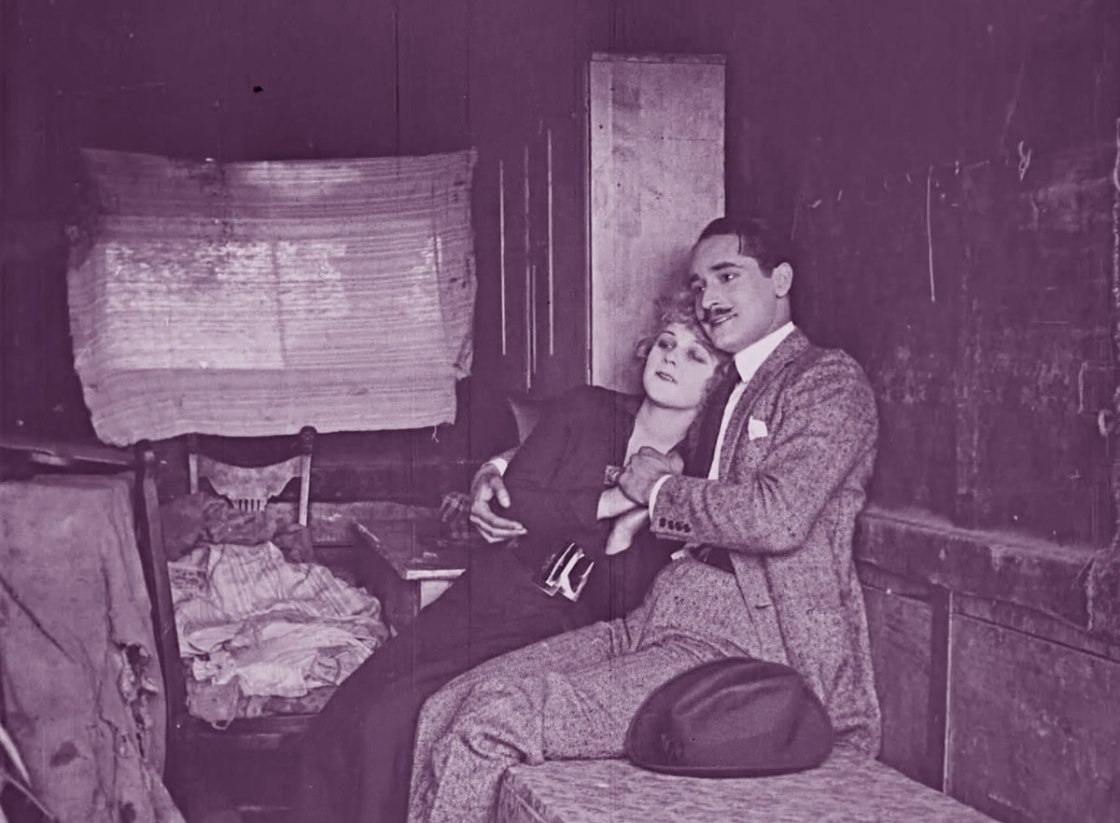
An abused wife is thrown out to the streets but soon finds a new family at a religious mission, where she also falls in love with a dapper modern Robin Hood. Rudolph Valentino plays a tiny role.
Home Media Availability: Released on Bluray.
Coffee, Tea or Robbery?
Wanda Hawley was a popular player in the late 1910s and early 1920s but has been almost entirely forgotten. A 1927 Photoplay piece entitled Fighting the Sex Jinx, which covered the lost appeal of vamps and virgins, provided a reason: “The exaggerated ingenue type, like the super-vamp, also misses out because her sweetness is beyond human belief. And so audiences tired of the saccharine comedies of Wanda Hawley.”
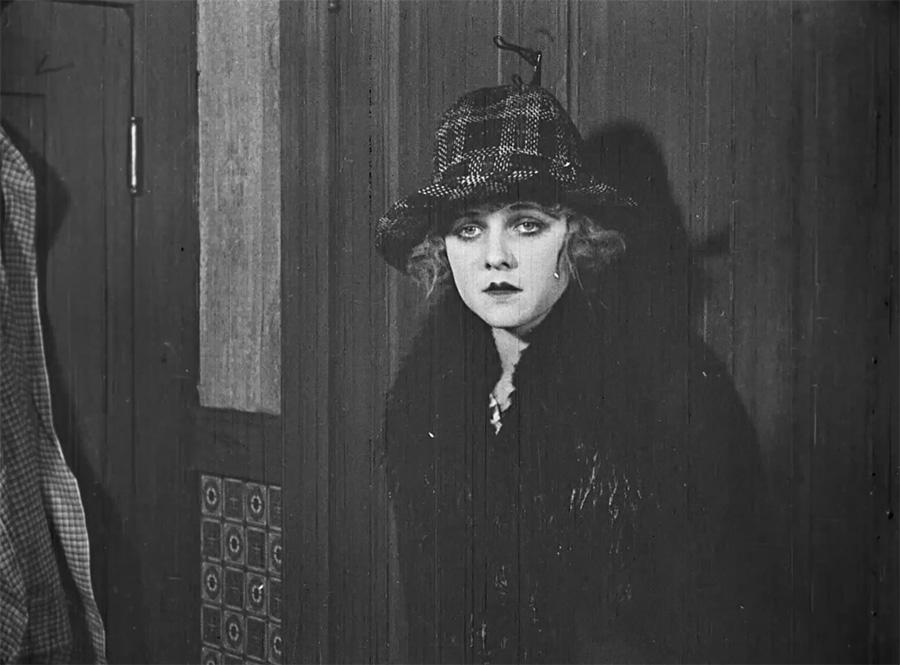
In 1919, though, vamps were still big business and Hawley was a genuine box office draw. She signed on with the independent Pioneer film company to make a sentimental, religious drama about a woman on the run and a modern Robin Hood.
Virtuous Sinners opens with Dawn (Hawley) returning home after trudging the street looking for a job. (Per the censor evasion of the time, this would have hinted to the audience that the job was sex work.) Her husband searches her purse for money and, finding none, informs her that their marriage was a scam with a fake preacher and throws her own into the cold.
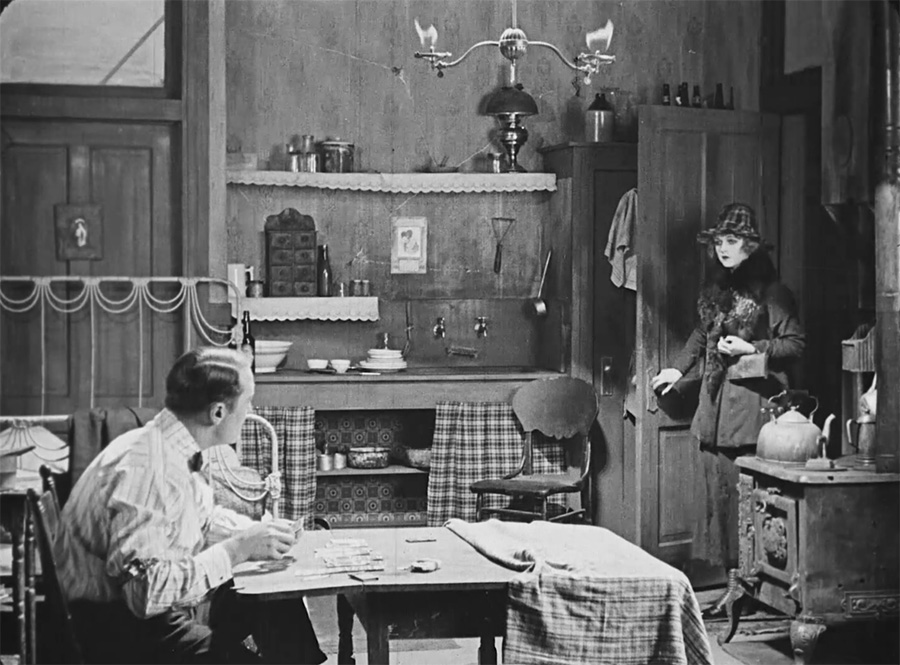
Meanwhile, devout minister Eli Barker (Harry Holden) is holding services and serving hot coffee to the impoverished locals. One of his parishioners, McGregor (Bert Woodruff), finds Dawn collapsed in a doorway and carries her inside. The mission workers nurse her back to health and she continues on, playing the organ and singing hymns.
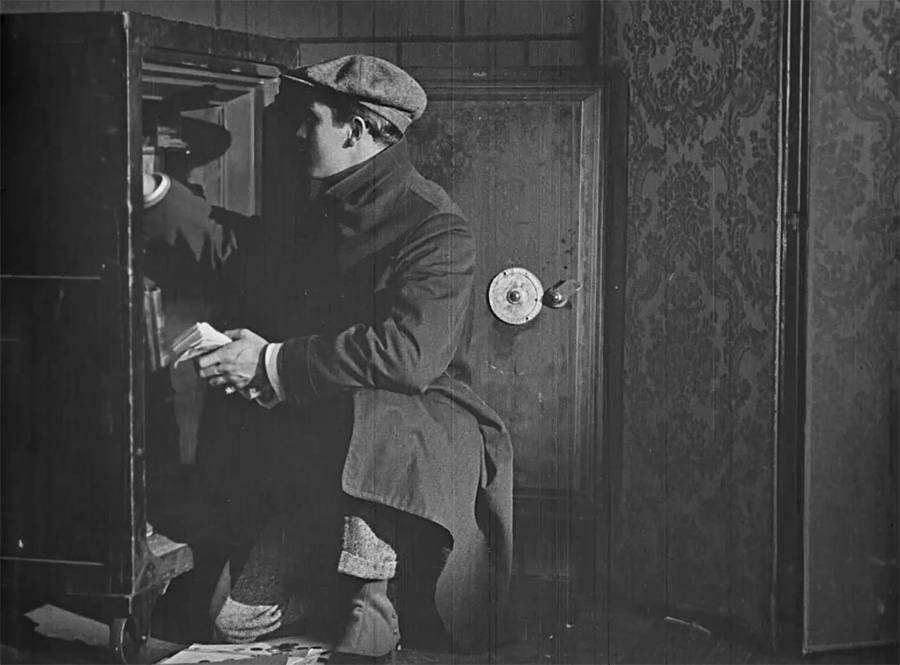
Her singing attracts Hamilton Jones (Norman Kerry), a gentleman safecracker. He donates generously to the mission, falls for Dawn, beats up her ex-husband when he comes sniffing around, and generally proves himself to be citizen of the year with his ready supply of cash and fancy automobile.
Now, there is a theme to be found here about the wealthy being close-fisted with their money while a thief is generous, lots of real Robin Hood and socialism, but we don’t get any of that. Instead, the movie heads deeper into the land of melodrama as McGregor is injured in a hit and run while saving a child and he needs an operation but that costs money.
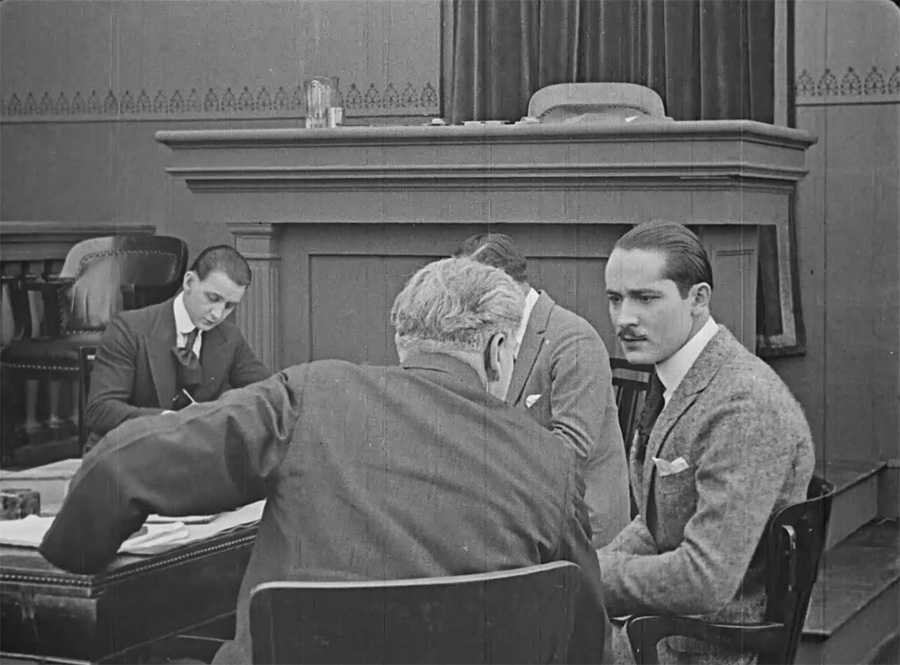
Jones wants to help but he is betrayed by a parishioner who is also a police informant (David Kirby) and is arrested for burglary. Barker pleads for him at the trial but the judge is not having it. This means the missionaries and their parishioners, most of whom are gangsters, are going to have to take matters into their own hands…
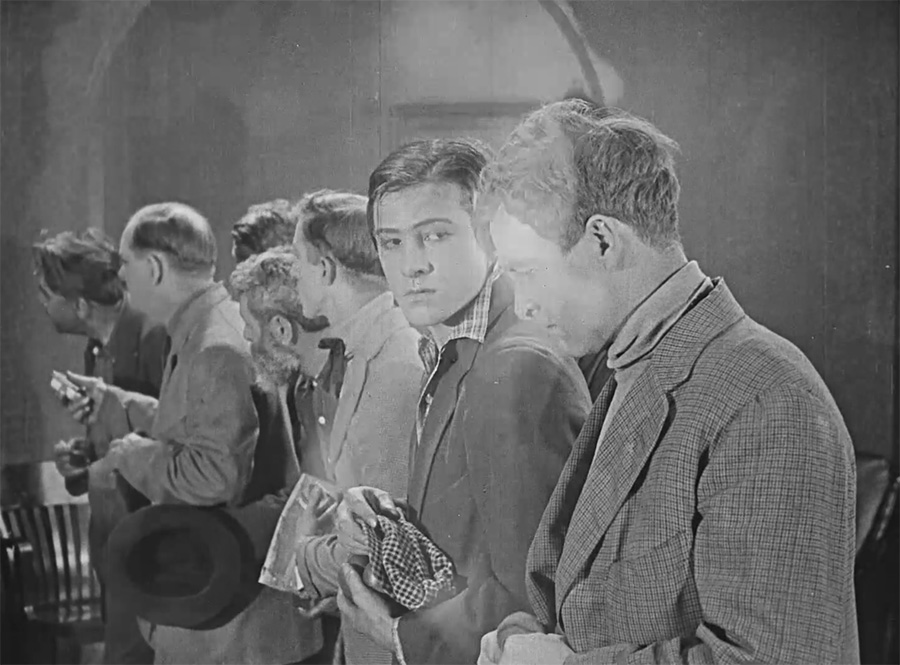
Modern audiences are not exactly clamoring for Norman Kerry and Wanda Hawley, or director Emmett J. Flynn for that matter, and the only reason Virtuous Sinners was released on home media at all was a minor member of the gang was played by Rudolph Valentino, then a struggling actor and dancer. 1918 had been a busy year for the future star, with leading man roles twice opposite Mae Murray and Carmel Myers. Three of these four films survive and they show Valentino playing well-heeled WASPs and Irish Americans with his Italian complexion hidden under a pound of pale pancake.
The efforts of 1918 didn’t stick and 1919 was a year of scrambling for work, playing gigolos, cads, and even extra work. Valentino’s role here is a bit more than an extra but only just. He plays a member of the gang determined to protect the mission and has a few shots where he is looking directly at the camera but it’s not really a “speaking” role, as it were. However, he looks more convincing and at ease than he did in his high hat roles, with more natural makeup and mannerisms.
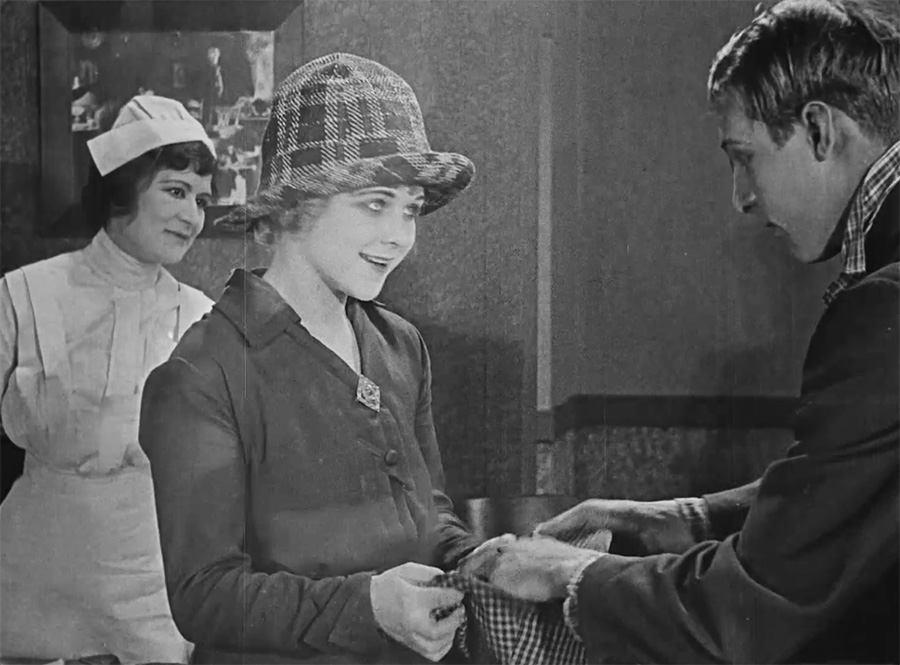
Of course, we have the benefit of hindsight and it’s obvious that the role of sexy gentleman thief would have fit Valentino like a glove. Kerry isn’t bad, exactly, but he doesn’t have any particular spark in the role. (Or any role, truth be told.) Had this picture been made in 1922 rather than 1919, things might have looked very different.
The critics of 1919 were not kind to the picture. Wid’s Film Daily went for the jugular, headlining its review with: “Doesn’t Register as Real. Many Scenes Spoiled by Miserable Photography.”
Well, then.
Motion Picture News liked the movie a bit better but was still sparing in its praise: “While the title is decidedly daring, the story is considerably tame, and whoever concocted it has resurrected the idea that served in the days of the ten, twent’ and thirt’ melodrama… The picture does not offer a great deal beyond its characterization and atmosphere. These attributes will probably compensate for bad photography and lighting.” The review concluded that the public would probably receive the film well enough.
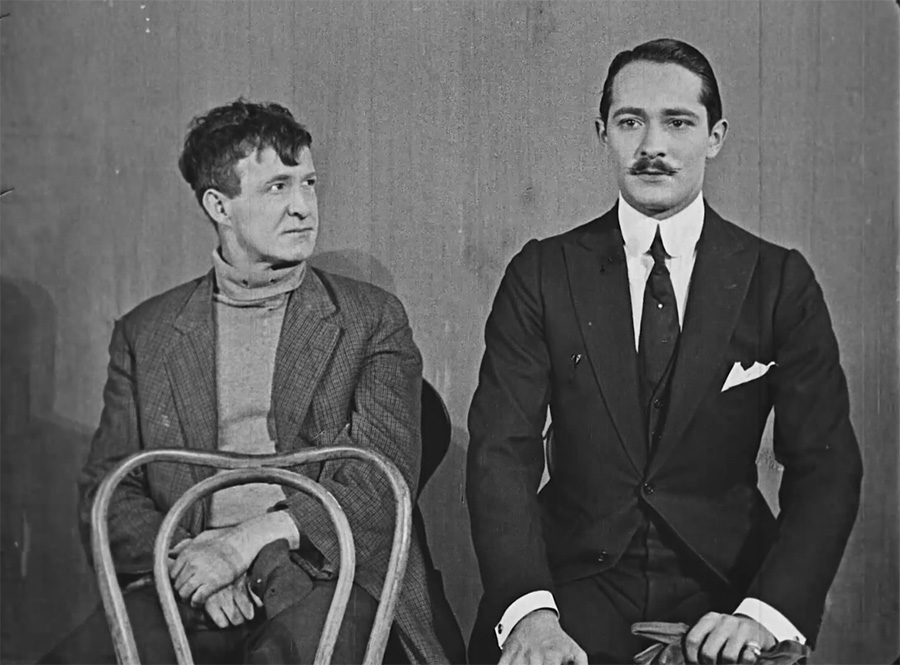
Both reviews call out the poor lighting and it is indeed harsh and ugly. This was the era of deliciously moody lighting, rich shadows and often delicate halos of light behind the main characters. Artificial light was replacing natural but the best cinematographers tried to emulate the spirit of old master oil paintings. Virtuous Sinners is basically lit with prison floodlights, which show up harshly on the faces of the actors and create unattractive double and triple shadows with the multiple light sources.
By the way, I had mentioned earlier that Valentino was the obvious choice for lead. The Wid’s review doesn’t mention him, of course, but it does suggest that perhaps the cast won’t be packing them into the theaters: “Norman Kerry can hardly be counted upon to attract any great number of fans, so in mentioning the players I would give first prominence to Wanda Hawley.”
Virtuous Sinners really only comes to life near the end of the film, when missionaries and gangsters join forces to spring Kerry from stir while he is being transported to prison. Using some subterfuge and a moving van, the ragtag team successfully free their benefactor and– it was all a dream. The sequence is so elaborate that I assumed it was intended as the actual ending but was changed due to censorship concerns. Censor boards took a dim view of criminals getting off the hook.
Interestingly, Film Daily’s review also suggests that the escape scene had not originally been a dream, suggesting that it had been too over-the-top for straight inclusion: “Probably because of its extravagance, rather than because it was a part of the story as originally conceived, the rescue sequence is passed off as a dream, a subterfuge that doesn’t really help to make the picture more convincing.”
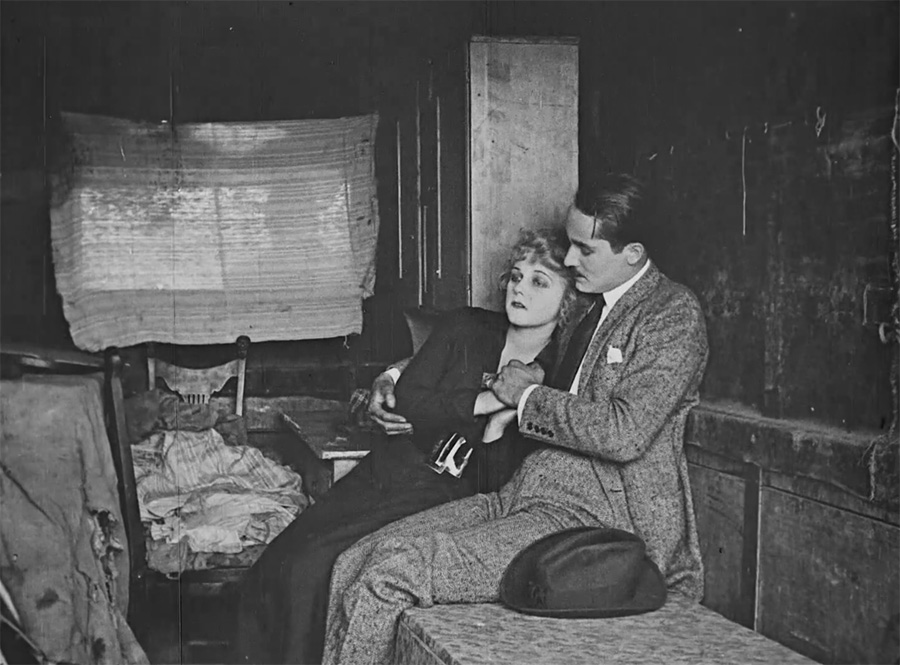
And that is the essential problem with Virtuous Sinners: it’s simply too chicken livered to pursue any of the more interesting themes that its material presents. Gangsters and missionaries working together against what they feel is unjust law is interesting. A judge sentimentally paroling a criminal to the care of a saintly woman is boring. No stereotype or trope is left unfilmed and any opportunity to create a twist or variation is studiously ignored.
I am actually pretty happy that Virtuous Sinners was released on high quality home media. We get plenty of silent era masterpieces and plenty of big star vehicles but it’s extremely helpful to also have access to films that were met with a decided meh or even a feh upon original release. After all, how can we judge quality if we don’t have access to the full spectrum? After reading the reviews and observing the lighting, I am certainly going to pay closer attention to lights and shadows in the future.
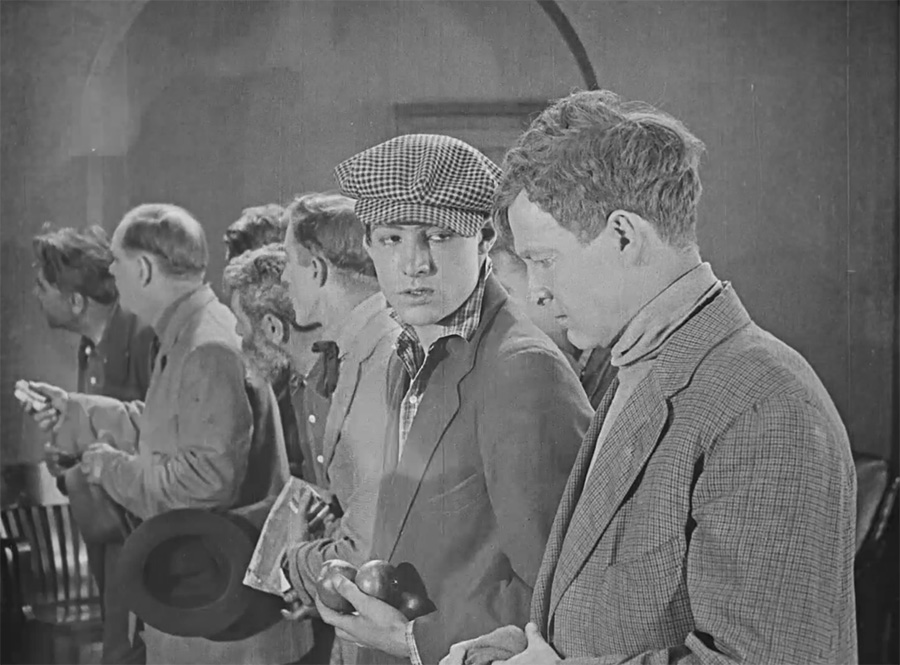
Is it worth seeing? Yes, I think I probably liked the picture more than the original critics, even if I felt it had a mountain of missed opportunities. I wouldn’t recommend it as a first silent film but anyone with a few dozen films under their belt would probably be interested in this.
Where can I see it?
Released by Flicker Alley as part of their Rudolph Valentino Bluray collection.
☙❦❧
Like what you’re reading? Please consider sponsoring me on Patreon. All patrons will get early previews of upcoming features, exclusive polls and other goodies.
Disclosure: Some links included in this post may be affiliate links to products sold by Amazon and as an Amazon Associate I earn from qualifying purchases.
 Movies Silently