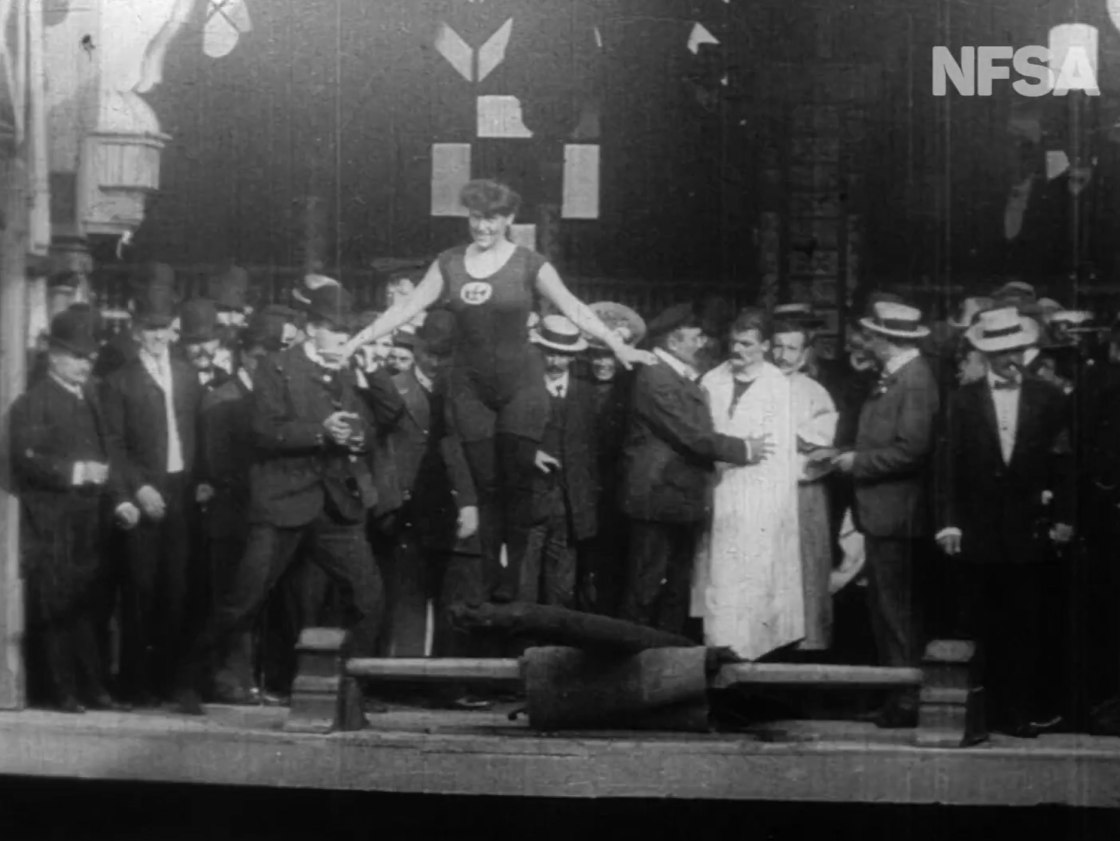
Thanks to scientific research, an academic declared that Australian swimming sensation Annette Kellerman was the perfect woman and this is demonstrated by slow and reverse shots of her diving into a pool. Who said science was boring?
Home Media Availability: Stream courtesy of NFSA
Searching for Venus
We tend to think of our forebears as more serious sorts but turn of the century culture had just as many trends and silly contests as we do today. In the 1890s, more American women were entering higher education as students and faculty members viewed them as important data source. Namely, how their measurements compared to the famous Venus de Milo statue.
Dr. Dudley Allen Sargent, who ran the gymnasium at Harvard University, collected the measurements of female students from multiple universities and amalgamated them into a statue that was dubbed the Harvard Venus. (I suppose it’s worth noting that the forerunner of Facebook was a Harvard Hot or Not? website.)
Sargent kept at his peculiar research and, in 1910, declared that American women were approaching the Classical ideal of the Venus as corsets loosened and silhouettes widened ever so slightly. He even named the woman closest to his marble ideal but she was not an American. Australian swimming sensation Annette Kellerman had, Sargent claimed, the closest measurements to the Venus and was the perfect woman.
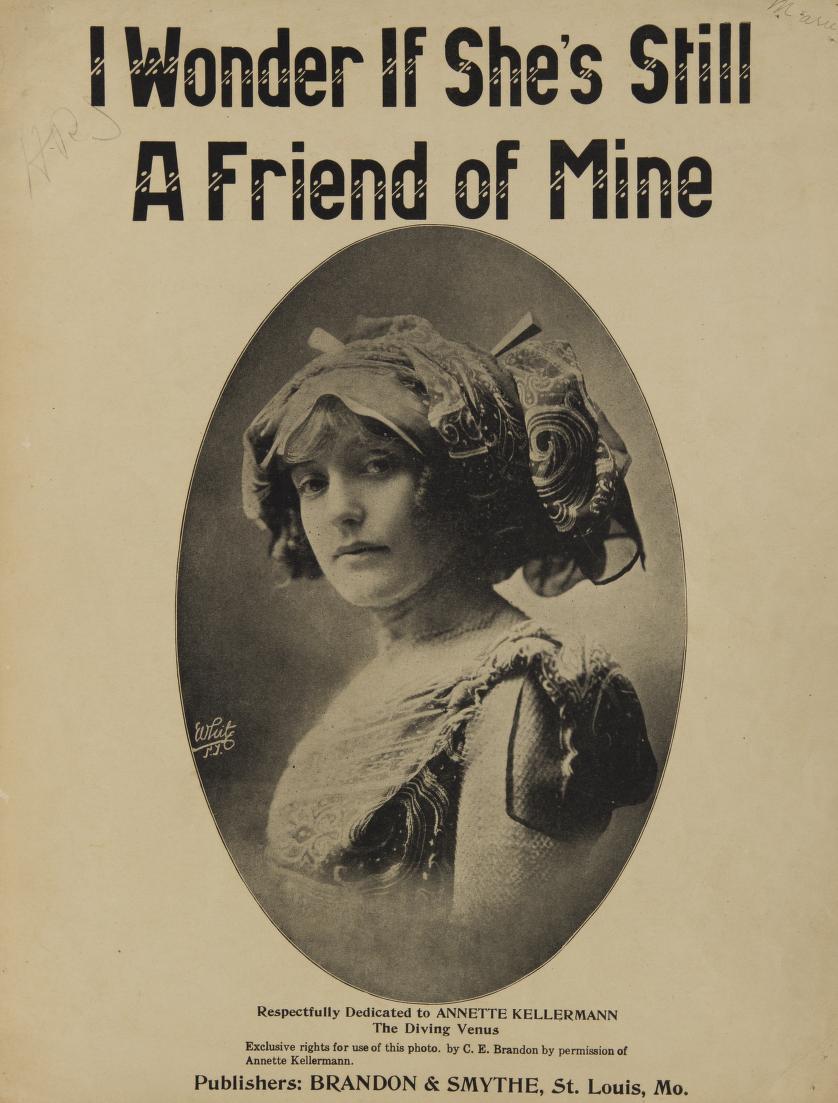
Kellerman had been born in New South Wales and had been taught to swim at an early age in order to strengthen her legs, which required braces. By the time she was a teen, Kellerman was engaging in races and diving expositions, matching the men in speed. Her body stocking swimsuit (what we would now call a unitard) earned her an arrest for indecency but, undeterred, she sewed stockings to cover her knees and calves and carried on. She attempted to cross the English Channel and ended up on the American vaudeville circuit.
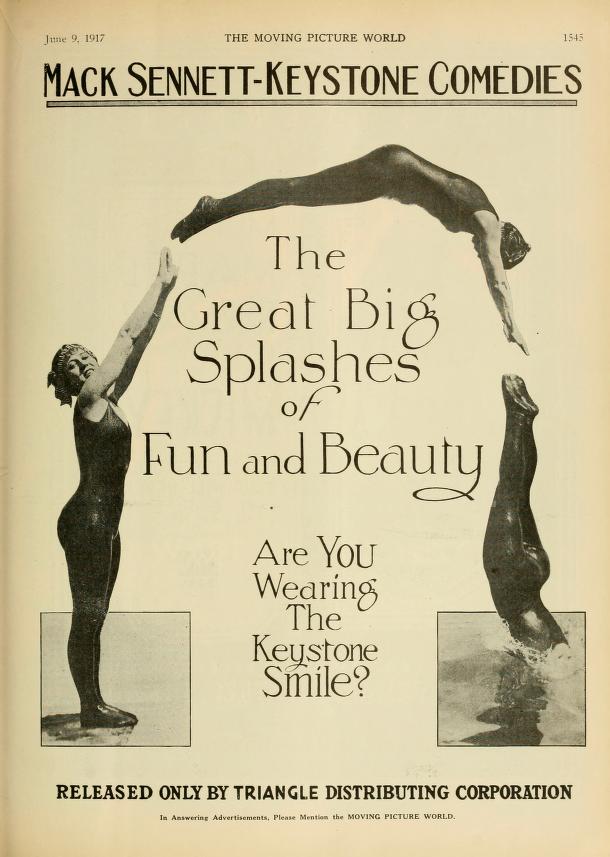
A film career was inevitable and Kellerman began to appear in Vitagraph films in 1909. Unfortunately, most of Kellerman’s early films are lost, Jephtah’s Daughter: A Biblical Tragedy is the lone surviving fiction film pre-1910. She continued to work in films into the 1920s and was more than a mere star, at times acting as uncredited co-director and stunt coordinator. Kellerman’s body stocking proved to be wildly popular and Mack Sennett used a similar suit to advertise his “great big splashes of fun and beauty” in 1917.
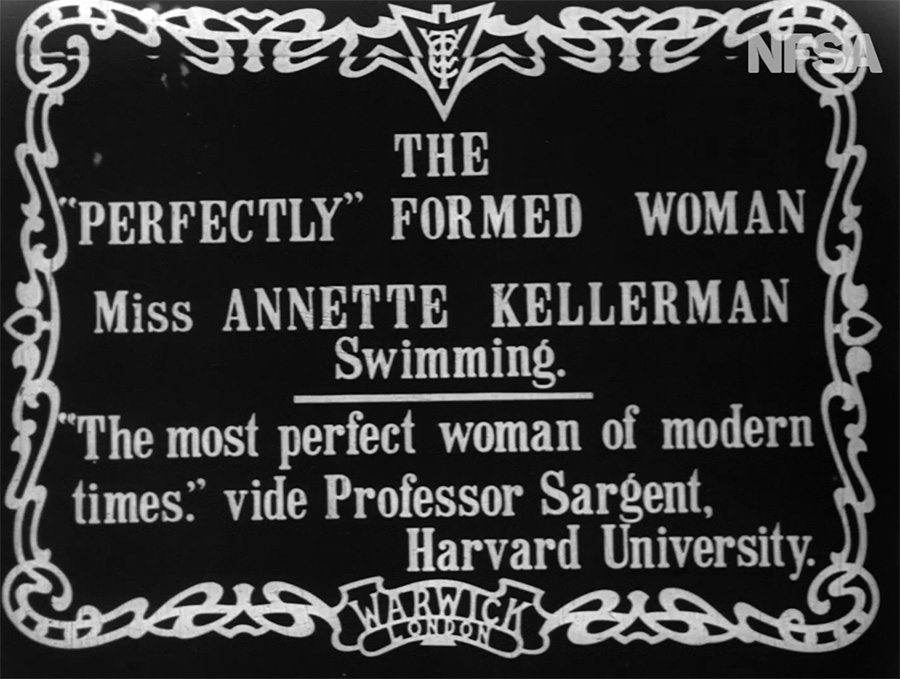
The “Perfectly” Formed Woman was released by the Warwick Bioscope Chronicles UK and was designed to capitalize on the 1910 Sargent article and his declaration of Kellerman’s perfection. It is a brief film, just over a minute long and likely meant as filler or a peepshow machine feature. It opens by quoting Sargent before cutting over to a shot of Kellerman at a diving exhibition wearing her signature body stocking.
The film is reversed, we see Kellerman back on the diving board in slow motion and this repeats for another dive, giving us a good look at her famous figure. The film concludes by stating that Kellerman’s measurements match the Venus and then shows the statue for comparison. There were hundreds of films like it at the time: a bit of sexiness with a pretentious veneer of science. What makes the film interesting is not its approach, which we have seen many times before and is hardly out of fashion, but its subject. And, of course, I mean Kellerman and not the profoundly weird Sargent.
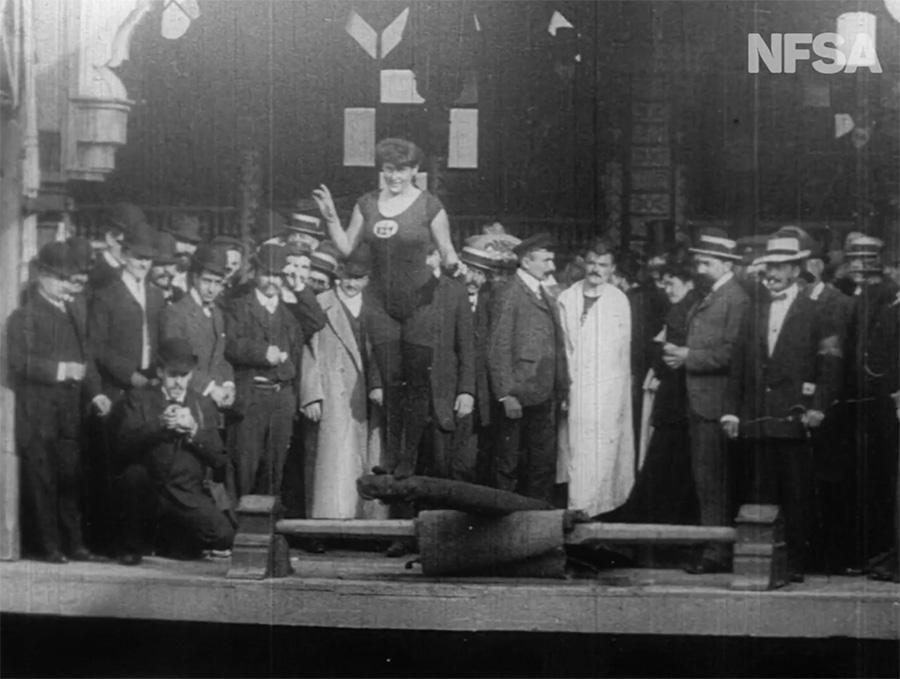
(The search for the American Venus continued, mostly focused on colleges and universities, and there was even an attempt to modernize the Venus proportions, raising the favored height from five foot four inches to five foot seven inches and shrinking the circumference several inches from Gibson Girl to sporty flapper.)
While Kellerman likely had no control over the way her likeness was used once the footage was shot and almost certainly had nothing to do with this film in particular, it illustrates the kind of ballyhoo she embraced to draw paying audiences to her stage act and films. And once she had them where she wanted them, she let her women’s rights flag fly. Women already had the vote in Australia and the feminist movement had made raising the age of consent one of its priorities.
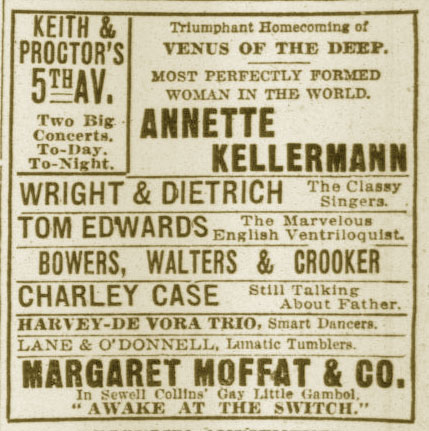
Kellerman’s combination of genuine athletic skill, an eye for hoopla and buzz, beauty, and cheerful feminism made her an international sensation. Pop culture of the time enjoyed treating feminists as dried up scolds trying to become men themselves because they were unable to hold male attention. Kellerman’s fetching swimsuits and good-natured advocacy of women entering sports instead of early marriages flew in the face of that stereotype. The living embodiment of the Venus de Milo, per scientific measurement, was saying “thanks but no thanks.” There was no comeback for that. Who could claim no man wanted her?
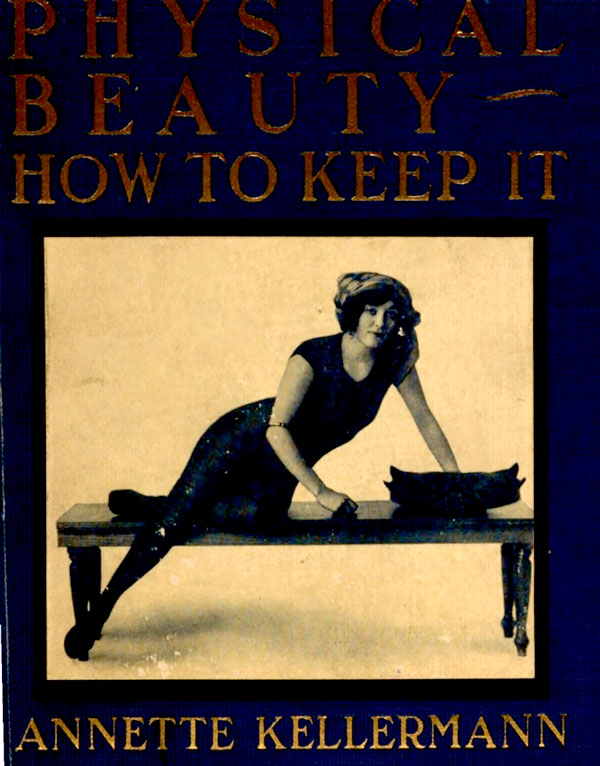
Kellerman did marry at the age of twenty-six, wedding her manager, James Sullivan, in 1912. The pair remained married for fifty years until Sullivan’s death and she remained as opinionated as ever after marriage. Her 1918 self-help book Physical Beauty: How to Keep It opens with a salvo against the sexual double standard and the impossible-to-thread needle of women needing to be beautiful but condemned if they openly pursue it. And, of course, she wears her famous body stocking swimsuit on the cover. Kellerman cleverly giving her audience an eyeful before delivering some hard-hitting, woman-to-woman home truths must have been intoxicating in an era when American women could not vote, own property in their own right, and singleness was seen as the worst possible fate.
Kellerman was not the first sportswoman in the movies (Annie Oakley had demonstrated target shooting for Edison cameras before movies were even projected), nor was she the first to show off a barely clothed body for motion pictures (bodybuilding legend Eugen Sandow had also posed for Edison cameras in the briefest of briefs). She was also not the first athlete to parlay their fame into a more general entertainment career but her path from athletic feats to onscreen roles would become the prototype and goal of studio era sporting stars. Kellerman was followed into screen success by Buster Crabbe, Johnny Weissmuller, Sonja Henie, and Esther Williams. (Williams later played Kellerman in the loose biopic Million Dollar Mermaid.)
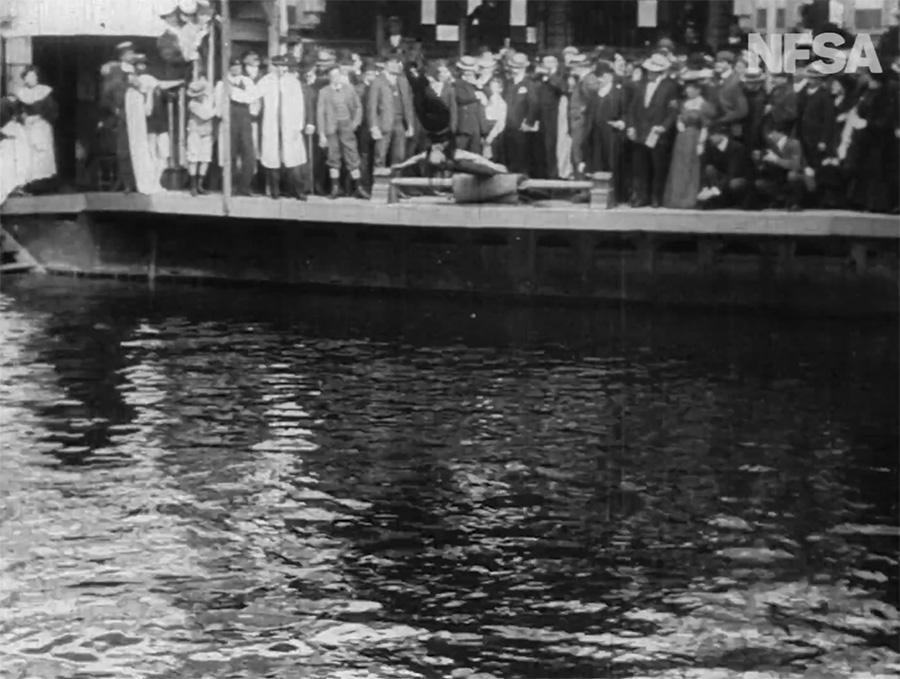
The “Perfectly” Formed Woman is a curious artifact of its era but it is also an example of a woman who used her beauty and athletic prowess to influence a generation. Recreational swimming became one of the most popular sports and swimsuits continued to abbreviate. In his dotage, Mack Sennett complained that the bikini was entirely too much but he obviously forgot the boldness of Kellerman donning that bodysuit.
Where can I see it?
Stream The “Perfectly” Formed Woman courtesy of the NFSA’s YouTube channel.
☙❦❧
Like what you’re reading? Please consider sponsoring me on Patreon. All patrons will get early previews of upcoming features, exclusive polls and other goodies.
Disclosure: Some links included in this post may be affiliate links to products sold by Amazon and as an Amazon Associate I earn from qualifying purchases.
 Movies Silently