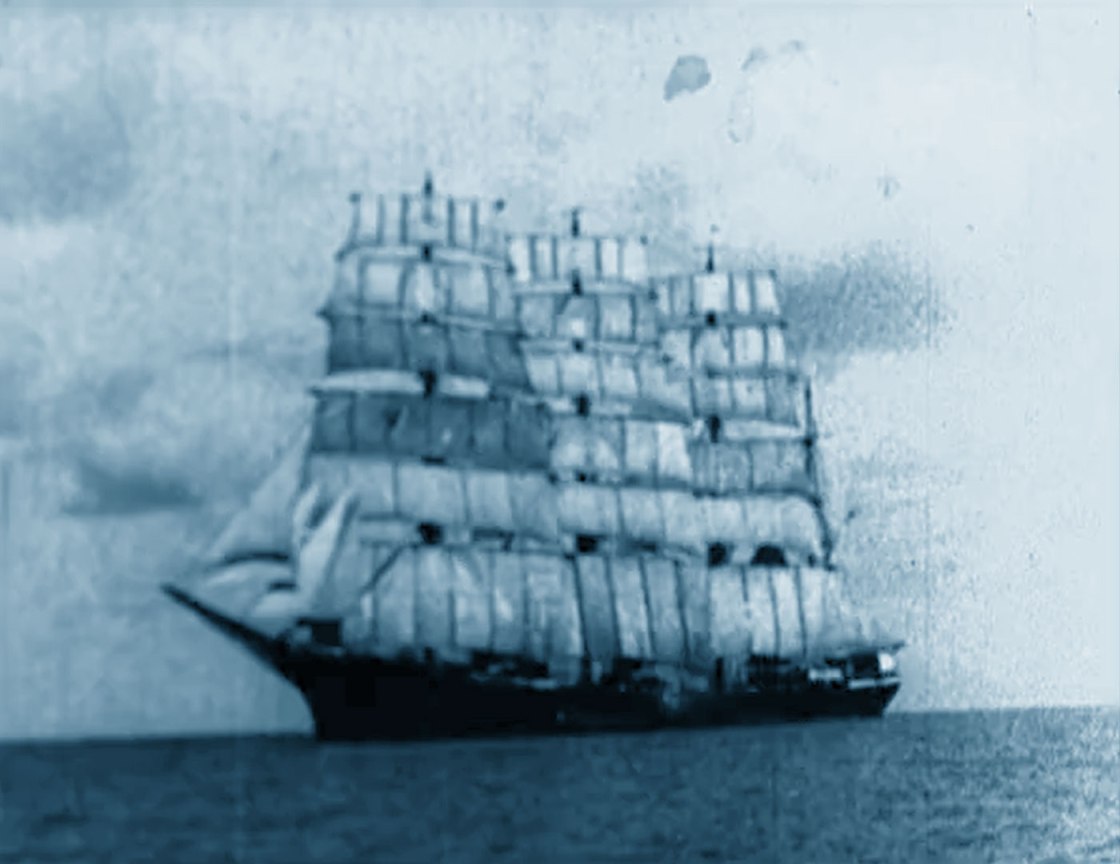
Australian adventurer and author Alan Villiers documents the Finnish barque Parma’s attempt to win a race from Australia to England in this silent short film.
Home Media Availability: Stream from Flicker Alley
Of Course it Blows, it’s a Horn
Hollywood was the epicenter of the talkie revolution and, when it became clear that sound was going to stick this time, studios retrofitted or released all of their in-production silent films, with the last of them out the door by 1930. The rest of the world adapted to the chatty new order with varying degrees of urgency, from Italy shooting silent and dubbing for most of the 20th century, to the leisurely adoption in Japan and the Soviet Union, to the breakneck sound transition in the United Kingdom, and then France and Germany. Australia was only slightly behind the Europeans, with Australian-made part-talkies in 1930 and full talkies in 1931.
But these were feature films meant for a mass audience. Internationally, and even in the United States, silent films survived for independent productions and documentary material, especially when the latter was shot under circumstances that were not compatible with the recording technology of the time. Around the Horn in a Square Rigger was both. Shot on the Finnish barque Parma, it was very much a silent of the old school, complete with title cards.
The film was shot by Alan Villiers, a Melbourne-born sailor, author and photographer, who documented the final age of sailing ships in an era when you could still list “adventurer” as a profession. A prolific writer and master of what Hollywood would call ballyhoo, Villiers had worked as a cinematographer for Windjammer (1930), a British production. He attempted to film a documentary on the Grace Harwar, a voyage marked by death, madness and scurvy. (Needless to say, Villiers long career is well beyond the scope of this review, so we will just be focusing on his efforts as a filmmaker.)
Around the Horn in a Square Rigger documented a grain race between the Parma, which Villiers had purchased jointly with its Finnish captain, Ruben de Cloux, and other sailing vessels transporting Australian grain abroad. In contrast to the Grace Harwar disaster, the Parma adventure proved to be a great success.
The film is a bit inside baseball without much coverage of what, exactly, a grain race is. It’s possible it was meant for distribution alongside a lecturer but it does not stand on its own as a narrative. Briefly, sailing ships were being steadily replaced by modern craft in the 20th century but the grain exchange between Australia and Europe was still highly profitable by sail. the Grain Race was an attempt to take a load of grain from South Australia to England is the fewest number of days via sailing ship, with 100 days being the benchmark for good time. The route took the ships around the Horn of Africa, known for its dangerous weather.
The Grain Race was held annually (barring war and the aftermath of war) twenty-one times between 1921 and 1949, ships flying the Finnish flag won or tied eighteen times. The Parma won twice, once during the voyage documented in this film.
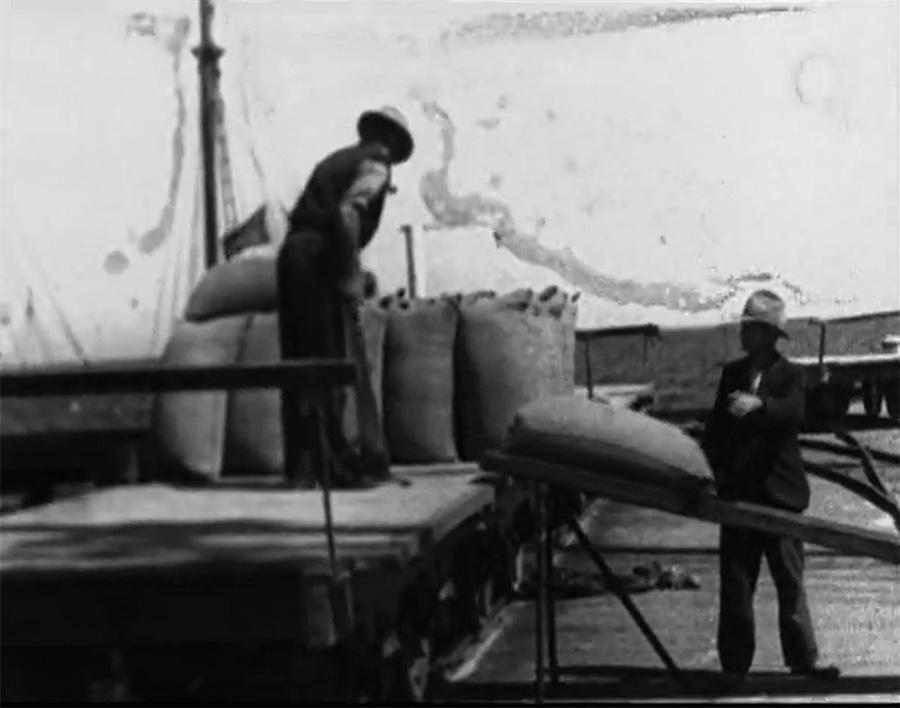
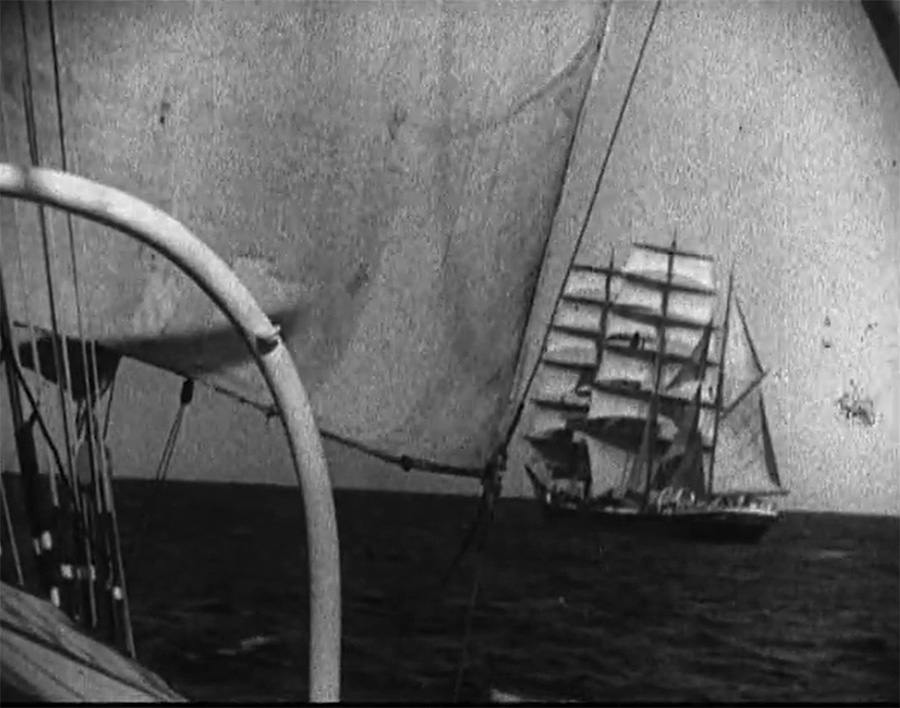
The picture opens by showing the leisurely loading of cargo into the hold of the Parma. Once away, Villiers turns his camera to the crew, which includes the captain’s daughter, Ruby, and the day-to-day operation of the ship. Things turn dicey as the ship approaches the Horn of Africa and there are long shots of the wild and choppy sea. However, the ship weathers the storm and, as it sails on, overtakes the Penang, another ship engaging in the race that had set sail forty-one days earlier. All told, the Parma takes just 83 days to reach its destination in Cornwall, a record that remains unbroken and is likely to remain so as there hasn’t been another grain race in nearly eight decades.
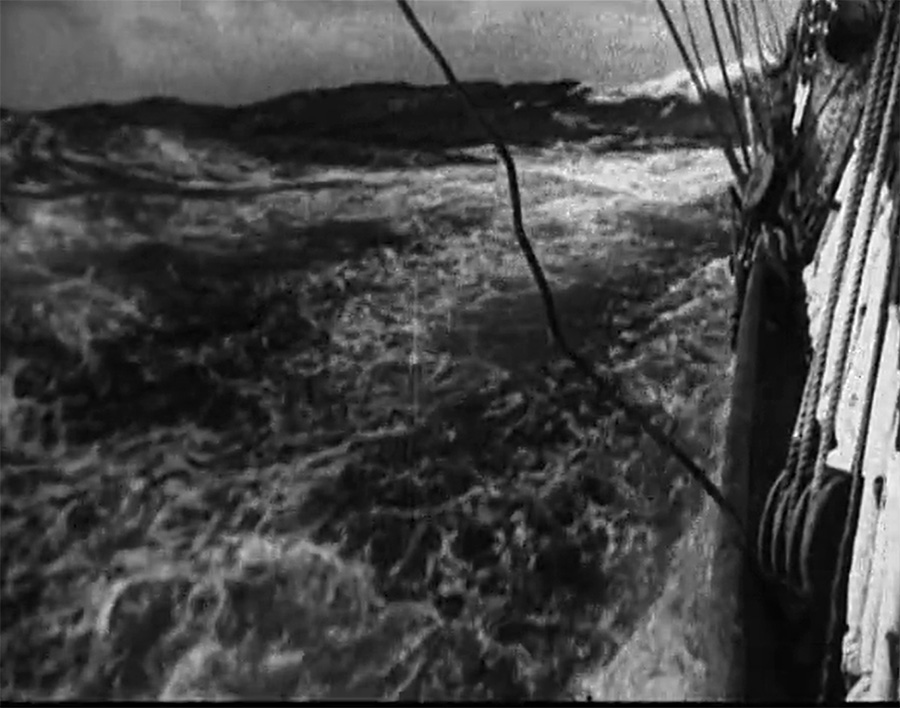
This is a unique document of a dying craft. Sailing shift had their last breath thanks to their ability to cheaply transport grain but with the biggest buyer being Germany and this being the 1930s, it’s clear in hindsight that the arrangement would not last. The post-war revival didn’t last five years. So, this is the closest modern people are likely to get to a real working sailing freighter. Villiers brings his skills as a photographer and they serve him to great advantage, capturing the mood and vibrancy of a sea voyage.
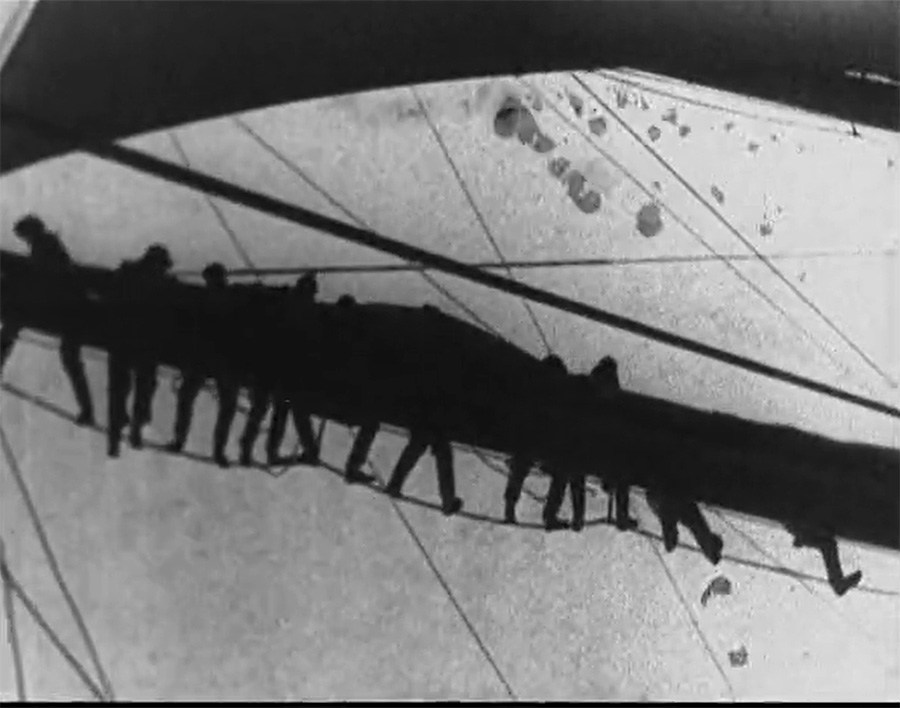
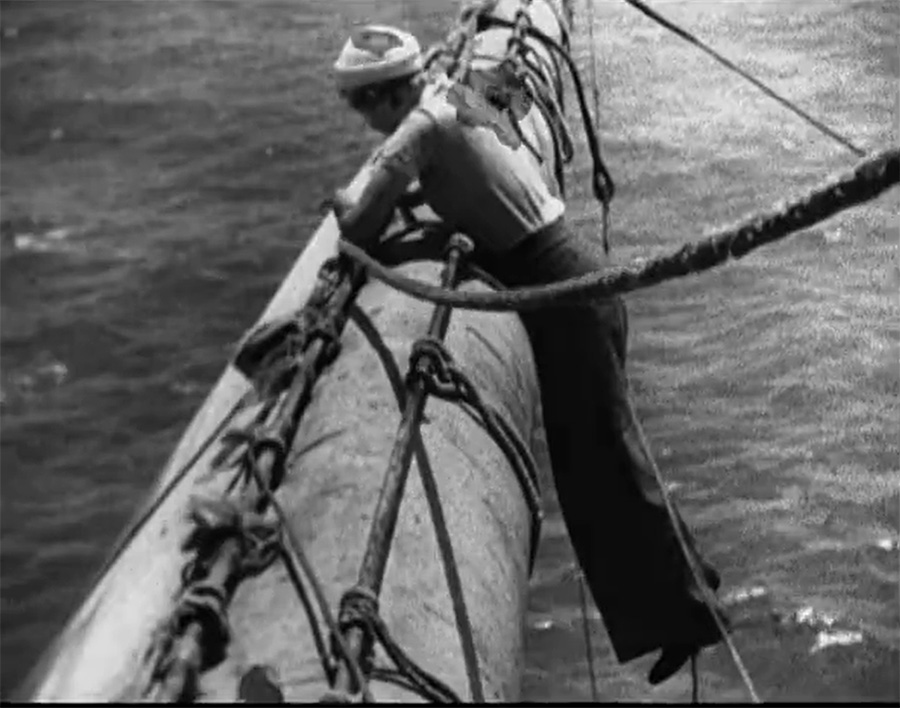
Unfortunately, Villiers’ obvious dramatic flourish is nowhere to be found in this motion picture effort and it quickly becomes clear that he was a better author than he was a filmmaker. While he captures some beautiful images of the sailors manhandling canvas, the moody ocean and the grinding work of a crew trying to keep their ship afloat during a storm, he holds shots for too long and assumes that shots of the waves will hold viewer interest. The footage is good but badly in need of an editor and punchier title cards. There is no particular suspense built as to which ship will win the race, no attempt to ramp up tension and then releasing it upon seeing that the Penang was in fact forty-one days behind them.
The shots of Ruby de Cloux seem out of place: she is established as the captain’s daughter and an experienced sailor herself but there is no attempt to build a narrative. In context, it seems these shots were something of a practice run for a new publicity undertaking Villiers had planned. He had engaged Norwegian-American stenographer Betty Jacobsen as his apprentice, intending to ghostwrite her experiences on the Parma (published as A Girl Before the Mast) and release a film entitled Apprentice Girl, which was not made.
Jacobsen was to work under a pseudonym, be paid $25 a week and her contract stipulated that there would be a second woman aboard, so the emphasis on Ruby de Cloux seems to be a hint at what was planned. (Needless to say, conditions aboard grain ships were not as egalitarian and feminist as Villiers wished to portray and Jacobsen’s adventure seems to have been very much a publicity stunt. Jacobsen does not seem to have published any other books.)
Around the Horn in a Square Rigger is a more rewarding film for viewers who already have some knowledge of the last days of sailing ships or who are familiar with the work of Villiers. Coming in with no context, it is a bit difficult to understand who is doing what and why. Still, if you want to see a short film with plenty of real seafaring, this is a good choice.
Where can I see it?
Released in the Under Full Sail collection from Flicker Alley. The disc is out of print but it is available to stream.
☙❦❧
Like what you’re reading? Please consider sponsoring me on Patreon. All patrons will get early previews of upcoming features, exclusive polls and other goodies.
Disclosure: Some links included in this post may be affiliate links to products sold by Amazon and as an Amazon Associate I earn from qualifying purchases.
 Movies Silently