
When a married couple disagree about their daughter’s education, the wife decides that she will win the battle by manipulating her husband into madness.
Home Media Availability: Stream courtesy of SF Studios.
Finishing It
One of the more interesting aspects of motion pictures in the lead up to the First World War was the conscious and international efforts to class up the industry. Movies had started out as a phenomenon, booking the biggest celebrities to be filmed, and had enjoyed attention from presidents and crowned heads but, after the initial frenzy, they settled into somewhat lurid success as the cheap entertainment of the masses.
Filmmakers and stage luminaries alike began a concerted effort to bring movies into the middle class in the 1900s, with French companies touting high brow historical fare with established tragedians and classical music, Germany turning to the epic biopic, and Americans pursuing a triple threat of stage adaptations, high class literature, and the Bible.
And here is where Anna Hofman-Uddgren enters the picture. A Swedish stage star, she hoped to bring the best of the theater to the movies and she had the connections to do it. Hofman Uddgren and her husband were personal friends of acclaimed author and playwright August Strindberg and he granted them the film rights to his plays gratis. In the early 1910s, the movies were steadily building respectability but it was not universal, which helps explain these generous conditions.

Hofman-Uddgren was a colorful figure (rumored to be the illegitimate daughter of the king of Sweden, a not-entirely outlandish notion as he personally paid for her education and financially supported her single mother) and her ambitions were not limited to merely producing a film or adapting a play. She had her eyes on the director’s chair and ultimately helmed six movies in 1911 and 1912. The Father, based on the 1887 Strindberg play, is the only one known to have survived.
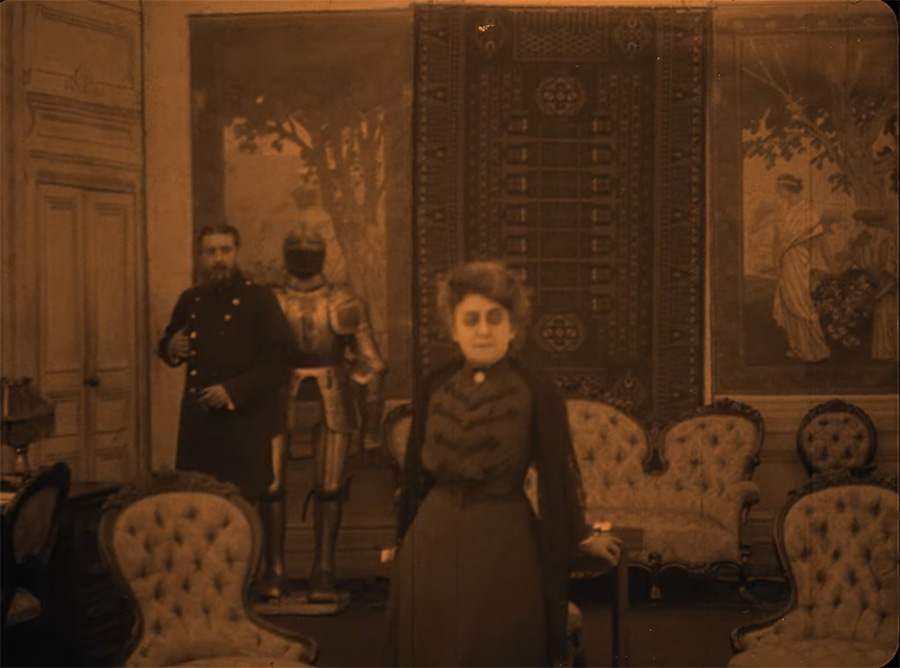
The Father opens with Captain Adolph (August Falck) discussing the chaos in his household, the most serious of which is the conflict with his wife, Laura (Karin Alexandersson). Adolph wants to send their only daughter, Bertha (Renée Björling), to the city to receive an education as a teacher. That way, she can support herself whether she marries or not. Laura insists that Bertha is to stay home and become an artist, even though she shows no particular talent in that financially uncertain field.
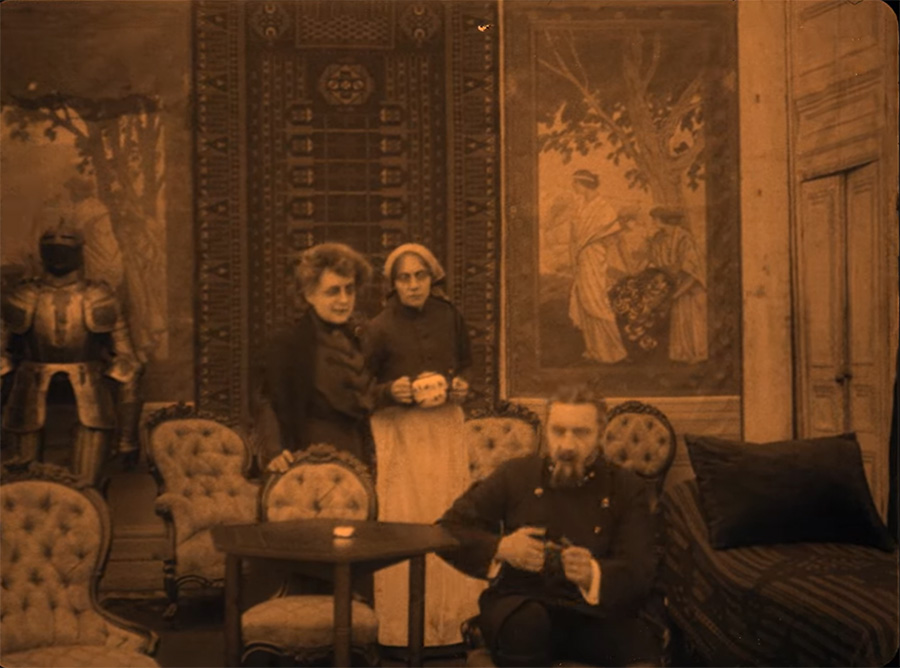
Adolph declares to Laura that his rights as husband mean that he decides what is best for their child and that is that. He fails to realize the lengths Laura will go to get her way, starting with her privately meeting with Dr. Östermark (Johan Ljungquist) to confide that she believes her husband is going insane. Laura’s brother, the Pastor (Konstantin Axelsson), warns Captain Adolph that his sister stops at nothing to get her way but he does not listen.
The next stage of Laura’s plan is to hint that Bertha is not really Adolph’s child. As he stews over this revelation, Laura tells others that her husband’s mental state has deteriorated so much that he actually doubts the paternity of his own child! The game continues as Laura needles and rumormongers and her version of the story begins to take hold in the minds of the couple’s friends and family. Only the Pastor sees what is really happening.
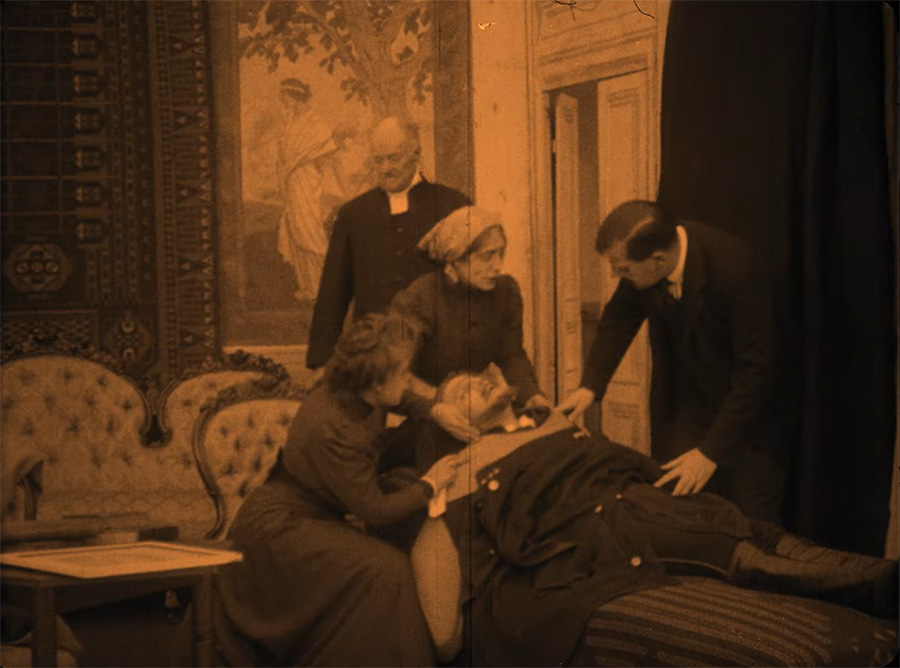
The play continues as an examination of Captain Adolph’s downfall and Laura’s eventual bitter triumph but she will likely rule over ashes as she has taken a torch to her household and has already been established as having poor money management skills.
The Father was a personal work for Strindberg, reflecting his own marital woes as his relationship with aristocratic Finnish actress Siri von Essen dissolved, Strindberg being convinced that she was having an affair with Danish author Marie David. It is a bitter bit of naturalism and an attempt for Strindberg to adjust public sentiment but its sadistic climax makes it a memorable, dark story. The Father also enjoyed international success, with an American stage production translated by Warner Oland in 1912. It’s easy to see why. It was a play deeply rooted in Strindberg’s personal life and the contemporary culture of Sweden but the concept of a war to the death brewing within a marriage remains timely and internationally appealing.

The Oland translation of The Father is available to read and I highly recommend doing so. It’s an excellent play with juicy roles for both leads but it is also necessary if you hope to make heads or tails of the film. Anna Hofman-Uddgren, like fellow stage-veteran-turned-film-person Sir Herbert Beerbohm Tree, seems to have insisted on the actors simply performing the entire production before the cameras, with small snippets of dialogue in the titles but no consistent way to decipher the narrative without already being familiar with the work.
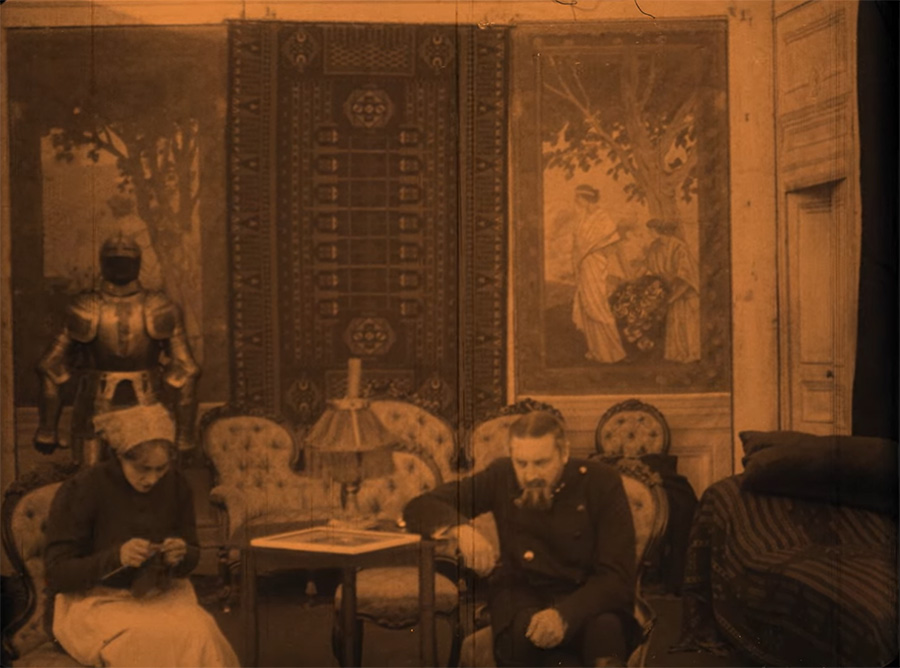
The result is long sequences of what is clearly spoken-from-the-page dialogue that cannot be followed by viewers even if they do speak Swedish. There is a misconception that silent films were one line of dialogue = one title card but that many cards results in a sluggish movie indeed and most silent films aimed to reduce title cards to the bare minimum. Hofman-Uddgren understood this and kept the title cards to spare but did not cut down on the dialogue being verbally delivered, and did not compensate with other visual information. For example, when Captain August is looking at a photo and mulling over whether Bertha is his, a closeup to that photo would have brought the audience further into the scene.
The choppiness of the narrative reflected a style of filmmaking that was on its last legs at the time. The earliest motion pictures were just minutes or even seconds long, so filmmakers became adept at putting “Good Parts” versions of books and plays on the screen. So, a director making Romeo and Juliet might show the balcony scene, the duel, and then jump to the climactic suicide without any bridging scenes. Full narratives were done (see the 1899 Méliès Cinderella, for example) but they were optional.
By 1912, the feature-length era was already established in many industries and part of its appeal was the idea of a smooth and complete narrative, an all-in-one-showing cinema experience. Multi-part story releases soon became the realm of cliffhanger serials, with more serious fare presenting the entire story in one sitting, no gaps.
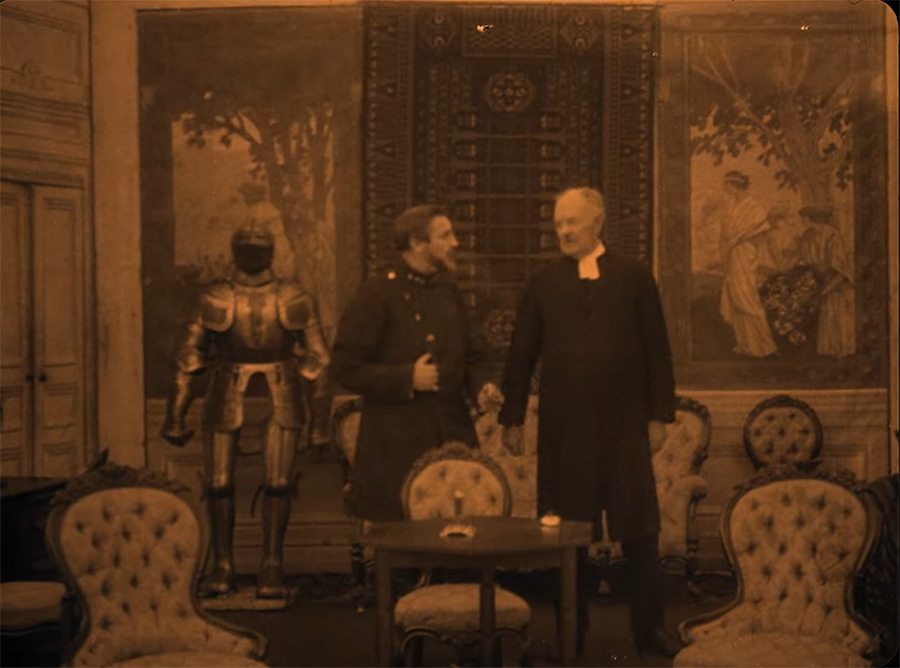
So, Hofman-Uddgren’s approach was not wrong but it was very near its expiration date. She does make some effort to open up the play, showing Captain August ride around his estate in a frenzy, showcasing the local landscape. She was also limited by a rather slim budget, filming everything on outdoor sets during the dead of Swedish winter.
It’s a shame there wasn’t more of an attempt to be cinematic with medium shots and closeups because the acting in The Father is excellent across the board. The cast was taken from the Swedish stage, unsurprisingly, and they hit just the right level of drama for the motion picture screen. Falck and Alexandersson are particularly good during the climactic madness scene, a sequence that could easily have descended into wild arm flailing but is played with restraint (pun intended, Falck is straitjacketed) and humanity. I imagine they were quite something to see in the theater.

All in all, The Father reflects an international period of transition as the stage and the screen were further separating and filmmakers were starting to explore longer runtimes. (The Father runs 37 minutes in its surviving version.) While it is not entirely successful, it’s an interesting picture to see for its historical value.
Where can I see it?
Watch courtesy of the SF Film YouTube channel. There are no English subtitles but those won’t do you much good anyway. You’re better off reading the play and then watching the film, which was likely how Hofman-Uddgren intended it anyway.
☙❦❧
Like what you’re reading? Please consider sponsoring me on Patreon. All patrons will get early previews of upcoming features, exclusive polls and other goodies.
Disclosure: Some links included in this post may be affiliate links to products sold by Amazon and as an Amazon Associate I earn from qualifying purchases.
 Movies Silently
I enjoyed reading your ‘history of the narrative’ and hope to see this film when my holiday company departs this weekend – after reading the play, as suggested. The imagery of winning at all costs certainly plays grim!
It’s definitely an interesting one!