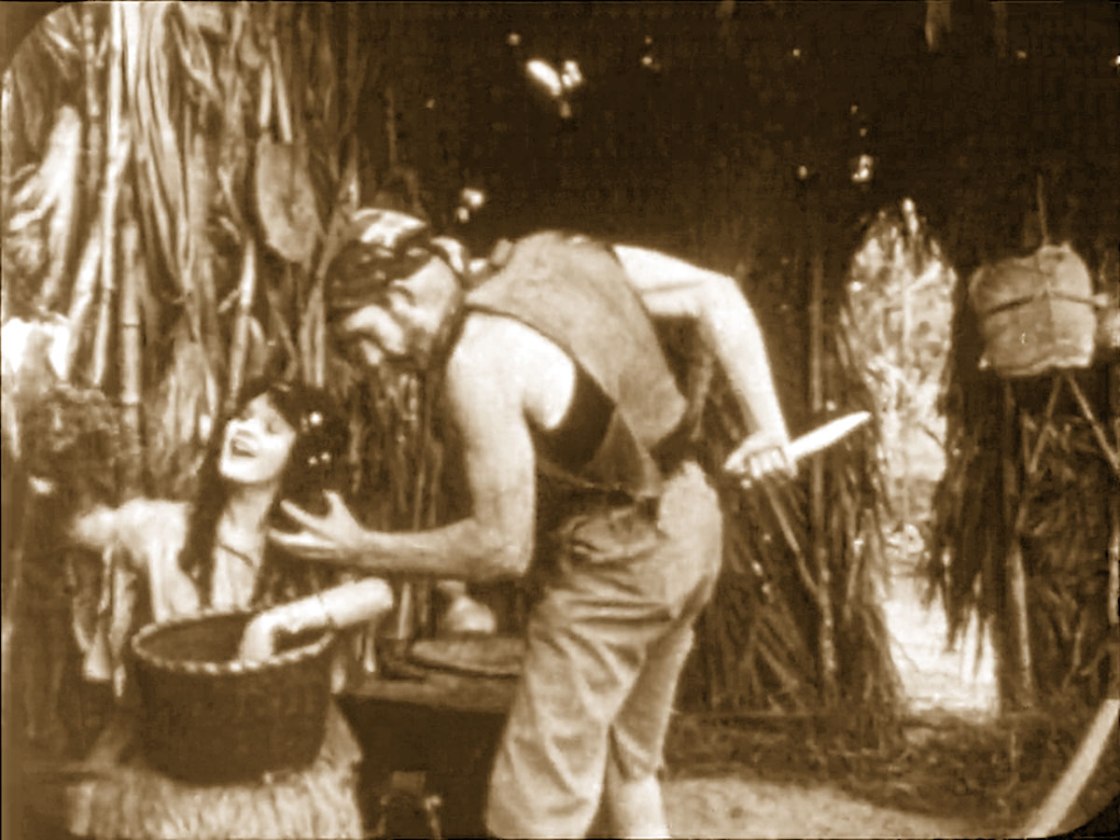
Wallace Reid plays a fortune-hunting schoolteacher who thinks he has hit the jackpot when he meets a naive heiress. Her aunt has other ideas and he ends up taking a post in the Philippines, where his schemes lead to murder.
Home Media Availability: Stream or download from Harpodeon
The Old-School Beachcomber
1914 was the last gasp of dramatic short films in the American film industry. Feature-length dramas had kicked off in style in 1912– the United States was late to the long movie game– had expanded their reach in 1913 and were everywhere in 1914. Still, there’s something to be said for the power of a punchy dramatic vignette.
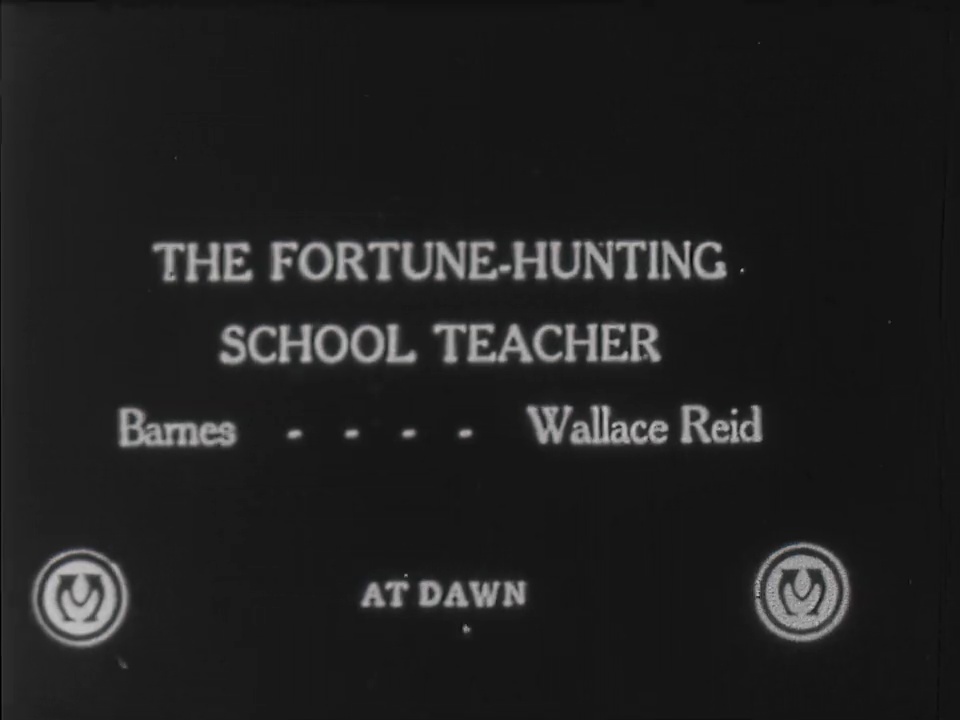
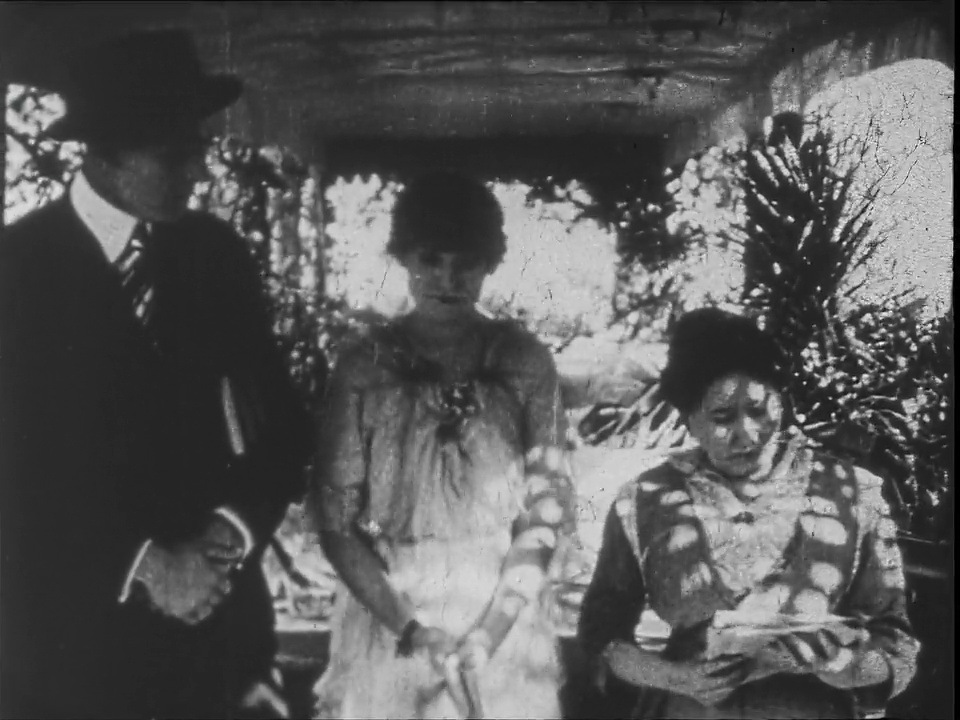
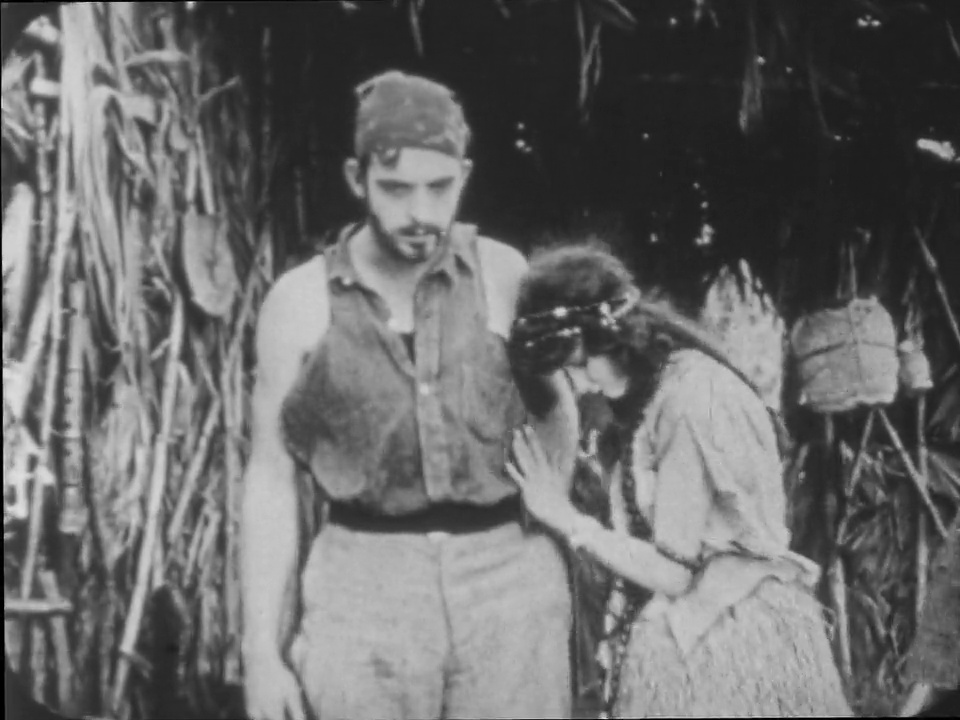
At Dawn, based on a short story by military-pulp author Frederick Moore, was just a single reel long and tells a nasty tale of greed, racism and murder. With such a short runtime, the film gets right down to business presenting its main character: Barnes (Wallace Reid) is a fortune-hunting schoolteacher (we know this because he is introduced with the title card “the fortune-hunting schoolteacher) who has managed to win the heart of an heiress (Loretta Blake). She has no money of her own but her aunt is both loaded and elderly.
The aunt sees through Barnes immediately and makes her niece write a letter severing the relationship, which she tearfully does. Barnes had just received an offer to teach in a place called “Balabang,” in the Philippines. (There’s a Balabag and an Alabang but I couldn’t find a Balabang. Perhaps a typo?) Barnes laughs at the idea, that is, until he receives his Dear John letter. His plans foiled and faced with the prospect of actually teaching school for a living, he sails at once.
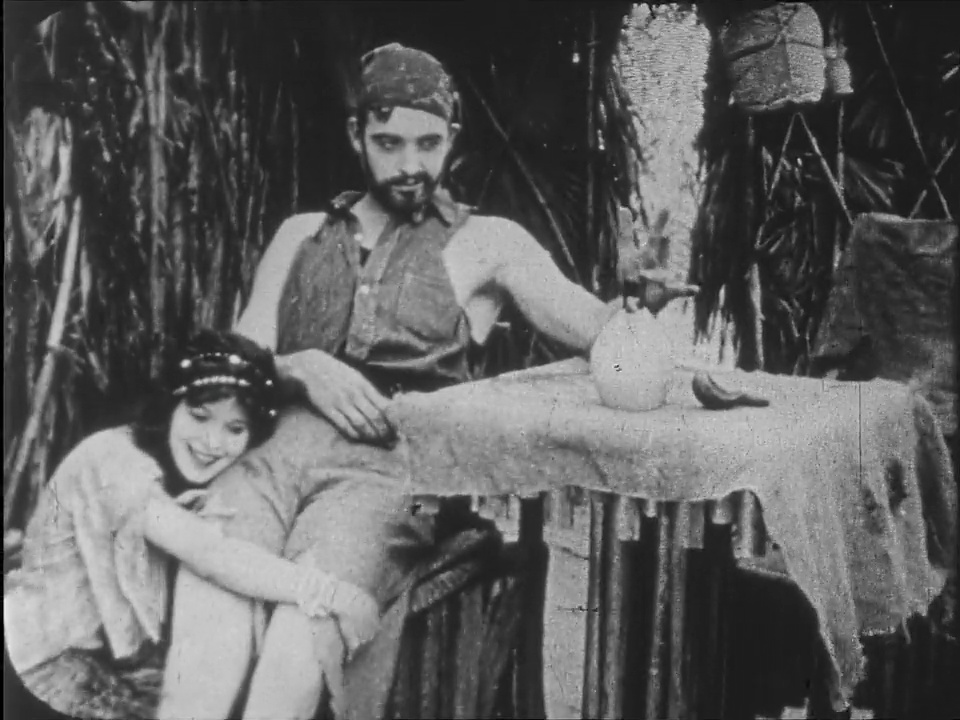
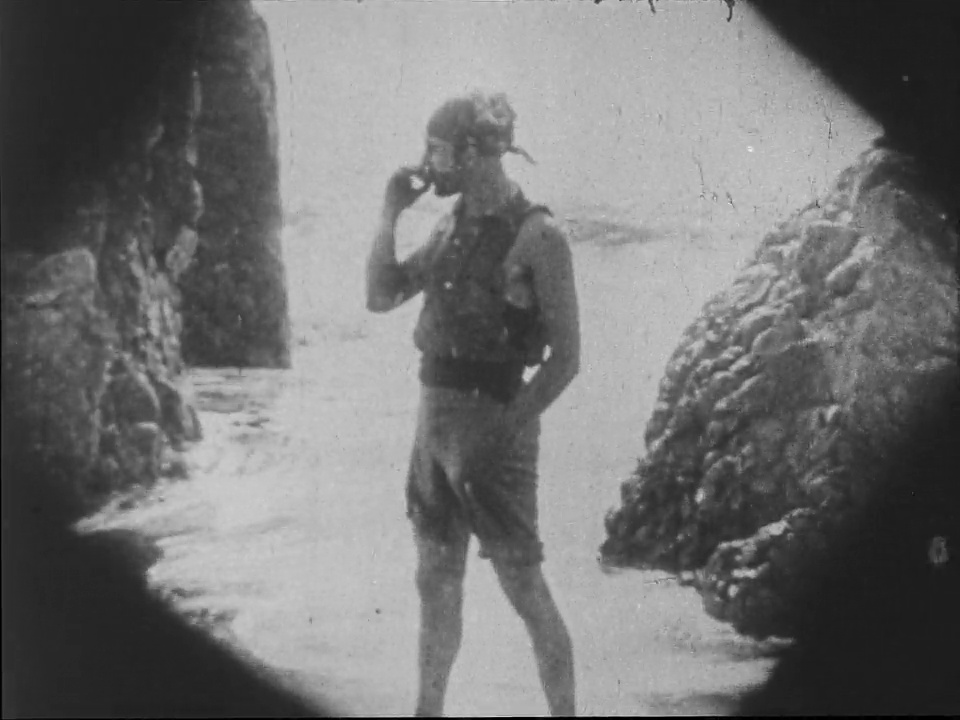
Any idea of teaching in the Philippines is forgotten and the titles inform us that Barnes has become a beachcomber who has taken a local wife (Billie West). “Beachcomber” is now a quaint term, suitable for naming a tourist-friendly grill on the ocean. At the time this film was made, it meant a North American or European person loafing, drinking, or worse in tropical climates. It was a popular cinematic way to convey that a character had hit bottom and it often included them at odds with or even abusing the local population. (You can see examples of this in The Idol Dancer and Brute Island.)
Barnes is already tired of his wife, who clings to him as he fantasizes about the heiress. Meanwhile, the aunt dies and leaves all of her money to her niece, who immediately sends word to Barnes that she is coming to the Philippines to get him. Barnes needs to get rid of his wife and fast but she loves him and won’t go. He finds a sharp knife and approaches her…
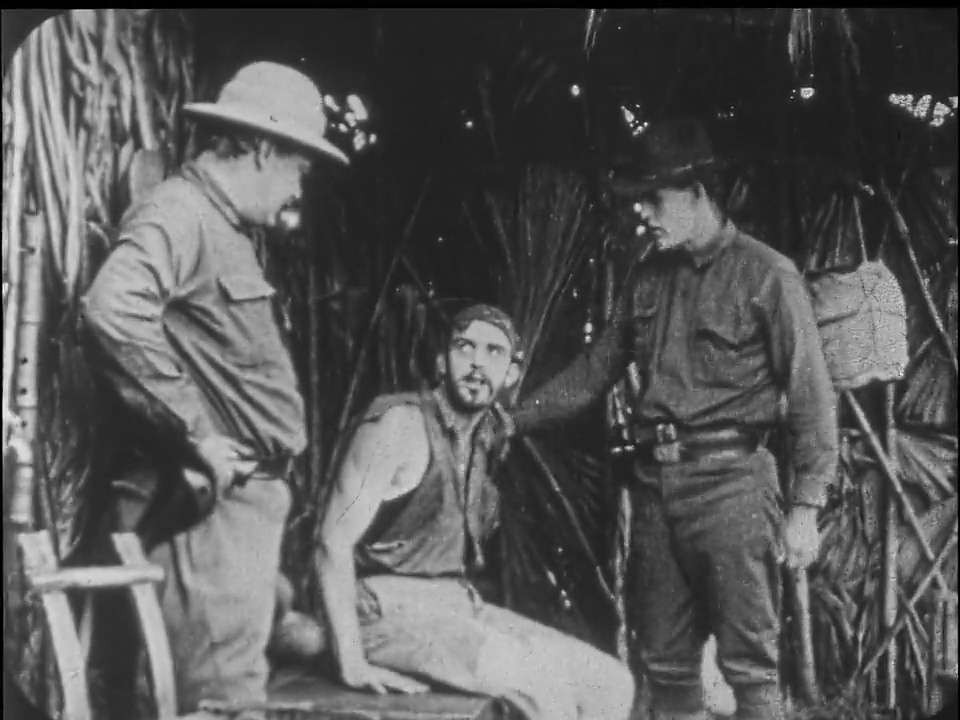
Later, a lieutenant (George Siegmann) and sergeant (William Lowery) stop by Barnes’s hut to ask for directions. He’s squirrelier than a nut factory and refuses to get off a large trunk. Now, one of the hard and fast rules of life is that if someone is sitting on top of a corpse-hiding-sized trunk and won’t budge, it’s best to check for a body. They do and, while nothing is shown on camera, the poor woman is clearly dead inside.
The rest of the scene is a bit hard to follow but the synopsis: “[Barnes] explains the circumstances and says: “What’s another Filipino more or less?” He implies to the lieutenant that when he has been so long there as he has he’ll understand better, and says that his United States girl was coming at dawn to marry him, so he had to get rid of his native girl.”
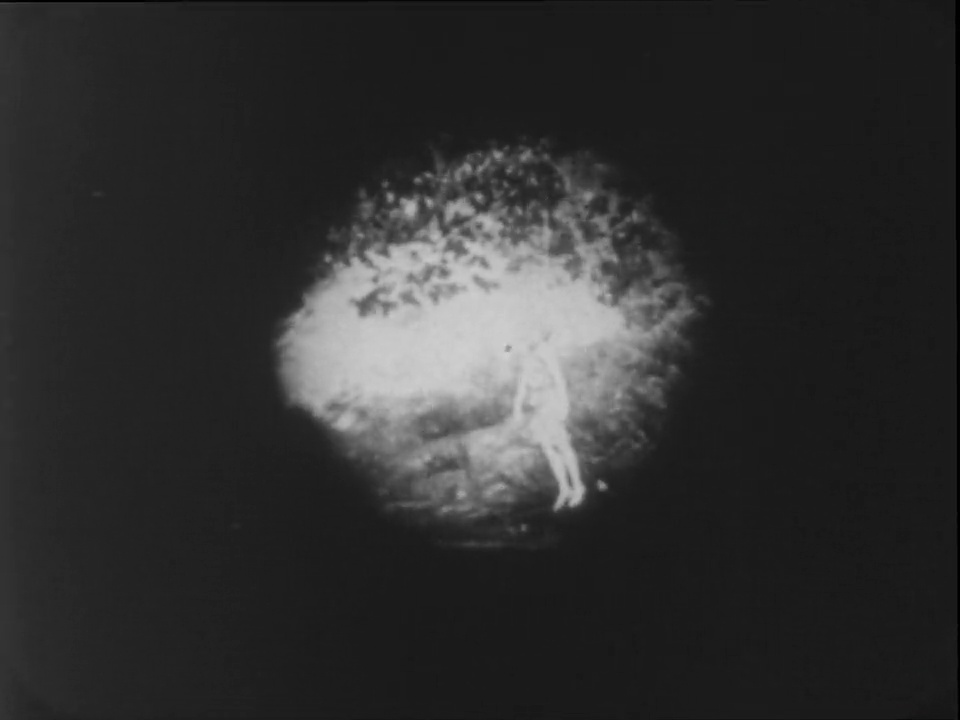
The lieutenant does not understand, in fact, but he pretends to and signals for the sergeant to see to the matter. The sergeant disappears with Barnes and then returns alone. The heiress shows up and asks the soldiers where she can find Barnes. The lieutenant replies that he died suddenly, its the climate, and there is a quick cut to Barnes hanged from a tree.
The soldiers see the heiress off and allow her to believe that Barnes had been waiting for her before his unfortunate death. Presumably, she will fall for another fortune hunter and step on a few rakes for good measure during the long boat ride home.

So… that was intense. Barnes may seem to be casting against type for Reid– in fact, IMDB lists Reid as playing the avenging lieutenant and the often villainous George Siegmann is credited as the killer! An example of modern people assuming that the men were typecast and not looking any further? Well, not exactly. I dug up some publicity materials from Mutual and it lists Reid and Siegman as hero and villain, not the reverse. (This was a Majestic release, which was a Mutual affiliate.)
Now, obviously, I think the casting in the film as it was shot is more interesting and makes more sense. I don’t see teenage Loretta Blake crossing the ocean for the love of George Siegmann but Wallace Reid… yeah, much more believable that not one but two beauties would be smitten. He even looks good in his beachcomber togs! Also, Siegmann tended to swallow scenery whole (most infamously in The Birth of a Nation) but he brings a subtle world weariness to his role that I don’t think Reid, then just twenty-three, could have accomplished.
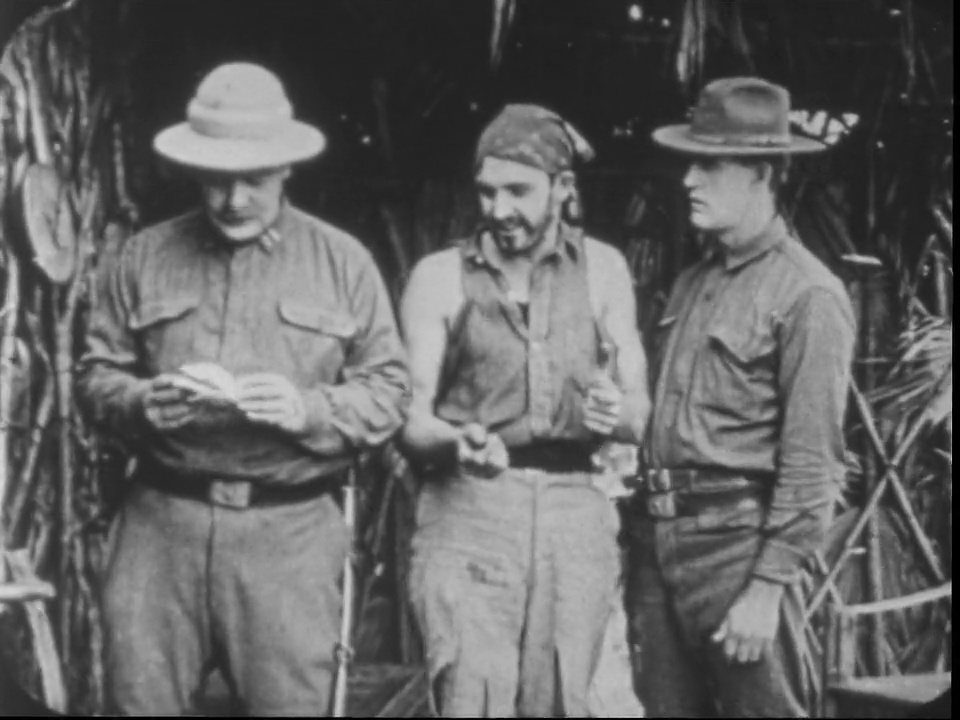
My theory is that the film was written with the idea of Reid as the lieutenant and Siegmann as the killer but the actors decided to swap for kicks at the last minute. This was a lighting fast production, just eight days of shooting and a release a month later. Switching roles would have been far more complicated with a film made under the studio system or with a larger budget but this was the last gasp of the freewheeling dramatic short days and the pre-written publicity material was already distributed. There simply wasn’t that much money at risk. (The entire film’s budget was about $1,300, which is around $40,000 today. Cheap!)
How big of a leap was this for its star? Wallace Reid had found early success at Vitagraph (you can spot him in both trousers and a dress in Diamond Cut Diamond) and had been studio-hopping before being signed by Lasky (early Paramount). It was his Paramount success that catapulted Reid to stardom, especially his turn as the jilted and stabby Don Jose in the 1915 Cecil B. DeMille-directed version of Carmen. Reid’s name would soon become associated with breezy romances, adventures, and dramas, though he still kept his hand in moral ambiguity.
Another change in the action vs the publicity material was that the studio synopsis describes the schoolteacher poisoning his poor lover rather than stabbing her, which was clearly hinted at onscreen. Perhaps it wasn’t seen as dramatic enough or not as easy to immediately diagnose as murder.
Other changes could be put down to slight rewording of title cards, possibly for re-release: Barnes is renamed Sykes, Billie West is described as his wife in the title cards but original synopses states that she “cohabits” with him (translation: not married).
Response to the film seems to have been somewhat cool. Majestic’s own trade magazine publicity describes it as “fairly well presented.” Don’t butter it up too much, guys! Meanwhile, the Bioscope calls it “a gloomy and somewhat morbid tale” and “Candidly, we are hardly favourably impressed with the film, which seems greatly on the depressing side.”
The main issues, in my opinion, were not so much the stars or the story as Donald Crisp’s direction. The film’s climax, which is pretty straightforward, was shot in an incredibly confusing manner and it was unclear who was doing what and why. There’s a lot of shuffling around, which might be true to real life but it doesn’t work when the entire film is 1,000 feet and we have a whole execution to get through.
I am inclined to like this picture more than the Biograph viewer did, however. While it has some rough edges, it’s a dramatic and striking story that works extremely well within its runtime, a quick hit of the macabre and we’re off to the melancholy finale. It’s a rare portrayal of Filipino characters in the American silent era and, while it relies heavily on stereotypes without any actual actors from the Philippines, the immediate rebuke of Barnes’s racist defense for murder is interesting in the context of the time.
While anti-Filipino violence in the United States came to a head in the 1920s, anti-Asian sentiment generally was high and anti-miscegenation laws were widely in force. Further, the long tail of the Philippine-American War had only been over for a year when At Dawn was filmed and it had been only thirteen years since the Balangiga Incident, during which Filipino forces defeated a US infantry unit in a surprise attack, itself revenge for the American slaughter in Samar.

However, the story can also be framed as United States military propaganda as the image of the benevolent lieutenant and the summary execution of an American killer would have fulfilled that brief. (The Spanish-American War was one of the first conflicts to be propelled forward by cinematic propaganda and the American side always portrayed itself as a force of freedom.)
So, as you can probably tell, the political and historical context of this film is as juicy as anything that makes it to the screen. It’s a fulfilling short to mull over. Not perfect by any means but a fascinating time capsule.
Where can I see it?
Stream or download from Harpodeon.
☙❦❧
Like what you’re reading? Please consider sponsoring me on Patreon. All patrons will get early previews of upcoming features, exclusive polls and other goodies.
Disclosure: Some links included in this post may be affiliate links to products sold by Amazon and as an Amazon Associate I earn from qualifying purchases.
 Movies Silently