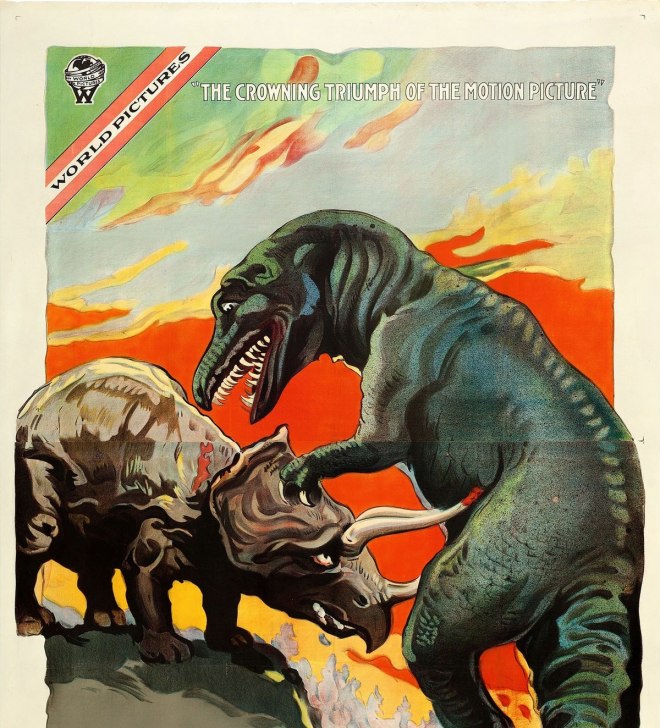
An explorer discovers an old cabin and its secret: a way to gaze back in time and see the world as it existed when dinosaurs roamed the earth. Cutting edge stop motion animation brings the ancient world to life.
Home Media Availability: Released on DVD and Bluray by Flicker Alley
Schrödinger’s Dinosaurs
Animator and special effects expert Willis O’Brien is famous for populating The Lost World with dinosaurs and making King Kong climb the Empire State Building but his film career had begun a decade earlier when his independent dinosaur picture caught the attention of the Edison company, then pursuing a series of Conquest programming packages that included education with entertainment.
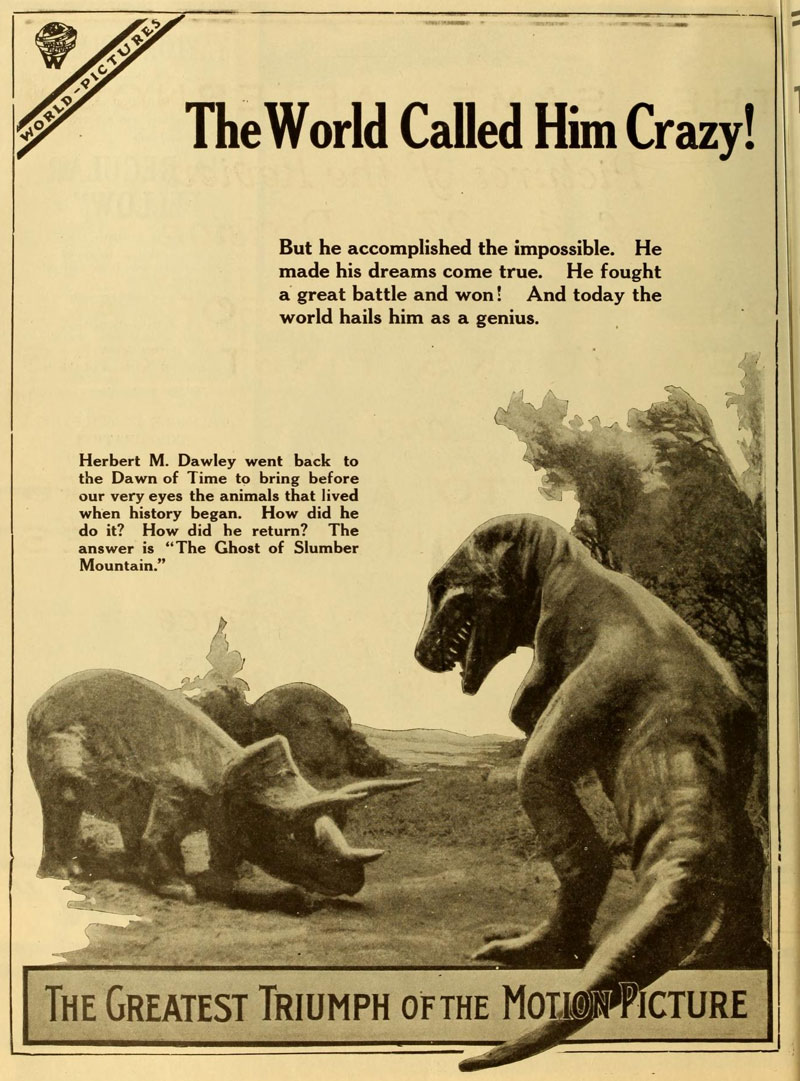
O’Brien made several pictures on that banner, each showing a greater grasp of technique and animation than the last, (including the 1917 caveman and dinosaur comedy R.F.D. 10,000 B.C.). Despite the success of the Conquest programs, Thomas Edison pulled the plug on his own film company after it became clear he could no longer rule the industry via patents. O’Brien’s next project was a joint effort with sculptor Herbert M. Dawley, who was also interested in bringing dinosaurs to life and entertaining while educating.
The Ghost of Slumber Mountain is sometimes described as a lost or mostly lost film. Originally conceived as a three-reel picture (likely 35 to 40-minutes long) it was severely cut back and a one-reel version was put into general circulation. I will dig deeper into the matter during the review proper but descriptions of the film after its longer initial release do not mention any plot elements or characters that are missing from the current restored version.
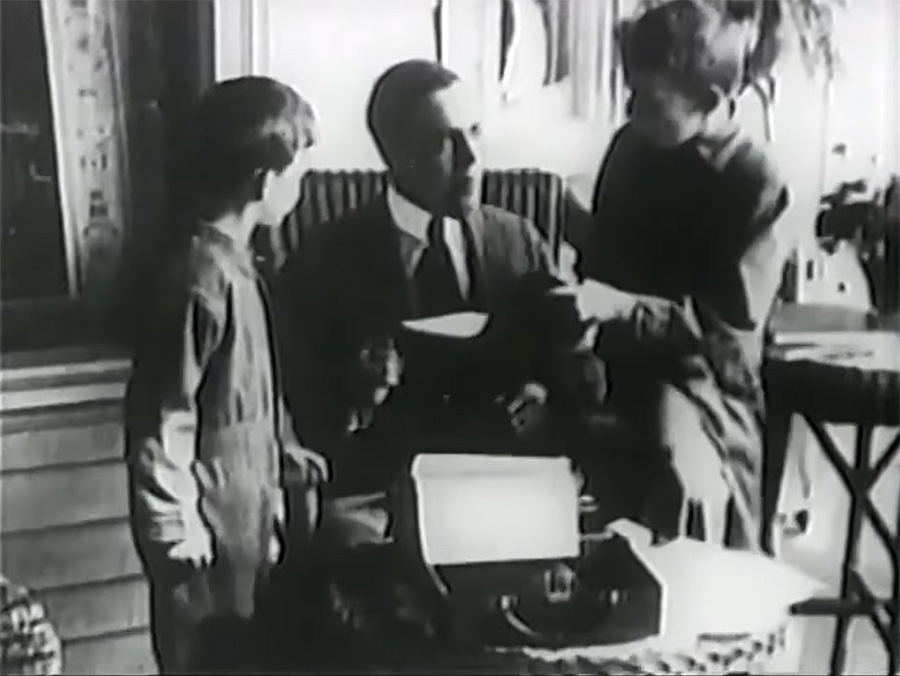
The picture opens with an adventurer-artist Jack Holmes (Dawley) entertaining his young nephews with tales of his exploits in the woods with his dog, Soxie. His friend tells him about a mad hermit (O’Brien), who used to stare at the landscape through a strange contraption.
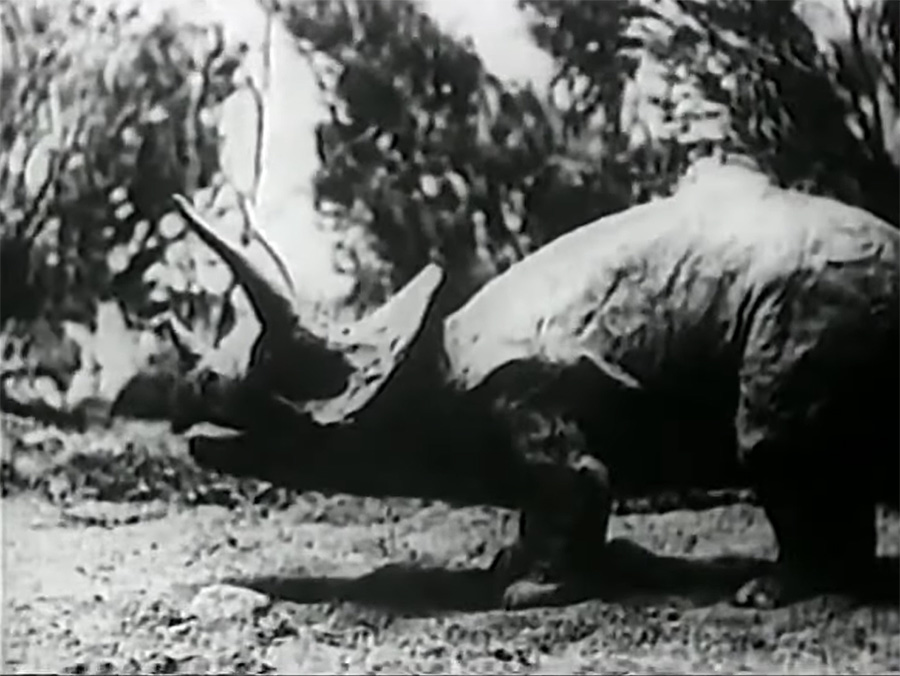
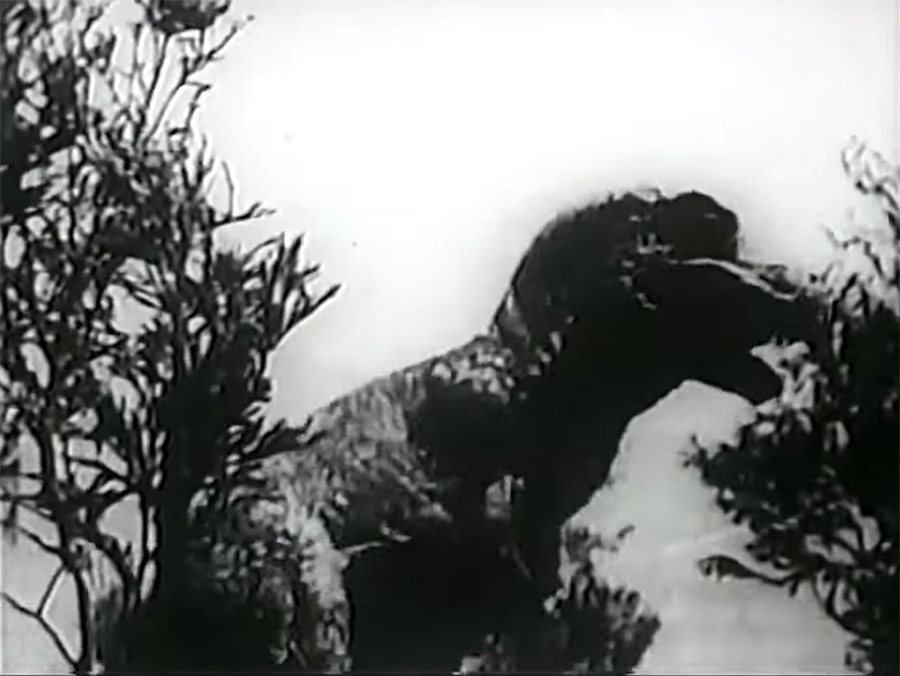
Holmes falls asleep and visits the cabin, where he is met with the ghost of the hermit and looks through the contraption. It turns out that the device shows him the world as it was millions of years ago. A brontosaurus! A triceratops battle with a tyrannosaurus rex eating the winner! But then the T-rex appears in the real world and pursues Holmes. What a strange dream!
I have a different set of rules when I review an incomplete picture as complaining about a nonsensical plot or jerky narrative isn’t fair. However, the major cuts to the film were performed before its wide release; with modern restorations, what we are seeing is very close to what audiences of 1919 (the year it was rolled out nationwide) would have seen.
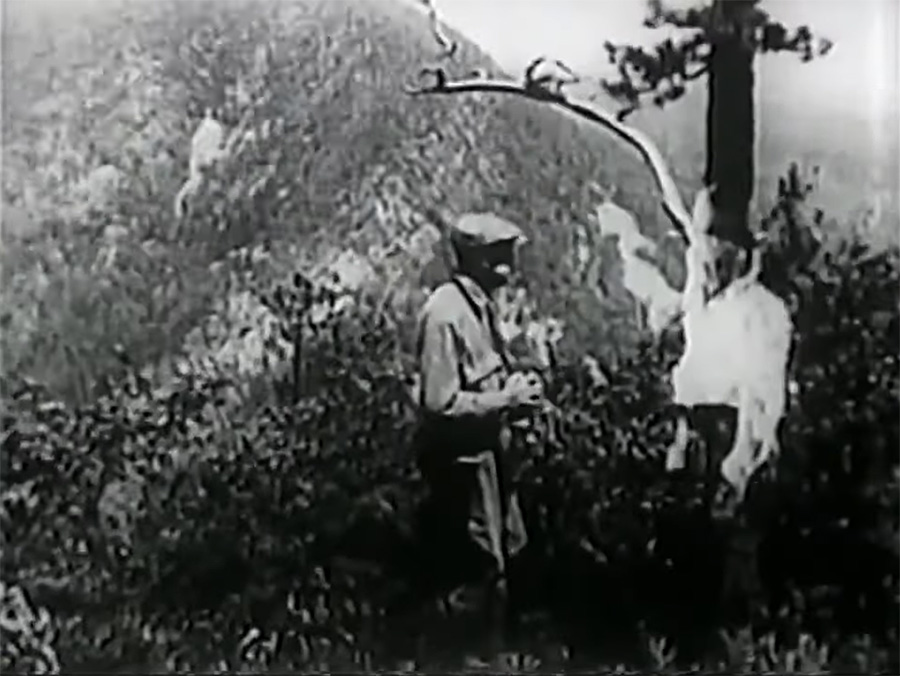
As it stands, the narrative is a mess. The frame story seems to serve no purpose, especially since much of the plot takes place within flashbacks and dreams. We have Holmes telling the story of his exploits, and then we have a dream within the story and it seems like a bit too much narrative lifting just to see some dinos. Further, if it is indeed true that no further plot elements were added, it seems that the majority of the cut footage was Dawley’s author insert prancing around the forest, lowering the proportion of dinosaurs to overall runtime. That may fly in our modern era of spending two hours on an origin story to see four minutes of Godzilla but the silent era demanded more bang for its buck. Also, I deduct points for this Chekhov’s dog business of prominently presenting Soxie but never showing pup with dino.
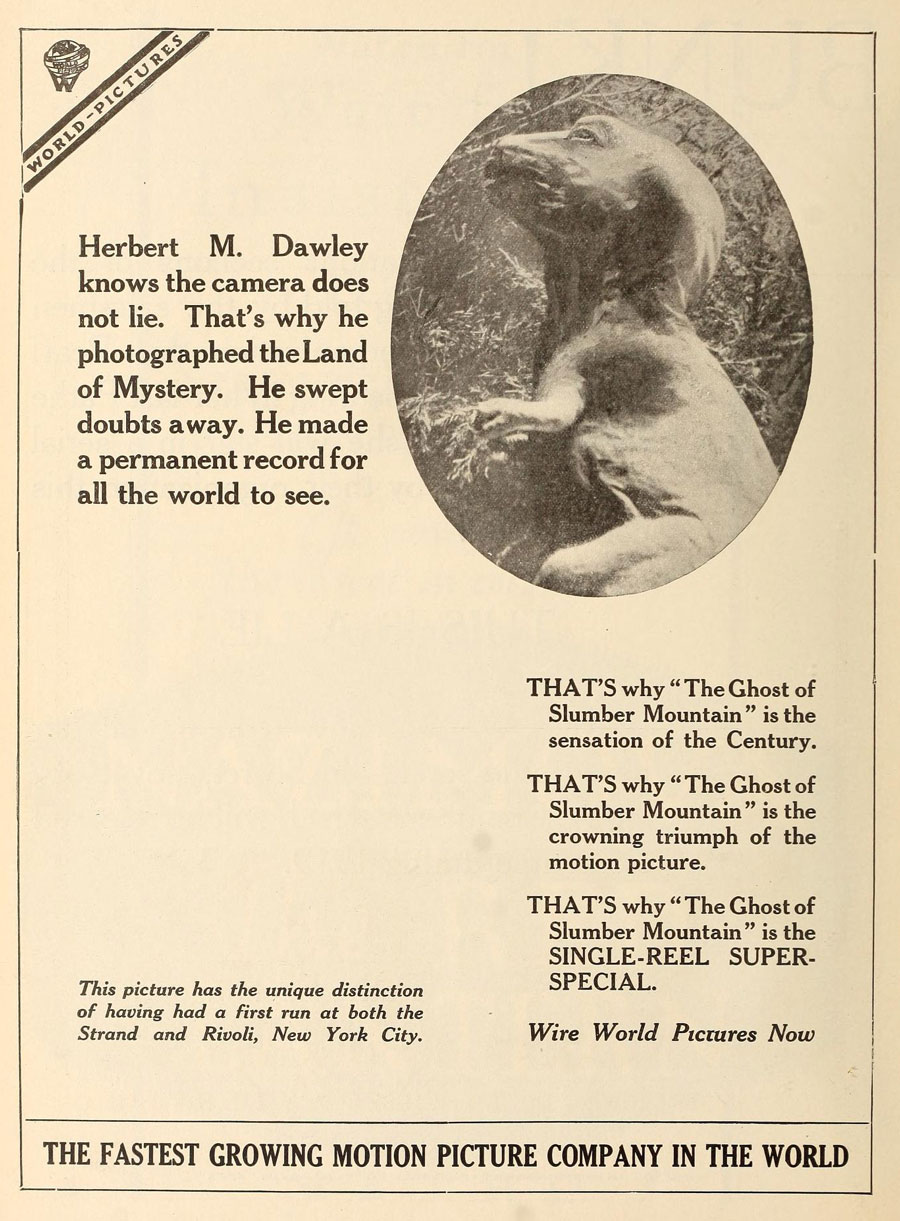
Dawley took full credit for the film, declaring that the story came to him during a bout of insomnia and that he immediately set to work, aiming to educate and entertain using his great skills as a sculptor. These publicity moves did not include any mention of Willis O’Brien. The Ghost of Slumber Mountain, despite being a one-reeler in a film landscape where features were king, became a sensation and Dawley promised that more entertainment would follow.
Some weeks after the film’s release, the Rothacker film company (eventually involved in producing The Lost World) took out prominent ads and published statements that O’Brien was the real genius behind The Ghost of Slumber Mountain, using his Edison company filmography as evidence.
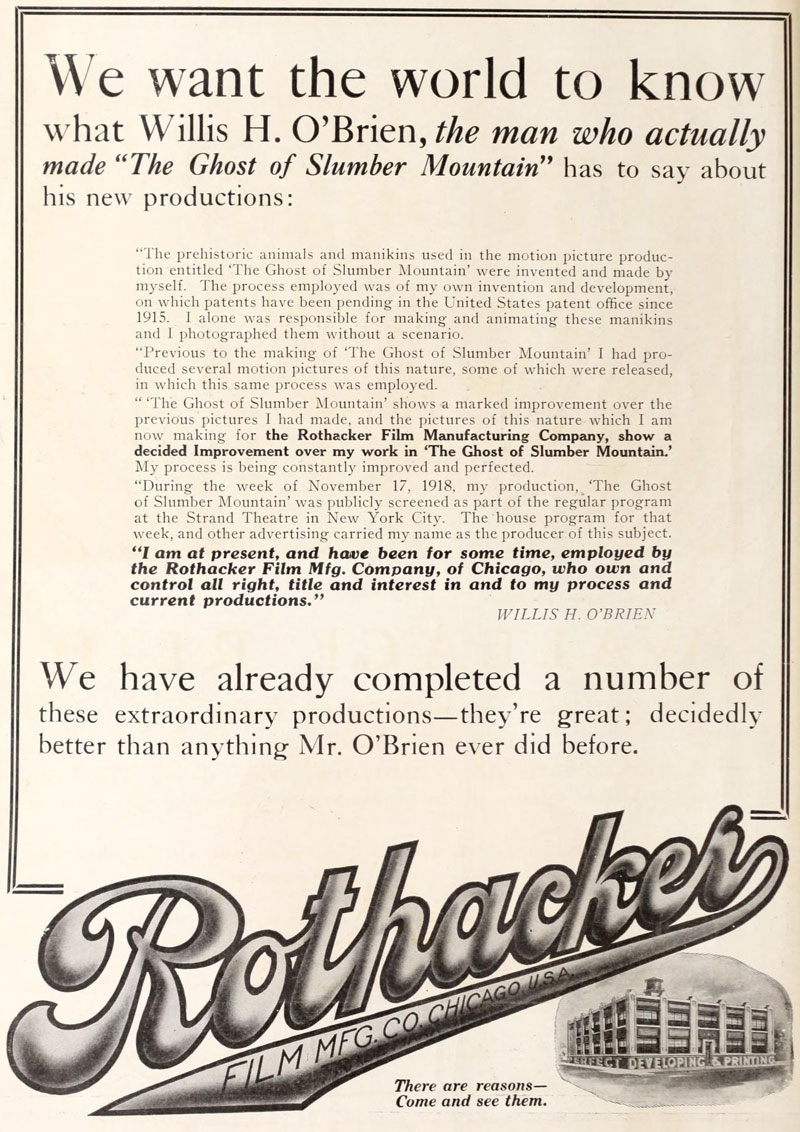
So, we have a good old-fashioned credit dispute at play!
Per the statement of Watterson Rothacker, company president:
“The work on this was all done by Mr. O’Brien. His manikins were used, and the entire production was made by him without any scenario, the only material being a sheet of titles. ‘The Ghost of Slumber Mountain’ was originally about 3,000 feet in length and was cut to present proportions for obvious reasons. When this picture was presented at the Strand, Mr. O’Brien was given full credit for its production, but since then an attempt has been made to create the impression that the work was not done by him, which, of course, is contrary to the facts in the case.”
The Rothacker statements stick closely to the facts and are not particularly dramatic. (This sort of press could get very dramatic indeed!) They lay out the chronology of O’Brien’s career until his collaboration with Dawley and plainly state that O’Brien had created all the stop motion puppets and animated the film himself, while his name was unfairly removed. O’Brien went on to make The Lost World and King Kong, Dawley puttered along in the movies before retiring to community theater. Case closed, right?
In a program piece for the San Francisco Silent Film Festival, Jeff Stafford presents another side to these stories, thanks to access to Dawley’s papers. Dawley’s side is that he was away on militia duty when O’Brien claimed full credit for the film at the Strand theater premiere (which Rothacker plaining acknowledges), signed up with the Rothackers on the sly during production, and generally behaved in a sneaky manner.
The credit claim didn’t stick, as coverage of the film published in the New York Tribune just a day after its Strand premiere gives sole credit to Dawley: “There is an amusing comedy called The Ghost of Slumber Mountain, presented by Herbert M. Dawley. It is something entirely different from what we have seen on the screen. Dawley goes to sleep and dreams he is living in prehistoric times.” (The piece does not mention the Strand by name but does name check Carl Eduoarde, who was the theater’s musical director at the time.)
Coverage in the trade magazine The Moving Picture World published two weeks later credits both men: “A novelty film presented at the Strand Theatre, New York City, during the week of Nov. 17 by Herbert M. Dawley and produced by Willis H. O’Brien will be included among the semi-educational.” (Note that producers were sometimes called directors and directors were sometimes called producers.)
O’Brien had not been successful in cutting out Dawley’s credits but there is ample evidence that Dawley successfully cut out O’Brien. Signing on with the Rothackers during production was bad form but it seems the relationship between Dawley and O’Brien had deteriorated considerably. The line in the Rothacker statement about the film being “cut to present proportions for obvious reasons” points to Dawley perhaps wanting to claim additional screentime as the Jack Holmes character while O’Brien’s main contribution was the ghostly hermit and the dinosaurs, which are the only interesting things in the film.
Legal headaches followed as Dawley claimed rights to the design of the dinosaur puppets O’Brien and Rothacker wished to continue using. O’Brien objectively was making successful dinosaur pictures before he met Dawley but Dawley was also experimenting with dinosaur animation before he met O’Brien. I have seen O’Brien’s work released through the Conquest programs and The Ghost of Slumber Mountain is considerably more sophisticated, which gives a point to Dawley, but a year had passed between Slumber Mountain and R.F.D. 10,000 B.C., which is an eternity in film development.
I should probably not be a judge of patent cases because when these squabbles get granular enough, I tend to throw up my hands and shout “Okay, everyone invented it, happy now?” and that’s not very good legal practice. It is, however, perfectly acceptable in matters of film patents when I am a mere reviewer looking back over a century later. These things are never as cut and dried as they seem from the outside and the thought of untangling the matter after so much time has passed is exhausting. I think Dawley, a skilled sculptor whose dinosaur work was quite striking, likely did contribute to the new, more sophisticated dinosaur animation we see in The Ghost of Slumber Mountain but vindictively scrubbing O’Brien’s credit was unprofessional in the extreme. Not even Dawley’s staunchest supporters claim O’Brien contributed nothing.
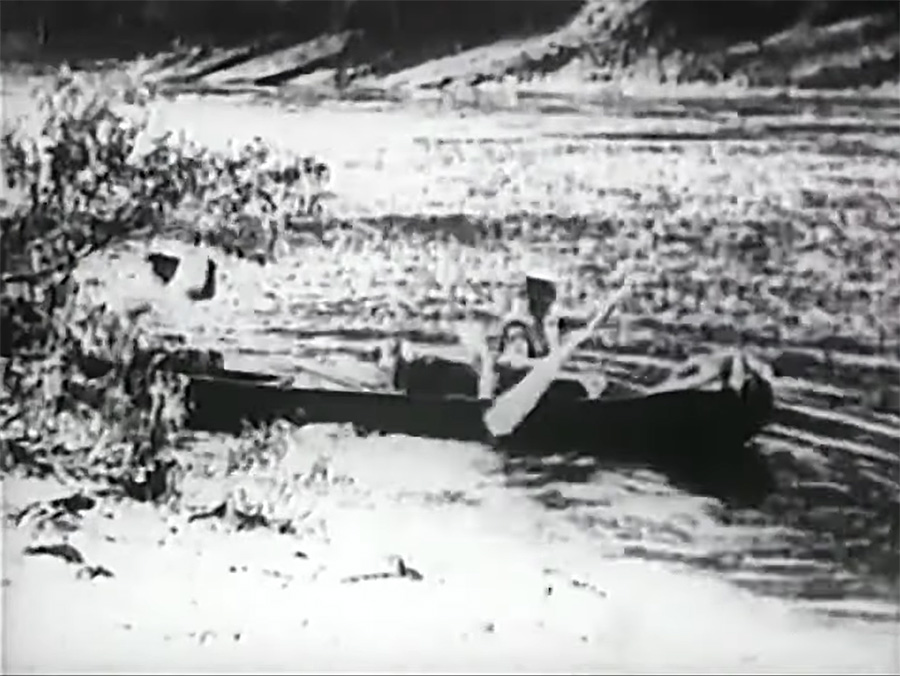
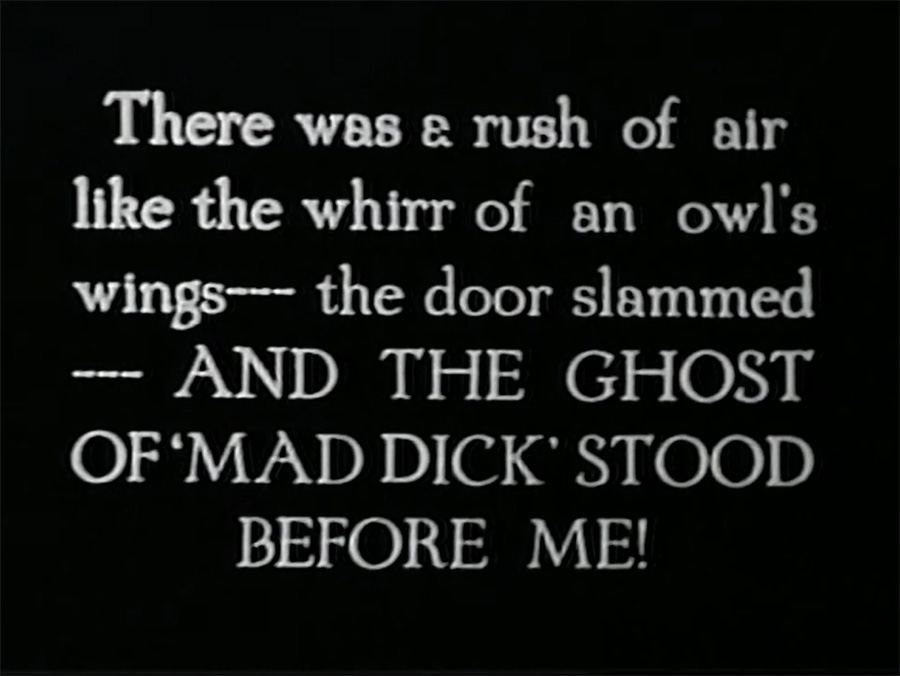
As for the film itself, the unorthodox structure is not a dealbreaker for me but the narrative relies far too much on title cards to paper over the action. (I cannot imagine how much JACK HOLMES HIKES AND ROWS footage was cut to keep things moving.) Further, numerous opportunities to enhance the atmosphere were ignored, with the ghostly hermit just casually appearing with no particular buildup or attempt to build the mood. I wonder if this was part of a decision to minimize O’Brien’s presence in the film but, as they say, it’s the titular role!
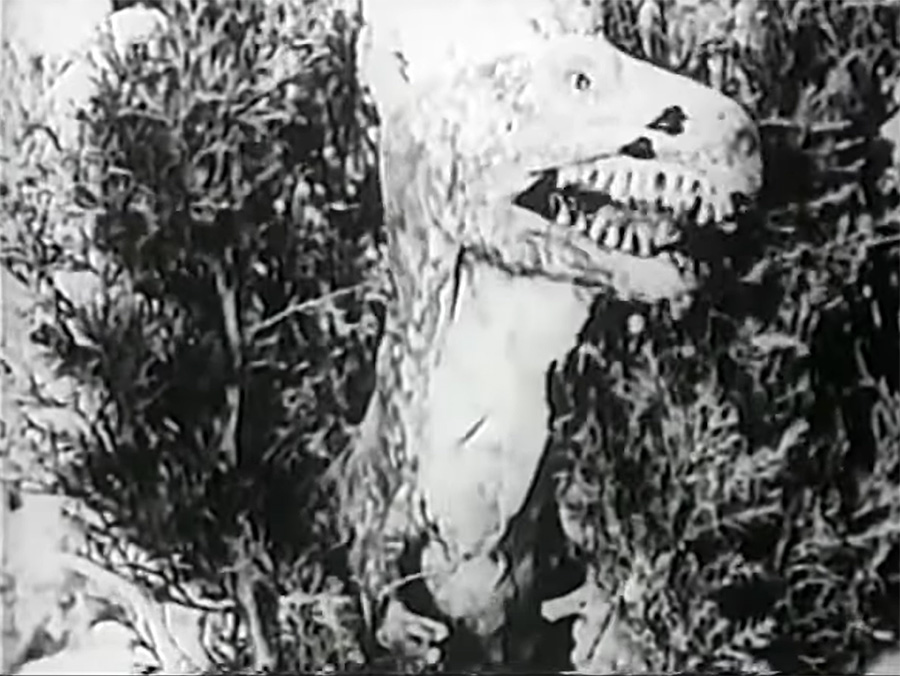
The dinosaurs are the stars, with the animation showing personality and a bit of humor before the T-rex shows up and things turn nasty. The dinosaur invading the modern dream world is also effective and more scenes like this would have made The Ghost of Slumber Mountain a masterpiece.
As it stands, it is a strange combination of amateur production with tremendous special effects. It’s as if a student film suddenly cut to a bespoke special effects sequences produced by Industrial Light and Magic. Come for the dinos, stay for the dinos, I will be bold enough to say that the missing two reels probably didn’t contain much that we would miss.
Where can I see it?
Released on DVD and Bluray by Flicker Alley as an extra on their discs of The Lost World.
☙❦❧
Like what you’re reading? Please consider sponsoring me on Patreon. All patrons will get early previews of upcoming features, exclusive polls and other goodies.
Disclosure: Some links included in this post may be affiliate links to products sold by Amazon and as an Amazon Associate I earn from qualifying purchases.
 Movies Silently