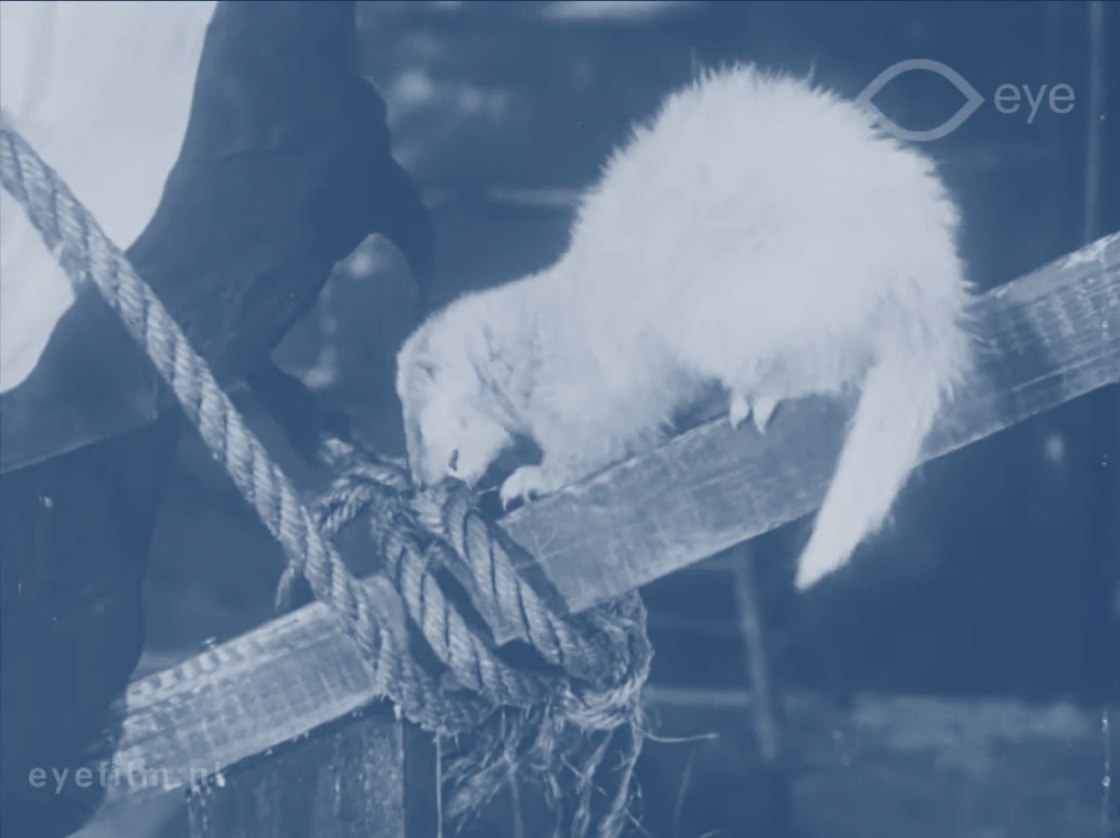
When a policeman tries to break up a counterfeiting ring, he is kidnapped and locked in a cellar. All hope seems to be lost but help arrives in an unexpected way…
Home Media Availability: Stream courtesy of EYE.
Step Aside, Lassie
Animal heroes, at least domesticated animal heroes, had been a staple in cinema from an early date. Rescued by Rover (1905) famously had to be remade when the original print was duplicated to death. The Bride of the Haunted Castle (1910) hinged on a brave cat, most American studios had a resident trained dog that engaged in all manner of heroics. No cowboy was complete without his energetic horse.
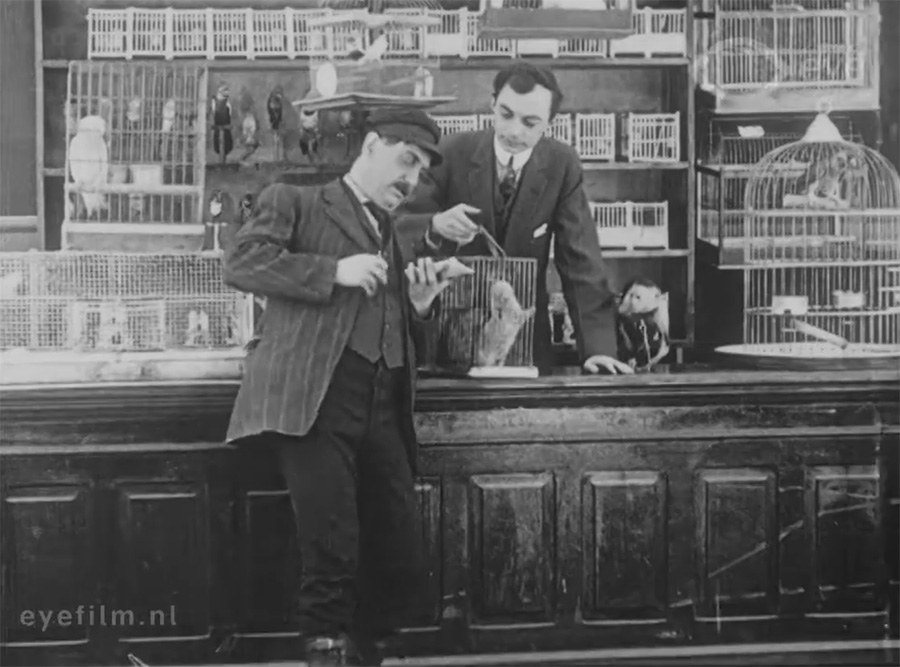
As for other animals, well, their cinematic moments in the sun have been few and far between. Meanwhile, the Selig Polyscope company was building its reputation with its menagerie of animal performers, promising to bring the wild to the screen. They also produced more traditional heroic fare with titles like Arabia the Equine Detective. (I urge caution when researching this company, however. They would kill animals onscreen in some productions, though not this one.)
The Ferrets gives away the identity of its heroes in the title but it opens with Detective Tait (Carl Winterhoff) and Hope Desmond (Lillian Logan) trying to get her father’s (Joseph Ransome) blessing for their engagement. He happens to be the chief of police and Tait’s boss and, while he likes Tait, he doesn’t like him well enough to be son-in-law material and he’ll have to do something really impressive to win Hope’s hand. Like, say, smashing that nasty ring of counterfeiters that has been causing so much trouble in the city.
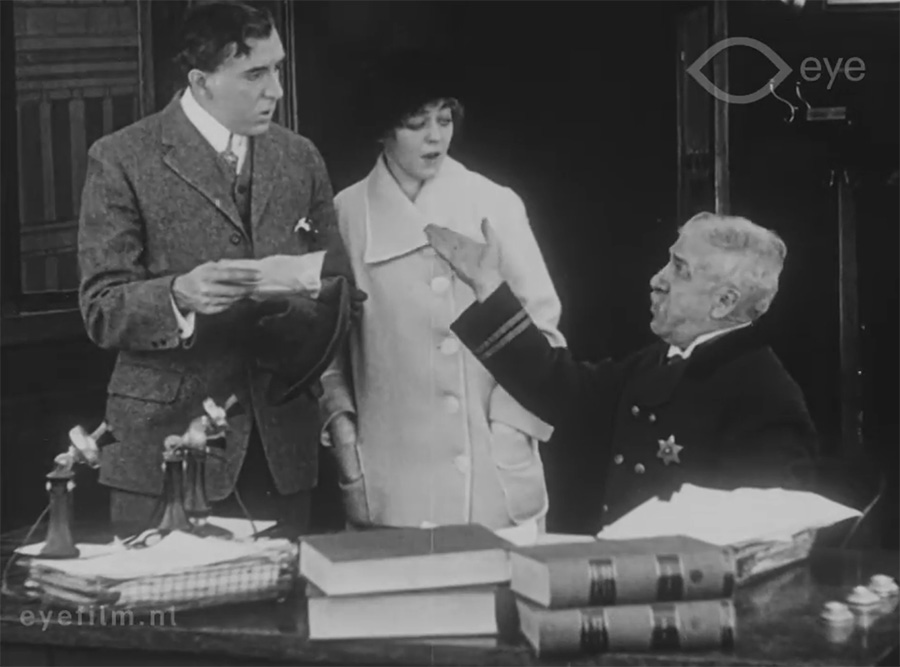
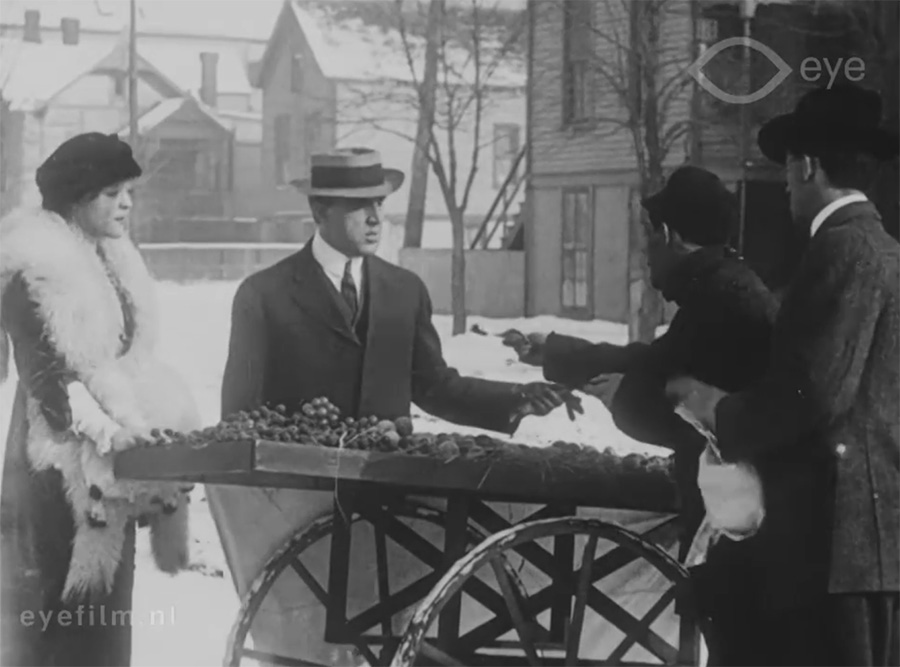
Tait and Hope leave the police station and stop to buy fruit. Another customer asks if Tait can change a large bill and when he does, he sees that the note is funny money. Tait says his farewells to Hope and tails the counterfeiter to a rented house but the gang overpowers him, drags him to the cellar and leaves him there bound and gagged.
Meanwhile, the owner of the counterfeiters’ hideout has hired an exterminator to do something about the house’s rat problem and the exterminator arrives with his ferrets and releases them into the walls. He heads to the cellar, sees Tait’s predicament and releases him but the counterfeiters overhear this and soon the exterminator is tied up along with the hapless policeman.
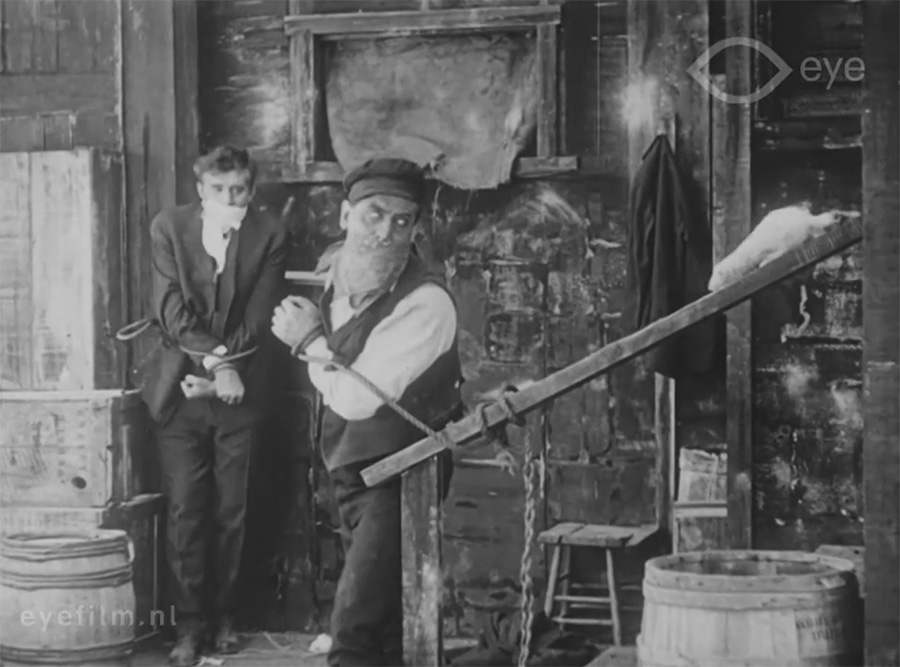
However, one of the ferrets crawls into the cellar, bites through the ropes holding the exterminator. The gang is guarding the only exit, so the Tait and the exterminator tie a note to the ferret and release it out the cellar window. The ferret is immediately discovered by some boys and a passing policeman, who read the note and send the cavalry to the rescue. Will this finally be enough to impress Chief Desmond? See The Ferrets to find out!
This is an extremely goofy picture and the plot falls to pieces almost immediately. The policeman at the end was right next to the hideout and uses a call box to report what has happened. Why didn’t Desmond call in before trying to enter the hideout? Also, it makes sense for the villains to kidnap the detective, nobody knows where he is, but since the exterminator was hired and his office was given the address where he would be working, wouldn’t there be an inquiry if he disappeared? The counterfeiters just seem to be more into locking people in their cellar rather than printing fake bills, which doesn’t seem like a terribly profitable way to engage in a crime spree.
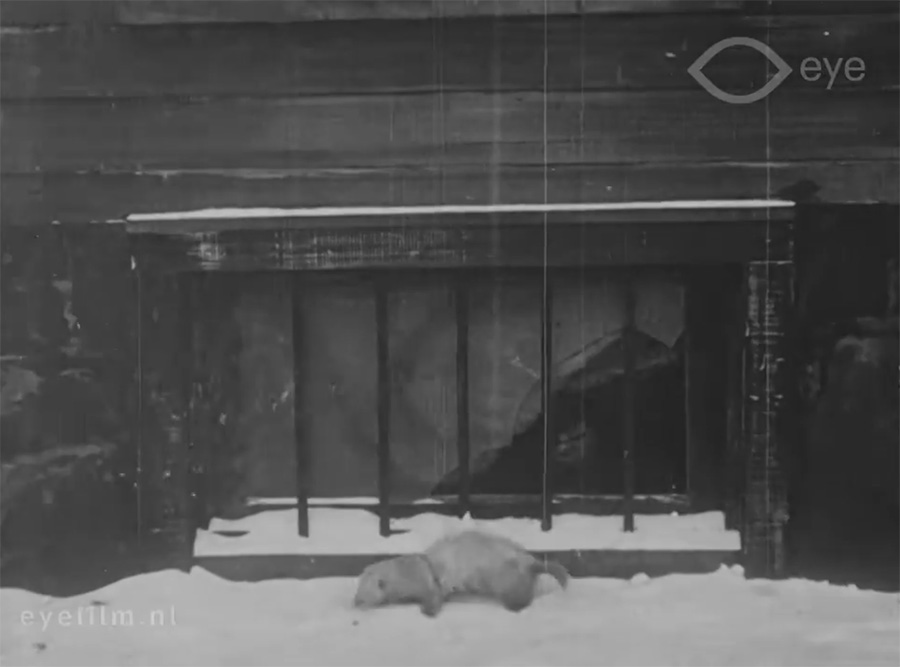
That said, wacky plot aside (or maybe because of the wacky plot), I enjoyed this picture. It’s a bit of a transitional movie as 1913 was the year feature films really took hold in American cinema and viewers were demanding more visual flair and longer stories but studios were still holding onto dramatic shorts that could be cheaply produced. The Ferrets was clearly not expensive, using street scenes and simple sets for most of the action with the ferrets being the main special effects.
(Selig had studios in Edendale, CA and Chicago, IL but I believe the exteriors were shot in Chicago, given the snowy conditions.)
Obviously, ferrets are also the main appeal for modern viewers, especially since they are an onscreen rarity, particularly in heroic roles. While the film is called The Ferrets, it’s really one main ferret who saves the day, a cute white-coated animal. Crawling into small spaces, chewing things up, a ferret has gotta do what a ferret has gotta do.
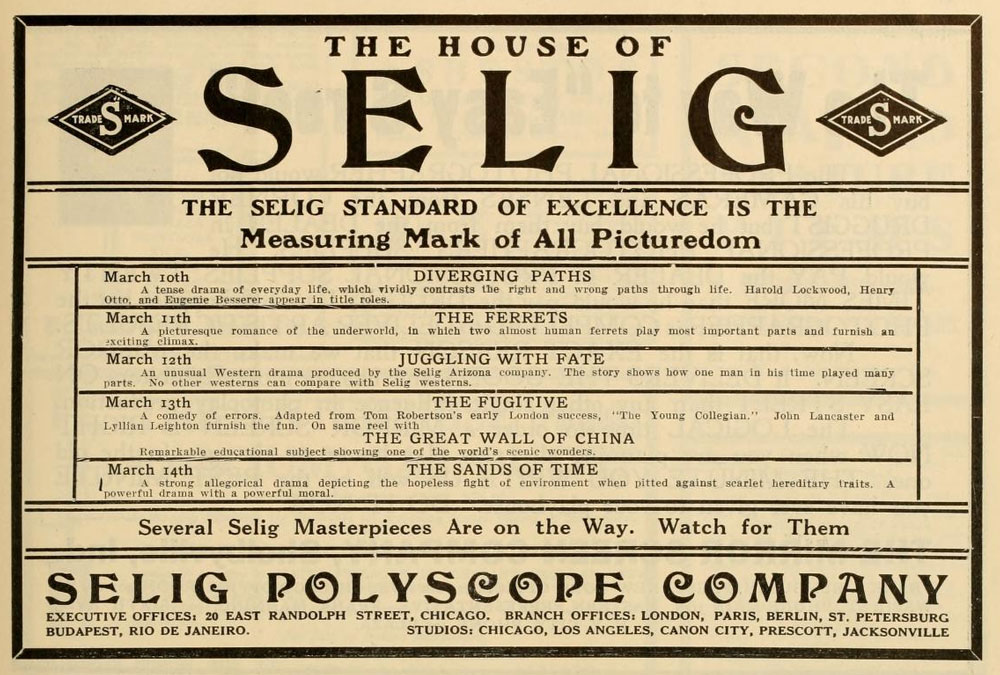
The Ferrets also reflects resistance the relatively new star system in American cinema, which had really only been in place since about 1910. Previously, stage star and other celebrity cameos had been credited but actors whose fame was derived mostly from the movies were left anonymous to discourage salary demands. Some studios were still holding onto the practice and, indeed, Selig advertised The Ferrets in trade magazines as a “picturesque romance of the underworld, in which two almost human ferrets play most important parts and furnish an exciting climax.”
In its review of the film, which it deemed “interesting,” the trade magazine Moving Picture World emphasized the fact that Oscar Eagle, a stage veteran, had produced it. (At the time, sometimes producer meant director and director meant producer, as was this case. Eagle was the director.) Fan magazines, meanwhile, dutifully reported the true identities of the film’s stars.
Carl Winterhoff, Lillian Logan and Joseph Ransome are obscure names even to fans of silent cinema and represent the large number of starring players who cycled through the movies, briefly the hottest sensation at their studio and then a fade into obscurity. Durable film stardom was a rarity for actors who began their careers at the dawn of the feature era.
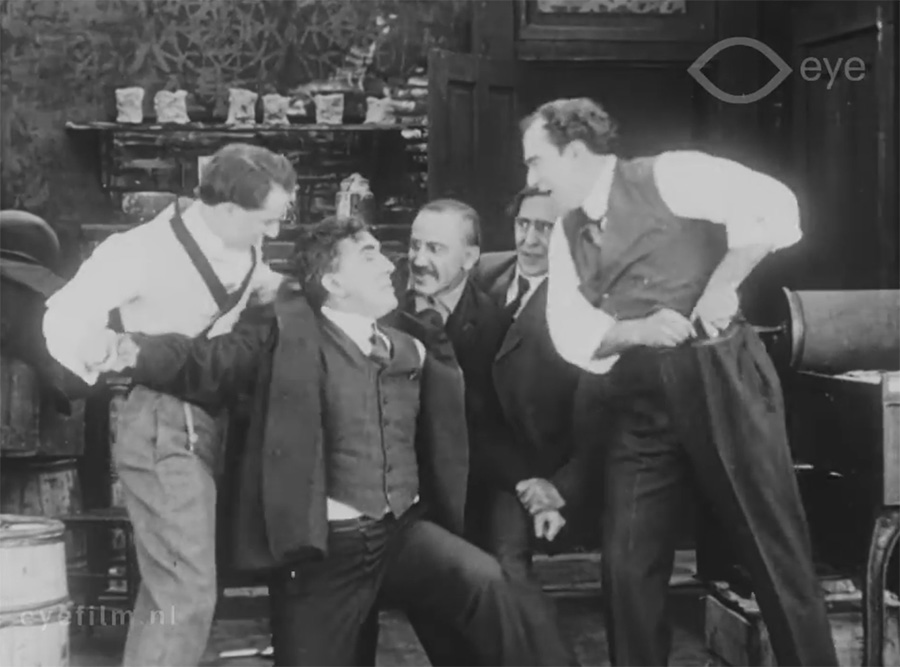
The Ferrets isn’t a masterpiece, I suppose, but I loved the gimmick of the heroic ferrets and the way the picture is so very much of its time and place. It’s a light little caper, pure escapism, but quite a lot of fun.
Where can I see it?
Stream courtesy of EYE. The film has Dutch intertitles but the plot is easy enough to follow.
☙❦❧
Like what you’re reading? Please consider sponsoring me on Patreon. All patrons will get early previews of upcoming features, exclusive polls and other goodies.
Disclosure: Some links included in this post may be affiliate links to products sold by Amazon and as an Amazon Associate I earn from qualifying purchases.
 Movies Silently