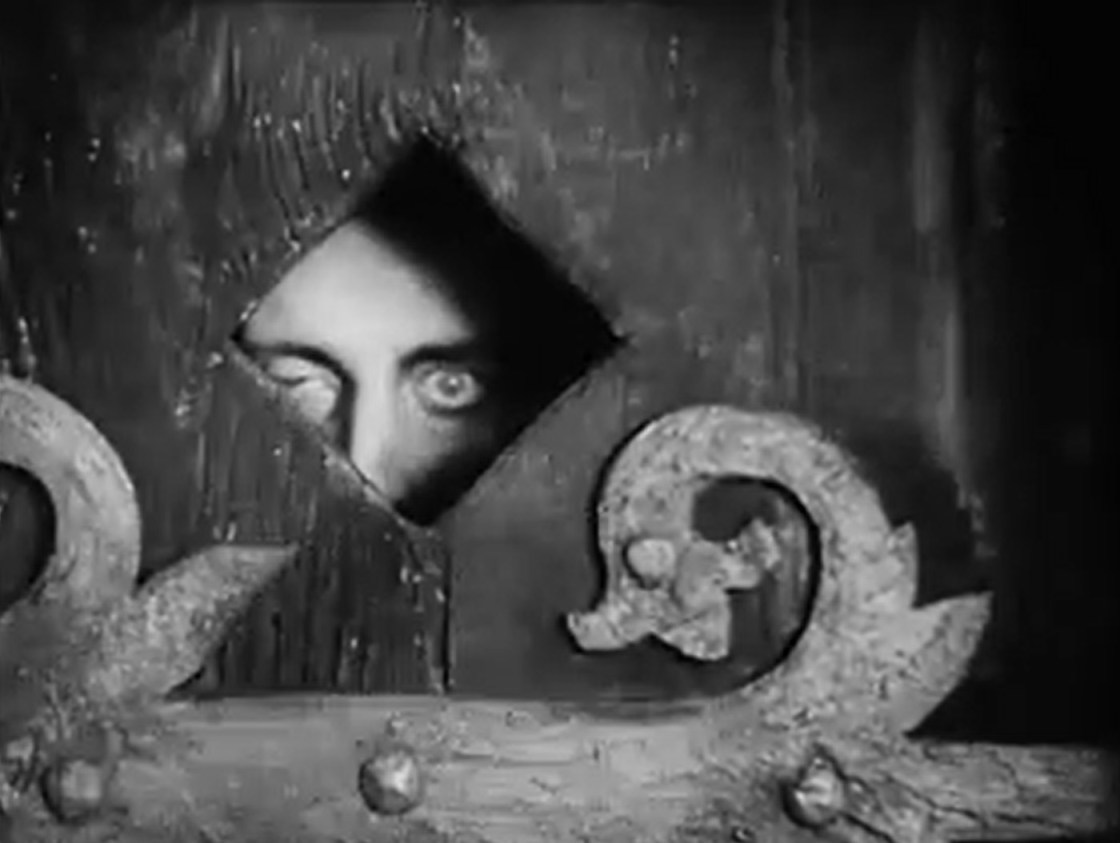
Legend and the modern world collide in a Latvian epic. The film opens with a legendary medieval battle between good and evil and closes with the Latvian War of Independence with parallels between myth and reality.
Home Media Availability: Stream courtesy of the National Film Centre of Latvia
Once More Unto the Brooch
With the brief loosening of imperialism in the wake of the First World War, more countries were making their cinematic debuts as independent nations. Latvia’s own war of independence had ended in 1920 and, for its tenth anniversary, the new nation dipped into its cultural heritage to adapt Lāčplēsis (Bearslayer), an 1888 epic poem by Andrejs Pumpurs.
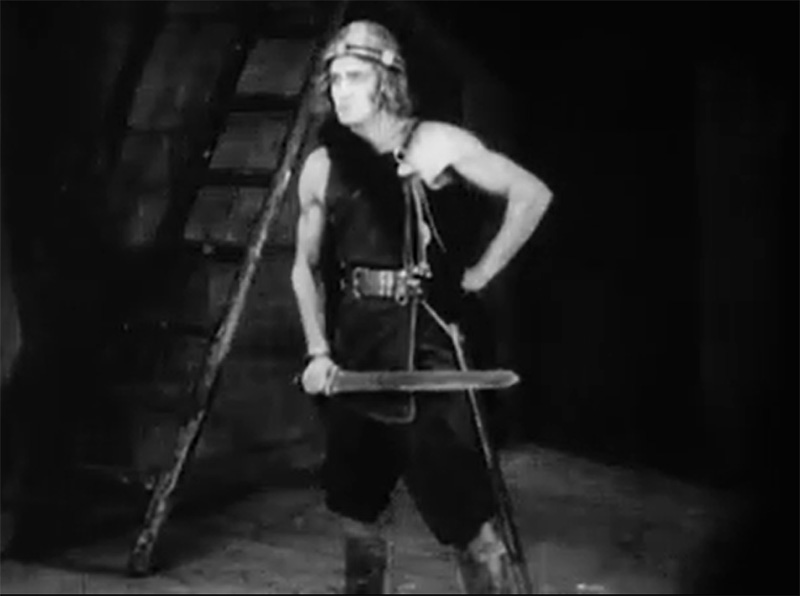
The poem tells the tale of a Latvian hero, his romance with Laimdota and his rivalry with the wicked German Black Knight. Deeply rooted in Latvian mythology and folklore, the poem ends with Lāčplēsis defeating the Black Knight but being pulled to his death into the water with him. The hero can still be seen endlessly fighting his foe, vowing that one day he will best him.
(You can read an English translation of the poem here.)
Considering Latvia’s political state at the time and in subsequent years, the symbolism was not lost on its readers and it became a popular symbol as independence movements were sweeping Europe.
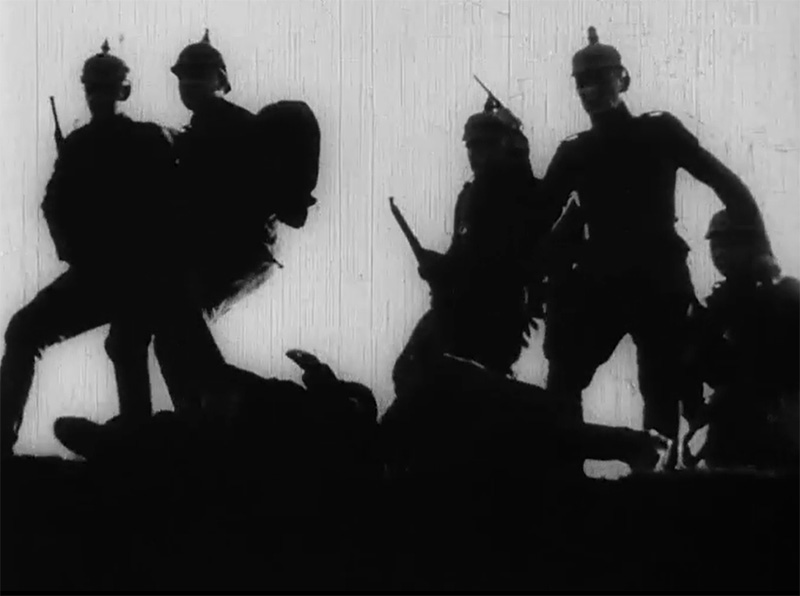
Bearslayer uses the poem as a frame story and then switches over to recent history, the leadup to Latvia’s independence. It is what I would describe as a high context film: it was made for an audience that would already be familiar with its source material and some of the real world events would have been just a decade old or less and fresh in everyone’s minds. Since most of us aren’t Latvians and certainly don’t remember WWI or the aftermath of the Russian Revolution firsthand, here is a quick, incomplete and oversimplified refresher:
Imperial Russia began a campaign of russification of its vassal states, which, for the context of this film’s setting, included the Baltic states of Latvia, Lithuania and Estonia, as well as the Nordic state of Finland and the partitioned state of Poland (Russia went halfsies with Germany). In practice, this meant Russian language education was forced onto the people and their own literature, music and culture were suppressed and even banned.
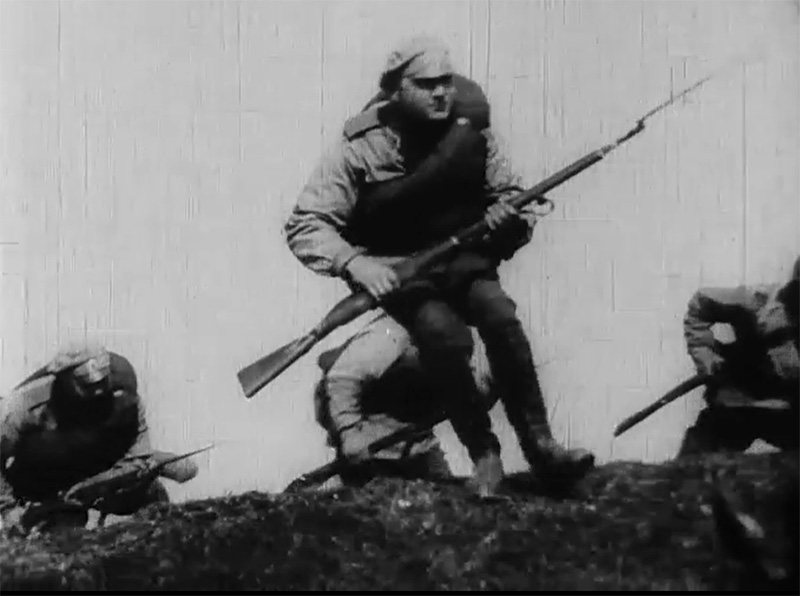
Russian entered the First World War against Germany and the Central Powers (with all of Russia’s Central and Northern European holdings dragged along for the ride) but withdrew when its government was overthrown in a revolution that resulted in the rise of the Soviet Union. The Baltic states, Poland and Finland declared their independence but Russia wanted to keep hold of them at gunpoint.
The Red Army invaded Latvia in 1918 and Latvia, with support from its neighbors, particularly Estonia (and later, naval support from France and the United Kingdom), waged war but the Red Russians were able to capture the capital of Riga. In the meantime, White Russian officer Pavel Bermondt-Avalov, also attempted to take over Latvia and partition Lithuania with volunteer Russian and German troops as part of a larger pro-Germany, anti-Bolshevik strategy. That’s right, Germany, while ostensibly helping Latvia, kind of thought that since the country was just sitting there, they could maybe help themselves… There were a lot of cooks in the Latvian kitchen, let’s put it that way.
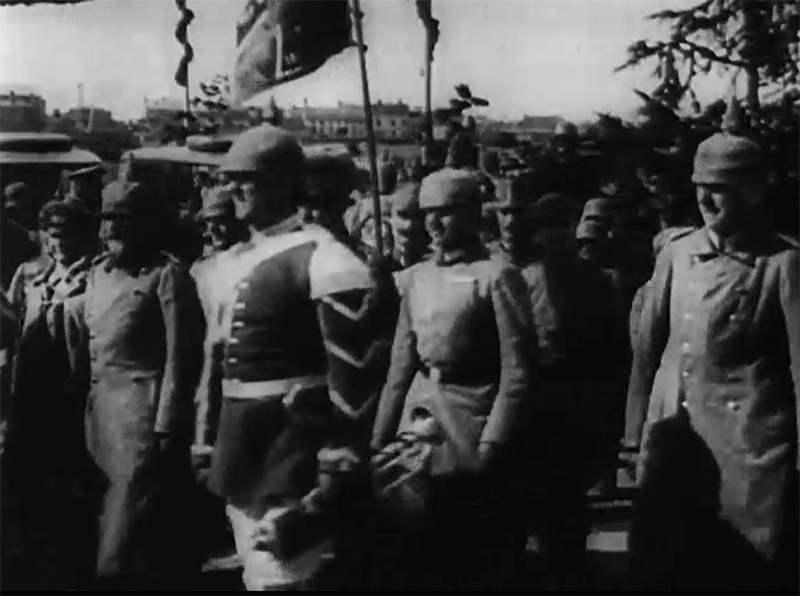
(Frankly, I think it was a bit rude of the Germans and the White Russians, after dragging half the world into their telegram spat because Austria was a kleptomaniac and Serbia couldn’t hold its temper, these two knuckleheads got together to try to steal the Baltics. I think they had done quite enough already, thank you.)
By the way, if you want to see more films about states under Russian colonial rule from a non-Russian perspective, The Chess Player is set in divided Poland, Old Baron of Rautakylä deals with an attempt by Sweden to sell Finland to Russia, the Estonian film Jüri Rumm portrays a bandit who robs Russian-backed aristocrats.
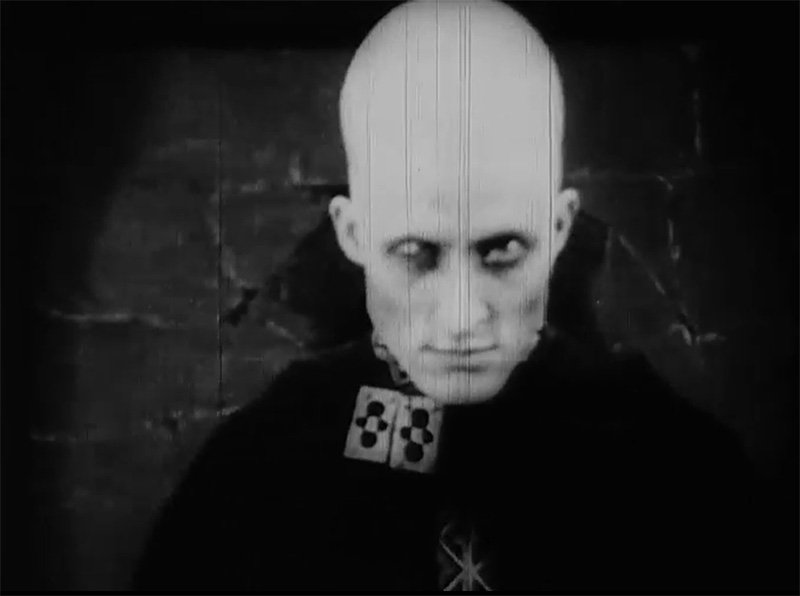
With all that in mind, let’s dig into the film and it hits the ground running. It takes liberties with the poem, focusing only on the climactic battle between Lāčplēsis (Voldemārs Dimze) and the Black Knight (Osvalds Mednis), the latter of whom is holding Laimdota (Lilita Bērziņa) prisoner in a tower and threatening to remove the enchanted protection from the brooch she wears so he can force her to become his lover.
The sequence is highly stylized, with the villains’ appearances enhanced by cosmetic prostheses and heavy makeup. The overall design is rooted in traditional Latvian costumes and patterns but there is a fair dose of silent era enhancement thanks to moody lighting and geometric sets and miniatures. It’s also fast. No long title cards explaining anything, no lingering shots over the sets and characters, but rather, quick cuts, first person fight scenes and a dark and stormy night.

With the audience primed, the scene ends with the hero’s death but then we get a jagged cut to Jānis, a young Latvian teen of 1905 trying to read but the last page has been torn. Jānis is accosted by soldiers (the ringleader, the modern Black Knight, also played by Osvalds Mednis) who want to arrest his employer. Jānis secretly vandalizes the wheel of their carriage and runs to warn the family. The father leaves his young daughter, Mirdza, in the care of Jānis. The soldiers arrive, realize what Jānis has done and the Black Knight beats him with a whip, permanently scarring his face.
The film moves its action up to the First World War, with Latvia under heavy attack from German forces. Jānis (now played by Voldemārs Dimze) and Mirdza (Lilita Bērziņa) reunite while he is on a mission to get a message through enemy lines. The Germans are overwhelming the Latvians with heavy fire and Jānis is shot but the bullet strikes his mother’s brooch, which he always carries and which is identical to Laimdota’s enchanted jewelry from the prologue. He sends the brooch to Mirdza as a token of love and protection.
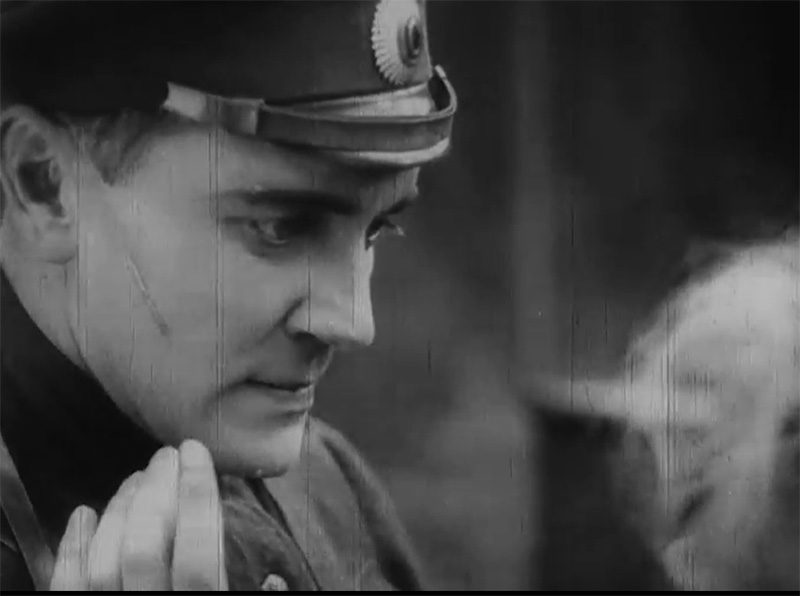
The World War ends but the War of Independence begins. Jānis is serving at the front and Mirdza is in Riga, trying to sell her valuables to support herself and her father. The Black Knight buys some of them but wants the brooch as well and becomes violent when Mirdza refuses him. He manages to steal the brooch and uses it to attempt to blackmail Mirdza but she leaves Riga.
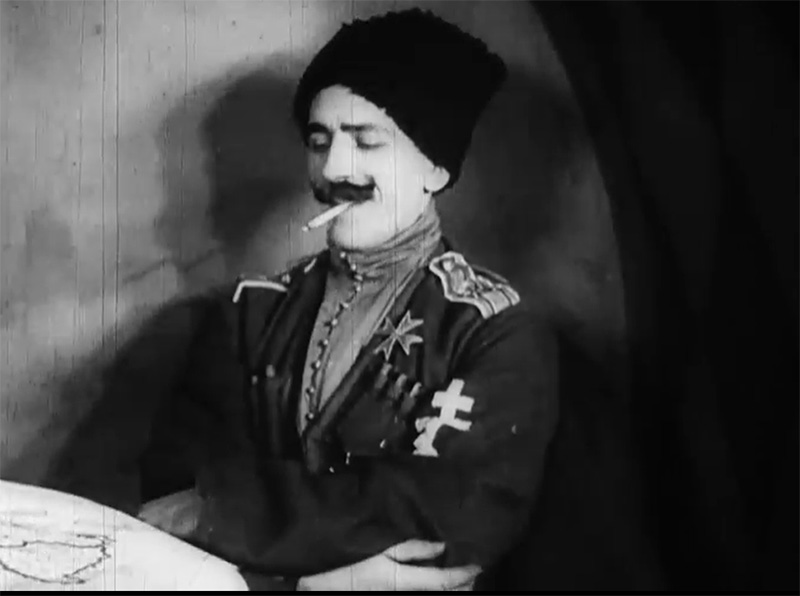
The independent Latvian forces retake Riga and the Black Knight flees to join Bermondt-Avalov’s German-Tsarist forces but Jānis recovers his brooch. Bermondt-Avalov has ambitions to conquer all of western Europe once he’s finished in the Baltic but the Latvians have allied with the Estonians, French and English to fight him. The Latvians seem to be victorious but the Dark Knight, a sex pest to the end, will not leave without one last attack on Mirdza while Jānis races to the rescue. Will the past repeat itself or will the Lāčplēsis finally gain his victory?
I generally try to avoid reading other reviews before writing my own but I was curious to see what English speaking viewers thought of Bearslayer, considering how deeply it taps into uniquely Latvian cultural elements. As I suspected, a fair number of reviews praised the “surreal” opening sequence and complained about the rest of the film seeming disconnected from the prologue and difficult to follow.
Circling back to what I mentioned at the beginning of this review, I feel that who the movie was made for is an important consideration, especially with such highly specialized regional cinema. An American film can throw out Paul Revere references and a cut-down cherry tree without a second thought, other countries wish to do the same with their cultural references. Not understanding these references, if you are not part of the culture being tapped, is not a reflection on the quality of the film. It’s like going into a tea shop and complaining that they don’t carry Coca-Cola.
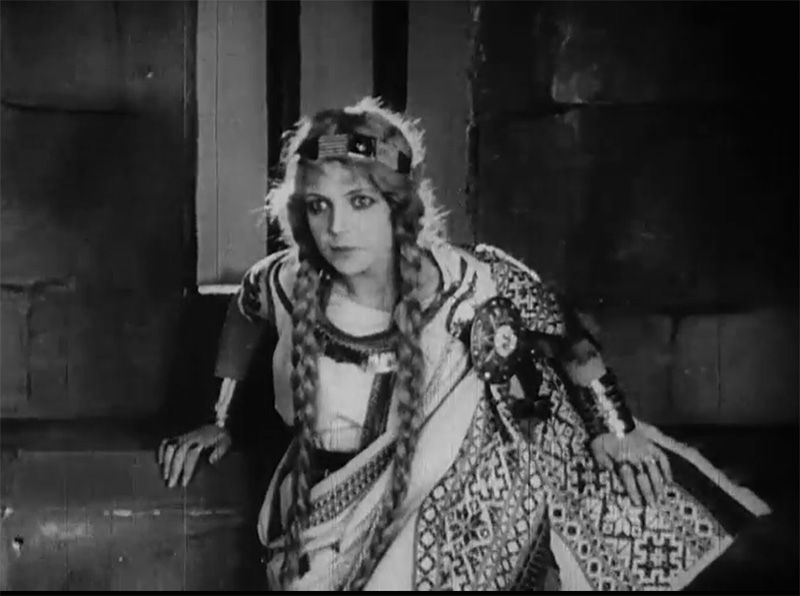
The opening sequence of Bearslayer is a standout and a stunner but it is stylized rather than surreal, with all the elements rooted in both the poem and Latvian folklore. The subsequent WWI and Latvian War of Independence sequences are more grounded but do make the reasonable assumption that the viewer knows who is who (villain Bermondt-Avalov is unveiled with great flourish). A basic skim of these topics from any reputable source will quickly bring the average audience up to speed. We can memorize the difference between the Sith and the Jedi, we can do this.
Bearslayer is very much a propaganda film but it is also an ambitious picture that avoids many of the pitfalls of the genre. Its pace is breathless, for a start, likely because Latvia experienced 50 years of history in 1/10 the time. This is notable because European epics tend to plod a bit and I don’t consider a slower pace to be a flaw in itself generally but it does make Bearslayer’s zippy pace stand out. Portraying a legend sequence, a world war, multi-pronged invasions and a retaking of the capital into an hour and a half is no small feat.
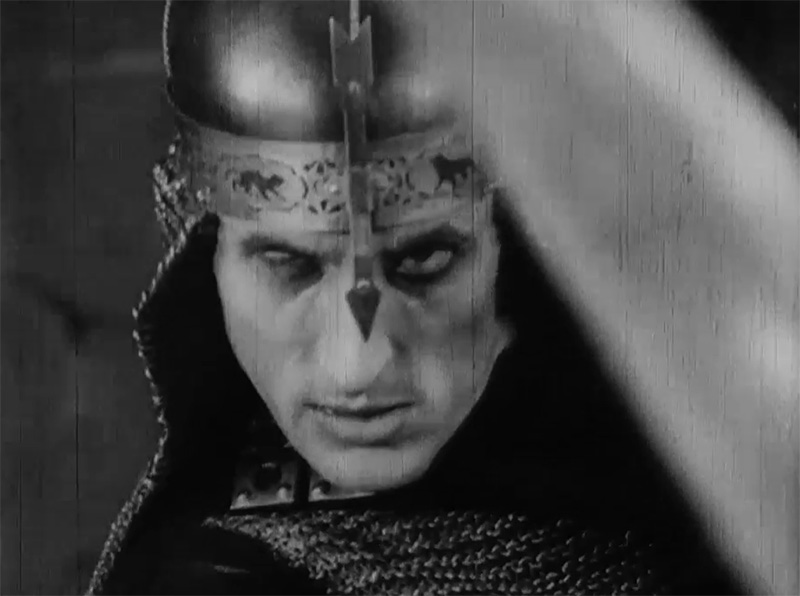
Lilita Bērziņa does most of the heavy emoting–Voldemārs Dimze and Osvalds Mednis had been soldiers during the War of Independence– but the cast is generally very good. The production was financially backed by the Latvian government and enjoyed full military cooperation.
While comparisons to the Riga-born Sergei Eisenstein and to Fritz Lang’s Die Nibelungen are obvious, I do think there is more than a little Raymond Bernard to be found, especially in the way director Aleksandrs Rusteiķis and cinematographer Jānis Sīlis make use of an unchained camera and point of view shots during the fight scenes. (And the anti-imperialism message of The Chess Player in particular would likely have resonated in Latvia.) I also wonder if there was some influence from Michael Strogoff (1926), a French mega production adapting a Jules Verne novel with a Russian and Ukrainian cast that hired Latvia and its army for its elaborate and extravagant battle scenes.
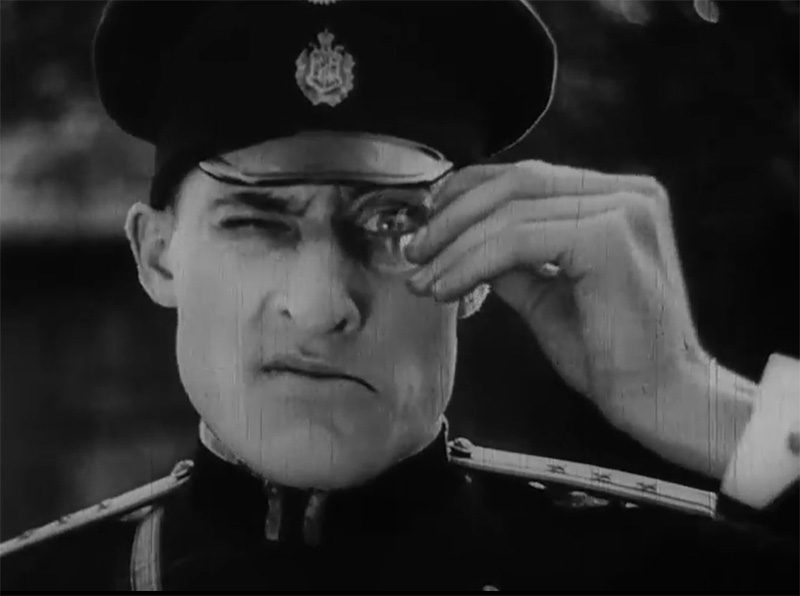
Using the mythical, religious or historical past to frame a modern tale was popular in the silent era generally and was sometimes even reversed, as was the case of Joan the Woman’s WWI sequences framing its Joan of Arc Tale. Cecil B. DeMille made this kind of thing his signature, mirroring the biblical content of The Ten Commandments with a modern tale of sin and redemption.
Bearslayer compares favorably to these films, embracing stylized film techniques, making the most of the military cooperation and generally infusing everything strongly with Latvian culture. It’s a strong start for the film industry of a new country.
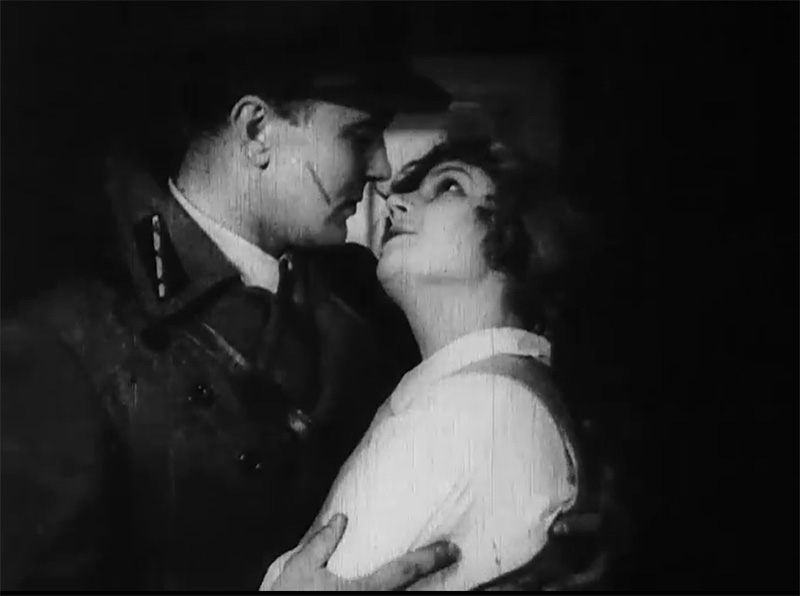
I should say that anyone not already familiar with Baltic history and Latvian culture will be rewarded if they take a few moments to perform some cursory research. You don’t need a PhD or anything, it’s just that a small amount of reading before watching this film will do wonders for your enjoyment of this surprisingly snappy epic.
Where can I see it?
Stream courtesy of the National Film Centre of Latvia. The film is unscored currently but does have optional English subtitles.
☙❦❧
Like what you’re reading? Please consider sponsoring me on Patreon. All patrons will get early previews of upcoming features, exclusive polls and other goodies.
Disclosure: Some links included in this post may be affiliate links to products sold by Amazon and as an Amazon Associate I earn from qualifying purchases.
 Movies Silently