
Estonia’s bustling bootlegging trade is the backdrop for a romance between a Brazilian adventurer and one of the smugglers. Naturally, there are chases, escapes, danger and a mountain of illicit booze.
Home Media Availability: Stream courtesy of Arkaader.
We (Really) Don’t Know Anything About (These) Drinks
After decades of lobbying, the alcohol temperance movement was enjoying international success in the late nineteenth and early twentieth centuries, including in Northern Europe. Sweden’s voters turned down an outright ban, though sales were and are a government monopoly, while Norway and Iceland adopted some forms of prohibition. Finland banned alcohol completely in 1919 before switching over to a state monopoly system in 1932.

Waves of Passion is an Estonian-German co-production from the tail end of Finland’s alcohol prohibition. With alcohol banned, heavily regulated, or (in the case of Germany, Denmark and other states) taxed heavily as a deterrent, the stage was set for smuggling and Estonia was a convenient hub. Tallinn is just a quick boat trip away from Helsinki, a matter of a few hours with motored craft, and with so many thirsty people over there with cash to pay… well, what’s the harm? Not everyone agreed and the illicit liquor trade was described as “the Baltic pestilence.”
The story opens on a Baltic pleasure cruise filled with international passengers. It’s all fun and parties in the ballroom below deck but on the water, the Coast Guard is patrolling for bootleggers attempting to bring German and Polish liquor into Estonia. Kölgis (Fritz Greiner) is the Schmugglerführer, as the German version puts it, or the head cheese of Estonian smuggling, and he enjoys eavesdropping on the cruise passengers breathlessly discussing the smugglers.
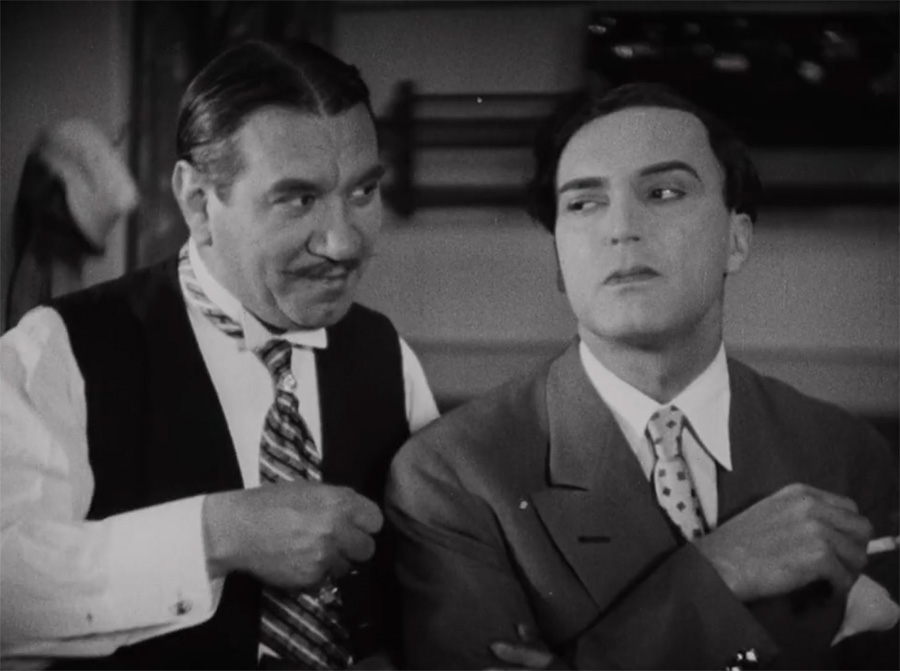
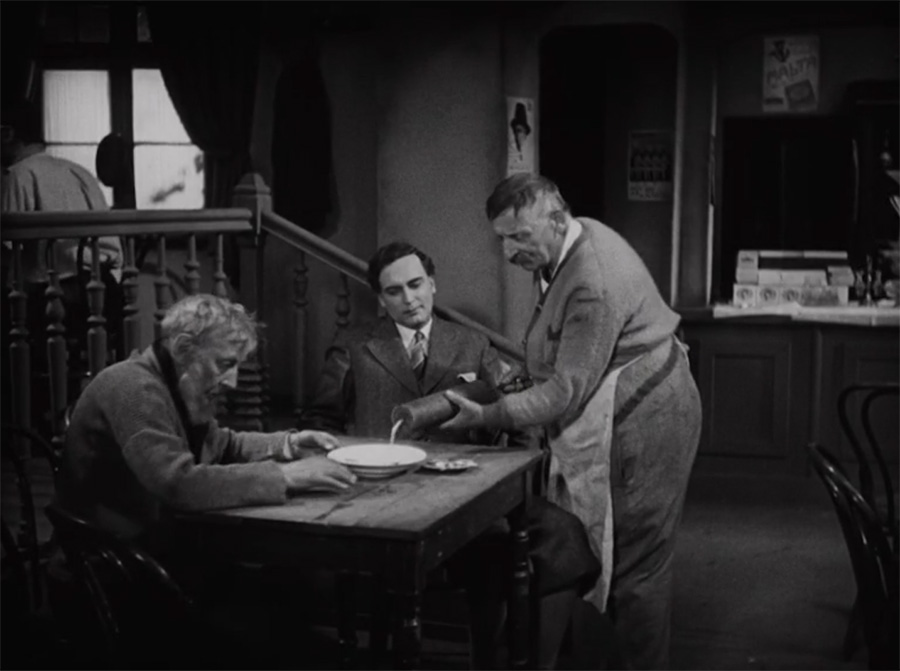
Meanwhile, Brazilian passenger named Rex Ronney (Vladimir Gajderov) loses a great deal of money in a game of cards with a fellow passenger. The passenger is attacked and robbed but he cannot identify the assailant. However, Rex is the prime suspect and later shows up in Kölgis’s cabin to introduce himself. He is a bootlegger who has experience running liquor in America and he wants a job in the Estonian operation. Kölgis likes Rex’s credentials and obvious criminal tendencies, he sends him to meet Bratt (Hugo Laur) at a restaurant in Tallinn.
(The restaurant seems to serve soup from a caulking gun-type contraption and I am both intrigued and envious. One of those little details that makes older movies so fun.)
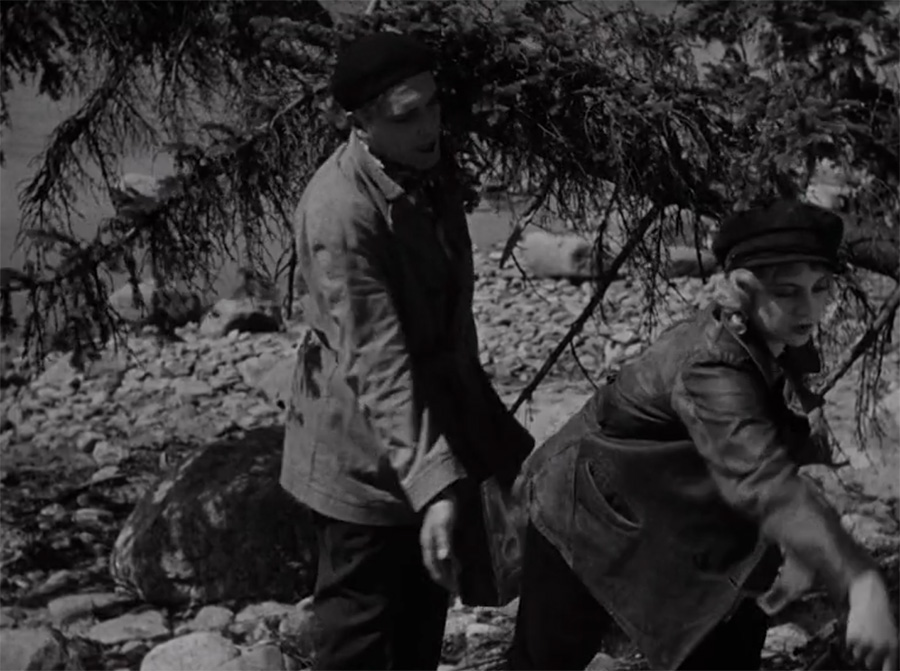
The ambitious smuggling operation is being financed by Martens (Raimondo Van Riel) and overseen by his daughter, Betty (Ita Rina). Dozens of gasoline cans full of booze arrive from abroad and must be brought ashore and loaded into a waiting truck. Rex and Betty meet-cute on the mission when he mistakes her for a boy and swats her backside to encourage her to pick up the pace. In the middle of the operation, the Coast Guard arrives. Betty doesn’t want to abandon the large quantity of liquor still being unloaded but Rex forces her to retreat in the nick of time.
Betty then explains why she was so determined to complete the alcohol run despite the risk: her father is deeply in debt to Kölgis and she will have to marry him if the debt is not paid. Rex finds this to be hilarious and teases Betty about her upcoming wedding. Despite this, she falls for him.
The film then reveals Rex’s secret: he is not a criminal at all but is actually a writer who has gone undercover for research. The passenger he attacked on the ship is a fellow writer who is working with the police to smash the Kölgis ring. However, there is a danger that this will bring down Martens and Betty with him.
Will Rex manage to save the day? Or will this writer’s research prove to be fatal? See Waves of Passion to find out!
A big draw for modern viewers will be seeing Slovenian actress Ita Rina in something a bit happier than the tragic Czech drama Tonka of the Gallows. She’s great fun her as the spunky and modern heroine. Raimondo Van Riel is very good as her affectionate-but-ineffectual father and Fritz Greiner brings Wallace Beery-esque brutal villainy to the table.
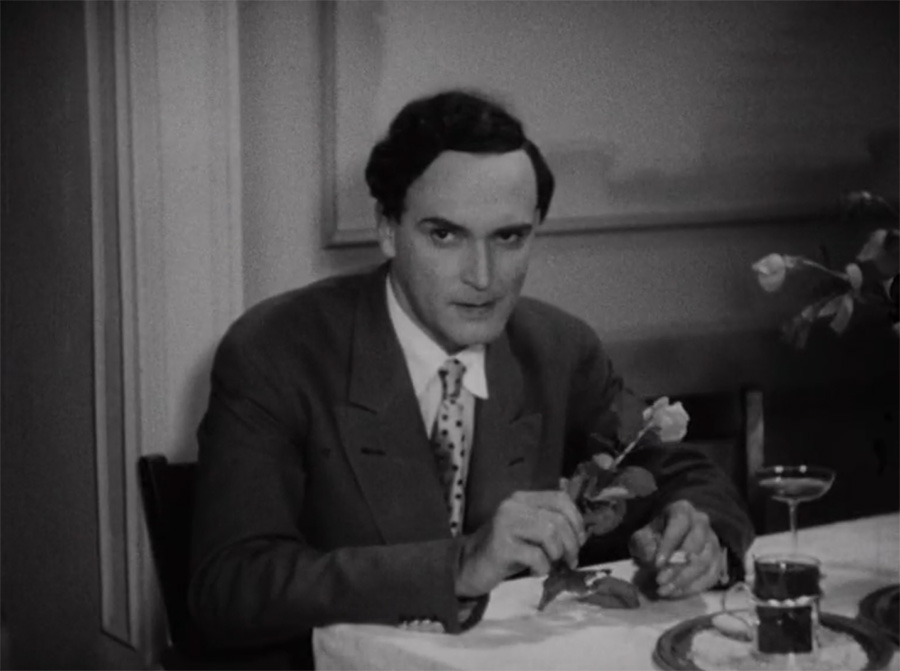
And now we must address the elephant in the room. The international supporting cast and the local Estonian performers hit it out of the park but then there’s Vladimir Gajdarov. His performance is full of creative decisions that were… certainly choices. He grins like a maniac through much of the film, perhaps trying to channel some Fairbanksian spunk but it’s not really appropriate to the film’s tone and the rest of the cast’s performances. He constantly pokes fun at Betty being forced to marry Kölgis, which comes off as mean. (Forced marriages were the work of villains in just about every film of every country of every era. It’s one of the few crimes we and our forebears agree about: it’s just nasty.)
As the film progresses and the stakes rise, Gajdarov drops the smirk and starts to behave more naturally but the damage is already done and I was singularly not invested in his romance with Rina. To make matters worse, Betty grows angry because she sees Rex flirting with a barmaid. The film treats this is a misunderstanding but the flirtation was not necessary to Rex’s cover or scheme. He just did it for kicks. So, going into the grand finale, we care about Betty and Martens but we don’t care if Rex’s romance works out.

Gajdarov was good in the other roles I have seen him in, his brief turn as Tsar Alexander in Michael Strogoff and his larger role in Murnau’s The Burning Soil, so I think this is likely something we should blame on the director. Waves of Passion was directed by… Vladimir Gajdarov.
Ah.
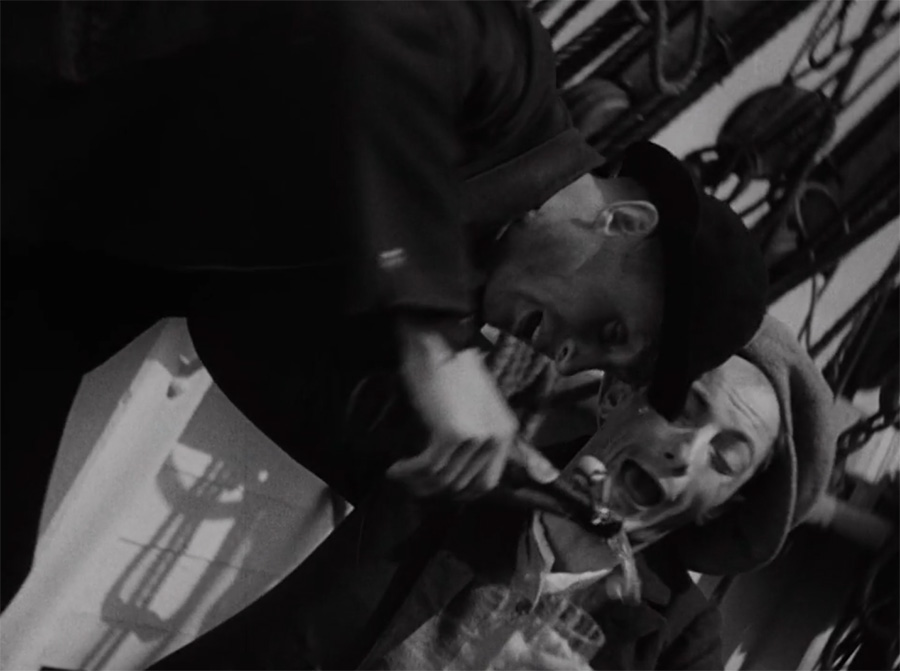
The rest of the film’s direction is fine and there are some very nice visual sequences (credited cinematographers are Ewald Daub and Vladimir Lemke), particularly the drunken shipboard wedding dance sequence, awash with Dutch angles and rapid cuts to mimic the feeling of a seasick orgy.
The silent era hung around longer in Europe (and much longer in Japan and Russia) than in the United States and Waves of Passion has a synchronized score-on-disc by Bert Reisfeld, which accompanied the film for its international release. These were individual phonograph records to correspond with the film reels. The music is a bit jaunty for the material, if judged by modern standards, but would have been quite typical for the time of the picture’s original release and should be enjoyed with that context in mind.
Waves of Passion is also amusing in modern context because, while smuggling isn’t really required, the regular day cruises between Tallinn and Helsinki are still full of people purchasing cases of alcohol at lower Estonian prices and trundling them back across the Baltic. “This thing you and your neighbors do regularly but when it was illegal” is always going to make for a fun time at the movies.

And the affection for alcohol in all the prohibiting countries is a major part of the context. European and North American countries attempting to ban alcohol had to contend with the fact that, for a huge portion of the population, drink was viewed as harmless enjoyment. (Likely recognizing this, Temperance literature of the 19th century will sometimes wax poetic about the beauties of Islam and its religious ban on alcohol.)
While ostensibly against smuggling, Waves of Passion is really more against large-scale organized smuggling. The restaurant where the smugglers meet is raided but pretty much left to its business afterward. The movie ends with the characters sharing a glass of (legal) champagne and Martens and Betty unprosecuted. This reflects the likely feelings of the audience of the day: smuggling alcohol is met with the same level of concern as Americans smuggling Kinder Eggs back home.

Waves of Passion is a fascinating time capsule and, I am sure, especially fun for modern Finns and Estonians to watch. The supporting cast, and particularly Ita Rina, is excellent with Gajdarov providing the one false note. Crime film fans will find a lot to enjoy here.
Where can I see it?
Stream courtesy of Arkaader with optional English subtitles. The surviving footage of the film is from an Estonian release print (trilingual in Estonian, Russian and German) but is missing several minutes of footage. The surviving synchronized score-on-disc is incomplete and meant to accompany the foreign release cut. The restoration team synced the remaining discs using spacers to lengthen the title cards and engaged composer Cornelius Renzi to write supplemental music to match the original. This is an excellent restoration with great care taken to preserve the spirit of the picture and it looks and sounds wonderful. Anyone interested in film preservation will find the result inspirational.
☙❦❧
Like what you’re reading? Please consider sponsoring me on Patreon. All patrons will get early previews of upcoming features, exclusive polls and other goodies.
Disclosure: Some links included in this post may be affiliate links to products sold by Amazon and as an Amazon Associate I earn from qualifying purchases.
 Movies Silently
Oh dear, I’m having trouble with the commenting. I wanted to mention that the link to Arkaander goes to the Kindere Egss story. Sorry for messing up your comments section!
No worries! I will fix it. WordPress has been fussy lately with various things, hopefully they will fix it soon.