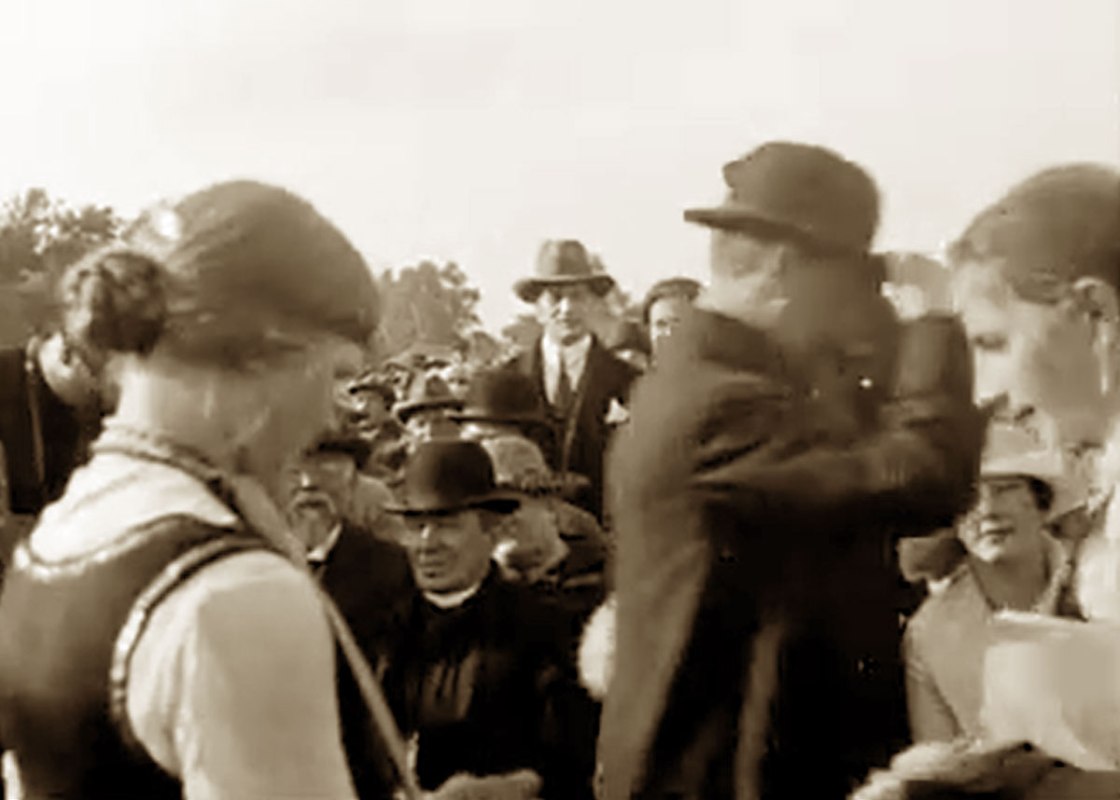
A collection of four short documentary films shot in Kaunas and capturing the social, cultural and political life of Lithuania for the diaspora living abroad, including some shots of that diaspora visiting home.
Home Media Availability: Stream online.
You can take the boy out of Lithuania…
Who is this movie for? It’s always interesting to find the answer to that question, especially when silent films are the subject. After all, exporting a movie was as simple as swapping out title cards or presenting them in a bilingual, trilingual (or more!) format. There were movies intended primarily for the local audience, movies that were made to be exported and then there was a very special type of cinema, movies made for the diaspora.

The nineteenth century saw a change in European statehood and what it meant to be a nation with successful unification campaigns in Italy and Germany, the rise of independence movements and a reinvigorated desire for people living under colonialism to embrace their own cultures. The Baltic States and Finland had been enduring a process of russification under the rule of the tsar, with their languages and cultures regulated and suppressed. Feudalism in the Russian Empire had only ended in the 1860s and emigration, particularly to the United States, was an attractive option for Lithuanians and others.
The First World War and Russian Revolution paved the way for independent statehood and, naturally, filmmakers (many state-backed) were eager to give the diaspora a glimpse of the old country and their culture. Finland released a feature-length picture, Finlandia, in 1922 and, if we go earlier, the pre-WWI O’Kalem productions shot in Ireland were marketed as a chance for Irish Americans to see home.
Which brings us to Jonas Kazimieras Milius, a Lithuanian who had emigrated to America, returned to Lithuania to volunteer in the military and then returned to the United States. He then founded a film company in New York with fellow Lithuanian Juozas Navikas and ventured back to Lithuania in 1928 and 1929 to shoot footage.
Lithuania has made numerous newsreels, mini-documentaries and actualities available as part of their participation in the E-Cinema project but this particular set of films appealed to me particularly because it is made up of an appealing blend of cultural and political elements and showcases a fair number of everyday Lithuanians in Kaunas (the once and future capital of Vilnius was annexed by Poland at the time).

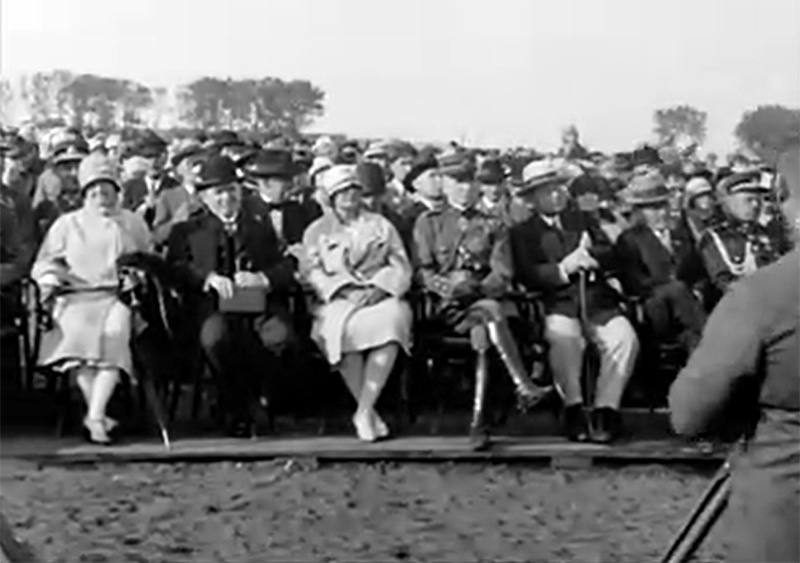
The first film captures the 1928 Song Festival of Lithuania, the first having been held in 1924. Song festivals had been embraced by all three Baltic states as a powerful symbol of their individual cultures and were subjected to interference and censorship under post-WWII Soviet rule. The spontaneous singing of Estonian songs during the 1988 Estonian song festival kicked off the Singing Revolution independence movement in Estonia, which spread to Latvia and Lithuania, and resulted in all three states regaining their freedom at last.
Political context aside, the 1928 footage is a valuable record of not only the contest but also how it was filmed. As the camera pans across the choirs (almost 100 of them with thousands of singers) and audience (tens of thousands), we see other camera operators at work filming the event. The front row dignitaries are granted closer shots, the ladies in picture hats and cloches, the men in bowlers, top hats, felt hats or military regalia. However, most of the shots are intended to convey just how massive the festival audience is. (By the way, the centennial festival was held last year.)
The next film is a more typical scene for newsreel and documentary footage: President Antanas Smetona in a cloth cap and smart riding apparel, first lady Sofija Smetonienė (in daringly trim riding breeches), and retired General Silvestras Žukauskas relax by going for a ride in the forest. The party is shown on horseback and, later, reclining on the forest floor. It’s a rather casual scene and obviously filmed with the full cooperation of the presidential couple.
It’s worth noting that Smetona, the first president of the newly-independent Lithuania, seized power from democratically elected third president Kazys Grinius in a 1926 coup d’etat supported by Žukauskas (who apparently never met a coup he didn’t like), citing a Communist plot to seize power. (Deposed President Grinius denied this.) Regarding Smetona’s legacy, “complicated” is the word that crops up most often and it’s well beyond my scope of knowledge and insight to make any definitive proclamations but as a devotee of film history, the casual scenes of Smetona and his wife were not accidental.

Politicians and crowned heads quickly realized the power of cinema and were quick to embrace it as a means to molding their reputations. Teddy Roosevelt, Queen Victoria and Tsar Nicholas II all eagerly posed for newsreels, displaying varying degrees of friendliness, stateliness and personal eccentricity. Smetona and company clearly wanted to convey a friendly image to the Lithuanians abroad, all while displaying the trappings of wealth and success in the form of beautiful horses.
The next scene shows the Smetona family at home, this time with young teenage son Julius, as they stroll through the gardens. The president wears a formal frock coat while his wife and son are more casual, she wears a trim striped dress and he is in short pants. Again, an image of friendliness, a family man in an ideal home.

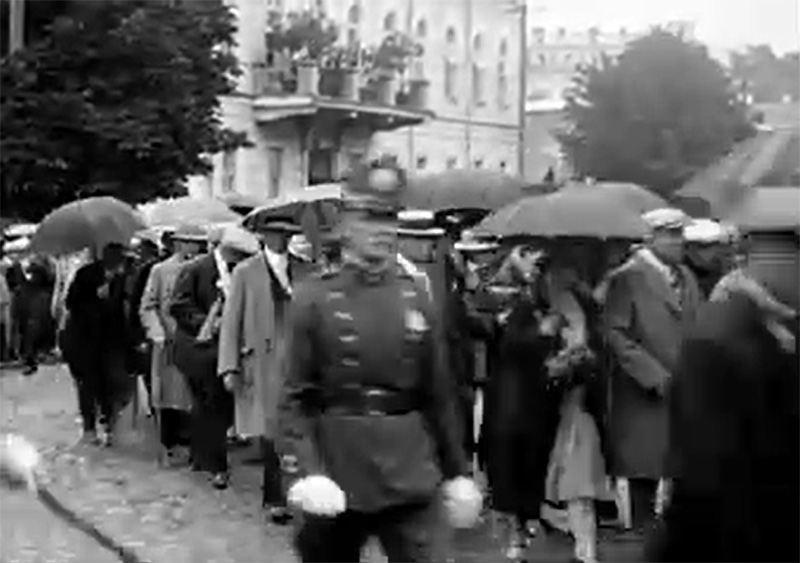
The last scene features a delegation of Lithuanian Americans visiting Kaunas and it’s a wealth of ordinary citizens in their Sunday best for the parade down the streets of the city. Our modern perception 1920s fashions is skewed by the wave of fashion illustrations and Hollywood costuming (and that’s not even getting started on mid-century anachronisms and Spirit Halloween flapper costumes), so it’s always valuable to see everyday people dressed in their finery for a more realistic sample.
It’s especially interesting to see the contrast between the Americans and the locals. The cut of the hats and coats of the Americans seem to be a bit different and… somehow blingier. (Remember, we just saw footage of Lithuania’s First Lady, who came from an aristocratic family, as well as shots of dignitaries at the Song Festival.)
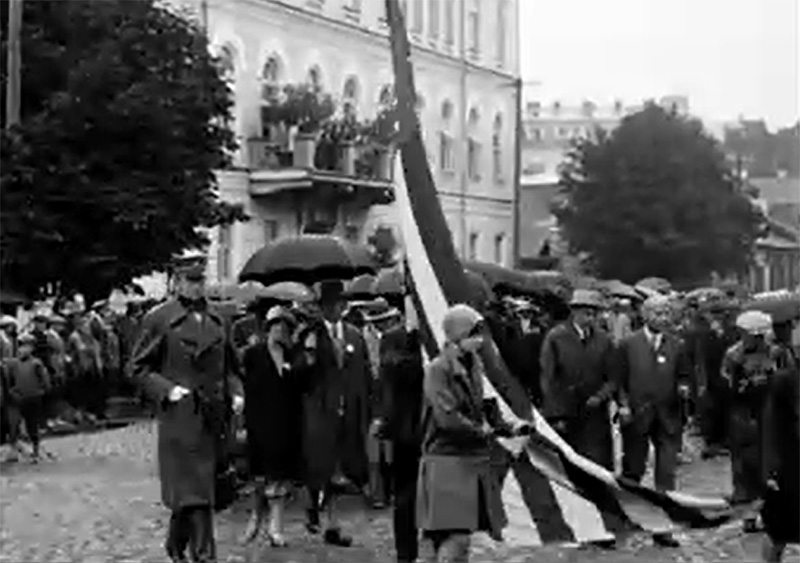
The parade of Americans walk by with their flags as rain begins to fall. As is often the case with nonfiction footage, the people stare openly at the camera, some of the men in the military escort salute the camera. A man and boy walk toward the film crew, there is a cut and the brief image of a police nightstick striking and a policeman walks by. Prankster? Political dissident? Simply a clueless fellow pushed out of the way? We’ll never know but there’s always something to see in films of this type.
Milius showed his films all over North America and I imagine the audience was eager to catch a glimpse of home, or at least the home of their parents or grandparents. While all four of the films show editorial intent, they are refreshingly unrehearsed and there is truth in the clothing, gestures and curiosity of the people who pass through.
Anyone interested in European political and cultural history will want to see this film and fashion researchers will find a treasure trove in the footage.
Where can I see it?
Stream online courtesy of Lithuania’s E-Kinas service.
☙❦❧
Like what you’re reading? Please consider sponsoring me on Patreon. All patrons will get early previews of upcoming features, exclusive polls and other goodies.
Disclosure: Some links included in this post may be affiliate links to products sold by Amazon and as an Amazon Associate I earn from qualifying purchases.
 Movies Silently