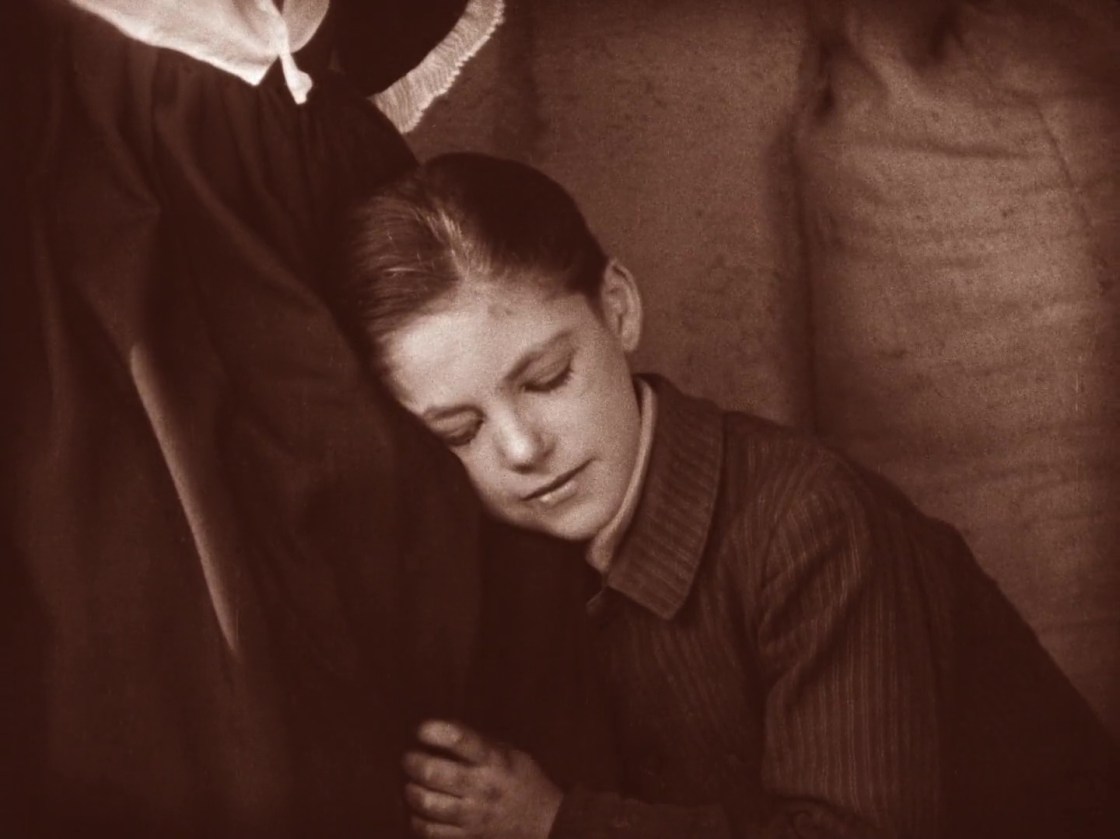
A small boy in a Swiss village must navigate his mother’s death, his father’s remarriage and the tensions in their new blended family. Surprisingly unsentimental and realistic in its portayal of a child in crisis.
Home Media Availability: Currently out of print.
A Child’s View
Belgian director Jacques Feyder has fallen into relative obscurity compared to his contemporaries in the French film industry. Perhaps it is because his films play well for only a very specific audience but, fortunately, I happen to be that audience.
His 1921 epic Queen of Atlantis is either meditative or dull, depending on your perspective (I am Team Medititive) and his intimate dive into corruption in the French legal system, Crainquebille (1922), tends to get lost in the shuffle. Faces of Children was shot in 1923 but took two years to extract from legal tangles, edit and finally see release. It is Feyder’s most famous film, which is to say not that famous at all compared to other releases of the period.
Shot on location in Switzerland, the picture opens with a funeral: Pierre Amsler, the mayor (Victor Vina) of a small mountain village has lost his wife (Suzy Vernon). His young son, Jean (Jean Forest), is barely holding on. A sensitive boy who was close to his mother, Jean finds little support from Pierre, who is lost in his own grief. Pierrete (Pierrette Houyez), the youngest child, does not realize what has happened, so she stays home and happily plays with her kitten and blows soap bubbles as her father and brother go to bury her mother. The funeral scene is shot from a child’s eye view, showcasing a world of kneecaps and would-be helpful adults looking down on the traumatized boy.

Jean finds some comfort in dedicating his life to his mother’s memory. She is not truly dead in his eyes as her portrait comes to life and smiles at him and he visits her grave every week to leave flowers. For Pierre, though, the situation is intolerable. He is stretched thin trying to take care of his work while running the household. Little Pierrette in particular needs help as she is too young to care for herself.
A way forward opens up unexpectedly when Pierre is collecting rent from his tenents. The newly-widowed Jeanne (Rachel Devirys) tells him that she cannot pay because the lift insurance claim covering the death of her husband has been denied. Pierre forgives the rent and is impressed by Jeanne’s hard-working nature and her care for her daughter Arlette (Arlette Peyran), who is about Jean’s age.
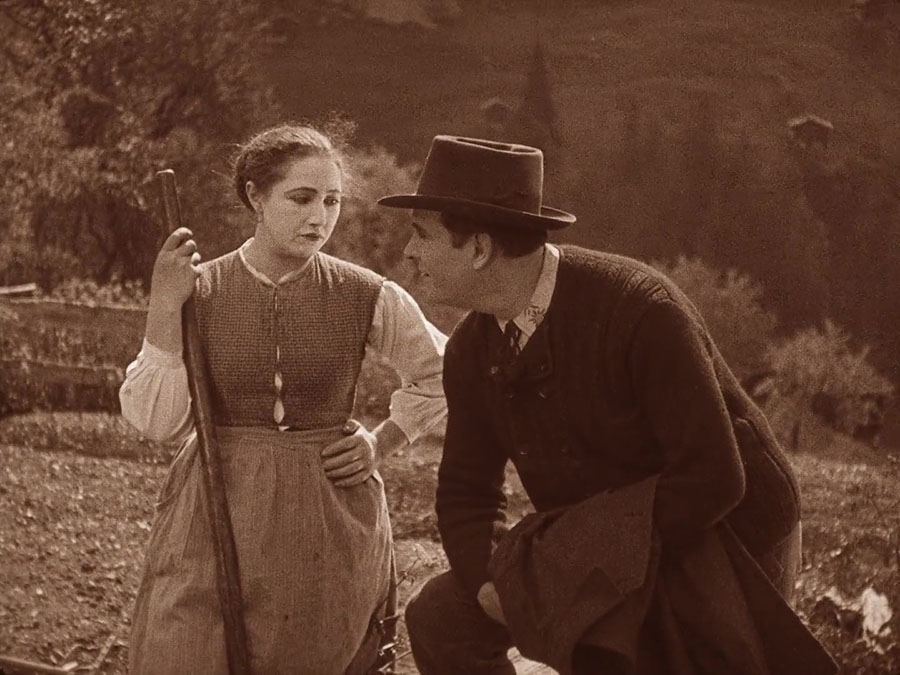
Pierre decides that he will court Jeanne and, insensitive though he is, he realizes that this will upset Jean. He calls on Jean’s godfather, Canon Taillier (Henri Duval), to assist in the matter. Taillier offers to take Jean on a trip and break the news to him while Pierre marries Jeanne. Jean seems to take the news well, at least from Taillier’s point of view, and only asks if he really has to call her maman. Taillier tells him he can use the more formal “mère” instead. Meanwhile, the wedding celebration goes on without Jean, much to the delight of Pierrette and Arlette.
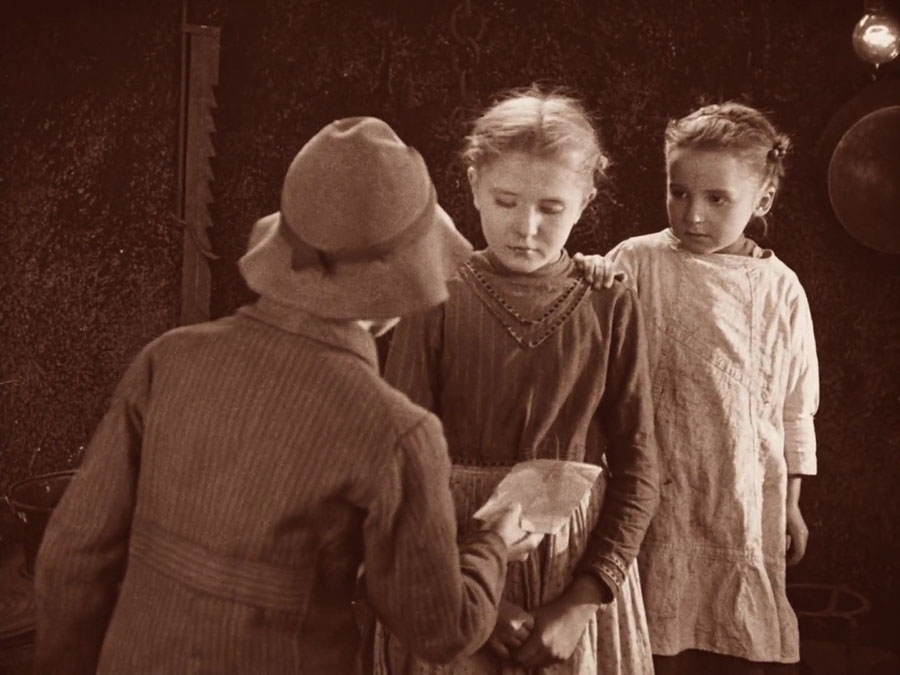
While he is more sympathetic to Jean than Pierre could ever be, Canon Taillier underestimates the betrayal felt by the boy. Since his mother is still alive in his eyes, Jeanne can never be anything other than an interloper. And since Jean walks home alone, there is nobody present to soften the meeting between himself and Arlette. She does not recognize him and refuses to open the door until he throws a tantrum. Then he discovers that his own room has been given to the girls and he has been shuffled off to a smaller side bedroom.

All of these things have perfectly reasonable explanations but children in crisis are not reasonable. Since he cannot lash out at his father or Jeanne (who he addresses “madame”) Jean’s target is Arlette. He cuts her out of playtime with Pierrette and teases her by taking her favorite doll. During a long sleigh ride, he drops the doll into the snow while Arlette sleeps. Arlette is heartbroken when she awakens to find her doll gone but Jean offers to help her sneak out of the house at night so she can find it.
His plan is to get her in trouble for leaving without permission but he underestimates the danger. Arlette walks far and high, determined to find her doll, and narrowly escapes being swallowed up in an avalanche, taking shelter in a small chapel that is buried under a wall of snow. Jean realizes that Arlette is in real danger and his conscience drives him to confess to Pierre and Jeanne. While the whole town mounts a rescue operation, Jean tries to find solace in his mother’s portrait but it is hazy and lifeless.

Will Jean navigate the fallout from his prank? Will the family ever be united? See Faces of Children to find out!
This is a fascinating and absorbing film that flies by. Kids in the movies are an interesting subject to a large degree because they are so rarely portrayed with any level of realism. Movies feature zany kids, adorable kids, bratty kids, adventurous kids, mean kids, nice kids but the straight, brutal line of childhood logic is often lost in the process. And portraying an unpleasant child in a state of trauma without lazily pivoting to “what a brat” is even rarer.
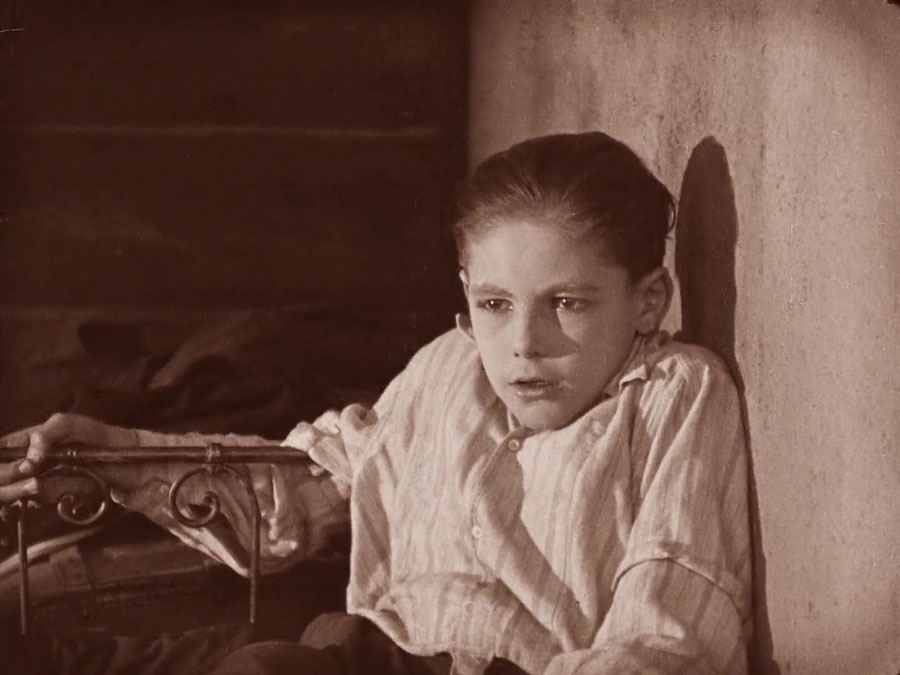
The credit must be equally shared between the screenplay by Jacques Feyder and Françoise Rosay (Feyder’s wife and an uncredited assistant director), the skills of the young actors playing the children, and Feyder’s skill in directing them. Children in movies frequently come across as stiff and overrehearsed but Forest, Peyran and Houyez are natural and believable, even in moments of extreme emotion.
For a time in popular film criticism, there was a trend to complain about movies when characters didn’t behave logically at all times. “Plot hole!” was the rallying cry when someone acted in an illogical manner, even when under emotional duress. Well, Faces of Children is a fine example of a film with logical characters who run into problems they could have avoided if they had led with their hearts.

As remarriages go, the love match that sets off the plot is perfect on paper. Pierre is still relatively young and financially secure, he is lonely and wants help with the children, Jeanne is attractive, sensible, hardworking and a good mother to her own child. Both enter the marriage with the best of intentions, wishing to become the missing parent to their stepchildren, though Pierre, as usual, refuses to offer Jean emotional support.
What nobody considers is that Jean, illogically but realistically, still views his mother as alive and therefore Jeanne is an interloper and Arlette has no place at all. The story explains but does not excuse his behavior toward Arlette: he has no healthy outlet for his anger and sorrow, so he chooses the easiest unhealthy one he can find.

The family is in crisis and nobody is prepared to deal with this fact. Pierrette is too young to view getting a new mother and sister as anything other than a grand lark. Jeanne means well but fails to realize that child logic is not the same as adult logic. Pierre is fridgid and emotionally distant, the closest thing the film has to a villain but more from self-repression and detachment than malice. Jean and Arlette are just old enough to comprehend what has happened but are not old enough to process their feeling, leaving them both simultaneously enlightened and helpless to do anything about it.
(Spoiler) The climax of the film focuses entirely on the relationships between Jean, Arlette and Jeanne. Pierrette doesn’t understand yet and Pierre was likely just as distant while his first wife was alive. A change in his relationship with Jean would mean a change in decade-long behavior and likely a lifetime of emotional repression. But with Jeanne and Arlette, there is hope.
The plotting of the film is interesting in its utter refusal to abandon its focus on characters for the sake of suspense. We are immediately shown that Arlette has taken shelter in the chapel and was not swallowed up in the avalanche. Jeanne’s rescue of Jean takes just a few seconds, with much more time and focus given to her carrying him out of the water and her emotional breakthrough with him.
A movie more focused on pleasing the crowds would have chased the melodrama, letting the audiences sweat about the survival of Arlette and Jean. Feyder breaks all the rules in building suspense yet these sequences are absorbing in a way few films are because of this complete prioritization of emotional truth and character growth. We know that Arlette is alive but we want to see her reunited with her mother and what the consequences for Jean will be. We know that Jean has been quickly and efficiently rescued by the capable Jeanne but we want to know if he has forgiven himself.

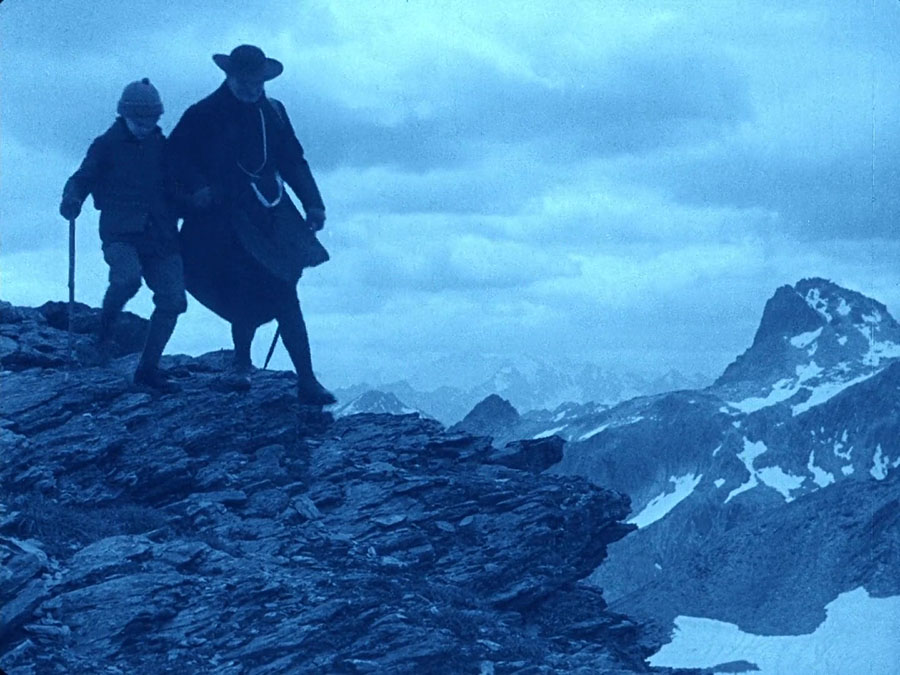
Of course, no discussion of this film would be complete without mentioning cinematographer Léonce-Henri Burel. The Swiss alps provide a breathtaking backdrop and Burel takes advantage of them at every turn but his artistry was not confined to capturing mountains and rivers. He uses point of view shots throughout the film to emphasize the child-size stature of its small protagonist. The closeups are lovely, natural and luminous in both the mountain sunshine and the moody fire and candlight.
Faces of Children is sometimes described as realism but there is a dose of the magical. Jean’s mother coming alive in her portrait is the most obvious example but the film also follows no particular chronology of seasons, with winter and spring swapping back and forth throughout the film, seemingly to match Jean’s mood.

Faces of Children is a true masterpiece of rare and delicate beauty. It eschews the rules of studio filmmaking and intentionally pursues character growth and emotional breakthroughs over plot points and manages to do so while remaining watchable and accessible. The young cast is particularly excellent and showcases the best of silent era acting. A must see.
Where can I see it?
Originally released on disc as part of the very out of print Rediscover Jacques Feyder French Film Master box set. Unfortunately, there has been no subsequent official release in North America but it is widely available to stream via fan upload.
☙❦❧
Like what you’re reading? Please consider sponsoring me on Patreon. All patrons will get early previews of upcoming features, exclusive polls and other goodies.
Disclosure: Some links included in this post may be affiliate links to products sold by Amazon and as an Amazon Associate I earn from qualifying purchases.
 Movies Silently
What a wonderful film. I absolutely loved it. The scenery, the story, and the acting (especially the children) were superb. I could watch this film over and over. I totally agree with you that it is a must see. I’m so glad that you reviewed this film. Many thanks!
Isn’t it great?
An incredibly touching film. The acting is restrained throughout, and all the more effective for that. Thanks for reviewing it. I just saw it on Youtube after reading what you wrote, and it really is a must see.
Glad you enjoyed it!