
When a little girl rescues some trapped mice, it turns out that they are actually the mouse fairy and her powers come in handy when further fairy tale perils present themselves.
Home Media Availability: Stream courtesy of EYE.
By the Book
Fairy tale films were an early cinematic hit but they had a direct link to the stage, with mythical extravaganzas charming audiences with lavish sets and costumes. Georges Méliès was, of course, the king of onscreen fairy tale fantasies but he was not the only one and, as projected movies entered their second decade, filmmakers were looking for new and imaginative ways to incorporate the unique properties of cinema into their fairylands.

The young Ambrosio film company of Italy tackled the fairy tale genre by bringing it back to childhood: fairy tale plays and movies were popular but most viewers of the era had likely first encountered folklore in a children’s picture book.
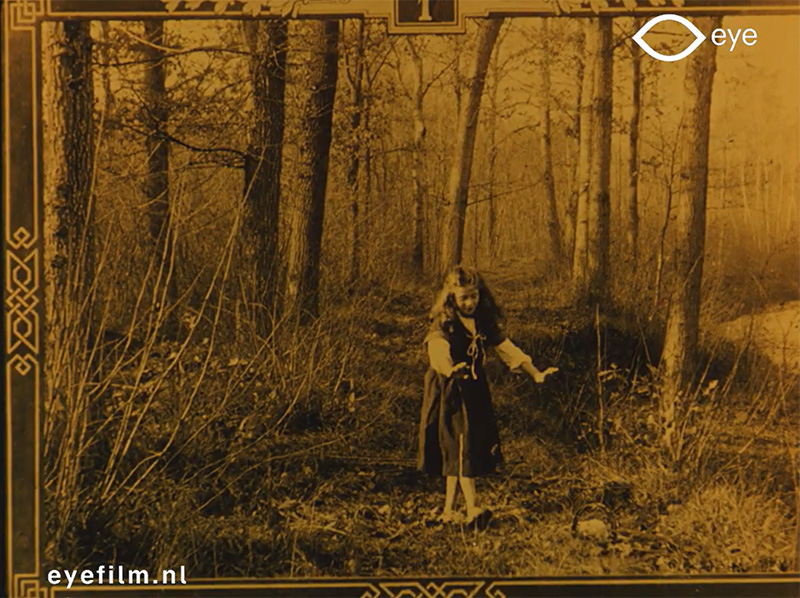
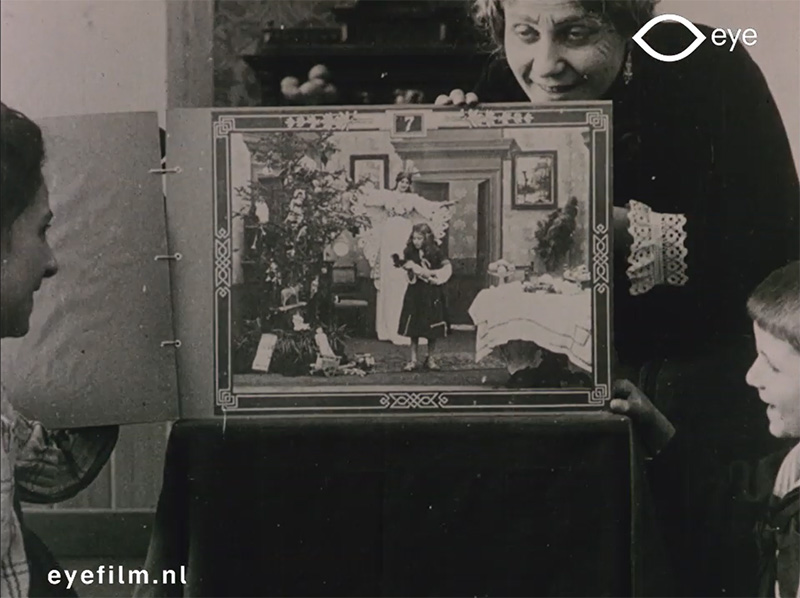
The Grateful Little Mice opens with a grandmother reading the storybook to her grandchildren, who pay rapt attention. She turns the title page and we see a photograph of a forest scene with a young model acting out a walk in the woods. The audience is drawn toward the book and then the figures come to life.
I think many viewers associate camera movement with a later era of cinema but strapping film equipment directly to a train, automobile or boat had been popular since the dawn of the movies and pans were growing in popularity during the 1900s. However, there was more than one way to create a sense of movement in the movies. Méliès, who tended to keep his camera firmly set up in a long shot, had his actors charge the camera in his 1899 series, The Dreyfus Affair, creating a dynamic and chaotic sequence. Later, he devised a more sense of kinetic movement with a sophisticated tracking/zoom illusion by wheeling a fishtank toward the camera in The Mermaid (1904).

While it is sometimes described as a camera movement, if you look carefully, the opening and closing sequences of The Grateful Little Mice perform the same trick. Notice that the wall remains in the same position, as does the background furniture, but the book and the three actors move closer to the camera, possibly on a rolling platform. (There is an ever so slight wobble that you can see if you look for it.) The same action is reversed for the conclusion, pulling the audience back out of the story physically.
The effect is not quite seamless as there is a jump between the photographed scene of the book’s page and the live action that commences but it is an attractive and imaginative way to invite the viewer into the world of the book and the producers didn’t stop there. The illuminated border of the book, complete with chapter number on top, is visible throughout the film, constantly reminding the audience that we have been transported into a literary world. It is remarkably charming.

The story is about a young girl who finds a rat in a trap while walking in the woods. She releases the creature, who turns into a fairy and expresses her gratitude for the rescue. Later, the girl is attacked by a hunter (possibly an ogre? I am not up on my fairy tale cannibal lore) in the forest and dragged away to his bone-littered hut. Through gesture, he conveys that he intends to eat her up.
The fairy sends mice and rats to gnaw a hole in the door and the girl escapes. The hunter pursues but the fairy causes a wall to grow in his path. Undeterred, the hunter turns a branch into a ladder with magic and continues his pursuit. The mice then gnaw apart a bridge and, when he walks across, he falls to his death.

The girl rejoices and is presented with gifts by the fairy, as well as a dining table covered with rats and mice. The happy ending secured, the audiences makes a backwards exit from the book. The end!
As was typical of films of this period, extreme realism and extreme artifice are combined to create a magical world. The opening scene shows a real forest with trees and shrubs but once the villain appears, we enter a far more fantastical realm with painted sets and even artificial water. These techniques would have been borrowed from the stage, though it’s worth noting that a selling point for the Méliès fairy tale In the Kingdom of the Fairies (1903) was the use of real water for the special effects!

The hunter’s hut scene is particularly effective, with moldy bricks and a cooking pot full of human bones adding to the grisly mood of the scene. And I am not sure if the rats and mice were trained but it’s certainly fun to see them swarming across the sets, bent on destruction of the door in the cutest way possible. (Though I should note that some of the rats and mice seem to have been thrown into the frame, which… don’t do that, okay?)
The surviving print is fairly elaborately tinted with four different colors to match the moods of the picture. The film opens with a warm gold tint that befits an evening of storytelling, as well as a peaceful walk through the forest. The hunter’s hut sequence is tinted an eerie green with a lighter, fresher color for the forest escape sequence. The happy ending is a silvery black and white, a good shade to inform the audience that storytime is over and we can return to the real world.
The Grateful Little Mice has a brief seven-minute runtime and its story is simple (though why the hunter couldn’t just enchant himself some dinner, I have no idea) but the production shows considerable care and planning, as well as the growing desire to not just match the lavish stage fairy productions but surpass them with only-in-the-movies flourishes.
The Grateful Little Mice has everything you could want in family entertainment: a “be kind to animals” message (however imperfect), a scary but not-too-scary villain who gets his comeuppance, a large dose of magic and lots of cute scenes of mice and rats saving the day.
Where can I see it?
Stream online courtesy of the EYE Filmmuseum.
☙❦❧
Like what you’re reading? Please consider sponsoring me on Patreon. All patrons will get early previews of upcoming features, exclusive polls and other goodies.
Disclosure: Some links included in this post may be affiliate links to products sold by Amazon and as an Amazon Associate I earn from qualifying purchases.
 Movies Silently