
Colleen Moore plays a humble switchboard operator who dreams of bigger and better things, flowers and furs from a wealthy suitor. When a millionaire comes to town, it looks like her big chance but he is up to his neck with gold diggers…
She has his number
The famous decadence of the 1920s was built on a significant wealth gap and so it wasn’t surprising that films would seek to close that divide with a little bit of romance. The slang term “gold digger” was enjoying popularity and women on the hunt for rich men became popular heroines as modern women embraced a new audacity. Sitting home waiting for a genteel suitor was for the birds. Men pursued women for beauty, why shouldn’t beauties turn the tables?

Some 1920s cinematic gold diggers end up having to furnish their own gold (as Viola Dana does in That Certain Thing), some land their man but find their gold digging offends their husband (as in the case of Midnight Madness), some find that they just want their sweet, poor boyfriend (Gloria Swanson in Manhandled) and some just dream of money but really just want a hardworking and faithful man, as we see in Orchids and Ermine.
Colleen Moore plays Pink, a happy little flapper who runs the switchboard at a cement company and dreams of marrying a rich man who will cover her in ermine coats and orchid corsages. When she sees an ad for a position at the De Luxe Hotel in New York, she jumps at the chance to get within striking distance of the rich customers.
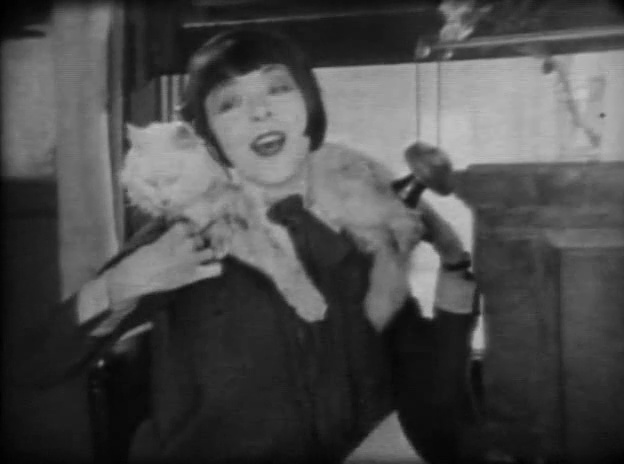
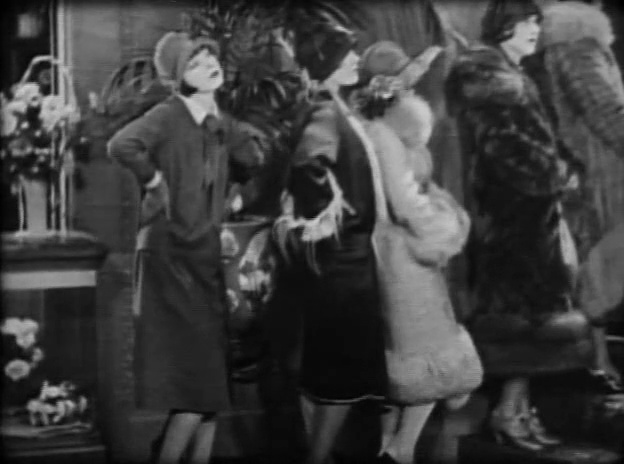
Every other single woman in the city had the same idea and the employment line is long. Pink’s comparatively plain clothes don’t seem to stand out in a sea of lace, beads and feathers but that turns into an advantage as the boss isn’t interested in hiring a fashion plate. Pink gets the job.
Pink operates the hotel switchboard and befriends coworker and fellow gold digger Ermintrude (Gwen Lee, who could plays these roles with her eyes closed), who works at the hotel flower shop. Ermintrude is eager to marry rich and not too particular about background checks: she is taken in by a rich man’s driver posing as the boss.
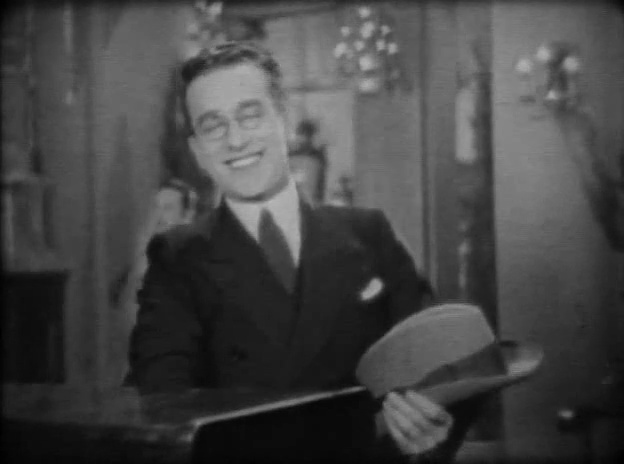
Pink and Ermintrude see that Oklahoma oil millionaire Richard Tabor (Jack Mulhall) is going to stay at the De Luxe and both dream of landing the big fish. Again, all the other young women in New York have the same idea and Richard is mobbed.
Shy and retiring by nature, Richard doesn’t want to spend his entire New York trip dodging women, so he asks his valet Hank (Sam Hardy) to swap places with him. Hank has a blank checkbook and all he has to do is carouse and deflect attention from Richard.

Pink, meanwhile, has learned from Ermintrude’s example, begins to doubt the gold digging way and is starting to get a little sick of coarse pickup lines. (One of her suitors is a six-year-old Mickey Rooney playing a mustachioed little person.)
Richard is smitten with Pink and buys her some orchids at the hotel flower shop, charged to the Tabor account. Pink is delighted until Hank shows up as Richard Tabor and buys flowers for Ermintrude. Pink assumes that Richard the valet who is skating on thin ice by charging flowers to the boss’s account.

Hank gives nervous and awkward Richard some surefire pickup lines that he read in a flirting how-to manual. By the way, everything could be taught by correspondence course in the early 20th century and this was often used as comedy fodder. How to Be a Detective manuals had been movie comedy fodder since the 1900s, Merton of the Movies portrayed a would-be actor who learned his chops by book and record, and the incompetent pickup artist writing the book on the subject was the central gag of Girl Shy.
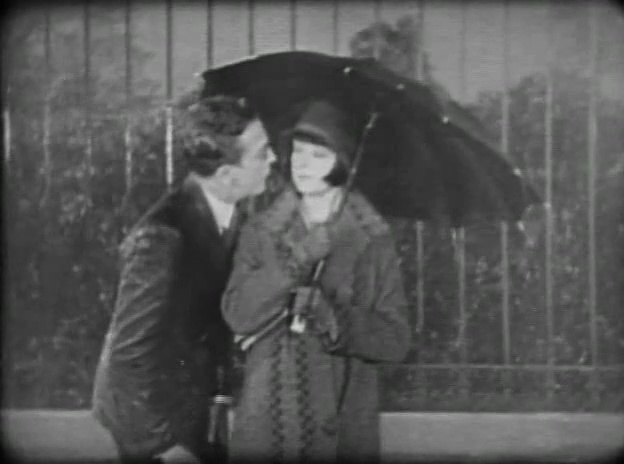
While the book’s corny advice may have worked for Hank with Ermintrude, Richard gets nowhere with Pink, especially since she thinks he’s lying about his identity, and she is off duty anyway, so she leaves him sputtering. He pursues her, jumping onto her bus and trying to explain himself and tell her who he really is.
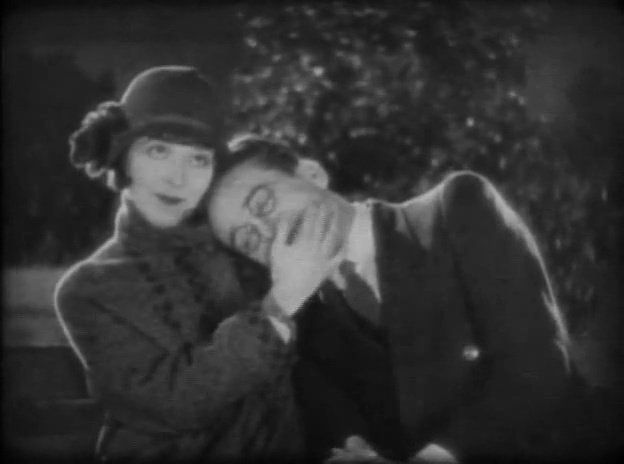
In his excitement, he fails to duck and ends up clonked on the head by a street sign. Pink was starting to soften anyway and seeing him hurt removes all her resentment. She fusses over him and tells him that she likes him but he needs to be more ambitious and look for a better job. Meanwhile, Ermintrude has dragged Hank off to the preacher for a whirlwind wedding.
Richard shows up the next day in his suit and top hat, Pink thinks he has gotten a job as a floorwalker and applauds his ambition. After he proposes, he finally manages to tell Pink that he is really Tabor and he intends to buy her everything she ever wanted. That’s all well and good but the shops still think Hank is Tabor and Richard quickly finds himself arrested for fraud.
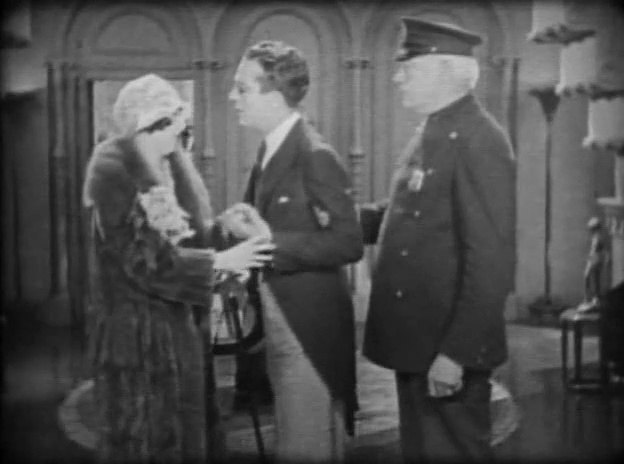
Will Richard sort things out? Will Pink finally get her orchids? See Orchids and Ermine to find out!
Well, that was cute! Ably directed by Alfred Santell, it’s light as a feather, not a shred of realism to be found, basically the kind of 1920s flapper fairy tale that was Colleen Moore’s signature. Moore is cute and brings on the sass. (When picked up on by an older rich man, she quips that “You can’t beat these old birds—when their wives reach forty they want to change them for two twenties.”) Jack Mulhall is also a lot of fun, not overplaying his character’s awkwardness and convincing us that he is just the sort of person Moore would give up her gold-digging dreams to wed.

This is a fine example of the kind of slick star vehicle audiences of the 1920s could expect from an actor of Moore’s fame. Charisma, fashion, some witty title cards, a stunt or two, and then a happy ending for the nicest characters. It’s like slipping into a John Held, Jr. illustration. It’s fluff but it does have its feet in the social realities of its era.
By the 1920s, there started to be rumblings of a shift in the United States away from viewing outside employment as something done by single women until they found a husband, but the women most likely to be employed were still single, never married. The gap was smaller between never married women and women who were divorced, widowed or separated but it was still significant and would remain so for decades. A “happy” movie ending featuring a woman quitting her job to appease her husband or fiancé was common well into the mid-century.

The societal expectation was clear: young women were welcome to be gainfully employed as something to do until they found Mr. Right. As a result, workplace comedies that focused on women tended to view marriage as the end goal, much the same way college pictures would end with graduation.
Half of all single American women were employed in the 1920s and the movies reflected reality with every major star appearing as a shop girl, a secretary, a manicurist, or a telephone operator. Mr. Right might be the boss, a floorwalker, a humorously awkward lug, or a millionaire. And, in the case of Orchids and Ermine, the story splits the difference since Pink both accepts a working class suitor and wins her rich husband.
The picture isn’t meant to be gritty and so we are never shown Pink’s presumably small boarding house room or the home she shares with her parents and five siblings or any other variation on this theme. Orchids and Ermine is an aspirational fantasy (though the aspiration has a color like: Pink tells a Black friend that when she makes it, she will hire her as a maid).
The aspirational message works well for Moore’s persona: she was attractive but in a relatable way. Not every moviestruck fan could have Mary Pickford’s curls or Greta Garbo’s elegance but Colleen Moore’s sharp bob and everywoman manner felt attainable.
Overall, Orchids and Ermine is as slick and sleek a 1920s rom-com as you could ask for. Fans of the genre will love it, fans of Colleen Moore will love it, fans of 1920s fashion will love it and that’s pretty much a cross-section of the modern viewers who will be watching this to begin with.
Where can I see it?
Released on DVD by Grapevine but now out of print. I am hoping for a release of the pristine 35mm surviving print. Otherwise, it’s available unofficially on Internet Archive and YouTube.
☙❦❧
Like what you’re reading? Please consider sponsoring me on Patreon. All patrons will get early previews of upcoming features, exclusive polls and other goodies.
Disclosure: Some links included in this post may be affiliate links to products sold by Amazon and as an Amazon Associate I earn from qualifying purchases.
 Movies Silently