
A lesser-known Alexandre Dumas novel brought to the screen as a Dutch-British co-production. Set at the start of the reign of William of Orange, it is a tale of death, jealousy and flowers.
Home Media Availability: Stream courtesy of EYE.
Tulip Mania
Tulip Mania has entered the vernacular as a shorthand for a frenzied speculative bubble. From Beanie Babies to NFTs, the crazes are intense, brief and eccentric. However, unlike subsequent bubbles, tulips remained popular even if their value became far more realistic.

The Black Tulip was published by Alexandre Dumas in 1850, on the heels of his popular classics The Three Musketeers (and sequels) and The Count of Monte Cristo. A thin volume with a simple plot, it never won the same popularity of the author’s big hits but since those books are famously difficult to fit into just one picture, perhaps its tale was better suited to the cinema.
While it is set over three decades after the height of tulip mania, the story revolves around a rare form of the flower and a prize offered to the gardener who can grow one. (Most “black” flowers and fruits are actually very dark purple, just as any “blue” rose is actually very pale violet. I want a historical swashbuckler about the race to grow the first yellow sweet pea, thank you.)
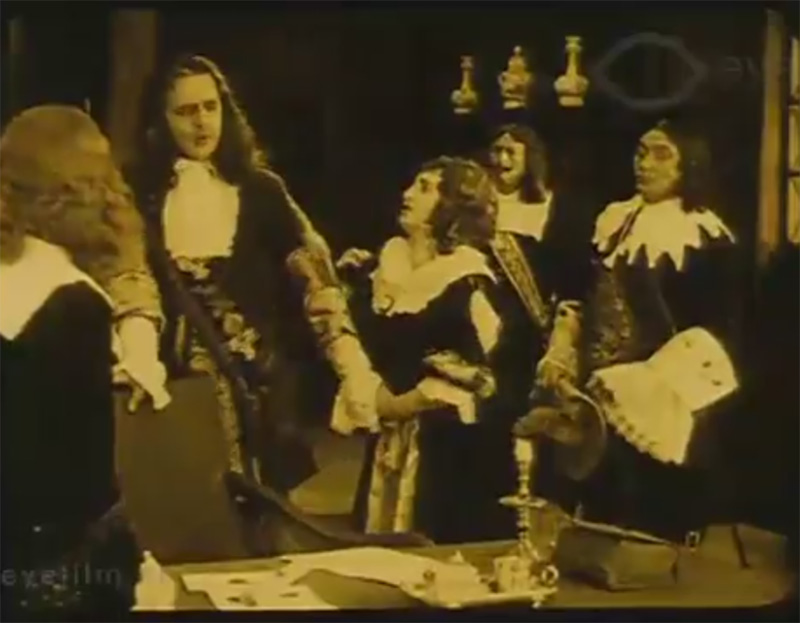
Dumas opens his novel with the horrifying events of 1672, in which Johan and Cornelis de Witt, brothers and leaders of Dutch politics for decades but bound for exile, were dragged from prison in the Hague by an angry mob. They were murdered, mutilated and partially eaten.
Now that he has your attention…
The film version, a Dutch-British co-production, opts for a gentler opening, loving shots of flowers and an announcement that a rich prize is being offered for anyone who can grow a black tulip. Finally, we get an introduction to the novel’s hero, Cornelius van Baerle (Gerald McCarthy), a gentleman gardener and tulip fanatic—and the godson of Cornelis de Witt.

With the political climate of the Netherlands in turmoil, William of Orange (Frank Dane) makes his move to gain power. The brothers de Witt (Eduard Verkade and Dio Huysmans) resist but violent protests force their hand.
Here we have some inclination that this movie is going off the rails. The stressful protests are just some people waving their arms a bit. Are they calling for the deaths of their former masters or jostling to buy Eurovision tickets? Either is possible, given their demeanor.

Anyway, the de Witts had been corresponding with Louis XVI, which wasn’t a good look seeing as how he has invaded the Netherlands, so they send the incriminating letters to be stored by van Baerle, who is noted for caring about his garden and nothing else.
However, van Baerle’s neighbor, Boxtel (Harry Waghalter) is jealous of his garden and suspects that he is attempting to grow a black tulip. He sends an anonymous letter of denunciation after eavesdropping and learning of the French correspondence. When van Baerle is arrested, Boxtel attempts to steal his tulip bulbs but discovers that they are nowhere to be found.

Circumstances have grown more dire for the de Witt brothers, with Cornelis tortured and Johan trying to get him out of prison and into exile. Gryphus (Coen Hissink), the corrupt jailer, is no help and seems to actually support the mob but his beautiful daughter, Rosa (Zoe Palmer), is horrified. Angered citizens storm the prison and the brothers die off-camera.
The mob gets slightly more animated at this point but I am still not buying that this is an enraged army of cannibals. I understand why the deaths of the brothers de Witt were not shown—this is a family film, sir!—but what follows is simply a sober proclamation that their deaths were a black page in history, followed by showing a black page in a book.
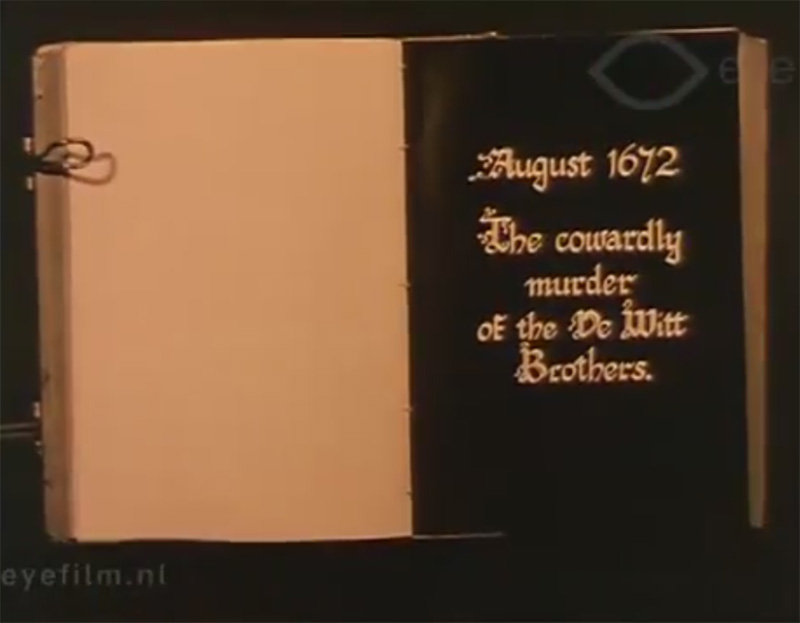
This literal imagery is unintentionally humorous. The black page was a phrase in common use at the time and a first edition of the 18th century work Tristram Shandy famously used a black page to mark the death of a character (as did several earlier texts from the 17th century) but, as is the case with trunkhose and codpieces, it is possible to be historically accurate and still distracting.
The sequence carries no narrative weight and this film was designed for foreign release, so non-Dutch viewers need a helping hand to understand the infamy of these deaths. This is not helped by the fact that the grievances of the crowd (the Dutch did not, in fact, like being invaded by the French) are left vague other than a demand for William of Orange to be granted power.
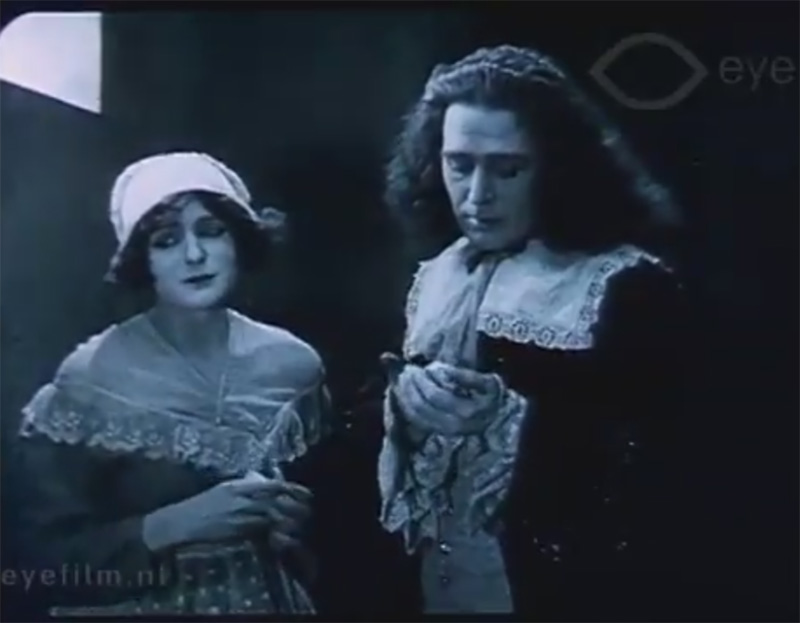
With the de Witts dispatched, the film returns its focus to van Baerle. It’s love at first sight when he sees Rosa and she reciprocates. She gives him his godfather’s bible and he decides to will her his black tulip bulbs, writing a letter explaining what he is giving her and their value. It’s an abrupt sort of romance but that sort of thing was popular at the time. “I just met you and this is crazy but here are my tulips, which will be your dowry when I die, etc.”
Things take another turn when van Baerle’s death sentence is commuted to life in prison and Rosa personally entreats William to post her father as his jailer so they can remain together. The rest of the picture is a bit of a slog with Rosa and van Baerle exchanging sweet nothings in prison, flowers being grown and Boxtel skulking about trying to find the bulbs.

The last ten minutes, the film wakes up and becomes a race between Rosa and Boxtel to deliver the blooming tulip to the prince. Boxtel steals it, Rosa steals it back, he locks her in a windmill, she climbs down the blade to escape. It’s the most fun to be had in the entire picture and I just wish there had been more of it. (Co-director Maurits Binger had earlier helmed The Secret of Delft, a far more enjoyable picture which likewise featured a stolen cultural item, an action heroine and windmill antics. The man knew what he liked.)
The Black Tulip’s resolution involves a deux ex Orange with the prince stepping in to right all wrongs. That’s fine in theory, it’s hardly the first or only story of its era to be resolved via royal intervention. However, Dumas painted himself into a narrative corner with his opening scene and the film, even though it rearranged the sequence of events, fell into the same trap.
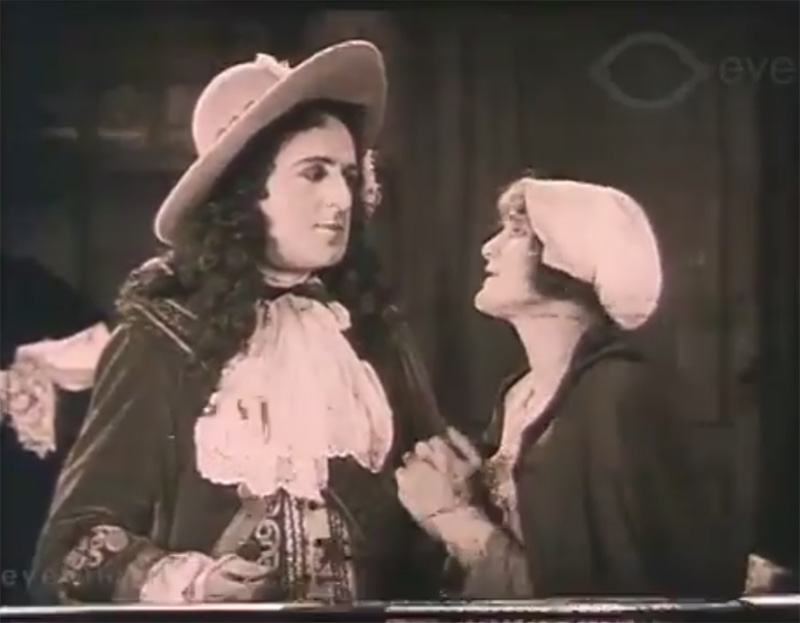
The Black Tulip wants to have it both ways: condemn the brutal deaths of the de Witts but not grappling with the fact that William of Orange, even if he didn’t directly order anything, benefited from the killings while failing to punish and in some cases actually rewarding the masterminds. Do I really have to explain RICO? (I know, I know, it’s American but William died when his horse tripped on a molehill and his political rivals toasted “the little gentleman in the black velvet waistcoat” so the concept of indirect killing was known.)
The essential, related problem is that The Black Tulip is not Dumas’s finest adventure and this production does little to elevate it. It especially pales in an apples-to-apples comparison with other mob-filled historical pictures from the same era. Scaramouche (1923) and A Tale of Two Cities (1917) both portrayed their furious mobs in a suitably frenzied manner.
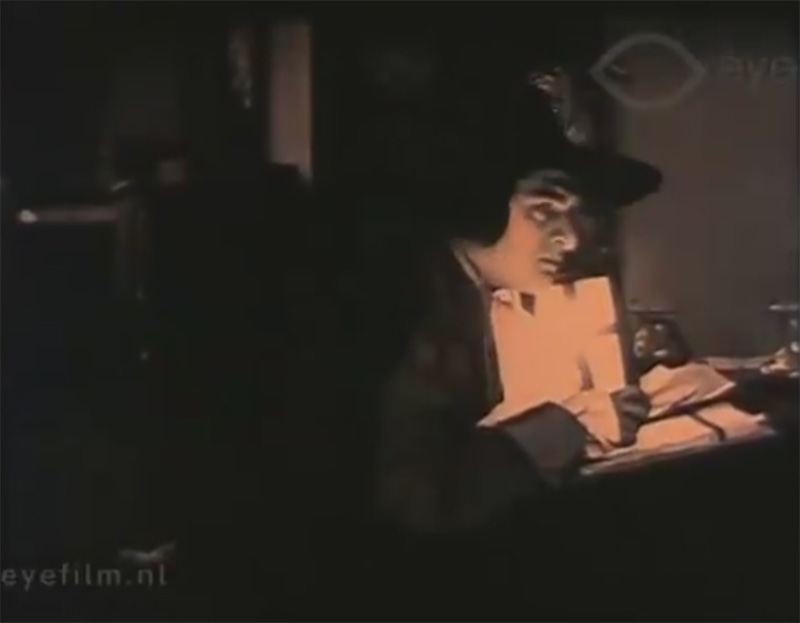
I understand balking at portraying a pair of extremely bloody deaths but the film consistently failed to drive home what could have been emotional moments. What was the point of putting van Baerle in prison while his godfather is being murdered if his reaction is not shown? It could have added poignance to the scene without graphic violence. The infamous gore of 1919’s Behind the Door was suggested by shadows and shocked reactions, after all. Further, why was Rosa’s initial contact with William treated so nonchalantly? Sneaking into the royal presence should have created a bit of suspense if it hadn’t been treated as a hand-wavey flashback.
The black tulip is a MacGuffin in the classic sense with no particular emphasis on its rarity or beauty. People are willing to lie, cheat and steal for this thing, yet the film doesn’t even give us a closeup once it flowers and is unveiled. Red photographed black during this, period, so it would have been rather easy to shoot loving images of the rare flower. In fact, floral motion picture photography had been popular since the 1890s, so this was hardly a difficult task. We are not shown the process of flower breeding, which could have been made cinematic utilizing the style of actualities, which were so popular at the time.

Indeed, the characters are generally dragged from Point A to Point B with few emotional beats offered simply because the story requires them to be there. The Black Tulip falls into the historical film trap of emphasizing events and scenery (which is quite good) over the inner lives of the protagonists.
In the plus column, the end of Boxtel is more satisfying in the film. In the book, he died of a heart attack when Rosa was named owner of the black tulip but van Baerle does not learn of his betrayal until much later. In the film, we get the whole “take this man away” business with Boxtel trundled off to prison before the main cast. (Nineteenth century novelists loved their “possibly divinely struck down or maybe a heart condition” ends for villains.)

Other changes to the novel are inexplicable and not for the better. For example, in the film, van Baerle is being led away for execution when he receives word that his sentence was commuted. Fine. In the novel, he is actually lying with his head on the block when the last minute reprieve comes. Whose idea was it to remove all the suspense from the scene like that?
In theory, a production about guerilla tulip gardening should have been ideally suitable for a Dutch-British co-production but in practice, much of the already weak novel’s meagre suspense is excised adn nobody involved seemed to have been particularly excited about the story or characters or even tulips. And if they didn’t care, how can the audience?
Where can I see it?
Stream courtesy of EYE. And I want to emphasize that even if this film wasn’t my favorite, at least I know that from personal viewing experience and not guesswork based on a textbook and a few vintage reviews. Archival access is priceless, even if all the films can’t be winners.
☙❦❧
Like what you’re reading? Please consider sponsoring me on Patreon. All patrons will get early previews of upcoming features, exclusive polls and other goodies.
Disclosure: Some links included in this post may be affiliate links to products sold by Amazon and as an Amazon Associate I earn from qualifying purchases.
 Movies Silently
Very well timed review as far as I’m concerned, given a new adaptation of Monte-Cristo just hit theaters this week in France!
Nice!
As I was watching this film I was wondering what you would say about it. I found it a bit of a slog to get through to be honest. Only the scene at the windmill provided any excitement. But as you say, all films can’t be winners. So I was glad I watched it, and I’m glad it has survived. Many thanks for your entertaining review.
Yeah, the pacing is just leaden and there is really no excuse for it. Such a pity. Glad you enjoyed the review!