
A young lady tries to entertain her handsome boyfriend with an intimate supper for two. Her little brother, however, has other plans. A practical joke comedy from the Edison company.
Home Media Availability: Stream for free courtesy of the Library of Congress.
This is my contribution to the It’s In the Name of The Title Blogathon hosted by Taking Up Room and realweedgiemidget.
Wouldn’t it make you mad?
In the earliest days of projected cinema, movie audiences literally did go to the movies, plural. A selection of short films would be played together, sometimes mixed with live entertainment, and variety was the word. A film show could include magical fantasies, actuality footage taken from around the world, historical vignettes (beheadings optional), or, in the case of the film we are reviewing today, knockabout comedy.

Maude’s Naughty Little Brother; or, Wouldn’t it Jar You? Wouldn’t it Jar You? was a Vitagraph production of 1900. The story, like the film itself, is short and sharp: Maude (possibly a male studio employee in drag—it looks a lot like Vitagraph boss J. Stuart Blackton himself— as was common practice in American films of this period) has set up a romantic candlelight meal with her boyfriend. The Edison catalog—Vitagraph had a distribution deal with them—describes him as “a dude of the regular chappy type.” All is going well but then the title character shows up.
Maude’s little brother ties the boyfriend’s coat to the table with several lengths of string. When the father of the house returns home and sees what his daughter has been up to, he attacks the boyfriend, who is forced to flee while dragging the table. Then the father turns his attention to his son, whom he spanks as Maude sobs.
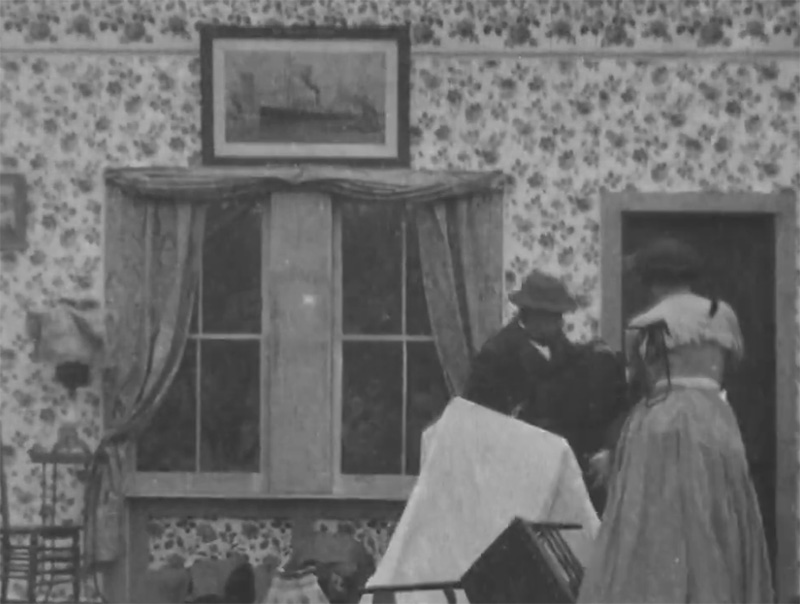
Practical jokes and violent slapstick were the building blocks of cinematic comedy. The Sprinkler Sprinkled, possibly the earliest film with a plot and certainly one of the very first comedies, featured an equally naughty boy playing jokes on the gardener and receiving his just deserts. Characters were mugged, chased, thrown, or eaten at a fantastic clip in the 1890s and early 1900s. Chaotic clowning was the order of the day and there wasn’t a wrong that couldn’t be righted with a well-aimed left hook.
Maude’s Naughty Little Brother contains all of its action in a single long shot, mimicking to look of a stage play. Movies were about to get a lot more movie-ish, though, because George Albert Smith in the U.K. pioneered the closeup in his 1900 comedy As Seen Through a Telescope. (Smith, a man of taste, tended to use the closeup technique in his films to showcase his two main objects of interest: kittens and his wife’s legs.) Scottish filmmaker James Williamson would use an extreme closeup for cannibalistic comedy in The Big Swallow in 1901. So, Maude’s Naughty Little Brother is a bit of 1900 film technique sealed in amber.
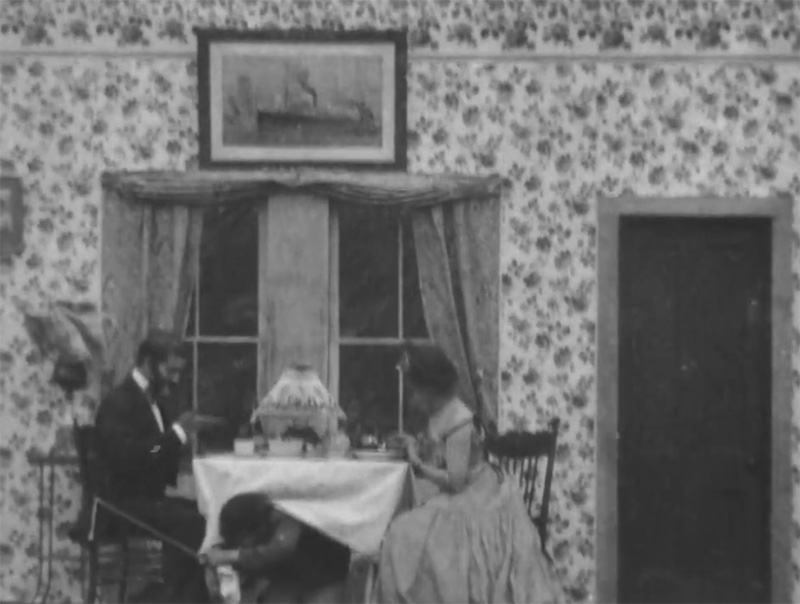
This tiny 90-foot comedy runs just 90 seconds and title cards were not yet in use for silent film dialogue. So, why were the filmmakers so insistent upon giving their heroine the name Maude? Surely it didn’t matter what she was named, right? Well, Maude reached the zenith of its popularity in the United States in the 1880s, cracking the top 25, and all of those Maudes would have been in their teens when 1900 rolled around. It was convenient shorthand to communicate the youth of the character, the same way a 1980s teen would be Heather and a 2000s teen would be Emily.
Maude wasn’t an outlier like Mary (which topped the naming charts for the first half of the twentieth century) and had a pretty normal lifespan for a trendy name: after reaching the top of its popularity, it slowly slid downward and exited the top 1,000 in the United States just a few years after Maude’s Naughty Little Brother was released. But when that movie came out? “Maude” would have immediately communicated “youth” to movie audiences.
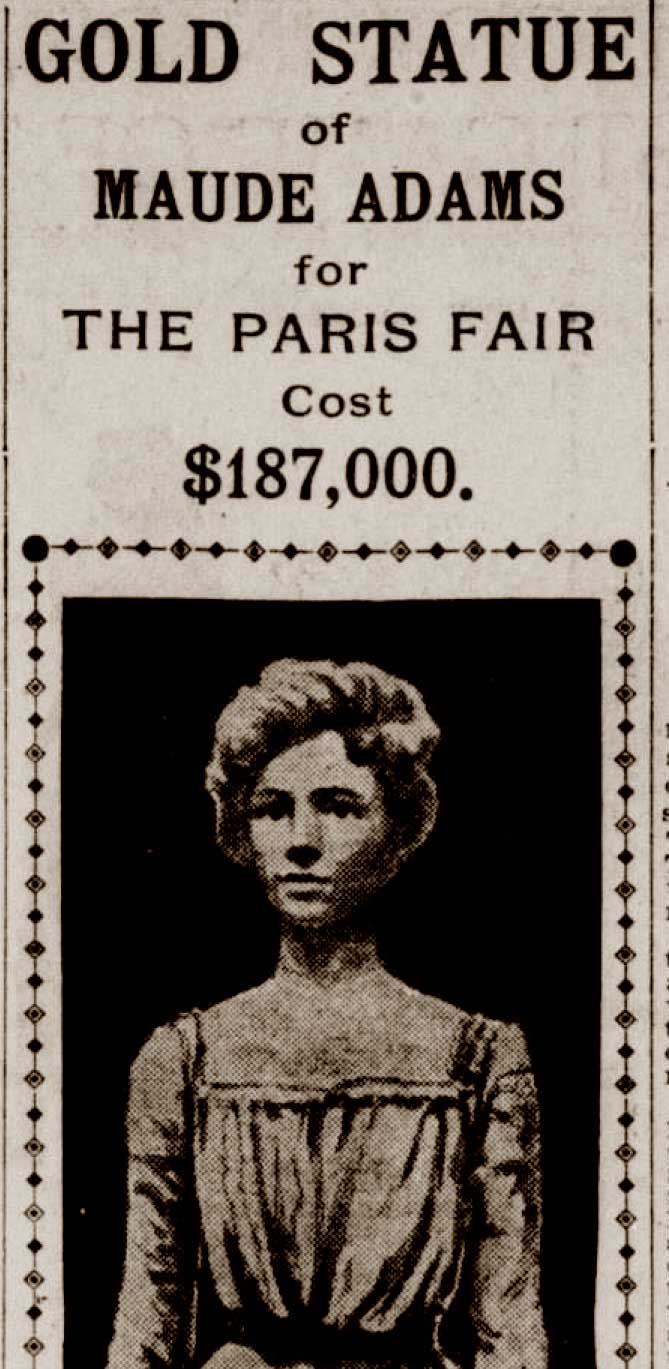
This was helped by the popularity of actress Maude Adams, the first Broadway Peter Pan, who was embroiled in mild controversy in 1900 when she was selected as the model for a solid gold statue of The American Girl to be displayed at the Paris Exposition (the same exposition that displayed a talking picture and awarded Campbell’s Soup its gold medal). Adams was slim, dainty and sporty, her signature role being the Boy Who Would Not Grow Up and one critic complained that she was too unlike the previous ideal, the buxom (and fictional) Gibson Girl.
The second part of the film’s title (“Wouldn’t it Jar You? Wouldn’t it Jar You?) also has an interesting history. The phrase “wouldn’t it jar you?” (with the meaning “wouldn’t it just drive you nuts?”) was in common use in the 19th century but it exploded in popularity in 1900, just in time for the Edison team to playfully add it to their title.
I was unable to definitively locate Patient Zero for this sudden upsurge but if I had to make an educated guess, I would say Tin Pan Alley was the likely culprit. American popular songs followed trends as much as expectant parents choosing names and where one songwriter went, the others would follow. There were crazes for airplane songs, Irish-Yiddish wedding songs, name a specific niche and reams of sheet music would follow.
Wouldn’t it Make You Mad, Wouldn’t it Jar You? by Will J. Hardman and Oh, Wouldn’t it Jar You? by Will D. Cobb were both published in 1900, with the former being praised for its catchy lyrics. The song was quoted for many years after, so it might possibly have been the cause of all this.
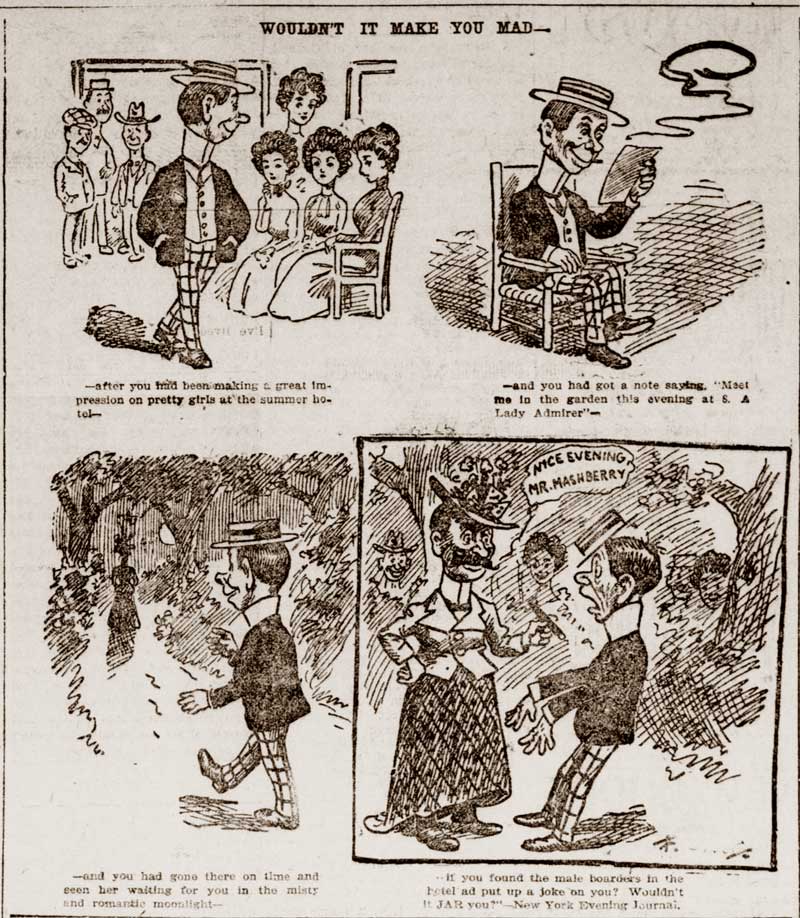
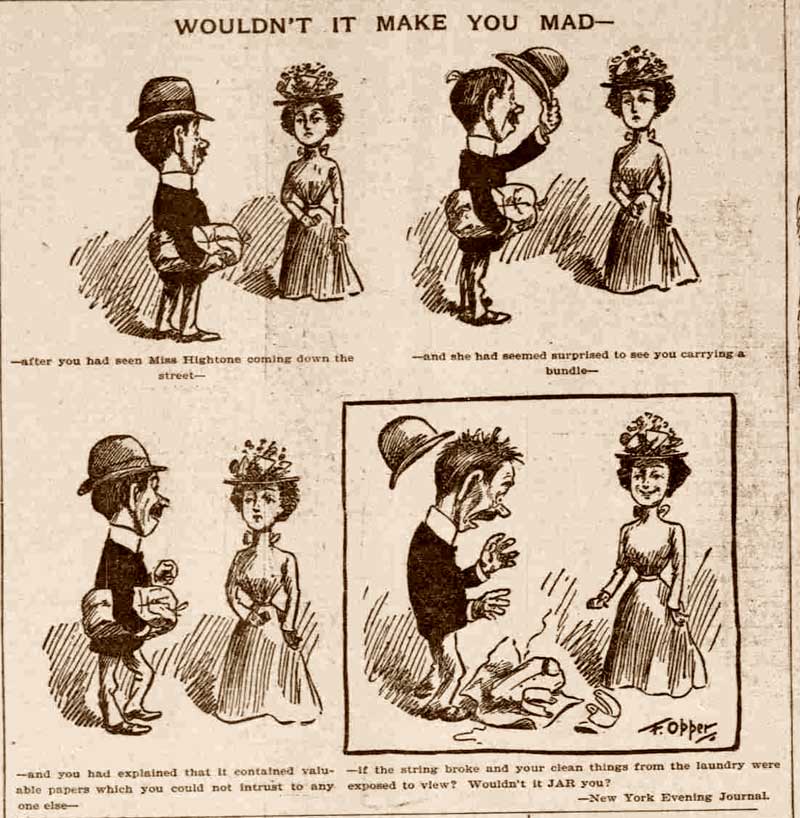
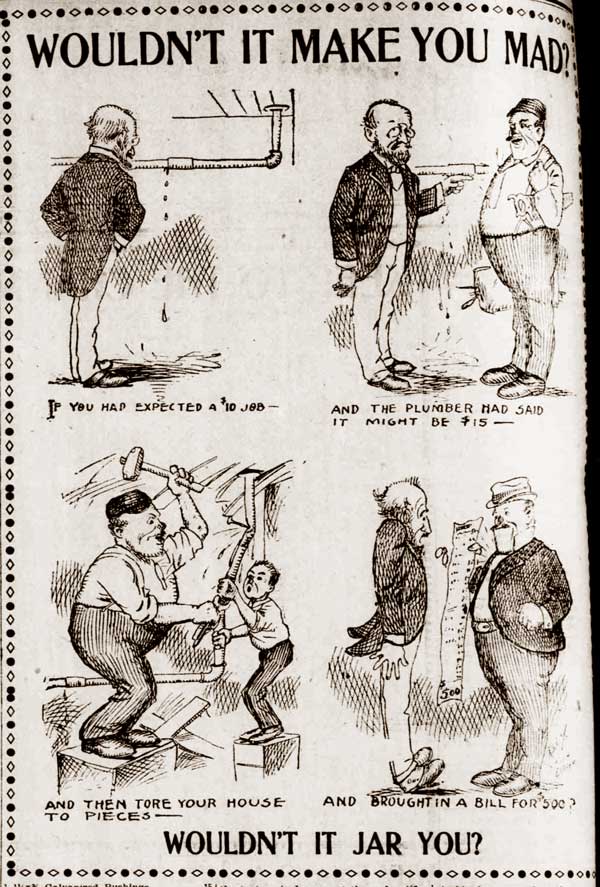
“Wouldn’t it jar you?” humor was also taken up by newspapers, with newspapers in major markets, including New York, publishing comics portraying maddening situations. These comics were syndicated countrywide in small anthologies, adding to the cries of “wouldn’t it jar you?”
The situations fell into two categories: annoying mishaps of modern life (tripping over the cat while trying to quietly steal back into the house after a late night; a plumber’s bill ballooning) or full practical jokes (a hotel guest being tricked into a date with a young woman—who is another male guest in disguise).
It’s possible that Maude’s Naughty Younger Brother was directly inspired by these comics. After all, the film was shot on the Vitagraph rooftop studio in New York City and the company had been founded by New York newspaper men. (Rooftop because most films relied on natural light at the time.) Plus, in 1900, copyright law was weak and demand was strong. All early companies frequently adapted and remade with or without permission, while constantly bemoaning piracy themselves.
Maude’s Naughty Younger Brother is a simple film on the surface but digging a little deeper teaches us a lot about its era. It’s a tiny piece of 1900, frozen in time and ready to reveal secrets if we let it. That said, I am relieved to have only spent ninety seconds with that terrible family.
Where can I see it?
Stream for free courtesy of the Library of Congress.
☙❦❧
Like what you’re reading? Please consider sponsoring me on Patreon. All patrons will get early previews of upcoming features, exclusive polls and other goodies.
Disclosure: Some links included in this post may be affiliate links to products sold by Amazon and as an Amazon Associate I earn from qualifying purchases.
 Movies Silently
I love this title and your explanations about Maude, I actually know a Maude who would love to read this – she has a wee brother too – is it ok to send this post to her? Thanks for joining our blogathon and bringing Maude with you
Gill from Realweegiemidget Reviews
Thank you so much for hosting! Yes, please do. 🙂
Thanks for including a streaming link. I liked how they set up the gag, and it did not disappoint.
P.S. Maude certainly does look like a man in drag…
P.P.S. Since this is an Edison film, I want to ask your opinion of the book, “The Missing Reel” about Augustin Le Prince. Am currently reading, and it seems to have a lot of speculation, but what say you?
I am very, very, very cautious about the Le Prince conspiracy theories. Not that I doubt Edison was a stinker but because if he was going to murder anyone, it would have been Siegmund Lubin. (Edison demanded proof that he was actually dead when there was a fundraiser for Lubin’s widow many years after the early patent wars.) For Le Prince, my guess is accidental death, which isn’t nearly as fun.
Thank you for the link! What a treasure this is! xox
You’re welcome!
I really enjoyed this interesting and informative post — and the links to the shorts! AND I’m going to start incorporating “Wouldn’t it jar you?” into my lexicon! Great stuff, Fritzi.
— Karen
Thank uou!
How interesting! I’m so glad these films are easily accessible, because they look like treasures. Thanks again for joining the blogathon. 🙂
Thank you for hosting!