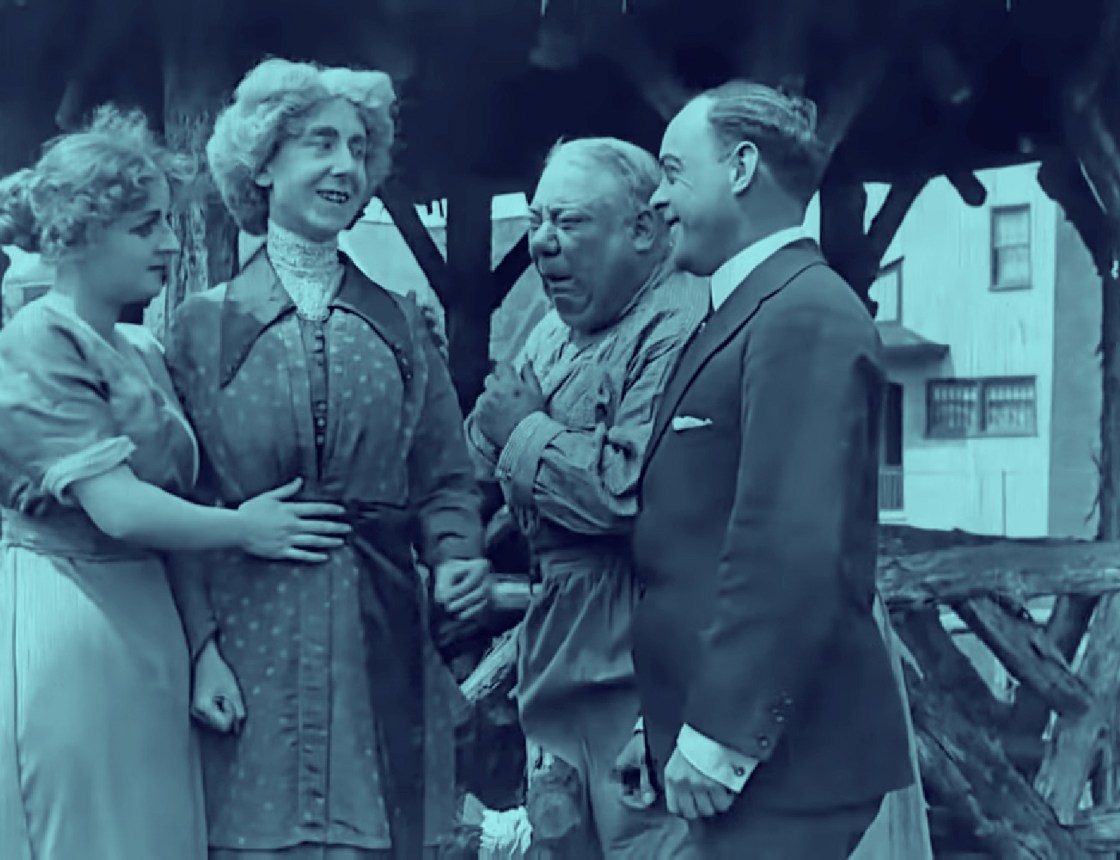
John Bunny discovers that his aunt is coming to visit and is bringing her unmarried cousin. Terrified of having to abandon his bachelor life, Bunny asks his friend to take his place while he poses as the cook. He realizes his mistake when the cousin turns out to be a beauty.
Home Media Availability: Stream courtesy of EYE.
Such a drag
While Keystone comedies are now seen as the iconic humor of pre-WWI American cinema, the critics of the time were head over heels for John Bunny, praising his comical situations and the fact that he eschewed heavy slapstick. Bunny was frequently cast opposite Flora Finch and the duo crafted gags around both their physical contrast and their opposing personas. Bunny’s characters were jolly and pursued life with gusto, while Finch’s were often sour and sermonizing. They helped put the Vitagraph studio on the map as a haven for more cultured comedy.
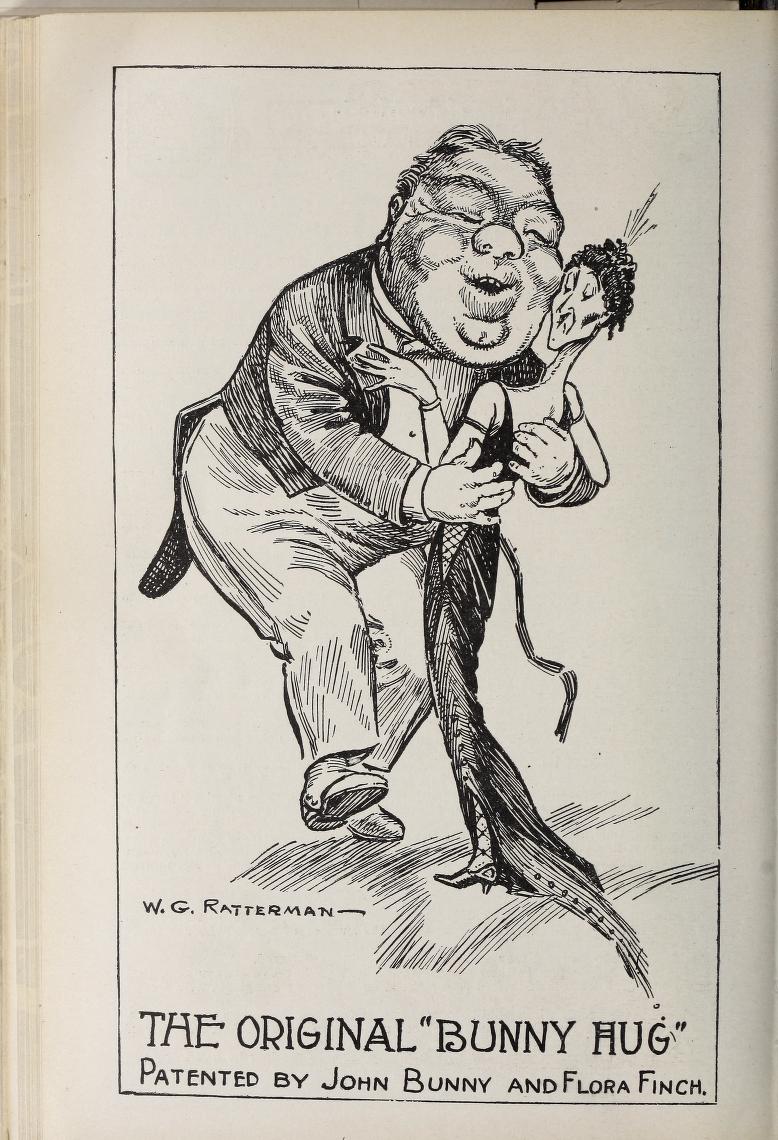
In Bunny’s Dilemma, he plays a bachelor who is delighted with the single life. His peace is threatened when his Aunt Eliza (Finch) is coming to visit and bringing her spinster cousin, Jean (Lillian Walker). She’s hoping that wedding bells will result.
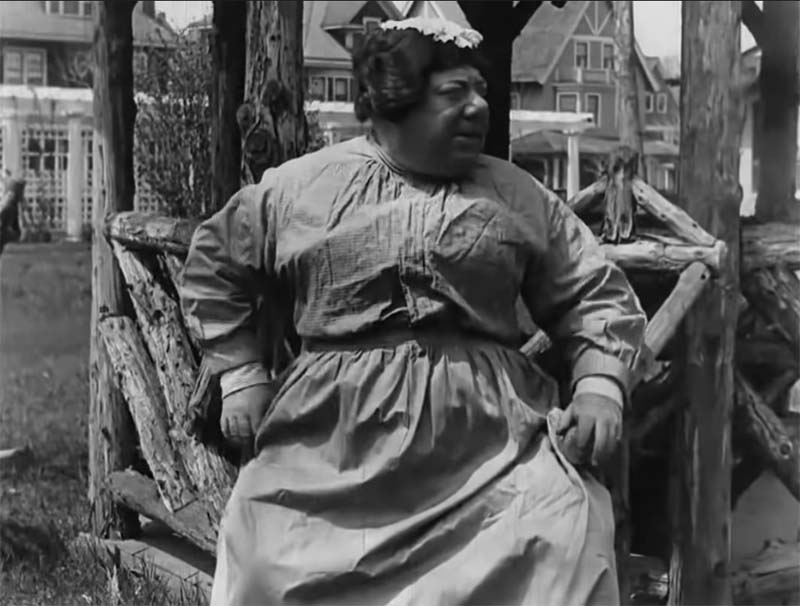
Bunny is horrified at the idea but he has a plan. Aunt Eliza has never met him and has no idea what he looks like, so Bunny asks his friend, Jack (Wally Van), to take his place and save him from matrimony. Jack agrees and Bunny dons a skirt and apron to pose as the cook and keep his eye on the situation.
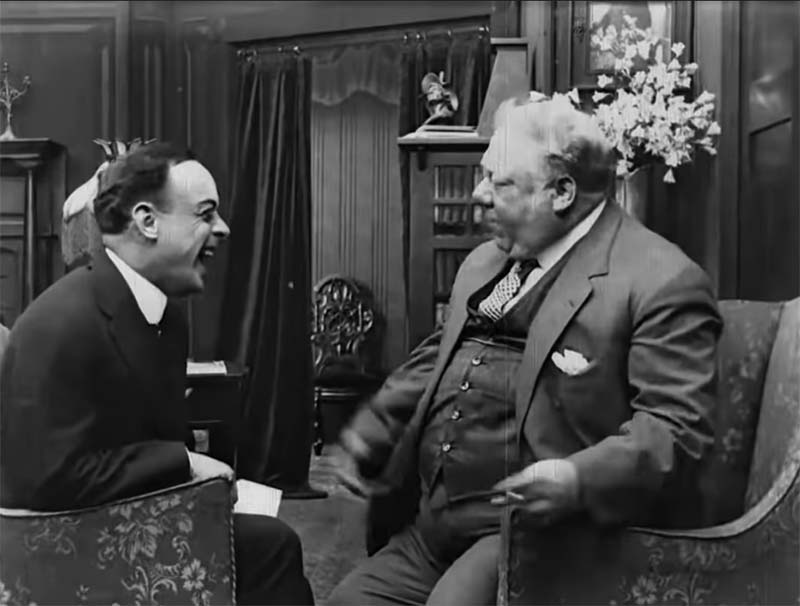
When Aunt Eliza arrives, Bunny realizes that he has made a terrible mistake because her definition of spinster and his are very different; Jean is young and beautiful. He wants to reveal his true identity but is blocked by Jack at every turn. For her part, Jean is confused as to why the help is flirting with her, so Jack informs her that the cook is off her rocker, poor dear.
Desperate to declare himself, Bunny writes a note asking Jean to come down to the arbor so that she can see “Beauty from the Beast.” Jean is intrigued but she is intercepted by Aunt Eliza, who is none too amused and goes to the rendezvous herself in a heavy veil. While Jack and Jean look on and laugh, Bunny proclaims his love to his own aunt, who gives him a proper scolding for his impertinence and scheming. Aunt Eliza accepts the alternative match between Jack and Jean and the happy couple exits the scene. No wedding bells for Bunny!
Bunny’s Dilemma is a simple comedy with a limited cast but its short runtime works in its favor and the result is a fun little confection that never wears out its welcome and plays to the strengths of its cast. While the Bunny-Finch collaborations can be amusing, they can sometimes tip into mean-spiritedness, particularly toward Finch’s characters, with her often ending up humiliated and crying, while Bunny skips off scot-free. Sometimes, things went the other way, as was the case in Bunny’s Suicide— Flora gives him a rope to hang himself and he tries to do just that. (A common comedy trope at the time.) In contrast, Mr. and Mrs. Sidney Drew were a comedy team working at the same time for the same studio but they kept their sparring civilized and delicately balanced with mutual affection.
Bunny’s Dilemma is funny but also dramatically satisfying because Bunny ended up with exactly what he said he wanted at the beginning of the story: Jack took Jean off his hands and he has remained a single man. The stakes are as low as can be, so nobody takes the chaos all that seriously once everything has been explained and a good time is had by all. It’s essentially a classic bedroom farce in miniature.
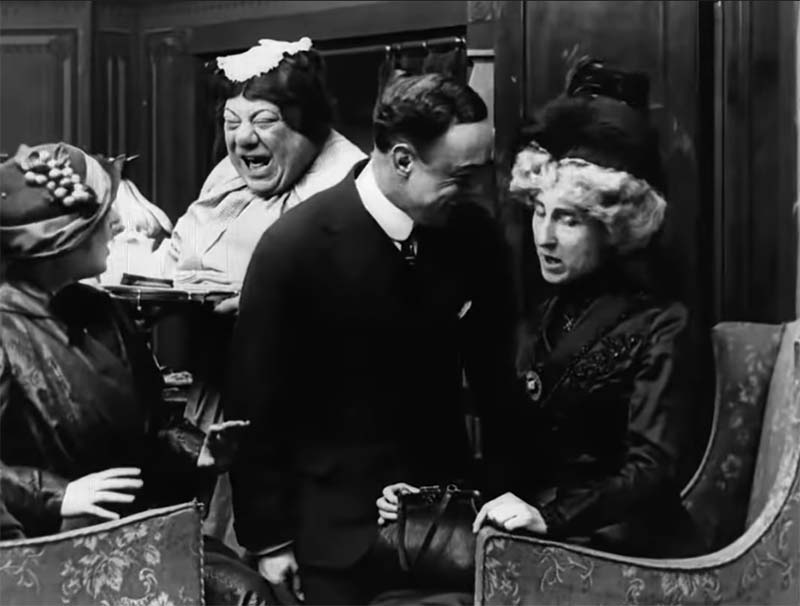
This was familiar comedic territory for Bunny and Finch. She had dressed as a man while her male costars were in drag in Diamond Cut Diamond the previous year. In 1914, Bunny would adopt orientalist dress and pose as a sultana in order to evade Finch and her breach of promise suit in Bunny in Disguise.
Bunny and Finch were working from a long and rich international tradition of crossdressing for love. Pushkin’s The House in Kolomna centers a soldier who poses as the family cook at the behest of his lover so that they can spend time together under the nose of her strict mother. The film was adapted to the screen in Russia with Ivan Mosjoukine as the soldier the same year Bunny’s Dilemma was released.
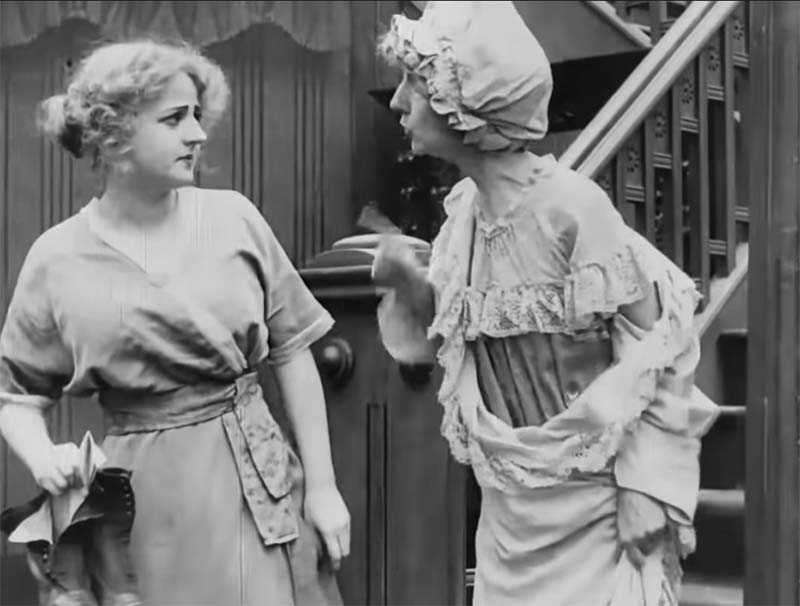
It’s highly unlikely that the films were in any way connected—Kolomna was not considered to be a major work of Pushkin and was obscure to English-speaking audiences—but, rather, were drawing from the same farcical pop culture well. The inspiration for Bunny’s Dilemma was far more likely to have been Charley’s Aunt, a wildly popular 1892 gender-bending comedy hit that maintained its appeal for decades.
Bunny seems to quite enjoy his role as the cook and his fussy ruffled cap makes him resemble a John Tenniel illustration. The subterranean warfare between Bunny and Jack is also quite funny as Jack gleefully courts the unexpectedly attractive Jean and Bunny tries to thwart him by flirting and, when that fails, fainting. Jack responds by trying to revive his cook with a pitcher of water.
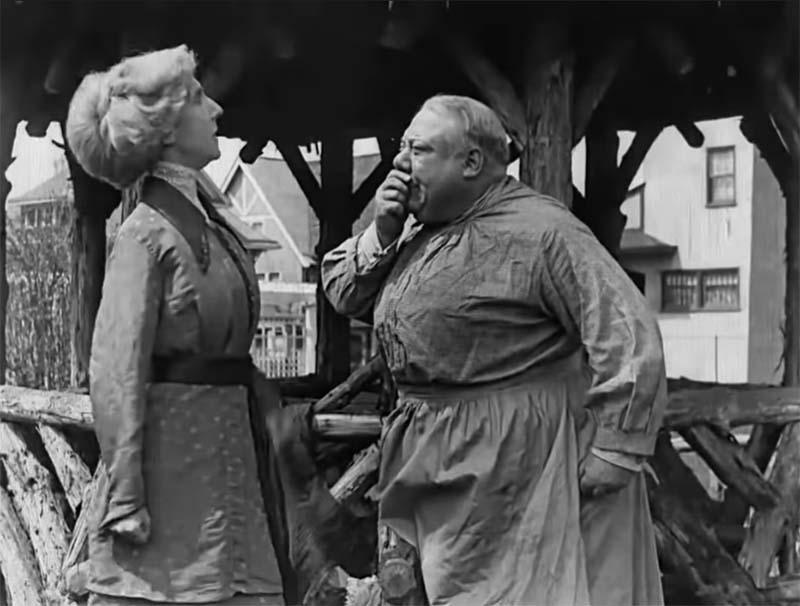
There isn’t much interaction between Finch and Bunny during the main action of the film but the duo have a very nice bit of comedy at the end when Bunny realizes that his goose is cooked and he has been exposed to Aunt Eliza. He sinks down, deflated by failure, as she triumphantly scolds him. She then seemingly forgives him at the behest of Jean and Jack before giving him one last rebuke for the road and flouncing off.
Bunny’s Dilemma represents the gentler side of the Bunny-Finch collaboration and it’s a good introduction to the team, better than the rather harsh Her Crowning Glory, which is probably the most famous of their films to modern audiences. I love a good bedroom farce, so I am the target audience for this picture. If you like madcap schemes, disguises and wacky hijinks in the pursuit of love, you will probably enjoy it too.
Where can I see it?
Stream for free via the EYE Filmmuseum’s YouTube channel. The film is listed as Bunny in Disguise but vintage synopses show that it is really Bunny’s Dilemma. The intertitles and letters are in Dutch without subtitles but it is easy enough to follow the film if you know the basics of the plot. You can also see an American print with English intertitles and a score by Ben Model on the DVD release John Bunny: Film’s First King of Comedy. In the surviving English language version, Jean is called Sally and Jack is called Cutey. I am uncertain whether the characters were renamed prior to the film’s initial release or if this represents a re-release with redone titles.
☙❦❧
Like what you’re reading? Please consider sponsoring me on Patreon. All patrons will get early previews of upcoming features, exclusive polls and other goodies.
Disclosure: Some links included in this post may be affiliate links to products sold by Amazon and as an Amazon Associate I earn from qualifying purchases.
 Movies Silently