
When a German officer has his fortune told, he is warned to beware because his life will end when he crosses paths with a blonde woman. The officer laughs it off and immediately takes up with a blonde adventuress. I wonder what will come of that?
Home Media Availability: Stream courtesy of EYE.
He had it coming
The early 1910s was a period of rapid innovation and breakneck production speed in the film industry. There was an eager demand for more films to satisfy audiences and theaters that could change their programs daily. With so many pictures being released, the advertising copy had to be, well, energetic in order to cut through the noise.

Selig’s 1912 release The Hand of Fate; or, The Mysterious Blonde was advertised as “an exciting tale of international romance, intrigue and daring in which a Blonde and a Brunette struggle for supremacy.”
Sold! Take my money!
The Blonde and Brunette of this film are Phyliss Gordon, making her Selig debut, and Mona Darkfeather. The object of their struggle is Hobart Bosworth, future daddy and/or old sea salt of the silent feature era but still in his matinee idol salad days at the time this picture was produced.
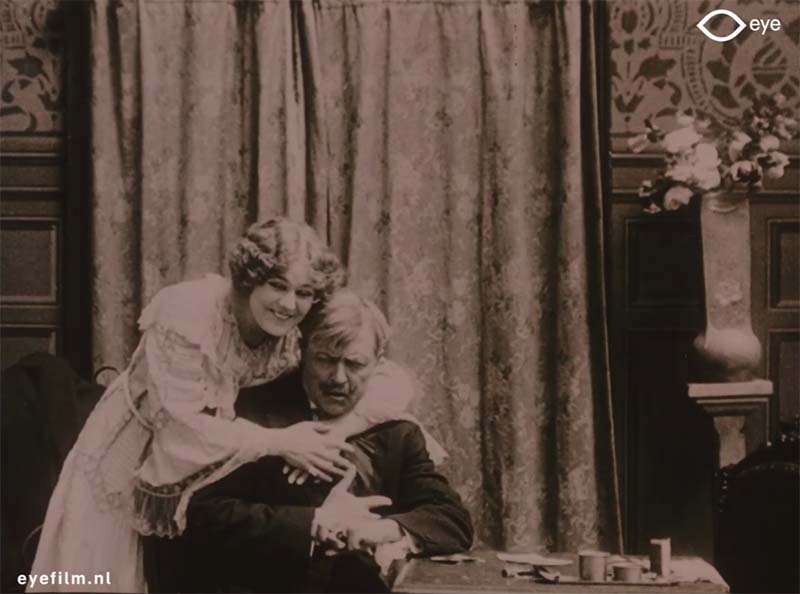
It should be obvious by now that this is a throbbing melodrama. The genre was popular (and still is, if you think about it, as melodrama was all about dramatic events and plot twists over characters and mood) but it was not the only option for silent era entertainment. However, the image of the mustachioed villain has firmly lodged itself into the popular consciousness. The Hand of Fate double-crosses anyone looking for that particular trope because the villain is… well, you’ll see.
(The version of the film I saw had Dutch intertitles and some of the characters had been given different names from the American release. I will be using the original American character names for my review.)

The picture opens in Germany with some officers paying for a palm reading from Stella (Mona Darkfeather). Stella knows her onions and immediately sees that Emil Kiznoff (Hobart Bosworth) has a lifeline that ends when he intersects with a blonde. Emil doesn’t think much of the warning but thinks very much of Stella and persuades her to secretly marry him.
Of course, a German officer with a Romani wife would likely cause a stir, so cowardly and disloyal Emil leaves Stella at home and goes to balls and soirees as a single man. And it is there he meets Madame Z (Phyliss Gordon), a gambler, adventuress and jewel thief. And blonde.
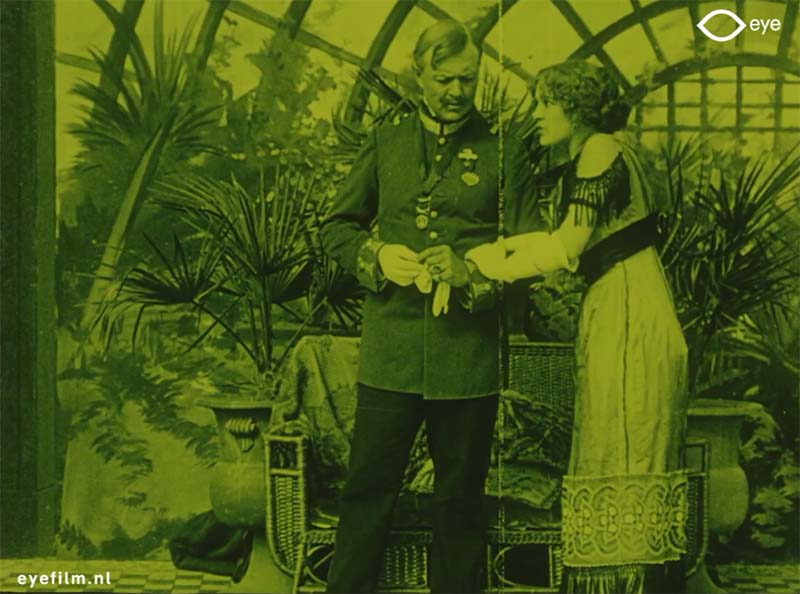
Madame Z has sticky fingers and an eye for fine jewels and manages to lift cash and tchotchkes from party guests with great skill. She frames Emil as her accomplice in order to force him to flee to America with her. He doesn’t fight very hard. “Well, she’s got me, I better leave my wife and my career, byeeee.”
Stella isn’t about to take this lying down and follows them to the USA, where she sets up a fortune telling shop to support herself while she searches. She is engaged to render her services at a society party and, I think we all saw this coming, is soon face-to-face with her wayward husband (not at all unhappy in his present situation, by the way) and Madame Z.

At this point, what is shown on the screen differs from what was published in synopses. The plot recap published in the trade publication Moving Picture World states:
“Emil and Madame Z attend the reception for the purpose of stealing and in a very dramatic scene Stella comes face to face with the couple and exposes them to the police.”
A brief capsule review published in a later issue reiterates, “the deserted wife follows and is vindicated by fate with the help of the police.”
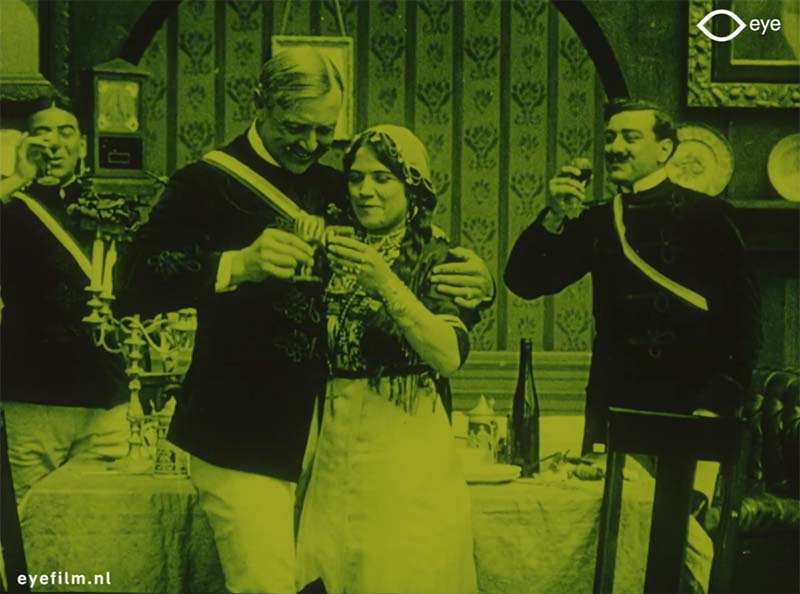
However, what is shown onscreen in the version I viewed was Stella stabbing Emil as he tries to leave the party with Madame Z. The actual stabbing is not shown, just a title card explaining that Stella has taken matters into her own hands and no earthly judge will sentence her husband, and then a shot of the body and both Stella and Madame Z being arrested.
It’s possible that a more happy and law-abiding ending was used for domestic release while the more vengeful version was released in the Netherlands and maybe across Europe. Or the synopsis was sent out to the trade magazines before the picture was completed and there were slight tweaks to the plot. In any case, this shows the importance of viewing the original films whereover possible and the problem we have with the sheer quantity of lost pictures: synopses are valuable but not infallible.
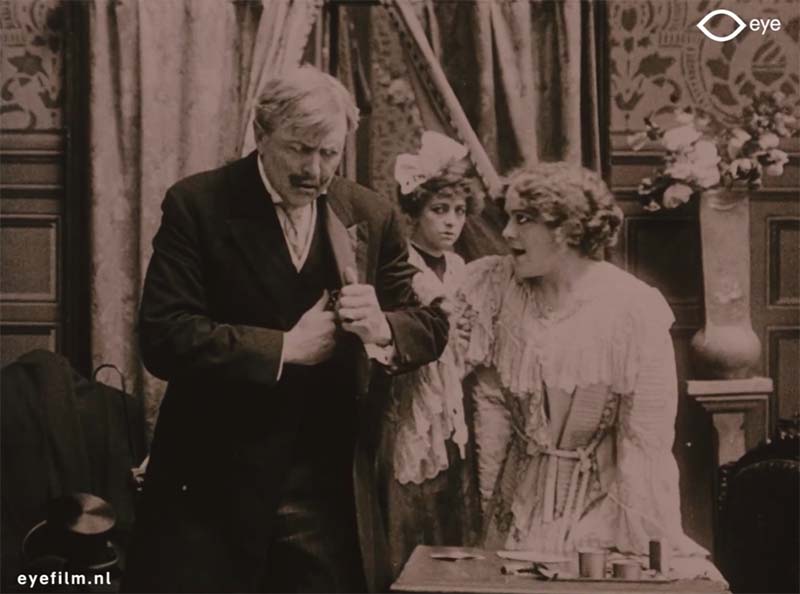
I wouldn’t say this was the most artistic picture—director and Mr. Mona Darkfeather Frank Montgomery insists on showing the cast at full length, closeups are for wimps— but it sure was a lot of fun! I particularly liked Phyliss Gordon’s turn as the ruthless Madame Z, smirking as she plants stolen jewels on the hapless Emil. I want follow-up films showing Madame Z’s criminal reign of terror across Central Europe with her bold and equally female confederates! I want a rendition of Cellblock Tango with Madame Z and Stella proclaiming that Emil had it coming. (“Stab!”)
The picture keeps audience sympathy with the abandoned Stella and it’s nice to see the Romani character not portrayed as a criminal. (Silent films were awash in kidnapping, smuggling and general criminality amongst people of that ethnicity. See: various iterations of Carmen, a swashbuckler or two and some pulpy serials.) I also quite enjoyed the ambiguity surrounding her power of prophecy.
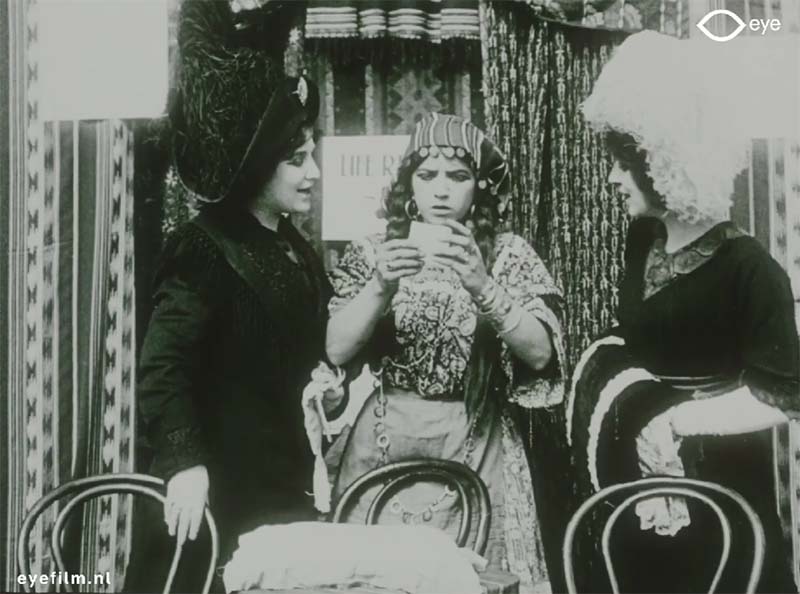
The Hand of Fate indicates that Stella has legitimate fortune telling skills by showing her vision of Madame Z as the fatal blonde but in the end, Emil’s doom comes at her brunette hand. So, was she predicting the future or was she wise to Emil’s wandering eye and giving him fair warning that betrayal would mean death? What a very delicious conundrum.
And having a character predict someone’s doom and then personally ensure that their prediction comes true is a fun forerunner of The Cabinet of Dr. Caligari. I’m not suggesting that it was directly influenced by The Hand of Fate. Rather, that it was drawing from the same very broad pop culture well.

On the other hand, if we wish to accept that Stella’s powers are real, we have the tale of a ridiculous man who fails to take the selfless warnings of his lover seriously and foolishly tempts fate by jumping into the arms of the blondest villainess he can find. His type is the reason hairdryers have “do not use while bathing” warnings.
Either way, is The Hand of Fate corny melodrama? Yes.
Did I eat this up with a spoon? Also yes.

What can I say? I enjoyed every minute of it. I am a sucker for wicked adventuresses and ladies who take matters into their own hands and this picture has a twofer of independent and, to varying degrees, unscrupulous ladies! More if you count Madame Z’s various female accomplices. I couldn’t be happier with this little one-reeler and very much enjoyed the epic, kaiju-scale battle between the Blonde and the Brunette. Poor Hobart Bosworth never stood a chance.
Where can I see it?
I said “take my money” at the start of this review but it’s actually free to watch this little gem. Stream courtesy of the EYE Filmmuseum. The intertitles are in Dutch but there are optional English subtitles.
☙❦❧
Like what you’re reading? Please consider sponsoring me on Patreon. All patrons will get early previews of upcoming features, exclusive polls and other goodies.
Disclosure: Some links included in this post may be affiliate links to products sold by Amazon and as an Amazon Associate I earn from qualifying purchases.
 Movies Silently