
A swords and swashbuckling epic set during France’s Wars of Religion, this picture follows two aristocratic families with a longstanding feud on opposite sides of the conflict. Will two members of the these opposing clans fall in love? Does a baguette have carbs?
Home Media Availability: Public domain streaming.
Trying to turn the Huguenot Massacre into some kind of religious affair
If there was one thing everyone in Hollywood agreed on in the early twenties, it was that big costume pictures were the thing, the larger and more lavish, the better. First National in particular was keen to show itself a leader of the genre and Ashes of Vengeance, based on an enjoyable 1914 novel by H.B. Somerville, was their opening salvo in a successful campaign of historical entertainment.
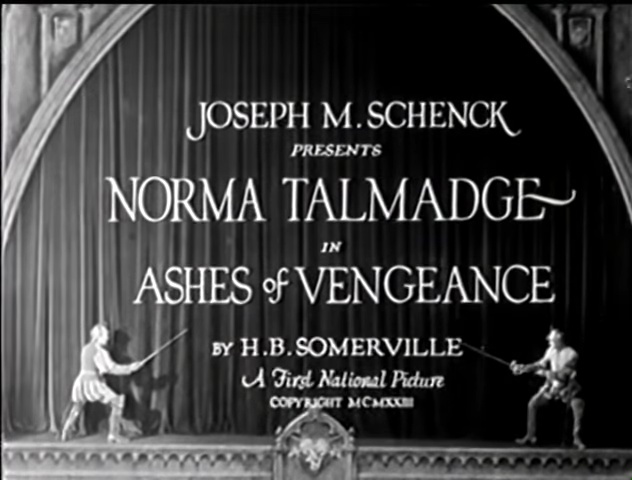
The picture opens on the eve of the St. Bartholomew’s Day Massacre of 1572. The film manages to cover the French Wars of Religion by barely mentioning religion but the short version is that the Catholic faction in France massacred the Protestant Huguenots, assassinated their leaders and unleashed a wave of violence against the survivors.
The hero of the picture is Rupert de Vrieac (Conway Tearle), a Huguenot who is visiting Paris with his fiancée, Margot (Betty Francisco). Margot catches the eye of the Catholic Compte de la Roche (Courtenay Foote), whose family has a longstanding feud against the Vrieacs. The Compte flirts with Margot in order to enrage Rupert and she is more than willing to go along. There’s only one possible response to such an insult: a duel!

Rupert wins the duel and refuses to kill his opponent because it will humiliate the Compte to owe his life to a Vrieac. However, the Compte has his own revenge up his sleeve because he knows about the impending massacre. Once the killing his underway, the Compte offers Rupert a deal: he will spare his life and the lives of Margot and her household if Rupert will act as his loyal servant for five years. With the deal struck, Margot flees to safety, promising to marry Rupert once he is released from his bondage.
The Compte de la Roche has two sisters, the intimidating Yoeland (Norma Talmadge) and little Anne (Jeanne Carpenter), who a paraplegic. Yoeland enjoys tormenting Rupert as she is as invested in the feud as her brother is. Anne, on the other hand, quite likes him. Things take a turn when Rupert saves them both from a wolf attack.

(The wolf attack scene is a bit silly looking, truth be told, since the wolf was doubled by a German Shepherd who was clearly delighted to wrestle with daddy but the wolf involved in closeups was very clearly distressed and the treatment of animals in the movies was not regulated at the time. There were protests but real reform was still years away.)
Yoeland is summoned to her cousin Denise’s (Mary McAllister) castle because the silly girl is in love with her handsome but poor noble neighbor and doesn’t want to marry the Duc de Tours (Wallace Beery). Rupert seems too happy about Yoeland leaving, so she makes him come along as her escort. Sworn enemies all together in an isolated castle? What could possibly go wrong?
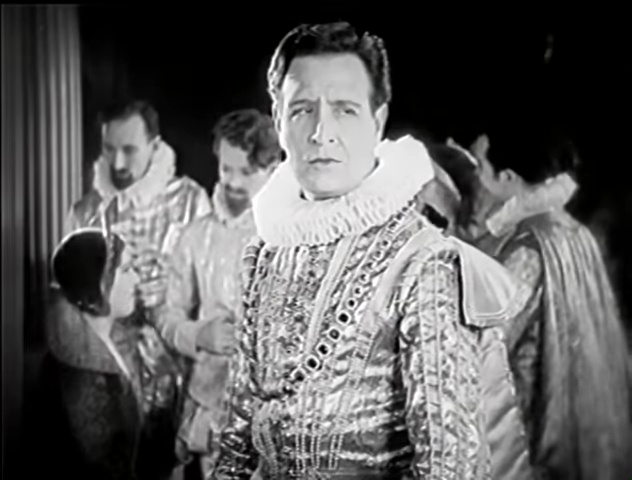
Popping in here to mention that, by this time in the film, it is painfully clear at this point in the film that Conway Tearle was miscast. Rupert’s entire predicament is due to a combination of youthful hotheadedness, posturing, and naïve romanticism becoming entangled in a chivalrous trap. In his mid-forties at the time, Tearle’s age was a barrier in portraying such a character. John Barrymore was just a few years younger but he could pull off that sort of impetuousness easily and would have eaten all of the scenery to boot. Milton Sills, the same age as Barrymore, would have offered raw masculinity and intelligence and was a brooder without equal.

It’s not as though the mature leading men had a monopoly on brooding, though. Even better would have been young up-and-comer Ramon Novarro, who gave the performance of his career as a sarcastic and vindictive French revolutionary in Scaramouche the same year Ashes of Vengeance was released. Intense Austrian actor Joseph Schildkraut may have been the original choice for Rupert but he and Talmadge hated one another on the set of Song of Love, so that would not have been possible. I like the idea, though. Hungarian Victor Varconi would certainly have been up to the task, particularly the brooding part. Ivor Novello is an interesting idea but he needed to be guided by a firm hand, lest he fall into preening and posing. Still, what a stunner in a doublet! My perfect Rupert, though, would probably be French actor Pierre Blanchar, who tackled a similarly conflicted character in The Chess Player and stunned in historical togs on more than one occasion.
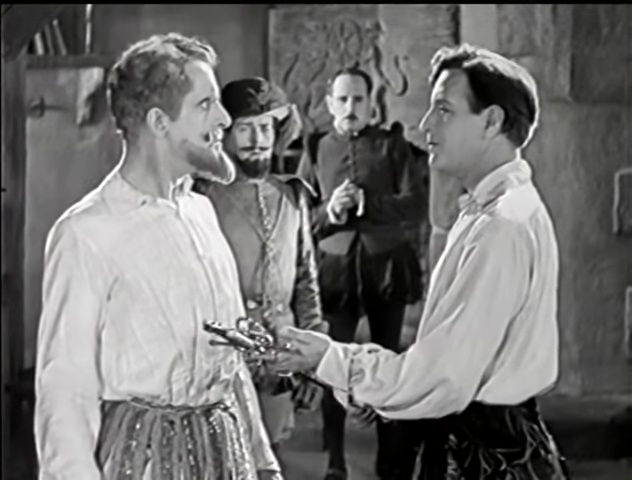
Tearle could deliver good performances—he was excellent as the abused husband in Stella Maris—but he tended to have difficulty making his scenes pop in more melodramatic or historical fare, at least from what I have seen of his work. Ashes of Vengeance revolves around an archaic code of conduct and hatred buried under layers of societal obligations and personal vows of honor. In short, Tearle standing around and looking a bit grumpy is not cutting the mustard. And he wasn’t helped by certain choices in adapting the film but more on that in a bit.
Up to this point, the main conflict of the film has been Conway Tearle vs. Courtenay Foote, which, well, it is what it is. However, the change of setting also provides a change in character dynamic and it becomes Norma Talmadge vs. Wallace Beery and now we’re cooking with gas!
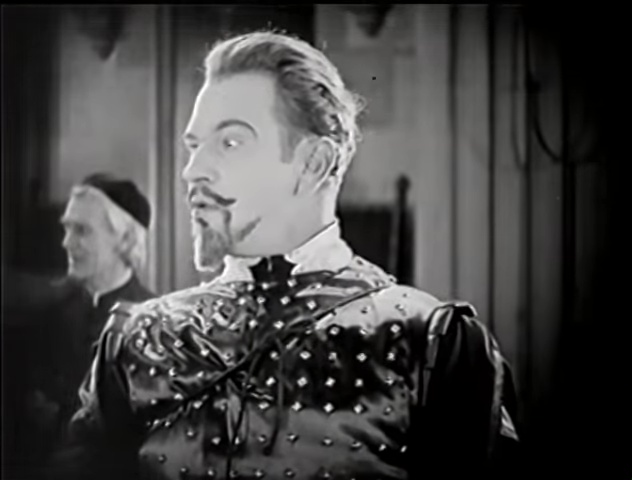
Beery’s skill at portraying obnoxious brutes was due to considerable real-life experience, per most accounts, but there was no one in Hollywood better at being the man you love to hate. And Talmadge was always at her best playing tough broads rather than dainty maidens, so letting her go at Beery hammer and tongs was the best decision possible to liven up the picture. Things are also getting warmer between Yoeland and Rupert but you probably could have guessed that for yourself. Especially since Margot has sent a “Dear Rupert” letter, converted and married another man.
This is also where the story takes an interesting and unusual turn for a swashbuckler picture. It’s not unknown but a claustrophobic suspense sequence is not considered an essential ingredient in the swashbuckling genre. Not sure why because it works so well and what’s coming is a doozy!

The Duc swaggers around, beating peasants and bullying anyone in his path. Yoeland stands up to him and, at one point, takes a riding whip to him. Being a kinky fellow, the Duc takes this as a sign of love and makes his move, only to be rebuffed. He takes his anger out on one of the palace maids, whose fiancé is one of the Duc’s personal bodyguards. The guard attacks the Duc and the Duc kills him.
Obviously, a man of such wealth and statue cannot be held accountable for murdering his own servant. Or so he thinks. The dead man has a brother and soon, the entire company of guardsman is baying for the blood of their master.
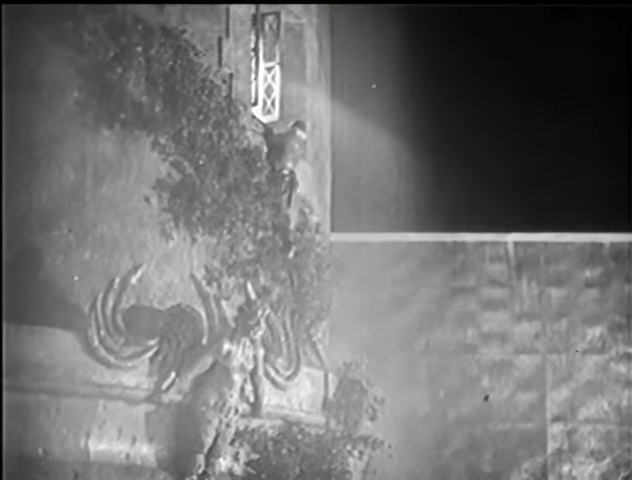
Most of the de la Roche soldiers are off on a secondary plot thread, which means there are only a handful of armed people on hand to protect Yoeland, Denise and the other civilians. So, we have a dark and stormy night, a group of armed men swearing vengeance and murder, Yoeland unwilling to let the Duc die because of her obligation of hospitality and only six swordsman to hold off the mob. Cue the lighting strikes, this is getting good!
Will Yoeland and Rupert put aside their pride and find love? Will buckles be swashed as they were never swashed before? See Ashes of Vengeance to find out!
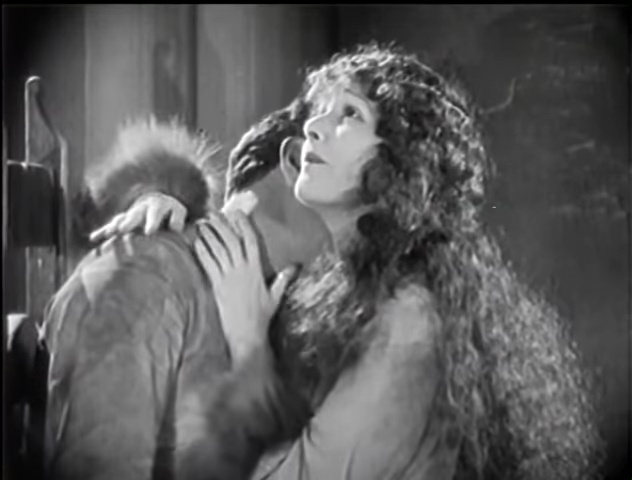
I wouldn’t call it a masterpiece but Ashes of Vengeance is a really interesting picture to watch and discuss. Not all of it works but the parts that do are mesmerizing.
Director Frank Lloyd had a great talent for historical setpieces and Ashes of Vengeance contains some excellent ones, particularly the battle for the turret as a storm rages. Lloyd had already proved his mettle with historical subjects and would reach even greater heights with The Sea Hawk and Mutiny on the Bounty. Ashes of Vengeance remains on dry land but it still looks amazing—and keep in mind I was only able to view a dodgy public domain transfer.

Norma Talmadge takes a full two reels to show up but she proves to be worth the wait as the aggressive Yoeland. The chemistry between Talmadge and Tearle never really sparks but her fights with the Duc, her relationship with Denise and her take-charge attitude all work extremely well. I have to say, though, the Talmadge-less opening reels are a bit of a slog punctuated by the occasional duel. Stick with it.
Reviews of the time were generally positive, though Photoplay complained that the picture drags in spots, which is a fair point. While the film has much to recommend it, particularly its fine sets, moody lighting and strong performances by Talmadge and Beery, most of its issues with pacing come down to two main issues: ignoring the context of its setting and making bad choices in the adaptation of the novel’s earliest scenes.
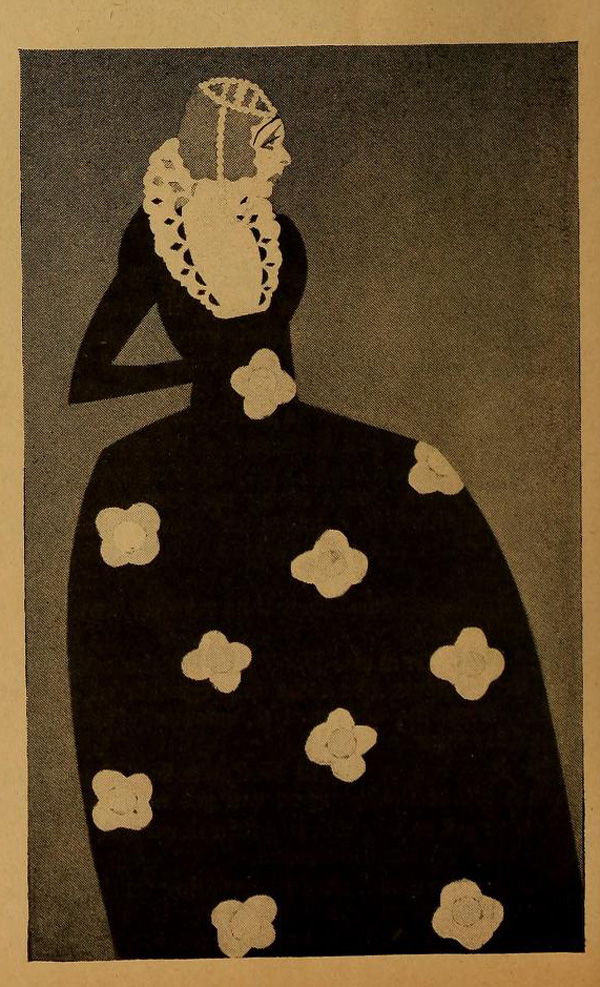
(You can read the novel online here. I enjoyed it. Not Rafael Sabatini but an entertaining swashbuckler with plenty of blood and thunder stuff. Fun Fact: To promote the book in tandem with the film, its publisher ran a contest for the best review of the novel with a $500 prize. The judges of the contest included H.B. Somerville and Norma Talmadge. Other fun fact: the film was briefly retitled Purple Pride before being switched back.)
The St. Bartholomew’s Day massacre of the French Huguenots was a bloody and horrific event that shocked the world. The novel primarily deals with the aftermath of the event rather than the massacre itself but there are brief descriptions of the carnage that give the reader an idea of the enormity of the event. The film has extras waving weapons and torches and running about but there is no real suspense or sense of personal peril that was so evident during the later battle for the turret. These scenes need not have been graphic. Frank Lloyd did an excellent job symbolically portraying the Reign of Terror in his version of A Tale of Two Cities.

Afterwards, the massacre is not brought up again, nor are the religious differences between the main characters or the secondary betrayal of Margot when she not only marries another man but converts as well.
I’m not saying that the film had to meditate on death and religious hatred for its entire runtime; this is a work of romantic escapism, after all. However, if you’re going to use a tragic event to spur on the actions of a character, dropping it like a hot potato the minute it has served its purpose is not good storytelling. Hollywood was regularly making mainstream films about the weltschmerz of WWI veterans, what I wanted from this film would not have been out of the bounds of movieland at the time it was made. Other than a few “comptes” and “ducs” tossed around, the movie version of Ashes of Vengeance could have taken place anywhere old timey and chivalrous.

As for following the novel, in general, Ashes of Vengeance shadows its source material closely, at least until the final act. It streamlines things, as can be expected from any adaptation, and severely prunes back the scenes with little Anne, which didn’t really lend themselves well to cinema. In general, the changes work just fine but there were some cuts that weakened the film overall.
And, as I have already hinted at, the original novel upon which the film was based does a much better job of keeping the reader immersed in the world of the French Wars of Religion. Questions of Rupert’s religious devotion are brought up from time to time. It’s not the sole focus of the book but the fact that he is a Huguenot living among Catholics is a running theme.
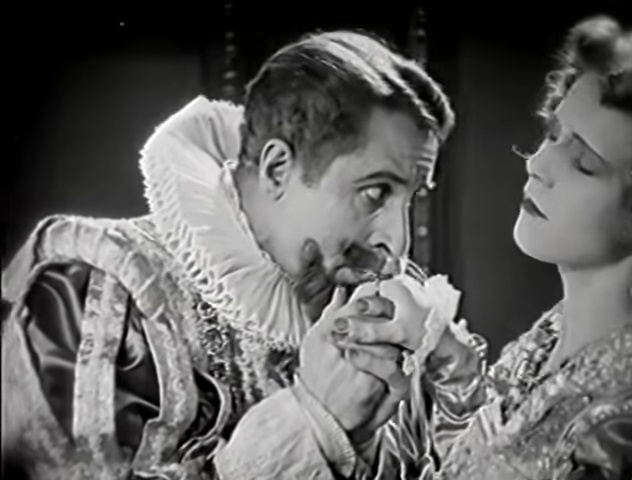
The other problem is the character of Margot. Conway Tearle was a middle-aged actor playing a young fool in love and the only way such a casting would have worked would have been to believably establish his undying, if imprudent, devotion to the vapid Margot. Instead, the film shows them together but then immediately introduces the flirtations of Compte de la Roche. So, we meet this woman, she flirts with another man, there’s a duel to settle the matter and suddenly Rupert is sacrificing his honor for her, but the decision seems to come out of left field because nothing particularly romantic has happened between them.
Again, the novel establishes that naïve young Rupert is dazzled by Margot’s beauty but he is angry about her flirtation. Before he can have it out with her, the massacre occurs and he agrees to the Compte’s terms in order to save her, her aunt and his own faithful servant. Margot professes her undying love after being pressured by her aunt to show gratitude and Rupert clings to her promises as a way of keeping his hopes alive during his time as a prisoner of de la Roche. However, he also contemplates suicide as a way of escaping the humiliation he has accepted.

None of that comes through in the film and this is a problem because it is the basic building block of the entire plot. I understand why the filmmakers wouldn’t have wanted to focus on Margot with big star Norma Talmadge waiting in the wings but director Frank Lloyd managed to establish the character and personality, as well as the motives of the men in her thrall, in a few short, colorful scenes with the dissolute Siren in The Sea Hawk.
In the novel, Margot returns as an ally of the Duc de Tours (turns out he’s not the only kinky sadist in the cast of characters) and plays a huge role in the final act, which would have made the establishing of her character worthwhile in the opening scenes. I see why the film opted to keep her out of the finale in order to focus on the more interesting war between Talmadge and Beery but it does unbalance the story a bit and make it lose symmetry. Can you imagine what a performer like Louise Glaum, Gwen Lee, Myrna Loy, Bebe Daniels or May McAvoy could have done with such a role?

That said, the adaptation of the novel is generally quite good with a lot of the unfilmable or distasteful elements cut. I didn’t really need more of the Cute Sickly Angel Child trope or a second wolf hunt, thanks. It also streamlines the “this love story could have been resolved with just one honest conversation” logjam of the novel.
I also cannot emphasize enough how good this production looks. Its budget was estimated to be has much as a million dollars, the top of the Hollywood budget food chain at the time, and that it took six months to shoot, which was also massive for the period. Marketing claimed that the recreation of the Louvre was the largest indoor set ever made, though I take Hollywood superlatives with a grain of salt. Still, the sets were clearly massive and the cast of thousands may have been in the hundreds but they sure looked good.

At the risk of sounding like a fuddy-duddy, they don’t make ‘em like this anymore! Even the mammoth productions of the 1960s never reached the heady and elaborate bulk of a proper silent film epic and the heft adds to the appeal of Ashes of Vengeance enormously. Every dollar spent is on the screen, from the giant sets to the elaborate costumes. (And a medal for bravery to the men wearing trunkhose, not the easiest look to pull off.) Special applause are due to art director Stephen Goosson.
I see that the Library of Congress holds a 35mm nitrate print in its collection. I would love to see this film presented in its full glory because I have a feeling that the suspenseful trapped-in-a-castle-with-a-mob scenes will really sparkle with a proper screening or transfer. I would also love to hear the Victor Schertzinger score written to accompany the film. (During this time period, full custom scores were known but generally reserved for prestige releases such as this.)

Ashes of Vengeance isn’t the best swashbuckler of its kind, era or even year but it’s definitely worth your time. A mixed bag, to be sure, but the good parts are really, really good.
Where can I see it?
Available for public domain streaming. (Link to Wikipedia entry with film embedded.)
☙❦❧
Like what you’re reading? Please consider sponsoring me on Patreon. All patrons will get early previews of upcoming features, exclusive polls and other goodies.
Disclosure: Some links included in this post may be affiliate links to products sold by Amazon and as an Amazon Associate I earn from qualifying purchases.
 Movies Silently