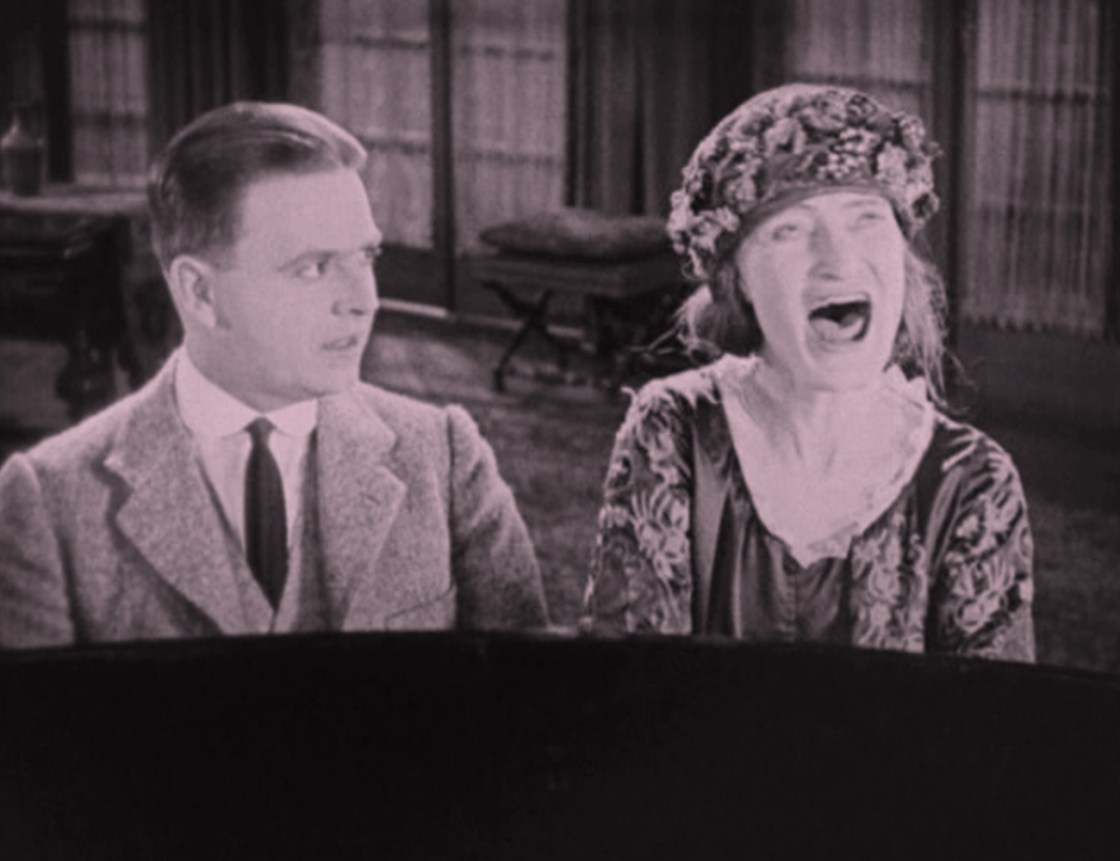
Douglas MacLean just wants to marry the actress of his dreams—but his rich uncle won’t allow it. With no bride and no job, a bellboy position starts to look very tempting.
Home Media Availability: Released on DVD.
Down with capitalism or something
History is cruel and today’s celebrity is tomorrow’s obscure trivia question. Douglas MacLean was a name that cropped up pretty frequently in entertainment news of the silent era but none of his solo comedies were available to view by the general public for years. He was just one name of many, lost in the shuffle.
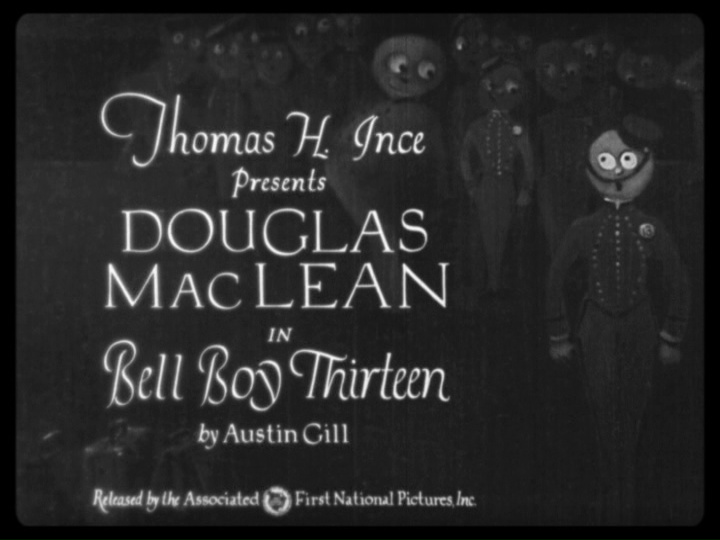
So, when Undercrank Productions funded and released a collection of MacLean’s work, I was interested. Every revival of an obscure star is another piece of the silent era’s puzzle recovered and heaven knows we have a lot of missing pieces.
MacLean’s films were described as “comedy-drama” by critics of the day. In other words, they weren’t slapstick, just silly. In silent film terms, you can compare him to Reginald Denny, Marion Davies or Constance Talmadge and, if you’d like a later comparison, the comedies of Cary Grant or Rock Hudson. Light, breezy, fun, situation over physical comedy, though a few pratfalls would not be out of place. I am quite fond of this particular cinematic flavor.
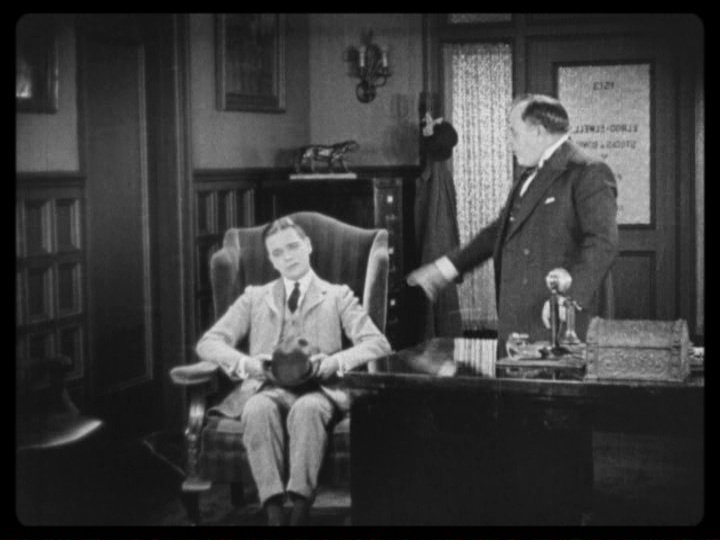
The plot concerns Harry Elrod (MacLean), who has found the woman he wants to marry, actress Kitty Clyde (Margaret Loomis). However, his Uncle Ellrey (John Steppling) holds the purse strings and is an old-fashioned sort who doesn’t want his nephew marrying one of those awful acting types. Harry plans to elope anyway but his uncle blocks him at every turn.
Forced to come home and entertain the ungainly Angela Fish (Emily Gerdes), Harry manages to fake a fire and escape out the window, inadvertently causing chaos with the fire department as he leaves in the chief’s car. It’s all for nothing because he misses Kitty’s train and must try to catch up with her at her hotel.
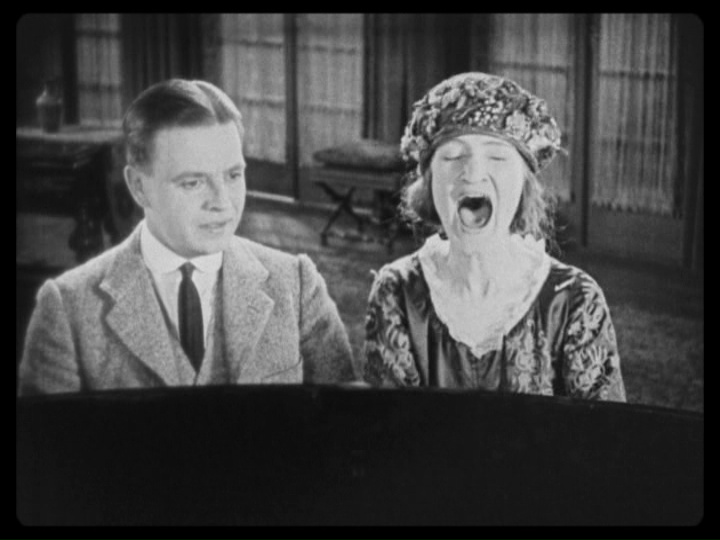
Unfortunately, Kitty is as old-fashioned as Uncle Ellrey and she doesn’t want to marry without his blessing. What’s more, she wants Harry to get a job. Well, the hotel always needs bellboys, so…
And wouldn’t you know who has just checked in? Will Harry use this opportunity to win his uncle’s approval? Will Kitty say yes? Is forming a bellboy union and striking the answer? You’ll have to see Bellboy 13 to find out!)
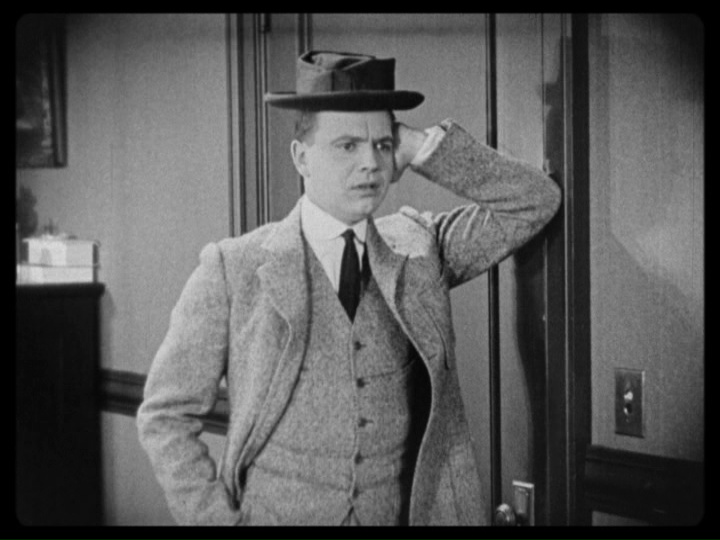
Okay, it may seem like an odd thing to bring up first but this film has a really tight and clean structure. Every gag interlocks beautifully and is perfectly timed to let the laughter subside before the next joke hits. It’s a marvel of pacing and visual storytelling. Kudos to writer Violet Clark.
(There’s also a small plot twist that I am not even going to hint at or reveal here because it was so much fun to discover while watching the picture and the timing of the reveal was so pristine.)
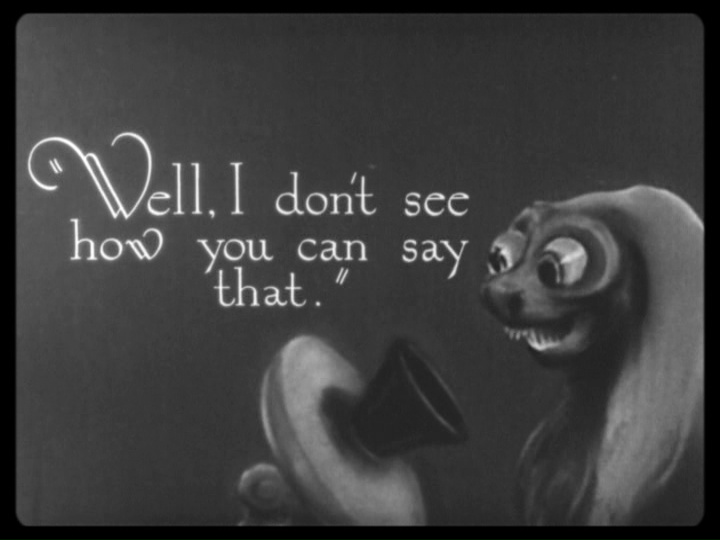
Another feature of the film that is practically a character in its own right is the title card artwork. Whoever drew those caricatures hit the nail on the head and enhanced every gag they accompanied. In fact, more than a few of the laughs I enjoyed were the direct result of this droll artwork. The credited artists were F.J. van Halle, Carl W. Schneider and Leo H. Braun.
The picture has the tone of a cheery Reginald Denny comedy and, sure enough, Bellboy 13’s director, William Seiter, directed several Denny pictures, including the iconic Skinner’s Dress Suit. So, it makes sense that Bellboy 13 would be light, peppy, amusing, everything you could want in a comedy in this style and of the highest quality.
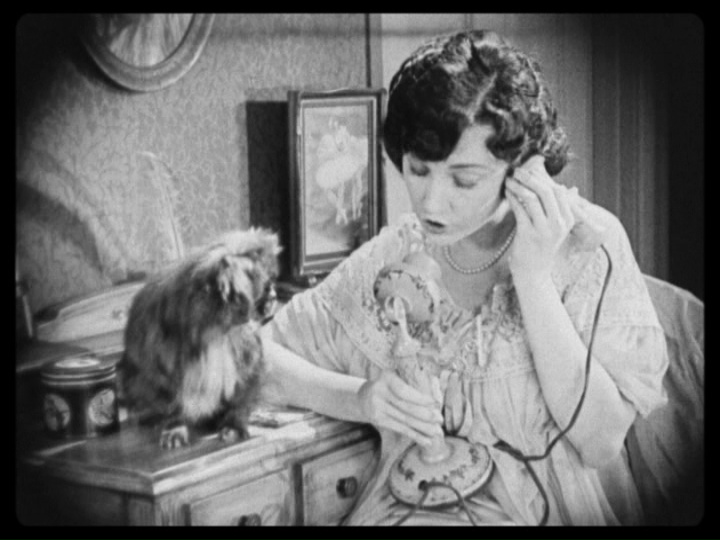
MacLean had a bit of the Harold Lloyd go-getter persona in his onscreen character but he was also his own thing, boyish, mischievous and always ready with a plan. It may not be a good plan but it is a plan all the same.
Really, the main flaw of the picture is Margaret Loomis as Kitty Clyde. The role is thin even by The Girl standards of silent comedy—there were many amazing comediennes but also quite a few Sexy Lamps (failing the Sexy Lamp Test is when a woman in a film can be replaced with a sexy lamp and the plot still makes sense)—and Loomis never conveys clearly whether she loves Harry or finds him annoying. This weakens the picture somewhat because Harry considers her to be the most wonderful woman in the world and she’s just… there.
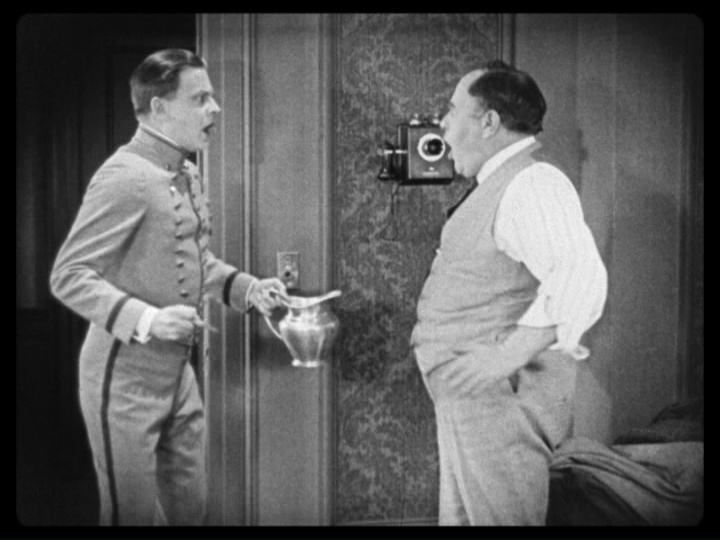
However, what it lacks in the leading lady department, Bellboy 13 makes up for in the bombastic uncle department. Veteran performer John Steppling is hilarious as Ellrey Elrod, who manages to stay one step ahead of his nephew at all times while he’s on his home turf but quickly loses control once he enters the unfamiliar hotel surroundings that Harry calls home. Steppling and MacLean have excellent chemistry and are thoroughly believable with their (somewhat) affectionate animosity.
Bellboy 13 was one of the many films released by producer Thomas Ince before his sudden death and it was given all the screaming publicity that silent film devotees would expect from the Ince brand. The picture closely preceded the release of Charlie Chaplin’s The Pilgrim, both distributed by First National, and the double bill was marketed with a Chaplin impersonators at many theaters. However, no amount of advertising could disguise the fact that the critics of 1923 were underwhelmed and exhibitors were mixed about Bellboy 13.
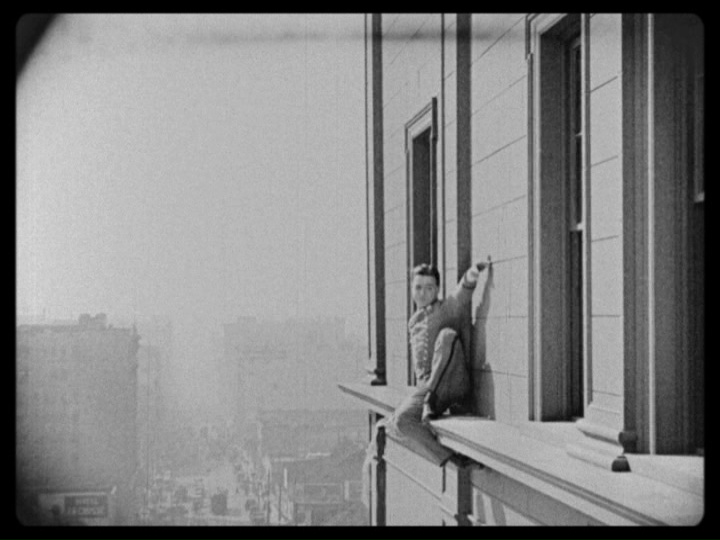
The review in Exhibitors Herald writes the film off as okay but with a forgettable plot. Motion Picture Magazine felt that Bellboy 13 was not a good vehicle for MacLean and simply was not as good as The Hottentot. (More on that picture in a moment.)
An exhibitor quoted in Moving Picture World called it “an ordinary program picture, not good and not bad.” Another stated “has no kicks and no great boosts.” Other exhibitors were more positive about the film. In their reports to trade magazines, they described it as “a scream,” “a fast moving, laugh-getting comedy,” “more laughs than a bellboy has buttons” and “a chuckle every 100 feet.”
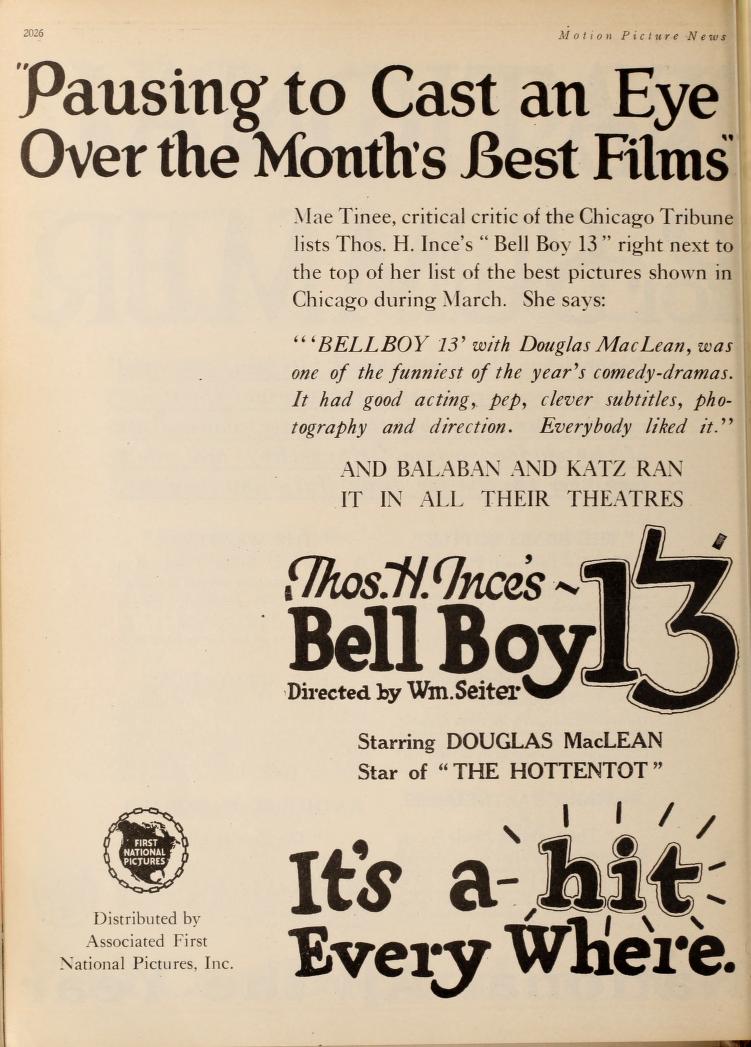
However, the refrain that was repeated again and again in reviews of Bellboy 13 in particular and Douglas MacLean films in general was that they all paled in comparison to The Hottentot. “A sorry excuse for a five-reel comedy after The Hottentot” opined one irritated exhibitor. What the heck was The Hottentot? It was a racehorse comedy during a time when movie producers and audiences alike could not get enough of the gee-gees and big name horses like Man o’ War received top billing in their own movies. Maybe The Hottentot was as hilarious as the critics claimed but it certainly was part of a fad. Faddish films are not bad in themselves but they sometimes don’t age as well as other pictures.
But this actually leads into my other point, the importance of discovering lost films and releasing surviving obscure silents: we cannot make a proper call until we have see the picture for ourselves. Oh, we can make educated guesses but there’s always something missing from reviews and synopses of the period. They can’t cover every foot of film, after all.

While reading the reviews of Bellboy 13, I couldn’t help but compare my experience with another obscure, late Ince release, Dynamite Smith. A comeback for Charles Ray, the film was met with effusive praise and near universal acclaim from film critics. It fell into obscurity and was thought lost until a print emerged in the hands of a private collector. (You can read my review here.)
Based on the contemporary reviews of Dynamite Smith and the reviews of Bellboy 13, it would be reasonable to assume that I would love the former and be lukewarm toward the latter. However, my opinion was the exact opposite: Bellboy 13 delighted me endlessly, while Dynamite Smith was unintentionally funny, its faddish rural violence narrative long past its expiration date.
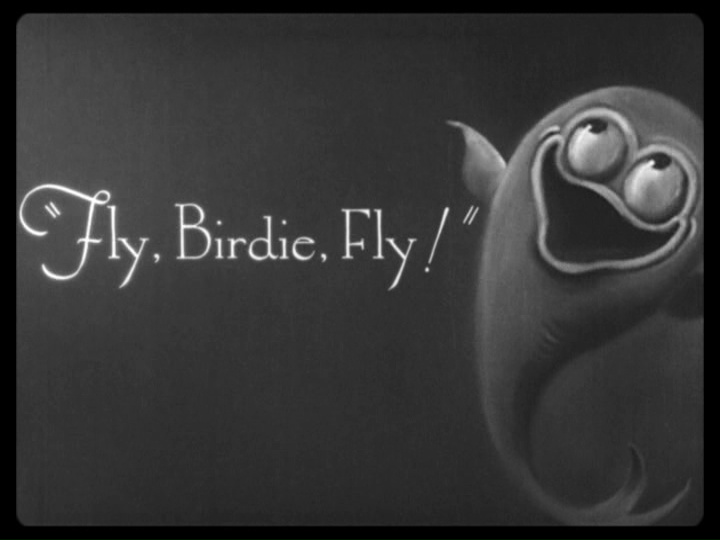
Maybe I will see The Hottentot one day (supposedly a fragment survives, maybe we’ll get more?) and be blown out of my boots by it but I saw Bellboy 13 first and thought it was a kick. Will the critics of the twenties prove to be correct? That’s the fun of finally seeing missing and obscure films, after all. We get to see if our forebears were right, wrong or just different from us. I, for one, am very happy that they were wrong about Bellboy 13.
I consider this movie to be an extremely pleasant surprise. Anyone researching the comedy of the era might assume that this picture could be safely skipped but it’s a fresh and zippy comedy. There’s not much new to be found but its tight structure, efficient humor, witty art titles and likeable leads assure a good time will be had by all. If you enjoy the breezier side of the twenties, this is highly recommended.
Where can I see it?
Released on DVD by Undercrank productions with a score by Ben Model. The set includes the 1921 film One a Minute and a studio tour short.
☙❦❧
Like what you’re reading? Please consider sponsoring me on Patreon. All patrons will get early previews of upcoming features, exclusive polls and other goodies.
Disclosure: Some links included in this post may be affiliate links to products sold by Amazon and as an Amazon Associate I earn from qualifying purchases.
 Movies Silently