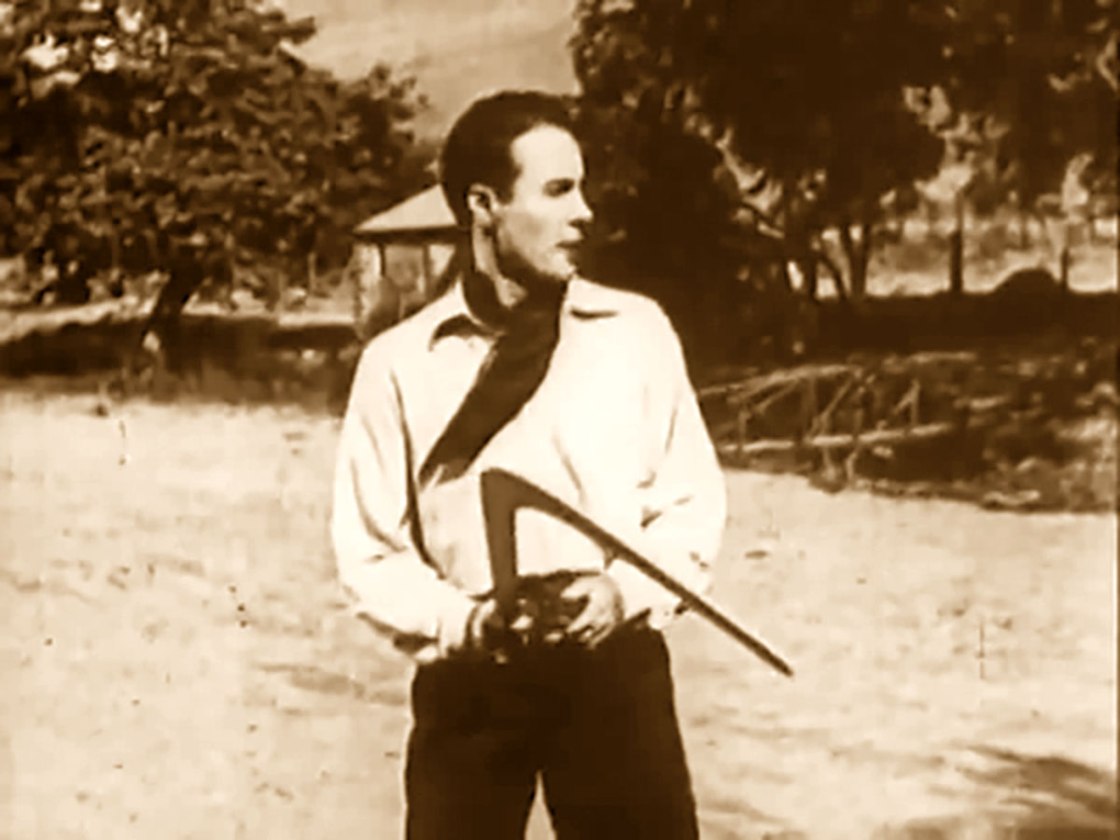
A strapping Australian lad packs his bags to go stay with his uncle on the French Riviera and falls in love with an exiled Russian princess. Needless to say, nothing goes as planned.
Home Media Availability: Released on DVD.
Up and Over Down Under
Fish out of water stories have always been a box office draw, so it’s not surprising that Cecil B. DeMille’s new studio, Producers Distributing Corporation chose to make one among its very first releases. In this case, a strapping Australian sheep farmer is let loose on the French Riviera, where a beautiful princess and her serial killer ex are performing a dance of death.
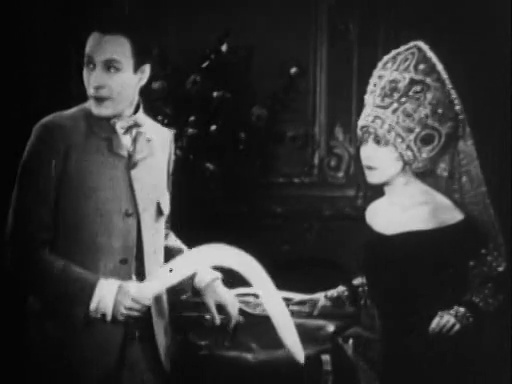
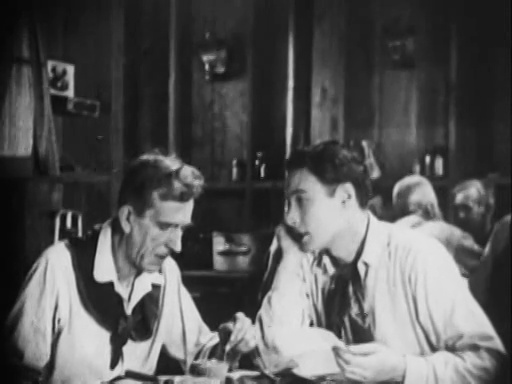
Rod La Rocque plays Amos Burden, who leaves his sheep station in Warranga, New South Wales, and goes to live with his Uncle David (Richard Carle), a wealthy and successful painter living the good life on the Continent. Aristocratic Russian exile Princess Nadia Ramiroff (Jetta Goudal) is posing for him and it’s love at first sight. Uncle David had hopes but it’s clear he will have to settle for the Dowager Duchess of Perth (Trixie Friganza).
Not so fast! Ramon Garcia (Noah Beery) was once going to marry Nadia and now he is stalking and murdering her lovers, three dead so far! He tells Nadia that Amos will be next if she doesn’t see sense and marry him. He proves his serious intent by slicing up our hero with a sword cane.
I usually go on longer with my synopsis but this is literally all the plot we get, leading to the inevitable abduction and rescue scene in which Amos is able to use his Australian skills to save the day and win he woman of his dreams. Did anyone doubt it for a moment?
The Coming of Amos was based on a novel by William J. Locke, who also penned Stella Maris, which was the basis for one of Mary Pickford’s finest films. Part of the reason for its success was that screenwriter Frances Marion jettisoned most of the original novel and opted to craft it into a dual-role vehicle fit for America’s Sweetheart.
The Coming of Amos likewise does away with much of the original novel but in this case, Garrett Fort and James Ashmore Creelman, who would go on to write some of the most iconic films of the 1930s, stumble badly adapting material.
In the book, Amos is a twenty-five-year-old virgin raised by religious fanatic parents, his father a fiery preacher and his imposing mother the daughter of an aristocratic clergyman who moved to Australia with her husband to convert the locals. Upon arriving and finding most everyone already converted, they built a sheep farming business run like a monastery, with dozens of single men and only one woman at its head.
Amos has no education beyond religious, and his upbringing was severe even by the standards of frontier life. (Women being notoriously scarce in such situations.) This automatically puts him at odds with his worldly, sybaritic uncle, who marvels at his nephew’s strange upbringing as the novel’s first person narrator and much of the book is taken up with the mutual culture shock. This is also a far more interesting way to contrast British expats with an Australian as evangelical Christianity was a powerful force from the dawn of the nation’s colonial origin.
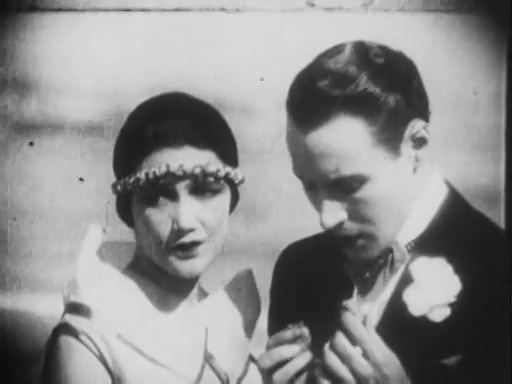
Fort and Creelman excise that element entirely, possibly to avoid offending Will Hays (Cecil B. DeMille had been among the first to welcome Hays to Hollywood and was eager to cooperate with his edicts, at least at this point), who took a dim view of anything that could be construed as mocking religion.
Instead, rural Australia is portrayed as a rugged and manly land of No Dames. Not a flapper knee to be seen! This angle was popularly used in fish out of water cowboy-in-the-city or American-in-Europe pictures and The Coming of Amos follows the pattern closely. Though one wonders how little Australians were made under the circumstances. Mail order brides were the answer for many lonely men in various parts of Australia, as was also the case in 19th and early 20th century rural America.
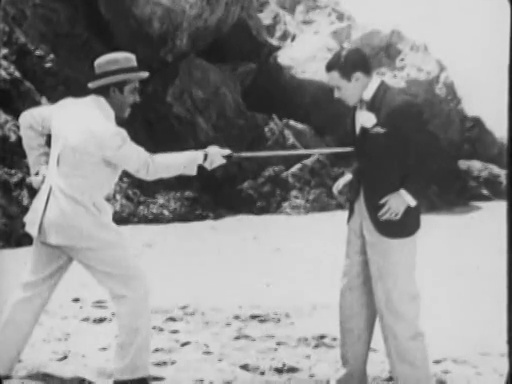
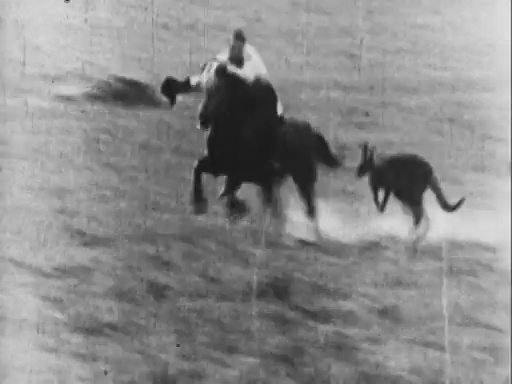
With conservative Christianity out of the conversation, The Coming of Amos establishes its hero’s home country with a pet kangaroo and incessant throwing of boomerangs. I am slightly astonished that he didn’t ride a crocodile-shaped chariot drawn by wombats and koalas whilst doing a kookaburra impression. However, I suppose this was all necessary because, if it hadn’t been for these props and the atrocious dialect title cards, Amos really could have come from anywhere, from U.S.A. to Labrador.
(Incidentally, the novel ends with Amos writing to his uncle to announce he has given up the celibate life to marry Nadia, so the double entendre of the title may have been intentional or a Freudian slip.)
So, I really have to ask what anyone was thinking in selecting this book for a film adaptation. The tale of a hyper-religious Protestant who finally finds himself happily deflowered by an experienced Russian princess doesn’t exactly scream Approved by the National Board of Review, I get that, but replacing it with the most generic plot points possible doesn’t seem to have been the answer.
Rod La Rocque and Jetta Goudal are pretty to look at, of course, but neither are particularly convincing in their roles and the screenplay does little to support them. Director Paul Sloane does all right keeping things moving and interesting images on the screen but he likewise has little to support him. Uncle David Fontenay is aged up a decade, removed as a true rival for Nadia’s affections and Richard Carle is barely given any screentime, eliminating the book’s central conflict of rough and ready natural man vs a creature of luxury and culture, a celibate he-man vs a mature roue. Still, his fate is better than that of poor Trixie Friganza. The stage legend barely has a cameo and part of that is taken up with fat jokes. Noah Beery probably has it the best as the mwahahaha villain, those roles are always fun.
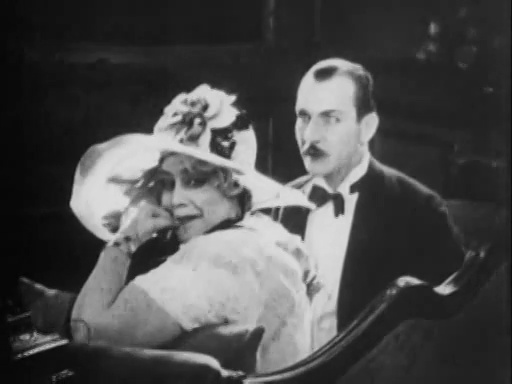
Surprisingly, reviews for the film were generally positive and feedback from theater managers was encouraging, they liked the picture and its stars. Indeed, The Coming of Amos netted $227,000 at the box office, a respectable sum or would have been if the picture’s budget had not been $255,000. This was the major flaw in DeMille’s studio: the program pictures that were supposed to be the steady income stream were too darn expensive, which meant the pricey specials were do or die and they did not always do.
The Coming of Amos is not a bad picture but it is one that I have seen many times before and often done better. William J. Locke adaptations are not exactly a going concern these days but it would be interesting to see a version of the book in an un-Hays world.
Where can I see it?
Released on DVD by various low budget concerns.
☙❦❧
Like what you’re reading? Please consider sponsoring me on Patreon. All patrons will get early previews of upcoming features, exclusive polls and other goodies.
Disclosure: Some links included in this post may be affiliate links to products sold by Amazon and as an Amazon Associate I earn from qualifying purchases.
 Movies Silently
Given the film establishes its ‘Australian’ credentials via pet kangaroos (which has never been a thing) and incessant boomerang throwing (likewise), it would be interesting to track down a contemporary Australian film review and see what the locals thought of all this at the time.
I wonder how good DeMille’s distribution arm was at the time, American theaters complained about getting it too early (small towns liked to coast on big city publicity). But then again, his company’s Midnight Madness was recovered in New Zealand, so his later releases did get pretty far around the world. Another question I would have would be: was it localized at all if it received Australian release? In other words, any title cards that might cause undesired titters could have been replaced with something more locally appropriate.
Excellent question. All I could find was this piece from the New South Wales Sunday Times of 13 February 1927: “The combination and story in ‘The Coming of Amos now at the Empress, makes this offering from the De Mille studio one of the banner pictures of the year. Headed by Rod La Rocque, who is starring in the title role, the list of players in this production is unusually brilliant…”
I think you’ll find the rest of the page this was taken from much more interesting: 13 Feb 1927 – The Coming of Amos – Trove
Thank you!
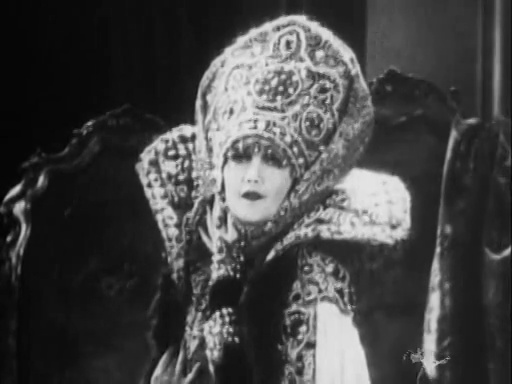
One wonders what Amos’ folks thought about the girl he brought home. Russian noblewoman with an experienced past, Orthodox background, spooky ex-lover, they might be able to handle all that. But if she showed up at their sheep monastery in one of her bedazzled kokoshniks they might just go ballistic.
In the book, both parents are dead, the father earlier and the domineering mother more recently and she has ordered her son to go to Europe for an education with his uncle for no less than five years. Amos converts to Orthodox, it is indicated, so I think his sheep monastery days are truly over.