
An aristocrat is shocked when he spots his wife in the background of a motion picture arm-in-arm with another man. The only possible solution: murder!
Home Media Availability: Released on DVD by Kino.
Runaway Imagination
Louis Feuillade is best remembered today for his anarchic serials but his body of work included films in every genre, from shorter crime pictures to historical epics to marital dramas. The Tragic Error was made just before he tackled Fantômas and sealed his reputation as the king of stylish lawbreakers.

René Navarre (Fantômas himself) stars as René de Romiguières, who dotes on his wife, Suzanne (Suzanne Grandais). René is summoned away on business but sees a Gaumont picture show being advertised and he cannot resist going in for a little treat. The comedy short is from Gaumont’s popular Onésime series and the real Ernest Bourbon cameos in an outdoor scene shot on location in the city. René is shocked to see Suzanne walk into the frame– she is arm and arm with another man!
René asks the theater owner where he can purchase this Gaumont film and is handed the Gaumont catalog. Thanks to the speedy Gaumont service, René is soon in possession of a reel of Gaumont film. (Did you know this movie was made by Gaumont?) He unspools the reel and examines the frames. There can be no doubt, Suzanne is walking with another man and even hides her face when she sees the camera as if she is ashamed and has something to hide.
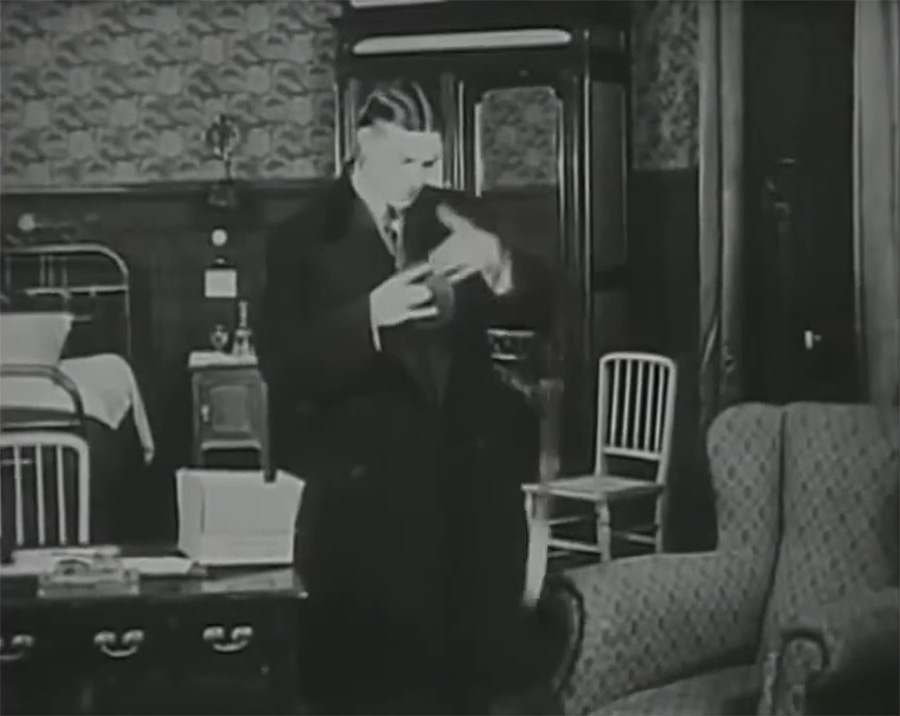
René returns home and bides his time, looking for further evidence of adultery. It happens when Suzanne receives a letter and carelessly leaves it out. It is from a man declaring his affection and asking her to meet him. René plays it cool and places a cigarette in the bridle of the horse pulling Suzanne’s carriage. When it burns down, it will scare the horse and cause it to bolt, killing her. (In typical aristocratic solipsism, the danger to the coachman, horses and any passersby is not even an afterthought.)
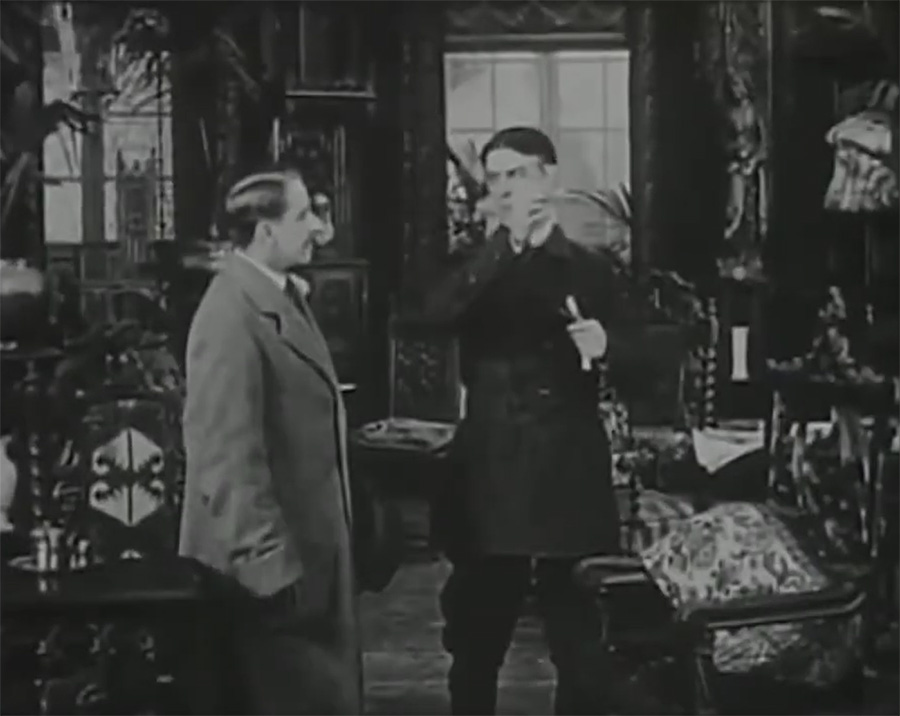
Meanwhile, a man shows up looking for Suzanne. He is her brother, who has been disowned by his family but Suzanne has secretly met him. He had hoped to see her at the train station but she didn’t show. René quickly takes out his frame of Gaumont film and sees that the brother is indeed the man Suzanne was strolling with. Realizing his mistake, he rushes off to find his wife. Will he make it in time?
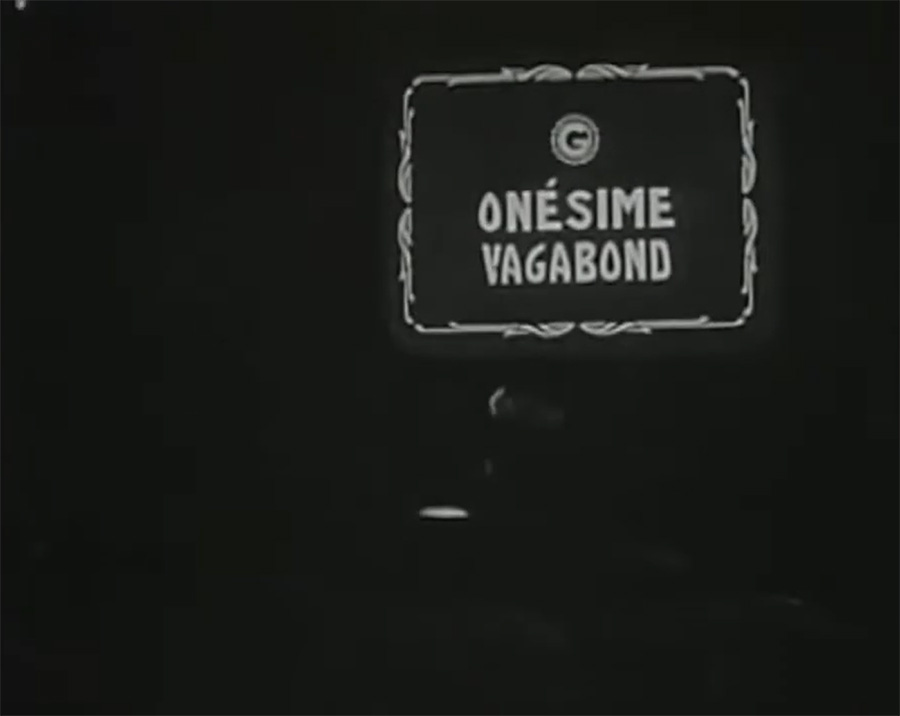
Now, I love a good melodrama. I love it when Feuillade is really nutty. I love a Rube Goldberg murder plot. However, The Tragic Error did not work for me and I was considering why and then it hit me: it’s Onésime.
I am a big fan of the Onésime series, which starred Ernest Bourbon and was directed by Jean Durand (Feuillade had done a stint as a writer). If you have never seen it, it’s wild, violent and frequently dips its toes into science fiction. An absolute delight, thoroughly French in the best way possible. Putting Onésime in The Tragic Error was obviously a bit of playful crossbranding but it also was a mistake because it reminded me (and possibly audiences of 1913) that this is essentially an Onésime plot, sans comedy but with an unearned happy ending.
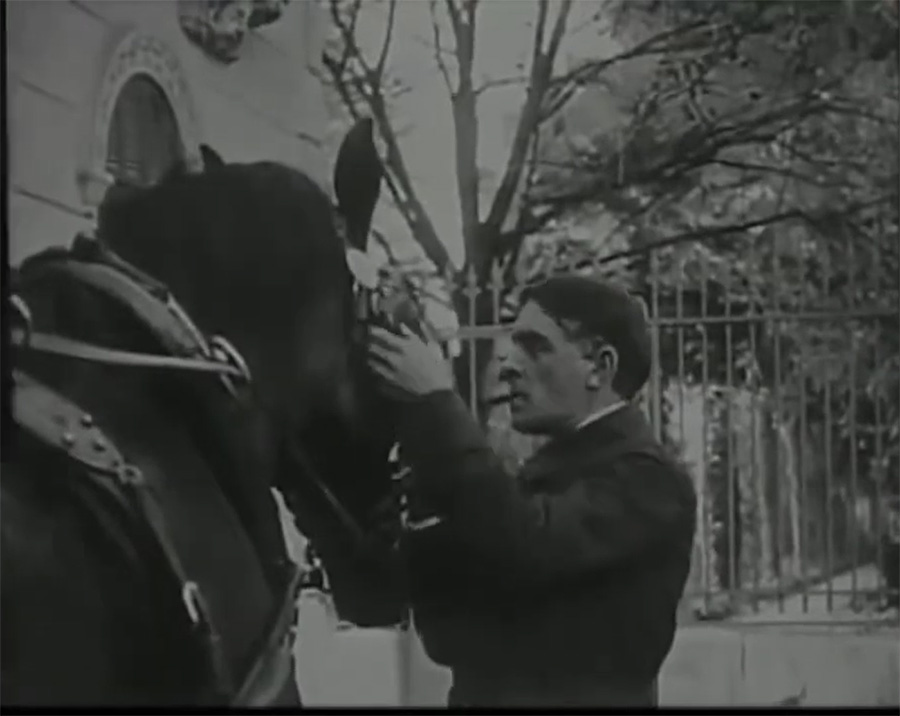
While Navarre and Grandais try their best to be serious about the thing, the story is so madcap and goofy that I am not sure anyone could have sold it as a serious picture. As an Onésime story, it would have been splendid. I can just see Bourbon constantly referring to his strip of film while he attempts to come up with a clever way to murder his wife. This was the man who killed and dismembered his own clone in Onésime vs Onésime, a cigarette-and-horse murder plot would have been right up his alley!
While the story of the film doesn’t exactly work, there are elements of interest to fans of film history. (And if you’re reading a review of a 1913 French silent film, you’re a fan of film history.) Obviously, the look inside an average theater of 1913, or a film set version, is valuable in itself. It’s also a reminder that, during this period of film, theaters were still able to purchase movies outright from studios and distributors. This wasn’t usually for private exhibition as the price would have been prohibitive for the average movie fan (purchases for home viewing really kicked off with the introduction of 9.5mm film under the Pathé Baby brand) but The Tragic Error presents special circumstances.
This is also one of many examples of visual media being used as a major plot device in a film. Gaumont’s The Mystery of the Rocks of Kador (1913) created a movie within a movie to catch a would-be killer, Eclair’s Love and Science (1912) featured an early version of the video call causing jealousy and rage, and the Thanhouser production The Evidence of the Film (1913) used another accidental walk-on during a street scene, this time to clear an innocent boy accused of a crime.
The Evidence of the Film and The Tragic Error were extremely similar but were released almost simultaneously (January 10 and January 24, 1913, respectively. Fourteen days is a pretty rapid turnaround, though not impossible for the speedy French film industry. We are assuming that the film itself was not exported to France but rather the plot device was conveyed from New York to Paris via transatlantic cable. The film’s plot twist was published in trade periodicals weeks before its official release.

Tragedy caught on film also made the news from time to time. In the summer of 1911, a New York film company hoped to capture an actor diving into a Staten Island pond and after he dove into the water, the camera focused on the bubbling surface where he was likely to emerge. He never emerged, apparently underestimating the depth and becoming stuck in the mud and drowning.
It could also simply be a case of parallel invention. Shooting scenes on city streets was common practice, I imagine more than one film person considered the possibility of accidentally filming a robbery, a pair of illicit lovers or some other accidental, life-altering scene. Such situations were played for humor by the Edison film company and Charlie Chaplin.
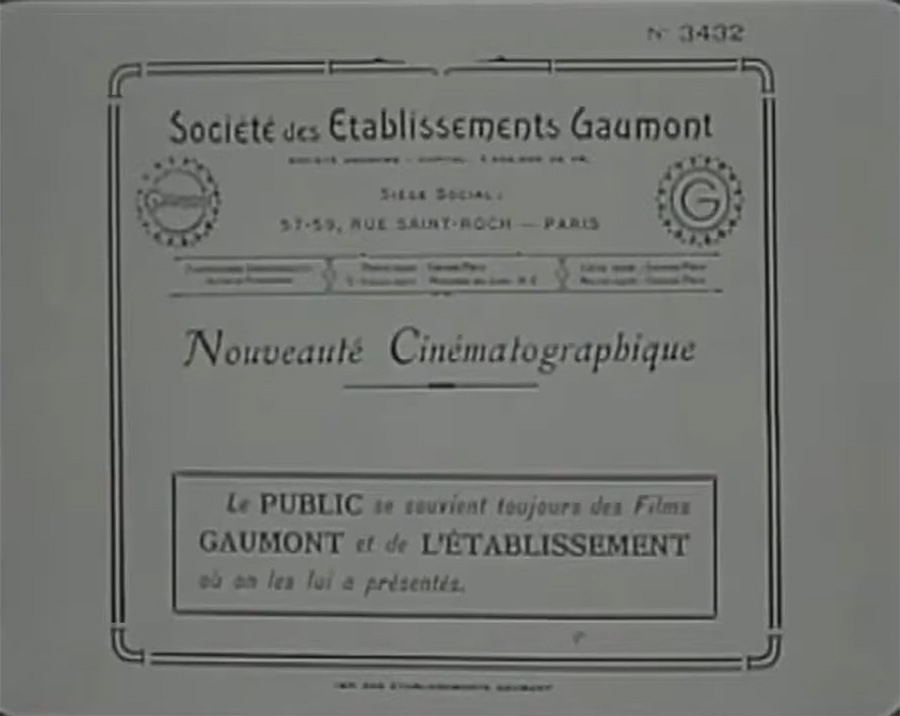
The Tragic Error doesn’t really work as a drama, the plot is too goofy and really belonged in dark slapstick. However, the picture is an interesting slice of filmmaking pre-World War One and is well worth seeing.
Where can I see it?
Released on DVD in the Gaumont Treasures box set released in the USA by Kino.
☙❦❧
Like what you’re reading? Please consider sponsoring me on Patreon. All patrons will get early previews of upcoming features, exclusive polls and other goodies.
Disclosure: Some links included in this post may be affiliate links to products sold by Amazon and as an Amazon Associate I earn from qualifying purchases.
 Movies Silently