When a local Dutch beauty chooses a wealthy miller over her smitten boyfriend, the stage is set for a tale of adultery, murder, and desecration of a corpse.
Home Media Availability: View courtesy of the Royal Film Archive of Belgium.
Candy-Colored Mayhem
Sending film teams abroad to capture foreign wonders for actualities had been the backbone of the early film industry, providing a steady stream of enjoyable and educational fare, while also allowing studios to ink distribution deals and screen their own films for the locals. As the industry matured, dramas filmed on location gained popularity and that was how French director Alfred Machin ended up in Ghent, Belgium on behalf of the Pathé company.

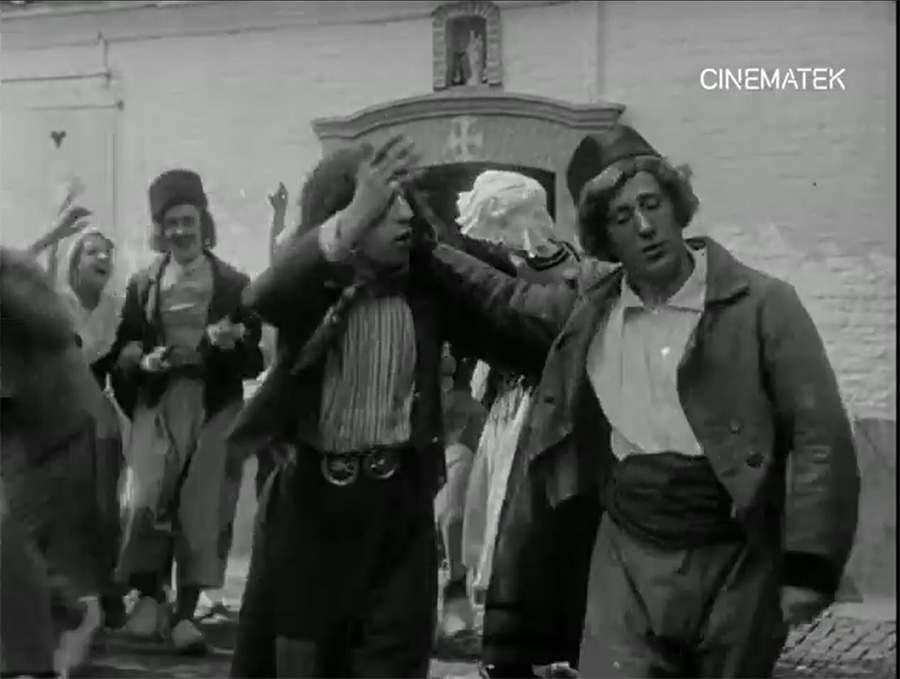
The picturesque region provided an ideal backdrop and acted as a stand-in for the Netherlands. Village beauty Johanna (Mademoiselle Saunières) is in love with Wilhelm (Berryer) and the pair enjoy the local festivities (dancers from Théâtre de l’Alhambra provide the professional hoofing). However, a wealthy miller (Pitje Ambreville) waits until Wilhelm is called away and approaches Johanna.
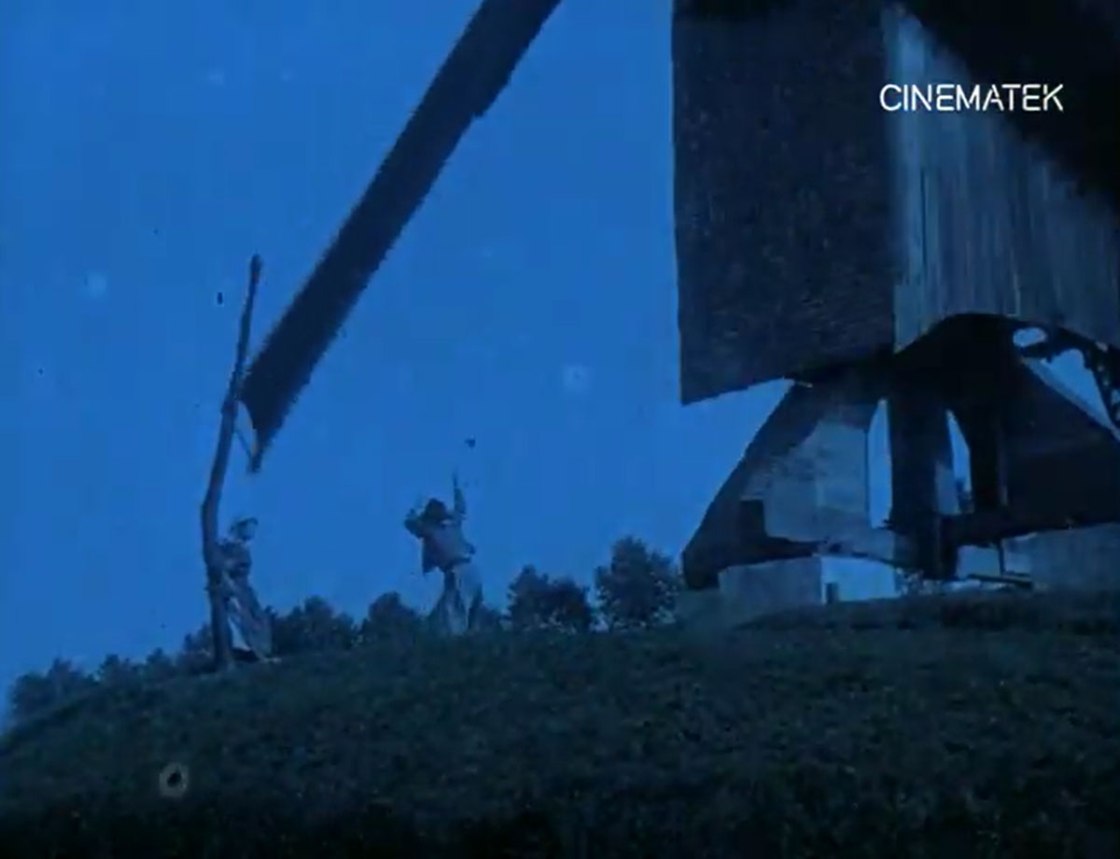
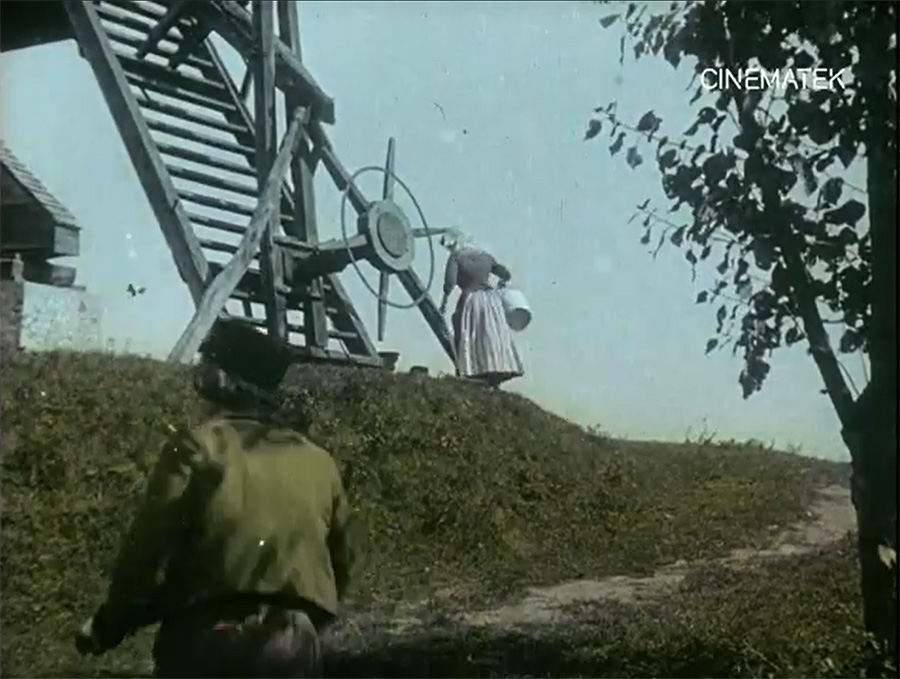
He shows her his mill and his lands, conveying that he is wealthy and can provide well for her. Johanna hesitates but finally accepts his proposal. Machin’s direction of this scene is interesting as we don’t get a loving money shot of the historical windmill. Instead, Johanna and the miller approach the building and the massive sails swoop down ominously in the background.
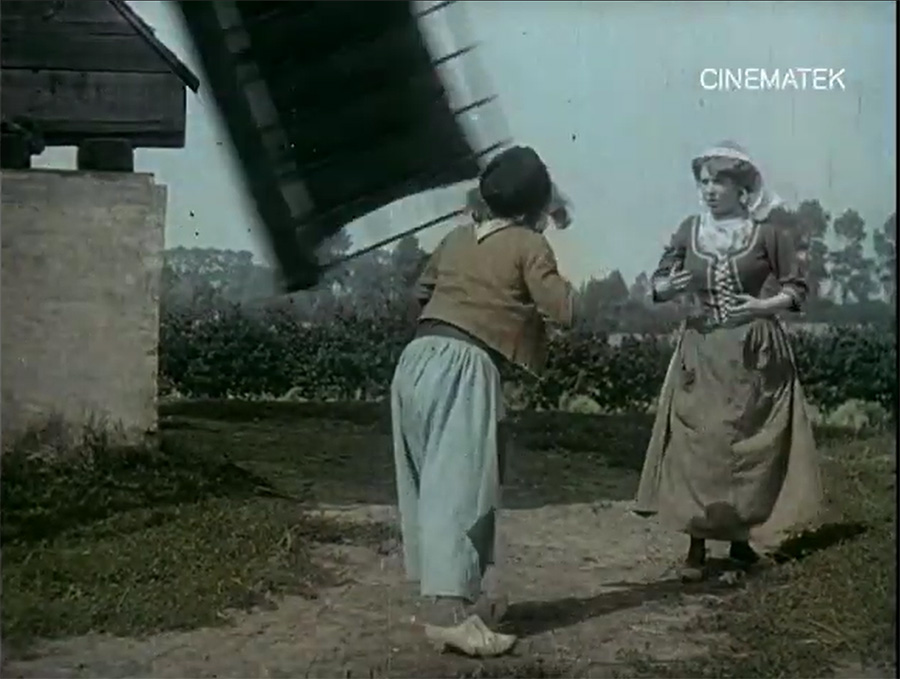
Johanna and the miller have a grand wedding with Wilhelm looking on jealousy. There is more dancing and a scene of the couple and their friends boating to the mill after the ceremony. Johanna seems happy with her choice, helping her husband load up his flour for market. A happy ending!
Except…
Wilhelm is hanging around, watching until the miller is safely off to market and then he approaches Johanna. She rejects him at first but her old feelings begin to return…
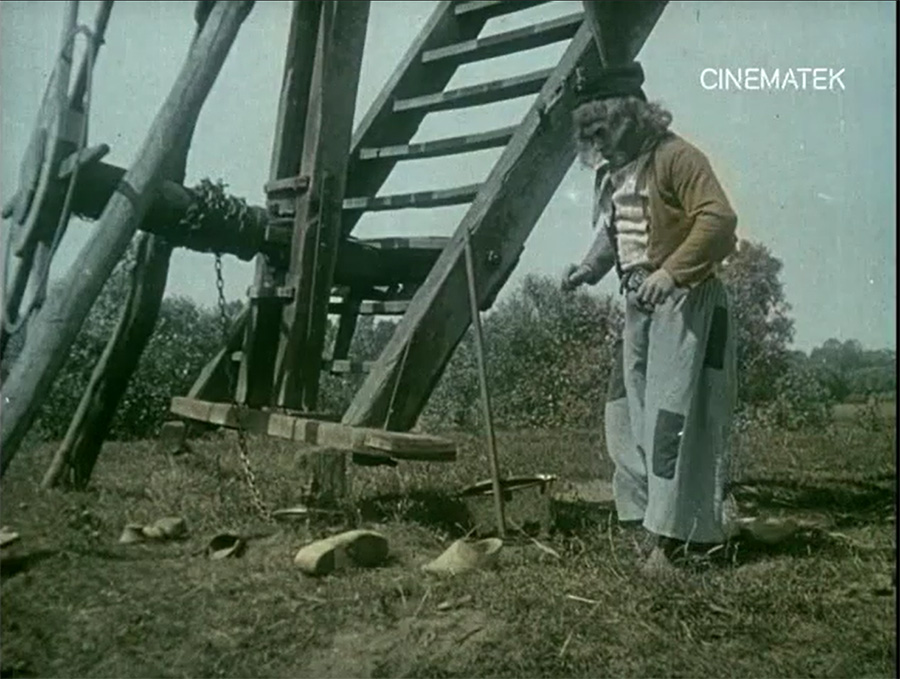
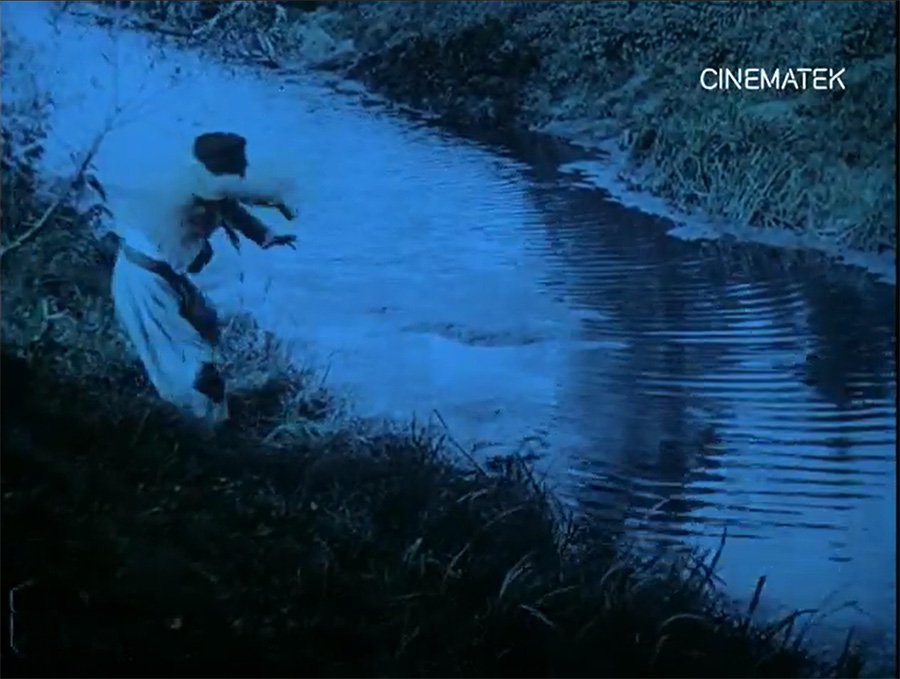
The miller returns home and sees that there is a pair of men’s wooden clogs at the foot of the steps. He suspects betrayal and hides behind the steps. Night falls and Wilhelm finally departs from the loving Johanna. The miller attacks him and beats him to death, then he drags his body to the windmill, ties it to one of the sails and sets it in motion. Johanna runs down, horrified, and he ties her to a tree so that she is forced to watch Wilhelm’s body as it flies by. The miller flees and throws himself in the rivers and his body sinks under the reflection of the windmill.
So, that was extremely dramatic, as you can probably tell, and the performers are definitely following their stage instinct to play to the cheap seats. However, the visual impact of the film is undeniable and still has quite an impact. The most obvious element is the beautiful stencil-applied color that adorns most of the scenes (apparently lost for the wedding sequences, however). It provides the watercolor-like delicacy that we can expect from French films with applied color from this period.

However, Machin’s attention to mood and foreshadowing is also notable. The mill is the central figure in the film, constantly providing a backdrop, movement, a symbol of wealth and prosperity, a wedding venue, an illicit love nest, an ambush point and, finally, a grisly way to display a slain rival’s body.
While the film is ostensibly a showcase for quaint village life, Machin is clearly more interested in the gorier elements of the tale, letting the dancers provide background interest and occasional punctuation for the fatal love triangle he is brewing.
I feel like I have stumbled into an old movie cultural duel as the Dutch had previously released The Misadventure of a French Gentleman Without Pants on Zandvoort Beach, portraying its title character as a prissy ditz who would rather doff his trousers than get then damp with a bit of saltwater. The French portrayal of the Dutch as windmill-happy maniacs isn’t entirely out of place, though, as Dutch productions tended to include windmills in their action as much as possible, with the heroine of The Secret of Delft famously escaping the villains via a mill blade.
(I would also be remiss if I didn’t mention that the British film industry got in on the windmill brawl business– possibly before anyone else– with George Albert Smith’s 1897 or 1898 comedy duel between a miller and a sweep with the windmill in the background.)
Pathé was enjoying a bustling trade exporting films to the United States but, in the case of The Cursed Mill, it was not without hiccups. In Cine Goes to Town, Richard Abel reports that the film was severely cut for American release on the say-so of the National Board of Censors. (Which was a New York-based organization that, grand title aside, was not national at the time but later became the National Board of Review). Americans would have seen all the dancing and the miller’s proposal and the couple’s early married life and… the end! Wasn’t that nice?
That said, two 1912 releases, also directed by Machin, featured windmill-based violence and managed to enjoy American release. His Windmill portraying a vagrant setting a mill on fire for revenge and Revolt of the Peasants, in which Dutch rebels tie Spanish soldiers to windmill blades to avenge the death of an elderly Dutchman. So, vindictive windmill violence is okay in America as long as there isn’t an element of adultery, just so we’re all clear. Also, Machin obviously liked what he liked. (But who was actually obsessed with windmills, the French or the Dutch?)
The Cursed Mill is an excellent showcase of the visual impact movies could achieve by the end of the 1900s and its censorship story adds to its historical value. The acting is very much on the stagy side but that doesn’t dull its overall power.
Where can I see it?
View the complete film courtesy of the Royal Film Archive of Belgium. There are shorter cuts online that only show the love triangle sequences– a reversal of the original censorship cuts!– but this version has the complete wedding scene and its all-important foreshadowing.
☙❦❧
Like what you’re reading? Please consider sponsoring me on Patreon. All patrons will get early previews of upcoming features, exclusive polls and other goodies.
Disclosure: Some links included in this post may be affiliate links to products sold by Amazon and as an Amazon Associate I earn from qualifying purchases.
 Movies Silently