
When a little girl goes missing in the forest, her parents turn to a young boy who has the ability to see distant events. Will they rescue her in time?
Home Media Availability: Stream courtesy of the Danish Film Institute
I See Missing People
In the 1900s, the Danish film industry was on a roll and so was director Viggo Larsen. As was typical for the era, his output of short films was enormous and he flitted between genres, doing everything from slapstick comedy to melodramas to costumed adaptations of stage hits. In his 1907 picture, The Boy with the Sixth Sense, Larsen tackled an international cultural phenomenon, spiritualism and psychic abilities.
The Spiritualist movement had kicked off in the nineteenth century and received a shot in the arm as people reeled from the aftermath of the First World War. There had been skeptics since the start as well, including celebrities like Harry Houdini and Allan Pinkerton, both of whom actively attempted to expose frauds. Fraudsters made for good true crime but real powers were irresistible in the movies, and so genuine psychics and fortune tellers abounded on the screen. Still do, actually. Denmark was experiencing its own Spiritualist boom around the time The Boy with the Sixth Sense was made, so it was an obvious choice of topic for a popular movie.
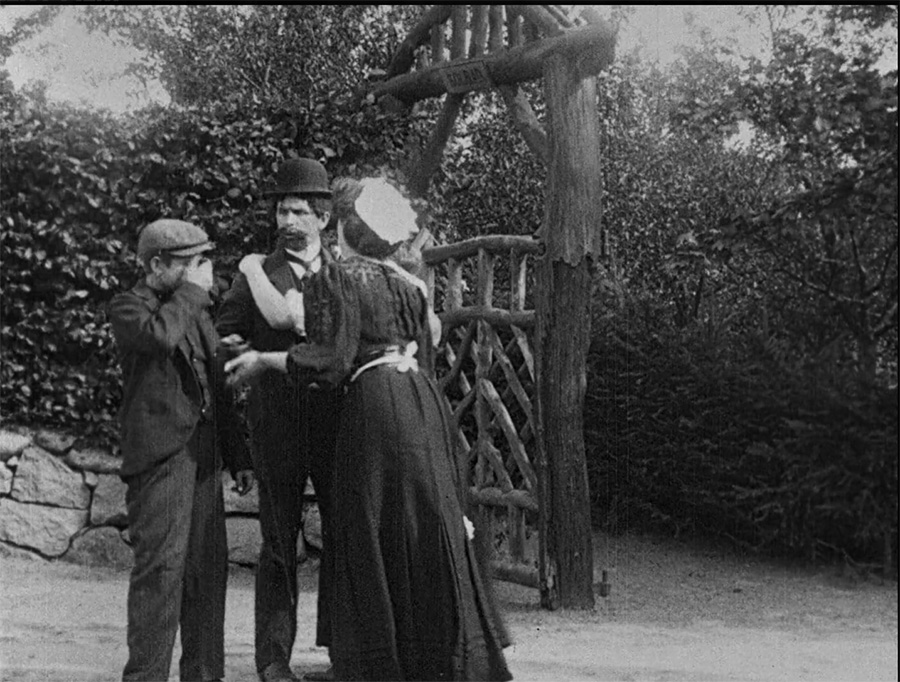
The surviving copy of the film opens with a scene of a muddy child being returned to her parents by an equally muddy police officer. I am not sure if this was a scene clipped from another picture or if it was meant to be a prelude to the main action. (Old-timey film collectors could be shockingly cavalier about taking scissors and glue to movies in their hoards.)
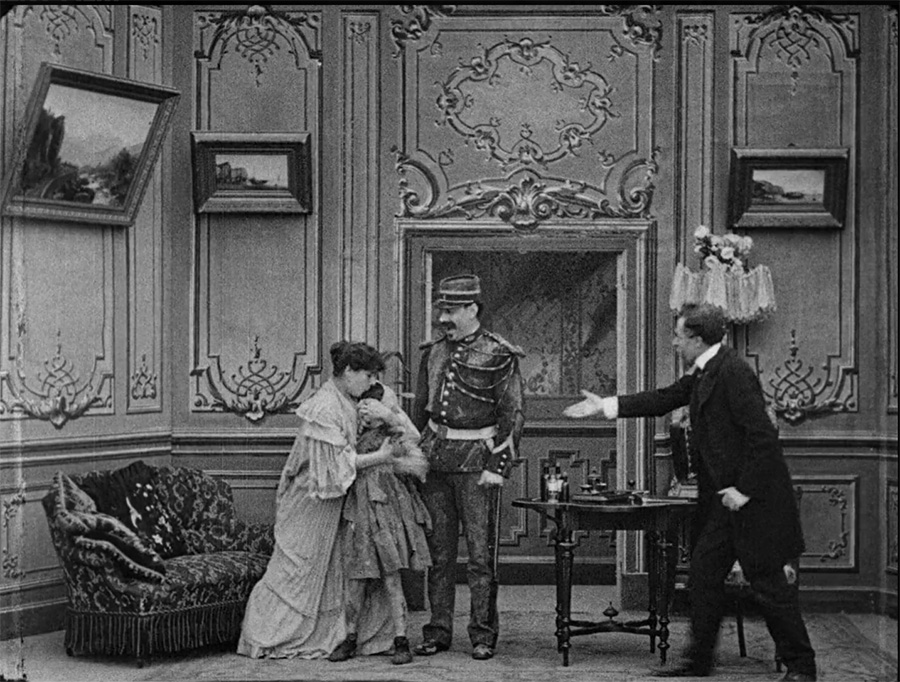
We then are introduced to the main characters of the picture: a selfish young mother more interested in her novel than in the fact that the maid has not seen her small daughter about. The maid goes looking again but the little girl is nowhere to be found. The mother reluctantly leaves her reading and goes to look.
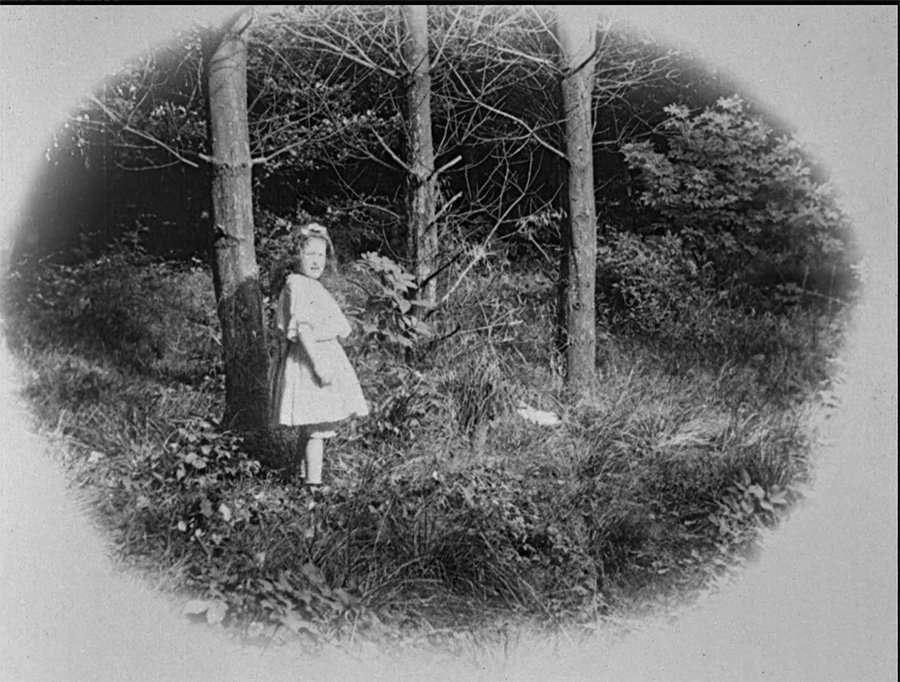
A boy walks by and, when asked if he has seen the missing child, he tells them that he has. He covers his eyes and visualizes her wandering in the woods, hopelessly lost. Larsen and cinematographer Axel Sørensen convey that the boy is telling the truth and that his abilities are real by cutting to what the boy sees: the missing girl surrounded by a frame of ethereal mist.
The girl’s father shows up and asks the boy inside the house, where he once again visualizes the child’s predicament. The father supplies a map at the boy’s request and the young psychic covers his eyes and points to the place where the little girl can be found. Father, mother, maid and boy all head out together to the rescue.
Meanwhile, the girl stumbles onto a tramp in the woods. He sees that she is alone and takes the opportunity to steal her necklace. She is enraged at the theft and confronts him. Larsen cuts between the girl’s peril and the frustratingly slow pace of the rescuers, with the boy pausing to see what is happening.
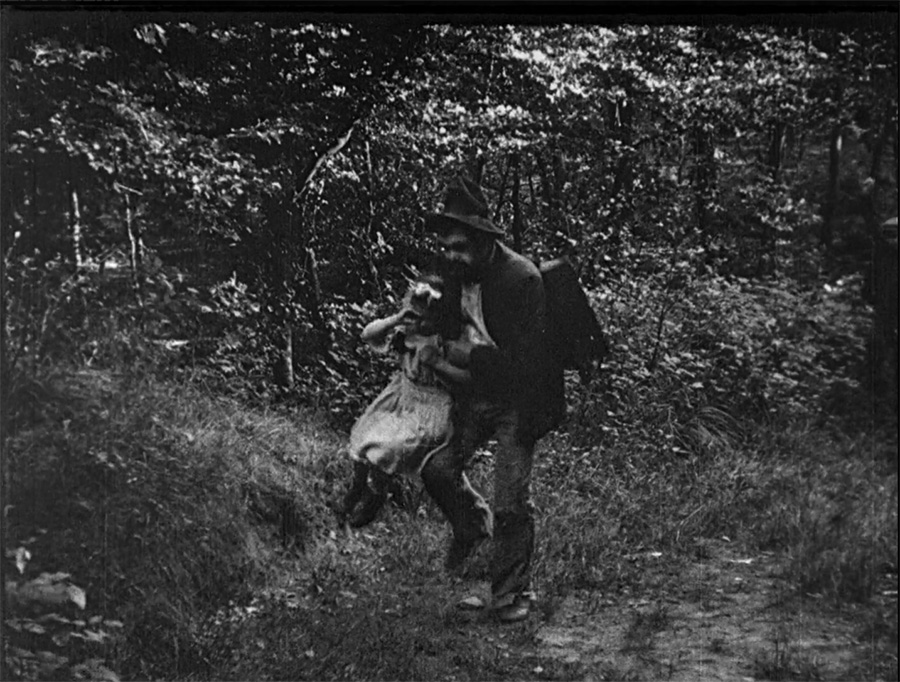
The tramp has had enough and is about to toss the child into a ditch when help arrives, the father subdues him and the child is reunited with her family. A happy ending for all, thanks to the boy with the sixth sense.
This is an interesting film in Larsen’s body of work. While his early films of 1906 had been mostly long scenes and long shots to capture the full action. Charming though they are (his 1906 picture, A New Hat for the Madam, is one of my all-time favorite comedies of any era), The Boy with the Sixth Sense displays a more sophisticated grasp of cinema as a medium, employing special effects and closeups of the boy finding the girl’s location on the map to enhance the uncanny mood, as well as cutting between the imperiled child and her rescuers at the end to build suspense. This latter technique would be further ramped up by the French in The Physician of the Castle (1908), often regarded as the pioneering work of editing for suspense.
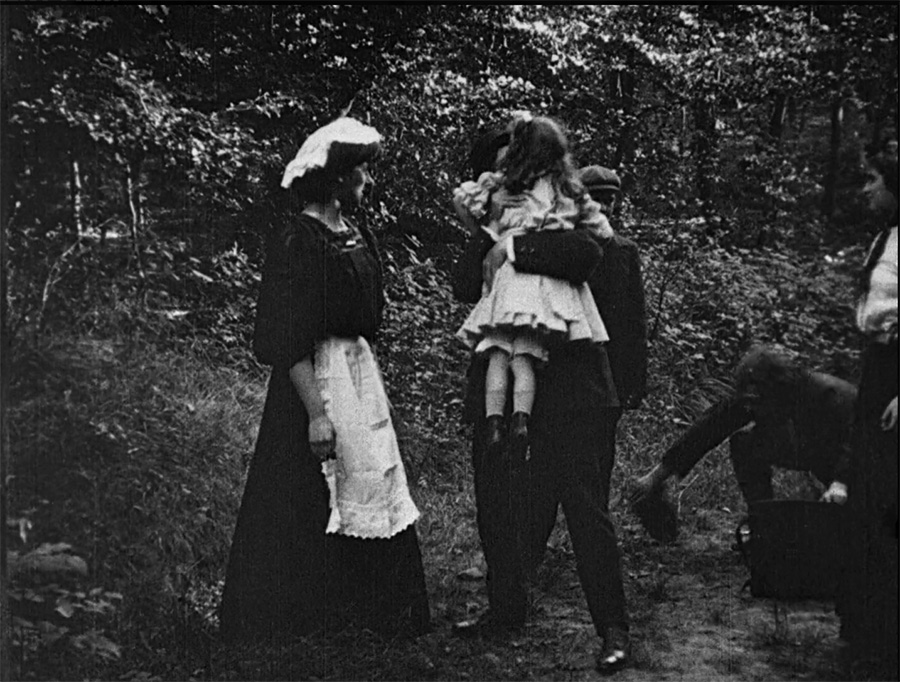
The film’s brief runtime (standard at the time) does somewhat hamper the storytelling. It is carefully established at the beginning of the picture that the mother is more interested in her books than in her child’s safety, the father is away and only the maid cares about where the kid is at any given times. There is no real payoff for this message, but it is possible that it was explained in further detail in marketing materials or audiences were expected to extrapolate the message based the signals provided. In any case, the unambiguous happy ending is less interesting than it could have been.
That being said, this is a well-made little suspense picture that has everything audiences could want in that line. Cute kid in peril? Check! An unexpected rescue? Check! (Early film people were rescued by everything from genius dogs to ferrets.) A spiritualist twist? Check!

This film also reflects early cinema’s contrast between outdoor-for-indoor painted sets (the wind gently blows the furnishings during indoor scenes) and the natural forest setting for most of the picture. I also appreciated the uncredited cast (film acting credits were slim and none at this point) for their comparatively subtle performances. While they do employ pantomime, they do not indulge in arm flailing hysterics during the film’s more dramatic sequences. (The family featured in that opening scene play it more broadly, I wonder if it was filmed earlier?)
All in all, this is a classic crowdpleaser on a popular topic that showcases how rapidly the art of filmmaking was developing internationally and in Denmark particularly. It’s a fast-paced little picture that establishes some of the building blocks for the supernatural crime genre that are still popular today. A fun way to spend six minutes.
Where can I see it?
Available to stream sans score courtesy of the Danish Film Institute. The film has no intertitles, so there will be no language barrier to enjoying it.
☙❦❧
Like what you’re reading? Please consider sponsoring me on Patreon. All patrons will get early previews of upcoming features, exclusive polls and other goodies.
Disclosure: Some links included in this post may be affiliate links to products sold by Amazon and as an Amazon Associate I earn from qualifying purchases.
 Movies Silently